
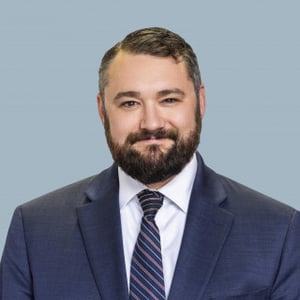
Partner, Ashbrook Byrne Kresge Flowers LLC
Ben Flowers, a partner at Ashbrook Byrne Kresge Flowers LLC, is an accomplished litigator with experience briefing, arguing, and winning high-stakes cases in courts throughout the country.
Before joining the law firm, Ben served as Ohio's 10th Solicitor General. In that role he regularly represented the State of Ohio before the Supreme Court of the United States, the United States Court of Appeals for the Sixth Circuit, and the Supreme Court of Ohio. Most prominently, in National Federation of Independent Business v. Department of Labor, Ben led a multi-state challenge to OSHA's vaccine mandate, ultimately prevailing before the Supreme Court.
Ben is a graduate of The Ohio State University and the University of Chicago Law School. Following law school, Ben clerked for Judge Sandra Ikuta of the U.S. Court of Appeals for the Ninth Circuit and for Justice Antonin Scalia of the Supreme Court of this United States. Ben lives in Upper Arlington, Ohio with his wife Denise and their three very active children.
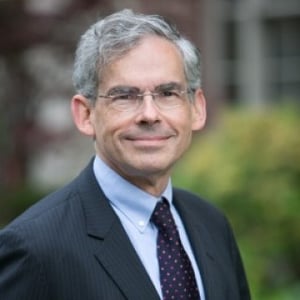
Andrew Sabin Professor of Professional Practice and Founder and Faculty Director of the Sabin Center for Climate Change Law, Columbia University Law School
The founder and faculty director of the groundbreaking Sabin Center for Climate Change Law and one of the foremost environmental lawyers in the nation, Michael Gerrard is an advocate, litigator, teacher, and scholar who has pioneered cutting-edge legal tools and strategies for addressing climate change. He writes and teaches courses on environmental law, climate change law, and energy regulation. He was the chair of the faculty of Columbia University’s renowned Earth Institute from 2015 to 2018 and now holds a joint appointment to the faculty of its successor, the Columbia Climate School.
For three decades, before joining the Columbia Law School faculty in 2009, Gerrard practiced law in New York, most recently as the partner in charge of the New York office of Arnold & Porter. As an environmental lawyer, he tried numerous cases and argued many appeals in federal and state courts and administrative tribunals. He also handled the environmental aspects of diverse transactions and development projects and provided regulatory compliance advice to an array of clients in the private and public sectors. Several publications rated him the leading environmental lawyer in New York and one of the leaders in the world.
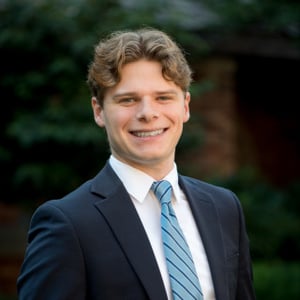
President, Yale Student Chapter
David Haungs is a student at Yale Law School, where he serves as President of the Yale Federalist Society chapter.
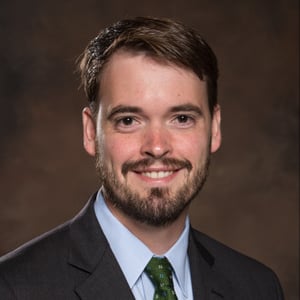
Senior Attorney, Institute for Justice
Rob Johnson is a senior attorney at the Institute for Justice, where he litigates to protect private property, free speech, and other individual rights. Rob is a nationally-recognized expert on civil forfeiture. He previously represented a series of small business owners who had their entire bank accounts seized by the IRS, and he launched an initiative that resulted in the IRS reopening hundreds of closed forfeiture cases and returning millions of dollars. He has also litigated cases challenging the constitutionality of civil forfeiture procedures, and he scored a victory striking down a forfeiture program as a violation of due process.
Beyond civil forfeiture, Rob has litigated cases defending a range of constitutional rights. He was part of teams that successfully challenged occupational licensing requirements for tour guides in Savannah and Charleston. He also developed a class action lawsuit fighting the NYPD’s use of a draconian “no-fault eviction” statute to coerce residents to waive their constitutional rights, which led New York City to reform the challenged law.
Rob’s writing has been published in the Wall Street Journal, Washington Post, Politico, and Reason, among other venues. Rob has testified about occupational licensing before the House and Senate Judiciary Committees and has twice testified about civil forfeiture before the House Ways & Means Oversight Subcommittee. He has also testified before state legislatures across the country.
From 2014-2017, Rob served as IJ’s first Elfie Gallun Fellow for Freedom and the Constitution. In that role, Rob wrote and spoke about the vital role the U.S. Constitution plays in protecting our most precious freedoms. He is currently at work on a book about the Fourteenth Amendment.
Rob studied literature and anthropology at Columbia University, and he studied law at Harvard Law School. Upon graduation, he clerked for Chief Judge Alex Kozinski on the Ninth Circuit and for Justice Anthony Kennedy on the Supreme Court.
Rob lives in Cleveland with his wife and two daughters—all named after characters in Shakespeare plays—and is an amateur large format photographer.
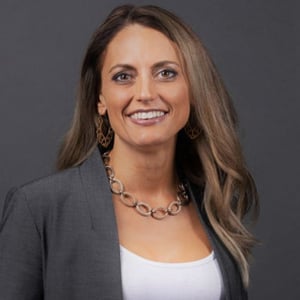
Judge, U.S. Court of Appeals for the Third Circuit
Hon. Jennifer Mascott served as Associate Professor of Law and Director of the Separation of Powers Institute at The Catholic University of America’s Columbus School of Law before her appointment to the federal bench. On July 16, 2025, President Donald J. Trump nominated her to the U.S. Court of Appeals for the Third Circuit (Delaware), and she was confirmed on October 9, 2025.
Prior to her confirmation, Judge Mascott wrote extensively in administrative and constitutional law, statutory interpretation, and the separation of powers. Her scholarship—published in leading journals including the Stanford Law Review, Notre Dame Law Review, and Supreme Court Review—was cited by the U.S. Supreme Court and multiple federal courts. She also contributed Supreme Court commentary for NBC Universal.
Before joining Catholic Law, she was an Assistant Professor and Co-Director of The C. Boyden Gray Center at George Mason University’s Antonin Scalia Law School. In 2022 she became co-author of Beermann, Cass & Diver’s Administrative Law: Cases and Materials (9th ed.). In 2023 she received the Justice Joseph Story Award for excellence in scholarship, teaching, and advancing the rule of law.
Judge Mascott also served as a Council Member of the ABA’s Administrative Law Section and as a Public Member of the Administrative Conference of the United States. She frequently testified before Congress on executive power, regulatory reform, and judicial jurisdiction, and participated in multiple Supreme Court confirmation hearings.
From 2019 to 2021, she took leave from academia to serve as Deputy Assistant Attorney General in the Department of Justice’s Office of Legal Counsel and later as Associate Deputy Attorney General, where she argued federal cases and assisted with Justice Amy Coney Barrett’s confirmation. Earlier in her career, she clerked for Justice Clarence Thomas and for then-Judge Brett M. Kavanaugh on the D.C. Circuit.
Judge Mascott earned her J.D. summa cum laude from the George Washington University Law School and her B.A. from the same institution.
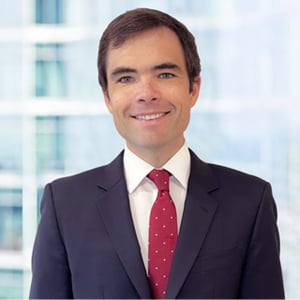
Partner, Keller Postman LLP
JJ Snidow is a Partner at Keller Postman where he specializes in civil litigation in the trial courts. His area of practice focuses on product liability, consumer protection, and antitrust. Before joining Keller Postman, he practiced in DC at Wilkinson Stekloff, a defense-side trial firm. He clerked for Judge Raymond M. Kethledge on the Sixth Circuit, Judge Amul R. Thapar on the Eastern District of Kentucky, and Justice Anthony M. Kennedy on the Supreme Court. He was formerly chairman of the Federalist Society's emerging leaders council, and in law school he served as president of the Yale chapter.
Partner, Ashbrook Byrne Kresge Flowers LLC
Ben Flowers, a partner at Ashbrook Byrne Kresge Flowers LLC, is an accomplished litigator with experience briefing, arguing, and winning high-stakes cases in courts throughout the country.
Before joining the law firm, Ben served as Ohio's 10th Solicitor General. In that role he regularly represented the State of Ohio before the Supreme Court of the United States, the United States Court of Appeals for the Sixth Circuit, and the Supreme Court of Ohio. Most prominently, in National Federation of Independent Business v. Department of Labor, Ben led a multi-state challenge to OSHA's vaccine mandate, ultimately prevailing before the Supreme Court.
Ben is a graduate of The Ohio State University and the University of Chicago Law School. Following law school, Ben clerked for Judge Sandra Ikuta of the U.S. Court of Appeals for the Ninth Circuit and for Justice Antonin Scalia of the Supreme Court of this United States. Ben lives in Upper Arlington, Ohio with his wife Denise and their three very active children.
Andrew Sabin Professor of Professional Practice and Founder and Faculty Director of the Sabin Center for Climate Change Law, Columbia University Law School
The founder and faculty director of the groundbreaking Sabin Center for Climate Change Law and one of the foremost environmental lawyers in the nation, Michael Gerrard is an advocate, litigator, teacher, and scholar who has pioneered cutting-edge legal tools and strategies for addressing climate change. He writes and teaches courses on environmental law, climate change law, and energy regulation. He was the chair of the faculty of Columbia University’s renowned Earth Institute from 2015 to 2018 and now holds a joint appointment to the faculty of its successor, the Columbia Climate School.
For three decades, before joining the Columbia Law School faculty in 2009, Gerrard practiced law in New York, most recently as the partner in charge of the New York office of Arnold & Porter. As an environmental lawyer, he tried numerous cases and argued many appeals in federal and state courts and administrative tribunals. He also handled the environmental aspects of diverse transactions and development projects and provided regulatory compliance advice to an array of clients in the private and public sectors. Several publications rated him the leading environmental lawyer in New York and one of the leaders in the world.
President, Yale Student Chapter
David Haungs is a student at Yale Law School, where he serves as President of the Yale Federalist Society chapter.
Senior Attorney, Institute for Justice
Rob Johnson is a senior attorney at the Institute for Justice, where he litigates to protect private property, free speech, and other individual rights. Rob is a nationally-recognized expert on civil forfeiture. He previously represented a series of small business owners who had their entire bank accounts seized by the IRS, and he launched an initiative that resulted in the IRS reopening hundreds of closed forfeiture cases and returning millions of dollars. He has also litigated cases challenging the constitutionality of civil forfeiture procedures, and he scored a victory striking down a forfeiture program as a violation of due process.
Beyond civil forfeiture, Rob has litigated cases defending a range of constitutional rights. He was part of teams that successfully challenged occupational licensing requirements for tour guides in Savannah and Charleston. He also developed a class action lawsuit fighting the NYPD’s use of a draconian “no-fault eviction” statute to coerce residents to waive their constitutional rights, which led New York City to reform the challenged law.
Rob’s writing has been published in the Wall Street Journal, Washington Post, Politico, and Reason, among other venues. Rob has testified about occupational licensing before the House and Senate Judiciary Committees and has twice testified about civil forfeiture before the House Ways & Means Oversight Subcommittee. He has also testified before state legislatures across the country.
From 2014-2017, Rob served as IJ’s first Elfie Gallun Fellow for Freedom and the Constitution. In that role, Rob wrote and spoke about the vital role the U.S. Constitution plays in protecting our most precious freedoms. He is currently at work on a book about the Fourteenth Amendment.
Rob studied literature and anthropology at Columbia University, and he studied law at Harvard Law School. Upon graduation, he clerked for Chief Judge Alex Kozinski on the Ninth Circuit and for Justice Anthony Kennedy on the Supreme Court.
Rob lives in Cleveland with his wife and two daughters—all named after characters in Shakespeare plays—and is an amateur large format photographer.
Judge, U.S. Court of Appeals for the Third Circuit
Hon. Jennifer Mascott served as Associate Professor of Law and Director of the Separation of Powers Institute at The Catholic University of America’s Columbus School of Law before her appointment to the federal bench. On July 16, 2025, President Donald J. Trump nominated her to the U.S. Court of Appeals for the Third Circuit (Delaware), and she was confirmed on October 9, 2025.
Prior to her confirmation, Judge Mascott wrote extensively in administrative and constitutional law, statutory interpretation, and the separation of powers. Her scholarship—published in leading journals including the Stanford Law Review, Notre Dame Law Review, and Supreme Court Review—was cited by the U.S. Supreme Court and multiple federal courts. She also contributed Supreme Court commentary for NBC Universal.
Before joining Catholic Law, she was an Assistant Professor and Co-Director of The C. Boyden Gray Center at George Mason University’s Antonin Scalia Law School. In 2022 she became co-author of Beermann, Cass & Diver’s Administrative Law: Cases and Materials (9th ed.). In 2023 she received the Justice Joseph Story Award for excellence in scholarship, teaching, and advancing the rule of law.
Judge Mascott also served as a Council Member of the ABA’s Administrative Law Section and as a Public Member of the Administrative Conference of the United States. She frequently testified before Congress on executive power, regulatory reform, and judicial jurisdiction, and participated in multiple Supreme Court confirmation hearings.
From 2019 to 2021, she took leave from academia to serve as Deputy Assistant Attorney General in the Department of Justice’s Office of Legal Counsel and later as Associate Deputy Attorney General, where she argued federal cases and assisted with Justice Amy Coney Barrett’s confirmation. Earlier in her career, she clerked for Justice Clarence Thomas and for then-Judge Brett M. Kavanaugh on the D.C. Circuit.
Judge Mascott earned her J.D. summa cum laude from the George Washington University Law School and her B.A. from the same institution.
Partner, Keller Postman LLP
JJ Snidow is a Partner at Keller Postman where he specializes in civil litigation in the trial courts. His area of practice focuses on product liability, consumer protection, and antitrust. Before joining Keller Postman, he practiced in DC at Wilkinson Stekloff, a defense-side trial firm. He clerked for Judge Raymond M. Kethledge on the Sixth Circuit, Judge Amul R. Thapar on the Eastern District of Kentucky, and Justice Anthony M. Kennedy on the Supreme Court. He was formerly chairman of the Federalist Society's emerging leaders council, and in law school he served as president of the Yale chapter.
Partner, Ashbrook Byrne Kresge Flowers LLC
Ben Flowers, a partner at Ashbrook Byrne Kresge Flowers LLC, is an accomplished litigator with experience briefing, arguing, and winning high-stakes cases in courts throughout the country.
Before joining the law firm, Ben served as Ohio's 10th Solicitor General. In that role he regularly represented the State of Ohio before the Supreme Court of the United States, the United States Court of Appeals for the Sixth Circuit, and the Supreme Court of Ohio. Most prominently, in National Federation of Independent Business v. Department of Labor, Ben led a multi-state challenge to OSHA's vaccine mandate, ultimately prevailing before the Supreme Court.
Ben is a graduate of The Ohio State University and the University of Chicago Law School. Following law school, Ben clerked for Judge Sandra Ikuta of the U.S. Court of Appeals for the Ninth Circuit and for Justice Antonin Scalia of the Supreme Court of this United States. Ben lives in Upper Arlington, Ohio with his wife Denise and their three very active children.
Andrew Sabin Professor of Professional Practice and Founder and Faculty Director of the Sabin Center for Climate Change Law, Columbia University Law School
The founder and faculty director of the groundbreaking Sabin Center for Climate Change Law and one of the foremost environmental lawyers in the nation, Michael Gerrard is an advocate, litigator, teacher, and scholar who has pioneered cutting-edge legal tools and strategies for addressing climate change. He writes and teaches courses on environmental law, climate change law, and energy regulation. He was the chair of the faculty of Columbia University’s renowned Earth Institute from 2015 to 2018 and now holds a joint appointment to the faculty of its successor, the Columbia Climate School.
For three decades, before joining the Columbia Law School faculty in 2009, Gerrard practiced law in New York, most recently as the partner in charge of the New York office of Arnold & Porter. As an environmental lawyer, he tried numerous cases and argued many appeals in federal and state courts and administrative tribunals. He also handled the environmental aspects of diverse transactions and development projects and provided regulatory compliance advice to an array of clients in the private and public sectors. Several publications rated him the leading environmental lawyer in New York and one of the leaders in the world.
Senior Attorney, Institute for Justice
Rob Johnson is a senior attorney at the Institute for Justice, where he litigates to protect private property, free speech, and other individual rights. Rob is a nationally-recognized expert on civil forfeiture. He previously represented a series of small business owners who had their entire bank accounts seized by the IRS, and he launched an initiative that resulted in the IRS reopening hundreds of closed forfeiture cases and returning millions of dollars. He has also litigated cases challenging the constitutionality of civil forfeiture procedures, and he scored a victory striking down a forfeiture program as a violation of due process.
Beyond civil forfeiture, Rob has litigated cases defending a range of constitutional rights. He was part of teams that successfully challenged occupational licensing requirements for tour guides in Savannah and Charleston. He also developed a class action lawsuit fighting the NYPD’s use of a draconian “no-fault eviction” statute to coerce residents to waive their constitutional rights, which led New York City to reform the challenged law.
Rob’s writing has been published in the Wall Street Journal, Washington Post, Politico, and Reason, among other venues. Rob has testified about occupational licensing before the House and Senate Judiciary Committees and has twice testified about civil forfeiture before the House Ways & Means Oversight Subcommittee. He has also testified before state legislatures across the country.
From 2014-2017, Rob served as IJ’s first Elfie Gallun Fellow for Freedom and the Constitution. In that role, Rob wrote and spoke about the vital role the U.S. Constitution plays in protecting our most precious freedoms. He is currently at work on a book about the Fourteenth Amendment.
Rob studied literature and anthropology at Columbia University, and he studied law at Harvard Law School. Upon graduation, he clerked for Chief Judge Alex Kozinski on the Ninth Circuit and for Justice Anthony Kennedy on the Supreme Court.
Rob lives in Cleveland with his wife and two daughters—all named after characters in Shakespeare plays—and is an amateur large format photographer.
Judge, U.S. Court of Appeals for the Third Circuit
Hon. Jennifer Mascott served as Associate Professor of Law and Director of the Separation of Powers Institute at The Catholic University of America’s Columbus School of Law before her appointment to the federal bench. On July 16, 2025, President Donald J. Trump nominated her to the U.S. Court of Appeals for the Third Circuit (Delaware), and she was confirmed on October 9, 2025.
Prior to her confirmation, Judge Mascott wrote extensively in administrative and constitutional law, statutory interpretation, and the separation of powers. Her scholarship—published in leading journals including the Stanford Law Review, Notre Dame Law Review, and Supreme Court Review—was cited by the U.S. Supreme Court and multiple federal courts. She also contributed Supreme Court commentary for NBC Universal.
Before joining Catholic Law, she was an Assistant Professor and Co-Director of The C. Boyden Gray Center at George Mason University’s Antonin Scalia Law School. In 2022 she became co-author of Beermann, Cass & Diver’s Administrative Law: Cases and Materials (9th ed.). In 2023 she received the Justice Joseph Story Award for excellence in scholarship, teaching, and advancing the rule of law.
Judge Mascott also served as a Council Member of the ABA’s Administrative Law Section and as a Public Member of the Administrative Conference of the United States. She frequently testified before Congress on executive power, regulatory reform, and judicial jurisdiction, and participated in multiple Supreme Court confirmation hearings.
From 2019 to 2021, she took leave from academia to serve as Deputy Assistant Attorney General in the Department of Justice’s Office of Legal Counsel and later as Associate Deputy Attorney General, where she argued federal cases and assisted with Justice Amy Coney Barrett’s confirmation. Earlier in her career, she clerked for Justice Clarence Thomas and for then-Judge Brett M. Kavanaugh on the D.C. Circuit.
Judge Mascott earned her J.D. summa cum laude from the George Washington University Law School and her B.A. from the same institution.
President, Yale Student Chapter
David Haungs is a student at Yale Law School, where he serves as President of the Yale Federalist Society chapter.
Partner, Keller Postman LLP
JJ Snidow is a Partner at Keller Postman where he specializes in civil litigation in the trial courts. His area of practice focuses on product liability, consumer protection, and antitrust. Before joining Keller Postman, he practiced in DC at Wilkinson Stekloff, a defense-side trial firm. He clerked for Judge Raymond M. Kethledge on the Sixth Circuit, Judge Amul R. Thapar on the Eastern District of Kentucky, and Justice Anthony M. Kennedy on the Supreme Court. He was formerly chairman of the Federalist Society's emerging leaders council, and in law school he served as president of the Yale chapter.
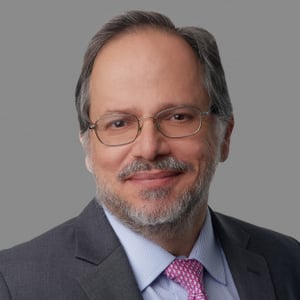
Director of Law & Policy, Environmental Integrity Project
Following Princeton and the University of Chicago Law School, David began practicing law at Paul, Weiss, Rifkind, Wharton & Garrison. Eventually tiring of litigation where the result was a wire transfer from Entity A to Entity B, in the early 1990’s David began his environmental law career at the Massachusetts Attorney General’s Office. Since then, he has litigated dozens of cases under all of the major environmental statutes including, as Sierra Club’s Chief Climate Counsel, initiating and managing Massachusetts v. EPA. Most recently, he has been busy challenging FERC’s permitting of natural gas pipelines and LNG export terminals. Apart from litigation, David has helped lead efforts on both greenhouse gas regulation and global warming legislation (and may be the only person ever invited to testify by both Barbara Boxer and James Inhofe).
He has drafted a range of federal climate legislation, advised states as to their greenhouse gas regulatory authority (and for many years has represented environmental groups defending state GHG regulations from dormant Commerce Clause challenges). David has designed and taught courses on “Environmental Litigation” at Georgetown University Law Center and “Environmental Law and Science” at the William and Mary Law School/Virginia Institute of Marine Science.
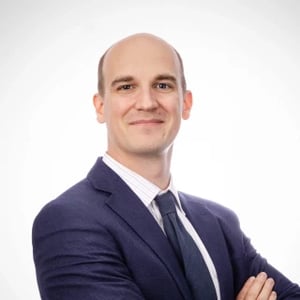
Partner, Boyden Gray PLLC
Michael Buschbacher is a partner at Boyden Gray PLLC. He represents public and private companies, trade associations, non-profits, and individuals in high-stakes litigation and administrative proceedings, with a particular focus on environmental and energy matters.
In addition to trial-level work, Mr. Buschbacher maintains an active appellate practice, both as merits counsel and as counsel for amici curiae. He has written amicus briefs quoted by the Seventh and Ninth Circuits. And his Supreme Court advocacy has been cited by The New Yorker, The New York Times, and E&E News. Mr. Buschbacher’s commentary on legal issues has been published in The Wall Street Journal, Newsweek, and The American Conservative.
Before joining the firm, Mr. Buschbacher served at the U.S. Department of Justice as counsel to the Assistant Attorney General for the Environment and Natural Resources Division. There, he advised senior Department leadership, served as the lead attorney on several lawsuits, and helped draft policy memoranda for the Department on the proper scope and procedure for environmental enforcement. Prior to serving in the government, Mr. Buschbacher was an associate in the D.C. office of Sidley Austin.
Mr. Buschbacher is a former clerk to Judge Alice M. Batchelder of the U.S. Court of Appeals for the Sixth Circuit and to Magistrate Judge Paul R. Cherry of the U.S. District Court for the Northern District of Indiana.
Mr. Buschbacher holds a B.A. in Music and Germanic Studies from Indiana University and a J.D., magna cum laude, from Notre Dame Law School.
Andrew Sabin Professor of Professional Practice and Founder and Faculty Director of the Sabin Center for Climate Change Law, Columbia University Law School
The founder and faculty director of the groundbreaking Sabin Center for Climate Change Law and one of the foremost environmental lawyers in the nation, Michael Gerrard is an advocate, litigator, teacher, and scholar who has pioneered cutting-edge legal tools and strategies for addressing climate change. He writes and teaches courses on environmental law, climate change law, and energy regulation. He was the chair of the faculty of Columbia University’s renowned Earth Institute from 2015 to 2018 and now holds a joint appointment to the faculty of its successor, the Columbia Climate School.
For three decades, before joining the Columbia Law School faculty in 2009, Gerrard practiced law in New York, most recently as the partner in charge of the New York office of Arnold & Porter. As an environmental lawyer, he tried numerous cases and argued many appeals in federal and state courts and administrative tribunals. He also handled the environmental aspects of diverse transactions and development projects and provided regulatory compliance advice to an array of clients in the private and public sectors. Several publications rated him the leading environmental lawyer in New York and one of the leaders in the world.
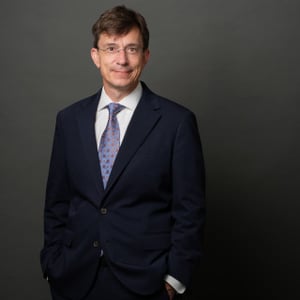
Professor of Law and Executive Director, Law and Economics Center, Antonin Scalia Law School, George Mason University
Donald Kochan is Professor of Law and Executive Director of the Law & Economics Center (LEC). Professor Kochan is an elected member of the American Law Institute (ALI) and serves as an Adviser to ALI's Restatement of the Law Fourth, Property project. Professor Kochan is a Nonresident Scholar at the Center for the Constitution at Georgetown University Law Center, where he was a Visiting Scholar in residence during Fall 2018. Before joining the Antonin Scalia Law School faculty, he was the Parker S. Kennedy Professor in Law at Chapman University’s Dale E. Fowler School of Law from 2004 to 2020. From 2003 to 2004, Professor Kochan was an Olin Fellow at the University of Virginia School of Law. During 2002-2003, he was a Visiting Assistant Professor of Law at George Mason’s Scalia Law School.
Professor Kochan’s scholarship focuses on areas of property law, constitutional law, administrative law, local government law, natural resources and environmental law, and law & economics. He has published several books and more than 50 scholarly articles and essays in well-regarded law journals. His work has been cited in more than a dozen state and federal court opinions, in more than 75 briefs filed in state and federal courts including more than 25 filed in the U.S. Supreme Court, in dozens of books and treatises, and in more than 800 scholarly articles.
Professor Kochan received his JD from Cornell Law School, where he was a John M. Olin Scholar in Law and Economics and managing editor of the Cornell International Law Journal. During law school, he also served as editor and executive editor of the Harvard Journal of Law & Public Policy symposium issues in 1997 and 1998. He received his BA from Western Michigan University, magna cum laude, with majors in both political science and philosophy, where he studied as the John W. Gill Medallion Scholar and was honored as the Presidential Scholar (awarded to the top graduate in the political science department).
After graduating from law school, Professor Kochan was a law clerk to The Honorable Richard F. Suhrheinrich of the United States Court of Appeals for the Sixth Circuit. Following his clerkship, Professor Kochan was an associate with the firm of Crowell & Moring LLP in Washington, D.C., where he specialized in natural resources & environmental law as well as tort, products, and consumer civil litigation & legislative affairs.
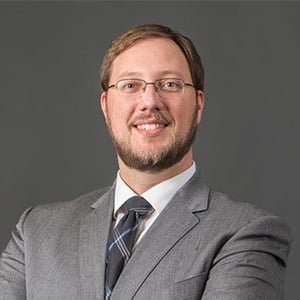
Laurence H. Silberman Chair in Constitutional Governance and Senior Fellow, American Enterprise Institute; Co-Director, Antonin Scalia Law School’s C. Boyden Gray Center for the Study of the Administrative State
Adam J. White is the Laurence H. Silberman Chair in Constitutional Governance and senior fellow at the American Enterprise Institute, where he focuses on the Supreme Court and the administrative state. Concurrently, he codirects the Antonin Scalia Law School’s C. Boyden Gray Center for the Study of the Administrative State.
Mr. White practiced constitutional and administrative law, particularly in the regulation of energy and financial markets. He started his legal career as a law clerk for Judge David B. Sentelle at the US Court of Appeals for the DC Circuit.
Mr. White has written for the Wall Street Journal, the New York Times, the Washington Post, National Affairs, Commentary, Harvard Journal of Law & Public Policy, and Notre Dame Law Review, among other publications. He is a regular contributor to the Yale Journal on Regulation’s Notice and Comment blog, and for many years, he was one of the Weekly Standard’s lead writers on constitutional law and the Supreme Court.
Mr. White has testified often before Congress, including before the Senate’s Committees on the Judiciary; Commerce, Science, and Transportation; and Homeland Security and Governmental Affairs and before the House’s Judiciary and Financial Services Committees. In 2018, the Senate Committee on the Judiciary called him to testify in Brett Kavanaugh’s Supreme Court confirmation hearings to advise senators on Kavanaugh’s approach to administrative law.
In 2021, he served on the Presidential Commission on the Supreme Court of the United States, where he criticized “Court packing” and other efforts to restructure the Supreme Court. In 2017, he was appointed to serve on the Administrative Conference of the United States. He also serves on the leadership council for the American Bar Association’s Administrative Law and Regulatory Practice Section, which he will chair in 2023–24. Before joining AEI, he was a research fellow at Stanford University’s Hoover Institution and an adjunct fellow at the Manhattan Institute.
Mr. White has a JD from Harvard Law School and a bachelor of business administration from the College of Business at the University of Iowa.
Director of Law & Policy, Environmental Integrity Project
Following Princeton and the University of Chicago Law School, David began practicing law at Paul, Weiss, Rifkind, Wharton & Garrison. Eventually tiring of litigation where the result was a wire transfer from Entity A to Entity B, in the early 1990’s David began his environmental law career at the Massachusetts Attorney General’s Office. Since then, he has litigated dozens of cases under all of the major environmental statutes including, as Sierra Club’s Chief Climate Counsel, initiating and managing Massachusetts v. EPA. Most recently, he has been busy challenging FERC’s permitting of natural gas pipelines and LNG export terminals. Apart from litigation, David has helped lead efforts on both greenhouse gas regulation and global warming legislation (and may be the only person ever invited to testify by both Barbara Boxer and James Inhofe).
He has drafted a range of federal climate legislation, advised states as to their greenhouse gas regulatory authority (and for many years has represented environmental groups defending state GHG regulations from dormant Commerce Clause challenges). David has designed and taught courses on “Environmental Litigation” at Georgetown University Law Center and “Environmental Law and Science” at the William and Mary Law School/Virginia Institute of Marine Science.
Partner, Boyden Gray PLLC
Michael Buschbacher is a partner at Boyden Gray PLLC. He represents public and private companies, trade associations, non-profits, and individuals in high-stakes litigation and administrative proceedings, with a particular focus on environmental and energy matters.
In addition to trial-level work, Mr. Buschbacher maintains an active appellate practice, both as merits counsel and as counsel for amici curiae. He has written amicus briefs quoted by the Seventh and Ninth Circuits. And his Supreme Court advocacy has been cited by The New Yorker, The New York Times, and E&E News. Mr. Buschbacher’s commentary on legal issues has been published in The Wall Street Journal, Newsweek, and The American Conservative.
Before joining the firm, Mr. Buschbacher served at the U.S. Department of Justice as counsel to the Assistant Attorney General for the Environment and Natural Resources Division. There, he advised senior Department leadership, served as the lead attorney on several lawsuits, and helped draft policy memoranda for the Department on the proper scope and procedure for environmental enforcement. Prior to serving in the government, Mr. Buschbacher was an associate in the D.C. office of Sidley Austin.
Mr. Buschbacher is a former clerk to Judge Alice M. Batchelder of the U.S. Court of Appeals for the Sixth Circuit and to Magistrate Judge Paul R. Cherry of the U.S. District Court for the Northern District of Indiana.
Mr. Buschbacher holds a B.A. in Music and Germanic Studies from Indiana University and a J.D., magna cum laude, from Notre Dame Law School.
Andrew Sabin Professor of Professional Practice and Founder and Faculty Director of the Sabin Center for Climate Change Law, Columbia University Law School
The founder and faculty director of the groundbreaking Sabin Center for Climate Change Law and one of the foremost environmental lawyers in the nation, Michael Gerrard is an advocate, litigator, teacher, and scholar who has pioneered cutting-edge legal tools and strategies for addressing climate change. He writes and teaches courses on environmental law, climate change law, and energy regulation. He was the chair of the faculty of Columbia University’s renowned Earth Institute from 2015 to 2018 and now holds a joint appointment to the faculty of its successor, the Columbia Climate School.
For three decades, before joining the Columbia Law School faculty in 2009, Gerrard practiced law in New York, most recently as the partner in charge of the New York office of Arnold & Porter. As an environmental lawyer, he tried numerous cases and argued many appeals in federal and state courts and administrative tribunals. He also handled the environmental aspects of diverse transactions and development projects and provided regulatory compliance advice to an array of clients in the private and public sectors. Several publications rated him the leading environmental lawyer in New York and one of the leaders in the world.
Professor of Law and Executive Director, Law and Economics Center, Antonin Scalia Law School, George Mason University
Donald Kochan is Professor of Law and Executive Director of the Law & Economics Center (LEC). Professor Kochan is an elected member of the American Law Institute (ALI) and serves as an Adviser to ALI's Restatement of the Law Fourth, Property project. Professor Kochan is a Nonresident Scholar at the Center for the Constitution at Georgetown University Law Center, where he was a Visiting Scholar in residence during Fall 2018. Before joining the Antonin Scalia Law School faculty, he was the Parker S. Kennedy Professor in Law at Chapman University’s Dale E. Fowler School of Law from 2004 to 2020. From 2003 to 2004, Professor Kochan was an Olin Fellow at the University of Virginia School of Law. During 2002-2003, he was a Visiting Assistant Professor of Law at George Mason’s Scalia Law School.
Professor Kochan’s scholarship focuses on areas of property law, constitutional law, administrative law, local government law, natural resources and environmental law, and law & economics. He has published several books and more than 50 scholarly articles and essays in well-regarded law journals. His work has been cited in more than a dozen state and federal court opinions, in more than 75 briefs filed in state and federal courts including more than 25 filed in the U.S. Supreme Court, in dozens of books and treatises, and in more than 800 scholarly articles.
Professor Kochan received his JD from Cornell Law School, where he was a John M. Olin Scholar in Law and Economics and managing editor of the Cornell International Law Journal. During law school, he also served as editor and executive editor of the Harvard Journal of Law & Public Policy symposium issues in 1997 and 1998. He received his BA from Western Michigan University, magna cum laude, with majors in both political science and philosophy, where he studied as the John W. Gill Medallion Scholar and was honored as the Presidential Scholar (awarded to the top graduate in the political science department).
After graduating from law school, Professor Kochan was a law clerk to The Honorable Richard F. Suhrheinrich of the United States Court of Appeals for the Sixth Circuit. Following his clerkship, Professor Kochan was an associate with the firm of Crowell & Moring LLP in Washington, D.C., where he specialized in natural resources & environmental law as well as tort, products, and consumer civil litigation & legislative affairs.
Laurence H. Silberman Chair in Constitutional Governance and Senior Fellow, American Enterprise Institute; Co-Director, Antonin Scalia Law School’s C. Boyden Gray Center for the Study of the Administrative State
Adam J. White is the Laurence H. Silberman Chair in Constitutional Governance and senior fellow at the American Enterprise Institute, where he focuses on the Supreme Court and the administrative state. Concurrently, he codirects the Antonin Scalia Law School’s C. Boyden Gray Center for the Study of the Administrative State.
Mr. White practiced constitutional and administrative law, particularly in the regulation of energy and financial markets. He started his legal career as a law clerk for Judge David B. Sentelle at the US Court of Appeals for the DC Circuit.
Mr. White has written for the Wall Street Journal, the New York Times, the Washington Post, National Affairs, Commentary, Harvard Journal of Law & Public Policy, and Notre Dame Law Review, among other publications. He is a regular contributor to the Yale Journal on Regulation’s Notice and Comment blog, and for many years, he was one of the Weekly Standard’s lead writers on constitutional law and the Supreme Court.
Mr. White has testified often before Congress, including before the Senate’s Committees on the Judiciary; Commerce, Science, and Transportation; and Homeland Security and Governmental Affairs and before the House’s Judiciary and Financial Services Committees. In 2018, the Senate Committee on the Judiciary called him to testify in Brett Kavanaugh’s Supreme Court confirmation hearings to advise senators on Kavanaugh’s approach to administrative law.
In 2021, he served on the Presidential Commission on the Supreme Court of the United States, where he criticized “Court packing” and other efforts to restructure the Supreme Court. In 2017, he was appointed to serve on the Administrative Conference of the United States. He also serves on the leadership council for the American Bar Association’s Administrative Law and Regulatory Practice Section, which he will chair in 2023–24. Before joining AEI, he was a research fellow at Stanford University’s Hoover Institution and an adjunct fellow at the Manhattan Institute.
Mr. White has a JD from Harvard Law School and a bachelor of business administration from the College of Business at the University of Iowa.
Partner, Ashbrook Byrne Kresge Flowers LLC
Ben Flowers, a partner at Ashbrook Byrne Kresge Flowers LLC, is an accomplished litigator with experience briefing, arguing, and winning high-stakes cases in courts throughout the country.
Before joining the law firm, Ben served as Ohio's 10th Solicitor General. In that role he regularly represented the State of Ohio before the Supreme Court of the United States, the United States Court of Appeals for the Sixth Circuit, and the Supreme Court of Ohio. Most prominently, in National Federation of Independent Business v. Department of Labor, Ben led a multi-state challenge to OSHA's vaccine mandate, ultimately prevailing before the Supreme Court.
Ben is a graduate of The Ohio State University and the University of Chicago Law School. Following law school, Ben clerked for Judge Sandra Ikuta of the U.S. Court of Appeals for the Ninth Circuit and for Justice Antonin Scalia of the Supreme Court of this United States. Ben lives in Upper Arlington, Ohio with his wife Denise and their three very active children.
Andrew Sabin Professor of Professional Practice and Founder and Faculty Director of the Sabin Center for Climate Change Law, Columbia University Law School
The founder and faculty director of the groundbreaking Sabin Center for Climate Change Law and one of the foremost environmental lawyers in the nation, Michael Gerrard is an advocate, litigator, teacher, and scholar who has pioneered cutting-edge legal tools and strategies for addressing climate change. He writes and teaches courses on environmental law, climate change law, and energy regulation. He was the chair of the faculty of Columbia University’s renowned Earth Institute from 2015 to 2018 and now holds a joint appointment to the faculty of its successor, the Columbia Climate School.
For three decades, before joining the Columbia Law School faculty in 2009, Gerrard practiced law in New York, most recently as the partner in charge of the New York office of Arnold & Porter. As an environmental lawyer, he tried numerous cases and argued many appeals in federal and state courts and administrative tribunals. He also handled the environmental aspects of diverse transactions and development projects and provided regulatory compliance advice to an array of clients in the private and public sectors. Several publications rated him the leading environmental lawyer in New York and one of the leaders in the world.
President, Yale Student Chapter
David Haungs is a student at Yale Law School, where he serves as President of the Yale Federalist Society chapter.
Senior Attorney, Institute for Justice
Rob Johnson is a senior attorney at the Institute for Justice, where he litigates to protect private property, free speech, and other individual rights. Rob is a nationally-recognized expert on civil forfeiture. He previously represented a series of small business owners who had their entire bank accounts seized by the IRS, and he launched an initiative that resulted in the IRS reopening hundreds of closed forfeiture cases and returning millions of dollars. He has also litigated cases challenging the constitutionality of civil forfeiture procedures, and he scored a victory striking down a forfeiture program as a violation of due process.
Beyond civil forfeiture, Rob has litigated cases defending a range of constitutional rights. He was part of teams that successfully challenged occupational licensing requirements for tour guides in Savannah and Charleston. He also developed a class action lawsuit fighting the NYPD’s use of a draconian “no-fault eviction” statute to coerce residents to waive their constitutional rights, which led New York City to reform the challenged law.
Rob’s writing has been published in the Wall Street Journal, Washington Post, Politico, and Reason, among other venues. Rob has testified about occupational licensing before the House and Senate Judiciary Committees and has twice testified about civil forfeiture before the House Ways & Means Oversight Subcommittee. He has also testified before state legislatures across the country.
From 2014-2017, Rob served as IJ’s first Elfie Gallun Fellow for Freedom and the Constitution. In that role, Rob wrote and spoke about the vital role the U.S. Constitution plays in protecting our most precious freedoms. He is currently at work on a book about the Fourteenth Amendment.
Rob studied literature and anthropology at Columbia University, and he studied law at Harvard Law School. Upon graduation, he clerked for Chief Judge Alex Kozinski on the Ninth Circuit and for Justice Anthony Kennedy on the Supreme Court.
Rob lives in Cleveland with his wife and two daughters—all named after characters in Shakespeare plays—and is an amateur large format photographer.
Judge, U.S. Court of Appeals for the Third Circuit
Hon. Jennifer Mascott served as Associate Professor of Law and Director of the Separation of Powers Institute at The Catholic University of America’s Columbus School of Law before her appointment to the federal bench. On July 16, 2025, President Donald J. Trump nominated her to the U.S. Court of Appeals for the Third Circuit (Delaware), and she was confirmed on October 9, 2025.
Prior to her confirmation, Judge Mascott wrote extensively in administrative and constitutional law, statutory interpretation, and the separation of powers. Her scholarship—published in leading journals including the Stanford Law Review, Notre Dame Law Review, and Supreme Court Review—was cited by the U.S. Supreme Court and multiple federal courts. She also contributed Supreme Court commentary for NBC Universal.
Before joining Catholic Law, she was an Assistant Professor and Co-Director of The C. Boyden Gray Center at George Mason University’s Antonin Scalia Law School. In 2022 she became co-author of Beermann, Cass & Diver’s Administrative Law: Cases and Materials (9th ed.). In 2023 she received the Justice Joseph Story Award for excellence in scholarship, teaching, and advancing the rule of law.
Judge Mascott also served as a Council Member of the ABA’s Administrative Law Section and as a Public Member of the Administrative Conference of the United States. She frequently testified before Congress on executive power, regulatory reform, and judicial jurisdiction, and participated in multiple Supreme Court confirmation hearings.
From 2019 to 2021, she took leave from academia to serve as Deputy Assistant Attorney General in the Department of Justice’s Office of Legal Counsel and later as Associate Deputy Attorney General, where she argued federal cases and assisted with Justice Amy Coney Barrett’s confirmation. Earlier in her career, she clerked for Justice Clarence Thomas and for then-Judge Brett M. Kavanaugh on the D.C. Circuit.
Judge Mascott earned her J.D. summa cum laude from the George Washington University Law School and her B.A. from the same institution.
Partner, Keller Postman LLP
JJ Snidow is a Partner at Keller Postman where he specializes in civil litigation in the trial courts. His area of practice focuses on product liability, consumer protection, and antitrust. Before joining Keller Postman, he practiced in DC at Wilkinson Stekloff, a defense-side trial firm. He clerked for Judge Raymond M. Kethledge on the Sixth Circuit, Judge Amul R. Thapar on the Eastern District of Kentucky, and Justice Anthony M. Kennedy on the Supreme Court. He was formerly chairman of the Federalist Society's emerging leaders council, and in law school he served as president of the Yale chapter.
Director of Law & Policy, Environmental Integrity Project
Following Princeton and the University of Chicago Law School, David began practicing law at Paul, Weiss, Rifkind, Wharton & Garrison. Eventually tiring of litigation where the result was a wire transfer from Entity A to Entity B, in the early 1990’s David began his environmental law career at the Massachusetts Attorney General’s Office. Since then, he has litigated dozens of cases under all of the major environmental statutes including, as Sierra Club’s Chief Climate Counsel, initiating and managing Massachusetts v. EPA. Most recently, he has been busy challenging FERC’s permitting of natural gas pipelines and LNG export terminals. Apart from litigation, David has helped lead efforts on both greenhouse gas regulation and global warming legislation (and may be the only person ever invited to testify by both Barbara Boxer and James Inhofe).
He has drafted a range of federal climate legislation, advised states as to their greenhouse gas regulatory authority (and for many years has represented environmental groups defending state GHG regulations from dormant Commerce Clause challenges). David has designed and taught courses on “Environmental Litigation” at Georgetown University Law Center and “Environmental Law and Science” at the William and Mary Law School/Virginia Institute of Marine Science.
Partner, Boyden Gray PLLC
Michael Buschbacher is a partner at Boyden Gray PLLC. He represents public and private companies, trade associations, non-profits, and individuals in high-stakes litigation and administrative proceedings, with a particular focus on environmental and energy matters.
In addition to trial-level work, Mr. Buschbacher maintains an active appellate practice, both as merits counsel and as counsel for amici curiae. He has written amicus briefs quoted by the Seventh and Ninth Circuits. And his Supreme Court advocacy has been cited by The New Yorker, The New York Times, and E&E News. Mr. Buschbacher’s commentary on legal issues has been published in The Wall Street Journal, Newsweek, and The American Conservative.
Before joining the firm, Mr. Buschbacher served at the U.S. Department of Justice as counsel to the Assistant Attorney General for the Environment and Natural Resources Division. There, he advised senior Department leadership, served as the lead attorney on several lawsuits, and helped draft policy memoranda for the Department on the proper scope and procedure for environmental enforcement. Prior to serving in the government, Mr. Buschbacher was an associate in the D.C. office of Sidley Austin.
Mr. Buschbacher is a former clerk to Judge Alice M. Batchelder of the U.S. Court of Appeals for the Sixth Circuit and to Magistrate Judge Paul R. Cherry of the U.S. District Court for the Northern District of Indiana.
Mr. Buschbacher holds a B.A. in Music and Germanic Studies from Indiana University and a J.D., magna cum laude, from Notre Dame Law School.
Andrew Sabin Professor of Professional Practice and Founder and Faculty Director of the Sabin Center for Climate Change Law, Columbia University Law School
The founder and faculty director of the groundbreaking Sabin Center for Climate Change Law and one of the foremost environmental lawyers in the nation, Michael Gerrard is an advocate, litigator, teacher, and scholar who has pioneered cutting-edge legal tools and strategies for addressing climate change. He writes and teaches courses on environmental law, climate change law, and energy regulation. He was the chair of the faculty of Columbia University’s renowned Earth Institute from 2015 to 2018 and now holds a joint appointment to the faculty of its successor, the Columbia Climate School.
For three decades, before joining the Columbia Law School faculty in 2009, Gerrard practiced law in New York, most recently as the partner in charge of the New York office of Arnold & Porter. As an environmental lawyer, he tried numerous cases and argued many appeals in federal and state courts and administrative tribunals. He also handled the environmental aspects of diverse transactions and development projects and provided regulatory compliance advice to an array of clients in the private and public sectors. Several publications rated him the leading environmental lawyer in New York and one of the leaders in the world.
Professor of Law and Executive Director, Law and Economics Center, Antonin Scalia Law School, George Mason University
Donald Kochan is Professor of Law and Executive Director of the Law & Economics Center (LEC). Professor Kochan is an elected member of the American Law Institute (ALI) and serves as an Adviser to ALI's Restatement of the Law Fourth, Property project. Professor Kochan is a Nonresident Scholar at the Center for the Constitution at Georgetown University Law Center, where he was a Visiting Scholar in residence during Fall 2018. Before joining the Antonin Scalia Law School faculty, he was the Parker S. Kennedy Professor in Law at Chapman University’s Dale E. Fowler School of Law from 2004 to 2020. From 2003 to 2004, Professor Kochan was an Olin Fellow at the University of Virginia School of Law. During 2002-2003, he was a Visiting Assistant Professor of Law at George Mason’s Scalia Law School.
Professor Kochan’s scholarship focuses on areas of property law, constitutional law, administrative law, local government law, natural resources and environmental law, and law & economics. He has published several books and more than 50 scholarly articles and essays in well-regarded law journals. His work has been cited in more than a dozen state and federal court opinions, in more than 75 briefs filed in state and federal courts including more than 25 filed in the U.S. Supreme Court, in dozens of books and treatises, and in more than 800 scholarly articles.
Professor Kochan received his JD from Cornell Law School, where he was a John M. Olin Scholar in Law and Economics and managing editor of the Cornell International Law Journal. During law school, he also served as editor and executive editor of the Harvard Journal of Law & Public Policy symposium issues in 1997 and 1998. He received his BA from Western Michigan University, magna cum laude, with majors in both political science and philosophy, where he studied as the John W. Gill Medallion Scholar and was honored as the Presidential Scholar (awarded to the top graduate in the political science department).
After graduating from law school, Professor Kochan was a law clerk to The Honorable Richard F. Suhrheinrich of the United States Court of Appeals for the Sixth Circuit. Following his clerkship, Professor Kochan was an associate with the firm of Crowell & Moring LLP in Washington, D.C., where he specialized in natural resources & environmental law as well as tort, products, and consumer civil litigation & legislative affairs.
Laurence H. Silberman Chair in Constitutional Governance and Senior Fellow, American Enterprise Institute; Co-Director, Antonin Scalia Law School’s C. Boyden Gray Center for the Study of the Administrative State
Adam J. White is the Laurence H. Silberman Chair in Constitutional Governance and senior fellow at the American Enterprise Institute, where he focuses on the Supreme Court and the administrative state. Concurrently, he codirects the Antonin Scalia Law School’s C. Boyden Gray Center for the Study of the Administrative State.
Mr. White practiced constitutional and administrative law, particularly in the regulation of energy and financial markets. He started his legal career as a law clerk for Judge David B. Sentelle at the US Court of Appeals for the DC Circuit.
Mr. White has written for the Wall Street Journal, the New York Times, the Washington Post, National Affairs, Commentary, Harvard Journal of Law & Public Policy, and Notre Dame Law Review, among other publications. He is a regular contributor to the Yale Journal on Regulation’s Notice and Comment blog, and for many years, he was one of the Weekly Standard’s lead writers on constitutional law and the Supreme Court.
Mr. White has testified often before Congress, including before the Senate’s Committees on the Judiciary; Commerce, Science, and Transportation; and Homeland Security and Governmental Affairs and before the House’s Judiciary and Financial Services Committees. In 2018, the Senate Committee on the Judiciary called him to testify in Brett Kavanaugh’s Supreme Court confirmation hearings to advise senators on Kavanaugh’s approach to administrative law.
In 2021, he served on the Presidential Commission on the Supreme Court of the United States, where he criticized “Court packing” and other efforts to restructure the Supreme Court. In 2017, he was appointed to serve on the Administrative Conference of the United States. He also serves on the leadership council for the American Bar Association’s Administrative Law and Regulatory Practice Section, which he will chair in 2023–24. Before joining AEI, he was a research fellow at Stanford University’s Hoover Institution and an adjunct fellow at the Manhattan Institute.
Mr. White has a JD from Harvard Law School and a bachelor of business administration from the College of Business at the University of Iowa.
Andrew Sabin Professor of Professional Practice and Founder and Faculty Director of the Sabin Center for Climate Change Law, Columbia University Law School
The founder and faculty director of the groundbreaking Sabin Center for Climate Change Law and one of the foremost environmental lawyers in the nation, Michael Gerrard is an advocate, litigator, teacher, and scholar who has pioneered cutting-edge legal tools and strategies for addressing climate change. He writes and teaches courses on environmental law, climate change law, and energy regulation. He was the chair of the faculty of Columbia University’s renowned Earth Institute from 2015 to 2018 and now holds a joint appointment to the faculty of its successor, the Columbia Climate School.
For three decades, before joining the Columbia Law School faculty in 2009, Gerrard practiced law in New York, most recently as the partner in charge of the New York office of Arnold & Porter. As an environmental lawyer, he tried numerous cases and argued many appeals in federal and state courts and administrative tribunals. He also handled the environmental aspects of diverse transactions and development projects and provided regulatory compliance advice to an array of clients in the private and public sectors. Several publications rated him the leading environmental lawyer in New York and one of the leaders in the world.
Andrew Sabin Professor of Professional Practice and Founder and Faculty Director of the Sabin Center for Climate Change Law, Columbia University Law School
The founder and faculty director of the groundbreaking Sabin Center for Climate Change Law and one of the foremost environmental lawyers in the nation, Michael Gerrard is an advocate, litigator, teacher, and scholar who has pioneered cutting-edge legal tools and strategies for addressing climate change. He writes and teaches courses on environmental law, climate change law, and energy regulation. He was the chair of the faculty of Columbia University’s renowned Earth Institute from 2015 to 2018 and now holds a joint appointment to the faculty of its successor, the Columbia Climate School.
For three decades, before joining the Columbia Law School faculty in 2009, Gerrard practiced law in New York, most recently as the partner in charge of the New York office of Arnold & Porter. As an environmental lawyer, he tried numerous cases and argued many appeals in federal and state courts and administrative tribunals. He also handled the environmental aspects of diverse transactions and development projects and provided regulatory compliance advice to an array of clients in the private and public sectors. Several publications rated him the leading environmental lawyer in New York and one of the leaders in the world.
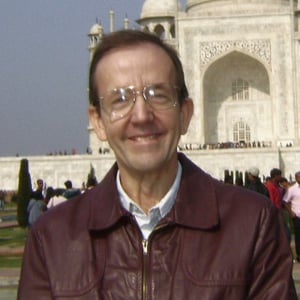
Adjunct Professor, Belmont Abbey College
Andrew Sabin Professor of Professional Practice and Founder and Faculty Director of the Sabin Center for Climate Change Law, Columbia University Law School
The founder and faculty director of the groundbreaking Sabin Center for Climate Change Law and one of the foremost environmental lawyers in the nation, Michael Gerrard is an advocate, litigator, teacher, and scholar who has pioneered cutting-edge legal tools and strategies for addressing climate change. He writes and teaches courses on environmental law, climate change law, and energy regulation. He was the chair of the faculty of Columbia University’s renowned Earth Institute from 2015 to 2018 and now holds a joint appointment to the faculty of its successor, the Columbia Climate School.
For three decades, before joining the Columbia Law School faculty in 2009, Gerrard practiced law in New York, most recently as the partner in charge of the New York office of Arnold & Porter. As an environmental lawyer, he tried numerous cases and argued many appeals in federal and state courts and administrative tribunals. He also handled the environmental aspects of diverse transactions and development projects and provided regulatory compliance advice to an array of clients in the private and public sectors. Several publications rated him the leading environmental lawyer in New York and one of the leaders in the world.
Partner, Willkie Farr & Gallagher LLP
Francis J. Menton, Jr. is a partner in the Litigation Department and Co-Chair of the Business Litigation Practice Group of Willkie Farr & Gallagher LLP in New York. Mr. Menton specializes in complex and technical commercial litigation, principally contract and securities claims. He has a nationwide trial practice, and has tried cases in state and federal courts including Colorado, Kansas, Massachusetts, Michigan, New York, Puerto Rico, Texas, Virginia, and Washington.
Mr. Menton is the author of "New Opportunities for Defendants in Securities Class Actions," Engage (Fall 2007), "Can You Protect Yourself Against Identity Theft?" New York Law Journal (April 29, 2002), and "Top Ten Federal Government Efforts to Suppress Free Speech," Federalist Society Free Speech and Election Law News (Summer 2000, 1999, 1998). He also authored "Evaluating Claims Under The Securities Litigation Reform Act of 1995," New York Law Journal (January 6, 1996).

Showcase Panel 4: Science in the Courts After COVID and Skrmetti
Benjamin M. Flowers, Michael Gerrard, David Andrew Haungs, Robert E. Johnson, Jenn L. Mascott, J.J. James Snidow
CLE credit for this event is available at On-Demand CLE. From litigation challenging COVID regulations to...
Showcase Panel 4: Science in the Courts After COVID and Skrmetti
Benjamin M. Flowers, Michael Gerrard, David Andrew Haungs, Robert E. Johnson, Jenn L. Mascott, J.J. James Snidow
CLE credit for this event is available at On-Demand CLE. From litigation challenging COVID regulations to...
Showcase Panel 4: Science in the Courts After COVID and Skrmetti
2025 National Lawyers Convention
Washington, DCShowcase Panel 4: Science in the Courts After COVID and Skrmetti
Benjamin M. Flowers, Michael Gerrard, Robert E. Johnson, Jenn L. Mascott, David Andrew Haungs, J.J. James Snidow
From litigation challenging COVID regulations to the recent legal challenges to state laws regulating transgender...
Can State Courts Set Global Climate Policy?
David Bookbinder, Michael Buschbacher, Michael Gerrard, Donald J. Kochan, Adam White
Climate change has been described as a “super wicked” policy problem. Policymakers face profound difficulties...
Can State Courts Set Global Climate Policy?
David Bookbinder, Michael Buschbacher, Michael Gerrard, Donald J. Kochan, Adam White
Climate change has been described as a “super wicked” policy problem. Policymakers face profound difficulties...
Can State Courts Set Global Climate Policy?
The EPA and Climate Change
New York, New YorkCan Nuclear Fusion Rescue the Earth from Climate Change and Our Energy Addiction?"
Does Climate Science Warrant Greenhouse Gas Regulation?
New York, New York