
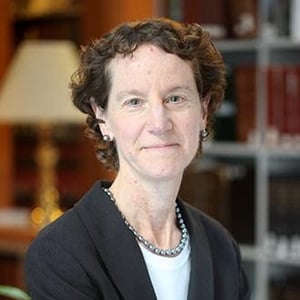
Partner, Arnold & Porter
Debbie Feinstein heads the firm's Global Antitrust group, and brings a wealth of experience to her practice in advising clients on a range of antitrust challenges before US antitrust authorities. She recently re-joined the firm from the US Federal Trade Commission (FTC), where she was Director of the Bureau of Competition. In that capacity, she was responsible for supervising the investigation and enforcement of the US antitrust laws against anticompetitive mergers and conduct. During her tenure from 2013 to 2017, the FTC had substantial litigation success and a number of major merger wins, including challenges to Sysco Corp.'s acquisition of rival US Foods Inc., and Staples Inc.'s merger with Office Depot Inc. She had previously served at the FTC from 1989 to 1991 as Assistant to the Director of the Bureau of Competition and Attorney Advisor.

Senior Judge, United States Court of Appeals, District of Columbia Circuit
Circuit Judge Douglas H. Ginsburg was appointed to the United States Court of Appeals for the District of Columbia in 1986. After receiving his B.S. from Cornell University in 1970, and his J.D. from the University of Chicago Law School in 1973, he clerked on the D.C. Circuit and for Justice Thurgood Marshall on the United States Supreme Court. Thereafter, Judge Ginsburg was a professor at the Harvard Law School, the Deputy Assistant and then Assistant Attorney General for the Antitrust Division of the Department of Justice, as well as the Administrator of the Office of Information and Regulatory Affairs in the Office of Management and Budget. Concurrent with his service as a federal judge, Judge Ginsburg has taught at the University of Chicago Law School and the New York University School of Law. Judge Ginsburg is currently a Professor of Law at the George Mason University and a visiting professor at University College London, Faculty of Laws.
Judge Ginsburg is the Chairman of the International Advisory Board of the Global Antitrust Institute at the Law and Economics Center of the George Mason University School of Law. He also serves on the Advisory Boards of: Competition Policy International; the Harvard Journal of Law and Public Policy; the Journal of Competition Law and Economics; the Journal of Law, Economics & Policy; the Supreme Court Economic Review; the University of Chicago Law Review; the New York University Journal of Law and Liberty; and, at University College London, both the Centre for Law, Economics and Society and the Jevons Institute for Competition Law and Economics.
In 2020, Judge Ginsburg was the 11th recipient of the John Sherman Award, presented by the Antitrust Division of the Department of Justice in recognition of the awardee’s Lifetime Contributions to Antitrust Law and Policy.
In 2014, Judge Ginsburg received the Lifetime Achievement Award given annually by the Global Competition Review.
He is the author or co-author of several books and more than 100 articles on competition and regulation, including, most recently, Growing Convergence: The Limited Role of Antitrust in Standard Essential Patent Disputes, in CPI Antitrust Chronicle, Summer 2021, Vol. 1, No. 2.

James G. Dinan University Professor, Carey Law School, University of Pennsylvania
Herbert Hovenkamp is a Fellow of the American Academy of Arts and Sciences, and in 2008 won the Justice Department’s John Sherman Award for his lifetime contributions to antitrust law. In 2012 he served on the ABA’s Committee to advise the President-elect on antitrust matters. His principal writing includes The Opening of American Law: Neoclassical Legal Thought, 1870-1970 (Oxford, 2015); Antitrust Law (formerly with Phillip E. Areeda and Donald F. Turner) (22 vols., Aspen 2008-18); Principles of Antitrust (West, 2017); Creation Without Restraint: Promoting Liberty and Rivalry in Innovation (Oxford, 2012, with Bohannan); The Making of Competition Policy (Oxford, 2012, with Crane); The Antitrust Enterprise: Principle and Execution (Harvard, 2006); Federal Antitrust Policy: The Law of Competition and Its Practice (West, 5th ed. 2015); IP and Antitrust (2 vols., Aspen, 2017, with Janis, Lemley, Leslie, and Carrier); and Enterprise and American Law, 1836-1937 (Harvard, 1991). He has also co-authored casebooks in antitrust, property law, and a free open source casebook on innovation and competition policy. He has consulted on numerous antitrust cases for various government entities and private plaintiffs. He has two sons.

Partner, Litigation Department, Paul Hastings
Michael Murray is co-chair of the Antitrust and Competition practice at Paul Hastings and represents clients in high-stakes mergers and acquisitions and antitrust litigation and investigations. Based in the firm’s Washington, D.C. office, Michael is Chambers ranked and brings significant government antitrust and competition experience, having most recently served as the principal deputy assistant attorney general in the Antitrust Division at the Department of Justice (DOJ), where he oversaw the work of approximately 350 lawyers and 50 economists. In that capacity, Michael supervised DOJ’s merger investigations, conduct matters and litigation for several years.
Michael is the rare antitrust lawyer who maintains both an active merger control practice and a bustling litigation practice. In 2025, for example, he shepherded over $65 billion of transactions through global merger control regimes, including a litigated merger challenge in the U.S., while also representing over a dozen clients in major antitrust litigation. In that year, he won awards for both his merger work and his litigation matters. Chambers USA describes Mike for having “an encyclopedic knowledge of antitrust law [who] can recite different issues for different circuits.”
Michael also is a partner in the Appellate, Regulatory and Complex Litigation practices at Paul Hastings. He brings significant government experience to a practice consisting of preparing and litigating challenges to agency rulemaking, adjudication or other activity, having served as an associate deputy attorney general at DOJ, where he oversaw the Civil Division’s defense of high-profile rulemaking challenges and other agency actions. Earlier in his career, Michael clerked for the Honorable Justice Anthony M. Kennedy of the U.S. Supreme Court and the Honorable Judge Diarmuid F. O'Scannlain of the U.S. Court of Appeals for the Ninth Circuit. He also served as an AUSA for the U.S. Attorney's Office for the Eastern District of Virginia.
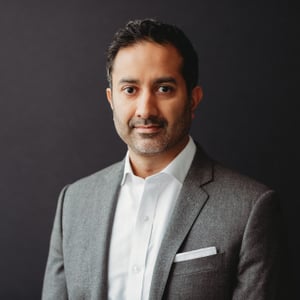
Antitrust Partner, White & Case
Rahul Rao is a partner in the Global Antitrust Practice at White & Case and the former Deputy Director of the Federal Trade Commission’s Bureau of Competition. He advises clients on merger clearance, government investigations, antitrust litigation, and regulatory strategy, with particular depth in healthcare, life sciences, private equity, retail, and labor markets.
At the FTC, Rahul led major merger and conduct investigations, supervised enforcement in critical sectors, and helped shape landmark policy initiatives, including the revised Merger Guidelines and the Commission’s noncompete rulemaking. Earlier, he helped establish the Washington State Attorney General’s Antitrust Division as a national leader in labor market competition enforcement.
Having served on both the federal and state enforcement front lines, Rahul brings clients a unique understanding of agency priorities, risk profiles, and strategies for navigating today’s increasingly dynamic antitrust environment.
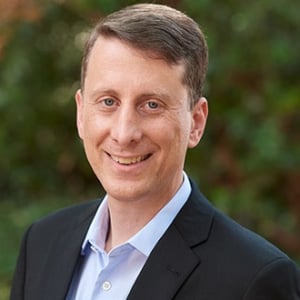
Carolyn Craig Franklin Chair in Law; Professor of Law and Business; Affiliate Professor of Business, USC Gould School of Law and Marshall School of Business
D. Daniel Sokol is the Carolyn Craig Franklin Chair in Law and a Professor of Law and Business at the USC Gould School of Law and Marshall School of Business (marketing department). He holds a courtesy appointment in the Department of Economics. He also serves as faculty director of the Center for Transnational Law and Business and the co-director of the USC Marshall Initiative on Digital Competition. Additionally, in a part time capacity, he serves as Senior Advisor at White & Case LLP.
Professor Sokol is among the top 10 most cited antitrust law professors in the past five years. He focuses his teaching and scholarship on complex business issues from early stage start-ups to multinational businesses and the issues that businesses face regarding competition: antitrust, data breaches, corporate governance, digital platforms, compliance, innovation, M&A, digital transformation, and global business regulation.
He is a member of the American Law Institute. He also serves as academic advisor to the United States Chamber of Commerce and as a non-governmental Advisor to the International Competition Network. His work has appeared in a variety of journals: Strategic Management Journal, Journal of Law and Economics, Journal of Economics & Management Strategy, Harvard Business Review, Sloan Management Review, Michigan Law Review and Northwestern Law Review, among others.
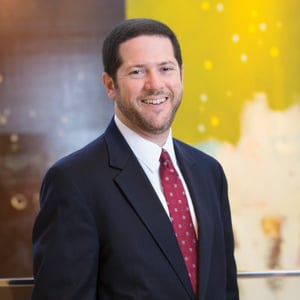
Partner, Co-chair of the Litigation & Trial Practice Group, Alston & Bird LLP
Adam Biegel is co-chair of Alston & Bird’s Litigation & Trial Practice Group and former co-chair of its Antitrust Team. He has substantial experience representing clients on antitrust counseling and litigation matters, including those involving government and internal investigations, mergers and joint ventures, pricing and distribution, compliance counseling and training, pre-merger reviews under the Hart-Scott-Rodino (HSR) Act, and multidistrict litigation. He regularly represents clients before the U.S. Department of Justice (DOJ) Antitrust Division, Federal Trade Commission (FTC) and state attorneys general, and in federal courts.
Adam is recognized for his antitrust experience by Chambers USA and selected to The Best Lawyers in America®, including his recognition as “Lawyer of the Year” for Antitrust Litigation in Washington, D.C., in 2022. He is a longtime member of the American Bar Association Antitrust Law Section’s leadership, currently serving as co-chair of its In-House Counsel Task Force and previously having served on its board, and chaired its Corporate Counseling Committee, Long Range Planning Committee, and Spring Meeting conference. He also serves on the board of the Federalist Society’s antitrust practice group.
Adam served as a law clerk to the Hon. Frank M. Hull, U.S. Court of Appeals for the Eleventh Circuit. Before attending law school, he worked as a newspaper reporter in Arkansas and on the legislative staff of U.S. Senator Orrin Hatch.
Partner in the Antitrust & Competition Practice Group, Sheppard Mullin
John’s practice focuses on civil and criminal antitrust matters, including mergers & acquisitions, strategic counseling and compliance, and global cartel investigations, where he represents clients before the Department of Justice Antitrust Division, Federal Trade Commission, and international and state antitrust enforcement authorities.
Prior to private practice, John was in the Mergers I Division of the Federal Trade Commission’s Bureau of Competition for several years. While with the FTC, he investigated, challenged, and negotiated settlements in a number of potentially anti-competitive business combinations in the aerospace, technology, consumer products, defense, healthcare, and pharmaceutical industries and received an Award for Meritorious Service for work on merger litigation.
John frequently speaks and writes on antitrust issues. He was the lead editor on the American Bar Association, Section of Antitrust Law’s Energy Antitrust Handbook, and has held leadership positions in that organization.
Partner, Boies Schiller Flexner LLP
Rich’s primary practice area is complex litigation, with a particular emphasis on antitrust matters. He frequently represents plaintiffs and defendants in private litigation, in addition to representing parties and third parties in the context of DOJ, FTC, and State Attorney General investigations and litigation. He also advises clients regarding transactions—both their own and those of others—including mergers or acquisitions that may be subject to review by federal, state, or international antitrust authorities. His experience includes both criminal and civil antitrust jury trials, and he is relied upon by clients for clear and practical guidance shaped by years of experience in antitrust enforcement and private practice.
Rich rejoined the firm in December 2013 after serving for four years as the Director of the Bureau of Competition at the Federal Trade Commission. He directed the FTC’s antitrust enforcement activity during a period when approximately 80 enforcement actions were initiated in a wide variety of industries. Major matters included, among others, two victories in the Supreme Court (involving pay-for-delay and state action), successful challenges to hospital mergers, and Intel and Google consent orders. He also participated directly in drafting and implementing the 2010 Horizontal Merger Guidelines.
Prior to serving as Bureau Director, Rich was a partner in the firm’s Washington D.C. office from 2001 to 2009. From October 1998 to June 2001, he served as an Assistant Director of the Bureau of Competition, in charge of the Health Care Services and Products Division. The work of that Division focused on antitrust enforcement in the health care industry, including anticompetitive practices and mergers involving health care providers, and anticompetitive conduct in the pharmaceutical industry.
Before initially entering private practice in 1985, Rich worked as a trial attorney in the Antitrust Division of the U.S. Department of Justice, and also served as Acting Deputy Director of the Division’s Office of Policy Planning and as Acting Assistant Chief of the Division’s Energy Section.
Research Manager, American Economic Liberties Project
Laurel manages AELP’s team of policy analysts and coordinates with expert advisors and fellows to develop original research and policy briefs. An experienced attorney, she also frequently writes and speaks about high profile court cases that impact the economic liberties of the American people.
In private practice, Laurel represented firms of all sizes– from startups to Fortune 500 companies– spanning a wide variety of industries, from software to generic pharmaceuticals to semiconductors. At Comar Mollé LLP, a boutique firm that specializes in serving startups and investors, she provided strategic counseling on employment, privacy, and transactional matters. At Goodwin Procter LLP, a global biglaw firm, she litigated high stakes patent and complex commercial disputes and counseled clients on technology transactions.
Before joining AELP, Laurel researched competition policy issues for the Balanced Economy Project in Europe. Earlier in her career, she analyzed legislation promoting access to essential medicines at the World Health Organization, coordinated patent law training workshops for Vietnamese research institutions through the Public Intellectual Property Resource for Agriculture, and developed public outreach materials for the American Association for the Advancement of Science. She has also developed and taught courses on topics ranging from legal practice skills to emerging policy issues.
Partner, Global Chair, Antitrust and Competition, Fried Frank
Bernard A. Nigro Jr. (“Barry”) is Global Chair of Fried Frank's Antitrust and Competition Department. Barry previously served as the Department of Justice’s Principal Deputy Assistant Attorney General for Antitrust and the Federal Trade Commission’s Deputy Director for the Bureau of Competition.
During his almost 40 years of practice and government service, Barry has handled hundreds of civil and criminal matters in dozens of industries ranging from concrete to high tech and everything in between. For example, Barry has been involved in some of the largest M&A transactions during the past decade, served as the antitrust compliance monitor in United States v. Apple Inc. (S.D.N.Y. 2013), worked on a variety of cartel matters, and counseled on complex compliance and litigation matters. While in government, Barry supported the rollout of the Procurement Collusion Strike Force, an initiative to modernize the merger review process, and revisions to the merger guidelines and remedies policies.
Barry is recognized as a leader by Chambers USA: America’s Leading Lawyers for Business, a “Leading Lawyer” by Legal 500 in Antitrust: Merger Control, and a “Global Leader” by Who’s Who Legal: Competition. Clients say "Barry is very adept at getting deals across the finish lines. He knows the inside game very well," “he is a skilled and knowledgeable antitrust lawyer with a very practical approach,” and “knows how to marry business and antitrust.” Other clients describe him as “the rare combination of DOJ and FTC expertise that is invaluable to clients who need to understand the agencies’ latest thinking” and note that “his decades of experience generally, and recent experience as the number-two lawyer in the Antitrust Division, make him a knowledgeable and skilled counselor on a broad array of government enforcement matters.” Clients say he is “fabulous” and “figures out quickly what’s important and focuses energies there.” Clients also report that “[n]o one compares to Barry Nigro in terms of goodwill” and note his “years of experience make his counsel and perspective, particularly seeing what is coming down the road, exceptional.”
Barry’s commitment to public service includes having served as Vice Chair of the American Bar Association’s Section of Antitrust Law (numbering over 10,000 members from across the globe), President of the George Washington University Law Alumni Association, a member of the Executive Committee of Higher Achievement’s DC President’s Council, a member of St. Albans School’s Development Committee, a member of Bishop Ireton High School’s Campaign Leadership Committee, and a member of Georgetown University’s Class of 1982 Executive Committee, among many other roles.
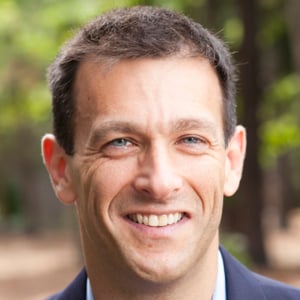
Alexander Hamilton Professor of Business Law, George Washington University Law School
Barak Richman’s primary research interests include the economics of contracting, new institutional economics, antitrust, and healthcare policy. His work has been published in the Columbia Law Review, the University of Pennsylvania Law Review, Law and Social Inquiry, the New England Journal of Medicine, the Journal of the American Medical Association, and Health Affairs. In 2006, he co-edited with Clark Havighurst a symposium volume of Law and Contemporary Problems entitled "Who Pays? Who Benefits? Distributional Issues in Health Care,” and his book Stateless Commerce was published by Harvard University Press in 2017.
Professor Richman represented the NFL Coaches Association in an amicus curiae brief in American Needle v. The Nat’l Football League, which was argued before the U.S. Supreme Court in January 2010 and again in Brady v. The Nat’l Football League in 2011. His recent work challenging illegal practices by Rabbinical Associations was featured in the New York Times. And in 2020, he was a member of the Working Group on Platform Scale at Stanford University’s Program on Democracy and the Internet that proposed middleware as a solution to stem the economic and political power of dominant internet platforms.
Professor Richman is also a Senior Scholar at the Clinical Excellence Research Center at the Stanford University School of Medicine and is currently a special counsel for competition policy at the Department of Health and Human Services. He won Duke Law School's Blueprint Award in 2005 and was named Teacher of the Year in 2010. He has had visiting appointments at Columbia, Harvard, and Stanford.
Professor Richman has an AB, magna cum laude, from Brown University, a JD, magna cum laude, from Harvard Law School, and a PhD from the University of California, Berkeley, where he studied under Nobel Laureate in Economics Oliver Williamson. He served as a law clerk to Judge Bruce M. Selya of the United States Court of Appeals for the First Circuit, and from 1994-1996 he handled international trade legislation as a staff member of the United States Senate Committee on Finance, then chaired by Senator Daniel Patrick Moynihan
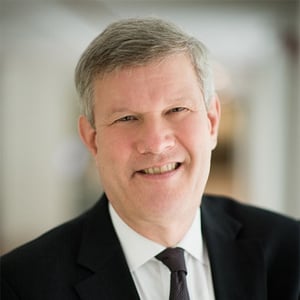
Senior Fellow and Director, Center for the Economics of the Internet, Hudson Institute
Harold Furchtgott-Roth is a senior fellow and director of the Center for the Economics of the Internet at Hudson Institute.
Mr. Furchtgott-Roth founded Furchtgott-Roth Economic Enterprises in 2003. He frequently comments on issues related to the communications sector of the economy. From 2001 to 2003, he was a visiting fellow at the American Enterprise Institute where he published A Tough Act to Follow, chronicling the difficulties implementing the Telecommunications Act of 1996.
From 1997 through 2001, Mr. Furchtgott-Roth served as a commissioner of the Federal Communications Commission. In that capacity, he served on the Joint Board on Universal Service. He is one of the few economists to have served as a federal regulatory commissioner, and the only one to have served on the Federal Communications Commission.
Before his appointment to the FCC, he was chief economist for the House Committee on Commerce and a principal staff member on the Telecommunications Act of 1996. Earlier in his career, he was a senior economist with Economists Incorporated and a research analyst with the Center for Naval Analyses.
Mr. Furchtgott-Roth is a member of the Washington Legal Foundation’s Legal Policy Advisory Board. He is the coauthor of three books: Cable TV: Regulation or Competition, with R.W. Crandall; Economics of A Disaster: The Exxon Valdez Oil Spill, with B.M. Owen et al; and International Trade in Computer Software, with S.E. Siwek.

Revisiting Philadelphia National Bank: The Structural Presumption and the Future of Merger Review
Debbie Feinstein, Douglas H. Ginsburg, Herbert Hovenkamp, Michael Murray, Rahul Rao, D. Daniel Sokol
The 1963 Supreme Court case United States v. Philadelphia National Bank established a "structural presumption": if a merger...
Time for a Checkup: Evaluating the Withdrawal of the Health Care Antitrust Guidelines
Adam Biegel, John D. Carroll, Richard A. Feinstein, Laurel Kilgour, Bernard A. Nigro, Barak D. Richman
In 1996, the FTC and DOJ issued Statements of Antitrust Enforcement Policy in Health Care. ...
Topics
Duopoly Is Not A Dirty Word
It is often said that competition and regulation are substitutes. Where there is competition,...
Assessing Competition in the Wireless Sector: How DoJ Can Clear Away the Fog from Proposed Mergers
Harold W. Furchtgott-Roth
I. Introduction and Background Over the past twenty years, the American wireless sector has grown...