

Professor, University of Southern California Gould School of Law
Jonathan Barnett is the Torrey H. Webb Professor of Law at the Gould School of Law, University of Southern California. He founded and currently directs the USC Media, Entertainment and Technology Law Program. Barnett specializes in intellectual property, contracts, antitrust, and corporate law. Barnett has published in the Harvard Law Review, Yale Law Journal, Journal of Legal Studies, Review of Law & Economics, Journal of Corporation Law and other scholarly journals.
He joined USC Law in fall 2006 and was a visiting professor at New York University School of Law in fall 2010. Prior to academia, Barnett practiced corporate law as a senior associate at Cleary Gottlieb Steen & Hamilton in New York, specializing in private equity and mergers and acquisitions transactions. He was also a visiting assistant professor at Fordham University School of Law in New York. A magna cum laude graduate of University of Pennsylvania, Barnett received a MPhil from Cambridge University and a JD from Yale Law School.
Taft, Stettinius & Hollister Professor of Law, University of Minnesota Law School
Professor Thomas F. Cotter joined the University of Minnesota Law School faculty in 2006. He received his B.S. and M.S. degrees in economics from the University of Wisconsin-Madison, and in 1987 graduated magna cum laude from the University of Wisconsin Law School, where he served as Senior Articles Editor of the Wisconsin Law Review and was elected to the Order of the Coif.
From 1987-89, Professor Cotter clerked for the Honorable Lawrence W. Pierce, United States Court of Appeals for the Second Circuit. He practiced law at Cravath, Swaine & Moore in New York City from 1988-90, and at Jenner & Block in Chicago from 1990-94. From 1994-2005, he taught at the University of Florida College of Law, where he held a University of Florida Research Foundation Professorship and directed the school’s Intellectual Property Law Program. From 2005-06, he was a Professor of Law at Washington and Lee University School of Law. In 2007, he was named to a two-year Solly Robins Distinguished Research Fellowship at the University of Minnesota Law School, and in 2008 was named to the Taft, Stettinius & Hollister Chair in Law.
Professor Cotter’s principal research and teaching interests are in the fields of domestic and international intellectual property law, antitrust, and law and economics. He is the author of six books—Patent Wars: How Patents Impact Our Daily Lives (Oxford Univ. Press, 2018); Trademarks, Unfair Competition, and Business Torts (with Barton Beebe, Mark A. Lemley, Peter S. Menell, and Robert P. Merges) (Wolters Kluwer 2d ed., 2016; 1st ed., 2011); Law and Economics: Positive, Normative, and Behavioral Perspectives (with Jeffrey L. Harrison) (3d ed., Thomson West, 2013); Comparative Patent Remedies: A Legal and Economic Analysis (Oxford University Press, 2013); and Intellectual Property: Economic and Legal Dimensions of Rights and Remedies (with Roger D. Blair) (Cambridge University Press 2005).
Altogether he has authored or coauthored over 60 other scholarly works, including articles in the California Law Review, the Georgetown Law Journal, the Iowa Law Review, the Minnesota Law Review, and the University of Illinois Law Review. He also publishes a blog, ComparativePatentRemedies.com, on the law (both foreign and domestic) and economics of patent remedies. Most recently, the Innovators Network Foundation, in partnership with ACT|The App Association, appointed Professor Cotter to a one-year Intellectual Property Fellowship.
Senior Counsel for Law and Policy, Committee for Justice
Jeff is a registered patent attorney and an intellectual property and innovation policy professional with a unique combination of training and real-world experience. Jeff is also currently a PhD candidate at the University of Pittsburgh Graduate School of Public and International Affairs (GSPIA). His dissertation is entitled “An Inquiry into the Nature and Causes of American Innovation: An Austrian Economics Perspective.”
Jeff maintains an active intellectual property law practice in the life sciences space. While counseling clients and working on his dissertation and other scholarship, Jeff remains active in the policy analysis and advocacy space. He currently serves as the President of the Association for American Innovation and a member and former Chair of the Public Policy Legal Task Force (PPLTF) for the Association of University of Technology Managers (AUTM).
Jeff has a bachelor’s degree chemical and biomedical engineering with concentrations in molecular biology and fermentation technology and from Carnegie Mellon. He also has a master’s degree in industrial administration (business) from Carnegie Mellon where he concentrated on international management, marketing and finance. He earned his law degree from the Duquesne University School of Law with a focus on intellectual property law.

Former Chief Judge, United States Court of Appeals for the Federal Circuit
Judge Michel served for more than 22 years on the Federal Circuit, retiring on May 31, 2010. From December 25, 2004 until his retirement, he also discharged the duties of Chief Judge of this national court, serving simultaneously on the U.S. Judicial Conference -- the Judiciary's governing body -- and by appointment of the Chief Justice on its seven-judge Executive Committee.
He judged several thousand appeals and authored more than 800 opinions, one third concerning intellectual property law. Intellectual Asset Management magazine inducted him into its Hall of Fame and he was designated one of the 50 most influential leaders in intellectual property law in the world. His contributions were also recognized by lifetime achievement and similar awards by the American Intellectual Property Law Association (AIPLA); Intellectual Property Owners Education Foundation (IPO); the American Bar Association's Intellectual Property Section; Managing Intellectual Property magazine; the Sedona Conference; the Patent and Trademark Office Society (PTOS); the New York, Chicago, Philadelphia, and Los Angeles Intellectual Property Law Associations; and the William C. Connor, the Giles S. Rich, and the Richard Linn Intellectual Property American Inns of Court. In 2010 the Los Angeles IP Inn was renamed in his honor as the Paul R. Michel IP Inn.
Judge Michel received the Jefferson Medal, the Eli Whitney Award, and the Katz-Kiley Prize as well as Honorary Doctor of Law degrees from the Catholic University of America and the John Marshall Law School. He is a lifetime Member of Honore of FICPI, the international association of private practitioners of intellectual property law. Williams College granted him the Kellogg Award for "outstanding leadership in law and public service."
Judge Michel has written numerous articles on patent law and advocacy, taught related courses and master classes at George Washington University, the University of Akron, and John Marshall law schools, serving as well on their IP advisory boards and on counterpart boards at the universities of California (Berkley), Washington, and Maryland. He co-authored a casebook, Patent Litigation and Strategy (West, 1999) and an August 2010 editorial in the New York Times on strengthening the patent system to promote prosperity and create new jobs.
A frequent speaker at conferences and law schools during his judicial tenure and since, he retired from a lifetime appointment to be free to speak out on the national need for better patent policy and protection of intellectual property and the vital, unmet resource needs of the courts, the PTO, the International Trade Commission, and other IP-related agencies. He was appointed Distinguished Scholar in Residence by IPO, following his retirement. Judge Michel also consults for law firms and their clients in intellectual property litigations, conducting moot courts, mock trials, case evaluations, editing briefs, advising on strategy and providing mediation and arbitration services.
Executive Director, High Tech Inventors Alliance
David W. Jones is the Executive Director of the High Tech Inventors Alliance. Prior to HTIA, David was Assistant General Counsel for Patent Policy at Microsoft, where he spent more than a decade handling both domestic and international patent issues. He previously held multiple positions on Capitol Hill, most recently as antitrust and IP counsel to Senator Orrin Hatch on the Senate Judiciary Committee. David clerked for Chief Judge Sharon Prost on the Federal Circuit and Judge Will Garwood on the Fifth Circuit and is a graduate of the University of Virginia School of Law.
Former Chief Judge, United States Court of Appeals for the Federal Circuit
Judge Michel served for more than 22 years on the Federal Circuit, retiring on May 31, 2010. From December 25, 2004 until his retirement, he also discharged the duties of Chief Judge of this national court, serving simultaneously on the U.S. Judicial Conference -- the Judiciary's governing body -- and by appointment of the Chief Justice on its seven-judge Executive Committee.
He judged several thousand appeals and authored more than 800 opinions, one third concerning intellectual property law. Intellectual Asset Management magazine inducted him into its Hall of Fame and he was designated one of the 50 most influential leaders in intellectual property law in the world. His contributions were also recognized by lifetime achievement and similar awards by the American Intellectual Property Law Association (AIPLA); Intellectual Property Owners Education Foundation (IPO); the American Bar Association's Intellectual Property Section; Managing Intellectual Property magazine; the Sedona Conference; the Patent and Trademark Office Society (PTOS); the New York, Chicago, Philadelphia, and Los Angeles Intellectual Property Law Associations; and the William C. Connor, the Giles S. Rich, and the Richard Linn Intellectual Property American Inns of Court. In 2010 the Los Angeles IP Inn was renamed in his honor as the Paul R. Michel IP Inn.
Judge Michel received the Jefferson Medal, the Eli Whitney Award, and the Katz-Kiley Prize as well as Honorary Doctor of Law degrees from the Catholic University of America and the John Marshall Law School. He is a lifetime Member of Honore of FICPI, the international association of private practitioners of intellectual property law. Williams College granted him the Kellogg Award for "outstanding leadership in law and public service."
Judge Michel has written numerous articles on patent law and advocacy, taught related courses and master classes at George Washington University, the University of Akron, and John Marshall law schools, serving as well on their IP advisory boards and on counterpart boards at the universities of California (Berkley), Washington, and Maryland. He co-authored a casebook, Patent Litigation and Strategy (West, 1999) and an August 2010 editorial in the New York Times on strengthening the patent system to promote prosperity and create new jobs.
A frequent speaker at conferences and law schools during his judicial tenure and since, he retired from a lifetime appointment to be free to speak out on the national need for better patent policy and protection of intellectual property and the vital, unmet resource needs of the courts, the PTO, the International Trade Commission, and other IP-related agencies. He was appointed Distinguished Scholar in Residence by IPO, following his retirement. Judge Michel also consults for law firms and their clients in intellectual property litigations, conducting moot courts, mock trials, case evaluations, editing briefs, advising on strategy and providing mediation and arbitration services.

Professor of Law, Antonin Scalia Law School, George Mason University
Adam Mossoff is Professor of Law at Antonin Scalia Law School, George Mason University. He has published extensively on why patents, copyrights, and other intellectual property rights have been—and should be—legally secured to innovators and creators as property rights. His scholarship has been relied on by the United States Supreme Court, by lower federal courts, and by U.S. federal agencies. He has been invited to testify numerous times before the U.S. Senate and the House of Representatives on intellectual property legislation. His writings on intellectual property policy have also appeared in the Wall Street Journal, New York Times, Forbes, Investors Business Daily, and in other media outlets. His journal articles can be downloaded here.
Professor Mossoff is a longstanding member of the Executive Committee of the Intellectual Property Practice Group of the Federalist Society, on which he served as Chairperson from 2016-2018, and he is Chair of the Intellectual Property Working Group of the Regulatory Transparency Project of the Federalist Society. He is a Senior Fellow and Chair of the Forum for Intellectual Property at the Hudson Institute, a Visiting Intellectual Property Fellow at the Heritage Foundation, and a member of the Board of Directors of the Center for Intellectual Property Understanding. He is a member of the Intellectual Property Rights Policy Committee of ANSI and he has served as Chair and Vice-Chair of the Intellectual Property Committee of the IEEE-USA, on which he remains a member in good standing.

Partner, Patrick Doerr
Mr. Rando has represented clients in matters involving computer hardware and software, silicon chip manufacturing, biotechnology, medical devices, pharmaceuticals, chemical compounds, food additives, alternative energy, AI, autonomous vehicles, blockchain, consumer electronics, communications, internet, and e-commerce. He has appeared in courts across the country, including the Southern and Eastern Districts of New York and multiple U.S. Courts of Appeals.
As appellate counsel, Mr. Rando has served as counsel of record or co-counsel in more than 30 amicus briefs filed before the U.S. Supreme Court and Federal Circuit on issues of patent law, statutory interpretation, separation of powers, and constitutional law. Noteworthy filings include eBay Inc. v. MercExchange (2006), Oil States v. Greene’s Energy (2017), American Axle v. Neapco (2021), Amgen v. Sanofi (2023), and Cellect v. Vidal (2024).
Mr. Rando is a Fellow of the Academy of Court-Appointed Masters, having served by judicial appointment as Special Master in numerous complex patent cases, including multi-day Markman hearings and post-discovery proceedings. He also serves as a court-appointed Mediator and Neutral in both patent and commercial disputes.
He has played an active role in judicial and legislative engagement. Mr. Rando co-developed and conducted lecture series for the SDNY and EDNY Patent Pilot Program Judges and Clerks, covering the America Invents Act and Section 101 eligibility post-Alice and Mayo. He represented both the Federal Bar Association (FBA) and New York Intellectual Property Law Association (NYIPLA) at the Tillis/Coons Section 101 Patent Reform Roundtable, and submitted written testimony to the U.S. Senate Judiciary Committee in 2019.
Mr. Rando is a former president of the NYIPLA (2023–2024) and has held nearly every leadership position in the organization. He also served as Chair of the FBA’s Intellectual Property Law Section and was a founding member and president of the FBA’s EDNY Chapter. He is a founding member of the Association of Amicus Counsel, and an active contributor to the Federalist Society IP Practice Group Executive Committee.
He frequently lectures at CLE programs, universities, and legal associations on IP, constitutional law, and appellate advocacy. He has been quoted extensively in publications such as Law360, Bloomberg Law, WIPR, and National Law Journal. His scholarly publications include articles in The Federal Lawyer, Touro Law Review, and IPWatchdog.

Partner, Johns & Counsel PLLC
Chris Johns advocates for people and causes he believes in. He represents individuals and businesses as they confront powerful interests on the other side: property owners in eminent-domain cases, people and organizations seeking to exercise constitutional rights, and others with a just cause in a civil trial or appeal.
Chris has won cases for clients in courts across the country—from state and federal trial and appellate courts to the United States Supreme Court. He is also an adjunct professor at the University of Texas School of Law, where he teaches the course on eminent domain and private-property rights.
Chris grew up and attended public schools in Buckhannon, West Virginia. He went to Brigham Young University on academic and piano scholarships and, after his first year of college, served for two years as a full-time volunteer for his church in Oakland and San Francisco. Chris spent most of his time in neighborhoods unlike anything he’d ever seen in rural West Virginia. Still, he can’t imagine a better education: speaking with thousands of people about life, hopes, fears, and spiritual paths; becoming fluent in Spanish; observing communities that thrived and others that failed; and making friends with individuals from many countries and many walks of life, from gang members to high-level government officials. Chris decided during his volunteer service that he eventually wanted to become a lawyer and advocate. He studied English upon return to BYU, graduating magna cum laude in 1997.
Chris received his J.D. with high honors from the University of Texas School of Law. There, he was editor in chief of the Texas Law Review, a member of the Chancellors honor society, and a member of the Order of the Coif. He received Dean’s Achievement Awards in several of his classes. After graduation, Chris clerked for the Honorable Phyllis A. Kravitch of the United States Court of Appeals for the Eleventh Circuit.
He then attended the University of Oxford, where he received a postgraduate law degree and authored a frequently cited dissertation analyzing the relationship between property and the law of obligations.
Chris entered private practice at Weil, Gotshal & Manges LLP, where he worked with former Texas Solicitor General Greg Coleman in the firm’s national Supreme Court and appellate practice. He and three of his law-school classmates founded Johns Marrs Ellis & Hodge LLP, a trial and appellate boutique, and practiced together for nearly nine years.
In March 2018, Chris opened Johns & Counsel PLLC with a small, elite team dedicated to the clients and causes that mean most to him and the other members of the firm.
Chris appears on the 2018 and 2019 list of The Best Lawyers in America, a peer-selected honor. Texas Super Lawyers Magazine named him to its 2014, 2015, 2016, 2017, and 2018 lists of “Super Lawyers” and to its 2013 and 2014 lists of “Rising Stars.” He is also a barrister in the Lloyd Lochridge American Inn of Court. Chris has testified about property rights on invitation from the Texas Legislature, is a regular speaker at national and state CLE conferences, has received multiple pro bono service awards, helped train UT’s moot-court teams, and has appeared as a legal commentator on television news programs.
Chris is licensed in Texas and New York and is admitted to practice before the Supreme Court of the United States, the U.S. Courts of Appeals for the Fourth, Fifth, and Federal Circuits, the U.S. Court of Appeals for the Federal Circuit, the U.S. District Courts for the Eastern, Southern, and Western Districts of Texas, the U.S. Court of Federal Claims, several other federal courts across the country, and all state courts in Texas.
Partner, Foley & Lardner LLP
Jeffrey A. Simmons is a partner and member of Foley & Lardner’s Business Litigation & Dispute Resolution Practice, where he focuses on complex litigation matters. Mr. Simmons was lead counsel in one of the largest insurance rehabilitations in U.S. history, In the Matter of the Rehabilitation of Segregated Account of Ambac Assurance Corporation, Case No. 10-cv-1576 (Dane Co., Wis.). A large portion of his practice is also devoted to trademark, copyright, patent and trade secret disputes. He currently serves on the Seventh Circuit Court of Appeals’ subcommittee responsible for rewriting the circuit’s pattern jury instructions for trademark and copyright cases.
Prior to joining Foley, Mr. Simmons served as a law clerk to the Hon. John W. Reynolds, U.S. District Court for the Eastern District of Wisconsin.
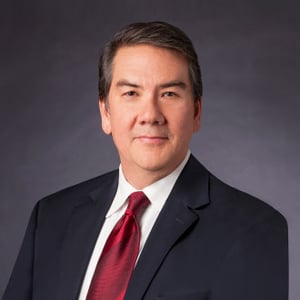
Director of Property Rights Litigation, Pacific Legal Foundation
Robert Thomas is Pacific Legal Foundation’s director of its Property Rights practice group. He is an expert on property rights, takings, land use, and eminent domain issues.
After more than three decades in private practice in Hawaii and California representing property owners in takings, eminent domain, and land use cases, Robert joined PLF’s team of freedom fighters in 2021.
He has litigated cases in both state and federal court. As counsel for the property owners in County of Hawaii v. C&J Coupe Family Limited Partnership, he helped establish the rule that courts are not mere “rubber stamps” when a local government is taking property by eminent domain. Another case, Hamilton ex rel. Lethem v. Lethem, held that a parent’s liberty interest in raising and disciplining his child included a right to fair procedures, including notice and a judicial hearing before the family court could restrict parent-child contact.
Robert is a frequent speaker on property rights, takings, land use, and eminent domain issues nationwide. He also regularly publishes scholarly and practical articles in his area of practice, most recently including, “Hoist the Yellow Flag and Spam® Up: The Separation of Powers Limitation on Hawaii’s Emergency Authority”, 43 U. Haw. L. Rev. 71 (2020) and “Evaluating Emergency Takings: Flattening the Economic Curve”, 29 Wm. & Mary Bill Rts. J. 1145 (2021).
An elected member of the American Law Institute, Robert received his LLM, with honors, from Columbia Law School, where he was a Harlan Fiske Stone Scholar, and his JD from the University of Hawaii School of Law, where he served as editor of the Law Review. He also serves as the inaugural Joseph T. Waldo Visiting Chair in Property Rights Law at William & Mary Law School in Williamsburg, Virginia, where he teaches upper-division courses in eminent domain, land use, property rights, and property law.
When he’s not working, you might find Robert writing and publishing his blog on land use, property, and takings law, inversecondemnation.com, one of the most widely read blogs on those subjects.
Professor, University of Southern California Gould School of Law
Jonathan Barnett is the Torrey H. Webb Professor of Law at the Gould School of Law, University of Southern California. He founded and currently directs the USC Media, Entertainment and Technology Law Program. Barnett specializes in intellectual property, contracts, antitrust, and corporate law. Barnett has published in the Harvard Law Review, Yale Law Journal, Journal of Legal Studies, Review of Law & Economics, Journal of Corporation Law and other scholarly journals.
He joined USC Law in fall 2006 and was a visiting professor at New York University School of Law in fall 2010. Prior to academia, Barnett practiced corporate law as a senior associate at Cleary Gottlieb Steen & Hamilton in New York, specializing in private equity and mergers and acquisitions transactions. He was also a visiting assistant professor at Fordham University School of Law in New York. A magna cum laude graduate of University of Pennsylvania, Barnett received a MPhil from Cambridge University and a JD from Yale Law School.
Taft, Stettinius & Hollister Professor of Law, University of Minnesota Law School
Professor Thomas F. Cotter joined the University of Minnesota Law School faculty in 2006. He received his B.S. and M.S. degrees in economics from the University of Wisconsin-Madison, and in 1987 graduated magna cum laude from the University of Wisconsin Law School, where he served as Senior Articles Editor of the Wisconsin Law Review and was elected to the Order of the Coif.
From 1987-89, Professor Cotter clerked for the Honorable Lawrence W. Pierce, United States Court of Appeals for the Second Circuit. He practiced law at Cravath, Swaine & Moore in New York City from 1988-90, and at Jenner & Block in Chicago from 1990-94. From 1994-2005, he taught at the University of Florida College of Law, where he held a University of Florida Research Foundation Professorship and directed the school’s Intellectual Property Law Program. From 2005-06, he was a Professor of Law at Washington and Lee University School of Law. In 2007, he was named to a two-year Solly Robins Distinguished Research Fellowship at the University of Minnesota Law School, and in 2008 was named to the Taft, Stettinius & Hollister Chair in Law.
Professor Cotter’s principal research and teaching interests are in the fields of domestic and international intellectual property law, antitrust, and law and economics. He is the author of six books—Patent Wars: How Patents Impact Our Daily Lives (Oxford Univ. Press, 2018); Trademarks, Unfair Competition, and Business Torts (with Barton Beebe, Mark A. Lemley, Peter S. Menell, and Robert P. Merges) (Wolters Kluwer 2d ed., 2016; 1st ed., 2011); Law and Economics: Positive, Normative, and Behavioral Perspectives (with Jeffrey L. Harrison) (3d ed., Thomson West, 2013); Comparative Patent Remedies: A Legal and Economic Analysis (Oxford University Press, 2013); and Intellectual Property: Economic and Legal Dimensions of Rights and Remedies (with Roger D. Blair) (Cambridge University Press 2005).
Altogether he has authored or coauthored over 60 other scholarly works, including articles in the California Law Review, the Georgetown Law Journal, the Iowa Law Review, the Minnesota Law Review, and the University of Illinois Law Review. He also publishes a blog, ComparativePatentRemedies.com, on the law (both foreign and domestic) and economics of patent remedies. Most recently, the Innovators Network Foundation, in partnership with ACT|The App Association, appointed Professor Cotter to a one-year Intellectual Property Fellowship.

Associate Dean for Academic Affairs, Austin E. Owen Research Scholar & Professor of Law, The University of Richmond School of Law
Dean Kristen Jakobsen Osenga teaches and writes in the areas of patent law, antitrust, and legislation and regulation. Some of her recent scholarship focuses on standard development organizations, patent eligible subject matter, patent licensing firms, litigation and remedies for patent infringement, and patent law reform. She has written numerous law review articles on these and other topics, as well as book chapters and op eds on various aspects of patent law. Additionally, she has spoken on these issues at many academic conferences and bar events. Dean Osenga is Chief Policy Counselor for the Inventors Defense Alliance, as well as an active member of the Federal Circuit Bar Association and the American Intellectual Property Law Association.
Dean Osenga received a B.S. degree in Biomedical Engineering from the University of Iowa, an M.S. degree in Electrical Engineering from Southern Illinois University – Carbondale, and a J.D. from the University of Illinois College of Law, where she graduated magna cum laude. After law school, she practiced at the law firm of Finnegan, Henderson, Farabow, Garrett, & Dunner LLP, (now Finnegan) where she did patent prosecution and litigation. She then clerked for the Judge Richard Linn of the U.S. Court of Appeals for the Federal Circuit. After clerking, she entered academia, teaching first at Chicago-Kent College of Law and then at the University of Richmond, where she has been since 2006. She has also been a Visiting Professor at Emory University School of Law and at William & Mary School of Law.

Partner, WilmerHale
Tom Saunders' practice focuses on appellate and government and public policy litigation with a particular emphasis on intellectual property. He has extensive experience representing clients in patent and copyright cases and has built a reputation as a leading advocate in high-stakes litigation before the Federal Circuit and Supreme Court. He returned to the firm in 2008 after completing a clerkship for the Honorable Ruth Bader Ginsburg of the United States Supreme Court.
Mr. Saunders also has significant experience in civil litigation involving the government and quasi-governmental entities. He regularly advises clients on constitutional matters, questions of public policy and strategy, and administrative law.

Partner, Kellogg, Huber, Hansen, Todd, Evans & Figel, P.L.L.C.
Aaron M. Panner specializes in antitrust law, Supreme Court and appellate litigation, and telecommunications regulation. His clients include many of the nation’s leading communications and information services companies, which he has represented at all levels of the federal courts and before the Federal Communications Commission. He has also represented leading companies and individuals in high-stakes litigation at the trial and appellate levels. He has successfully briefed multiple motions to dismiss antitrust claims on the pleadings; he has also successfully represented plaintiffs in defeating motions to dismiss. Since 2010, he has served as amicus counsel for the American Psychiatric Association, participating in a range of Supreme Court and appellate cases involving matters of concern to the psychiatric profession.

Laurence A. Tisch Professor of Law and Director, Classical Liberal Institute, New York University School of Law; Senior Fellow, The Civitas Institute, University of Texas at Austin
Richard A. Epstein is the inaugural Laurence A. Tisch Professor of Law at NYU School of Law. Prior to his joining the faculty, he was a visiting law professor at NYU from 2007 through 2009. He served as the Peter and Kirstin Bedford Senior Fellow at the Hoover Institution from 2000 to 2024. Since 2024 to the present he is a senior lecturer at the Civitas Institute at the University of Texas—Austin. Epstein is also the James Parker Hall Distinguished Service Professor of Law Emeritus and a senior lecturer at the University of Chicago. His initial law school appointment was at the University of Southern California from 1968 to 1972. Epstein received an LL.D., h.c. from the University of Ghent, 2003. He has been a member of the American Academy of Arts and Sciences since 1985 and was a Senior Fellow of the Center for Clinical Medical Ethics at the University of Chicago Division of Biological Sciences, also from 1983. to 2022 He served as editor of the Journal of Legal Studies from 1981 to 1991, and of the Journal of Law and Economics from 1991-2001. From 2001 to 2010 he was a director of the John M. Olin Program in Law and Economics at the University of Chicago.
His newest book, The Myth of Birthright Citizenship: What the Fourteenth Amendment Really Says was published in 2026 (Encounter Books). Prior to that he has published many books including, The Dubious Morality of the Modern Administrative State (Roman & Littlefield 2020).Earlier he published th Classical Liberal Constitution: The Uncertain Quest for Limited Government (Harvard 2014) iHis previous books include Design for Liberty: Private Property, Public Administration and the Rule of Law (Harvard 2011); The Case Against the Employee Free Choice Act (Hoover 2009); Supreme Neglect: How to Revive the Constitutional Protection of Property Rights (Oxford 2008); Antitrust Decrees in Theory and Practice: Why Less is More (AEI 2007); Overdose: How Excessive Government Regulation Stifles Pharmaceutical Innovation (Yale University Press. 2006); How Progressives Rewrote the Constitution (Cato 2006); Cases and Materials on Torts (Aspen Law & Business; 8th ed. 2004); Skepticism and Freedom: A Modern Case for Classical Liberalism (University of Chicago, 2003); Torts (Aspen Law & Business 1999); Principles for a Free Society: Reconciling Individual Liberty with the Common Good (Perseus Books, 1998): Mortal Peril: Our Inalienable Rights to Health Care (Addison-Wesley, 1997); Simple Rules for a Complex World (Harvard, 1995); Bargaining With the State (Princeton, 1993); Forbidden Grounds: The Case Against Employment Discrimination Laws (Harvard , 1992); Takings: Private Property and the Power of Eminent Domain (Harvard, 1985); and Modern Products Liability Law (Greenwood Press, 1980). He has also edited(with Catherine M. Sharkey) Cases and Materials on the Law of Torts (10th edition 2012).
Professor Epstein has written numerous articles on a wide range of legal and interdisciplinary subjects. He has taught courses in administrative law, antitrust law, civil procedure, communications, constitutional law, contracts, corporations, criminal law, employment discrimination law, environmental law, food and drug law health law and policy, legal history, labor law, property, real estate development and finance, jurisprudence, labor law; land use planning, patents, individual, estate and corporate taxation, Roman Law; torts, and workers' compensation.
Professor Epstein also writes a regular column for Civitas Institute, which also sponsors his podcast, The Libertarian with Charles C.W. Cooke, and Law Talk, with Cooke and John Yoo. He also does a podcast with John Batchelor. And appears regularly on the Freedom File with Judge Andrew Napolitano.
Professor of Law, Antonin Scalia Law School, George Mason University
Adam Mossoff is Professor of Law at Antonin Scalia Law School, George Mason University. He has published extensively on why patents, copyrights, and other intellectual property rights have been—and should be—legally secured to innovators and creators as property rights. His scholarship has been relied on by the United States Supreme Court, by lower federal courts, and by U.S. federal agencies. He has been invited to testify numerous times before the U.S. Senate and the House of Representatives on intellectual property legislation. His writings on intellectual property policy have also appeared in the Wall Street Journal, New York Times, Forbes, Investors Business Daily, and in other media outlets. His journal articles can be downloaded here.
Professor Mossoff is a longstanding member of the Executive Committee of the Intellectual Property Practice Group of the Federalist Society, on which he served as Chairperson from 2016-2018, and he is Chair of the Intellectual Property Working Group of the Regulatory Transparency Project of the Federalist Society. He is a Senior Fellow and Chair of the Forum for Intellectual Property at the Hudson Institute, a Visiting Intellectual Property Fellow at the Heritage Foundation, and a member of the Board of Directors of the Center for Intellectual Property Understanding. He is a member of the Intellectual Property Rights Policy Committee of ANSI and he has served as Chair and Vice-Chair of the Intellectual Property Committee of the IEEE-USA, on which he remains a member in good standing.

Executive Vice President, The Federalist Society
Dean Reuter is Executive Vice President at the Federalist Society for Law and Public Policy Studies. He has served in two federal government agency Offices of the Inspector General, as Counsel to the Inspector General and Deputy Inspector General, responsible for policing the use of federal funds granted and contracted through those agencies. As such, he helped conduct and oversee criminal investigations across the country. He is the principal author of the non-fiction book, The Hidden Nazi: The Untold Story of America's Deal with the Devil, and editor of Liberty’s Nemesis: The Unchecked Expansion of the State and Confronting Terror: 9/11 and the Future of American National Security. He was appointed by the President and served as Vice-Chairman of the Board of Directors of the Corporation for National and Community Service, and recently served as an appointee on the U.S. Commission on Presidential Scholars. He is a graduate of Hood College (BA with Honors) and the University of Maryland School of Law.
Partner, McCarter & English, LLP
Erik concentrates his practice in the area of Intellectual Property/Information Technology. He is a trial attorney specializing in patent, trademark, and licensing disputes in federal and state courts, arbitrations, and the U.S. Patent and Trademark Office. He has handled a wide range of technology cases involving, for example, x-ray inspection systems, speech recognition software, Internet security software, diagnostic and medical devices, immunoassays, telecommunications electronics, and water purification systems.
Erik has extensive experience representing national and international clients in patent litigation in federal courts throughout the country. He has successfully enforced patent rights and has also defended companies accused of infringement. Erik has also designed and implemented trademark and copyright protection and enforcement strategies for clients in virtually every industry, including business consulting, financial services, life sciences, electronics, communications equipment, computer products, and consumer goods.
Erik's recent litigation victories include, for example, a case involving infringement of x-ray technology patents in which he obtained sanctions against an alleged infringer for making material misrepresentations to the court and for other misconduct. Sanctions included an award of attorneys' fees and striking of the validity defenses. He also successfully moved to exclude the alleged infringer's expert witness. This case settled on the first day of trial, after Erik and his team defeated the accused infringer's motion for summary judgment of non-infringement and won a number of motionsin limine.
In a precedent-setting case, Erik represented a vendor of Internet security software that had been sued by an adware company for blocking pop-up ads and adware. A federal court dismissed the claims, holding that his client was immune from civil liability under the Communications Decency Act. 47 USC § 230(c)(2)(B). The United States Court of Appeals for the Ninth Circuit affirmed the district court's ruling. SeeZango, Inc. v. Kaspersky Lab., Inc.(9th Cir. Case No. 07-35800). The case set precedent as the first application of the Act to immunize a vendor of Internet security software used to screen adware and spyware.
Erik represented a Sonoma winery that that owned a well-known trademark. In a summary judgment decision, a federal court ruled that the winery's licensee, an importer of luxury vodka, breached the license, that the winery properly terminated the license, and that the importer's continued sale of the vodka infringed the winery's trademark rights. The case settled soon afterwards.
Erik represented an R&D lab that had invented the key component of a medical diagnostic device. When the R&D lab discovered that its licensee, the manufacturer of the device, was using questionable accounting methods to reduce royalties, the lab sued to recover the unpaid royalties. Erik's client was awarded approximately $11 million in unpaid royalties, attorneys' fees, and interest. The First Circuit Court of Appeals upheld this award. SeeCytyc Corp. v. DEKA Products Limited Partnership, 439 F.2d 27 (1st Cir. 2006).
Erik writes and speaks on intellectual property and litigation issues. He has been honored for the past four years as aMassachusetts Super Lawyerin the field of intellectual property litigation in Massachusetts by Law & Politics and Boston Magazine.
Partner, Burns & Levinson LLP
Prior to joining Burns & Levinson LLP in January 2006, Mr. Cohen was a partner with the firm Perkins Smith & Cohen LLP.
He has more than 40 years experience as a lawyer dealing with patent, copyright, trademark, unfair competition, licensing/franchising, visual arts, software, databases and publication law, formation and operation of business enterprises and not-for-profit organizations, international trade, litigation/ADR, and legal ethics. He handles acquisition, licensing and litigation of intellectual property rights. He has also served as an expert witness, arbitrator and mediator in intellectual property matters.
Partner, McCarter & English LLP
Mr. Cote represents both small and large businesses and occasionally individuals in both federal and state courts throughout the country. His practice concentrates primarily on hospitality, employment, civil rights, contracts, unfair and deceptive conduct, class action, private property rights and appellate litigation.
During his time with McCarter, Mr. Cote has played an integral role in obtaining several significant victories for the firm's clients, including the dismissal of a challenge under the public trust doctrine to the private ownership of lawfully filled, tidelands that were developed pursuant to a legislative grant issued in 1832 and the successful defense of a large food service company in a case of first impression concerning the application and interpretation of the Massachusetts Tips Act. Mr. Cote was also instrumental in obtaining a sanctions award of $100,000 in connection with a construction accident case brought in bad faith against one of the firm's clients.
Prior to his admission to the bar, Mr. Cote served for over ten years as a paralegal and law clerk in Arizona, Massachusetts, Vermont and Washington, D.C. During this time, he served as the principal legal assistant to the Arizona Legislature's Ombudsman for Private Property Rights. He also clerked for the Honorable Roger J. Marzulla and Nancie G. Marzulla at Defenders of Property Rights, which, at the time, was the nation's only non-profit legal foundation dedicated exclusively to the protection of private property rights. He is a contributing author of that organization's 1999 publication "State Property Rights Legislation Report: Federalism in Action."
Mr. Cote presently serves as the vice-chair of the Boston Lawyers Division of the Federalist Society for Law and Public Policy Studies. He is also a member of the executive committee for the Federalist Society's Litigation Practice Group and the primary author of the Environmental Practice Group's 2001 terrorism briefing paper entitled: "National Security vs. Public Disclosure: The War on Terrorism's Implications Upon Federal Emergency Planning and Right to Know Laws."

Stevenson Bernard Professor, George Washington University Law School
The Honorable F. Scott Kieff is the Stevenson Bernard Professor at George Washington University Law School and a Visiting Fellow at Stanford University’s Hoover Institution.
He served as Commissioner of the U.S. International Trade Commission from 2013-2017. He also served during the Bush, Obama, and Trump Administrations in the part-time leadership of the national security defense-intelligence community.
He was previously a professor of law and medicine at Washington University in Saint Louis and a Senior Fellow at Hoover. A former law clerk to U.S. Circuit Judge Giles S. Rich, he is a graduate of Penn Law School and MIT, where he studied molecular biology and microeconomics. He was elected to the European Academy of Sciences and Arts in 2012 and the Academia Europaea in 2024.
His private sector work through Kieff Strategies LLC (www.kieffstrategies.com) provides neutral services including mediation and compliance, and expert services including crisis management, advising, and testimony.

Professor of Law, Boston University School of Law
The son of an economics professor, Michael Meurer knew by the time he was 13 that he, too, wanted to teach at the university level. An S.B., J.D. and Ph.D. later, he became an economics professor at Duke University and later a law professor at the University of Buffalo. He came to Boston University School of Law in 1999, where he has taught courses in patents, intellectual property and public policy toward the high-tech industry. "It's a special privilege to be able to speak three times a week to an attentive and thoughtful audience," he says.
Professor Meurer has received several grants and fellowships, including two grants from the Pew Charitable Trust, a Ford Foundation grant, an Olin Faculty Fellowship at Yale Law School and a postdoctoral fellowship at AT&T Bell Labs. He has served as an expert witness for the Federal Trade Commission on a merger case presenting issues related to patent licensing. He also has consulted with government officials from developing countries about antitrust law, and taught short courses in American intellectual property law at the law faculties of the University of Victoria and the National University of Singapore. "I'm excited by the prospect of having a positive influence on American technology law and policy," Professor Meurer says. Outside of work, he enjoys playing and watching basketball.

Associate Professor, Boston College Law School
David Olson is an associate professor and the Faculty Director of the Program on Innovation and Entrepreneurship. He teaches patent law, intellectual property law, antitrust law, and various seminars. His research and writing primarily focus on patents, copyrights, antitrust, and incentives for innovation and competition. Since joining BC Law in 2007, he has been recognized for his teaching excellence and contributions. In 2011, he received the Business & Law Society Faculty Award for Achievement in Business & Law. In 2012, he received the Professor Emil Slizewski Award for Faculty Excellence. For one semester in 2015, Olson served as a visiting professor at Pontifical Catholic University, Rio de Janeiro, Brazil, where he conducted research and taught a course on intellectual property.
Olson has published scholarly articles on patent law, copyright law, antitrust, music licensing, and first amendment copyright issues. His writing has been cited in Supreme Court and other legal opinions. He has testified before the U.S. Congress on matters of drug patents, FDA regulation, and antitrust.
The media frequently seeks Olson’s insights and opinions. He has been quoted in the Wall Street Journal, Associated Press, and Reuters, among others. He has appeared as a guest panelist on WBUR’s Radio Boston, WAMU's Kojo Namdi Show, and Public Radio Canada. His op-eds have appeared in the Chicago Tribune, Washington Times, and The Hill.
Olson came to Boston College from Stanford Law School's Center for Internet and Society, where he conducted research on patent law and litigated copyright fair use impact cases. Before entering academia, Olson practiced law as a patent litigator. He clerked for Judge Jerry Smith of the U.S. Court of Appeals for the Fifth Circuit.

Patent Owners in the Soup... No Injunction for You!
Jonathan Barnett, Thomas F. Cotter, Jeffrey E. Depp, Paul Redmond Michel
Some Intellectual Property experts contend that American patent reliability has been in decline for 20...
The Injunction Presumption: Revisiting eBay v. MercExchange
David Jones, Paul Redmond Michel, Adam Mossoff, Robert J. Rando
The Federalist Society's Intellectual Property Practice Group is pleased to host this panel discussion on...
Is “Possess Now, Pay Later” Constitutional in Private Pipeline Takings?
Chris Johns, Jeffrey A. Simmons, Robert H. Thomas
The U.S. Supreme Court will soon consider the third of several petitions for certiorari asking...
Dispatches from the Patent Wars: The High-Stakes Battle Between Qualcomm and Apple
Jonathan Barnett, Thomas F. Cotter, Kristen Osenga
American patent law has witnessed a number of high-profile patent wars throughout history and today...
Property Rights in the Supreme Court: Limelight and Nautilus - Podcast
Thomas G. Saunders, Aaron M. Panner
The U.S. Supreme Court recently decided another important pair of property rights cases. Nautilus v....
Patent Rights: A Spark or Hindrance for the Economy? - Podcast
Richard A. Epstein, Adam Mossoff, Dean Reuter
Innovation and entrepreneurship are integral to America’s economic strength, and the U.S. patent system has...
Patent Enforcement in the 21st Century
Erik P. Belt, Jerry Cohen, Gregory D. Cote, F. Scott Kieff, Michael J. Meurer, David S. Olson
This panel will explore the long-standing debate over remedies for patent infringement and whether and...