
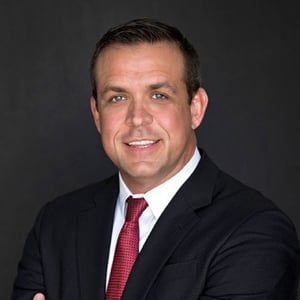
Attorney, Berkshire Law Office
As one of approximately 70 certified specialists in the State of Arizona and one of 36 Fellows in the American Academy of Matrimonial Lawyers, Keith Berkshire is well versed in all areas of family law, including high stakes litigation. In addition to his litigation practice, Keith has a significant appellate practice which includes 23 published Opinions at the Arizona Court of Appeals and the Arizona Supreme Court. Keith also successfully litigated the Howell case at the Supreme Court of the United States.
Keith routinely teaches other attorneys and judges at legal education seminars on various family law issues, including legal decision-making (custody) and appellate matters and regularly serves as an expert witness on variously family law issues.
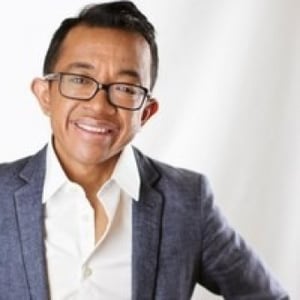
Attorney, Arizona Center for Disability Law
Sey In is a Hofstra law graduate interested in public interest law with focus in health law, public service, and immigration. He worked in litigation technology for over 10 years prior to going to law school.
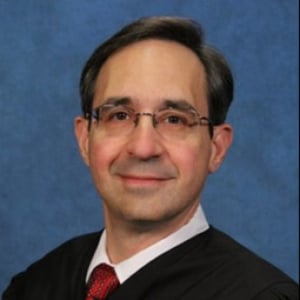
Presiding Judge of the Probate and Mental Health Department, Superior Court of Arizona for Maricopa County
Jay M. Polk is the Presiding Judge of the Probate and Mental Health Department of the Superior Court of Arizona for Maricopa County. He served as the Associate Presiding Judge of that department from April 10, 2017, through June 26, 2020. From November 21, 2011, to April 7, 2017, Judge Polk was assigned to the Family Court Department and served as the Associate Presiding Judge of Family Court Department for the Northeast Regional Court Center for approximately two of those years.
For nearly 20 years prior to his appointment to the bench, Judge Polk limited his practice of law to contested and uncontested matters relating to guardianships, conservatorships, decedents’ estates, the abuse or exploitation of vulnerable adults, and estate planning for modest estates. In addition, he served as a mediator and arbitrator, as a guardian ad litem for minor children and incapacitated adults, and as judge pro tempore. Between 1999 and 2011, Judge Polk was an Arizona Licensed Fiduciary and, as such, served as a personal representative or special administrator for several estates, as well as the special conservator for an attorney.
Judge Polk is a frequent speaker on probate and family law matters. He is an editor of the forthcoming edition of the Arizona Probate Code Practice Manual, was a co-managing editor of the 2014 edition of that publication, an associate editor of the 2000 edition of that publication, and has been a regular contributor to the Judicial College of Arizona’s Probate Benchbook. Throughout his career, Judge Polk has been involved in drafting legislation to improve Arizona’s probate laws. In addition, Judge Polk served on the Arizona Supreme Court’s Probate Rules Committee, which drafted the first set of statewide probate rules of procedure, and the Arizona Supreme Court’s Committee on Improving Judicial Oversight and Processing of Probate Court Matters, which proposed significant reforms to Arizona’s probate laws and rules. From December 2017 until December 2019, Judge Polk served on the Task Force on the Arizona Rules of Probate Procedure and chaired Workgroup 1 of that Task Force. He continues to serve on the Task Force’s Editorial Workgroup, which is updating statewide mandatory probate forms. From September 2018 until December 2019, Judge Polk was a member of the Steering Committee on Arizona Case Processing Standards and chaired the Probate Time Standards subcommittee. Between 2014 and 2015, Judge Polk assisted in creating the Superior Court of Arizona for Maricopa County’s intelligent probate forms.
Since 2011, Judge Polk has been a member of the Fiduciary Board, which regulates Arizona professional fiduciaries. He has been a member of the Executive Board of the Arizona Judges Association since June 2014, and served as Secretary from July 2016 through June 2017, Vice President from July 2017 through June 2018, and President from July 2018 to June 2019. He has been a member of the Arizona Public Safety Personnel Retirement System (“PSPRS”) Advisory Committee since November 2016. Since May 2017, Judge Polk has served as the Judicial Liaison to the Estate Planning, Probate, and Trust Law Section of the Maricopa County Bar Association, and since September 2018, he has served as the Judicial Liaison to the Elder Law, Mental Health, and Special Needs Planning Section of the State of Bar of Arizona. Since June 2019, he also has been the Judicial Liaison to the Probate and Trust Law Section of the State Bar of Arizona. In addition, Judge Polk served as President of The Council For Jews With Special Needs from 2004 to 2006 and was a member of that organization’s Board of Directors from 1998 through 2007.
A graduate of the University of Chicago (A.B. 1989, Political Science) and Arizona State University (J.D. 1992), Judge Polk has been the recipient of numerous professional awards, including the State Bar of Arizona Probate and Trust Law Section’s 2008 Eleanor ter Horst Distinguished Service Award, the Arizona Fiduciaries Association’s 2009 Leadership Award, the Arizona Chapter of the National Academy of Elder Attorneys’ 2011 Craig C. Gordon Outstanding Arizona Chapter Member Award, and the Maricopa County Bar Association Family Law Section’s 2017 Bridging the Gap Award.
Vice Chief Justice, Arizona Supreme Court
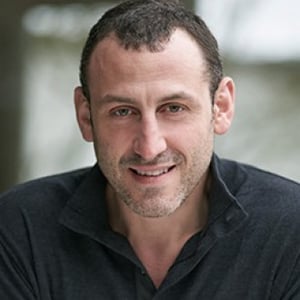
Professor of Law, Northwestern University Pritzker School of Law
Joshua Kleinfeld teaches and writes about political, legal, and moral philosophy, criminal law, and criminal procedure. He also practices law in Northwestern's Juvenile Criminal Defense Clinic. He is a full professor with tenure at the Northwestern Pritzker School of the Law and (by courtesy) in Northwestern’s philosophy department. In 2017-18, he was a visiting professor at Harvard and Stanford Law Schools. He is the recipient of the Bator Award, given annually to one American law professor under the age of 40 who has demonstrated "excellence in legal scholarship, a commitment to teaching, a concern for students, and who has made a significant public impact."
In philosophy, Kleinfeld's research focuses on the idea of "embodied ethical life," as developed in the socio-theoretic tradition of Hegel, Weber, and Durkheim. This tradition aims to understand and critique social life by bringing to light the normative ideas implicit in social practices and institutions. In law, this means that the most interesting philosophical concepts are often those reflected or actualized in legal practice – in the law as judges and lawyers think of it and wield it.
In criminal law and procedure, Kleinfeld has developed a theory known as "reconstructivism," which holds that the chief office of criminal law is not to dole out retributive justice, nor to optimize crime and cost control, but to reconstruct a violated normative order in the wake of a crime. This work, which draws on the thought of Hegel, Durkheim, Jean Hampton, and Antony Duff, develops an alternative to retributive and utilitarian theories of criminal law by focusing on the distinctive social function and sense of justice at work in the criminal system.
Kleinfeld is also involved in practical criminal justice reform. In this vein, he defends children accused of homicide in the Northwestern Juvenile Criminal Defense clinic and assists in litigation efforts meant to reform American criminal law through the courts. He has also developed a view of criminal justice reform known as "democratization," which holds that the root of the American criminal justice crisis is a set of bureaucratic attitudes, structures, and incentives divorced from the American public’s concerns and sense of justice, and that the primary solution is to make criminal justice more community-focused and responsive to lay influences. Working with others, he has developed a number of policy proposals meant to reform American criminal justice in a democratic direction.
Kleinfeld holds a JD from Yale Law School, a PhD in philosophy from the Goethe University of Frankfurt (supervised by Axel Honneth, Klaus Günther, and Rainer Forst), and a BA in philosophy from Yale College. He clerked for Judge J. Harvie Wilkinson on the United States Court of Appeals for the Fourth Circuit; Judge Janice Rogers Brown on the United States Court of Appeals for the D.C. Circuit; and President (chief justice) Aharon Barak of the Supreme Court of Israel. He worked as an Associate at Debevoise & Plimpton LLP in Frankfurt, Germany, in the area of corporate criminal law. Before law school, he worked as a Senior Research Analyst at the White House’s Council on Bioethics.
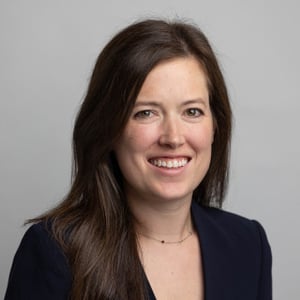
Senior Attorney, Institute of Justice
Kirby Thomas West is a senior attorney at the Institute for Justice, where she is also the co-director of IJ’s National Initiative to End Forfeiture Abuse. She joined IJ in 2018 and litigates cases defending property rights, free speech, and educational choice.
In her time at IJ, Kirby has launched challenges to unconstitutional civil forfeiture and impoundment schemes. She has also litigated educational choice cases, including as part of the IJ team that litigated Carson v. Makin, a landmark educational choice case decided in 2022.
In 2024, Kirby was a Wasserstein Public Interest Fellow at Harvard Law School.
Before joining IJ, Kirby Was an attorney at Baker Botts LLP, in Washington D.C. She clerked for Judge Dennis Shedd of the U.S. Court of Appeals for the Fourth Circuit.
Kirby received her law degree cum laude from Harvard Law School in 2015.
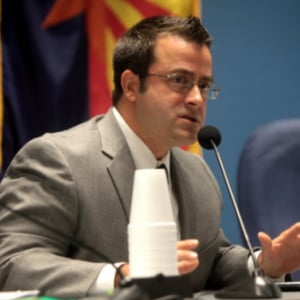
General Counsel, Prospera Group
Dranias serves as NeWay Capital LLC’s General Counsel, handling all corporate legal matters. Prior to this, he was Senior Litigation Counsel with the Government Accountability & Special Litigation Unit of the Arizona Attorney General. He also serves as Policy Advisor and Research Fellow with the Heartland Institute, as an expert and Speaker’s Bureau member with the Federalist Society, a Law and Civil Liberties Speaker for Students for Liberty, a Council of Scholars member with Compact for America Educational Foundation, as well as an Adjunct Instructor teaching Business Ethics and Law at Grand Canyon University.
Previously, Dranias served as President & Executive Director of Compact for America Educational Foundation where he led national efforts to organize the states to propose and ratify a federal Balanced Budget Amendment. Prior to that, Dranias was General Counsel, Policy Development Director and Constitutional Policy Director at the Goldwater Institute. Dranias led the Institute’s successful challenge to Arizona’s system of government campaign financing to the U.S. Supreme Court. Prior to that, he was an attorney with the Institute for Justice for three years and an attorney in private practice in Chicago for eight years, where he served as Young Lawyers Section co-editor of the Chicago Bar Association Record and earned the Oliver Wendell Holmes Award for his service.

Law of War
Phoenix, AZCandidate Forum: 2022 Arizona Attorney General's Race
Phoenix Lawyers Chapter
Phoenix, AZFree Britney!
Do the Probate & Family Courts have too much power to control individual autonomy?
Phoenix, AZLearning to Change: New Takes on Education Reform
Kirby Thomas West
A Review of: The Choice We Face: How Segregation, Race, and Power Have Shaped America’s...
The Death of Chevron
Phoenix Lawyers Chapter
Phoenix, AZTopics
Cornerstone of Liberty
Private property is one of humanity’s great discoveries, like fire, or DNA, or the scientific...
Pot or Not? High-minded Federalism vs. Homegrown Policy
Paradise Valley, ArizonaIntroducing “Article V 2.0”: The Compact for a Balanced Budget
Nicholas C. Dranias
This article discusses the use of interstate compacts to advance Article V amendments to the U.S....
Domestic Law Enforcement Tactics Debate
Phoenix, ArizonaProfessionalism & Collegiality