
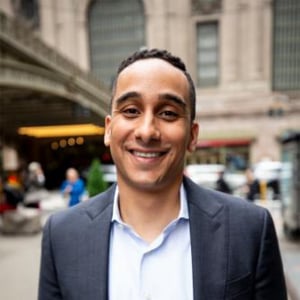
Nick Ohnell Fellow, The Manhattan Institute
Rafael Mangual is the Nick Ohnell Fellow at the Manhattan Institute, a contributing editor of City Journal, and a member of the Council on Criminal Justice. His first book, Criminal (In)Justice, was released in July 2022. He has authored and coauthored a number of MI reports and op-eds on issues ranging from urban crime and jail violence to broader matters of criminal and civil justice reform. His work has been featured and mentioned in a wide array of publications, including the Wall Street Journal, The Atlantic, New York Post, The New York Times, The Washington Post, Philadelphia Inquirer and City Journal. Mangual also regularly appears on Fox News and has made a number of national and local television and radio appearances on outlets such as C-SPAN and Bloomberg Radio. In 2020, he was appointed to serve a four-year term as a member of the New York State Advisory Committee of the U.S. Commission on Civil Rights.
Prior to joining MI in 2015, Rafael worked in corporate communications for the International Trademark Association. He holds a B.A. in corporate communications from the City University of New York’s Baruch College and a J.D. from DePaul University in Chicago, where he was president of the Federalist Society and vice president of the Appellate Moot Court team. After graduating from law school, Mangual was inducted into the Order of the Barristers, a national honor society for excellence in oral and written advocacy.

Senior Fellow and Director of Constitutional Studies, Manhattan Institute
Ilya Shapiro is a senior fellow and director of constitutional studies at the Manhattan Institute and a contributing editor of City Journal. Previously he was executive director and senior lecturer at the Georgetown Center for the Constitution, and before that a vice president of the Cato Institute.
Shapiro is the author of Lawless: The Miseducation of America’s Elites (2025) and Supreme Disorder: Judicial Nominations and the Politics of America’s Highest Court (2020), coauthor of Religious Liberties for Corporations? (2014), and editor of 11 volumes of the Cato Supreme Court Review (2008-18). He has contributed to a variety of academic, popular, and professional publications, including the Wall Street Journal, Harvard Journal of Law & Public Policy, Washington Post, Los Angeles Times, USA Today, National Review, and Newsweek. He also regularly provides commentary for various media outlets, writes the Shapiro’s Gavel newsletter on Substack, and once appeared on the Colbert Report.
Shapiro has testified many times before Congress and state legislatures and has filed more than 500 amicus curiae “friend of the court” briefs in the Supreme Court. He lectures regularly on behalf of the Federalist Society, is a member of the board of fellows of the Jewish Policy Center, was an inaugural Washington Fellow at the National Review Institute, and has been an adjunct law professor at the George Washington University and University of Mississippi. He is also the chairman of the board of advisers of the Mississippi Justice Institute, a barrister in the Edward Coke Appellate Inn of Court, and a former member of the Virginia Advisory Committee to the U.S. Commission on Civil Rights.
Earlier in his career, Shapiro was a special assistant/adviser to the Multi-National Force in Iraq on rule-of-law issues and practiced at Patton Boggs and Cleary Gottlieb. Before entering private practice, he clerked for Judge E. Grady Jolly of the U.S. Court of Appeals for the Fifth Circuit. He holds an AB from Princeton University, an MSc from the London School of Economics, and a JD from the University of Chicago Law School.
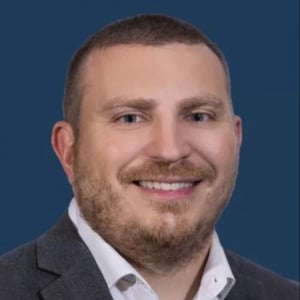
Legal Policy Director, Pacific Legal Foundation
Daniel Dew directs Pacific Legal Foundation’s legal policy efforts. The legal policy team fights for individual liberty in the other two branches of government by finding principled solutions to complex problems.
Daniel has led numerous successful public policy campaigns, including home equity theft reform, judicial bias reform, emergency powers reform, and prior to his time at PLF, civil asset forfeiture reform, sentencing reform, and removing government-imposed barriers to employment.
Before joining PLF, Daniel was a legal fellow at The Buckeye Institute in Columbus, Ohio, and a visiting legal fellow at The Heritage Foundation’s Meese Center for Legal and Judicial Studies.
Daniel served on the Ohio Supreme Court’s Task Force to Examine Ohio’s Bail System, and Ohio’s Justice Reinvestment 2.0 Ad Hoc Committee. He has also served as president of the Columbus, Ohio lawyers chapter of the Federalist Society, and chaired the Ohio State Bar Association’s Criminal Justice Committee.
He earned his law degree from Cleveland Marshall College of Law and his undergraduate degree from Utah State University.
When he’s not battling bureaucrats, Daniel coaches baseball, trains for marathons (very slowly), is constantly disappointed by Cleveland sports teams, and keeps busy with his wife, Amanda, and their four children.
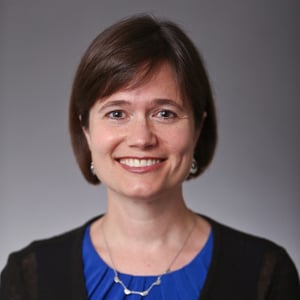
Senior Director, Liberty & National Security Program, Brennan Center for Justice at New York University Law School
Elizabeth (Liza) Goitein is senior director of the Brennan Center for Justice’s Liberty & National Security Program.
Goitein is a nationally-recognized expert on presidential emergency powers, government surveillance, and government secrecy. Her writing has been featured in major newspapers and magazines including the New York Times, Washington Post, Wall Street Journal, USA Today, Los Angeles Times, The Atlantic Magazine, and The New Republic, and she has appeared frequently on MSNBC, CNN, and NPR. She has testified on several occasions before the Senate and House Judiciary Committees.
Before coming to the Brennan Center, Goitein served as counsel to Senator Russ Feingold, chairman of the Constitution Subcommittee of the Senate Judiciary Committee, and as a trial attorney in the Federal Programs Branch of the Civil Division of the Department of Justice. Goitein graduated from Yale Law School and clerked for the Honorable Michael Daly Hawkins on the U.S. Court of Appeals for the Ninth Circuit. In 2021–22, she was a member of the inaugural class of Senior Practitioner Fellows at the University of Chicago’s Center for Effective Government.
Senior Fellow and Director of Constitutional Studies, Manhattan Institute
Ilya Shapiro is a senior fellow and director of constitutional studies at the Manhattan Institute and a contributing editor of City Journal. Previously he was executive director and senior lecturer at the Georgetown Center for the Constitution, and before that a vice president of the Cato Institute.
Shapiro is the author of Lawless: The Miseducation of America’s Elites (2025) and Supreme Disorder: Judicial Nominations and the Politics of America’s Highest Court (2020), coauthor of Religious Liberties for Corporations? (2014), and editor of 11 volumes of the Cato Supreme Court Review (2008-18). He has contributed to a variety of academic, popular, and professional publications, including the Wall Street Journal, Harvard Journal of Law & Public Policy, Washington Post, Los Angeles Times, USA Today, National Review, and Newsweek. He also regularly provides commentary for various media outlets, writes the Shapiro’s Gavel newsletter on Substack, and once appeared on the Colbert Report.
Shapiro has testified many times before Congress and state legislatures and has filed more than 500 amicus curiae “friend of the court” briefs in the Supreme Court. He lectures regularly on behalf of the Federalist Society, is a member of the board of fellows of the Jewish Policy Center, was an inaugural Washington Fellow at the National Review Institute, and has been an adjunct law professor at the George Washington University and University of Mississippi. He is also the chairman of the board of advisers of the Mississippi Justice Institute, a barrister in the Edward Coke Appellate Inn of Court, and a former member of the Virginia Advisory Committee to the U.S. Commission on Civil Rights.
Earlier in his career, Shapiro was a special assistant/adviser to the Multi-National Force in Iraq on rule-of-law issues and practiced at Patton Boggs and Cleary Gottlieb. Before entering private practice, he clerked for Judge E. Grady Jolly of the U.S. Court of Appeals for the Fifth Circuit. He holds an AB from Princeton University, an MSc from the London School of Economics, and a JD from the University of Chicago Law School.

Professor of Law, Antonin Scalia Law School, George Mason University
ILYA SOMIN is Professor of Law at George Mason University and the B. Kenneth Simon Chair in Constitutional Studies at the Cato Institute. His research focuses on constitutional law, property law, democratic theory, federalism, and migration rights. He is the author of Free to Move: Foot Voting, Migration, and Political Freedom (Oxford University Press, revised and expanded edition, 2022), Democracy and Political Ignorance: Why Smaller Government is Smarter (Stanford University Press, revised and expanded second edition, 2016), and The Grasping Hand: Kelo v. City of New London and the Limits of Eminent Domain (University of Chicago Press, 2015, rev. paperback ed., 2016), coauthor of A Conspiracy Against Obamacare: The Volokh Conspiracy and the Health Care Case (Palgrave Macmillan, 2013), and co-editor of Eminent Domain: A Comparative Perspective (Cambridge University Press, 2017). Democracy and Political Ignorance has been translated into Italian and Japanese.
Somin’s work has appeared in numerous scholarly journals, including the Yale Law Journal, Stanford Law Review, Northwestern University Law Review, Georgetown Law Journal, Critical Review, and others. Somin has also published articles in a variety of popular press outlets, including the New York Times, Washington Post, Wall Street Journal, Los Angeles Times, CNN, NBC, The Atlantic, USA Today, Boston Globe, US News and World Report, South China Morning Post, National Law Journal and Reason. He has been quoted or interviewed by the New York Times, Washington Post, Wall Street Journal, Time, Newsweek, The Economist, the Christian Science Monitor, the Financial Times, The Guardian, the Associated Press, CBS, MSNBC, NPR, BBC, Reuters, the Canadian Broadcasting Corporation, the Australian Broadcasting Corporation, Radio Free Europe/Radio Liberty, Al Jazeera, and the Voice of America, among other media.
Somin’s writings have been cited in decisions by the United States Supreme Court, multiple state supreme courts and lower federal courts, and the Supreme Court of Israel. He is co-counsel for the plaintiffs in VOS Selections, Inc. v. Trump, a case challenging the constitutionality of President Trump’s “Liberation Day” tariffs. Somin has testified on the use of drones for targeted killing in the War on Terror before the US Senate Judiciary Subcommittee on the Constitution, Civil Rights, and Human Rights. In 2009, he testified on property rights issues at the United States Senate Judiciary Committee confirmation hearings for Supreme Court Justice Sonia Sotomayor. Somin writes regularly for the popular Volokh Conspiracy law and politics blog, now affiliated with Reason magazine (previously affiliated with the Washington Post from 2014 to 2017). From 2006 to 2013, he served as Co-Editor of the Supreme Court Economic Review, one of the country’s top-rated law and economics journals.
Somin has served as a visiting professor at the University of Pennsylvania Law School. He has also been a visiting professor or scholar at the Georgetown University Law Center, the University of Hamburg, Germany, the University of Torcuato Di Tella in Buenos Aires, Argentina, Uriel Reichman University in Israel, and Zhengzhou University in China. He is a University Affiliate of the Schar School of Policy and Government at George Mason University, and an affiliated faculty member of the George Mason University Institute for Immigration Research. Before joining the faculty at George Mason, Somin was the John M. Olin Fellow in Law at Northwestern University Law School in 2002-2003. In 2001-2002, he clerked for the Hon. Judge Jerry E. Smith of the U.S. Court of Appeals for the Fifth Circuit. Professor Somin earned his B.A., Summa Cum Laude, at Amherst College, M.A. in Political Science from Harvard University, and J.D. from Yale Law School.
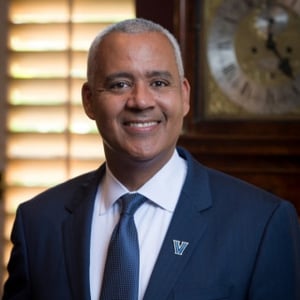
Arthur J. Kania Dean and Professor of Law, Villanova University, Charles Widger School of Law
Mark C. Alexander, JD is the Arthur J. Kania Dean and Professor of Law at the Villanova University Charles Widger School of Law. As the School’s chief administrator and chairperson of the faculty, Alexander is responsible for all facets of the Law School, including its long-term strategic and academic planning, curricular initiatives, faculty research and teaching support, student services, and fundraising and alumni relations.
Alexander previously served as Associate Dean for Academics at Seton Hall University’s School of Law. His responsibilities included oversight of the curriculum’s academic components, collaboration with the faculty and administration on implementation of the School’s strategic plan, and management of the career, enrollment and student services offices. A member of Seton Hall’s Law School faculty for two decades, he was honored as Professor of the Year on numerous occasions.
Alexander’s areas of expertise include constitution law, election law, the First Amendment and criminal procedure. His research interests focus on the constitutional dimensions of election law and campaign reform. Alexander has authored several books on the First Amendment and constitutional law, and his scholarship has been published in leading journals such as Harvard Journal of Law & Public Policy, Stanford Law & Policy Review and NYU Review of Law & Social Change.
Regularly interviewed by national print and broadcast media, Alexander is a sought-after speaker and panelist for national and international law symposiums and academic forums. He possesses significant international experience, having spent a year in Spain teaching American law and politics on a Fulbright Scholarship, as well as teaching in the Seton Hall Law-in-Italy program. He is also a fellow of the U.S.-Japan Leadership Program. Alexander served on the J. William Fulbright Foreign Scholarship Board from 2010 to 2014, having been appointed by President Barack Obama.
In addition to his leadership in academia, Alexander has also served as an adviser and issues director for several high-profile political campaigns. Prior to joining the Seton Hall Law School faculty in 1996, he clerked for Chief Judge Thelton Henderson of the United States District Court for the Northern District of California and was a litigator with Gibson, Dunn & Crutcher in San Francisco. Alexander earned a Juris Doctor from Yale University Law School and a Bachelor of Arts in Architecture from Yale University.

Professor of Law, Northwestern University Pritzker School of Law
Joshua Kleinfeld teaches and writes about political, legal, and moral philosophy, criminal law, and criminal procedure. He also practices law in Northwestern's Juvenile Criminal Defense Clinic. He is a full professor with tenure at the Northwestern Pritzker School of the Law and (by courtesy) in Northwestern’s philosophy department. In 2017-18, he was a visiting professor at Harvard and Stanford Law Schools. He is the recipient of the Bator Award, given annually to one American law professor under the age of 40 who has demonstrated "excellence in legal scholarship, a commitment to teaching, a concern for students, and who has made a significant public impact."
In philosophy, Kleinfeld's research focuses on the idea of "embodied ethical life," as developed in the socio-theoretic tradition of Hegel, Weber, and Durkheim. This tradition aims to understand and critique social life by bringing to light the normative ideas implicit in social practices and institutions. In law, this means that the most interesting philosophical concepts are often those reflected or actualized in legal practice – in the law as judges and lawyers think of it and wield it.
In criminal law and procedure, Kleinfeld has developed a theory known as "reconstructivism," which holds that the chief office of criminal law is not to dole out retributive justice, nor to optimize crime and cost control, but to reconstruct a violated normative order in the wake of a crime. This work, which draws on the thought of Hegel, Durkheim, Jean Hampton, and Antony Duff, develops an alternative to retributive and utilitarian theories of criminal law by focusing on the distinctive social function and sense of justice at work in the criminal system.
Kleinfeld is also involved in practical criminal justice reform. In this vein, he defends children accused of homicide in the Northwestern Juvenile Criminal Defense clinic and assists in litigation efforts meant to reform American criminal law through the courts. He has also developed a view of criminal justice reform known as "democratization," which holds that the root of the American criminal justice crisis is a set of bureaucratic attitudes, structures, and incentives divorced from the American public’s concerns and sense of justice, and that the primary solution is to make criminal justice more community-focused and responsive to lay influences. Working with others, he has developed a number of policy proposals meant to reform American criminal justice in a democratic direction.
Kleinfeld holds a JD from Yale Law School, a PhD in philosophy from the Goethe University of Frankfurt (supervised by Axel Honneth, Klaus Günther, and Rainer Forst), and a BA in philosophy from Yale College. He clerked for Judge J. Harvie Wilkinson on the United States Court of Appeals for the Fourth Circuit; Judge Janice Rogers Brown on the United States Court of Appeals for the D.C. Circuit; and President (chief justice) Aharon Barak of the Supreme Court of Israel. He worked as an Associate at Debevoise & Plimpton LLP in Frankfurt, Germany, in the area of corporate criminal law. Before law school, he worked as a Senior Research Analyst at the White House’s Council on Bioethics.
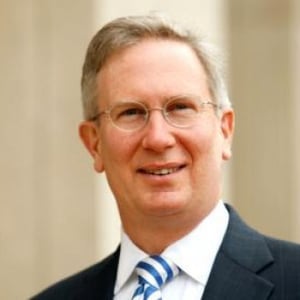
David and Mary Harrison Distinguished Professor of Law, University of Virginia School of Law
Paul G. Mahoney is a David and Mary Harrison Distinguished Professor and served as dean of the Law School from 2008-16. Mahoney's teaching and research areas are securities regulation, law and economic development, corporate finance, financial derivatives and contracts. He has published widely in law reviews and peer-reviewed finance and law and economics journals. His book, “Wasting a Crisis: Why Securities Regulation Fails,” was published by the University of Chicago Press in 2015.
Mahoney joined the Law School faculty in 1990 after practicing law with the New York firm of Sullivan & Cromwell and clerking for Judge Ralph K. Winter, Jr. of the U.S. Court of Appeals for the Second Circuit and Justice Thurgood Marshall of the U.S. Supreme Court. He served as academic associate dean at the Law School from 1999 to 2004 and has held the Albert C. BeVier Research Chair and the Brokaw Chair in Corporate Law. He has been a visiting professor at the University of Chicago Law School, the University of Southern California Law School and the University of Toronto Faculty of Law. He has also worked on legal reform projects in Kazakhstan, Kyrgyzstan, Mongolia and Nepal.
Mahoney is a member of the Council on Foreign Relations and a fellow of the American Academy of Arts and Sciences. In 2018 he joined Securities and Exchange Commission’s Investor Advisory Committee. He served as an associate editor of the Journal of Economic Perspectives from 2004 to 2007 and as a director of the American Law and Economics Association from 2002 to 2004. He is a past recipient of the All-University Outstanding Teacher Award and the Law School's Traynor Award for excellence in faculty scholarship.

Dean and Harold H. Greene Professor of Law, The George Washington University School of Law
Dayna Bowen Matthew, JD, PhD, is the Dean and Harold H. Greene Professor of Law at the George Washington University Law School. A leader in public health and civil rights law who focuses on disparities in health, health care, and the social determinants of health, Dean Matthew joined GW Law in 2020. She is the author of the bestselling book Just Medicine: A Cure for Racial Inequality in American Health Care and the newly released Just Health: Treating Structural Racism to Heal America.
Dean Matthew previously served on the faculty of the University of Virginia School of Law, where she was Co-Founder and Inaugural Director of The Equity Center, a transdisciplinary research center that seeks to build better relationships between UVA and the Charlottesville community through community engaged scholarship that tangibly redresses racial and socioeconomic inequality.
Earlier in her career, Dean Matthew served on the University of Colorado law faculty as a Professor, Vice Dean, and Associate Dean of Academic Affairs. She was a member of the Center for Bioethics and Humanities on the Anschutz Medical Campus. Dean Matthew held a joint appointment at the Colorado School of Public Health.
Dean Matthew also has taken on many public policy roles. In 2013, she co-founded the Colorado Health Equity Project, a medical-legal partnership incubator aimed at removing barriers to good health for low-income clients by providing legal representation, research, and policy advocacy. In 2015, she served as the Senior Adviser to the Director of the Office of Civil Rights for the US Environmental Protection Agency, where she expedited cases on behalf of historically vulnerable communities besieged by pollution. She then became a member of the health policy team for US Senator Debbie Stabenow of Michigan and worked on public health issues.
During 2015-16, she was a Robert Wood Johnson Foundation Health Policy Fellow in Residence in Washington, DC, and pivoted her work toward population-level clients. She forged relationships with influential policy groups such as the Brookings Institution, where she is currently a Non-resident Senior Fellow, and the Congressional Black Caucus Foundation.
She also is a member of the American Law Institute and currently serves on several public health boards including the CDC’s Advisory Committee on Immunization Practices’ COVID-19 Vaccine Working Group, the American Society of Law, Medicine, and Ethics, and the Scientific Advisory Council of the Foundation for Opioid Response Efforts
Before entering academia, Dean Matthew practiced as a civil litigator both in Kentucky, at the law firm of Greenebaum, Doll & McDonald, and in Virginia, at McGuireWoods, where her work primarily focused on the defense of medical care providers and corporate manufacturers in state courts, federal courts, and before administrative and licensing tribunals.
Dean Matthew graduated with an AB in economics from Harvard-Radcliffe and, after a brief stint as a commercial real estate banker, obtained a JD from the University of Virginia. While studying at Virginia, Dean Matthew served as an Editor of the Virginia Law Review, won the law school’s William Minor Lile Moot Court Competition, and taught as a Hardy Dillard Writing Fellow. Following graduation, she clerked for Justice John Charles Thomas, the first African American justice to sit on the Virginia Supreme Court. She taught at Virginia as an assistant professor from 1991 to 1994. In 2018, she received a PhD in health and behavioral sciences from the University of Colorado at Denver.
She has written numerous articles and book chapters on health and antitrust law topics that have appeared in the Virginia Law Review, the Georgetown Journal of Law, and the American Journal of Law and Medicine, among others.
Dean Matthew lives in Washington, DC with her partner, Thomas Matthew MD, and enjoys all things outdoors including running, alpine skiing, travel, and spending time with family and friends.

Judge, United States Court of Appeals, District of Columbia Circuit
Judge Rao was appointed to the United States Court of Appeals for the District of Columbia Circuit in March 2019. She graduated from Yale College in 1995 and the University of Chicago Law School in 1999. Following graduation, she served as a law clerk to Judge J. Harvie Wilkinson III of the U.S. Court of Appeals for the Fourth Circuit and, in the 2001 October Term, as law clerk to Justice Clarence Thomas of the U.S. Supreme Court. Between her clerkships, Judge Rao served as counsel for nominations and constitutional law to the U.S. Senate Committee on the Judiciary. In 2002, she joined the international arbitration group of Clifford Chance LLP in London, England. From 2005-2006, she served as Special Assistant and Associate White House Counsel to President George W. Bush. From 2006 to 2017, Judge Rao was a professor at the Antonin Scalia Law School at George Mason University, where she taught constitutional law, legislation and statutory interpretation, and the history and foundations of the administrative state. In 2014, she founded the Center for the Study of the Administrative State, a non-profit Center that promotes academic scholarship and public policy debates about administrative law. In July 2017, she was appointed to serve as the Administrator of the Office of Information and Regulatory Affairs in the Office of Management and Budget. She served in this position until her appointment to the D.C. Circuit.
Senior Fellow and Director of Constitutional Studies, Manhattan Institute
Ilya Shapiro is a senior fellow and director of constitutional studies at the Manhattan Institute and a contributing editor of City Journal. Previously he was executive director and senior lecturer at the Georgetown Center for the Constitution, and before that a vice president of the Cato Institute.
Shapiro is the author of Lawless: The Miseducation of America’s Elites (2025) and Supreme Disorder: Judicial Nominations and the Politics of America’s Highest Court (2020), coauthor of Religious Liberties for Corporations? (2014), and editor of 11 volumes of the Cato Supreme Court Review (2008-18). He has contributed to a variety of academic, popular, and professional publications, including the Wall Street Journal, Harvard Journal of Law & Public Policy, Washington Post, Los Angeles Times, USA Today, National Review, and Newsweek. He also regularly provides commentary for various media outlets, writes the Shapiro’s Gavel newsletter on Substack, and once appeared on the Colbert Report.
Shapiro has testified many times before Congress and state legislatures and has filed more than 500 amicus curiae “friend of the court” briefs in the Supreme Court. He lectures regularly on behalf of the Federalist Society, is a member of the board of fellows of the Jewish Policy Center, was an inaugural Washington Fellow at the National Review Institute, and has been an adjunct law professor at the George Washington University and University of Mississippi. He is also the chairman of the board of advisers of the Mississippi Justice Institute, a barrister in the Edward Coke Appellate Inn of Court, and a former member of the Virginia Advisory Committee to the U.S. Commission on Civil Rights.
Earlier in his career, Shapiro was a special assistant/adviser to the Multi-National Force in Iraq on rule-of-law issues and practiced at Patton Boggs and Cleary Gottlieb. Before entering private practice, he clerked for Judge E. Grady Jolly of the U.S. Court of Appeals for the Fifth Circuit. He holds an AB from Princeton University, an MSc from the London School of Economics, and a JD from the University of Chicago Law School.
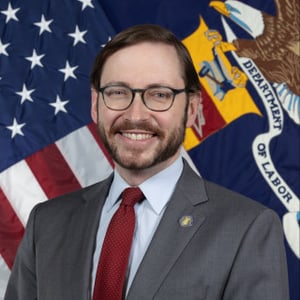
Solicitor, U.S. Department of Labor
Jonathan Berry is Solicitor at the U.S. Department of Labor, in service to President Trump’s agenda to put American workers first. He leads the Department’s lawyers in advising the Secretary and agency leadership on all aspects of law and in representing the Department in court. He was previously managing partner at Boyden Gray PLLC, where he provided strategic counsel and litigated on issues at the intersection of law, politics, and public policy. Earlier, he headed the regulatory office at Labor, and also served at the Department of Justice, in the first Trump Administration. Mr. Berry served as a law clerk to Judge Jerry E. Smith of the United States Court of Appeals for the Fifth Circuit, and to Associate Justice Samuel A. Alito, Jr., of the Supreme Court of the United States.

Partner, Sullivan & Cromwell LLP; Former Head of External Affairs, BlackRock
Dalia Blass is the Senior Investment Management Partner and a partner in S&C’s Financial Services Group at Sullivan & Cromwell LLP. Her practice focuses on providing strategic and regulatory advice to asset managers, registered and private funds, fund boards and their service providers across the range of regulatory, governance, compliance, examination and enforcement matters they face. ry landscape facing asset managers.
Ms. Blass joined the Firm in 2023 from BlackRock, where she was Senior Managing Director, Global Head of External Affairs and a member of BlackRock’s Global Executive Committee.
Prior to BlackRock, Ms. Blass served as the Director of the Division of Investment Management at the U.S. Securities and Exchange Commission (SEC). Under her leadership, the Division of Investment Management finalized more than 70 regulatory initiatives to modernize the regulatory framework for investment companies and investment advisers, improve the investor experience through modernized disclosure and outreach efforts, elevate the standards of conduct for financial professionals, and re-evaluate the role and responsibilities of fund boards of directors. Ms. Blass was a member of the SEC’s senior-level COVID-19 Market Monitoring Group and contributed to the staff’s report on the U.S. Credit Markets Interconnectedness and Effects of the COVID-19 Economic Shock. She also co-chaired the Financial Stability Board’s Technical Experts Group on Money Market Funds. A summary of Division of Investment Management Activities under Ms. Blass is available here.
Ms. Blass previously served in a number of leadership roles in the Division of Investment Management for a total of 14 years at the SEC. She has received the SEC’s Distinguished Service Award and the Manuel F. Cohen Award and was also named in Barron’s inaugural list of the 100 Most Influential Women in U.S. Finance.
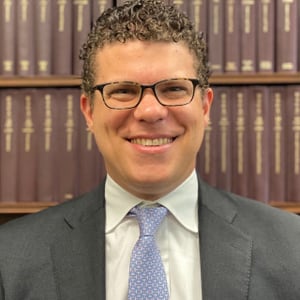
Deputy Director, Bureau of Consumer Protection, Federal Trade Commission
Douglas C. Geho is a seasoned lawyer with extensive enforcement, regulatory, and litigation experience. During the first Trump Administration, Geho served at the Department of Labor as Counsel and Policy Advisor, and then Counselor to the Assistant Secretary for Policy, where he advanced efforts relating to regulatory and enforcement reform, worker safety and training, and additional Administration priorities. He then served as a lead attorney for the House Judiciary Committee and two of its subcommittees. He also managed investigations for the Senate Committee on Homeland Security and Governmental Affairs.
Most recently, Geho served as an Attorney Advisor to Commissioner Melissa Holyoak, handling consumer protection matters for her office. He clerked for Judge Alice M. Batchelder on the U.S. Court of Appeals for the Sixth Circuit. Prior to his government service, Geho was a litigator in private practice. Geho is a graduate of Georgetown Law and Grove City College.

Judge, United States Court of Appeals, Fifth Circuit
Andrew Oldham is a Circuit Judge on the United States Court of Appeals for the Fifth Circuit. Before ascending to the bench, Judge Oldham served as General Counsel to Texas Governor Greg Abbott, where he advised the Governor on a range of issues under federal and state law and managed litigation in which the Governor was an interested party. Before that he served as Deputy Solicitor General for the State of Texas, where he represented Texas in federal courts across the country, including twice before the United States Supreme Court. Before moving to Texas, Judge Oldham was an attorney at Kellogg Hansen Todd Figel & Frederick in Washington, D.C. His practice focused on appellate litigation in federal courts of appeals throughout the country. Before entering private practice, Judge Oldham served as a law clerk to Justice Samuel A. Alito, Jr., at the Supreme Court of the United States and to Judge David B. Sentelle of the U.S. Court of Appeals for the District of Columbia Circuit. He also worked as an attorney-adviser in the Office of Legal Counsel at the U.S. Department of Justice from 2006 to 2008. Judge Oldham earned a B.A. from the University of Virginia with highest honors, a Truman Scholarship for graduate school, an M. Phil., first class (with distinction), from Cambridge University, and a J.D., magna cum laude, from Harvard Law School.

Senior Advisor, Freshfields
Christine is a senior advisor in our antitrust, competition and trade practice with more than 25 years of public and private sector experience at the intersection of law, policy and politics. Based in Washington, DC, she counsels senior executives and boards of directors on how to navigate complex and evolving legal and regulatory regimes to achieve their desired business goals.
Most recently, Christine served as a Commissioner at the Federal Trade Commission (FTC) where she helped shape policies and enforcement actions in the fields of antitrust, consumer privacy and data security and consumer protection. During her tenure, she also testified before the US Congress on several occasions and represented the FTC in bilateral and multilateral discussions abroad.
Before joining the FTC, Christine was a Senior Vice President at Delta Air Lines where she oversaw the carrier’s regulatory and international legal matters. Prior to moving in-house, she was a partner at two international law firms where she worked with clients to achieve regulatory clearance for multi-jurisdictional mergers and to defend businesses in high-stakes investigations.
Her broad sector experience ranges from aircraft and automobiles to veterinary services, video games and virtual reality. She has worked extensively in the highly regulated fields of airlines, healthcare and pharmaceuticals.
After leaving the FTC last year, Christine founded an organization to provide safe housing and comprehensive support services to survivors of human trafficking and sexual exploitation. Freshfields provided pro bono services to the organization including corporate formation. She will continue supporting this organization alongside client practice.
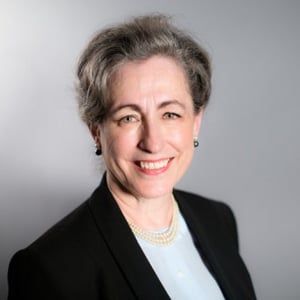
Senior Litigation Counsel, New Civil Liberties Alliance
Peggy Little, Senior Counsel at New Civil Liberties Alliance, a new public interest law firm challenging the administrative state founded in 2017 by Professor Philip Hamburger, has over three decades of experience as a trial and appellate litigator in complex, high-stakes regulatory, mass-tort, class-action, products liability, securities, commercial and civil rights litigation representing individuals and high-profile litigants including Fortune 50 companies, financial institutions, public companies, and universities in state and federal courts, including the United States Supreme Court.
Peggy is a graduate of Yale College and Yale Law School, where she was awarded the Potter Stewart Prize. She was a law clerk to the Hon. Ralph K. Winter on the U.S. Court of Appeals for the Second Circuit. Prior to starting her own trial and appellate law firm in 1997, where she was appellate consulting counsel to the New Haven firefighters in Ricci v.DeStefano, a landmark 2009 United States Supreme Court decision, Peggy was a partner at Tyler, Cooper & Alcorn in New Haven, Connecticut. From 2004 to early 2018, Peggy directed, part-time, the Federalist Society Pro Bono Center.
Peggy has participated in many national conferences and symposia addressing issues of current importance in constitutional law – specifically state and federal constitutional questions regarding the separation of powers and the first amendment – and regularly speaks, blogs and publishes on the topic of the unconstitutional exercise of governmental power. In May of 2017, she presented her paper, Pirates at the Parchment Gates, to a conference of state and federal judges at the Law and Economics Center at the Antonin Scalia Law School. Her work has been published by law reviews, legal publications, the Federalist Society, the Wall Street Journal, Law and Liberty and the Manhattan Institute.
Recent publications include: How the SEC silences its critics, The SEC should listen to Sen. Cotton, Lucia v. SEC, Opening Salvos in the Opioid Litigation Wars, Straight Dope on the Opioid Crisis
Legal Policy Director, Pacific Legal Foundation
Daniel Dew directs Pacific Legal Foundation’s legal policy efforts. The legal policy team fights for individual liberty in the other two branches of government by finding principled solutions to complex problems.
Daniel has led numerous successful public policy campaigns, including home equity theft reform, judicial bias reform, emergency powers reform, and prior to his time at PLF, civil asset forfeiture reform, sentencing reform, and removing government-imposed barriers to employment.
Before joining PLF, Daniel was a legal fellow at The Buckeye Institute in Columbus, Ohio, and a visiting legal fellow at The Heritage Foundation’s Meese Center for Legal and Judicial Studies.
Daniel served on the Ohio Supreme Court’s Task Force to Examine Ohio’s Bail System, and Ohio’s Justice Reinvestment 2.0 Ad Hoc Committee. He has also served as president of the Columbus, Ohio lawyers chapter of the Federalist Society, and chaired the Ohio State Bar Association’s Criminal Justice Committee.
He earned his law degree from Cleveland Marshall College of Law and his undergraduate degree from Utah State University.
When he’s not battling bureaucrats, Daniel coaches baseball, trains for marathons (very slowly), is constantly disappointed by Cleveland sports teams, and keeps busy with his wife, Amanda, and their four children.
Senior Director, Liberty & National Security Program, Brennan Center for Justice at New York University Law School
Elizabeth (Liza) Goitein is senior director of the Brennan Center for Justice’s Liberty & National Security Program.
Goitein is a nationally-recognized expert on presidential emergency powers, government surveillance, and government secrecy. Her writing has been featured in major newspapers and magazines including the New York Times, Washington Post, Wall Street Journal, USA Today, Los Angeles Times, The Atlantic Magazine, and The New Republic, and she has appeared frequently on MSNBC, CNN, and NPR. She has testified on several occasions before the Senate and House Judiciary Committees.
Before coming to the Brennan Center, Goitein served as counsel to Senator Russ Feingold, chairman of the Constitution Subcommittee of the Senate Judiciary Committee, and as a trial attorney in the Federal Programs Branch of the Civil Division of the Department of Justice. Goitein graduated from Yale Law School and clerked for the Honorable Michael Daly Hawkins on the U.S. Court of Appeals for the Ninth Circuit. In 2021–22, she was a member of the inaugural class of Senior Practitioner Fellows at the University of Chicago’s Center for Effective Government.
Senior Fellow and Director of Constitutional Studies, Manhattan Institute
Ilya Shapiro is a senior fellow and director of constitutional studies at the Manhattan Institute and a contributing editor of City Journal. Previously he was executive director and senior lecturer at the Georgetown Center for the Constitution, and before that a vice president of the Cato Institute.
Shapiro is the author of Lawless: The Miseducation of America’s Elites (2025) and Supreme Disorder: Judicial Nominations and the Politics of America’s Highest Court (2020), coauthor of Religious Liberties for Corporations? (2014), and editor of 11 volumes of the Cato Supreme Court Review (2008-18). He has contributed to a variety of academic, popular, and professional publications, including the Wall Street Journal, Harvard Journal of Law & Public Policy, Washington Post, Los Angeles Times, USA Today, National Review, and Newsweek. He also regularly provides commentary for various media outlets, writes the Shapiro’s Gavel newsletter on Substack, and once appeared on the Colbert Report.
Shapiro has testified many times before Congress and state legislatures and has filed more than 500 amicus curiae “friend of the court” briefs in the Supreme Court. He lectures regularly on behalf of the Federalist Society, is a member of the board of fellows of the Jewish Policy Center, was an inaugural Washington Fellow at the National Review Institute, and has been an adjunct law professor at the George Washington University and University of Mississippi. He is also the chairman of the board of advisers of the Mississippi Justice Institute, a barrister in the Edward Coke Appellate Inn of Court, and a former member of the Virginia Advisory Committee to the U.S. Commission on Civil Rights.
Earlier in his career, Shapiro was a special assistant/adviser to the Multi-National Force in Iraq on rule-of-law issues and practiced at Patton Boggs and Cleary Gottlieb. Before entering private practice, he clerked for Judge E. Grady Jolly of the U.S. Court of Appeals for the Fifth Circuit. He holds an AB from Princeton University, an MSc from the London School of Economics, and a JD from the University of Chicago Law School.
Professor of Law, Antonin Scalia Law School, George Mason University
ILYA SOMIN is Professor of Law at George Mason University and the B. Kenneth Simon Chair in Constitutional Studies at the Cato Institute. His research focuses on constitutional law, property law, democratic theory, federalism, and migration rights. He is the author of Free to Move: Foot Voting, Migration, and Political Freedom (Oxford University Press, revised and expanded edition, 2022), Democracy and Political Ignorance: Why Smaller Government is Smarter (Stanford University Press, revised and expanded second edition, 2016), and The Grasping Hand: Kelo v. City of New London and the Limits of Eminent Domain (University of Chicago Press, 2015, rev. paperback ed., 2016), coauthor of A Conspiracy Against Obamacare: The Volokh Conspiracy and the Health Care Case (Palgrave Macmillan, 2013), and co-editor of Eminent Domain: A Comparative Perspective (Cambridge University Press, 2017). Democracy and Political Ignorance has been translated into Italian and Japanese.
Somin’s work has appeared in numerous scholarly journals, including the Yale Law Journal, Stanford Law Review, Northwestern University Law Review, Georgetown Law Journal, Critical Review, and others. Somin has also published articles in a variety of popular press outlets, including the New York Times, Washington Post, Wall Street Journal, Los Angeles Times, CNN, NBC, The Atlantic, USA Today, Boston Globe, US News and World Report, South China Morning Post, National Law Journal and Reason. He has been quoted or interviewed by the New York Times, Washington Post, Wall Street Journal, Time, Newsweek, The Economist, the Christian Science Monitor, the Financial Times, The Guardian, the Associated Press, CBS, MSNBC, NPR, BBC, Reuters, the Canadian Broadcasting Corporation, the Australian Broadcasting Corporation, Radio Free Europe/Radio Liberty, Al Jazeera, and the Voice of America, among other media.
Somin’s writings have been cited in decisions by the United States Supreme Court, multiple state supreme courts and lower federal courts, and the Supreme Court of Israel. He is co-counsel for the plaintiffs in VOS Selections, Inc. v. Trump, a case challenging the constitutionality of President Trump’s “Liberation Day” tariffs. Somin has testified on the use of drones for targeted killing in the War on Terror before the US Senate Judiciary Subcommittee on the Constitution, Civil Rights, and Human Rights. In 2009, he testified on property rights issues at the United States Senate Judiciary Committee confirmation hearings for Supreme Court Justice Sonia Sotomayor. Somin writes regularly for the popular Volokh Conspiracy law and politics blog, now affiliated with Reason magazine (previously affiliated with the Washington Post from 2014 to 2017). From 2006 to 2013, he served as Co-Editor of the Supreme Court Economic Review, one of the country’s top-rated law and economics journals.
Somin has served as a visiting professor at the University of Pennsylvania Law School. He has also been a visiting professor or scholar at the Georgetown University Law Center, the University of Hamburg, Germany, the University of Torcuato Di Tella in Buenos Aires, Argentina, Uriel Reichman University in Israel, and Zhengzhou University in China. He is a University Affiliate of the Schar School of Policy and Government at George Mason University, and an affiliated faculty member of the George Mason University Institute for Immigration Research. Before joining the faculty at George Mason, Somin was the John M. Olin Fellow in Law at Northwestern University Law School in 2002-2003. In 2001-2002, he clerked for the Hon. Judge Jerry E. Smith of the U.S. Court of Appeals for the Fifth Circuit. Professor Somin earned his B.A., Summa Cum Laude, at Amherst College, M.A. in Political Science from Harvard University, and J.D. from Yale Law School.

Criminal (In)Justice: What the Push For Decarceration & Depolicing Gets Wrong & Who It Hurts
Mobile Lawyers Chapter
Mobile, ALShowcase Panel II: The Mission of Law Schools
Mark C. Alexander, Joshua Kleinfeld, Paul G. Mahoney, Dayna Matthew, Neomi Rao
Law schools are the gatekeepers of the legal profession and thus wield substantial influence on...
National Pork Producers Council v. Ross - Post-Argument SCOTUScast
Ilya Shapiro
In National Pork Producers Council v. Ross, the Supreme Court will address the dormant commerce...
Woke, Smoke, or Smart: Regulators Push for ESG
Jonathan Berry, Dalia Osman Blass, Douglas C. Geho, Andrew Oldham, Christine S. Wilson
Executive branch agencies such as the SEC, CFTC, FTC and others have recently used their...
Courthouse Steps Oral Argument: SEC v. Cochran
Margaret A. Little
On November 7, 2022, the U.S. Supreme Court will hear oral argument in Michelle Cochran...
What Are the Limits of Emergency Executive Powers?
Daniel J. Dew, Elizabeth Goitein, Ilya Shapiro, Ilya Somin
The use of presidential emergency powers has raised controversy under administrations of both parties. President...
What Are the Limits of Emergency Executive Powers?
Daniel J. Dew, Elizabeth Goitein, Ilya Shapiro, Ilya Somin
The use of presidential emergency powers has raised controversy under administrations of both parties. President...
Racial Preferences, Wedding Websites, and Election Law: Another Big Year at the Supreme Court
Mississippi Gulf Coast Lawyers Chapter
Gulfport, MSRacial Preferences, Wedding Websites, and Election Law: Another Big Year at the Supreme Court
Mississippi Lawyers Chapter
Jackson, MSWhat Are the Limits of Emergency Executive Powers?
Teleforum