

Partner, Gibson, Dunn & Crutcher LLP
Morgan Ratner is an experienced appellate advocate and legal-issues specialist who handles the most important cases around the country. She has argued ten cases before the U.S. Supreme Court, where she has had remarkable success at both the certiorari and merits stages.
Morgan regularly briefs and argues appeals and dispositive motions; provides strategic guidance for trial and administrative proceedings; and counsels clients confronting high-stakes legal issues. She has had particular success helping clients navigate—and, when appropriate, challenge—federal regulations. In the last 18 months, she has twice been named The American Lawyer’s “Litigator of the Week” (and her matters have been named three times more), including for prevailing in a landmark Delaware corporate-governance dispute and striking down the FCC’s net-neutrality rules. The American Lawyer named her the 2024 “Young Lawyer of the Year — Litigation”, and Law360 recently profiled her as one of “12 Lawyers Who Are The Future Of The Supreme Court Bar.”
Morgan served for more than four years in the Office of the Solicitor General at the U.S. Department of Justice, where she argued securities regulation, bankruptcy, employment, and intellectual property cases before the U.S. Supreme Court. During her tenure, she also filed more than 150 Supreme Court briefs at the merits and certiorari stages and received a John Marshall Award, DOJ’s highest award offered to lawyers for exceptional service to the Office of the Solicitor General and DOJ.
After graduating Harvard Law School—where she was awarded the Fay Diploma as the top student in her class—Morgan clerked for Chief Justice John G. Roberts, Jr. of the U.S. Supreme Court and then-Judge Brett M. Kavanaugh of the U.S. Court of Appeals for the D.C. Circuit. She is a member of the Edward Coke Appellate Inn of Court, a volunteer with Street Law, Inc., and a trustee of the Supreme Court Historical Society.

Senior Fellow and Director of Constitutional Studies, Manhattan Institute
Ilya Shapiro is a senior fellow and director of constitutional studies at the Manhattan Institute and a contributing editor of City Journal. Previously he was executive director and senior lecturer at the Georgetown Center for the Constitution, and before that a vice president of the Cato Institute.
Shapiro is the author of Lawless: The Miseducation of America’s Elites (2025) and Supreme Disorder: Judicial Nominations and the Politics of America’s Highest Court (2020), coauthor of Religious Liberties for Corporations? (2014), and editor of 11 volumes of the Cato Supreme Court Review (2008-18). He has contributed to a variety of academic, popular, and professional publications, including the Wall Street Journal, Harvard Journal of Law & Public Policy, Washington Post, Los Angeles Times, USA Today, National Review, and Newsweek. He also regularly provides commentary for various media outlets, writes the Shapiro’s Gavel newsletter on Substack, and once appeared on the Colbert Report.
Shapiro has testified many times before Congress and state legislatures and has filed more than 500 amicus curiae “friend of the court” briefs in the Supreme Court. He lectures regularly on behalf of the Federalist Society, is a member of the board of fellows of the Jewish Policy Center, was an inaugural Washington Fellow at the National Review Institute, and has been an adjunct law professor at the George Washington University and University of Mississippi. He is also the chairman of the board of advisers of the Mississippi Justice Institute, a barrister in the Edward Coke Appellate Inn of Court, and a former member of the Virginia Advisory Committee to the U.S. Commission on Civil Rights.
Earlier in his career, Shapiro was a special assistant/adviser to the Multi-National Force in Iraq on rule-of-law issues and practiced at Patton Boggs and Cleary Gottlieb. Before entering private practice, he clerked for Judge E. Grady Jolly of the U.S. Court of Appeals for the Fifth Circuit. He holds an AB from Princeton University, an MSc from the London School of Economics, and a JD from the University of Chicago Law School.
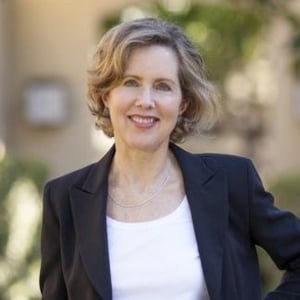
Thomas W. Smith Fellow; Contributing Editor, City Journal, Manhattan Institute
Heather Mac Donald is the Thomas W. Smith Fellow at the Manhattan Institute, a contributing editor of City Journal, and a New York Times bestselling author. She is a recipient of the 2005 Bradley Prize. Mac Donald’s work at City Journal has covered a range of topics, including higher education, immigration, policing, homelessness and homeless advocacy, criminal-justice reform, and race relations. Her writing has appeared in the Wall Street Journal, Washington Post, New York Times, Los Angeles Times, The New Republic, and The New Criterion. Mac Donald's newest book, The Diversity Delusion: How Race and Gender Pandering Corrupt the University and Undermine Our Culture (2018), argues that toxic ideas first spread by higher education have undermined humanistic values, fueled intolerance, and widened divisions in our larger culture.
Mac Donald’s The War on Cops (2016), a New York Times bestseller, warns that raced-based attacks on the criminal-justice system, from the White House on down, are eroding the authority of law and putting lives at risk. Other previous works include The Burden of Bad Ideas (2001), a collection of Mac Donald’s City Journal essays, details the effects of the 1960s counterculture’s destructive march through America’s institutions. In The Immigration Solution: A Better Plan than Today’s (2007), coauthored with Victor Davis Hanson and Steven Malanga, she chronicles the effects of broken immigration laws and proposes a practical solution to securing the country’s porous borders. In Are Cops Racist? (2010), another City Journal anthology, Mac Donald investigates the workings of the police, the controversy over so-called racial profiling, and the anti-profiling lobby’s harmful effects on black Americans.
A nonpracticing lawyer, Mac Donald clerked for the Honorable Stephen Reinhardt, U.S. Court of Appeals for the Ninth Circuit, and was an attorney-advisor in the Office of the General Counsel of the U.S. Environmental Protection Agency and a volunteer with the Natural Resources Defense Council. She has frequently testified before U.S. House and Senate Committees. In 1998, Mac Donald was appointed to Mayor Rudolph Giuliani’s task force on the City University of New York. She has received numerous awards for her writing:
A frequent guest on Fox News and other TV and radio programs, Mac Donald holds a B.A. in English from Yale University, graduating with a Mellon Fellowship to Cambridge University, where she earned an M.A. in English and studied in Italy through a Clare College study grant. She holds a J.D. from Stanford University Law School.
At the Criminal Justice Legal Foundation's 2018 annual meeting in downtown Los Angeles, U.S. Attorney General Jeff Sessions called Mac Donald, “the greatest thinker on criminal justice in America today.”
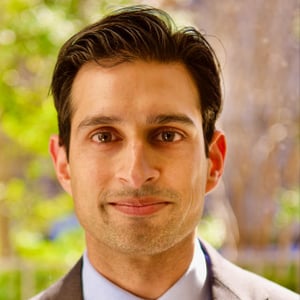
Partner, Lehotsky Cohn
Mithun Mansinghani is an experienced appellate and trial litigator who has argued cases at all levels in state and federal court, including at the U.S. Supreme Court. His practice focuses on commercial litigation, regulatory issues, and appeals. Mr. Mansinghani has been ranked by Chambers & Partners both in Oklahoma and nationwide for his litigation work. He also has been recognized in Lawdragon’s 500X – The Next Generation list for his appellate expertise and Benchmark Litigation’s 40 and Under list for his commercial litigation.
From 2017 to 2022, Mr. Mansinghani served as Oklahoma Solicitor General, the state’s chief advocate on appellate matters, constitutional issues, and challenges to federal regulation. In that role, he also advised the Attorney General, the Governor, the Legislature, and other state leadership on critical and high-stakes legal issues. Mr. Mansinghani has argued more cases before the Justices of the Oklahoma Supreme Court than any other litigator in the last decade.
Mr. Mansinghani has been nationally recognized for amici briefs he authored at the U.S. Supreme Court. These amici briefs have been cited in Supreme Court opinions, referenced by the Justices at argument, and received a National Association of Attorneys General “Best Brief” award. He also provides commentary on U.S. Supreme Court cases for media outlets including NPR, The New York Times, SCOTUSblog, and Bloomberg.
In addition to appellate litigation, Mr. Mansinghani has first-chaired several bench trials to successful verdicts. He has conducted all stages of district court litigation, and has prevailed in numerous cases on summary judgment and motions to dismiss.
Mr. Mansinghani’s extensive experience includes federal and state constitutional law, litigating federal and state regulation, and work with state attorneys general. He has particular expertise in matters related to energy and the environment. Mr. Mansinghani also has significant experience negotiating with Native American tribes and has litigated some of the nation’s most important federal Indian law cases.
Prior to serving in the Oklahoma Attorney General’s Office, Mr. Mansinghani was a litigator with Gibson, Dunn and Crutcher in Washington, D.C. He served as a law clerk to the Hon. Jerry E. Smith on the U.S. Court of Appeals for the Fifth Circuit. Mr. Mansinghani graduated with honors from Harvard Law School, where he was as an editor of The Harvard Law Review.
Senior Fellow and Director of Constitutional Studies, Manhattan Institute
Ilya Shapiro is a senior fellow and director of constitutional studies at the Manhattan Institute and a contributing editor of City Journal. Previously he was executive director and senior lecturer at the Georgetown Center for the Constitution, and before that a vice president of the Cato Institute.
Shapiro is the author of Lawless: The Miseducation of America’s Elites (2025) and Supreme Disorder: Judicial Nominations and the Politics of America’s Highest Court (2020), coauthor of Religious Liberties for Corporations? (2014), and editor of 11 volumes of the Cato Supreme Court Review (2008-18). He has contributed to a variety of academic, popular, and professional publications, including the Wall Street Journal, Harvard Journal of Law & Public Policy, Washington Post, Los Angeles Times, USA Today, National Review, and Newsweek. He also regularly provides commentary for various media outlets, writes the Shapiro’s Gavel newsletter on Substack, and once appeared on the Colbert Report.
Shapiro has testified many times before Congress and state legislatures and has filed more than 500 amicus curiae “friend of the court” briefs in the Supreme Court. He lectures regularly on behalf of the Federalist Society, is a member of the board of fellows of the Jewish Policy Center, was an inaugural Washington Fellow at the National Review Institute, and has been an adjunct law professor at the George Washington University and University of Mississippi. He is also the chairman of the board of advisers of the Mississippi Justice Institute, a barrister in the Edward Coke Appellate Inn of Court, and a former member of the Virginia Advisory Committee to the U.S. Commission on Civil Rights.
Earlier in his career, Shapiro was a special assistant/adviser to the Multi-National Force in Iraq on rule-of-law issues and practiced at Patton Boggs and Cleary Gottlieb. Before entering private practice, he clerked for Judge E. Grady Jolly of the U.S. Court of Appeals for the Fifth Circuit. He holds an AB from Princeton University, an MSc from the London School of Economics, and a JD from the University of Chicago Law School.
Senior Fellow and Director of Constitutional Studies, Manhattan Institute
Ilya Shapiro is a senior fellow and director of constitutional studies at the Manhattan Institute and a contributing editor of City Journal. Previously he was executive director and senior lecturer at the Georgetown Center for the Constitution, and before that a vice president of the Cato Institute.
Shapiro is the author of Lawless: The Miseducation of America’s Elites (2025) and Supreme Disorder: Judicial Nominations and the Politics of America’s Highest Court (2020), coauthor of Religious Liberties for Corporations? (2014), and editor of 11 volumes of the Cato Supreme Court Review (2008-18). He has contributed to a variety of academic, popular, and professional publications, including the Wall Street Journal, Harvard Journal of Law & Public Policy, Washington Post, Los Angeles Times, USA Today, National Review, and Newsweek. He also regularly provides commentary for various media outlets, writes the Shapiro’s Gavel newsletter on Substack, and once appeared on the Colbert Report.
Shapiro has testified many times before Congress and state legislatures and has filed more than 500 amicus curiae “friend of the court” briefs in the Supreme Court. He lectures regularly on behalf of the Federalist Society, is a member of the board of fellows of the Jewish Policy Center, was an inaugural Washington Fellow at the National Review Institute, and has been an adjunct law professor at the George Washington University and University of Mississippi. He is also the chairman of the board of advisers of the Mississippi Justice Institute, a barrister in the Edward Coke Appellate Inn of Court, and a former member of the Virginia Advisory Committee to the U.S. Commission on Civil Rights.
Earlier in his career, Shapiro was a special assistant/adviser to the Multi-National Force in Iraq on rule-of-law issues and practiced at Patton Boggs and Cleary Gottlieb. Before entering private practice, he clerked for Judge E. Grady Jolly of the U.S. Court of Appeals for the Fifth Circuit. He holds an AB from Princeton University, an MSc from the London School of Economics, and a JD from the University of Chicago Law School.
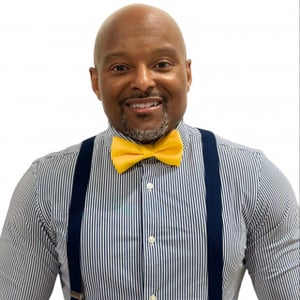
Dean, Delaware Law School
Dean Todd Clark is Dean of Delaware Law School. He joins Delaware Law School after serving as Associate Dean of Academic Affairs & Professor of Law at St. Thomas University Benjamin L. Crump College of Law. Before St. Thomas, Dean Clark was Professor of Law at North Carolina Central University School of Law where he taught Business Associations, Contracts, Corporate Justice, Employment Discrimination, and Hip Hop, Law & Justice. At NCCU, he also served on the ABA Compliance team and was the Director of the Justice in the Practice of Law Certificate Program and the Director of New Initiatives. Before that, Dean Clark was a Lecturer in Law at West Virginia University College of Law, where he taught Legal Writing and Appellate Advocacy.
Dean Clark earned his B.A. in Political Science from Wittenberg University, his M.B.A. from West Virginia University College of Business and Economics, and his J.D. from University of Pittsburgh School of Law. Following his graduation from law school, he practiced law at the law firm of Steptoe & Johnson.
His scholarship includes a book, CORPORATE JUSTICE (Carolina Academic Press), as well as numerous law review articles and other scholarship on social justice, corporate discretion, and sexual harassment. He is currently working on a casebook on Sports Law.
Senior Fellow and Director of Constitutional Studies, Manhattan Institute
Ilya Shapiro is a senior fellow and director of constitutional studies at the Manhattan Institute and a contributing editor of City Journal. Previously he was executive director and senior lecturer at the Georgetown Center for the Constitution, and before that a vice president of the Cato Institute.
Shapiro is the author of Lawless: The Miseducation of America’s Elites (2025) and Supreme Disorder: Judicial Nominations and the Politics of America’s Highest Court (2020), coauthor of Religious Liberties for Corporations? (2014), and editor of 11 volumes of the Cato Supreme Court Review (2008-18). He has contributed to a variety of academic, popular, and professional publications, including the Wall Street Journal, Harvard Journal of Law & Public Policy, Washington Post, Los Angeles Times, USA Today, National Review, and Newsweek. He also regularly provides commentary for various media outlets, writes the Shapiro’s Gavel newsletter on Substack, and once appeared on the Colbert Report.
Shapiro has testified many times before Congress and state legislatures and has filed more than 500 amicus curiae “friend of the court” briefs in the Supreme Court. He lectures regularly on behalf of the Federalist Society, is a member of the board of fellows of the Jewish Policy Center, was an inaugural Washington Fellow at the National Review Institute, and has been an adjunct law professor at the George Washington University and University of Mississippi. He is also the chairman of the board of advisers of the Mississippi Justice Institute, a barrister in the Edward Coke Appellate Inn of Court, and a former member of the Virginia Advisory Committee to the U.S. Commission on Civil Rights.
Earlier in his career, Shapiro was a special assistant/adviser to the Multi-National Force in Iraq on rule-of-law issues and practiced at Patton Boggs and Cleary Gottlieb. Before entering private practice, he clerked for Judge E. Grady Jolly of the U.S. Court of Appeals for the Fifth Circuit. He holds an AB from Princeton University, an MSc from the London School of Economics, and a JD from the University of Chicago Law School.
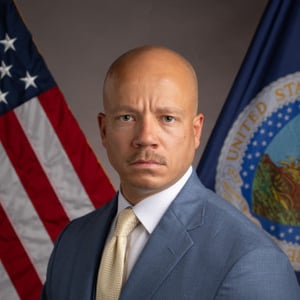
Assistant Secretary for Civil Rights, U.S. Department of Agriculture
Devon Westhill is the Assistant Secretary for Civil Rights at the U.S. Department of Agriculture. The U.S. Senate confirmed President Donald Trump’s nomination of Westhill on October 7, 2025.
Westhill returns to the USDA where he previously headed the civil rights office as Deputy Assistant Secretary in President Trump’s first term. His previous government appointments also include service at the U.S. Department of Labor, liaison to the Administrative Conference of the U.S., and liaison to the White House Initiative on Historically Black Colleges and Universities. Prior to returning to government service, Westhill was President and General Counsel of a nonprofit civil rights organization.
Westhill has testified on civil rights matters before Congress, federal agencies, and as an expert witness in federal court. He has spoken hundreds of times at college campuses, conferences, and on radio and TV programs, and he is frequently quoted in print publications, and his writing has appeared in numerous national outlets. A U.S. Navy veteran, Westhill earned his BA from the University of North Carolina at Chapel Hill and his JD from the University of Florida.
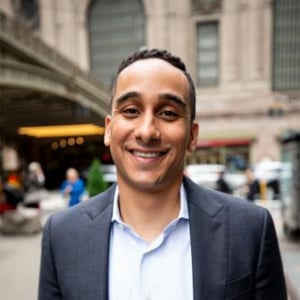
Nick Ohnell Fellow, The Manhattan Institute
Rafael Mangual is the Nick Ohnell Fellow at the Manhattan Institute, a contributing editor of City Journal, and a member of the Council on Criminal Justice. His first book, Criminal (In)Justice, was released in July 2022. He has authored and coauthored a number of MI reports and op-eds on issues ranging from urban crime and jail violence to broader matters of criminal and civil justice reform. His work has been featured and mentioned in a wide array of publications, including the Wall Street Journal, The Atlantic, New York Post, The New York Times, The Washington Post, Philadelphia Inquirer and City Journal. Mangual also regularly appears on Fox News and has made a number of national and local television and radio appearances on outlets such as C-SPAN and Bloomberg Radio. In 2020, he was appointed to serve a four-year term as a member of the New York State Advisory Committee of the U.S. Commission on Civil Rights.
Prior to joining MI in 2015, Rafael worked in corporate communications for the International Trademark Association. He holds a B.A. in corporate communications from the City University of New York’s Baruch College and a J.D. from DePaul University in Chicago, where he was president of the Federalist Society and vice president of the Appellate Moot Court team. After graduating from law school, Mangual was inducted into the Order of the Barristers, a national honor society for excellence in oral and written advocacy.

Senior Vice President for Legal Studies, Cato Institute
Clark Neily is senior vice president for legal studies at the Cato Institute. His areas of interest include constitutional law, overcriminalization, civil forfeiture, police accountability, and gun rights. Neily is the author of Terms of Engagement: How Our Courts Should Enforce the Constitution’s Promise of Limited Government. His writing has appeared in the Wall Street Journal, Forbes, and National Review Online, as well as various law reviews, including the Harvard Journal of Law and Public Policy, George Mason Law Review, Georgetown Journal of Law and Public Policy, NYU Journal of Law and Liberty, and Texas Review of Law and Politics. Neily is a frequent guest speaker and lecturer for the Federalist Society, Institute for Humane Studies, and American Constitution Society.
Before joining Cato in 2017, Neily was a senior attorney and constitutional litigator at the Institute for Justice and director of the Institute’s Center for Judicial Engagement. He is also an adjunct professor at the University of Texas School of Law, where he teaches constitutional litigation and public-interest law.
Neily served as co-counsel in District of Columbia v. Heller, the historic case in which the Supreme Court held for the first time that the Second Amendment protects an individual right to own a gun for self-defense.
Neily began his legal career as a law clerk to Judge Royce Lamberth on the U.S. District Court for the District of Columbia. After that he spent four years in the trial department of the Dallas-based firm Thompson & Knight. Neily received his undergraduate and law degrees from the University of Texas, where he was Chief Articles Editor of the Texas Law Review.
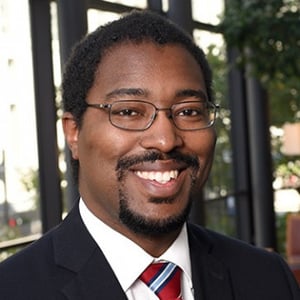
Partner, Taft Stettinius & Hollister LLP
Philip litigates complex matters in state and federal courts. He has briefed appeals in multiple U.S. Courts of Appeals, including the Sixth, Seventh, and Ninth Circuits, as well as state appellate courts in Ohio, Kentucky, and Georgia. Philip has also represented amici at both the cert petition and merits stages in the U.S. Supreme Court.
Prior to joining Taft, Philip served as a law clerk for Judge Raymond M. Kethledge of the U.S. Court of Appeals for the Sixth Circuit, Judge Amul R. Thapar of the U.S. District Court for the Eastern District of Kentucky, and Judge Lavenski R. Smith of the U.S. Court of Appeals for the Eighth Circuit.
Philip serves on the board of directors for the Cincinnati and Northern Kentucky lawyers chapters of the Federalist Society. He was a 2018 James Wilson Fellow with the James Wilson Institute, a 2013 John Marshall Fellow with the Claremont Institute Center for Constitutional Jurisprudence, and a 2011 Blackstone Fellow with the Alliance Defending Freedom.
Philip received his undergraduate degree, with Highest Honors, from Ouachita Baptist University. He received his J.D. from the University of Virginia School of Law, where he served as the submissions review editor for the Journal of Law and Politics.
Dean, Delaware Law School
Dean Todd Clark is Dean of Delaware Law School. He joins Delaware Law School after serving as Associate Dean of Academic Affairs & Professor of Law at St. Thomas University Benjamin L. Crump College of Law. Before St. Thomas, Dean Clark was Professor of Law at North Carolina Central University School of Law where he taught Business Associations, Contracts, Corporate Justice, Employment Discrimination, and Hip Hop, Law & Justice. At NCCU, he also served on the ABA Compliance team and was the Director of the Justice in the Practice of Law Certificate Program and the Director of New Initiatives. Before that, Dean Clark was a Lecturer in Law at West Virginia University College of Law, where he taught Legal Writing and Appellate Advocacy.
Dean Clark earned his B.A. in Political Science from Wittenberg University, his M.B.A. from West Virginia University College of Business and Economics, and his J.D. from University of Pittsburgh School of Law. Following his graduation from law school, he practiced law at the law firm of Steptoe & Johnson.
His scholarship includes a book, CORPORATE JUSTICE (Carolina Academic Press), as well as numerous law review articles and other scholarship on social justice, corporate discretion, and sexual harassment. He is currently working on a casebook on Sports Law.
Senior Fellow and Director of Constitutional Studies, Manhattan Institute
Ilya Shapiro is a senior fellow and director of constitutional studies at the Manhattan Institute and a contributing editor of City Journal. Previously he was executive director and senior lecturer at the Georgetown Center for the Constitution, and before that a vice president of the Cato Institute.
Shapiro is the author of Lawless: The Miseducation of America’s Elites (2025) and Supreme Disorder: Judicial Nominations and the Politics of America’s Highest Court (2020), coauthor of Religious Liberties for Corporations? (2014), and editor of 11 volumes of the Cato Supreme Court Review (2008-18). He has contributed to a variety of academic, popular, and professional publications, including the Wall Street Journal, Harvard Journal of Law & Public Policy, Washington Post, Los Angeles Times, USA Today, National Review, and Newsweek. He also regularly provides commentary for various media outlets, writes the Shapiro’s Gavel newsletter on Substack, and once appeared on the Colbert Report.
Shapiro has testified many times before Congress and state legislatures and has filed more than 500 amicus curiae “friend of the court” briefs in the Supreme Court. He lectures regularly on behalf of the Federalist Society, is a member of the board of fellows of the Jewish Policy Center, was an inaugural Washington Fellow at the National Review Institute, and has been an adjunct law professor at the George Washington University and University of Mississippi. He is also the chairman of the board of advisers of the Mississippi Justice Institute, a barrister in the Edward Coke Appellate Inn of Court, and a former member of the Virginia Advisory Committee to the U.S. Commission on Civil Rights.
Earlier in his career, Shapiro was a special assistant/adviser to the Multi-National Force in Iraq on rule-of-law issues and practiced at Patton Boggs and Cleary Gottlieb. Before entering private practice, he clerked for Judge E. Grady Jolly of the U.S. Court of Appeals for the Fifth Circuit. He holds an AB from Princeton University, an MSc from the London School of Economics, and a JD from the University of Chicago Law School.
Assistant Secretary for Civil Rights, U.S. Department of Agriculture
Devon Westhill is the Assistant Secretary for Civil Rights at the U.S. Department of Agriculture. The U.S. Senate confirmed President Donald Trump’s nomination of Westhill on October 7, 2025.
Westhill returns to the USDA where he previously headed the civil rights office as Deputy Assistant Secretary in President Trump’s first term. His previous government appointments also include service at the U.S. Department of Labor, liaison to the Administrative Conference of the U.S., and liaison to the White House Initiative on Historically Black Colleges and Universities. Prior to returning to government service, Westhill was President and General Counsel of a nonprofit civil rights organization.
Westhill has testified on civil rights matters before Congress, federal agencies, and as an expert witness in federal court. He has spoken hundreds of times at college campuses, conferences, and on radio and TV programs, and he is frequently quoted in print publications, and his writing has appeared in numerous national outlets. A U.S. Navy veteran, Westhill earned his BA from the University of North Carolina at Chapel Hill and his JD from the University of Florida.
Dean, Delaware Law School
Dean Todd Clark is Dean of Delaware Law School. He joins Delaware Law School after serving as Associate Dean of Academic Affairs & Professor of Law at St. Thomas University Benjamin L. Crump College of Law. Before St. Thomas, Dean Clark was Professor of Law at North Carolina Central University School of Law where he taught Business Associations, Contracts, Corporate Justice, Employment Discrimination, and Hip Hop, Law & Justice. At NCCU, he also served on the ABA Compliance team and was the Director of the Justice in the Practice of Law Certificate Program and the Director of New Initiatives. Before that, Dean Clark was a Lecturer in Law at West Virginia University College of Law, where he taught Legal Writing and Appellate Advocacy.
Dean Clark earned his B.A. in Political Science from Wittenberg University, his M.B.A. from West Virginia University College of Business and Economics, and his J.D. from University of Pittsburgh School of Law. Following his graduation from law school, he practiced law at the law firm of Steptoe & Johnson.
His scholarship includes a book, CORPORATE JUSTICE (Carolina Academic Press), as well as numerous law review articles and other scholarship on social justice, corporate discretion, and sexual harassment. He is currently working on a casebook on Sports Law.
Senior Fellow and Director of Constitutional Studies, Manhattan Institute
Ilya Shapiro is a senior fellow and director of constitutional studies at the Manhattan Institute and a contributing editor of City Journal. Previously he was executive director and senior lecturer at the Georgetown Center for the Constitution, and before that a vice president of the Cato Institute.
Shapiro is the author of Lawless: The Miseducation of America’s Elites (2025) and Supreme Disorder: Judicial Nominations and the Politics of America’s Highest Court (2020), coauthor of Religious Liberties for Corporations? (2014), and editor of 11 volumes of the Cato Supreme Court Review (2008-18). He has contributed to a variety of academic, popular, and professional publications, including the Wall Street Journal, Harvard Journal of Law & Public Policy, Washington Post, Los Angeles Times, USA Today, National Review, and Newsweek. He also regularly provides commentary for various media outlets, writes the Shapiro’s Gavel newsletter on Substack, and once appeared on the Colbert Report.
Shapiro has testified many times before Congress and state legislatures and has filed more than 500 amicus curiae “friend of the court” briefs in the Supreme Court. He lectures regularly on behalf of the Federalist Society, is a member of the board of fellows of the Jewish Policy Center, was an inaugural Washington Fellow at the National Review Institute, and has been an adjunct law professor at the George Washington University and University of Mississippi. He is also the chairman of the board of advisers of the Mississippi Justice Institute, a barrister in the Edward Coke Appellate Inn of Court, and a former member of the Virginia Advisory Committee to the U.S. Commission on Civil Rights.
Earlier in his career, Shapiro was a special assistant/adviser to the Multi-National Force in Iraq on rule-of-law issues and practiced at Patton Boggs and Cleary Gottlieb. Before entering private practice, he clerked for Judge E. Grady Jolly of the U.S. Court of Appeals for the Fifth Circuit. He holds an AB from Princeton University, an MSc from the London School of Economics, and a JD from the University of Chicago Law School.
Assistant Secretary for Civil Rights, U.S. Department of Agriculture
Devon Westhill is the Assistant Secretary for Civil Rights at the U.S. Department of Agriculture. The U.S. Senate confirmed President Donald Trump’s nomination of Westhill on October 7, 2025.
Westhill returns to the USDA where he previously headed the civil rights office as Deputy Assistant Secretary in President Trump’s first term. His previous government appointments also include service at the U.S. Department of Labor, liaison to the Administrative Conference of the U.S., and liaison to the White House Initiative on Historically Black Colleges and Universities. Prior to returning to government service, Westhill was President and General Counsel of a nonprofit civil rights organization.
Westhill has testified on civil rights matters before Congress, federal agencies, and as an expert witness in federal court. He has spoken hundreds of times at college campuses, conferences, and on radio and TV programs, and he is frequently quoted in print publications, and his writing has appeared in numerous national outlets. A U.S. Navy veteran, Westhill earned his BA from the University of North Carolina at Chapel Hill and his JD from the University of Florida.
Nick Ohnell Fellow, The Manhattan Institute
Rafael Mangual is the Nick Ohnell Fellow at the Manhattan Institute, a contributing editor of City Journal, and a member of the Council on Criminal Justice. His first book, Criminal (In)Justice, was released in July 2022. He has authored and coauthored a number of MI reports and op-eds on issues ranging from urban crime and jail violence to broader matters of criminal and civil justice reform. His work has been featured and mentioned in a wide array of publications, including the Wall Street Journal, The Atlantic, New York Post, The New York Times, The Washington Post, Philadelphia Inquirer and City Journal. Mangual also regularly appears on Fox News and has made a number of national and local television and radio appearances on outlets such as C-SPAN and Bloomberg Radio. In 2020, he was appointed to serve a four-year term as a member of the New York State Advisory Committee of the U.S. Commission on Civil Rights.
Prior to joining MI in 2015, Rafael worked in corporate communications for the International Trademark Association. He holds a B.A. in corporate communications from the City University of New York’s Baruch College and a J.D. from DePaul University in Chicago, where he was president of the Federalist Society and vice president of the Appellate Moot Court team. After graduating from law school, Mangual was inducted into the Order of the Barristers, a national honor society for excellence in oral and written advocacy.
Senior Vice President for Legal Studies, Cato Institute
Clark Neily is senior vice president for legal studies at the Cato Institute. His areas of interest include constitutional law, overcriminalization, civil forfeiture, police accountability, and gun rights. Neily is the author of Terms of Engagement: How Our Courts Should Enforce the Constitution’s Promise of Limited Government. His writing has appeared in the Wall Street Journal, Forbes, and National Review Online, as well as various law reviews, including the Harvard Journal of Law and Public Policy, George Mason Law Review, Georgetown Journal of Law and Public Policy, NYU Journal of Law and Liberty, and Texas Review of Law and Politics. Neily is a frequent guest speaker and lecturer for the Federalist Society, Institute for Humane Studies, and American Constitution Society.
Before joining Cato in 2017, Neily was a senior attorney and constitutional litigator at the Institute for Justice and director of the Institute’s Center for Judicial Engagement. He is also an adjunct professor at the University of Texas School of Law, where he teaches constitutional litigation and public-interest law.
Neily served as co-counsel in District of Columbia v. Heller, the historic case in which the Supreme Court held for the first time that the Second Amendment protects an individual right to own a gun for self-defense.
Neily began his legal career as a law clerk to Judge Royce Lamberth on the U.S. District Court for the District of Columbia. After that he spent four years in the trial department of the Dallas-based firm Thompson & Knight. Neily received his undergraduate and law degrees from the University of Texas, where he was Chief Articles Editor of the Texas Law Review.
Partner, Taft Stettinius & Hollister LLP
Philip litigates complex matters in state and federal courts. He has briefed appeals in multiple U.S. Courts of Appeals, including the Sixth, Seventh, and Ninth Circuits, as well as state appellate courts in Ohio, Kentucky, and Georgia. Philip has also represented amici at both the cert petition and merits stages in the U.S. Supreme Court.
Prior to joining Taft, Philip served as a law clerk for Judge Raymond M. Kethledge of the U.S. Court of Appeals for the Sixth Circuit, Judge Amul R. Thapar of the U.S. District Court for the Eastern District of Kentucky, and Judge Lavenski R. Smith of the U.S. Court of Appeals for the Eighth Circuit.
Philip serves on the board of directors for the Cincinnati and Northern Kentucky lawyers chapters of the Federalist Society. He was a 2018 James Wilson Fellow with the James Wilson Institute, a 2013 John Marshall Fellow with the Claremont Institute Center for Constitutional Jurisprudence, and a 2011 Blackstone Fellow with the Alliance Defending Freedom.
Philip received his undergraduate degree, with Highest Honors, from Ouachita Baptist University. He received his J.D. from the University of Virginia School of Law, where he served as the submissions review editor for the Journal of Law and Politics.
Senior Fellow and Director of Constitutional Studies, Manhattan Institute
Ilya Shapiro is a senior fellow and director of constitutional studies at the Manhattan Institute and a contributing editor of City Journal. Previously he was executive director and senior lecturer at the Georgetown Center for the Constitution, and before that a vice president of the Cato Institute.
Shapiro is the author of Lawless: The Miseducation of America’s Elites (2025) and Supreme Disorder: Judicial Nominations and the Politics of America’s Highest Court (2020), coauthor of Religious Liberties for Corporations? (2014), and editor of 11 volumes of the Cato Supreme Court Review (2008-18). He has contributed to a variety of academic, popular, and professional publications, including the Wall Street Journal, Harvard Journal of Law & Public Policy, Washington Post, Los Angeles Times, USA Today, National Review, and Newsweek. He also regularly provides commentary for various media outlets, writes the Shapiro’s Gavel newsletter on Substack, and once appeared on the Colbert Report.
Shapiro has testified many times before Congress and state legislatures and has filed more than 500 amicus curiae “friend of the court” briefs in the Supreme Court. He lectures regularly on behalf of the Federalist Society, is a member of the board of fellows of the Jewish Policy Center, was an inaugural Washington Fellow at the National Review Institute, and has been an adjunct law professor at the George Washington University and University of Mississippi. He is also the chairman of the board of advisers of the Mississippi Justice Institute, a barrister in the Edward Coke Appellate Inn of Court, and a former member of the Virginia Advisory Committee to the U.S. Commission on Civil Rights.
Earlier in his career, Shapiro was a special assistant/adviser to the Multi-National Force in Iraq on rule-of-law issues and practiced at Patton Boggs and Cleary Gottlieb. Before entering private practice, he clerked for Judge E. Grady Jolly of the U.S. Court of Appeals for the Fifth Circuit. He holds an AB from Princeton University, an MSc from the London School of Economics, and a JD from the University of Chicago Law School.

U.S. Supreme Court Review and Preview
Charleston Lawyers Chapter
Charleston, SCHeather Mac Donald on When Race Trumps Merit
Orange County Lawyers Chapter
Irvine, CA10th Annual Supreme Court Roundup
Tulsa Lawyers Chapter
Tulsa, OKSupreme Court Roundup
Baltimore Lawyers Chapter
Baltimore, MDHigher Ed & DEI
Todd Clark, Ilya Shapiro, Devon Westhill
In recent years, American organizations of all kinds have dedicated resources towards diversity, equity, and...
Higher Ed & DEI
Todd Clark, Ilya Shapiro, Devon Westhill
In recent years, American organizations of all kinds have dedicated resources towards diversity, equity, and...
Higher Ed & DEI
TeleforumFeddie Night Fights: Criminal (In)Justice?: Is the Push for Decarceration & Depolicing Backfiring?
Rafael A. Mangual, Clark Neily, Philip D. Williamson
The Federalist Society’s Student Division & Boston College Law School Chapter present Feddie Night Fights:Criminal...
Feddie Night Fights: Criminal (In)Justice?: Is the Push for Decarceration & Depolicing Backfiring?
Feddie Night Festivus: Shapiro vs. Everybody
Ilya Shapiro
The Federalist Society's Student Division &University of Tennessee College of Law Student Chapter present Feddie Night...