
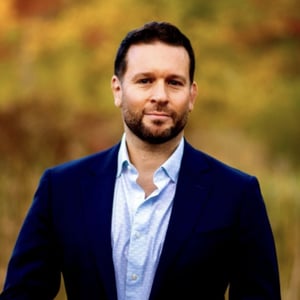
Professor of Law and Public Policy, Pepperdine University Caruso School of Law
Greg McNeal is an award winning entrepreneur, professor, and investor. He co-founded AirMap, a multinational aerospace and defense company honored as one of the “World’s Most Innovative Companies” by Fast Company and ranked as an Inc.com 25 Most Disruptive Company. The company also received a Los Angeles Business Journal Innovation Award, and a Consumer Electronics Show “Innovation Award.” The company was acquired in 2021.
He invests in and advises companies and entrepreneurs in SAAS, Defense, AI, and entertainment. The companies he founded or serves on the corporate board of have raised over $100 million in funding with his direct participation in the process. Those investors include Microsoft, Flexport, Sony, Qualcomm, Rakuten, Baidu, Airbus, and top global financial services and venture capital funds including Greycroft, Social Capital, General Catalyst, Lux Capital, Bullpen Capital, Bay Bridge Ventures, Teamworthy Ventures, Operate Studio, TenOneTen, Temasek, Macquarie Group, Graph Ventures and many others. The companies he advises have raised substantially more funding, in part due to his advice and mentorship.
He is a tenured Professor of Law and Public Policy at Pepperdine University and a faculty member with the Palmer Center for Entrepreneurship and the Law and teaches courses in technology, public policy, internet, and privacy law.
As a public policy and legal expert, Greg has worked with the White House, the Department of Defense, the State Department, and independent regulatory agencies on matters related to technology, law and policy. He has on multiple occasions testified before Congress and state legislatures about entrepreneurship and emerging technology and has aided state legislators, cities, municipalities, and executive branch officials in drafting legislation and ordinances related to technological advances and has been appointed by Cabinet officials to serve on Federal Rulemaking Committees.
He is a frequent keynote speaker at industry events and academic conferences related to technology, law, and public policy. He advises venture capital firms and other investors, start-ups, law enforcement, consulting firms, and Fortune 500 companies about the legal and regulatory issues associated with emerging technologies.
He regularly appears on television and radio to discuss technology and business, wrote a column on business and technology for Forbes and has authored Op-Eds for the New York Times, the Washington Post, and The Washington Times, among others. In his early career he worked on national security, international criminal law and counterterrorism matters and served as an Army officer.
Associate Professor of Law, Loyola Law School Los Angeles
Levitt is a national expert in constitutional law and the law of democracy, with particular focus on election administration and redistricting. He has published in the Harvard Law Review, the Yale Law and Policy Review, the Georgetown Law Journal, the William & Mary Law Review, and the peer-reviewed Election Law Journal, among others. In the spring of 2013, he served as a visiting faculty member at the Yale Law School.
Levitt has been invited to testify before committees of the U.S. Senate, the U.S. Civil Rights Commission, several state legislative bodies, and both federal and state courts. His research has been cited extensively in the media and the courts, including the U.S. Supreme Court. He also maintains the website All About Redistricting, tracking the process of state and federal redistricting around the country, including litigation.
Levitt has served in various capacities for several presidential campaigns, including as the National Voter Protection Counsel in 2008, helping to run an effort ensuring that tens of millions of citizens could vote and have those votes counted. Before joining the faculty of Loyola Law School, he was counsel at the Brennan Center for Justice at NYU School of Law, for five years. He has also worked as in-house counsel to the country's largest independent voter registration and engagement operation, and at several nonprofit civil rights and civil liberties organizations.
Levitt served as a law clerk to the Honorable Stephen Reinhardt of the U.S. Court of Appeals for the Ninth Circuit. He holds a law degree and a masters degree in public administration from Harvard University, and was an articles editor for the Harvard Law Review. He is admitted to the bar in California, New Jersey, New York, and the District of Columbia, and to the U.S. Courts of Appeal for the Ninth Circuit and Eleventh Circuit, and the U.S. District Courts in the Central District of California and Northern District of Florida.

Senior Fellow and Director of Constitutional Studies, Manhattan Institute
Ilya Shapiro is a senior fellow and director of constitutional studies at the Manhattan Institute and a contributing editor of City Journal. Previously he was executive director and senior lecturer at the Georgetown Center for the Constitution, and before that a vice president of the Cato Institute.
Shapiro is the author of Lawless: The Miseducation of America’s Elites (2025) and Supreme Disorder: Judicial Nominations and the Politics of America’s Highest Court (2020), coauthor of Religious Liberties for Corporations? (2014), and editor of 11 volumes of the Cato Supreme Court Review (2008-18). He has contributed to a variety of academic, popular, and professional publications, including the Wall Street Journal, Harvard Journal of Law & Public Policy, Washington Post, Los Angeles Times, USA Today, National Review, and Newsweek. He also regularly provides commentary for various media outlets, writes the Shapiro’s Gavel newsletter on Substack, and once appeared on the Colbert Report.
Shapiro has testified many times before Congress and state legislatures and has filed more than 500 amicus curiae “friend of the court” briefs in the Supreme Court. He lectures regularly on behalf of the Federalist Society, is a member of the board of fellows of the Jewish Policy Center, was an inaugural Washington Fellow at the National Review Institute, and has been an adjunct law professor at the George Washington University and University of Mississippi. He is also the chairman of the board of advisers of the Mississippi Justice Institute, a barrister in the Edward Coke Appellate Inn of Court, and a former member of the Virginia Advisory Committee to the U.S. Commission on Civil Rights.
Earlier in his career, Shapiro was a special assistant/adviser to the Multi-National Force in Iraq on rule-of-law issues and practiced at Patton Boggs and Cleary Gottlieb. Before entering private practice, he clerked for Judge E. Grady Jolly of the U.S. Court of Appeals for the Fifth Circuit. He holds an AB from Princeton University, an MSc from the London School of Economics, and a JD from the University of Chicago Law School.
Associate Professor of Law, Loyola Law School Los Angeles
Hiro Aragaki joined the Loyola faculty in 2011. His scholarly interests cluster around the intersection of contract and procedure. He has written extensively on federal arbitration law and on interest-based dispute resolution in the public sphere. His work has appeared in theUniversity of Pennsylvania Law Review, the UCLA Law Review, and the Yale Law Journal Online, among others. His most recent work, Equal Opportunity for Arbitration, was selected for presentation in the Civil Litigation & Dispute Resolution category at the Stanford/Yale Junior Faculty Forum. In 2011, he traveled to Dhaka, Bangladesh, to train judges and lawyers in mediation and to provide advice on the design of an effective court-connected ADR program.
Before coming to Loyola, Professor Aragaki was an Assistant Professor of Law & Ethics at Fordham University Graduate School of Business Administration in New York, where he taught courses on business law. Prior to that, he practiced law with international law firms, served as an arbitrator and mediator, and clerked for the Hon. Fern M. Smith, U.S. District Court (N.D. Cal.).
Professor Aragaki graduated with distinction from Stanford Law School, where he was an associate editor of the Stanford Law Review. He received a B.A. in Philosophy from Yale College and an M.Phil. in Social and Political Theory from Cambridge University, where he held a Benefactor’s Scholarship at St. John’s College.
John M. Rounds Professor of Law and Associate Dean, University of Kansas School of Law
Chris Drahozal is an internationally known scholar whose writing focuses on the law and economics of dispute resolution, particularly arbitration. He is the author of multiple books and numerous articles on commercial arbitration, and has taught and given presentations on the subject in Europe, Canada and the United States. He is serving as an Associate Reporter for the ALI's Restatement (Third) of the U.S. Law of International Commercial Arbitration. Drahozal also is a well-respected teacher and received the Immel Award for Teaching Excellence in 2004. Prior to coming to KU, Professor Drahozal practiced law with Sidley & Austin in Washington, D.C., and served as a law clerk for Chief Judge Charles Clark of the United States Court of Appeals for the Fifth Circuit, Justice Byron R. White of the United States Supreme Court, and Judge George H. Aldrich of the Iran-United States Claims Tribunal in The Hague, The Netherlands.

Milton R. Underwood Chair in Free Enterprise, Vanderbilt University Law School
Brian Fitzpatrick is the Milton R. Underwood Chair in Free Enterprise and Professor of Law at Vanderbilt Law School, where his research focuses on class action litigation, federal courts, judicial selection, and constitutional law. He is best known for his empirical studies of class action settlements as well as his book The Conservative Case for Class Actions (University of Chicago Press, 2019). Professor Fitzpatrick joined Vanderbilt's law faculty in 2007 after serving as the John M. Olin Fellow at New York University School of Law. He graduated first in his class from Harvard Law School and went on to clerk for Judge Diarmuid O'Scannlain on the U.S. Court of Appeals for the Ninth Circuit and Justice Antonin Scalia on the U.S. Supreme Court. After his clerkships, Professor Fitzpatrick practiced commercial and appellate litigation for several years at Sidley Austin in Washington, D.C., and served as Special Counsel for Supreme Court Nominations to U.S. Senator John Cornyn. Before earning his law degree, Fitzpatrick graduated summa cum laude with a bachelor's of science in chemical engineering from the University of Notre Dame. He has received the Hall-Hartman Outstanding Professor Award, which recognizes excellence in classroom teaching, for his Civil Procedure and Federal Courts courses.
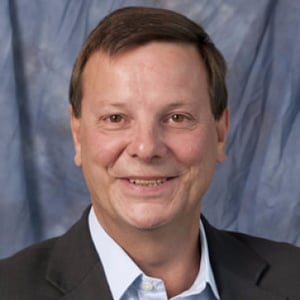
Professor of Law, Antonin Scalia Law School, George Mason University
Professor of Law Michael S. Greve joined the faculty of the Antonin Scalia Law School, George Mason University in fall 2012 after having served as John G. Searle Scholar at the American Enterprise Institute (AEI), where he specialized in constitutional law, courts, and business regulation and served as chairman of the Competitive Enterprise Institute. Prior to joining AEI, Greve was founder and co-director of the Center for Individual Rights, a public interest law firm specializing in constitutional litigation.
Greve has served previously as an adjunct professor at a number of universities, including Cornell and Johns Hopkins Universities, and has been a visiting professor at Boston College since 2004. He was awarded a PhD and an MA in government by Cornell University. Greve also earned a Diploma from the University of Hamburg in Germany.
A prolific writer, Greve is the author of nine books and a multitude of articles appearing in scholarly publications, as well as numerous editorials, short articles, and book reviews. He is a frequent speaker for professional and scholarly organizations and has made many appearances on radio and television.
In addition Greve has provided congressional and state legislative testimony, has lobbied and consulted in federal agency proceedings, and has provided litigation services and management in over 30 cases, including matters before the U.S. Supreme Court.
Professor of Law, University of Georgia School of Law
Peter B. "Bo" Rutledge is a full professor whose teaching and research interests include international dispute resolution, arbitration, international business transactions and the Supreme Court.
He is the author of the forthcoming book Arbitration and the Constitution and co-author with Gary Born of the book International Civil Litigation in the United States. His works have been published by Yale University Press, Oxford University Press and Cambridge University Press, and his articles have appeared in a diverse array of journals such as the University of Chicago Law Review, the Vanderbilt Law Review and the Journal of International Arbitration. He also regularly advises parties on matters of international dispute resolution (litigation and arbitration).
In 2008, the Supreme Court appointed Rutledge to brief and argue the case of Irizarry v. United States as amicus curiae in defense of the judgment below. He subsequently won the case, joining the ranks of a select few advocates who have successfully defended a judgment below when the government refused to do so. A former law clerk at the U.S. Supreme Court for Justice Clarence Thomas and the U.S. Court of Appeals for the 4th Circuit for Chief Judge J. Harvie Wilkinson III, Rutledge regularly files briefs and advises lawyers in matters before the Supreme Court and lower courts.
Given his interest in international dispute resolution, Rutledge has taught and spoken at numerous foreign universities. In 2010-11, he was a Fulbright Professor at the Institut für Zivilverfahrensrecht at the University of Vienna Law School. Foreign universities where Rutledge has been invited to speak include Oxford University, Cambridge University, the University of Mainz, Jagellonian University, Stockholm University and the University of Oslo.
An accomplished teacher, he has received teaching awards in the majority of his years in the legal academy, including most recently the 2009 John C. O'Byrne Award for Furthering Faculty-Student Relations.
In addition to his academic and legal work, Rutledge remains active in professional circles. He regularly advises parties on matters of international dispute resolution and has served as an expert in both litigation and arbitration. He is a listed arbitrator with the London Court of International Arbitration and the Vienna International Arbitral Center. He has testified on several occasions before Congress on pending arbitration legislation, has regularly spoken to broadcast and print media, and has given speeches to a range of professional audiences on matters such as international dispute resolution, arbitration and the Supreme Court. He currently serves as part of the American Arbitration Association's delegation to the UNCITRAL Working Group on Arbitration and is a member of the Academic Council of the Institute for Transnational Arbitration.
Before entering the teaching academy, Rutledge practiced at Wilmer Cutler & Pickering (now Wilmer Cutler Pickering Hale and Dorr), where his practice included international dispute resolution and Supreme Court matters, and at Freshfields Bruckhaus Deringer, where his practice concentrated on international arbitration.
He holds a B.A. magna cum laude from Harvard University, an M.Litt. in Applied Ethics from the University of Aberdeen (Scotland) and a J.D. with high honors from the University of Chicago, where he served as executive editor of The University of Chicago Law Review and was inducted into the Order of the Coif.
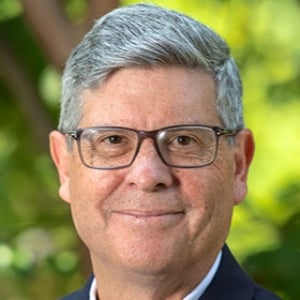
E. Claiborne Robins Distinguished Chair in Law, University of Richmond School of Law
Professor Kurt Lash teaches and writes about constitutional law. Founder and director of the Richmond Program on the American Constitution, Professor Lash has published widely on the subjects of constitutional law and constitutional history, including The Fourteenth Amendment and the Privileges or Immunities of American Citizenship (Cambridge University Press, 2014), The Lost History of the Ninth Amendment (Oxford University Press, 2009), and The American First Amendment in the Twenty-first Century: Cases and Materials(with William W. Van Alstyne) (5th ed., Foundation Press, 2014). An elected member of the American Law Institute, Professor Lash’s work has appeared in numerous legal journals including the Stanford Law Journal, Georgetown Law Journal, Virginia Law Review, andNotre Dame Law Review. He has been a visiting professor at Northwestern University School of Law and is the former director of the University of Illinois College of Law Program in Constitutional Theory, History, and Law.
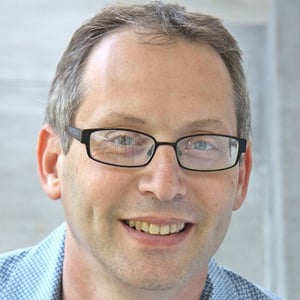
Chancellor's Professor of Law and Political Science, University of California, Irvine School of Law
Professor Richard L. Hasen is Chancellor’s Professor of Law and Political Science at the University of California, Irvine. Hasen is a nationally recognized expert in election law and campaign finance regulation, and is co-author of a leading casebook on election law.
From 2001-2010, he served (with Dan Lowenstein) as founding co-editor of the quarterly peer-reviewed publication, Election Law Journal. He is the author of over 100 articles on election law issues, published in numerous journals including the Harvard Law Review, Stanford Law Review and Supreme Court Review. He was elected to The American Law Institute in 2009 and served as an Adviser on ALI’s law reform project, Principles of Election Law: Resolution of Election Disputes.
Professor Hasen was named one of the 100 most influential lawyers in America by The National Law Journal in 2013, and one of the Top 100 Lawyers in California in 2005 and 2016 by the Los Angeles and San Francisco Daily Journal.
His op-eds and commentaries have appeared in many publications, including The New York Times, The Washington Post, Politico, and Slate. Hasen also writes the often-quoted Election Law Blog, which the ABA Journal named to its “Blawg 100 Hall of Fame” in 2015. His newest book, The Justice of Contradictions: Antonin Scalia and the Politics of Disruption, will be published in 2018 by Yale University Press.
Professor Hasen holds a B.A. degree (with highest honors) from UC Berkeley, and a J.D., M.A., and Ph.D. (Political Science) from UCLA. After law school, Hasen clerked for the Honorable David R. Thompson of the United States Court of Appeals for the Ninth Circuit, and then worked as a civil appellate lawyer at the Encino firm Horvitz and Levy.
From 1994-1997, Hasen taught at the Chicago-Kent College of Law and from 1998-2011 he taught at Loyola Law School, Los Angeles, where he was named the William H. Hannon Distinguished Professor of Law in 2005. He joined the UC Irvine School of Law faculty in July 2011, and is a faculty member of the UC Irvine Jack W. Peltason Center for the Study of Democracy.
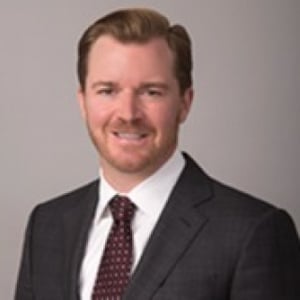
Partner, Gibson, Dunn & Crutcher LLP
Matthew D. McGill is a partner in the Washington, D.C. office of Gibson, Dunn & Crutcher and Co-Chair of the firm’s Judgment and Arbitral Award Enforcement and Betting and Gaming practice groups. He also is a member of the firm’s Appellate and Constitutional Law and Sports Law practice groups.
A three-time “Litigator of the Week” (The AmLaw Litigation Daily) Mr. McGill has been ranked by Chambers USA in Nationwide Appellate Law and recognized by The National Law Journal as a “Litigation Trailblazer” for his pioneering work enforcing judgments against foreign sovereigns. In 2020, he successfully negotiated a $335 million resolution of terrorism claims against the Republic of Sudan arising from the 1998 bombings of the U.S. Embassies in Kenya and Tanzania. Previously, he successfully resolved NML Capital’s multi-billion dollar claims against the Republic of Argentina after what the Financial Times called “the trial of the century in sovereign debt restructuring.” He currently represents clients in public enforcement matters against the governments of the Democratic Republic of Congo, Iran, Pakistan, Spain, and Venezuela.
An accomplished appellate advocate, Mr. McGill has participated in 23 cases before the Supreme Court of the United States, prevailing in 17, including several high-profile triumphs over foreign sovereigns:
Opati v. Republic of Sudan (2020) – Mr. McGill successfully argued before the Supreme Court on behalf of victims of the 1998 bombings of the U.S. Embassies in Kenya and Tanzania and secured a ruling that “unanimously reinstated as much as $4.3 billion in punitive damages awarded against Sudan” (New York Times) setting the stage for the resolution of the Embassy bombing claims and the United States’ delisting of Sudan as a state-sponsor of terrorism.
Puerto Rico v. Franklin California Tax-Free Trust (2016) – Arguing before the Supreme Court on behalf of creditors that found themselves on the leading edge of Puerto Rico’s debt crisis, Mr. McGill successfully defended an injunction invalidating Puerto Rico’s emergency municipal bankruptcy legislation. The ruling protected bondholders against the “chance that the territory could write its own bankruptcy plan” (Wall Street Journal) and ensured that Congress would retain control over Puerto Rico’s fiscal rescue.
Bank Markazi v. Peterson (2016) – In this important separation-of-powers case, Mr. McGill represented victims of the 1983 Beirut Marine Corps Barracks Bombing who hold judgments against Iran. Ruling in favor of the Beirut Marines, the Supreme Court rejected arguments from Iran’s central bank that Congress had impermissibly invaded the province of the Judicial Branch by authorizing victims of terrorism to seize certain central bank assets. The ruling allowed nearly $2 billion to be distributed to Iran’s victims.
Argentina v. NML Capital, Ltd. (2014) – The Supreme Court’s decision in this case confirmed the availability of broad discovery to enforce judgments against foreign sovereigns, empowering creditors to seek information concerning the debtor nation’s assets anywhere in the world.
At the intersection of sports and gaming, Mr. McGill led the effort of the Governor of New Jersey to legalize sports wagering in the Garden State, culminating in the Supreme Court’s “historic decision” (Sports Illustrated) in Murphy v. NCAA that struck down the federal law that had prohibited states other than Nevada from legalizing sports betting. By establishing that the federal government has no power to “dictate[] what a state legislature may and may not do,” this “landmark ruling” (USA Today) safeguards the power of States to govern themselves and cleared the path for States across the country to legalize sports wagering.
Later, when the U.S. government announced in 2019 that it was abandoning its longstanding position that the Wire Act of 1961 prohibits only certain forms of sports wagering, Mr. McGill led the legal challenge to the new government policy. Representing the technology provider for the internet-based operations of the New Hampshire Lottery, Mr. McGill secured a judgment that the Wire Act covered only sports betting, and successfully defended that judgment on appeal. The ruling safeguarded “the entire online gambling industry as well as multi-state lotteries such as Powerball” (Am Law Litigation Daily) from an arbitrary change in government policy. For his work toward legalizing sports wagering and confining the Wire Act to its intended scope, Mr. McGill has been recognized by Law360 as a Sports Law “MVP” and “2020 Sports & Entertainment Trailblazer” by The National Law Journal.
Mr. McGill also maintains an active pro bono practice. He currently represents three adoptive couples in a constitutional challenge to the Indian Child Welfare Act, and he represents persons born in American Samoa in their constitutional challenge to a federal statute that designates them “non-citizen nationals.”
Prior to joining Gibson Dunn, Mr. McGill served as a Bristow Fellow in the Office of the Solicitor General at the U.S. Department of Justice. He clerked for the Hon. Joseph M. McLaughlin of the U.S. Court of Appeals for the Second Circuit and the Hon. John G. Roberts, Jr. of the U.S. Court of Appeals for the D.C. Circuit.
Mr. McGill earned a Bachelor of Arts degree, magna cum laude, from Dartmouth College in 1996. In 2000, he graduated from Stanford Law School, where he was elected to the Order of the Coif.
Mr. McGill is licensed to practice in New York and the District of Columbia and he has been admitted to practice before the Supreme Court of the United States, the United States Courts of Appeals for the First, Second, Third, Fourth, Fifth, Ninth, Tenth, Eleventh, District of Columbia, and Federal Circuits, and the United States District Courts for the District of Columbia and the Southern District of New York.
E. Claiborne Robins Distinguished Chair in Law, University of Richmond School of Law
Professor Kurt Lash teaches and writes about constitutional law. Founder and director of the Richmond Program on the American Constitution, Professor Lash has published widely on the subjects of constitutional law and constitutional history, including The Fourteenth Amendment and the Privileges or Immunities of American Citizenship (Cambridge University Press, 2014), The Lost History of the Ninth Amendment (Oxford University Press, 2009), and The American First Amendment in the Twenty-first Century: Cases and Materials(with William W. Van Alstyne) (5th ed., Foundation Press, 2014). An elected member of the American Law Institute, Professor Lash’s work has appeared in numerous legal journals including the Stanford Law Journal, Georgetown Law Journal, Virginia Law Review, andNotre Dame Law Review. He has been a visiting professor at Northwestern University School of Law and is the former director of the University of Illinois College of Law Program in Constitutional Theory, History, and Law.
E. Claiborne Robins Distinguished Chair in Law, University of Richmond School of Law
Professor Kurt Lash teaches and writes about constitutional law. Founder and director of the Richmond Program on the American Constitution, Professor Lash has published widely on the subjects of constitutional law and constitutional history, including The Fourteenth Amendment and the Privileges or Immunities of American Citizenship (Cambridge University Press, 2014), The Lost History of the Ninth Amendment (Oxford University Press, 2009), and The American First Amendment in the Twenty-first Century: Cases and Materials(with William W. Van Alstyne) (5th ed., Foundation Press, 2014). An elected member of the American Law Institute, Professor Lash’s work has appeared in numerous legal journals including the Stanford Law Journal, Georgetown Law Journal, Virginia Law Review, andNotre Dame Law Review. He has been a visiting professor at Northwestern University School of Law and is the former director of the University of Illinois College of Law Program in Constitutional Theory, History, and Law.
Associate Professor of Law, Loyola Law School Los Angeles
Levitt is a national expert in constitutional law and the law of democracy, with particular focus on election administration and redistricting. He has published in the Harvard Law Review, the Yale Law and Policy Review, the Georgetown Law Journal, the William & Mary Law Review, and the peer-reviewed Election Law Journal, among others. In the spring of 2013, he served as a visiting faculty member at the Yale Law School.
Levitt has been invited to testify before committees of the U.S. Senate, the U.S. Civil Rights Commission, several state legislative bodies, and both federal and state courts. His research has been cited extensively in the media and the courts, including the U.S. Supreme Court. He also maintains the website All About Redistricting, tracking the process of state and federal redistricting around the country, including litigation.
Levitt has served in various capacities for several presidential campaigns, including as the National Voter Protection Counsel in 2008, helping to run an effort ensuring that tens of millions of citizens could vote and have those votes counted. Before joining the faculty of Loyola Law School, he was counsel at the Brennan Center for Justice at NYU School of Law, for five years. He has also worked as in-house counsel to the country's largest independent voter registration and engagement operation, and at several nonprofit civil rights and civil liberties organizations.
Levitt served as a law clerk to the Honorable Stephen Reinhardt of the U.S. Court of Appeals for the Ninth Circuit. He holds a law degree and a masters degree in public administration from Harvard University, and was an articles editor for the Harvard Law Review. He is admitted to the bar in California, New Jersey, New York, and the District of Columbia, and to the U.S. Courts of Appeal for the Ninth Circuit and Eleventh Circuit, and the U.S. District Courts in the Central District of California and Northern District of Florida.
Senior Fellow and Director of Constitutional Studies, Manhattan Institute
Ilya Shapiro is a senior fellow and director of constitutional studies at the Manhattan Institute and a contributing editor of City Journal. Previously he was executive director and senior lecturer at the Georgetown Center for the Constitution, and before that a vice president of the Cato Institute.
Shapiro is the author of Lawless: The Miseducation of America’s Elites (2025) and Supreme Disorder: Judicial Nominations and the Politics of America’s Highest Court (2020), coauthor of Religious Liberties for Corporations? (2014), and editor of 11 volumes of the Cato Supreme Court Review (2008-18). He has contributed to a variety of academic, popular, and professional publications, including the Wall Street Journal, Harvard Journal of Law & Public Policy, Washington Post, Los Angeles Times, USA Today, National Review, and Newsweek. He also regularly provides commentary for various media outlets, writes the Shapiro’s Gavel newsletter on Substack, and once appeared on the Colbert Report.
Shapiro has testified many times before Congress and state legislatures and has filed more than 500 amicus curiae “friend of the court” briefs in the Supreme Court. He lectures regularly on behalf of the Federalist Society, is a member of the board of fellows of the Jewish Policy Center, was an inaugural Washington Fellow at the National Review Institute, and has been an adjunct law professor at the George Washington University and University of Mississippi. He is also the chairman of the board of advisers of the Mississippi Justice Institute, a barrister in the Edward Coke Appellate Inn of Court, and a former member of the Virginia Advisory Committee to the U.S. Commission on Civil Rights.
Earlier in his career, Shapiro was a special assistant/adviser to the Multi-National Force in Iraq on rule-of-law issues and practiced at Patton Boggs and Cleary Gottlieb. Before entering private practice, he clerked for Judge E. Grady Jolly of the U.S. Court of Appeals for the Fifth Circuit. He holds an AB from Princeton University, an MSc from the London School of Economics, and a JD from the University of Chicago Law School.

Executive Vice President, The Federalist Society
Dean Reuter is Executive Vice President at the Federalist Society for Law and Public Policy Studies. He has served in two federal government agency Offices of the Inspector General, as Counsel to the Inspector General and Deputy Inspector General, responsible for policing the use of federal funds granted and contracted through those agencies. As such, he helped conduct and oversee criminal investigations across the country. He is the principal author of the non-fiction book, The Hidden Nazi: The Untold Story of America's Deal with the Devil, and editor of Liberty’s Nemesis: The Unchecked Expansion of the State and Confronting Terror: 9/11 and the Future of American National Security. He was appointed by the President and served as Vice-Chairman of the Board of Directors of the Corporation for National and Community Service, and recently served as an appointee on the U.S. Commission on Presidential Scholars. He is a graduate of Hood College (BA with Honors) and the University of Maryland School of Law.
Associate Professor of Law, Loyola Law School Los Angeles
Hiro Aragaki joined the Loyola faculty in 2011. His scholarly interests cluster around the intersection of contract and procedure. He has written extensively on federal arbitration law and on interest-based dispute resolution in the public sphere. His work has appeared in theUniversity of Pennsylvania Law Review, the UCLA Law Review, and the Yale Law Journal Online, among others. His most recent work, Equal Opportunity for Arbitration, was selected for presentation in the Civil Litigation & Dispute Resolution category at the Stanford/Yale Junior Faculty Forum. In 2011, he traveled to Dhaka, Bangladesh, to train judges and lawyers in mediation and to provide advice on the design of an effective court-connected ADR program.
Before coming to Loyola, Professor Aragaki was an Assistant Professor of Law & Ethics at Fordham University Graduate School of Business Administration in New York, where he taught courses on business law. Prior to that, he practiced law with international law firms, served as an arbitrator and mediator, and clerked for the Hon. Fern M. Smith, U.S. District Court (N.D. Cal.).
Professor Aragaki graduated with distinction from Stanford Law School, where he was an associate editor of the Stanford Law Review. He received a B.A. in Philosophy from Yale College and an M.Phil. in Social and Political Theory from Cambridge University, where he held a Benefactor’s Scholarship at St. John’s College.
John M. Rounds Professor of Law and Associate Dean, University of Kansas School of Law
Chris Drahozal is an internationally known scholar whose writing focuses on the law and economics of dispute resolution, particularly arbitration. He is the author of multiple books and numerous articles on commercial arbitration, and has taught and given presentations on the subject in Europe, Canada and the United States. He is serving as an Associate Reporter for the ALI's Restatement (Third) of the U.S. Law of International Commercial Arbitration. Drahozal also is a well-respected teacher and received the Immel Award for Teaching Excellence in 2004. Prior to coming to KU, Professor Drahozal practiced law with Sidley & Austin in Washington, D.C., and served as a law clerk for Chief Judge Charles Clark of the United States Court of Appeals for the Fifth Circuit, Justice Byron R. White of the United States Supreme Court, and Judge George H. Aldrich of the Iran-United States Claims Tribunal in The Hague, The Netherlands.
Professor of Law, Antonin Scalia Law School, George Mason University
Professor of Law Michael S. Greve joined the faculty of the Antonin Scalia Law School, George Mason University in fall 2012 after having served as John G. Searle Scholar at the American Enterprise Institute (AEI), where he specialized in constitutional law, courts, and business regulation and served as chairman of the Competitive Enterprise Institute. Prior to joining AEI, Greve was founder and co-director of the Center for Individual Rights, a public interest law firm specializing in constitutional litigation.
Greve has served previously as an adjunct professor at a number of universities, including Cornell and Johns Hopkins Universities, and has been a visiting professor at Boston College since 2004. He was awarded a PhD and an MA in government by Cornell University. Greve also earned a Diploma from the University of Hamburg in Germany.
A prolific writer, Greve is the author of nine books and a multitude of articles appearing in scholarly publications, as well as numerous editorials, short articles, and book reviews. He is a frequent speaker for professional and scholarly organizations and has made many appearances on radio and television.
In addition Greve has provided congressional and state legislative testimony, has lobbied and consulted in federal agency proceedings, and has provided litigation services and management in over 30 cases, including matters before the U.S. Supreme Court.
Professor of Law, University of Georgia School of Law
Peter B. "Bo" Rutledge is a full professor whose teaching and research interests include international dispute resolution, arbitration, international business transactions and the Supreme Court.
He is the author of the forthcoming book Arbitration and the Constitution and co-author with Gary Born of the book International Civil Litigation in the United States. His works have been published by Yale University Press, Oxford University Press and Cambridge University Press, and his articles have appeared in a diverse array of journals such as the University of Chicago Law Review, the Vanderbilt Law Review and the Journal of International Arbitration. He also regularly advises parties on matters of international dispute resolution (litigation and arbitration).
In 2008, the Supreme Court appointed Rutledge to brief and argue the case of Irizarry v. United States as amicus curiae in defense of the judgment below. He subsequently won the case, joining the ranks of a select few advocates who have successfully defended a judgment below when the government refused to do so. A former law clerk at the U.S. Supreme Court for Justice Clarence Thomas and the U.S. Court of Appeals for the 4th Circuit for Chief Judge J. Harvie Wilkinson III, Rutledge regularly files briefs and advises lawyers in matters before the Supreme Court and lower courts.
Given his interest in international dispute resolution, Rutledge has taught and spoken at numerous foreign universities. In 2010-11, he was a Fulbright Professor at the Institut für Zivilverfahrensrecht at the University of Vienna Law School. Foreign universities where Rutledge has been invited to speak include Oxford University, Cambridge University, the University of Mainz, Jagellonian University, Stockholm University and the University of Oslo.
An accomplished teacher, he has received teaching awards in the majority of his years in the legal academy, including most recently the 2009 John C. O'Byrne Award for Furthering Faculty-Student Relations.
In addition to his academic and legal work, Rutledge remains active in professional circles. He regularly advises parties on matters of international dispute resolution and has served as an expert in both litigation and arbitration. He is a listed arbitrator with the London Court of International Arbitration and the Vienna International Arbitral Center. He has testified on several occasions before Congress on pending arbitration legislation, has regularly spoken to broadcast and print media, and has given speeches to a range of professional audiences on matters such as international dispute resolution, arbitration and the Supreme Court. He currently serves as part of the American Arbitration Association's delegation to the UNCITRAL Working Group on Arbitration and is a member of the Academic Council of the Institute for Transnational Arbitration.
Before entering the teaching academy, Rutledge practiced at Wilmer Cutler & Pickering (now Wilmer Cutler Pickering Hale and Dorr), where his practice included international dispute resolution and Supreme Court matters, and at Freshfields Bruckhaus Deringer, where his practice concentrated on international arbitration.
He holds a B.A. magna cum laude from Harvard University, an M.Litt. in Applied Ethics from the University of Aberdeen (Scotland) and a J.D. with high honors from the University of Chicago, where he served as executive editor of The University of Chicago Law Review and was inducted into the Order of the Coif.
Milton R. Underwood Chair in Free Enterprise, Vanderbilt University Law School
Brian Fitzpatrick is the Milton R. Underwood Chair in Free Enterprise and Professor of Law at Vanderbilt Law School, where his research focuses on class action litigation, federal courts, judicial selection, and constitutional law. He is best known for his empirical studies of class action settlements as well as his book The Conservative Case for Class Actions (University of Chicago Press, 2019). Professor Fitzpatrick joined Vanderbilt's law faculty in 2007 after serving as the John M. Olin Fellow at New York University School of Law. He graduated first in his class from Harvard Law School and went on to clerk for Judge Diarmuid O'Scannlain on the U.S. Court of Appeals for the Ninth Circuit and Justice Antonin Scalia on the U.S. Supreme Court. After his clerkships, Professor Fitzpatrick practiced commercial and appellate litigation for several years at Sidley Austin in Washington, D.C., and served as Special Counsel for Supreme Court Nominations to U.S. Senator John Cornyn. Before earning his law degree, Fitzpatrick graduated summa cum laude with a bachelor's of science in chemical engineering from the University of Notre Dame. He has received the Hall-Hartman Outstanding Professor Award, which recognizes excellence in classroom teaching, for his Civil Procedure and Federal Courts courses.
Chancellor's Professor of Law and Political Science, University of California, Irvine School of Law
Professor Richard L. Hasen is Chancellor’s Professor of Law and Political Science at the University of California, Irvine. Hasen is a nationally recognized expert in election law and campaign finance regulation, and is co-author of a leading casebook on election law.
From 2001-2010, he served (with Dan Lowenstein) as founding co-editor of the quarterly peer-reviewed publication, Election Law Journal. He is the author of over 100 articles on election law issues, published in numerous journals including the Harvard Law Review, Stanford Law Review and Supreme Court Review. He was elected to The American Law Institute in 2009 and served as an Adviser on ALI’s law reform project, Principles of Election Law: Resolution of Election Disputes.
Professor Hasen was named one of the 100 most influential lawyers in America by The National Law Journal in 2013, and one of the Top 100 Lawyers in California in 2005 and 2016 by the Los Angeles and San Francisco Daily Journal.
His op-eds and commentaries have appeared in many publications, including The New York Times, The Washington Post, Politico, and Slate. Hasen also writes the often-quoted Election Law Blog, which the ABA Journal named to its “Blawg 100 Hall of Fame” in 2015. His newest book, The Justice of Contradictions: Antonin Scalia and the Politics of Disruption, will be published in 2018 by Yale University Press.
Professor Hasen holds a B.A. degree (with highest honors) from UC Berkeley, and a J.D., M.A., and Ph.D. (Political Science) from UCLA. After law school, Hasen clerked for the Honorable David R. Thompson of the United States Court of Appeals for the Ninth Circuit, and then worked as a civil appellate lawyer at the Encino firm Horvitz and Levy.
From 1994-1997, Hasen taught at the Chicago-Kent College of Law and from 1998-2011 he taught at Loyola Law School, Los Angeles, where he was named the William H. Hannon Distinguished Professor of Law in 2005. He joined the UC Irvine School of Law faculty in July 2011, and is a faculty member of the UC Irvine Jack W. Peltason Center for the Study of Democracy.
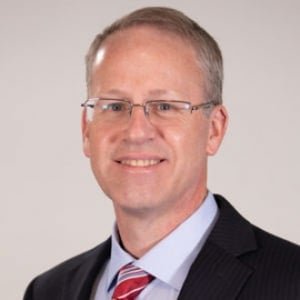
Senior Attorney, DC, Pacific Legal Foundation
Steve Simpson joined PLF in 2019 to head up its Separation of Powers practice group.
Steve’s career in public interest law started at the Institute for Justice in 2001, where he litigated free speech, campaign finance, and economic liberty cases. Among other high-profile cases in which Steve was involved, he was co-counsel in Arizona Free Enterprise Club’s Freedom Club PAC v. Bennett, IJ’s successful Supreme Court challenge to Arizona’s public financing law for political campaigns. He was the lead litigator in SpeechNow.org v. FEC, a joint effort between IJ and the Institute for Free Speech that led to the creation of super PACs. And he was co-counsel in Swedenburg v. Kelly, IJ’s successful Supreme Court challenge to New York’s ban on the interstate shipping of wine.
In 2013, Steve moved into the policy arena as the Ayn Rand Institute’s director of Legal Studies, where he spent five years writing and speaking on a wide variety of legal and cultural issues. From there, he moved back into law as senior litigation counsel at the New Civil Liberties Alliance in Washington, D.C.
Steve has spoken and written on a wide variety of legal and policy issues. He has testified in Congress and briefed congressional staffers. He has been interviewed on scores of television and radio programs, including PBS News Hour, Stossel, and The Rubin Report. His writings have appeared in many publications, including The Wall Street Journal and The Washington Post. In 2014, Steve was a Lincoln Fellow at the Claremont Institute. He is the editor of Defending Free Speech (ARI Press, 2016).
Steve earned his law degree magna cum laude from New York Law School in 1994. Following law school, he clerked for a federal district judge in the Southern District of Florida and spent several years as a litigator at Shearman & Sterling.
When he’s not at work or spending time with his wife and three daughters, Steve can usually be found mucking around in the woods at his cabin on Shenandoah Mountain.

Thomas M. Siebel Senior Fellow, The Hoover Institution, Stanford University; Gary T. Schwartz Distinguished Professor of Law Emeritus, UCLA School of Law
Eugene Volokh is the Thomas M. Siebel Senior Fellow at the Hoover Institution (Stanford), as well as the Gary T. Schwartz Distinguished Professor of Law Emeritus and Distinguished Research Professor at UCLA School of Law. He recently retired from teaching at UCLA, after 30 years there, and is now focusing on research.
Volokh is the author of the textbooks The First Amendment and Related Statutes (8th ed. 2023), and Academic Legal Writing (5th ed. 2016), as well as over 100 academic law journal articles, mostly on First Amendment law. He is a member of The American Law Institute; the editor-in-chief of the Journal of Free Speech Law; and the creator and coauthor of The Volokh Conspiracy, a leading legal blog founded in 2002 (hosted at the Washington Post from 2014 to 2017 and now at Reason Magazine).

Where Is National Security in the Presidential Election?
Redistricting Litigation Update - Podcast
Justin Levitt, Ilya Shapiro, Dean Reuter
To listen, please right click on the audio file you wish to hear and then...
The Future of Arbitration and the World of Class Action Litigation - Podcast
Hiro Aragaki, Christopher Drahozal, Michael S. Greve, Peter B. Rutledge, Brian T. Fitzpatrick
To listen, please right click on the audio file you wish to hear and then...
Redistricting Litigation Update
The Future of Arbitration and the World of Class Action Litigation
Constitutional Federalism: The Lost History of the 9th and 10th Amendments
Citizens United v. Federal Election Commission
Richard Hasen, Steve Simpson, Eugene Volokh
On January 21, 2010, the Supreme Court announced its decision in Citizens United v. FEC. ...
Citizens United and Its Effect on the Electoral Process
Los AngelesObama's Policies: At Odds with the 10th Amendment?
The 10th Amendment