
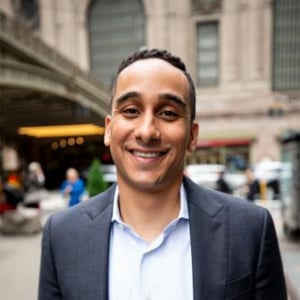
Nick Ohnell Fellow, The Manhattan Institute
Rafael Mangual is the Nick Ohnell Fellow at the Manhattan Institute, a contributing editor of City Journal, and a member of the Council on Criminal Justice. His first book, Criminal (In)Justice, was released in July 2022. He has authored and coauthored a number of MI reports and op-eds on issues ranging from urban crime and jail violence to broader matters of criminal and civil justice reform. His work has been featured and mentioned in a wide array of publications, including the Wall Street Journal, The Atlantic, New York Post, The New York Times, The Washington Post, Philadelphia Inquirer and City Journal. Mangual also regularly appears on Fox News and has made a number of national and local television and radio appearances on outlets such as C-SPAN and Bloomberg Radio. In 2020, he was appointed to serve a four-year term as a member of the New York State Advisory Committee of the U.S. Commission on Civil Rights.
Prior to joining MI in 2015, Rafael worked in corporate communications for the International Trademark Association. He holds a B.A. in corporate communications from the City University of New York’s Baruch College and a J.D. from DePaul University in Chicago, where he was president of the Federalist Society and vice president of the Appellate Moot Court team. After graduating from law school, Mangual was inducted into the Order of the Barristers, a national honor society for excellence in oral and written advocacy.

Laurence A. Tisch Professor of Law and Director, Classical Liberal Institute, New York University School of Law; Director, Classical Liberal Institute, Civitas Institute University of Texas at Austin
Richard A. Epstein is the Laurence A. Tisch Professor of Law, at New York University, a senior research fellow at the Civitas Institute at the University of Texas Austin, and a senior Lecturer, the University of Chicago. He received an LL.D., h.c . from the University of Ghent, 2003 , and an LLD h.c . from the University of Siegen in 2018 and the Bradley Prize in 2011. He has been a member of the American Academy of Arts and Sciences since 1985. He has edited both the Journal of Legal Studies (1981-1991) and the Journal of Law and Economics (1991-2001). He is also a founder and director of the Classical Liberal Institute at NYU Law School. His most recent book is The Classical Liberal Constitution: The Uncertain Quest for Limited Government (2014). His other books include Takings: Private Property and the Power of Eminent Domain ( 1985); Bargaining with the State (1993); Simple Rules for a Complex World (1995); Principles for a Free Society: Reconciling Individual Liberty and the Common Good (1998); Skepticism and Freedom: A Modern Theory of Classical Liberalism (2003); Design for Liberty: Private Property, Public Administration and the Rule of Law (2011), and most recently, The Myth of Birthright citizenship—and Beyond (2026). He has taught courses in , administrative law, antitrust, constitutional, contracts, environmental law, land use planning; real property, torts and water law. He has written and spoken extensively on a wide range of topics, and is writes a regular column for Defining Ideas.
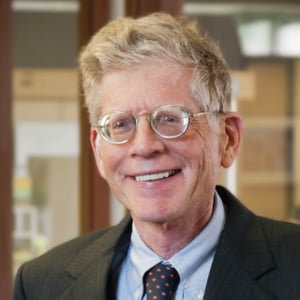
Professor of Law, University of Pittsburgh School of Law
Arthur D. Hellman, a professor of law (emeritus) at the University of Pittsburgh, is a nationally recognized scholar of the federal courts who has also written in the area of the First Amendment. His publications include numerous articles and several books, including casebooks in both areas, Federal Courts: Cases and Materials on Judicial Federalism and the Lawyering Process (5th edition 2022) (with David R. Stras, Ryan W. Scott, F. Andrew Hessick, and Derek T. Muller); and First Amendment Law: Freedom of Speech and Freedom of Religion (5th edition 2022) (with William D. Araiza, Thomas E. Baker, and Ashutosh A. Bhagwat).
In addition to his casebooks and academic writing, Processor Hellman has worked with the Judiciary Committees in the House and Senate in drafting federal courts legislation, including the most recent (2002) revision of the Judicial Conduct and Disability Act (Title 28, Chapter 16). The legislative histories of two major jurisdictional statutes – the Federal Courts Jurisdiction and Venue Clarification Act of 2011 and the “Holmes Group Fix” (enacted as part of the America Invents Act) – acknowledge his contributions.
Professor Hellman has testified as an invited witness at numerous hearings of both Judiciary Committees. His testimony has focused on a wide variety of legislative issues related to the federal courts, including the jurisdiction of the Supreme Court; proposals to divide the Ninth Circuit Court of Appeals; federal judicial discipline; unpublished appellate opinions; and the constitutionality of legislative restrictions on the powers of the federal courts.
In 2005 Professor Hellman was appointed as the inaugural holder of the Sally Ann Semenko Endowed Chair at the University. In 2002 he received the Chancellor’s Distinguished Research Award “as a faculty member who has an outstanding and continuing record of research and scholarly activity.”
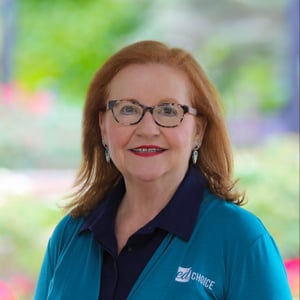
Vice President of Legal Affairs & Director of Legal Defense & Education Center, EdChoice
Leslie Hiner, Esq. is an advocate of educational freedom, a crusader fighting for the unencumbered opportunity of parents to decide how and where their children will be educated. She believes in the power of individuals to change the world, and believes personal liberty will be enhanced when our method of funding K–12 education is changed to empower parents and students before institutions.
As vice president of legal affairs at EdChoice, the nation’s leading educational choice organization, Leslie leads the EdChoice Legal Defense and Education Center for this nonpartisan, charitable nonprofit and engages with other national organizations to support school choice. She is a proven leader, advancing educational freedom and choice for all as a pathway to successful lives and a stronger society.
Hiner is an attorney with extensive state legislative and executive branch experience. In Indiana, she was the first woman chief of staff to the speaker of the house, counsel to the senate president pro tempore, and general counsel/elections deputy to the Secretary of State. She is also a former small business owner, and former litigator in private practice.
A founding board member of one of Indiana’s first charter schools, Leslie served as chairman of the board for the first several years, guiding the school’s growth from about 150 to over 1000 students. She was also directly involved in developing Indiana’s original charter school law, one of the best in the nation, and Indiana’s voucher law, the largest in the country to date.
Leslie is a member of the American Enterprise Institute Leadership Network, serves on the Schools That Can National Advisory Council, and is a Policy Advisor for The Heartland Institute. Leslie is a long-time member of the Federalist Society and a Lugar Series Excellence in Public Service alumna.
Hiner travels the country speaking on educational issues and testifying at public hearings. Recent engagements include the American Enterprise Institute With all deliberate speed: Brown v. Board of Education II 60 years later; Center for Urban Renewal and Education National Policy Summit, “Changing Policy to Change Lives”; National Conference of State Legislatures Summit debate, School Vouchers and Education Savings Accounts: Are They Constitutional; Network of Enlightened Women National Conference, Three Things You Need To Know About Education Policy; International Conference on School Choice and Reform, The Constitutionality of Educational Choice; 100 Black Men of Greater Dallas/Fort Worth, Project Soar’s Mobilizing the Village; Louisville Federalist Society Lawyers’ Chapter, Is School Choice Good Public Policy; American Conservative Union CPAC 2017.
She’s been cited in several publications, including the Wall Street Journal, New York Times, Chicago Tribune, Washington Times, Forbes, US News & World Report, The Hill, Real Clear Policy, Federalist Society DocketWatch, National Review, The Federalist, Zman Magazine, Watchdog, and has appeared on EWTN News Nightly, Wall Street Journal Video Opinion Journal podcasts, David Webb Show on Sirius/XM, ChoiceMediaTV, The Heartland Institute podcasts and school choice events, The Morning Blaze, Issues in Education and many state level broadcasts.
A native of Ohio, she earned her Juris Doctorate from the University of Akron School of Law, her Bachelor of Arts degree from the College of Wooster, and attended Rostad Teachers College as an exchange student in Sweden where she was a student teacher in grades 2 and 3. She and her husband reside in Indianapolis, and have two grown children.
Professor at Louis D. Brandeis School of Law, University of Louisville
Professor Russell L. Weaver graduated cum laude from the University of Missouri School of Law in 1978. He was a member of the Missouri Law Review, was elected to the Order of the Coif, and won the Judge Roy Harper Prize. After law school, Professor Weaver was associated with Watson, Ess, Marshall & Enggas in Kansas City, Missouri, and worked for the U.S. Department of Energy's Office of General Counsel in Washington, D.C.
Professor Weaver began teaching at the Louis D. Brandeis School of Law in 1982, and holds the rank of Professor of Law and Distinguished University Scholar. He teaches Constitutional Law, Advanced Constitutional Law, Remedies, Administrative Law, Criminal Law, and Criminal Procedure. He has received the Brandeis School of Law's awards for teaching, scholarship, and service, including the Brown Todd & Heyburn Fellowship. He has been awarded the President's Award (University of Louisville) for Outstanding Research, Scholarship and Creative Activity in the Field of Social Science, the President's Award for Outstanding Research, Scholarship and Creative Activity in the Career Achievement Category, and the President's Award for Distinguished Service. He is the Executive Director and past president of the Southeastern Conference of the Association of American Law Schools. He is an Honorary Associate of Macquarie University (Sydney, Australia).
Professor Weaver is a prolific author who has written dozens of books and articles over the last twenty-five years. He was named the Judge Spurgeon Bell Distinguished Visiting Professor at South Texas College of Law (affiliated with Texas A & M University) during the 1998-99 academic year, and he held the Herbert Herff Chair of Excellence at the Cecil C. Humphreys School of Law, University of Memphis, during 1992-93. In addition, he has been asked to speak at law schools and conferences around the world, and has been a visiting professor at law schools in France, England, Germany, Japan, Australia and Canada.
Professor Weaver is particularly noted for his work in the constitutional law area. He has served as a consultant to the constitutional drafting commissions of Belarus and Kyrghyzstan and as a commentator on the Russian Constitution. His constitutional law writings have focused on free speech issues, particularly those relating to the U.S. Supreme Court's landmark decision in N.Y. Times Co. v. Sullivan, and include a constitutional law case-book and two anthologies (The First Amendment Anthology and The Constitutional Law Anthology). He has a First Amendment casebook in progress.
Professor Weaver is also noted for his writings on legal education and his work in the administrative law area. In 1992 and 1993, he served as a consultant to the Administrative Conference of the United States. His writings have focused on agency interpretations of statutes and regulations, and he is co-author of one of the leading administrative law casebooks.
Professor Weaver has served on many community and professional committees. He served on the Louisville Bar Association's (LBA) Professional Responsibility Committee, and as Chair of the Association of American Law Schools' (AALS) Criminal Justice Section and serves on the AALS Planning Committee for the New Law Teacher's Workshop. He has also served on the American Civil Liberties Union of Kentucky's Legal Panel and Board of Directors.
Professor at Louis D. Brandeis School of Law, University of Louisville
Professor Russell L. Weaver graduated cum laude from the University of Missouri School of Law in 1978. He was a member of the Missouri Law Review, was elected to the Order of the Coif, and won the Judge Roy Harper Prize. After law school, Professor Weaver was associated with Watson, Ess, Marshall & Enggas in Kansas City, Missouri, and worked for the U.S. Department of Energy's Office of General Counsel in Washington, D.C.
Professor Weaver began teaching at the Louis D. Brandeis School of Law in 1982, and holds the rank of Professor of Law and Distinguished University Scholar. He teaches Constitutional Law, Advanced Constitutional Law, Remedies, Administrative Law, Criminal Law, and Criminal Procedure. He has received the Brandeis School of Law's awards for teaching, scholarship, and service, including the Brown Todd & Heyburn Fellowship. He has been awarded the President's Award (University of Louisville) for Outstanding Research, Scholarship and Creative Activity in the Field of Social Science, the President's Award for Outstanding Research, Scholarship and Creative Activity in the Career Achievement Category, and the President's Award for Distinguished Service. He is the Executive Director and past president of the Southeastern Conference of the Association of American Law Schools. He is an Honorary Associate of Macquarie University (Sydney, Australia).
Professor Weaver is a prolific author who has written dozens of books and articles over the last twenty-five years. He was named the Judge Spurgeon Bell Distinguished Visiting Professor at South Texas College of Law (affiliated with Texas A & M University) during the 1998-99 academic year, and he held the Herbert Herff Chair of Excellence at the Cecil C. Humphreys School of Law, University of Memphis, during 1992-93. In addition, he has been asked to speak at law schools and conferences around the world, and has been a visiting professor at law schools in France, England, Germany, Japan, Australia and Canada.
Professor Weaver is particularly noted for his work in the constitutional law area. He has served as a consultant to the constitutional drafting commissions of Belarus and Kyrghyzstan and as a commentator on the Russian Constitution. His constitutional law writings have focused on free speech issues, particularly those relating to the U.S. Supreme Court's landmark decision in N.Y. Times Co. v. Sullivan, and include a constitutional law case-book and two anthologies (The First Amendment Anthology and The Constitutional Law Anthology). He has a First Amendment casebook in progress.
Professor Weaver is also noted for his writings on legal education and his work in the administrative law area. In 1992 and 1993, he served as a consultant to the Administrative Conference of the United States. His writings have focused on agency interpretations of statutes and regulations, and he is co-author of one of the leading administrative law casebooks.
Professor Weaver has served on many community and professional committees. He served on the Louisville Bar Association's (LBA) Professional Responsibility Committee, and as Chair of the Association of American Law Schools' (AALS) Criminal Justice Section and serves on the AALS Planning Committee for the New Law Teacher's Workshop. He has also served on the American Civil Liberties Union of Kentucky's Legal Panel and Board of Directors.

Police Use of Force and the Practical Limits of Popular Reform Proposals: A Response to Rizer and Mooney
Rafael A. Mangual
Note from the Editor: The Federalist Society takes no positions on particular legal and public...
Topics
Unlawful Limits on Religious Community in the Age of COVID-19
In America, the COVID-19 pandemic has required sacrifices of almost everyone and has thrown...
The Supreme Court Tackles Patent Reform: Inter Partes Review Under the AIA Undermines the Structural Protections Offered by Article III Courts
Richard A. Epstein
Note from the Editor: This article criticizes Justice Clarence Thomas’ opinion in Oil States. It...
Is School Choice Good Public Policy?
Louisville, KentuckyFrom Gutenberg to the Internet: Free Speech and Democracy
The Fraudulent Joinder Prevention Act of 2016: A New Standard and a New Rationale for an Old Doctrine
Arthur D. Hellman
Note from the Editor: This article discusses the doctrine of fraudulent joinder and an ongoing attempt to...
Legal Strategies to Address ISIS and Foreign Terrorist Fighters in the Current and Next Presidential Administrations
Louisville, KentuckyLetter to Bankers from the Consumer Bureau
Richard Cordray has a letter for CEOs of large banks. The Bureau of Consumer Financial...
The Constitution and the Religion Clauses
U.S. Supreme Court: Roundup of Recent Cases and Preview of October 2013 Term
Louisville, Kentucky