

Chairman of the Securities and Exchange Commission
Paul S. Atkins was sworn into office as the 34th Chairman of the Securities and Exchange Commission on April 21, 2025, after being nominated by President Donald J. Trump on January 20, 2025, and confirmed by the U.S. Senate on April 9, 2025.
Prior to returning to the SEC, Chairman Atkins was most recently chief executive of Patomak Global Partners, a company he founded in 2009. Chairman Atkins helped lead efforts to develop best practices for the digital asset sector. He served as an independent director and non-executive chairman of the board of BATS Global Markets, Inc. from 2012 to 2015.
Chairman Atkins was appointed by President George W. Bush to serve as a Commissioner of the SEC from 2002 to 2008. During his tenure, he advocated for transparency, consistency, and the use of cost-benefit analysis at the agency. Chairman Atkins also represented the SEC at meetings of the President’s Working Group on Financial Markets and the U.S.-EU Transatlantic Economic Council. From 2009 to 2010, he was appointed a member of the Congressional Oversight Panel for the Troubled Asset Relief Program.
Before serving as an SEC Commissioner, Chairman Atkins was a consultant on securities and investment management industry matters, especially regarding issues of strategy, regulatory compliance, risk management, new product development, and organizational control.
From 1990 to 1994, Chairman Atkins served on the staff of two chairmen of the SEC, Richard C. Breeden and Arthur Levitt, ultimately as chief of staff and counselor, respectively. He received the SEC’s 1992 Law and Policy Award for work regarding corporate governance matters.
Chairman Atkins began his career as a lawyer in New York, focusing on a wide range of corporate transactions for U.S. and foreign clients, including public and private securities offerings and mergers and acquisitions. He was resident for 2½ years in his firm's Paris office and admitted as conseil juridique in France.
A member of the New York and Florida bars, Chairman Atkins received his J.D. from Vanderbilt University School of Law in 1983 and was Senior Student Writing Editor of the Vanderbilt Law Review. He received his A.B., Phi Beta Kappa, from Wofford College in 1980.
Originally from Lillington, North Carolina, Chairman Atkins grew up in Tampa, Florida. He and his wife Sarah have three sons.

Executive Vice President, Chief Legal Officer, Gates Corporation
Matthew R. A. Heiman joined the Company in May 2026 and has served as the Company’s Chief Legal Officer and Corporate Secretary since June 2026. As Chief Legal Officer, Mr. Heiman is responsible for all legal functions for Gates, including securities and corporate governance, M&A, litigation, commercial, regulatory, compliance, patents and trademarks, real estate, employment and labor, sustainability and environmental matters. Prior to joining Gates, Mr. Heiman held senior legal leadership roles at Waystar, where he served as Chief Legal & Administrative Officer from 2023 to 2025 and as General Counsel and Corporate Secretary from 2020 to 2023. Prior to that, he was with Johnson Controls, where he served as Vice President, Corporate Secretary, and Associate General Counsel. Mr. Heiman has been a Senior Fellow for the National Security Institute at George Mason University’s Antonin Scalia School of Law since 2018.
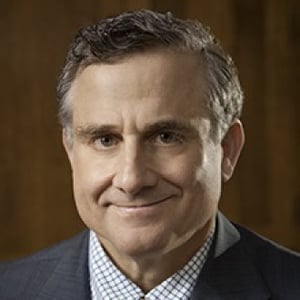
Sam Harris Professor of Corporate Law, Corporate Finance, and Securities Law, Yale Law School
Jonathan R. Macey is Sam Harris Professor of Corporate Law, Corporate Finance, and Securities Law at Yale University, and Professor in the Yale School of Management. From 1991 – 2004, Professor Macey was J. DuPratt White Professor of Law, Director of the John M. Olin Program in Law and Economics at Cornell Law School, and Professor of Law and Business at the Cornell University Johnson Graduate School of Business. Professor Macey earned his B.A. cum laude from Harvard in 1977, and his J.D. from Yale Law School in 1982, where he was Article and Book Review editor of The Yale Law Journal. In 1996, Professor Macey received a Ph.D. honoris causa from the Stockholm School of Economics. Following law school, Professor Macey was law clerk to Judge Henry J. Friendly on the U.S. Court of Appeals for the Second Circuit.
Professor Macey is the author of several books including the two-volume treatise, Macey on Corporation Laws, published in 1998 (Aspen Law & Business), and co-author of two leading casebooks, Corporations: Including Partnerships and Limited Liability Companies (2003 Thomson West), which is in its eighth edition, and Banking Law and Regulation (2002 Aspen Law & Business), which is now in its third edition. He also is the author of over 100 scholarly articles. His recent articles have appeared in the Banking Law Journal, the University of Chicago Law Review, the Stanford Law Review, The Yale Law Journal, the Cornell Law Review, the Journal of Law and Economics, and the Brookings Wharton Papers on Financial Institutions. He has published numerous editorials in such publications as The Wall Street Journal, Forbes, The Los Angeles Times, and The National Law Journal.
Professor Macey has taught at major universities throughout the world, including Bocconi University (Milan), the University of Tokyo; the University of Toronto; the University of Turin, the University of Amsterdam Department of Finance, and the Stockholm School of Economics, Department of Law. He also has been Professor of Law at the University of Chicago (1990) and Visiting Professor of Law at Harvard Law School (1999). Professor Macey is a Senior Research Fellow at the International Centre for Economic Research (ICER) in Turin, Italy. Professor Macey also serves on the Academic Advisory Board (Comitato Scientifico) of the Associazione Disiano Preite for the study of corporate law (per lo studio del diritto dell’impresa). In 1995, Professor Macey was awarded the Paul M. Bator prize for excellence in Teaching, Scholarship and Public Service by the Federalist Society for Law and Public Policy. In 1996, he received a Ph.D., honoris causa from the Stockholm School of Economics. And in 1998, he received the D.P. Jacobs prize for the most significant paper in volume 6 of the Journal of Financial Intermediation for his paper (co-authored with Maureen O’Hara), “The Law & Economics of Best Execution.”
In 1999 Professor Macey was made an honorary Fellow of the Society For Advanced Legal Studies. In 2000, Professor Macey became a member of the Legal Advisory Committee to the Board of Directors of the New York Stock Exchange. In 2001 Professor Macey was appointed a Bertil Daniellson Distinguished Visiting Professor in Banking and Finance at the Stockholm School of Economics. In 2002 Professor Macey was appointed to the Economic Advisory Board of the National Association of Securities Dealers (NASD). In 2004 Professor Macey was awarded a Teaching Award by the Yale Law Women in recognition of his “commitment to excellence in teaching, mentoring and inspiring.” In 2005 Professor Macey became a member of the Board of Editors of Thomson West Publishing Company.
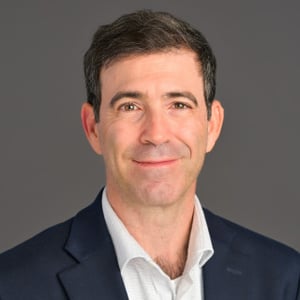
DeMuth Chair of Business Law, University of Colorado Law School
Andrew A. Schwartz joined the Colorado Law faculty in 2008 and was promoted to full professor in 2017. He teaches and publishes on corporate, securities and contract law, and has become an internationally recognized expert on investment crowdfunding. In 2017, Professor Schwartz served as a Fulbright Research Scholar and visiting professor at the University of Auckland Law School in New Zealand.
Professor Schwartz earned an Sc.B. in Civil Engineering from Brown University and a J.D. from Columbia University, where he served on the Columbia Law Review and was named a James Kent Scholar (top honors) all three years. Before entering academia, he clerked for Judge William A. Fletcher of the U.S. Court of Appeals for the Ninth Circuit and Judge Naomi Reice Buchwald of the U.S. District Court for the Southern District of New York. Following his clerkships, Professor Schwartz practiced corporate law in New York at Wachtell, Lipton, Rosen & Katz.
Professor Schwartz is the author of one book, Investment Crowdfunding, forthcoming from the Oxford University Press, as well as more than forty scholarly publications. His major articles have appeared in leading flagship law reviews including the UCLA Law Review, Minnesota Law Review, and Notre Dame Law Review, top specialty journals such as the Yale Journal on Regulation and Harvard Business Law Review, and peer-reviewed journals like the New Zealand Law Review.
Professor Schwartz has won numerous national awards for his scholarship, including the AALS Scholarly Paper Competition and the Federalist Society Young Legal Scholars Paper Competition. At Colorado Law, Professor Schwartz has received the Provost's Award for Faculty Achievement, the Gilbert Goldstein Faculty Fellowship, and the Outstanding New Faculty Award. His research is frequently cited and relied upon by courts and commentators across the country and around the world, including numerous citations by the Delaware Court of Chancery, the nation's leading venue for corporate law.

Founder and Managing Partner, Amineddoleh & Associates, LLP
With over a decade of litigation experience , Leila A. Amineddoleh is the Founder and Managing Partner of Amineddoleh & Associates, LLP where she specializes in art, cultural heritage, and intellectual property law. She began her career as an associate at Fitzpatrick, Cella, Harper & Scinto, where she specialized in high-stakes intellectual property litigation, and then worked Of Counsel at Lombard & Geliebter where she founded the firm’s art law group. She next co-founded an art and intellectual property law firm, and after two years of a successful practice there, Ms. Amineddoleh established her own firm to better suit the needs of her clients.
Ms. Amineddoleh is involved in all aspects of due diligence and litigation, and has extensive experience in arts transactional work. She has represented major art collectors and dealers in matters related to high-profile multi-million dollar contractual disputes, international cultural heritage law violations, the recovery of stolen art, and complex fraud schemes. As a leading specialist in art authentication, she collaborates with the world’s foremost forensic scientists and art historians to assist collectors and arts institutions through the complex authentication process. She also advises clients on the acquisition and sale of fine arts and cultural heritage works.
Ms. Amineddoleh proudly works with artists and entrepreneurs to protect their work and artistic rights, and develop intellectual property portfolios. She is also a certified legal mediator. She has been published extensively on issues related to art, cultural heritage, and intellectual property, and has appeared in major news outlets, including the New York Times, Forbes Magazine, The Guardian, TIME Magazine, and the Wall Street Journal. She also served as the art law and art crime correspondent for Artsy, and has had scholarly contributions published in books, including Nazi Law: From Nuremberg to Nuremberg.
As an advocate for the protection of cultural heritage, Ms. Amineddoleh also serves as a consultant to the New York District Attorney’s Office for antiquities investigations.
Ms. Amineddoleh is a recognized expert in art, cultural heritage, and intellectual property law, and teaches International Art & Cultural Heritage Law at Fordham University School of Law, in addition to Art Crime and the Law at New York University. She was privileged to serve as the Executive Director of the Lawyers’ Committee for Cultural Heritage Preservation from 2013 through 2015. Ms. Amineddoleh is also a musician and regularly performs the piano in and around New York City.

Partner, Wilson Elser Moskowitz Edelman & Dicker LLP
Jura Christine Zibas is co-chair of the firm’s Intellectual Property practice and a member of the Information Governance Leadership Committee. She has an extensive technology background and focuses her legal practice on intellectual property and related commercial matters. Relying on her scientific and analytical skill sets, Jura assists in solving legal issues that involve intellectual property rights, cybersecurity and complex business disputes.
Jura has broad experience with matters involving the protection, licensing and acquisition of patents, copyrights and trademarks, privacy and data security issues, and technology/software disputes. Trained in chemistry and dentistry, Jura handles various types of complex civil matters that involve a scientific, software or technology component, including the defense of medical institutions, dentists and other medical professionals in malpractice cases. Jura’s work on intellectual property, data privacy and security matters, and civil matters includes the management of clients’ risks and expansion activities. Further leveraging her experience in complex disputes, representation includes, for example, large online retailers in data breach and intellectual property, health care companies in government investigations and regulatory issues, and software developers in breach and fraud. In addition, she has advised on cyber risks in protecting millions of patient health information records and data privacy breach cases for various businesses. When resolving government investigations, Jura assists health care companies and pharmacies with oversight in dealing with federal and state regulations. She represented clients in lengthy corruption and money laundering/wire fraud cases brought by the U.S. Attorney and defended a utility company executive in the bribery of public officials. Jura continues to handle general liability and all civil litigation matters for various types of businesses.
Jura takes an analytical approach in providing her clients with logical solutions to help meet their business challenges and goals. She quickly processes technical and financial data to gain an understanding of her clients’ overall business model as well as the economics behind a particular case. Her science and technology background is of particular value to her clients in the medical, durable medical equipment, health care, construction, manufacturing, computer and engineering fields.
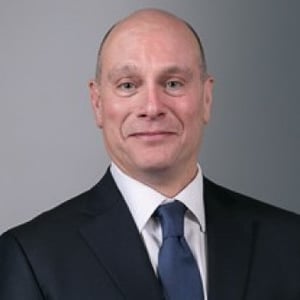
Of Counsel, Olshan Frome Wolosky LLP
Lee is an internationally renowned intellectual property and corporate lawyer and a leader in the fashion and retail law industry. His focus is on clients in the luxury goods, fashion and retail industries. Lee has extensive experience over a broad range of legal matters including intellectual property, licensing, marketing, transactional, securities, commercial and retail real estate, and employment.
Lee has served as General Counsel and in key management positions, most recently as Senior Vice President - Business Affairs, General Counsel & Corporate Secretary at Michael Kors Holdings Limited. He was part of the senior management team that over his thirteen year tenure transformed the company into one of the most successful fashion brands in the world, culminating in the company’s successful initial public offering in 2011.
Prior to Michael Kors, Lee was Senior Vice President, General Counsel & Corporate Secretary at Kasper A.S.L., Ltd., and he spent over eleven years at Polo Ralph Lauren Corporation, including as its Vice President of Intellectual Property and Associate General Counsel. His areas of responsibility included initial public offerings, product and territorial licensing, acquisitions and management of substantial licensees, joint venture agreements, supervision of major litigation, managing and enforcing the global intellectual property portfolio, and a range of compliance and legal issues relating to all production, advertising and public relations matters.
Lee was awarded the Luxury Law Summit's Lifetime Achievement Award. He is at the forefront of academic and industry leadership, including serving as Professor from Practice at Cardozo Law School where he helped create, and is now Co-Director of, its unique Fashion, Arts, Media and Entertainment Law Center (FAME). In addition, he serves as a Lecturer in Law at the University of Pennsylvania School of Law and Adjunct Professor at Villanova Law School. Lee is a contributor to Fashion Law, A Guide for Designers, Fashion Executives & Attorney (Fairchild Books, 2014), and was the project creator and co-editor of the seminal treatise, Trademark Counterfeiting (Aspen Law & Business, 1999). He served as Chairman of the International Anticounterfeiting Coalition and served on its board as a member of its Executive Committee for over a decade, and has been a frequent lecturer to federal, state and local law enforcement personnel, as well as to the trade, on matters relating to intellectual property protection and licensing. Sporn has been featured in publications including Corporate Counsel, Global Legal Post and Women’s Wear Daily.
Sporn received his J.D. Magna Cum Laude from Brooklyn Law School where he was a notes editor on the Brooklyn Law Review and received the Stanley Nathanson Award for outstanding leadership & scholarship. Following Brooklyn Law School, Sporn was an associate at Proskauer Rose. He received his B.A. at Oberlin College of Arts & Sciences and Oberlin Conservatory of Music.
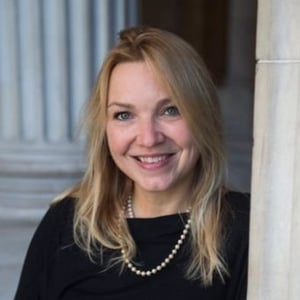
Founder, Canary Global Strategic
Ryan Triplette has spent the majority of her professional career seeking to understand the policy implications of some of the most complex issues - with a focus on intellectual property, security, and competition matters - facing businesses today. She founded Canary Global Strategic after deciding to relocate to Europe, seeking to combine the expertise obtained working with early stage and mature companies with expanding relationships across the European professional community, to provide invaluable resource for business interests seeking to engage policymakers on a range of issues of international import.
Prior to founding Canary, Ryan was a Principal at the Franklin Square Group, a bipartisan boutique firm based in Washington, DC specializing in technology issues. While at the Franklin Square Group, she advised some of the most innovative technology companies in the world as they entered new and generally regulatory heavy markets.
Ryan also previously served as Director of Government Relations for the Intel Corporation. During her tenure at Intel, she handled the strategic legislative and political engagement of Republican offices and members in the U.S. Senate and House of Representatives. In this capacity, she served as an advocate on a wide range of issues including: competition policy, cybersecurity, immigration, intellectual property, privacy, tax, telecom, and trade.
Before joining the private sector, Ryan served on the Senate Judiciary Committee for six years as Counsel and then Chief Intellectual Property Counsel for the Full Committee under the Republican Leadership of Senators Hatch (R-UT) and Specter (PA), respectively. While on the committee, she worked on intellectual property and civil law reform legislation, the Supreme Court nominations of Chief Justice John Roberts, Justice Samuel Alito, and the passage of nearly a dozen bills into law.
The culmination of these experiences contribute significantly to her in depth knowledge of how to effectively navigate the legislative and political processes.
Ryan is a member of the Virginia State Bar and holds a J.D. from University of Richmond School of Law and B.A. in Philosophy and Communication Studies from Vanderbilt University.
In her personal time, she sits on the board of several organizations devoted to mentoring individuals interested in the intersection of law and politics.

Academic Director, Fashion Law Institute, Fordham University School of Law
Susan Scafidi is the first professor ever to offer a course in Fashion Law, and she is internationally recognized for her leadership in establishing the field. She has testified regarding the proposed extension of legal protection to fashion designs and continues to work actively with members of Congress and the fashion industry on this and other issues. Her additional areas of expertise encompass property, intellectual property, cultural property, international law, trusts &estates, and legal history. Professor Scafidi founded and directs the nonprofit Fashion Law Institute, which was established with the generous support and advice of the Council of Fashion Designers of America and its president, Diane von Furstenberg, and is located at Fordham Law School. Prior to teaching at Fordham, Professor Scafidi was a tenured member of both the law and history faculties at SMU, and she has taught at a number of other schools, including Yale, Georgetown, and Cardozo.
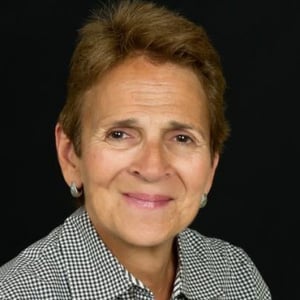
Professor of Practice; Director, Fashion, Arts, Media & Entertainment (FAME) Law Center, Benjamin N. Cardozo School of Law
Barbara Kolsun, co-director of The Fame Center, is a leading fashion industry attorney, an adjunct professor of fashion law at Cardozo Law, and co-editor of the seminal text on the subject, Fashion Law – A Guide for Designers, Fashion Executives and Attorneys (Bloomsbury, 2nd Edition, 2014). She is a consultant to fashion companies and has taught at NYU and Fordham Law Schools. Barbara has served as General Counsel of Kate Spade, Stuart Weitzman and Seven for All Mankind, and was Assistant General Counsel of Westpoint Stevens and Calvin Klein Jeans. While in private practice, her clients included Ralph Lauren and Tommy Hilfiger. Kolsun currently consults with fashion companies on various issues, and was honored with lifetime achievement awards in 2015 by both the Luxury Summit in London and the World Trademark Forum at INTA. She has served as Chairman of the Board of the International Anticounterfeiting Coalition and has spoken and been published widely on fashion law around the world. Cardozo's FAME Center for fashion, arts, media and entertainment law.
A consultant to fashion companies and has taught at NYU and Fordham Law Schools.
Kolsun started the legal departments and was the first General Counsel of Kate Spade, Stuart Weitzman and Seven for All Mankind, and was Assistant General Counsel of Westpoint Stevens and Calvin Klein Jeans. As outside counsel in several firms, she represented Ralph Lauren and Tommy Hilfiger. Kolsun currently consults with fashion companies on various issues, and was honored with two lifetime achievement awards in 2015 by the Luxury Summit in London and by the World Trademark Forum at INTA. She has devoted significant time and effort to the cause of enforcement of intellectual property serving as Chairman of the Board of the International Anticounterfeiting Coalition and has spoken and been published widely on fashion law around the world.
She has been the subject of stories in numerous publications, including the New York Times, and was a consultant in intellectual property to USAID's Start Vietnam program in 2002 and 2004.
Kolsun clerked for the Second Circuit after her graduation from Cardozo in 1982. She received her J.D. from Cardozo Law in 1982 and is a member of the Order of the Coif. She received her B.A. from Sarah Lawrence College in 1971 and her experience as a professional singer and actress continues to motivate her fierce efforts to protect artists' and designers' intellectual property rights.
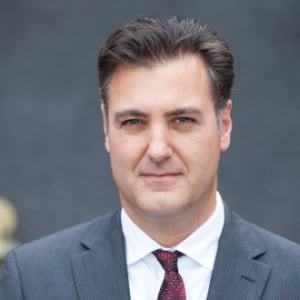
Doniger/Burroughs APC
Over the past five years, Mr. Doniger has handled more copyright cases than any other attorney in the United States, with his firm named as the top copyright litigation firm in Lex Machina’s 2015 Copyright Litigation Report. He has also prevailed in every copyright matter taken to trial, and has been lead trial counsel in many of the largest copyright verdicts in the Central District, including: Advanced Visual Image Design, LLC v. Exist, Inc., Case No. 2:10-cv-09383 ($1,754,272 verdict), United Fabrics International v. Lane Bryant, et al., Case No. CV08-6865 ($447,670 verdict), Caribbean Blues, Inc. v. Target Corp., et al., Case No. CV10-3334 ($389,638 verdict). He has also realized numerous six and seven figure settlements in his clients’ favor, including a $1.1 million settlement in favor of his client on the day of trial in Star Fabrics, Inc. v. Morex, Inc. et al., Case No. CV-10-7987, and a low seven-figure settlement in L.A. Printex Industries, Inc. v. William Carter Co., Case No. CV09-02449 which was negotiated in the middle of a bifurcated trial after he obtaining a willful copyright infringement liability verdict.
Since prevailing in his first trial as a sole practitioner in 1997 (One World Marketing v. MEK Int’l, Case No. BC 193556 – trademark infringement / trade secret theft jury verdict for plaintiff of $550,000), he has built a successful practice around business disputes in general and intellectual property in particular, representing photographers, authors, fine artists, and clients in the marketing, fashion, entertainment, real estate and hospitality industries. And in his 20+ years of practice Mr. Doniger has successfully litigated cases in the federal and state courts of California, New York, Nevada, and South Carolina, and has overseen litigation in foreign jurisdictions including Canada and the United Kingdom through local counsel.
Mr. Doniger has also successfully handled numerous state and federal appeals, including arguing before the Second Circuit to affirm a willful infringement verdict he obtained at trial before the Southern District of New York in LA Printex Ind., Inc. v. Pretty Girl, Inc. et al., prevailing in LA Printex Industries, Inc. v. Aeropostale, Inc., et al, (9th Cir. Case No. 10-56149 – January 12, 2012 reversal of summary judgment against Doniger/ Burroughs client) and United Fabrics International v. Lane Bryant, et al. (9th Cir. Case No. 10-56169 – 12/20/11 substantially affirming of Doniger / Burroughs trial verdict).
Mr. Doniger has been selected by Global Law Experts as its exclusive copyright law expert for California, has been a featured speaker on copyright, trademark, and misappropriation of likeness law for California Lawyers for the Arts, Fashion Business Incorporated and other groups, and has been retained as an expert witness on copyright litigation. He has also been profiled multiple times in the Daily Journal, which complimented that “he projects a thoughtful and ethical wisdom, particularly when it comes to practicing law,” and has featured and quoted in many other articles on intellectual property and business topics. Similarly, Doniger / Burroughs and its work has been featured in the Los Angeles Business Journal, Daily Journal, Los Angeles Weekly, and Fortune Magazine.
Mr. Doniger graduated from Brandeis University in 1992 with a double major in political science and philosophy, and a minor in international studies. In 1995 he obtained his law degree from the University of Southern California where he was a member of the Hale Moot Court Honors program, externed for the Honorable Ronald S.W. Lew, interned for the District Attorney’s Office in the Environmental Crimes Division, and was a California State Bar Environmental Law Section student writing competition winner.

Judge, United States Court of Appeals, District of Columbia Circuit
Judge Katsas was appointed to the D.C. Circuit in December 2017. He graduated from Princeton University and Harvard Law School, where he was an executive editor on the Harvard Law Review. Between 1989 and 1992, he served as a law clerk to Judge Edward Becker on the Third Circuit, to then-Judge Clarence Thomas on the D.C. Circuit, and to Justice Thomas on the Supreme Court. Between 1992 and 2001, he was an associate and then partner in the Washington office of Jones Day, where he specialized in appellate and complex civil litigation. Between 2001 and 2009, he served in many senior positions in the Department of Justice, including as Assistant Attorney General for the Civil Division and as Acting Associate Attorney General. In 2009, he returned to Jones Day. From January to December 2017, he served as Deputy Assistant to the President and Deputy Counsel to the President.
Before joining the bench, Judge Katsas argued more than 75 appeals, including three cases in the Supreme Court, 13 cases in the D.C. Circuit, and cases in every other federal court of appeals. By appointment of the Chief Justice, he served on the Advisory Committee on Appellate Rules from 2013 to 2017. In 2016, he was elected to membership in the American Academy of Appellate Lawyers.

Vice President of Domestic and Economic Policy, The Heritage Foundation
Roger Severino is Vice President of Economic and Domestic Policy, and the Joseph C. and Elizabeth A. Anderlik Fellow at The Heritage Foundation.
Severino is a national authority on civil rights, conscience and religious freedom, the administrative state, and information privacy, particularly as applied to health care law and policy. Find his tweets at @RogerSeverino_.
Severino spearheaded the HHS Accountability Project while a Senior Fellow at EPPC from 2021 to 2023. Previously, Severino was Director of HHS’ Office for Civil Rights, where he led a team of over 250 staff enforcing our nation’s civil rights, conscience and religious freedom, and health information privacy laws. He served from 2017 to 2021 and was the longest-serving OCR director of the past three decades.
Prior to joining HHS, Severino served for two years as Director of the DeVos Center for Religion and Civil Society at Heritage, advocating for life, family, and religious-freedom policies. Before that, he was a trial attorney for seven years at the U.S. Department of Justice’s Civil Rights Division where he enforced the Fair Housing Act and the Civil Rights Act of 1964. Severino started his legal career at the Becket Fund for Religious Liberty, where he was Legal Counsel and Chief Operations Officer and defended the rights of people of all faiths under federal and international law.
Severino has been profiled in The New York Times, The Atlantic, The Wall Street Journal, and The Hill and has appeared on Fox News, CNN, MSNBC, NPR, and PBS, among others. In 2020, The New York Times dubbed him and his wife Carrie, “a conservative power couple” to be reckoned with.
Severino holds a JD from Harvard Law School, a master’s degree in public policy, with highest distinction, from Carnegie Mellon University, and a bachelor’s degree in business from the University of Southern California. He was appointed by President Trump to the Administrative Conference of the United States and is a member of the District of Columbia and the Commonwealth of Virginia bars.
As OCR director, Severino founded the federal government’s first division dedicated exclusively to conscience and religious freedom compliance and enforcement. He enforced the Weldon Amendment for the first time against a state (California) after it coerced families and religious organizations into paying for abortion insurance coverage, leading to a $200 million federal funding disallowance. He also enforced laws protecting pro-life pregnancy resource centers from discrimination by states hostile to their message and enforced laws prohibiting forced participation in abortions by medical professionals.
With respect to civil rights, Severino protected older persons and people with disabilities from being denied life-saving care due to discriminatory “quality of life” judgments, especially during the COVID-19 pandemic. He also achieved a landmark sexual harassment resolution with Michigan State University in the wake of the Larry Nassar sexual assault scandal and protected the rights of non-English speakers to have equal access to health and human services.
In the area of health privacy, he secured the largest HIPAA monetary settlement in history and achieved the largest number of enforcement resolutions both in a single year and across four years. He also facilitated the transformational use of Skype, Zoom, and Facetime for delivery of telehealth during the COVID-19 pandemic and beyond.
His regulatory reform activities resulted in a comprehensive conscience protection regulation and proposed a life-affirming disability rights regulation. He achieved regulatory savings of $3.6 billion in health care industry costs over five years and identified and proposed an additional $3.2 billion in cost savings from the repeal of ineffective and unnecessary regulatory burdens.
Severino is a Spanish speaker who teaches salsa and west coast swing in his spare time.
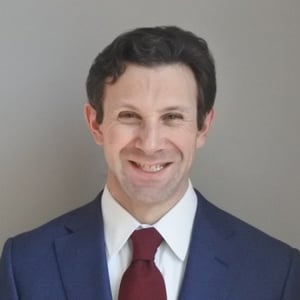
General Counsel - International, Willis Towers Watson
Todd F. Braunstein is General Counsel - International as well as Head of Global Investigations at Willis Towers Watson, an insurance broking and consulting firm with $9 billion in revenues, 45,000 employees, and business in 140+ countries. He previously worked as a federal prosecutor, at two DC law firms, and in the White House.
A.B., Harvard College; J.D., Harvard Law School

Patrick Hotung Professor of Constitutional Law, Georgetown University Law Center; Faculty Director, Georgetown Center for the Constitution
Randy E. Barnett is the Patrick Hotung Professor of Constitutional Law at the Georgetown University Law Center and is the Faculty Director of the Georgetown Center for the Constitution. After graduating from Northwestern University and Harvard Law School, he tried many felony cases as a prosecutor in the Cook County States’ Attorney’s Office in Chicago. A recipient of a Guggenheim Fellowship in Constitutional Studies and the Bradley Prize, Professor Barnett has been a visiting professor at Penn, Northwestern and Harvard Law School.
Professor Barnett’s publications includes thirteen books, more than one hundred articles and reviews, as well as numerous op-eds. His most recent book is Felony Review: Tales of True Crime and Corruption in Chicago (2026). His other books on the Constitution include: A Life for Liberty: The Making of an American Originalist (2024); The Original Meaning of the Fourteenth Amendment: Its Letter and Spirit (2021) (with Evan Bernick); An Introduction to Constitutional Law: 100 Supreme Court Cases Everyone Should Know (2019) (with Josh Blackman); Restoring the Lost Constitution: The Presumption of Liberty (2nd ed. 2013); Our Republican Constitution: Securing the Liberty and Sovereignty of We the People (2016); and Constitutional Law: Cases in Context (5th ed. forthcoming 2027) (with Josh Blackman). His books on contracts are The Oxford Introductions to U.S. Law: Contracts (2010) and Contracts: Cases and Doctrine (7th ed. 2021) (with Nate Oman). And he is the author of The Structure of Liberty: Justice and the Rule of Law (2nd ed. 2014).
In 2004, he argued the medical marijuana case of Gonzalez v. Raich before the U.S. Supreme Court. In 2012, he was one of the lawyers representing the National Federation of Independent Business in its constitutional challenge to the Affordable Care Act in NFIB v. Sebelius. He’s appeared in numerous documentaries and portrayed a prosecutor in the 2010 science-fiction feature film, InAlienable: The Movie. On X he is @RandyEBarnett
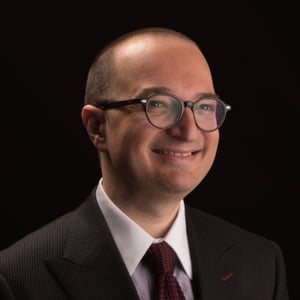
Professor of Law, University of Baltimore School of Law (on leave); Senior Counsel, U.S. Department of Justice
Professor Dolin’s scholarship centers on patent law with a specific focus on how the patent regime affects innovation, especially in bio-pharmaceutical areas. His work in these areas includes a number of scholarly articles, presentations, amicus briefs, and congressional testimony.
Dr. Dolin is currently on leave from his academic duties while he serves as Senior Counsel in the Civil Rights Division of the United States Department of Justice.
From January 2020 to January 2022, Professor Dolin served as a resident Associate Justice of the Supreme Court of the Republic of Palau. In this role, he (together with other members of the Court) heard appeals in civil, criminal, administrative, and constitutional law matters.
Prior to joining the University of Baltimore School of Law, Professor Dolin held visiting appointments in other law schools. He also served as a law clerk to the Hon. Pauline Newman, of the U.S. Court of Appeals for the Federal Circuit and the late Hon. H. Emory Widener Jr., of the U.S. Court of Appeals for the Fourth Circuit.
Rumors that he has a real Russian bear in his office are entirely true.

Professor of Law and Director of the Center for Intellectual Property Law, Maurice A. Deane School of Law at Hofstra University
Professor Manta teaches intellectual property law subjects. Her research examines the intersection between intellectual property law and social science, with a focus on psychology. She has most recently written about the hedonic value of trademarks and its legal implications, the problem of cognitive bias in copyright infringement litigation, price discrimination through software licensing in the age of the Internet of Things, and the role of criminal sanctions in intellectual property. Professor Manta has published or has forthcoming work in the Emory Law Journal, William & Mary Law Review, Iowa Law Review, Alabama Law Review, Boston College Law Review, Ohio State Law Journal, Washington and Lee Law Review, Harvard Journal of Law & Technology, Stanford Technology Law Review, Florida Law Review, Arizona Law Review, and Cornell Law Review Online, among others. She is also a co-author for a forthcoming textbook on criminal law issues in intellectual property. Professor Manta has further been a guest blogger for PrawfsBlawg and for Concurring Opinions. In 2014, she received the Lawrence A. Stessin Prize for Outstanding Scholarly Publications, which is awarded to two junior faculty members across all disciplines at Hofstra University.
Before joining the law school faculty in 2012, Professor Manta was an Assistant Professor of Law at the Case Western Reserve University School of Law. She was a Bigelow Teaching Fellow and Lecturer in Law at the University of Chicago Law School from 2007 to 2009. Professor Manta has also served on the faculties of Brooklyn Law School, The George Washington University School of Law, and the University of Arkansas at Little Rock William H. Bowen School of Law. She clerked for Judge Morris S. Arnold on the U.S. Court of Appeals for the Eighth Circuit for the 2006-2007 term.
While earning her J.D. at Yale Law School, Professor Manta was the grand prize winner of the Foley & Lardner LLP Intellectual Property Writing Competition. She also served as tributes editor of the Yale Law Journal, articles editor of the Yale Law & Policy Review, and editor of the Yale Journal on Regulation. She graduated magna cum laude from Yale University with a B.A. in psychology.

Professor of Law, Antonin Scalia Law School, George Mason University
Adam Mossoff is Professor of Law at Antonin Scalia Law School, George Mason University. He has published extensively on why patents, copyrights, and other intellectual property rights have been—and should be—legally secured to innovators and creators as property rights. His scholarship has been relied on by the United States Supreme Court, by lower federal courts, and by U.S. federal agencies. He has been invited to testify numerous times before the U.S. Senate and the House of Representatives on intellectual property legislation. His writings on intellectual property policy have also appeared in the Wall Street Journal, New York Times, Forbes, Investors Business Daily, and in other media outlets. His journal articles can be downloaded here.
Professor Mossoff is a longstanding member of the Executive Committee of the Intellectual Property Practice Group of the Federalist Society, on which he served as Chairperson from 2016-2018, and he is Chair of the Intellectual Property Working Group of the Regulatory Transparency Project of the Federalist Society. He is a Senior Fellow and Chair of the Forum for Intellectual Property at the Hudson Institute, a Visiting Intellectual Property Fellow at the Heritage Foundation, and a member of the Board of Directors of the Center for Intellectual Property Understanding. He is a member of the Intellectual Property Rights Policy Committee of ANSI and he has served as Chair and Vice-Chair of the Intellectual Property Committee of the IEEE-USA, on which he remains a member in good standing.

Associate Professor, Boston College Law School
David Olson is an associate professor and the Faculty Director of the Program on Innovation and Entrepreneurship. He teaches patent law, intellectual property law, antitrust law, and various seminars. His research and writing primarily focus on patents, copyrights, antitrust, and incentives for innovation and competition. Since joining BC Law in 2007, he has been recognized for his teaching excellence and contributions. In 2011, he received the Business & Law Society Faculty Award for Achievement in Business & Law. In 2012, he received the Professor Emil Slizewski Award for Faculty Excellence. For one semester in 2015, Olson served as a visiting professor at Pontifical Catholic University, Rio de Janeiro, Brazil, where he conducted research and taught a course on intellectual property.
Olson has published scholarly articles on patent law, copyright law, antitrust, music licensing, and first amendment copyright issues. His writing has been cited in Supreme Court and other legal opinions. He has testified before the U.S. Congress on matters of drug patents, FDA regulation, and antitrust.
The media frequently seeks Olson’s insights and opinions. He has been quoted in the Wall Street Journal, Associated Press, and Reuters, among others. He has appeared as a guest panelist on WBUR’s Radio Boston, WAMU's Kojo Namdi Show, and Public Radio Canada. His op-eds have appeared in the Chicago Tribune, Washington Times, and The Hill.
Olson came to Boston College from Stanford Law School's Center for Internet and Society, where he conducted research on patent law and litigated copyright fair use impact cases. Before entering academia, Olson practiced law as a patent litigator. He clerked for Judge Jerry Smith of the U.S. Court of Appeals for the Fifth Circuit.

Clinical Professor of Law, Dale E. Fowler School of Law, Chapman University

Corporate Responsibility: Maximizing Shareholder Benefit v. Social Justice
Paul S. Atkins, Matthew R. A. Heiman, Jonathan R. Macey, Andrew A. Schwartz
The seventh annual Executive Branch Review Conference took place on May 8, 2019, at the...
Fashion & Intellectual Property
Leila Amineddoleh, Jura Zibas, Lee S. Sporn, Ryan Triplette, Susan Scafidi, Barbara Kolsun, Stephen M. Doniger
Fashion is a three trillion dollar a year industry with a 100% participation rate. So...
Supreme Court Concludes 2015 Term - Podcast
Gregory G. Katsas, Roger Severino
On June 27, 2016, the United States Supreme Court concluded its October 2015 term by...
Loughrin v. United States - Post-Decision SCOTUScast
Todd F. Braunstein
On June 23, 2014, the Supreme Court issued its decision in Loughrin v. United States....
Panel I: Is IP Property or Government-Conferred Monopoly?
Randy E. Barnett, Gregory Dolin, Irina D. Manta, Adam Mossoff, David S. Olson
The Federalist Society's Faculty Division hosted a panel discussion that asked "Is IP Property or...
Bounty Hunters and the Public Interest - A Study of California Proposition 65
Anthony (Tom) Caso
INTRODUCTION Adopted by California voters in 1986, Proposition 65 was a revolutionary measure in a...