
Of Counsel, Christian Legal Society's Center for Law & Religious Freedom
Kim Colby has worked for Christian Legal Society’s Center for Law and Religious Freedom since graduating from Harvard Law School in 1981. She has represented religious groups in several appellate cases, including two cases heard by the United States Supreme Court. She has filed numerous amicus briefs in federal and state courts. In 1984, she assisted in congressional passage of the Equal Access Act, 20 U.S.C. § 4071, et seq., which protects the right of secondary school students to meet for prayer and Bible study on campus. Ms. Colby has prepared several CLS publications addressing issues about religious expression in public schools, including released time programs, implementation of the Equal Access Act, and teachers’ religious expression.
Ms. Colby graduated summa cum laude from the University of Illinois with a major in American History and a particular interest in slavery in colonial North America.

William Rand Kenan, Jr. Distinguished Professor of Law, University of North Carolina School of Law
William (Bill) Marshall joined the Carolina Law faculty in 2001 and serves as the William R. Kenan Jr. Distinguished Professor of Law. His teaching and research interests include the first amendment, presidential power, election law, federal jurisdiction, federal judicial selection, civil procedure, and media law. Marshall is the author of numerous book chapters, articles, and essays on free speech, separation of powers, the Establishment Clause, and the Free Exercise Clause. His work has appeared in the Harvard Law Review, the Yale Law Journal, the Supreme Court Review, and the University of Chicago Law Review, among others.
Marshall received his law degree from the University of Chicago and his undergraduate degree from the University of Pennsylvania. Marshall was Deputy Counsel to the President and Deputy Assistant to the President during the Clinton Administration and also served as the Solicitor General for the State of Ohio. He has taught at the Northwestern, Boston University, Vanderbilt, Ohio State, DePaul, Case Western Reserve, William and Mary, and the University Connecticut law schools. Prior to beginning his teaching career, Marshall was a Special Assistant Attorney General for the State of Minnesota.

Judge, United States Court of Appeals, Ninth Circuit
Judge O’Scannlain was appointed United States Circuit Judge for the Ninth Circuit by President Reagan on September 26, 1986. He received a J.D. degree in 1963 from Harvard Law School and a B.A. in 1957 from St. John’s University. He also earned the LL.M. (Judicial Process) degree at University of Virginia Law School in 1992. He was awarded the LL.D. (honoris causa) degree by the University of Notre Dame in 2002, the LL.D. (honoris causa) degree by Lewis & Clark College in 2003 and the LL.D. (honoris causa) degree by the University of Portland in 2011.
As a judge on the U.S. Court of Appeals for the Ninth Circuit, Judge O’Scannlain has participated in over 6,000 federal cases and has written hundreds of published opinions on a broad range of subjects including constitutional law, international law, securities law, administrative law, and criminal law. He hears appeals in San Francisco (court headquarters), as well as in Los Angeles (Pasadena), Portland, Seattle, Anchorage and Honolulu. The late Chief Justice Rehnquist appointed Judge O'Scannlain to the Federal Judicial Center's Advisory Committee on Appellate Judge Education. In 2009, Chief Justice Roberts appointed Judge O’Scannlain to the International Judicial Relations Committee of the U.S. Judicial Conference and subsequently appointed him Chairman in 2010.
President George W. Bush appointed Judge O’Scannlain to the Board of Trustees of the James Madison Memorial Fellowship Foundation in 2004. Pope Benedict XVI conferred the Order of Saint Gregory the Great on Judge and Mrs. O’Scannlain in 2007.
Judge O’Scannlain’s professional interests also include judicial administration and reform, and continuing legal education. Judge O’Scannlain is former Chair of the Judicial Division of the American Bar Association and has previously chaired the ABA’s Appellate Judges Conference, its Committee on Appellate Practice, and its 9th Appellate Practice Institute. He has testified before the Senate Judiciary Committee on several occasions, the House Judiciary Subcommittee on Courts and Intellectual Property, and the Commission on Structural Alternatives for the Federal Courts of Appeals on the subject of court reorganization. In addition to serving as a faculty member at numerous federal appellate practice seminars for judges and attorneys, including New York University Law School’s Institute for Judicial Administration, Judge O’Scannlain is an Adjunct Professor at Lewis & Clark Law School where he teaches a seminar on the Supreme Court. He has served as a Moot Court Judge at distinguished law schools across the United States including Harvard, Yale Stanford, Boalt Hall (Berkeley Law), Virginia, Cornell, Notre Dame, Fordham, Alabama, University of Southern California, King Hall (U.C. Davis) and Loyola Marymount University and in China at Xiamen and Renmin Universities.
Between graduation from Harvard and investiture as a federal judge, Judge O’Scannlain was primarily engaged in private law practice. Between 1969 and 1974, he was consecutively the Deputy Attorney General of Oregon, the Public Utility Commissioner of Oregon, and Director of the Oregon Department of Environmental Quality. He retired from the U.S. Army Reserve in 1978 as a Major after 23 years Reserve and National Guard service, including four years as an enlisted man.
A first generation Irish-American son of immigrant parents from Sligo and Derry, Judge O’Scannlain is married to the former Maura Nolan and has eight children: Sean, Jane, Brendan, Kevin, Megan, Christopher, Anne, and Kate, and nineteen grandchildren. His chambers are in the Pioneer Courthouse in Portland, Oregon.

Director of the Program in Human Rights, Catholic University of America
William L. Saunders is Chair Emeritus of the Religious Liberties Practice Group of the Federalist Society. He is also a religious liberty and human rights scholar as well as director of the Center for Human rights at The Catholic University of America. He is Law Fellow with the Institute for Human Ecology, Professor and Director of the Program in Human Rights in the School of Arts & Sciences and Co-director of the Center for Religious Liberty at the Columbus School of Law. Before joining The Catholic University of America, Mr. Saunders served as Senior Vice President and Senior Counsel with Americans United for Life for ten years. From 1999 to 2009, he was Senior Fellow in Bioethics and Human Rights Counsel at the Family Research Council.
Mr. Saunders attended the University of North Carolina at Chapel Hill on a Morehead scholarship. He obtained his degree in law from the Harvard Law School.
Mr. Saunders was featured in Harvard’s first Guide to Conservative Public Interest Law in 2003 and again in the 2008 edition. He served on Harvard’s Advisory Committee for its 2008 celebration of public interest law. A member of the Supreme Court bar, he has authored numerous legal briefs in state, federal, foreign, and international courts.
Mr. Saunders’ book, Unborn Human Life and Fundamental Rights: Leading Constitutional Cases Under Scrutiny, was published in 2019. His articles and book chapters have been published by the university presses of Harvard, Villanova, Brigham Young, Fordham, Georgetown, Houston, Scranton, and the Catholic University of America, as well as by the Intercollegiate Studies Institute, Freedom House, Greenhaven Press, Rowan & Littlefield, Praeger, St. Augustine’s, and Intervarsity press. He has given lectures and participated in debates at many colleges, universities, and law schools, including Princeton, Harvard, Georgetown, and Notre Dame. He delivered the annual J. Michael Miller Lecture at the University of St. Thomas (on international law) in February 2007, the annual R. Wayne Kraft Memorial Lecture (on bioethics) at DeSales University in February 2004 and the annual James Moore Lecture (on human rights violations in Sudan) at Millikin University in 1999. He has also lectured, and/or has been published, in many foreign countries, including Italy, Germany, Poland, Austria, Spain, Greece, Slovakia, Mexico, Qatar, Malaysia, Romania, the Philippines, Hong Kong, and the United Kingdom.
In addition to speaking and writing frequently on bioethics topics, Mr. Saunders has submitted testimony to the President’s Council on Bioethics, as well as to UNESCO’s Committee on Bioethics, and has briefed Congressional staff and state legislatures. He is a regular columnist for the National Catholic Bioethics Quarterly.
Mr. Saunders has appeared often in the media, including BBC World News, CNN, Fox News, Vatican Radio, and National Public Radio. His articles on issues have appeared in a variety of journals, such as First Things, Human Events, Human Life Review, The Legal Times, Communio, The Family in America: A Journal of Public Policy, Ethics & Medics, and Touchstone.
Mr. Saunders served on the official United States delegation to the UN Special Session on Children in 2001/02. In 2011, he was a speaker at an official briefing at the UN, addressing the topic, why euthanasia is not a human right.
In 2004, he served on the NGO Working Committee in connection with the Doha Intergovernmental Conference for the Family.
Mr. Saunders is Senior Fellow with the Religious Freedom Institute, and Affiliated Scholar with the Pellegrino Center for Clinical Ethics at the Georgetown University School of Medicine. He is President of the Fellowship of Catholic Scholars and a member of the boards of the International Association of Catholic Bioethicists, the International Right to Life Federation, the Institute on Religion and Democracy, and the Society of Catholic Social Scientists.
In 1999, Mr. Saunders founded Sudan Relief and Rescue, Inc., to aid the persecuted church in Sudan. He has worked for and written on behalf of the persecuted church for many years.
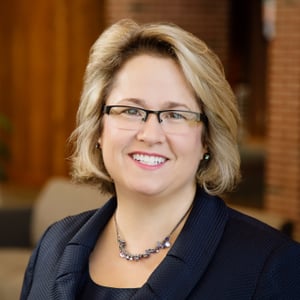
Professor, University of Illinois College of Law
Robin Fretwell Wilson is the Mildred Van Voorhis Jones Chair in Law at the University of Illinois College of Law.
A scholar in family law, bioethics and law and religion, Professor Wilson has worked extensively on behalf of state and federal law reform efforts in each realm.
Across two decades, she has worked to secure laws protecting the autonomy of patients to decide when they will be used to teach intimate exams to medical students, laws now in place in 22 states—sixteen of which have been enacted since 2019.
Professor Wilson is known for bridging differences in the culture war. In 2015, she spent a month in residence with the Utah legislature, helping Utah state lawmakers to pass anti-discrimination legislation that balances religious liberty and LGBT rights. In 2019, Professor Wilson assisted the governor of Utah to craft regulations banning gay conversion therapy. In 2019, she also aided U.S. Representative Chris Stewart with portions of the “Fairness for All” he introduced in Congress. A member of the American Law Institute and a Fulbright Specialist, Professor Wilson has served as a consultant to the United Arab Emirates’ Judicial Department as they sought to create a parallel court system for the adjudication by expatriates of family law matters using the laws of their home country or of their faith traditions.
Professor Wilson is the author of 20 books, including her 2018 book, Religious Freedom, LGBT Rights, and the Prospects for Common Ground, with Yale University Professor William Eskridge, Jr., which is now in paperback at Cambridge University Press. Her other books include: The Contested Place of Religion in Family Law (Cambridge University Press, 2018, ed.), Reconceiving the Family: Critical Reflections on the American Law Institute’s Principles of the Law of Family Dissolution (Cambridge University Press, 2006, ed.); The Handbook of Children, Culture & Violence (Sage Publications, 2006, with Nancy Dowd and Dorothy Singer, eds.); Same-Sex Marriage and Religious Liberty: Emerging Conflicts (Rowman & Littlefield, 2008, with Douglas Laycock and Anthony Picarello, eds.); Health Law and Bioethics: Cases in Context (Aspen, 2008, with Joan Krause, Sandra Johnson, and Richard Saver, eds.); Domestic Relations: Cases and Materials, 8th edition (Foundation Press, 2017, with Walter Wadlington and Raymond C. O’Brien); and Understanding Family Law, 4th edition (LexisNexis, 2013, with John DeWitt Gregory and Peter N. Swisher). Her articles have appeared in the Boston College Law Review, Cornell Law Review, Emory Law Journal, Illinois Law Review, North Carolina Law Review, San Diego Law Review, U.C. Davis Law Review, and Washington and Lee Law Review, as well as in numerous peer-reviewed journals.
In 2010 and again in 2016, Professor Wilson was ranked among the Top Ten Family Law Scholars in the United States for scholarly impact. She ranks among the Top 10% of Authors in all time downloads on the Social Science Research Network. Professor Wilson’s scholarship has been cited by the Fifth, Seventh and Tenth Circuit Court of Appeals, the Minnesota Court of Appeals, lower federal courts, and the Supreme Courts of Delaware, Illinois, Iowa, and Washington.
Professor Wilson’s work has been featured in the New York Times, Wall Street Journal, National Public Radio’s All Things Considered, Washington Post, Los Angeles Times, The Atlantic Monthly, U.S. News and World Report, ABA Journal, Chronicle of Higher Education, Chicago Tribune, CNN Headline News, Good Morning America, ABC News, CBS News, Philadelphia Inquirer, Essence Magazine, The American Prospect, People Magazine, The American Conservative, The Australian, and Al Jazeera, among others. She has presented her research across the world, including the United Nations in Geneva, Switzerland, as well as in Argentina, Brazil, Peru, Chile, China, Israel, Qatar, the Netherlands, Italy, England, Wales, Poland, Spain, Serbia, Japan, Canada, Norway, Denmark, Australia, New Zealand, South Africa, Turkey, and France.
Professor Wilson has seven times been honored for her work on innovative laws that respect all persons. In 2007, she received the Citizen’s Legislative Award for her work on changing Virginia’s informed consent law. In 2018, Professor Wilson received the Thomas L. Kane Religious Freedom Award from the J. Reuben Clark Law Society, which is presented annually to an individual who exemplifies the spirit of religious liberty for all and who has contributed in significant ways to the defense of religious freedom in the public square.
In 2018, Professor Wilson was honored as one of the 150 for 150: Celebrating the Accomplishments of Women at the University of Illinois at Urbana-Champaign for its sesquicentennial celebration. In 2020, Professor Wilson received the 2020 Larine Y. Cowan Make a Difference Award for Advocacy for LGBTQ Affairs, a university-wide honor given by the Office of Diversity, Equity and Inclusion at the University of Illinois at Urbana-Champaign.
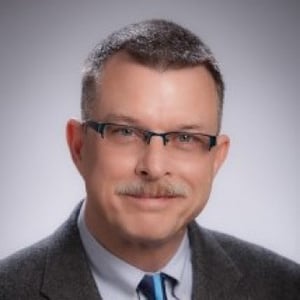
Founder and Senior Director, Institutional Religious Freedom Alliance
Stanley Carlson-Thies is the Founder and Senior Director of the Institutional Religious Freedom Alliance (IRFA), a division of the Center for Public Justice. As part of this role, he convenes the Coalition to Preserve Religious Freedom, a multi-faith alliance of social-service, education, and religious freedom organizations that advocates for the religious freedom of faith-based organizations to Congress and the federal government. In addition he is also a Senior Fellow at the Canadian think tank Cardus.
From 2009-2010 he served on a task force of President Obama’s Advisory Council on Faith-Based and Neighborhood Partnerships, helping to draft recommendations on how to clarify the church-state rules that apply to federal funding of social-service providers, and has consulted with federal departments and several states.
He served with the White House Office of Faith-Based & Community Initiatives from its inception in February 2001 until mid-May 2002. He assisted with writing “Unlevel Playing Field: Barriers to Participation by Faith-Based and Community Organizations in Federal Social Service Programs,” a report released by the White House in August 2001, and “Rallying the Armies of Compassion,” the initial blueprint for President George W. Bush’s faith and community agenda.
Previously, he was Director of Social Policy Studies for CPJ and directed CPJ’s project to track the implementation and impact of the Charitable Choice provision of the 1996 federal welfare reform law. Following his term in the White House, he returned to CPJ as the Director of Faith-based Policy Studies.
He received the William Bentley Ball Life and Religious Liberty Defense Award from the Center for Law and Religious Freedom and the Christian Legal Society in October 2004. He was named as one of 12 advocates who are “reinterpreting God and country” by the National Journal in May 2004. He holds a doctorate in political science from the University of Toronto. His dissertation is on the role of Protestants and Catholics in the development of Dutch politics in the 19th and 20th centuries. Besides the United States, he has lived in Canada, the Netherlands, and Japan, where he was born of missionary parents. He lives in Annapolis, Maryland, with his wife, Christiane. They are the proud parents of Simon.

Chairman and Founder, Institute for Free Speech; Josiah H. Blackmore II/Shirley M. Nault Designated Professor of Law, Capital University Law School

Thomas M. Siebel Senior Fellow, The Hoover Institution, Stanford University; Gary T. Schwartz Distinguished Professor of Law Emeritus, UCLA School of Law
Eugene Volokh is the Thomas M. Siebel Senior Fellow at the Hoover Institution (Stanford), as well as the Gary T. Schwartz Distinguished Professor of Law Emeritus and Distinguished Research Professor at UCLA School of Law. He recently retired from teaching at UCLA, after 30 years there, and is now focusing on research.
Volokh is the author of the textbooks The First Amendment and Related Statutes (8th ed. 2023), and Academic Legal Writing (5th ed. 2016), as well as over 100 academic law journal articles, mostly on First Amendment law. He is a member of The American Law Institute; the editor-in-chief of the Journal of Free Speech Law; and the creator and coauthor of The Volokh Conspiracy, a leading legal blog founded in 2002 (hosted at the Washington Post from 2014 to 2017 and now at Reason Magazine).
Journalist/Author
Trevor W. Coleman is a national award-winning journalist and author who served s Chief Speechwriter to Michigan Gov. Jennifer M. Granholm and as Director of Communications for the Michigan Department of Civil Rights and the Governor’s Southeast Michigan office. Coleman was also a long time member of the editorial board of the Detroit Free Press where he won numerous awards for editorial and column writing prior to his appointment to the Granholm administration. He is currently working fulltime on the authorized biography of legendary federal Judge Damon J. Keith. Its working title is “Crusader for Justice: The Life and Amazing Times of Federal Judge Damon J. Keith.”
As the Director of Communications for the Michigan Department of Civil Rights, he was responsible for crafting a global communications strategy which included developing all internal and external communications policies, managing media relations and executive speechwriting responsibilities. Because of his unique joint appointment, he was also required to establish an effective external communications strategy for the Governor’s Office for SE Michigan. In that position he also served as the official liaison to the Governor’s Advisory Council on Arab and Chaldean Affairs and the Governor’s Advisory Council on Asian and Pacific Islander Affairs.
As Chief Speechwriter for Governor Granholm, Coleman wrote or contributed to all major public policy speeches including in the areas of international relations, automotive industry, education, economics, budgetary, race relations, and health, poverty and gender issues. He wrote major commencement addresses and contributed to State of the State address. Coleman also wrote the Governor’s guest OPEDS for state and regional newspapers as well as articles for public policy and other niche magazines. This included the Detroit News, Detroit Free Press, Detroit Crain’s Business, Detroit Magazine, the Michigan Chronicle and others. He also helped develop the Governor’s communication strategy for her “One Michigan” tour and campaign to unite citizens.
As a member of the editorial board of the Detroit Free Press, Coleman specialized in writing on education, health care and urban policy. He also frequently wrote on civil rights, civil liberties and the U.S. criminal justice system. He was the editorial board’s senior foreign affairs writer for three years. Prior to joining the Free Press, Coleman was an urban affairs and civil rights reporter for The Detroit News, an editorial writer for the Cincinnati Enquirer, reporter and columnist for the Hartford Courant and city desk reporter for the Times-Leader in Wilkes-Barre, Pennsylvania. He was also a contributing editor and writer for Emerge Magazine, Black Enterprise and the NAACP Crisis Magazine. Coleman also wrote a Sunday column for several years for his hometown newspaper, The Hudson Register Star.
Among his many journalism awards are a 2001 American Diabetes Association Award of Merit for a series of editorials urging the state to expand medical coverage for diabetics; a 1999 Michigan Press Association Award for column writing; a 1999 National Association of Black Journalist Award for Commentary; the 1998 Detroit Press Foundation Michigan Journalism Award for Commentary; the 1993 Detroit Press Foundation Journalism Award for News Reporting, 1993 Best of Gannett Award for News Reporting and the 1993 and 1999 Lincoln University Unity Awards for coverage of minority and social issues. Coleman is listed in “Who’s Who among African-Americans,” and in 2010 was listed in the “Who’s Who of Black Detroiters.”
Among his many honors have been a 2009 Michigan Department of Civil Rights Dedicated Service Award, 2008 Brown Chapel AME Church Civil Rights Leadership Award, 2004 Macomb County NAACP Freedom Fund Leadership Award, 2004 Over Comers Ministries Inc. Leadership Award, 2002 Wayne Community College District Award for Community Service and the 1993 Distinguished Alumni Award, from the Kappa Chapter of Alpha Phi Alpha Fraternity at The Ohio State University.
He has been a guest speaker at many colleges and universities across the nation; among them Harvard Law School, The Ohio State University, the University of Michigan and University of Michigan School of Law, Michigan State University, Wayne State University, The University of Toledo Law School, Delaware State University, Schoolcraft College, Wayne Community College and many others. He has also appeared on numerous television and radio talk and public affairs programs.
A native of New York, he received his undergraduate degree in communications from The Ohio State University and is a fellow at the Knight Center for Specialized Journalism at the University of Maryland. He is also is a graduate of the American Press Institute in Reston, VA and Poynter Institute in Fla. Coleman resides in Bloomfield Hills and is the divorced father of two children Sydnie, a college junior and TJ, a high school junior.
Attorney (of counsel), Witte Law Offices
Matthew G. Davis practices in the areas of appellate law, civil rights (including alleged violations of the First and Second Amendments), election law, campaign finance, and defamation. Mr. Davis is also experienced in general civil litigation.
Mr. Davis graduated from the The Ohio State University with a bachelors of arts in journalism in 1990 and earned his juris doctorate from Thomas M. Cooley Law School in 2005. He started his legal career in the pre-hearing division of the Michigan Court of Appeals before becoming law clerk for Judge Brian K. Zahra. Following his clerkship, Mr. Davis joined Witte Law Offices as an associate.
Prior to his legal career, Mr. Davis spent approximately twelve years as a reporter for various daily newspapers, including the Columbus ( Ohio ) Dispatch, the St. Paul (Minn. ) Pioneer Press, and the Detroit Free Press, where he covered the state Legislature in Lansing. Mr. Davis left newspapers to attend the Thomas M. Cooley Law School and, concomitantly, serve as director of communications for the Michigan Department of Corrections and the Michigan Department of Attorney General. Mr. Davis led the creation and development of the Offender Tracking Information System at the MDOC, which allows Internet access of offender information.
Racial Justice Staff Attorney, ACLU of Michigan
Through his work as the attorney for the Racial Justice Project of the ACLU of Michigan, Mark P. Fancher addresses: racially disproportionate rates of incarceration; racial discrimination against public school students of color, racial profiling, public defender system reform, attacks on affirmative action and juvenile sentencing issues.
Fancher was formerly the Senior Staff Attorney for the Sugar Law Center for Economic and Social Justice where he specialized in workers' rights. He served on the staff of the State Bar of Michigan from 1998 to 2000 where he coordinated projects to encourage greater pro bono participation by Michigan's lawyers. He was a visiting assistant clinical professor at the University of Michigan Law School from 1996 through 1998.
Before moving to Michigan, Fancher was the Director of Litigation for Camden Regional Legal Services in New Jersey. He has also been in private practice where he specialized in employment discrimination and community economic development. Fancher is a graduate of Rutgers University School of Law - Camden. He received a Bachelor of Science Degree from the University of Tennessee.
Fancher has played a leadership role in the National Conference of Black Lawyers (NCBL) for numerous years. He is a past chair of the organization’s International Affairs Section, and he served as NCBL’s national co-chair from 1995-1998. He is also a member of the State Bar of Michigan Pro Bono Initiative.
Fancher has lectured across the country and written extensively on issues that include: self-determination for Africa and the African Diaspora; indigenous peoples’ land and resource rights; and political repression in the U.S.
Co-Founder, XIV Foundation
Jennifer Gratz is a modern-day civil rights leader. In 1997 she challenged race preferences (also known as affirmative action) at the University of Michigan and was victorious at the U.S. Supreme Court.
Ms. Gratz was the lead plaintiff in the landmark case Gratz v. Bollinger which challenged affirmative action at the University of Michigan. On June 23, 2003 the U.S. Supreme Court ruled that Ms. Gratz was discriminated against and U-M’s admission policy was unconstitutional. However, in a companion case decided the same day (Grutter v. Bollinger), the Supreme Court allowed race preferences to continue at U-M’s law school. Ms. Gratz called the split decision flawed and continued the fight for equality in her home state. She spearheaded the Michigan Civil Rights Initiative (MCRI), a state constitutional amendment that made race and gender preferences unconstitutional in public education, employment and contracting. In Nov 2006 Michigan voters approved MCRI by a 16-point landslide.
At CPAC following the Michigan vote, Ms. Gratz was honored with the prestigious Ronald Reagan Award from the American Conservative Union for leadership. Jennifer has spent many years working to end programs that grant preferential treatment based on race or sex and because of Ms. Gratz’s leadership eight states have now banned race and gender preferences.
Recently, Ms. Gratz co-founded the XIV Foundation (XIV) and Equal Protection Advocates (EPA). XIV, named after the 14th amendment, is a not-for-profit 501c3 dedicated to teaching the personal and societal advantages of fair and equal treatment. EPA is a 501c4 dedicated to advocating for fair and equal treatment without regard to race or gender for all Americans.
Ms. Gratz’s story and work has been featured in nearly every major media outlet – Fox News, CNN, MSNBC, Dateline, 60 Minutes, The Today Show, Wall Street Journal, NY Times, Washington Post, Washington Times, LA Times, Detroit Free Press, Detroit News, National Review, US News and World Report, Newsweek, Time Magazine, People Magazine, Glamour Magazine – to name a few.
Editorial Cartoonist, Editorial Writer, and Weekly Columnist, The Detroit News
Henry Payne is an editorial cartoonist, editorial writer, and weekly columnist The Detroit News.
A Pulitzer-Prize nominated cartoonist, Payne produces five local editorial cartoons a week for The News. He also writes and draws a weekly column, “Payne & Ink.” Additionally, Payne draws five cartoons a week on national and international subjects for United Feature Syndicate in Kansas City which distributes his cartoons to 40 newspaper clients worldwide. His work is reprinted in USA Today, National Review,Townhall.com and other publications.
Payne has been voted Best Editorial Cartoonist in Michigan by the Associated Press. He has been a runner-up for both the Pulitzer and Mencken awards.
As a writer, Payne reports regularly on economic, consumer and environmental issues. His articles have appeared in The Wall Street Journal, The Weekly Standard magazine, National Review, Reason, Scripps Howard News Service and newspapers around the country. He also is a correspondent for National Review’s popular “Planet Gore” blog.
Payne came to The Detroit News in 1999 after 13 years as an editorial cartoonist, writer, and editor forScripps Howard News Service in Washington, DC .
Payne published his first book, “Payne & Ink: The Cartoons and Commentary of Henry Payne, 2000-2001,” in 2002. He has also illustrated two children’s books for Random House: “Where did Daddy’s Hair Go?” (by Joe O’Connor) in 2006, and Dr. Seuss’ “The Ear Book” in 2007. In 1998, Payne created “Hub & Axel,” a comic panel distributed by the Tribune Company Syndicate about an American family and its very American passion for the automobile.
Born in 1962 in Charleston, West Virginia, Payne received a degree in history from Princeton University in 1984. As editorial cartoonist for two student newspapers, The Daily Princetonian and the Nassau Weekly, Payne won the College Media Advisers Cartoon Contest and the Tribune Company Syndicate’s National College Cartoonist’s Contest. Upon graduation from Princeton, Payne began his newspaper career as staff artist and editorial cartoonist with the Charleston (WV) Daily Mail. In 1986 he joined Scripps Howard News Service and began syndication with United Feature in 1987.
Payne is an active race car driver, tennis and squash player. He is the father of two boys and lives with wife, Talbot, in Bloomfield Hills, Michigan.

Senior Legal Fellow, Edwin Meese III Institute for the Rule of Law, Advancing American Freedom

President, Thomas M. Cooley Student Chapter
Penelope holds a Political Science and Pre-Law undergraduate degree from the University of Texas at El Paso. She also received a Master of Science degree in Intelligence and National Security Studies with focus on Latino Immigration from the University of Texas at El Paso. Penelope has worked in several projects within the Latino Community such the LSPI Pre-Law Institute at UTEP as an outreach minority coordinator for recruitment of young Latino and underrepresented minorities to participate in the pre-law institute and later access IVY league Law Schools all across the country. Under the Kauffman Initiative she worked as an outreach specialist for the Hispanic Entrepreneur Center at UTEP She is now a J.D Law candidate 2014 at Thomas M. Cooley Law School.
Ella A. and Ernest H. Fisher Professor of Law, Ohio Northern University Claude W. Pettit College of Law
Professor Lewis joined the Ohio Northern faculty in August, 2006. Lewis flew F-14's for the United States Navy in Operation Desert Shield, conducted strike planning for Desert Storm and was deployed to the Persian Gulf to enforce the no-fly zone over Iraq. He was a Topgun graduate in 1992 and was featured in a NOVA documentary on Topgun and aircraft carriers.
After his naval service, Lewis graduated from Harvard Law School, cum laude, was a management consultant with McKinsey and Company, and served as a litigation associate with McGuireWoods, LLP, in Norfolk, Virginia.
Professor Lewis published more than a dozen articles and essays on various aspects of the law of war and the conflict between the US and al Qaeda. His work has been cited by the Seventh, Ninth and Eleventh Circuit Courts of Appeals. He has testified before Congress on the legality of drone strikes in Pakistan and Yemen and on the civil liberties tradeoffs associated with trying some Al Qaeda members or terrorist suspects before military commissions. His op-eds have appeared in numerous media outlets including the LA Times and the New York Post and he has appeared on Public Radio International to discuss the increasing use of armed drones in warfare. He delivered scores of presentations and panel presentations before military and law school audiences alike including presentations to the international Military Operations Law conference in Queensland, Australia, the US Army's JAG School in Charlottesville, VA and law school events at Stanford, Chicago, Columbia, Penn, Duke, Texas and Northwestern among others.
Professor Lewis received the Award for Excellence in Classroom Teaching for the 2007-08 academic year.
He taught Commercial Law, International Law, a Law of War Seminar and Torts. He also taught Corporate Finance and Accounting for Lawyers. His other teaching interests included Civil Procedure and Contracts.

Senior Fellow and Director of Constitutional Studies, Manhattan Institute
Ilya Shapiro is a senior fellow and director of constitutional studies at the Manhattan Institute and a contributing editor of City Journal. Previously he was executive director and senior lecturer at the Georgetown Center for the Constitution, and before that a vice president of the Cato Institute.
Shapiro is the author of Lawless: The Miseducation of America’s Elites (2025) and Supreme Disorder: Judicial Nominations and the Politics of America’s Highest Court (2020), coauthor of Religious Liberties for Corporations? (2014), and editor of 11 volumes of the Cato Supreme Court Review (2008-18). He has contributed to a variety of academic, popular, and professional publications, including the Wall Street Journal, Harvard Journal of Law & Public Policy, Washington Post, Los Angeles Times, USA Today, National Review, and Newsweek. He also regularly provides commentary for various media outlets, writes the Shapiro’s Gavel newsletter on Substack, and once appeared on the Colbert Report.
Shapiro has testified many times before Congress and state legislatures and has filed more than 500 amicus curiae “friend of the court” briefs in the Supreme Court. He lectures regularly on behalf of the Federalist Society, is a member of the board of fellows of the Jewish Policy Center, was an inaugural Washington Fellow at the National Review Institute, and has been an adjunct law professor at the George Washington University and University of Mississippi. He is also the chairman of the board of advisers of the Mississippi Justice Institute, a barrister in the Edward Coke Appellate Inn of Court, and a former member of the Virginia Advisory Committee to the U.S. Commission on Civil Rights.
Earlier in his career, Shapiro was a special assistant/adviser to the Multi-National Force in Iraq on rule-of-law issues and practiced at Patton Boggs and Cleary Gottlieb. Before entering private practice, he clerked for Judge E. Grady Jolly of the U.S. Court of Appeals for the Fifth Circuit. He holds an AB from Princeton University, an MSc from the London School of Economics, and a JD from the University of Chicago Law School.
Author and FoxNews.com Contributor
John R. Lott, Jr. is an economist who has held research and/or teaching positions at the University of Chicago, Yale University, Stanford, UCLA, Wharton, and Rice and was the chief economist at the United States Sentencing Commission during 1988 and 1989. He has published over 100 articles in academic journals. He also is the author of six books including More Guns, Less Crime, Freedomnomics, The Bias Against Guns, and Are Predatory Commitments Credible? He has just released another book entitled "Debacle: Obama's war on jobs and growth and what we can do now to regain our future." Lott is a FoxNews.com contributor and a weekly columnist for them. Opinion pieces by Prof. Lott have appeared in such places as The Wall Street Journal, The New York Times, The Los Angeles Times, the New York Post, USA Today, and The Chicago Tribune. He has appeared on such television programs as the ABC and NBC National Evening News broadcasts, Fox News, "The NewsHour with Jim Lehrer," and the "Today Show." He received his Ph.D. in economics from UCLA in 1984.

Religious Liberty after Hobby Lobby
Kim Colby, William P. Marshall, Diarmuid F. O'Scannlain, William L. Saunders, Robin Fretwell Wilson
The U.S. Supreme Court’s 2013-14 Term included two major religion cases, Town of Greece v. Galloway and Burwell...
Supreme Court Preview
New York City, New YorkExecutive Order 13672: The LGBT Executive Order - Podcast
Robin Fretwell Wilson, Stanley Carlson-Thies
On July 21, 2014 President. Obama issued Executive Order 13672, amending EO 11246 which has...
Amending the Bill of Rights - Podcast
Bradley A. Smith, Eugene Volokh
There is a recent, concerted effort to ratify an amendment to the U.S. Constitution to...
The Twilight of Race-Based Preferences in College Admissions
Trevor W. Coleman, Matthew G. Davis, Mark Fancher, Jennifer Gratz, Henry Payne, Hans A. Von Spakovsky, Penelope S. Williams
The Michigan Lawyers Chapter hosted this event on February 12, 2014, at Thomas M. Cooley...
Sebelius v. Hobby Lobby Stores: Making Martyrs Out Of Corporate Owners
Denver, ColoradoClearing the Air: The Real Reason Why Drones are the Weapon of Choice in Counterterrorism and Why That is a Good Thing for Civilians
Michael W. Lewis
Note from the Editor: This article is about the use of drones in counterterrorism operations. ...
Discussion on McCutcheon v. FEC with Ilya Shapiro
MobileWhy Does Obama Keep Losing at the Supreme Court?
Birmingham, AlabamaPartisan Politics and the Selection of Judges: A Toxic Mix
Irvine, California