



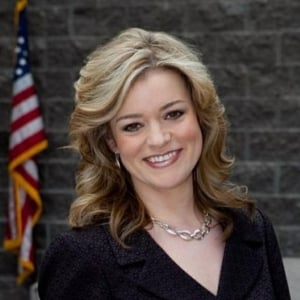




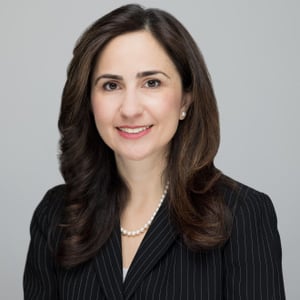
Tara Leigh Grove is the Vinson & Elkins Chair in Law at the University of Texas School of Law. Grove graduated summa cum laude from Duke University and magna cum laude from Harvard Law School, where she served as the Supreme Court Chair of the Harvard Law Review. Grove clerked for Judge Emilio Garza on the U.S. Court of Appeals for the Fifth Circuit, and then spent four years as an attorney for the U.S. Department of Justice, Civil Division, Appellate Staff, where she argued fifteen cases in the courts of appeals.
Grove’s research focuses on the federal judiciary, interpretive theory, and the constitutional separation of powers. She has published with such prestigious law journals as the Harvard Law Review, the Yale Law Journal, the Columbia Law Review, the University of Pennsylvania Law Review, the New York University Law Review, the University of Chicago Law Review, the Virginia Law Review, the Texas Law Review, the Cornell Law Review, the Northwestern University Law Review, and the Vanderbilt Law Review. Grove has received awards for both her research and her teaching.
In 2021, Grove served on the Presidential Commission on the Supreme Court of the United States, a bipartisan commission created by President Biden and charged with examining proposals for Supreme Court reform. Since 2022, Grove has worked on the Princeton Initiative on Reclaiming the Constitutional Powers of Congress, which brings together former members of Congress, political scientists, and law professors. Grove serves as the Co-Chair of the section on the Appointments Process for the Princeton Initiative. Grove is a co-author of Low & Jeffries' Federal Courts and the Law of Federal-State Relations, a leading federal courts casebook, and she has served as the Chair of the Federal Courts Section of the Association of American Law Schools. Grove has been a visiting professor at both Harvard Law School and Northwestern Pritzker School of Law.








504 Regulations Under the Current Administration
Robert Dinerstein, Sarah Parshall Perry, Kimberly M. Richey
Section 504 of the Rehabilitation Act of 1973 protects qualified "individuals with disabilities" from discrimination...
"Civility in the Law" DC Lunch
David Boies, Reginald J. Brown, Charles J. Cooper, Deborah Enix-Ross
Join us on Wednesday, May 24th, at 12:00 PM ETfor a special edition of our Washington, DC, Lawyers...
Panel V: Is Judicial Review Democratic?
Tara Leigh Grove, James C. Ho, Lawrence Sager, Keith E. Whittington
Judicial Review has been criticized throughout American history as undemocratic, creating what has been known...
Santos-Zacaria v. Garland - Post-Argument SCOTUScast
John P. Elwood
On January 17, the Court heard oral argument in Santos-Zacaria v. Garland. The case involves...
Title IX and the Major Questions Doctrine
Jennifer C. Braceras, Daniel Farber, Farnaz F. Thompson
In West Virginia v. EPA, the Supreme Court held that the major questions doctrine requires...
The Respect for Marriage Act & Religious Liberty: At Odds or Unaffected?
Gregory Baylor, Matt Clark, Carl H. Esbeck
In December 2022, Congress passed and President Biden signed the Respect for Marriage Act (RFMA)....
Litigation Update: Jack Phillips and Masterpiece Cakeshop
Mark Trammell
Jack Phillips, of Masterpiece Cakeshop fame, is back in court for the third time since the Supreme...
Legacy of the Unalienable Rights Commission: Discussion with Dr. Peter Berkowitz, Director of the Policy Planning Office, U.S. Department of State
Peter Berkowitz
In May 2019, Secretary of State Mike Pompeo announced formation of the Commission on Unalienable...
Religious Liberty at the Supreme Court: Previewing the New Term
Mark L. Rienzi, William L. Saunders
The Supreme Court's most recent term ended with several high-profile liberty rulings, including Espinoza v. Montana...
Religious Liberty at the Supreme Court: The 2020 Term and Beyond
Mark L. Rienzi, William L. Saunders
This summer, the Supreme Court decided several high-profile religious liberty cases. In Espinoza v. Montana Department...