
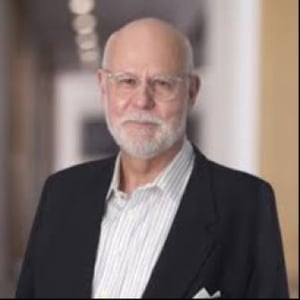
Partner, Foley & Lardner LLP
Patrick Daugherty is a senior corporate and securities law partner of Foley & Lardner LLP, based in Chicago. He also is an adjunct professor of Cornell Law School, where he teaches in residence each Fall Term.
Mr. Daugherty is a member of the Bar in New York, the District of Columbia, North Carolina, Michigan and Illinois. Credentialing organizations have named him “Lawyer of the Year” in both Michigan (2007) and Illinois (2022). A graduate of Northwestern University and of Cornell Law School (Class of 1981), he clerked for SDNY Chief Judge Lloyd F. MacMahon for a year before entering private practice. Mr. Daugherty also served as Counsel to SEC Commissioner Edward H. Fleischman in Washington, D.C., from 1986 to 1989. An Emeritus Member of the American Law Institute, he is the author, co-author or editor of several books and many articles on securities regulation and new financial products.
Mr. Daugherty believes that he was the first lawyer inside the SEC to join the Federalist Society when he became a member in the late 1980s. A mainstay of the Chicago Lawyers Chapter, at the national level of the Society he serves on the Executive Committee for the Financial Services & E-Commerce Practice Group.
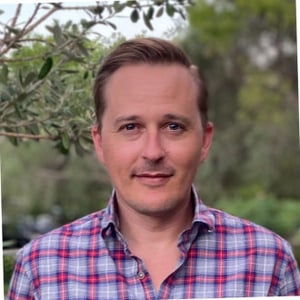
Head of Policy & General Counsel, Crypto, Andreessen Horowitz (a16z)
Miles Jennings joined the a16z Crypto team as General Counsel in August 2021.
Miles was most recently a partner at Latham & Watkins, where he focused on working with startups and investors in heavily regulated sectors including life sciences and, most importantly, crypto. He has been the go-to, trusted advisor for countless startups and crypto projects, guiding them from incorporation through financings, acquisitions, token offerings, and governance matters.
Miles’ experience within the sector stretches back to 2017, when he first began working with ConsenSys, a firm client, and he quickly became one of the most sought-after legal minds working in crypto. During his time at Latham, he co-chaired its global blockchain and cryptocurrency task force, which was composed of over 80 lawyers around the globe. In addition, he worked regularly with almost every venture firm operating in crypto, designing several of the investment structures they use today, and he was counsel to dozens of startups in the sector, including Aave, Bitwise, Avalanche, Element, Idle, Connext, 3Box, and Aztec. Miles was also an editor of Latham’s Global Fintech & Payments blog and has published several articles relating to legal matters relevant to crypto startups.

Partner, Norton Rose Fulbright
Steven Lofchie advises financial institutions on regulatory issues and financial instruments.
In his regulatory practice, Steven counsels clients on securities laws, the CEA, and related bankruptcy issues. His transactional practice focuses on securities credit and derivative transactions.
Steven is the founder and manager of an acclaimed legal website (now renamed Fried Frank Regulatory Intelligence) that has been endorsed by former chairpersons of both the SEC and CFTC. Subscribers to the website include government regulators and major buy- and sell-side firms.
Chambers USA has ranked Steven in Band 1 for eight years running, for both financial services regulation and derivatives. He is the only lawyer in the country to be top-ranked in both of those categories. Steven was also part of the team that was named 2020 Regulatory Team of the Year by IFLR Americas. The Best Lawyers in America recognized Steven as “Lawyer of the Year” for Administrative/Regulatory Law in New York in 2017, and U.S. News and World Report ranked him as the best regulatory lawyer in New York for 2014. In 2012, a derivatives transaction developed by Steven was cited as the best international structured product of the year by International Financial Law Review.

General Counsel, Ava Labs
Lee Schneider serves as General Counsel for Ava Labs, a leading blockchain software company. Mr. Schneider is responsible for all aspects of the legal function as well as the company’s government affairs initiatives.
As an early lawyer in the financial services and technology space (FinTech) and a leading voice in blockchain law and policy, Mr. Schneider has been involved in many significant projects in FinTech and blockchain, including some of the largest and most popular token sales. He also co-hosts a FinTech podcast with former SEC Commissioner Troy Paredes, available on iTunes and other podcast services.
Prior to Ava Labs, Mr. Schneider served as General Counsel of block.one and as a practice leader at two major US law firms. Mr. Schneider has a B.A. from the University of Michigan and a J.D. from the American University Washington College of Law (’91).

Head of Legal for the Americas, Crypto.com
Justin is Head of Legal for the Americas at Crypto.com where he leads the company's North and South American legal and regulatory strategy. Prior to joining Crypto.com, he was a partner with the international law firm of K&L Gates where his practice focused on the rapidly evolving legal and regulatory issues impacting decentralized technologies including cryptocurrencies, decentralized financial (DeFi) platforms, smart contracts, non-fungible tokens (NFTs) and other related concepts.
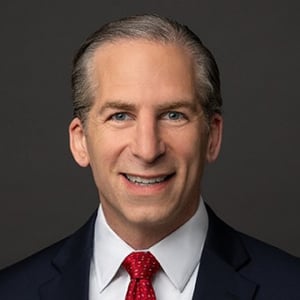
Partner, Cahill Gordon & Reindel LLP; Special Professor of Law, Maurice A. Dean School of Law, Hofstra University
Gary E. Kalbaugh is a nationally recognized leader in commodities, futures, and derivatives law.
Gary is a partner in the New York office of Cahill Gordon & Reindel LLP as well as a Special Professor of Law at the Maurice A. Deane School of Law at Hofstra University, where he teaches derivatives law and banking law.
A preeminent authority in the derivatives field, Gary is the author of the principal treatise Derivatives Law and Regulation (3rd ed. 2021) and serves as Editor-in-Chief of the Futures and Derivatives Law Report, the foremost industry publication. He is a past chair of the New York City Bar Association’s Committee on the Regulation of Futures and Derivatives and has over 15 years of experience as a professor teaching derivatives and banking law.
Gary is the leading derivatives lawyer in the digital assets space, and one of few to truly understand the technical side of emerging financial technology. He serves on the CFTC’s Future of Finance Subcommittee, reflecting his recognized leadership at the intersection of financial regulation and emerging technologies. A frequent speaker, writer, and commentator on derivatives, banking law, artificial intelligence, and digital assets regulation, he has served as conference co-chair for the American Bar Association’s “Artificial Intelligence and Derivatives Market” conference and regularly speaks at major industry conferences on cutting-edge issues in financial regulation and technology. Gary is sought after as a thought leader on the evolving landscape of digital asset regulation and the regulatory implications of AI in financial markets.
At ING, Gary served as Deputy General Counsel and Director, where he chaired swap dealer and security-based swap dealer regulatory committees and provided strategic leadership on U.S., European, and other regulations impacting the organization. He had global responsibility for U.S. derivatives regulatory issues and maintained strong relationships with regulators. Gary also co-developed ING legal’s global artificial intelligence training program and was responsible for U.S. regulatory issues relating to ING’s blockchain-based pilot programs and crypto initiatives.
Previously, Gary served as a lecturer-in-law at Columbia Law School and held senior roles at WestLB, where he was executive director, counsel, and chief U.S. data protection officer and chaired the global Dodd-Frank and underwriting committees. He began his career as an associate at a notable international firm.

Senior Adviser, Crito Capital
Dr. Oonagh McDonald, CBE is currently a senior adviser to Crito Capital, a private placement company based in New York.
A former British Member of Parliament, she became an international expert in financial regulation, after losing her seat in the General Election, 1987. She worked with the Asian Development Bank, advising regulatory authorities in a number of countries, including Sri Lanka and Indonesia. More recently, she has worked with USAID in Ukraine and Moldova. She has served as a non-executive director on the board of both financial services companies and regulatory authorities. In 1998, she was awarded the CBE (Commander of the British Empire), a national honor by the Queen for her work in financial regulation.
She is the author of numerous articles and seven books, of which the most recent are: “Holding bankers to account: A decade of market manipulation, regulatory failures and regulatory reforms” (Manchester University Press, 2019) and “Cryptocurrencies: Money, Trust and Regulation” (Agenda Publishing, 2021).

Senior Fellow, Mises Institute
Alex J. Pollock is a Senior Fellow with the Mises Institute, providing thought and policy leadership on financial issues and the study of financial systems. His work includes cycles of booms and busts, financial crises with their political responses, housing finance, government-sponsored enterprises, risk and uncertainty, central banking, banking and financial regulation, corporate governance, retirement finance, student loans, and the politics of finance.
He previously served as the Principal Deputy Director of the Office of Financial Research in the U.S. Treasury Department 2019-2021. He was a Distinguished Senior Fellow with the R Street Institute 2015-2019 and 2021, and a resident fellow at the American Enterprise Institute, 2004-2015. Among the many aspects of his AEI work, he developed the One Page Mortgage Form to give borrowers in clear form the key information they need in order to know what they are committing themselves to. He was President and CEO of the Federal Home Loan Bank of Chicago from 1991 to 2004. There he invented the Mortgage Partnership Finance program, which successfully created front-end mortgage credit risk sharing beginning in 1997. His decades of banking experience include being a Visiting Scholar at the Federal Reserve Bank of St. Louis, 1991.
Pollock was a director of the CME Group 2004-2019 and of Ascendium Education Group 1989-2019. He is a director and past-chairman of the Great Books Foundation and a past president of the International Union for Housing Finance.
He is the co-author of Surprised Again! - The COVID Crisis and the New Market Bubble (2022), and the author of Finance and Philosophy—Why We’re Always Surprised (2018) and Boom and Bust: Financial Cycles and Human Prosperity (2011), as well as numerous articles and Congressional testimony.
Pollock is a graduate of Williams College, the University of Chicago, and Princeton University.
His work is available on alexjpollock.com.
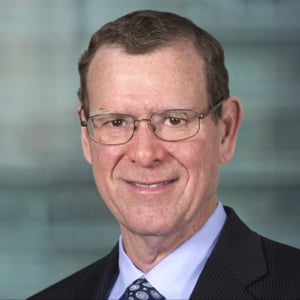
Executive in Residence, Wake Forest University School of Business
John Allison is an Executive in Residence at the Wake Forest School of Business. He is a member of the Cato Institute’s Board of Directors and Chairman of the Executive Advisory Council of the Cato Institute’s Center for Monetary and Financial Alternatives. Allison was president and CEO of the Cato Institute from October 2012 to April 2015. Prior to joining Cato, Allison was chairman and CEO of BB&T Corporation, the 10th-largest financial services holding company headquartered in the United States. During his tenure as CEO from 1989 to 2008, BB&T grew from $4.5 billion to $152 billion in assets. He was recognized by theHarvard Business Reviewas one of the top 100 most successful CEOs in the world over the last decade.
Allison has received the Corning Award for Distinguished Leadership, been inducted into the North Carolina Business Hall of Fame, and received the Lifetime Achievement Award from theAmerican Banker. He is the author of The Financial Crisis and the Free Market Cure: Why Pure Capitalism Is the World Economy’s Only Hope and The Leadership Crisis and the Free Market Cure: Why the Future of Business Depends on the Return to Life, Liberty, and the Pursuit of Happiness. In addition, he is a former Distinguished Professor of Practice at Wake Forest University School of Business, and serves on the Board of Visitors at the business schools at Wake Forest, Duke, and the University of North Carolina–Chapel Hill.
Allison is a Phi Beta Kappa graduate of the University of North Carolina–Chapel Hill. He received his master’s degree in management from Duke University and is also a graduate of the Stonier Graduate School of Banking. Allison is the recipient of six honorary doctorate degrees.

Maurice and Hilda Friedman Professor of Law, Columbia Law School; CEO, New Civil Liberties Alliance
Philip Hamburger is the Maurice and Hilda Friedman Professor of Law at Columbia Law School, and Chief Executive Officer at the New Civil Liberties Alliance. Before coming to Columbia, he was the John P. Wilson Professor at the University of Chicago Law School.
He writes on constitutional law and its history—with particular emphasis on religious liberty, freedom of speech and the press, judicial office, administrative power, and unconstitutional conditions.
His books are Separation of Church and State (Harvard 2002), Law and Judicial Duty (Harvard 2008), Is Administrative Law Unlawful? (Chicago 2014), The Administrative Threat (Encounter 2017), and Liberal Suppression: Section 501(c)(3) and the Taxation of Speech (Chicago 2018). A forthcoming book is Purchasing Submission: Conditions, Power, and Freedom (Harvard 2021).
He is a member of the American Academy of Arts and Sciences, and he has served on the board of directors of the American Society for Legal History. He has twice received the Sutherland Prize for the most significant contribution to English legal history, and has been awarded the Henry Paolucci - Walter Bagehot Book Award, the Hayek Book Prize, and the Bradley Prize.
President and General Counsel, New Civil Liberties Alliance
NCLA’s President and General Counsel, Mark Chenoweth, has observed the administrative state up close and personal from perches in all four branches of the federal government. Mark served as the first chief of staff to Congressman Mike Pompeo, as legal counsel to Commissioner Anne Northup at the U.S. Consumer Product Safety Commission, as an attorney advisor in the Office of Legal Policy at the U.S. Department of Justice, and as a law clerk to the Hon. Danny J. Boggs on the U.S. Court of Appeals for the Sixth Circuit.
Mark has worked in several different roles in the private sector as well. He began his legal career in D.C. as a regulatory associate at Wilmer, Cutler & Pickering. He then returned to his home state of Kansas to serve as in-house counsel for Koch Industries. Most recently he spent over four years as general counsel of the Washington Legal Foundation.
Mark is a graduate of Yale College and the University of Chicago Law School, where he co-founded the Institute for Justice Clinic on Entrepreneurship and became a Tony Patiño Fellow. Mark has been widely quoted and/or published in newspapers and websites including the New York Times, San Francisco Chronicle, New Hampshire Union Leader, and Metropolitan Corporate Counsel. He has also had recurring op-eds in the Los Angeles Daily Journal, and at Forbes.com.
Professor of Law, Brigham Young University
Professor Paul Stancil joined the Brigham Young University law faculty in 2014. Prior to this, Professor Stancil was a professor at Illinois University College of Law and a shareholder at Godfrey & Kahn, S.C. (Milwaukee), where his practice focused on antitrust and trade regulation matters. Professor Stancil teaches Antitrust Law, Civil Procedure, Public Choice Theory, and Mergers & Acquisitions.
Professor Stancil has broad research interests in law and economics, antitrust law, civil procedure, and public choice theory. He specializes in analyzing the complex incentives that motivate individuals and groups in both the creation and application of law. Professor Stancil has written on the legitimacy of statutory interpretation by courts and the economic incentives facing parties in civil and criminal litigation; he has also written articles exploring the influence of interest groups in various aspects of the political process. Professor Stancil’s research strives to connect a rich theoretical account of law and lawmaking with the complex and often messy dynamics of the real world. He is particularly interested in the role transaction costs play in motivating real-world individual and group behavior.
Professor Stancil’s articles have appeared in the Virginia Law Review, the William & Mary Law Review, the Cardozo Law Review, and the Baylor Law Review, among others.
Professor Stancil earned his B.A. in economics and Spanish from the University of Virginia and graduated Order of the Coif from the University of Virginia School of Law. After law school graduation, Professor Stancil worked for Baker Botts (Houston) and another small Texas firm as an antitrust and litigation associate before leaving to help start an antitrust practice group at Godfrey & Kahn.
Senior Fellow, Arthur F. Burns Fellow in Financial Policy Studies, American Enterprise Institute
Peter J. Wallison holds the Arthur F. Burns Chair in Financial Policy Studies and is co-director of AEI’s program on Financial Policy Studies. Prior to joining AEI, he practiced banking, corporate and financial law at Gibson, Dunn & Crutcher in Washington, D.C., and New York. Mr. Wallison has held a number of government positions. From June 1981 to January 1985, he was General Counsel of the United States Treasury Department, where he had a significant role in the development of the Reagan Administration's proposals for deregulation in the financial services industry. During 1986 and 1987, Mr. Wallison was White House counsel to President Ronald Reagan, and between 1972 and 1976, he served first as Special Assistant to New York's Gov. Nelson A. Rockefeller and, subsequently, as counsel to Mr. Rockefeller as vice president of the United States.
Mr. Wallison was admitted to practice before the courts of New York and the District of Columbia, and is retired from practice in New York. He continues to be a member of the District of Columbia Bar Association. He received his undergraduate degree from Harvard College in 1963 and law degree from Harvard Law School in 1966.
Mr. Wallison is the author of Ronald Reagan: The Power of Conviction and the Success of His Presidency, published in December 2002 by Westview Press. On campaign finance, he is the author (with Joel Gora) of Better Parties, Better Government, (AEI Press 2009). On financial or regulatory matters, he is the author of Back From the Brink, a proposal for a private deposit insurance system, and co-author of Nationalizing Mortgage Risk: The Growth of Fannie Mae and Freddie Mac; The GAAP Gap: Corporate Disclosure in the Internet Age; Competitive Equity: A Better Way to Organize Mutual Funds; Bad History, Worse Policy: How a False Narrative about the Financial Crisis Led to the Dodd-Frank Act (AEI Press 2013); and Hidden In Plain Sight: What Caused the World’s Worst Financial Crisis and Why it Could Happen Again (Encounter Books 2015). His most recent book is Judicial Fortitude: The Last Chance to Rein in the Administrative State, published by Encounter Books in October 2018.
He testifies frequently before committees of Congress, and is a frequent contributor to the op-ed pages of the Wall Street Journal and other print and online journals. He has also been a speaker at many conferences on financial services, housing, the causes of the financial crisis, the Dodd-Frank Act, accounting, and corporate governance, and was a member of the Shadow Financial Regulatory Committee between 1995 and 2015. He was a member of the SEC Advisory Committee on Improvements to Financial Reporting (2008), co-Chair of the Pew Financial Reform Task Force (2009), and a member of the congressionally- appointed Financial Crisis Inquiry Commission (2009-2011). In May 2011, for his work in financial policy, Mr. Wallison received an honorary doctorate in Humane Letters from the University of Colorado.
Partner, Davis Polk & Wardwell LLP
Mr. Guynn is head of Davis Polk’s Financial Institutions Group. He has been recognized as a thought-leader on financial regulatory reform and as one of the most widely consulted U.S. legal advisers during the financial crisis. See “In the Red Zone,”The American Lawyer, January 2009 and “For Davis Polk, Dodd-Frank Pays,” The American Lawyer, December 2010.
He has advised the Securities Industry and Financial Markets Association (SIFMA), the principal trade organization for U.S. banks, securities firms and asset managers, all of the U.S.’s six-largest banks and several foreign banks on the Dodd-Frank Act and its regulatory implementation.
His practice focuses on providing strategic bank and regulatory and enforcement advice and advising on M&A and capital markets transactions when the target or issuer is a banking organization or other financial institution. He also advises on bank failures and recapitalizations, corporate governance and internal controls, cross-border collateral transactions, credit risk management, securities settlement systems and payment systems.
S. Samuel Arsht Professor of Corporate Law, University of Pennsylvania Law School
David Skeel is the Caryl Louise Boies Visiting Professor of Law at New York University, and the S. Samuel Arsht Professor of Corporate Law at the University of Pennsylvania. He is the author of The New Financial Deal: Understanding the Dodd-Frank Act and its (Unintended) Consequences (Wiley, 2011); Icarus in the Boardroom: The Fundamental Flaws in Corporate America and Where They Came From (Oxford University Press, 2005); Debt’s Dominion: A History of Bankruptcy Law in America (Princeton University Press, 2001); and numerous articles on bankruptcy, corporate law, financial regulation, Christianity and law, and other topics. Professor Skeel has also written commentaries for the New York Times, Wall Street Journal, Books & Culture, The Weekly Standard, and other publications.
Partner, Millstein & Co.
James Wigand is a Partner at Millstein & Co.
From January 2011 to November 2013, Mr. Wigand served as the first Director of the Federal Deposit Insurance Corporation’s Office of Complex Financial Institutions (OCFI) and as a Senior Advisor to the Chairman, FDIC. The OCFI was created to better position the FDIC to carry out its new resolution responsibilities for systemically important financial institutions under the Dodd Frank Wall Street Reform and Consumer Protection Act.
Prior to assuming this position, Mr. Wigand served as the Deputy Director for Franchise and Asset Marketing, Division of Resolutions and Receiverships, FDIC, and oversaw the resolution of failing insured financial institutions and the sale of their assets from 1997 to 2010. From 1995 to 1997, he was the Assistant Director for Capital Markets, Division of Depositor and Asset Services, FDIC, overseeing the issuance and servicing of residential and commercial mortgage backed securities.
Mr. Wigand served in various executive positions at the Resolution Trust Corporation from December 1989 until its closing in December 1995. During this period, he supervised the Asset Management and Sales Division's loan and owned real estate management, seller financing, equity partnership and loan workout programs. He also had responsibility for receivership operations and the conclusion of RTC's conservatorship program.
Before RTC, Mr. Wigand worked in the Division of Liquidation, FDIC, the Federal Savings and Loan Insurance Corporation's Operations and Liquidation Division, and Ferris & Company.
During his career, Mr. Wigand has been involved with the management, sale or resolution of $1 trillion of financial institution assets.
Born in New York City, Mr. Wigand received a Bachelor of Science degree from the University of Maryland and a Master of Business Administration degree with a specialization in finance from the University of Chicago Graduate School of Business.
President and General Counsel, New Civil Liberties Alliance
NCLA’s President and General Counsel, Mark Chenoweth, has observed the administrative state up close and personal from perches in all four branches of the federal government. Mark served as the first chief of staff to Congressman Mike Pompeo, as legal counsel to Commissioner Anne Northup at the U.S. Consumer Product Safety Commission, as an attorney advisor in the Office of Legal Policy at the U.S. Department of Justice, and as a law clerk to the Hon. Danny J. Boggs on the U.S. Court of Appeals for the Sixth Circuit.
Mark has worked in several different roles in the private sector as well. He began his legal career in D.C. as a regulatory associate at Wilmer, Cutler & Pickering. He then returned to his home state of Kansas to serve as in-house counsel for Koch Industries. Most recently he spent over four years as general counsel of the Washington Legal Foundation.
Mark is a graduate of Yale College and the University of Chicago Law School, where he co-founded the Institute for Justice Clinic on Entrepreneurship and became a Tony Patiño Fellow. Mark has been widely quoted and/or published in newspapers and websites including the New York Times, San Francisco Chronicle, New Hampshire Union Leader, and Metropolitan Corporate Counsel. He has also had recurring op-eds in the Los Angeles Daily Journal, and at Forbes.com.

Digital Assets Market Structure Reform
Patrick Daugherty, Miles Jennings, Steven Lofchie, Lee Schneider, Justin Wales
Reforming the regulation of digital assets is a pressing issue across Congress, the Administration, the...
Topics
To Combat Long-Term Unemployment, Policymakers Should Embrace the Gig Economy
COVID-19 has thrown the labor market into a tailspin. Across the country, workers are queuing...
LIBOR – Will a $200 Trillion Global Benchmark Disappear – or Not?
Gary Kalbaugh, Oonagh Ann McDonald, Alex J. Pollock
LIBOR is a hugely important interest rate benchmark, used globally and embedded in over $200...
The Administrative State and The Rule of Law: Are Rollbacks Really Reform?
John A. Allison, Philip A. Hamburger
The Trump administration has taken a number of significant steps to provide the regulatory relief...
California Public Employees’ Retirement System v. ANZ Securities Post-Decision SCOTUScast
Mark Chenoweth
On June 26, 2017, the Supreme Court decided California Public Employees’ Retirement System v. ANZ...
Courthouse Steps: California Public Employees’ Retirement System v. ANZ Securities - Podcast
Mark Chenoweth
On April 17, 2017, the Supreme Court heard oral argument in California Public Employees’ Retirement...
Courthouse Steps: California Public Employees’ Retirement System v. ANZ Securities
TeleforumCalifornia Public Employees’ Retirement System v. ANZ Securities - Post-Argument SCOTUScast
Paul J. Stancil
On April 17, 2017, the Supreme Court heard oral argument in California Public Employees’ Retirement...
Is the Administrative State Too Big to Fail?: MetLife v. Financial Stability Oversight Council - Podcast
Peter J. Wallison
On March 30, Federal district court Judge Rosemary Collyer struck down the Financial Stability Oversight...
Single Point of Entry – A Response to Paul Kupiec and Peter Wallison - Podcast
Randall D. Guynn, David Skeel, James Wigand
In December 2013, the Federal Deposit Insurance Corporation (FDIC) released a proposal on the “Single...