
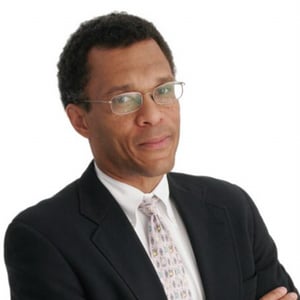
Raymond & Miriam Ehrlich Chair in US Constitutional Law, University of Florida Levin College of Law
Tracey Maclin is Professor of Law and Raymond & Miriam Ehrlich Eminent Scholar Chair. Prior to joining the University of Florida faculty, he was a professor of law and Joseph Lipsitt Faculty Research Scholar at Boston University School of Law. He has also taught at Cornell Law School, Harvard Law School and the University of Kentucky College of Law. Before entering law teaching, Professor Maclin served as a law clerk to Judge Boyce F. Martin, Jr. of the United States Court of Appeals for the Sixth Circuit and worked at Cahill, Gordon & Reindel.
Professor Maclin teaches courses in Constitutional Law and Constitutional Criminal Procedure. He also teaches a seminar on the Supreme Court’s cases in criminal procedure, criminal law, habeas corpus and the death penalty. His scholarship focuses on the Fourth Amendment and the Self-Incrimination Clause of the Fifth Amendment. He has published many law review articles and book chapters on constitutional criminal procedure topics. He is the author of The Supreme Court and the Fourth Amendment’s Exclusionary Rule (Oxford University Press 2013). In addition to his legal scholarship, Professor Maclin has authored over a dozen amicus curiae briefs and served as counsel of record for the American Civil Liberties Union, the National Association of Criminal Defense Lawyers and the Cato Institute in Fourth Amendment cases in the United States Supreme Court.
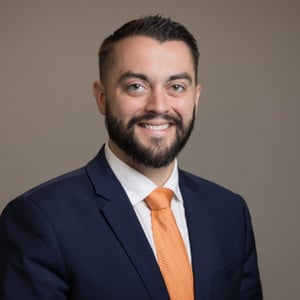
Partner, Consovoy McCarthy PLLC
Mr. Norris helps clients win important questions of federal law in trial and appellate courts across the country. He has represented prominent nonprofits, many States, the Republican Party, and the former President of the United States. He has argued in eight of the twelve federal circuits and twice at the U.S. Supreme Court, including the landmark case Students for Fair Admissions v. Harvard.
Mr. Norris is barred in Tennessee and Virginia, and is an elected member of the American Law Institute. Mr. Norris lives with his family in Knoxville, Tennessee.
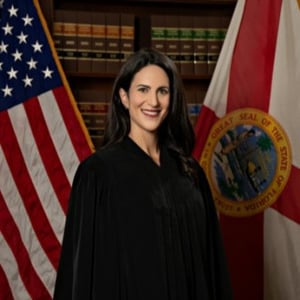
Justice, Florida Supreme Court
On May 23, 2023, Governor Ron DeSantis appointed Justice Meredith L. Sasso to be the 93rd justice of the Supreme Court of Florida.
Justice Sasso was raised in Tallahassee. She received her undergraduate degree from the University of Florida in 2005 and her law degree from the University of Florida in 2008, where she was a member of the Justice Campbell Thornal Moot Court Board. She began her career in private practice, representing clients in large loss general liability, auto negligence, and complex commercial claims in state and federal courts at trial and on appeal. She also served as guardian ad litem, representing abused or neglected children.
In August 2016, Justice Sasso joined the Office of the General Counsel to Governor Rick Scott, serving as Chief Deputy General Counsel. In this role, she represented the Governor in litigation before the Florida Supreme Court, the First District Court of Appeal, and state and federal trial courts, among other duties. In January 2019, Governor Rick Scott appointed her to the Fifth District Court of Appeal. Governor Ron DeSantis recommissioned her to the newly created Sixth District Court of Appeal on January 1, 2023, where she was elected by her colleagues to serve as its first Chief Judge.
She is an appointed member of the Florida Bar Appellate Court Rules Committee. She is also a member of the American Enterprise Institute Leadership Network and the Federalist Society.
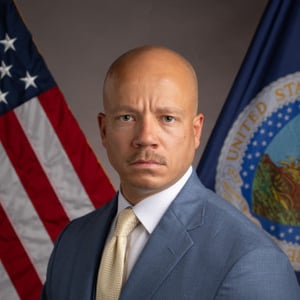
Assistant Secretary for Civil Rights, U.S. Department of Agriculture
Devon Westhill is the Assistant Secretary for Civil Rights at the U.S. Department of Agriculture. The U.S. Senate confirmed President Donald Trump’s nomination of Westhill on October 7, 2025.
Westhill returns to the USDA where he previously headed the civil rights office as Deputy Assistant Secretary in President Trump’s first term. His previous government appointments also include service at the U.S. Department of Labor, liaison to the Administrative Conference of the U.S., and liaison to the White House Initiative on Historically Black Colleges and Universities. Prior to returning to government service, Westhill was President and General Counsel of a nonprofit civil rights organization.
Westhill has testified on civil rights matters before Congress, federal agencies, and as an expert witness in federal court. He has spoken hundreds of times at college campuses, conferences, and on radio and TV programs, and he is frequently quoted in print publications, and his writing has appeared in numerous national outlets. A U.S. Navy veteran, Westhill earned his BA from the University of North Carolina at Chapel Hill and his JD from the University of Florida.
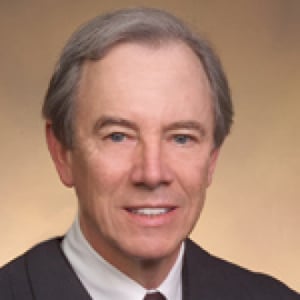
Judge, United States Court of Appeals, D.C. Circuit
Judge Randolph was confirmed by the Senate and appointed to the United States Court of Appeals for the District of Columbia Circuit by President George H. W. Bush in July 1990.
Judge Randolph received his B.S. degree in 1966 from Drexel University, majoring in economics and basic engineering. At Drexel, he was president of the debate society, vice president of the Student Senate, and a member of the varsity wrestling squad. In 1969, he received his J.D. from the University of Pennsylvania, summa cum laude. Judge Randolph ranked first in his law school class all three years and was managing editor of the Law Review.
After graduation, Judge Randolph served as a law clerk to Judge Henry J. Friendly of the United States Court of Appeals for the Second Circuit in New York.
Admitted to the California Bar in 1970 (and to the District of Columbia bar in 1973), Judge Randolph worked as Assistant to the Solicitor General, U.S. Department of Justice, in Washington, D.C., 1970-1973.
After two years in private practice, Judge Randolph was named Deputy Solicitor General of the United States, a position he held from 1975-1977.
In 1979, Judge Randolph was appointed Special Counsel to the Committee on Standards of Official Conduct (the Ethics Committee) of the United States House of Representatives, remaining in this position until 1980.
In the 1980s, Judge Randolph held a number of positions while in private practice, including Special Assistant Attorney General for the states of New Mexico (1985 90), Utah (1986-1990) and Montana (1983-1990). He also served as a Member of the Advisory Panel of the Federal Courts Study Committee.
From 1971-1990, Judge Randolph argued 23 times in the United States Supreme Court, winning 20 of his cases.
As an Adjunct Professor of Law at Georgetown University Law Center from 1974-1978 he taught courses in civil procedure and injunctions. In 1992 he taught a course in constitutional law. He is a Distinguished Adjunct Professor of Law at George Mason School of Law and for the past ten years has been teaching First Amendment law. He also serves on the Judicial Advisory Board of the George Mason University Law and Economics Center.
From 1993 through 1995 Judge Randolph was a member of the Committee on Codes of Conduct of the Judicial Conference of the United States, and from 1995 to 1998 served as the Committee's chairman. He also served as the judicial liaison to the American Bar Association’s Administrative Law Section.
Judge Randolph is a member of the Board of Visitors at Drexel University Law School and was named to the “Drexel One Hundred” as a leading alumnus. In 2002 he was presented the James Wilson Award by the University of Pennsylvania Law School. In November 2005 he delivered the Fifth Annual Barbara K. Olson Memorial Lecture at the Annual Lawyers Convention of the Federalist Society. He has published numerous articles, the most recent of which is in the June 2006 issue of the Harvard Journal of Law and Public Policy.
Judge Randolph is married to the Honorable Eileen J. O’Connor, formerly Assistant Attorney General, Tax Division, U.S. Department of Justice. His son John Trevor Randolph is an investment banker in New York. His daughter Cynthia Lee Randolph is an artist living in San Francisco.
Judge, United States Court of Appeals, D.C. Circuit
Judge Randolph was confirmed by the Senate and appointed to the United States Court of Appeals for the District of Columbia Circuit by President George H. W. Bush in July 1990.
Judge Randolph received his B.S. degree in 1966 from Drexel University, majoring in economics and basic engineering. At Drexel, he was president of the debate society, vice president of the Student Senate, and a member of the varsity wrestling squad. In 1969, he received his J.D. from the University of Pennsylvania, summa cum laude. Judge Randolph ranked first in his law school class all three years and was managing editor of the Law Review.
After graduation, Judge Randolph served as a law clerk to Judge Henry J. Friendly of the United States Court of Appeals for the Second Circuit in New York.
Admitted to the California Bar in 1970 (and to the District of Columbia bar in 1973), Judge Randolph worked as Assistant to the Solicitor General, U.S. Department of Justice, in Washington, D.C., 1970-1973.
After two years in private practice, Judge Randolph was named Deputy Solicitor General of the United States, a position he held from 1975-1977.
In 1979, Judge Randolph was appointed Special Counsel to the Committee on Standards of Official Conduct (the Ethics Committee) of the United States House of Representatives, remaining in this position until 1980.
In the 1980s, Judge Randolph held a number of positions while in private practice, including Special Assistant Attorney General for the states of New Mexico (1985 90), Utah (1986-1990) and Montana (1983-1990). He also served as a Member of the Advisory Panel of the Federal Courts Study Committee.
From 1971-1990, Judge Randolph argued 23 times in the United States Supreme Court, winning 20 of his cases.
As an Adjunct Professor of Law at Georgetown University Law Center from 1974-1978 he taught courses in civil procedure and injunctions. In 1992 he taught a course in constitutional law. He is a Distinguished Adjunct Professor of Law at George Mason School of Law and for the past ten years has been teaching First Amendment law. He also serves on the Judicial Advisory Board of the George Mason University Law and Economics Center.
From 1993 through 1995 Judge Randolph was a member of the Committee on Codes of Conduct of the Judicial Conference of the United States, and from 1995 to 1998 served as the Committee's chairman. He also served as the judicial liaison to the American Bar Association’s Administrative Law Section.
Judge Randolph is a member of the Board of Visitors at Drexel University Law School and was named to the “Drexel One Hundred” as a leading alumnus. In 2002 he was presented the James Wilson Award by the University of Pennsylvania Law School. In November 2005 he delivered the Fifth Annual Barbara K. Olson Memorial Lecture at the Annual Lawyers Convention of the Federalist Society. He has published numerous articles, the most recent of which is in the June 2006 issue of the Harvard Journal of Law and Public Policy.
Judge Randolph is married to the Honorable Eileen J. O’Connor, formerly Assistant Attorney General, Tax Division, U.S. Department of Justice. His son John Trevor Randolph is an investment banker in New York. His daughter Cynthia Lee Randolph is an artist living in San Francisco.
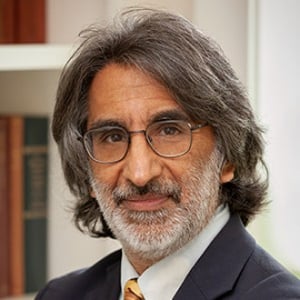
Sterling Professor of Law, Yale Law School
Akhil Reed Amar is Sterling Professor of Law and Political Science at Yale University, where he teaches constitutional law in both Yale College and Yale Law School. After graduating from Yale College, summa cum laude, in 1980 and from Yale Law School in 1984, and clerking for Judge (later Justice) Stephen Breyer, Amar joined the Yale faculty in 1985 at the age of 26. He is Yale’s only living professor to have won the University’s unofficial triple crown — the Sterling Chair for scholarship, the DeVane Medal for teaching, and the Lamar Award for alumni service.
Amar’s work has won awards from both the American Bar Association and the Federalist Society, and he has been cited by Supreme Court justices across the spectrum in more than 50 cases — tops among scholars under age 70. According to both Fred Shapiro’s landmark 2021 study of lifetime scholarly citations and Heinonline’s most recent tabulation of lifetime law-review citations, Amar is America’s second most-cited legal scholar still under age 70. He is a member of the American Academy of Arts and Sciences and has written widely for popular publications, including The New York Times, The Washington Post, The Wall Street Journal, Time, and The Atlantic. He was an informal consultant to the popular TV show The West Wing and his scholarship has been showcased on many broadcasts, including The Colbert Report, Morning Joe, AC360, Velshi, Fox News @ Night with Shannon Bream, Fareed Zakaria GPS, Erin Burnett Outfront, and Constitution USA with Peter Sagal.
He is the author of more than a hundred law review articles and several books, including The Bill of Rights (1998 — winner of the Yale University Press Governors’ Award), America’s Constitution (2005 — winner of the ABA’s Silver Gavel Award), America’s Unwritten Constitution (2012 — named one of the year’s 100 best nonfiction books by The Washington Post), and The Constitution Today (2016 — named one of the year’s top ten nonfiction books by Time magazine). The first volume of his ambitious trilogy on American constitutional history from the Founding to the present, The Words That Made Us: America’s Constitutional Conversation, 1760-1840, came out in May 2021. The second volume, Born Equal: Remaking America’s Constitution, 1840-1920, will be published in September 2025 and is already available for pre-order. All together, his nonfiction books have won two starred reviews from Publishers Weekly and three starred reviews from Kirkus—tops, it is believed, among legal scholars under age 70. Together with Vikram David Amar (YLS ’88), he has a bi-weekly column on the Supreme Court on the distinguished website SCOTUSblog. Along with Andy Lipka, he co-hosts a popular and free weekly podcast, Amarica’s Constitution, whose listeners are eligible for CLE credit in most American jurisdictions. A wide assortment of his articles and op-eds and video links to many of his public lectures and free online courses may be found at akhilamar.com.
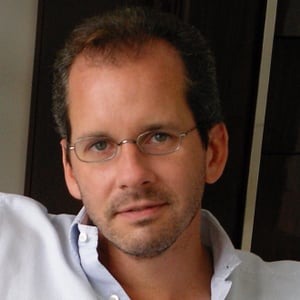
Professor of Law, Georgetown University Law Center
Nicholas Quinn Rosenkranz teaches constitutional law and federal jurisdiction, and he writes articles for the Harvard Law Review and the Stanford Law Review.
He is currently developing a new theory of constitutional interpretation and judicial review. The first installment, entitledThe Subjects of the Constitution, was published in the Stanford Law Review in May of 2010, and it is among the most downloaded articles about constitutional interpretation, judicial review, and/or federal courts in the history of SSRN. The second installment, The Objects of the Constitution, was published in May of 2011, also in the Stanford Law Review. And the comprehensive version is forthcoming as a book by Oxford University Press.
Rosenkranz has served and advised the federal government in a variety of capacities. He clerked for Judge Frank H. Easterbrook on the U.S. Court of Appeals for the Seventh Circuit (1999-2000) and for Justice Anthony M. Kennedy at the U.S. Supreme Court (October Term 2001). He served as an Attorney-Advisor at the Office of Legal Counsel in the U.S. Department of Justice (November 2002 - July 2004). He often testifies before Congress as a constitutional expert—most recently before the House Financial Services Oversight Subcommittee, regarding the Obama Administration's use of bank settlement agreements to circumvent the Appropriations Clause. He has also filed briefs and presented oral argument before the U.S. Supreme Court. His most recent Supreme Court brief, in Los Angeles v. Patel, was cited by Justice Alito in dissent.
Rosenkranz is a member of the New York Bar and the U.S. Supreme Court Bar. He is a Senior Fellow at the Cato Institute. He serves on the Board of Directors of the Foundation for Individual Rights in Education (FIRE). He is a founding member of Heterodox Academy and a member of its Executive Committee. He also serves on the Board of Directors of the Federalist Society and as the faculty advisor to the Georgetown chapter.

Emanuel S. Heller Professor of Law, University of California at Berkeley; Senior Research Fellow, School of Civic Leadership, Civitas Institute, University of Texas at Austin; Nonresident Senior Fellow, American Enterprise Institute
John Yoo is the Emanuel Heller Professor of Law. He is also Distinguished Visiting Scholar, School of Civic Leadership and Senior Research Fellow, Civitas Institute, at the University of Texas at Austin. He is also a Nonresident Senior Fellow at the American Enterprise Institute.
His most recent book, The Politically Incorrect Guide to the Supreme Court, co-authored with Robert Delahunty, was published in 2023. Professor Yoo’s other books include Defender-in-Chief: Trump’s Fight for Presidential Power; Striking Power: How Cyber, Robots, and Space Weapons Change the Rules for War, Point of Attack: Preventive War, International Law, and Global Welfare, and Crisis and Command: A History of Executive Power from George Washington to George Bush.
Professor Yoo has published more than 100 articles in academic journals on subjects including national security, constitutional law, international law, and the Supreme Court. He also regularly contributes to the editorial pages of the Wall Street Journal, New York Times, Washington Post, Los Angeles Times, and National Review, among others.
Professor Yoo has served in all three branches of government. He was an official in the U.S. Department of Justice, where he worked on national security and terrorism issues after the 9/11 attacks. He served as general counsel of the U.S. Senate Judiciary Committee. He has been a law clerk for Supreme Court Justice Clarence Thomas and federal appeals Judge Laurence Silberman. He has been a visiting professor at Seoul National University in South Korea, the Interdisciplinary Center in Israel, Keio University in Japan, Trento University in Italy, the University of Chicago, and the Free University of Amsterdam.
Professor Yoo supervises the Public Law and Policy Program and the California Constitution Center. He also serves on the boards of the Pacific Legal Foundation, the Federalist Society’s Separation of Powers and Federalism Division, the Universidad Cientifica del Sur Law School, and the Asia-Pacific Law Institute at Seoul National University. He is a winner of the Federalist Society’s Paul Bator award and been the Edwin Meese III Originalism Lecturer at the Heritage Foundation.
Professor Yoo graduated from Yale Law School and summa cum laude from Harvard College.
Raymond & Miriam Ehrlich Chair in US Constitutional Law, University of Florida Levin College of Law
Tracey Maclin is Professor of Law and Raymond & Miriam Ehrlich Eminent Scholar Chair. Prior to joining the University of Florida faculty, he was a professor of law and Joseph Lipsitt Faculty Research Scholar at Boston University School of Law. He has also taught at Cornell Law School, Harvard Law School and the University of Kentucky College of Law. Before entering law teaching, Professor Maclin served as a law clerk to Judge Boyce F. Martin, Jr. of the United States Court of Appeals for the Sixth Circuit and worked at Cahill, Gordon & Reindel.
Professor Maclin teaches courses in Constitutional Law and Constitutional Criminal Procedure. He also teaches a seminar on the Supreme Court’s cases in criminal procedure, criminal law, habeas corpus and the death penalty. His scholarship focuses on the Fourth Amendment and the Self-Incrimination Clause of the Fifth Amendment. He has published many law review articles and book chapters on constitutional criminal procedure topics. He is the author of The Supreme Court and the Fourth Amendment’s Exclusionary Rule (Oxford University Press 2013). In addition to his legal scholarship, Professor Maclin has authored over a dozen amicus curiae briefs and served as counsel of record for the American Civil Liberties Union, the National Association of Criminal Defense Lawyers and the Cato Institute in Fourth Amendment cases in the United States Supreme Court.
Partner, Consovoy McCarthy PLLC
Mr. Norris helps clients win important questions of federal law in trial and appellate courts across the country. He has represented prominent nonprofits, many States, the Republican Party, and the former President of the United States. He has argued in eight of the twelve federal circuits and twice at the U.S. Supreme Court, including the landmark case Students for Fair Admissions v. Harvard.
Mr. Norris is barred in Tennessee and Virginia, and is an elected member of the American Law Institute. Mr. Norris lives with his family in Knoxville, Tennessee.
Justice, Florida Supreme Court
On May 23, 2023, Governor Ron DeSantis appointed Justice Meredith L. Sasso to be the 93rd justice of the Supreme Court of Florida.
Justice Sasso was raised in Tallahassee. She received her undergraduate degree from the University of Florida in 2005 and her law degree from the University of Florida in 2008, where she was a member of the Justice Campbell Thornal Moot Court Board. She began her career in private practice, representing clients in large loss general liability, auto negligence, and complex commercial claims in state and federal courts at trial and on appeal. She also served as guardian ad litem, representing abused or neglected children.
In August 2016, Justice Sasso joined the Office of the General Counsel to Governor Rick Scott, serving as Chief Deputy General Counsel. In this role, she represented the Governor in litigation before the Florida Supreme Court, the First District Court of Appeal, and state and federal trial courts, among other duties. In January 2019, Governor Rick Scott appointed her to the Fifth District Court of Appeal. Governor Ron DeSantis recommissioned her to the newly created Sixth District Court of Appeal on January 1, 2023, where she was elected by her colleagues to serve as its first Chief Judge.
She is an appointed member of the Florida Bar Appellate Court Rules Committee. She is also a member of the American Enterprise Institute Leadership Network and the Federalist Society.
Assistant Secretary for Civil Rights, U.S. Department of Agriculture
Devon Westhill is the Assistant Secretary for Civil Rights at the U.S. Department of Agriculture. The U.S. Senate confirmed President Donald Trump’s nomination of Westhill on October 7, 2025.
Westhill returns to the USDA where he previously headed the civil rights office as Deputy Assistant Secretary in President Trump’s first term. His previous government appointments also include service at the U.S. Department of Labor, liaison to the Administrative Conference of the U.S., and liaison to the White House Initiative on Historically Black Colleges and Universities. Prior to returning to government service, Westhill was President and General Counsel of a nonprofit civil rights organization.
Westhill has testified on civil rights matters before Congress, federal agencies, and as an expert witness in federal court. He has spoken hundreds of times at college campuses, conferences, and on radio and TV programs, and he is frequently quoted in print publications, and his writing has appeared in numerous national outlets. A U.S. Navy veteran, Westhill earned his BA from the University of North Carolina at Chapel Hill and his JD from the University of Florida.
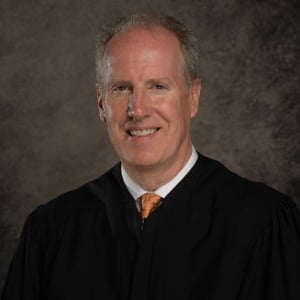
U.S. Court of Appeals, Second Circuit
|
Richard J. Sullivan was sworn in as a United States Circuit Court Judge for the Second Circuit in October 2018. Before that, Judge Sullivan served for eleven years as a United States District Judge for the Southern District of New York. Prior to becoming a judge, he served as the General Counsel and Managing Director of Marsh Inc., the world's leading risk management and insurance brokerage firm. From 1994 to 2005, he served as an Assistant United States Attorney in the Southern District of New York, where he was Chief of the International Narcotics Trafficking Unit and Director of the New York/New Jersey Organized Crime Drug Enforcement Task Force. In 2003, he was awarded the Henry L. Stimson Medal from the Association of the Bar of the City of New York. In 1998, he was named the Federal Law Enforcement Association's Prosecutor of the Year. Prior to joining the U.S. Attorney's Office, he was a litigation associate at Wachtell, Lipton, Rosen & Katz in New York and a law clerk to the Honorable David M. Ebel of the United States Court of Appeals for the 10th Circuit. He is a graduate of Yale Law School, the College of William & Mary, and Chaminade High School on Long Island. From 1986 to 1987, he served as a New York City Urban Fellow under New York City Police Commissioner Benjamin Ward. Judge Sullivan is on the executive board of the New York American Inn of Court and the Center for Law and Religion at St. John’s University School of Law. He is an adjunct professor at Columbia Law School, where he teaches courses on sentencing and jurisprudence, and he previously served as an adjunct professor at Fordham Law School, where he taught courses on white collar crime and trial advocacy and was named Adjunct Professor of the Year.
|
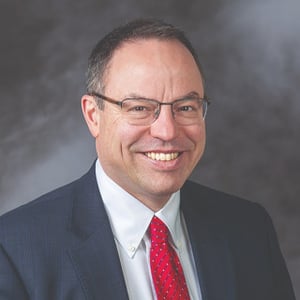
Professor of Law and J. Philip Johnson Faculty Fellow, University of North Dakota School of Law
Michael S. McGinniss is Professor of Law and J. Philip Johnson Faculty Fellow at the University of North Dakota School of Law, where he joined the faculty in 2010 and served as the Dean from 2019 to 2022. He chairs the executive committee for the Federalist Society's Practice Group on Professional Responsibility and Legal Education.
Before entering the legal academy, Professor McGinniss served for twelve years as a Disciplinary Counsel for the Supreme Court of Delaware. He currently teaches courses on Professional Responsibility, Advanced Legal Ethics, Civil Procedure, and Federal Courts. He also serves as Faculty Advisor for the North Dakota Law Review and the UND Law Federalist Society student chapter.
Professor McGinniss’ research and scholarship interests are wide-ranging and include lawyer and judicial ethics, lawyer discipline and regulation of the profession, constitutional law (especially First Amendment, separation of powers, and federalism), and cultural challenges faced by conservatives in the law schools and the legal profession. His most recent law review article, Declaring Independence to Secure Integrity: The Supreme Court Justices' Code of Conduct, was published in the Federalist Society Review. His article Expressing Conscience with Candor: Saint Thomas More and First Freedoms in the Legal Profession, was published in the Harvard Journal of Law & Public Policy.
Professor McGinniss has spoken to Federalist Society lawyer and student chapters across the country about judicial independence and ethics, especially relating to the federal courts and the United States Supreme Court Justices. In addition, he has spoken to several chapters about rising challenges to ideological diversity and targeting of conservative viewpoints in law schools and the legal profession. Although he is very pleased to speak on these and many other topics that may be of interest to lawyer and student chapters, in 2026-2027, he has particular interest in speaking on the topic “Lawyer Discipline as Political ‘Resistance’: Separation of Powers, Federalism, and the Rule of Law,” concerning his work-in-progress on the weaponization of professional disciplinary processes against conservative lawyers for political and ideological purposes.
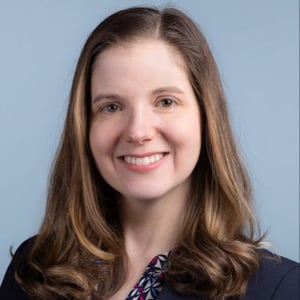
Vice President and Deputy Chief Counsel, U.S. Chamber Litigation Center, U.S. Chamber of Commerce
Jennifer B. Dickey is vice president and deputy chief counsel at the U.S. Chamber Litigation Center, the litigation arm of the U.S. Chamber of Commerce. Dickey handles a variety of litigation matters for the Chamber.
Dickey joined the Chamber following her service as Acting Assistant Attorney General and Principal Deputy Assistant Attorney General in the Civil Division at the U.S. Department of Justice. She also previously served as Deputy Associate Attorney General, providing strategic oversight of the Civil Division, Civil Rights Division, and Foreign Claims Settlement Commission, as well as Special Assistant to the President and Associate Counsel to the President. In the latter capacity, she provided legal advice on a wide array of executive actions and rulemakings, civil litigation, and judicial nominations.
Dickey also practiced law at Kirkland & Ellis LLP before her government service. She was a commercial and appellate litigator, representing businesses in federal and state courts.
Earlier in her career, Dickey served as a law clerk for the Honorable Clarence Thomas of the Supreme Court of the United States and the Honorable William H. Pryor Jr. of the United States Court of Appeals for the Eleventh Circuit.
Dickey earned her law degree magna cum laude from Duke University School of Law, where she was an Executive Editor of the Duke Law Journal, and her undergraduate degree magna cum laude from Dartmouth College.
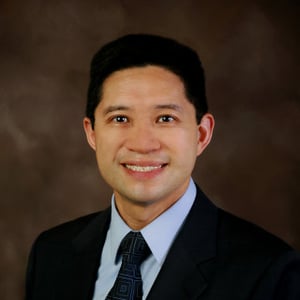
Founder, Original Jurisdiction
David Lat is a lawyer turned writer. He publishes Original Jurisdiction, a newsletter on Substack about law and legal affairs, and he writes for newspapers and magazines, including the New York Times, Washington Post, and Wall Street Journal. Prior to launching Original Jurisdiction, David founded Above the Law, one of the nation's most widely read legal news websites, and Underneath Their Robes, a popular blog about federal judges that he wrote under a pseudonym. He is also the author of a novel set in the world of the federal courts, Supreme Ambitions. Before entering the media world, David worked as a federal prosecutor in Newark, New Jersey; a litigation associate at Wachtell, Lipton, Rosen & Katz, in New York; and a law clerk to Judge Diarmuid F. O’Scannlain of the U.S. Court of Appeals for the Ninth Circuit. David graduated from Harvard College and Yale Law School, where he served as an editor of the Yale Law Journal.
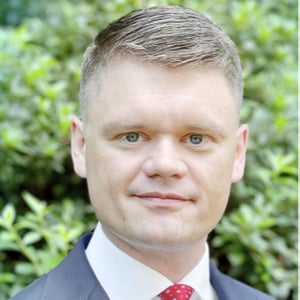
Associate, Lehotsky Keller Cohn
Mark Rothrock helps clients navigate complex litigation matters in state and federal courts.
Before joining Lehotsky Keller Cohn LLP, Mr. Rothrock worked in the Litigation Practice Group at Smith Anderson Blount Dorsett Mitchell & Jernigan, LLP, where he advised clients facing high-stakes disputes in state and federal courts. Mr. Rothrock clerked for Judge Raymond M. Kethledge of the U.S. Court of Appeals for the Sixth Circuit and for Judge James C. Dever III of the U.S. District Court for the Eastern District of North Carolina.
Mr. Rothrock graduated from Duke Law School, where he served as the Managing Editor of the Duke Law Journal, Executive Vice President of the Federalist Society, and as a research assistant to Professor Ernest Young.
Before law school, Mr. Rothrock served as a Tank Officer in the United States Marine Corps and deployed in support of Operation Enduring Freedom. Mr. Rothrock is now a Major in the United States Marine Corps Reserve.

Panel III: Race in Admissions: How SFFA v. Harvard and SFFA v. UNC are Changing Higher Education and the Legal Profession
Tracey Maclin, Cameron T. Norris, Meredith Sasso, Devon Westhill
The panel will discuss how these decisions are transforming the admissions process in higher education...
Panel III: Race in Admissions: How SFFA v. Harvard and SFFA v. UNC are Changing Higher Education and the Legal Profession
2024 Florida Chapters Conference
Kissimmee, FLWhere Have All the Trials Gone? The Vanishing Jury Trial and What It Means for the Legal Profession and the American System of Justice
Duquesne Student Chapter
Pittsburgh, PAPerspectives on Maintaining Values and Integrity in the Legal Field
Brigham Young Student Chapter
Provo, UTRising Challenges to Freedom of Speech and Respect for Ideological Diversity in the Legal Profession
North Dakota Lawyers Chapter
Bismark, NDThe Federalist Paper, Winter 2023
The 2022 National Lawyers Convention was one for the books! The Scalia Dinner featured brief remarks...
The Current State of the Legal Profession
Duke Student Chapter
Durham, NCHon. Robert H. Bork Memorial Lecture
A. Raymond Randolph
The 2022 National Lawyers Convention will take place November 10-12, 2022 at the Mayflower Hotel in...
Hon. Robert H. Bork Memorial Lecture
A. Raymond Randolph
The 2022 National Lawyers Convention will take place November 10-12, 2022 at the Mayflower Hotel in...
14th Annual Rosenkranz Debate & Luncheon
Akhil Reed Amar, Nicholas Quinn Rosenkranz, John C. Yoo
The 2022 National Lawyers Convention will take place November 10-12, 2022 at the Mayflower Hotel...