

Senior Fellow, Forum for Intellectual Property, Hudson Institute
Devlin Hartline is a senior fellow at Hudson Institute’s Forum for Intellectual Property. His research agenda spans a broad spectrum of doctrinal and political issues in intellectual property law, with particular focus on advancing and protecting the rights of creators and innovators. The Forum for Intellectual Property supports data-driven research and promotes evidence-based policy discussions about the key role of intellectual property in growing innovation economies and flourishing societies.
Prior to joining Hudson Institute, Mr. Hartline was an assistant professor of law at George Mason University Antonin Scalia Law School in Arlington, Virginia, where he taught intellectual property law, including copyright, patent, and trademark law. Mr. Hartline also served as director of communications at the law school’s Center for the Protection of Intellectual Property, where he led the center’s communications and academic advocacy efforts, working closely with scholars to publicize and promote rigorous research on the law, economics, and history of intellectual property.
Mr. Hartline holds a JD, cum laude, from Loyola University New Orleans College of Law and an LLM with concentrations in intellectual property and constitutional law from Tulane University Law School in New Orleans, Louisiana. Mr. Hartline also holds a BA in mathematics from the University of Colorado at Boulder.
Associate Professor, UNH Franklin Pierce School of Law
Zvi S. Rosen is an Associate Professor at UNH Franklin Pierce School of Law and the Faculty Director of the Franklin Pierce Society for Intellectual Property. He has served as a Assistant Professor at the Southern Illinois University School of Law, as a Visiting Assistant Professor at the Maurice A. Deane School of Law at Hofstra University, and as a Visiting Scholar and Professorial Lecturer in Law at George Washington University School of Law.
In 2015-2016, he was the Abraham L. Kaminstein Scholar in Residence at the U.S. Copyright Office. Mr. Rosen received his J.D. from Northwestern University School of Law in 2005 and LLM in Intellectual Property in 2006 from the George Washington University Law School. He has practiced at Fried, Frank, Harris, Shriver & Jacobson LLP as well as smaller firms and his own practice, and clerked for the Hon. Thomas B. Bennett of the U.S. Bankruptcy Court for the Northern District of Alabama. He has written extensively on the development of modern copyright and trademark law, as well as on bankruptcy law.
Senior Legal Fellow, Courts and the Constitution, Legal Policy Center, The Heritage Foundation
Zack is a Senior Legal Fellow of Courts and the Constitution at The Heritage Foundation.
He previously served for several years as an Assistant United States Attorney in the Northern District of Florida. Prior to that, he spent two years as an associate in the Washington, D.C. office of Cleary Gottlieb Steen & Hamilton, which he joined after clerking for the Hon. Emmett R. Cox on the United States Court of Appeals for the Eleventh Circuit.
Smith received his undergraduate, master’s, and law degrees from the University of Florida. During law school, Smith served as the Editor in Chief of the Florida Law Review and served on the executive boards of several student organizations, including the UF Chapter of the Federalist Society.
Senior Counsel, Litigation, Defense of Freedom Institute
Don Daugherty is Senior Counsel, Litigation, at the Defense of Freedom Institute for Policy Studies. He previously served as a Senior Counsel at the Institute for Free Speech and the Wisconsin Institute for Law & Liberty. Before that, he was a partner at three of Wisconsin’s largest firms, with nearly 30 years of trial and appellate litigation experience. He has been consistently recognized as among the “Best Lawyers in America,” as well as Wisconsin’s “Super Lawyers.” He received his B.A. from the University of Virginia and his J.D. from Northwestern University Law School. After law school, he served as a clerk to the Honorable Roger J. Miner of the United States Court of Appeals for the Second Circuit.
Don is on the Board of Advisors for the Milwaukee Lawyers’ Chapter of the Federalist Society, and on the Executive Committee of the Federalist Society’s Litigation Practice Group.
Special Counsel, Wiley Rein LLP
Michael Showalter is a Special Counsel at Wiley Rein LLP. He received his J.D. from Yale Law School in 2016.

Vice President for Legal Affairs, Goldwater Institute

President, Committee for Justice
Curt Levey is President of the Committee For Justice, an organization devoted to advancing constitutionally limited government and individual liberty. He is a veteran of Supreme Court and other judicial confirmation battles and serves on the executive committee of the Federalist Society's Civil Rights Practice Group.
After graduating Harvard Law School with honors and clerking for the U.S. Court of Appeals for the Sixth Circuit, Mr. Levey served as Director of Legal & Public Affairs at the Center for Individual Rights (CIR). There he worked on landmark Supreme Court cases, including the University of Michigan affirmative action cases and the successful constitutional challenge to the Violence Against Women Act. After CIR, Mr. Levey headed the Title IX policy group at the U.S. Department of Education.
Before attending law school, Mr. Levey earned an M.S. and B.A. in computer science from Brown University and worked in the field of artificial intelligence (AI). He invented a new type of AI technology, for which he wrote a successful patent application.

Professor Emeritus, New York University
GARY MARCUS is a leading voice in artificial intelligence. He is a scientist, best-selling author, and serial entrepreneur (Founder of Robust.AI and Geometric.AI, acquired by Uber). He is well-known for his challenges to contemporary AI, anticipating many of the current limitations decades in advance, and for his research in human language development and cognitive neuroscience.
An Emeritus Professor of Psychology and Neural Science at NYU, he is the author of five books, including, The Algebraic Mind, Kluge, The Birth of the Mind, and the New York Times Bestseller Guitar Zero. He has often contributed to The New Yorker, Wired, and The New York Times. His most recent book, Rebooting AI, with Ernest Davis, is one of Forbes’s 7 Must Read Books in AI.

Founder, Chairman, and CEO, Louis D. Brandeis Center for Human Rights Under Law
Hon. Kenneth L. Marcus is an internationally recognized expert in civil and human rights, as well as a leader in the fight against anti-Semitism on and off university campuses. He is the Founder, Chairman, and CEO of The Louis D. Brandeis Center for Human Rights Under Law, the leading civil rights legal organization fighting against anti-Semitism. The New York Times has called him “The Man Who Helped Redefine Campus Anti-Semitism.” He been described, in that paper, as “the single most effective and respected force” to combat anti-Semitism.
During his public service career, Marcus served as Assistant U.S. Secretary of Education for Civil Rights; Staff Director at the U.S. Commission on Civil Rights; and General Deputy Assistant U.S. Secretary of Housing and Urban Development for Fair Housing and Equal Opportunity.
In academia, he serves as Professorial Lecturer in Law at George Washington University. He formerly held the Lillie and Nathan Ackerman Chair in Equality and Justice in America at the City University of New York’s Bernard M. Baruch College, served as Visiting Research Professor of Political Science at Yeshiva University, and was a Board of Visitors member George Mason University and Distinguished Senior Fellow at that university’s law school. He is a member of the editorial board of the Journal of Contemporary Antisemitism and previously served as Associate Editor of the Journal for the Study of Anti-Semitism.
Marcus is also author of The Definition of Anti-Semitism (Oxford University Press) and Jewish Identity and Civil Rights in America (Cambridge University Press). He has published widely in academic journals as well as in more popular venues such as The Wall Street Journal, Washington Post, Newsweek, USA Today, and Politico. He is a graduate of Williams College and the University of California at Berkeley School of Law.
Earlier in his career, he was a litigation partner in two major law firms, where he conducted complex commercial and constitutional litigation. He also serves as Chairman emeritus of the Executive Committee of the Federalist Society for Law & Public Policy Civil Rights Practice Group.
Deputy Secretary of Labor, U.S. Department of Labor
Keith E. Sonderling was confirmed by the U.S. Senate on March 12, 2025 to be the 38th United States Deputy Secretary of Labor.
As the United States Deputy Secretary of Labor, Sonderling is the second-highest-ranking official and serves as the Department's Chief Operating Officer, overseeing the agency’s $14 billion dollar budget and 16,000 employees. The Deputy Secretary oversees key operational functions such as: strategic planning; budget formulation; financial management; information technology; and human resource management. Additionally, the Deputy Secretary provides the leadership and management of DOL’s agencies necessary to support the Secretary and the Department’s mission.
Prior to becoming Deputy Secretary, he was previously confirmed by the United States Senate to serve as the Commissioner of the U.S. Equal Employment Opportunity Commission (EEOC) from September 2020 until August 2024. He also served as the Commission’s Vice-Chair from 2020-2021.
During his tenure at the EEOC, one of Sonderling’s highest priorities was ensuring that artificial intelligence and workplace technologies are designed and deployed consistent with long-standing laws. He published numerous articles on the benefits and potential harms of using artificial intelligence-based technology in the workplace and spoke globally on artificial intelligence’s impact on the workplace.
Sonderling previously served at the US Department of Labor as the Acting and Deputy Administrator of the U.S. Department of Labor’s Wage and Hour Division from 2017-2020. During his tenure, the Division accomplished back-to-back record-breaking enforcement collections and educational outreach events. Sonderling also oversaw the development and publication of large-scale deregulatory rules and authored numerous Opinion Letters, Field Assistance Bulletins, and All Agency Memorandums. Additionally, he was instrumental in developing the Division’s first comprehensive self-audit program, which collected more than $7 million for nearly eleven thousand workers.
Before his government service, Sonderling was a partner at one of Florida’s oldest and largest law firms, Gunster. At Gunster, he counseled employers and litigated labor and employment disputes. In 2012, then-Governor Rick Scott appointed Sonderling to serve as the Chair of the Judicial Nominating Committee for appellate courts in South Florida. Sonderling was also active in the community, serving on the Board of Directors for Morse Life Health System, the Boca Raton Chamber of Commerce, and Leadership Florida.
Sonderling also serves as a Professional Lecturer in the Law (Adjunct Professor) at George Washington University Law School, teaching employment discrimination.
Sonderling received his B.S., magna cum laude, from the University of Florida and his J.D., magna cum laude, from Nova Southeastern University.
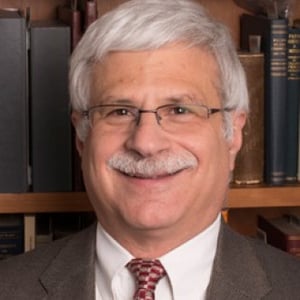
Professor of Law, Catholic University of America
Robert Destro served as Assistant Secretary for the Bureau of Democracy, Human Rights, and Labor (DRL). He has a long history as a human rights advocate and civil rights attorney with expertise in elections, employment, and constitutional law. Destro has served on the faculty at Catholic University’s Columbus School of Law since 1982 and served as its interim dean from 1999 to 2001. He was founding director of the Interdisciplinary Program in Law and Religion and served as the Director of the Institute for Policy Research and Catholic Studies from June 2017 to September 2019. He served as a commissioner on the U.S. Commission on Civil Rights from 1983-1989. His legal work includes collaboration with the Peace Research Institute Oslo in a fifteen-year dialogue among Muslim, Christian, and Jewish leaders in the legal, business, and religious fields in the United States and the Middle East as well as efforts promoting the release of political prisoners and prisoners of conscience in the Middle East. He has served as voting rights counsel for the Ohio Secretary of State and has advocated for the first amendment rights of individuals and organizations.
He earned a B.A. from Miami University, Ohio, and a J.D. from the University of California at Berkeley. He is an active member of the Bar in Ohio and California.
The rest of his bio including his publications are available on the Catholic University Faculty page linked here.
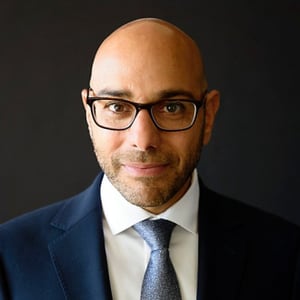
Managing Partner, Siri & Glimstad LLP
Aaron Siri is the Managing Partner of Siri & Glimstad LLP and has extensive experience in a wide range of complex civil litigation matters, with a focus on civil rights, class actions, and commercial litigation.
Mr. Siri has successfully litigated numerous civil rights cases involving informed consent and parental rights with regard to mandated medical products, including representing whistleblowers. (See representative examples ) He has successfully prosecuted class actions against large corporations resulting in payments to hundreds of thousands of Americans. (See representative examples ) Mr. Siri has also acted as counsel to clients in multiple commercial disputes exceeding one billion dollars. (See representative examples )
Prior to founding Siri & Glimstad, Mr. Siri was a litigation attorney at Latham & Watkins for over five years. Before Latham, Mr. Siri clerked for the Chief Justice of the Supreme Court of Israel (Aharon Barak) from 2004-2005 where he advised the Chief Justice of relevant American, English (including Commonwealth Countries), and International Law precedents for cases of first impression, including the implications of Israel’s planned removal of its citizens from the Gaza Strip/West Bank.
Mr. Siri has also been involved in various pro-bono matters, including representation of asylum applicants, housing discrimination victims, and non-profit organizations in tenant-landlord disputes, as well as being chosen as a Frank C. Newman delegate to present a paper he authored before the United Nations Human Rights Sub-Commission.
Mr. Siri earned his law degree at the University of California, Berkeley School of Law where he received four Prosser Prizes and ten High Honors. He was also the Editor-in-Chief and founder of the Berkeley Business Law Journal, which he developed into a nationally recognized publication, and was ranked the #1 commercial law journal in the country.
Prior to law school, Mr. Siri was an auditor at Arthur Andersen LLP, where he examined internal controls and audited corporate documents for private and public micro-cap technology companies. Mr. Siri is a Certified Public Accountant and an attorney admitted in federal and state courts across the country.
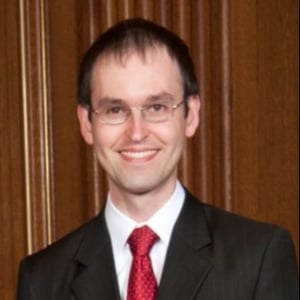
Partner, Cooper & Kirk PLLC
BRIAN W. BARNES has litigated high-stakes cases at all levels of the federal court system and has also argued numerous cases in state trial and appellate courts. He was the principal author of the briefs for the petitioners in Collins v Mnuchin, a multi-billion-dollar administrative law case challenging the nationalization of Fannie Mae and Freddie Mac, which is currently pending in the United States Supreme Court. In related litigation, Mr. Barnes deposed several of the current and former senior executives for Fannie Mae and Freddie Mac, including both companies’ former CEOs. Mr. Barnes also played a central role representing shareholders in disputes over the scope of the government’s discovery obligations in the Fannie Mae/Freddie Mac litigation, successfully persuading the Court of Federal Claims to order the government to show plaintiffs’ counsel most of the documents the government attempted to withhold under the deliberative process and bank examination privileges.
Mr. Barnes also has extensive experience representing plaintiffs in suits filed under the Racketeer Influenced and Corrupt Organizations Act (“RICO”). He briefed and argued St. Luke’s Health Network v. Lancaster General Hospital, 967 F.3d 295 (3d Cir. 2020), in which the Third Circuit reversed dismissal of RICO claims filed as part of a putative class action against a hospital that allegedly defrauded a Pennsylvania program that subsidizes care for indigent patients. Mr. Barnes also helped pioneer the use of RICO to sue state-legalized marijuana businesses: he filed the first such case, successfully argued the case on appeal after it was dismissed, and later helped try the case to a jury on remand. See Safe Streets Alliance v. Hickenlooper, 859 F.3d 865 (10th Cir. 2017).
Mr. Barnes has also worked on a wide range of other matters. He has briefed and argued cases concerning state preemption of local gun regulations in the trial and intermediate appellate courts of Illinois and Pennsylvania. In litigation over the Department of Education’s Title IX regulations, Mr. Barnes represents intervenors who are defending the regulations. And he has an active practice advising institutional investors on the probable outcomes of market-moving litigation in both state and federal courts.
Mr. Barnes clerked for Justice Samuel Alito during the Supreme Court’s 2012 Term and was previously a law clerk to Judge Thomas Griffith of the D.C. Circuit. He is a graduate of Yale Law School, where he was an Articles Editor for the Yale Law Journal and a member of the Yale Supreme Court Clinic. Mr. Barnes received his B.A. from Yale College and is a member of the Colorado and District of Columbia bars.
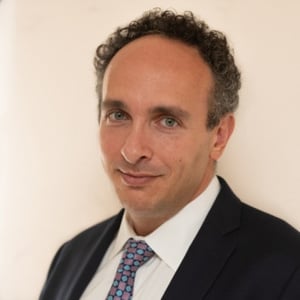
Assistant Professor of Cybersecurity Law, The United States Naval Academy
Jeff Kosseff is an Assistant Professor of Cybersecurity Law at the United States Naval Academy. He is the author of Cybersecurity Law (Wiley), the first comprehensive textbook on U.S. cybersecurity laws and regulations, and in spring 2019 he published The Twenty-Six Words that Created the Internet (Cornell University Press), a nonfiction narrative history of Section 230 of the Communications Decency Act. He currently is writing a third book, also for Cornell University Press, tentatively titled United States of Anonymous, about the history of the First Amendment right to anonymous speech in the United States, from the Federalist Papers to online postings. He received a 2019 Andrew Carnegie Fellowship to research and write the book.
His articles about cybersecurity and Internet law have appeared in Iowa Law Review, Wake Forest Law Review, IEEE Security & Privacy, Computer Law and Security Review, Columbia Science and Technology Law Review, and other publications. In October 2017, he testified about online sex trafficking and Section 230 before the House Judiciary Committee's Subcommittee on Crime, Terrorism, Homeland Security, and Investigations. In March 2017, he testified about Section 702 of the Foreign Intelligence Surveillance Act before the House Judiciary Committee.
Jeff has practiced cybersecurity and privacy law, and clerked for Judge Milan D. Smith, Jr. of the U.S. Court of Appeals for the Ninth Circuit and for Judge Leonie M. Brinkema of the U.S. District Court for the Eastern District of Virginia. He is a graduate of Georgetown University Law Center and the University of Michigan. Before becoming a lawyer, he was a journalist for The Oregonian and was a finalist for the Pulitzer Prize for national reporting.
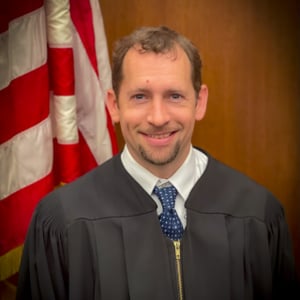
District Judge, United States District Court for the Northern District of Texas
Judge Brantley Starr was appointed to United States District Court for the Northern District of Texas in August 2019. Before his appointment, Judge Starr was the Deputy First Assistant Attorney General of Texas. Prior to that appointment, he served as Deputy Attorney General for Legal Counsel. From 2011 to 2015, Judge Starr served as career staff attorney to Texas Supreme Court Justice Eva Guzman. From 2008 to 2011, he practiced at King & Spalding, LLP. He served in the Office of the Solicitor General from 2006 to 2008. Prior to that, Judge Starr clerked for then-Justice Don Willett on the Texas Supreme Court after serving at the Office of the Attorney General. Judge Starr received his law degree from the University of Texas School of Law and his bachelor of arts degree from Abilene Christian University in 2001. Judge Starr has taught the Origins of the Constitution Class at the University of Texas law, Texas A&M law, and SMU law.

Executive Director, Engine
Kate has been at Engine since 2017 and has served as Engine’s Policy Director since 2019, working on privacy, intermediary liability, and telecommunications issues.
Prior to joining Engine, Kate worked on surveillance reform issues at the Electronic Frontier Foundation. Before joining the advocacy community, Kate spent years as a technology policy reporter in D.C., including at Politico, The Hill, and Communications Daily. She is a graduate of Hamilton College.

Thomas M. Siebel Senior Fellow, The Hoover Institution, Stanford University; Gary T. Schwartz Distinguished Professor of Law Emeritus, UCLA School of Law
Eugene Volokh is the Thomas M. Siebel Senior Fellow at the Hoover Institution (Stanford), as well as the Gary T. Schwartz Distinguished Professor of Law Emeritus and Distinguished Research Professor at UCLA School of Law. He recently retired from teaching at UCLA, after 30 years there, and is now focusing on research.
Volokh is the author of the textbooks The First Amendment and Related Statutes (8th ed. 2023), and Academic Legal Writing (5th ed. 2016), as well as over 100 academic law journal articles, mostly on First Amendment law. He is a member of The American Law Institute; the editor-in-chief of the Journal of Free Speech Law; and the creator and coauthor of The Volokh Conspiracy, a leading legal blog founded in 2002 (hosted at the Washington Post from 2014 to 2017 and now at Reason Magazine).
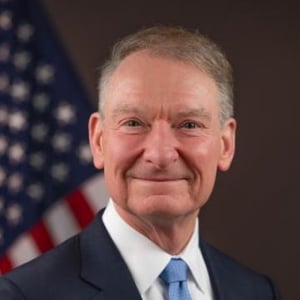
Chairman of the Securities and Exchange Commission
Paul S. Atkins was sworn into office as the 34th Chairman of the Securities and Exchange Commission on April 21, 2025, after being nominated by President Donald J. Trump on January 20, 2025, and confirmed by the U.S. Senate on April 9, 2025.
Prior to returning to the SEC, Chairman Atkins was most recently chief executive of Patomak Global Partners, a company he founded in 2009. Chairman Atkins helped lead efforts to develop best practices for the digital asset sector. He served as an independent director and non-executive chairman of the board of BATS Global Markets, Inc. from 2012 to 2015.
Chairman Atkins was appointed by President George W. Bush to serve as a Commissioner of the SEC from 2002 to 2008. During his tenure, he advocated for transparency, consistency, and the use of cost-benefit analysis at the agency. Chairman Atkins also represented the SEC at meetings of the President’s Working Group on Financial Markets and the U.S.-EU Transatlantic Economic Council. From 2009 to 2010, he was appointed a member of the Congressional Oversight Panel for the Troubled Asset Relief Program.
Before serving as an SEC Commissioner, Chairman Atkins was a consultant on securities and investment management industry matters, especially regarding issues of strategy, regulatory compliance, risk management, new product development, and organizational control.
From 1990 to 1994, Chairman Atkins served on the staff of two chairmen of the SEC, Richard C. Breeden and Arthur Levitt, ultimately as chief of staff and counselor, respectively. He received the SEC’s 1992 Law and Policy Award for work regarding corporate governance matters.
Chairman Atkins began his career as a lawyer in New York, focusing on a wide range of corporate transactions for U.S. and foreign clients, including public and private securities offerings and mergers and acquisitions. He was resident for 2½ years in his firm's Paris office and admitted as conseil juridique in France.
A member of the New York and Florida bars, Chairman Atkins received his J.D. from Vanderbilt University School of Law in 1983 and was Senior Student Writing Editor of the Vanderbilt Law Review. He received his A.B., Phi Beta Kappa, from Wofford College in 1980.
Originally from Lillington, North Carolina, Chairman Atkins grew up in Tampa, Florida. He and his wife Sarah have three sons.

Partner, Wilson Sonsini
David Berger specializes in corporate governance and M&A litigation as well as rapid response shareholder activism and corporate governance risk oversight. David’s practice is an unusual blend of corporate governance advisory work and litigation, and he is nationally recognized for his expertise in both the boardroom and the courtroom. David also represents directors and companies in internal investigations and public companies on disclosure and SEC proceedings.
David has represented many leading technology and other companies in a variety of governance matters, including Google, Hewlett-Packard, Tesla, Genentech, Dropbox, Box, TD Ameritrade, Copart, Lumentum, Coherent, and Chevron. In addition, David represents many leading investment banks and private equity firms, including Morgan Stanley, SilverLake, TPG, Oak Hill, Francisco Partners, and Qatalyst Partners.
David is a senior fellow at NYU’s Center for Corporate Governance and Finance, and is a visiting professor at NYU Law School. David taught M&A Litigation and was a visiting Fellow in the Program on Corporate Governance at Harvard Law School in 2018. He has also been a visiting lecturer at a number of other leading law schools, including Duke, Stanford, Hebrew University, and Tel Aviv University, among others.

Founding Partner, Boyden Gray & Associates
Ambassador C. Boyden Gray is the founding partner of Boyden Gray & Associates, a law and strategy firm in Washington, D.C., focused on constitutional and regulatory issues.
Mr. Gray worked in the White House for twelve years, first as counsel to the Vice President during the Reagan administration and then as White House Counsel to President George H.W. Bush. In the Reagan administration, he was Counsel to the Presidential Task Force on Regulatory Relief, for which he wrote the original Executive Order 12291 requiring cost-benefit analysis and White House review of regulations (later renumbered as current EO 12866). In the George H.W. Bush Administration, Mr. Gray was in charge of judicial selection and was also instrumental in the enactment of the Clean Air Act Amendments of 1990, the Energy Policy Act of 1992, and a cap-and-trade system for acid rain emissions. In 1993, he received the Presidential Citizens Medal. Under President George W. Bush, Mr. Gray was U.S. Ambassador to the European Union and U.S. Special Envoy to Europe for Eurasian Energy.
Mr. Gray practiced law for 25 years at the law firm of Wilmer, Cutler & Pickering and was chairman of the Administrative Law and Regulatory Practice Section of the American Bar Association from 2000 to 2002. Early in his career, Mr. Gray helped to develop the Business Roundtable and served as its first counsel. He is an adjunct professor at Antonin Scalia Law School and a former adjunct professor at NYU Law School (teaching energy and environmental law). Mr. Gray is on the Board of Directors of the Atlantic Council, the Federalist Society, Reason Foundation, and the Trust for the National Mall.
Mr. Gray earned his A.B. magna cum laude from Harvard, where he was an editor of the Crimson, and his J.D. with high honors from the University of North Carolina at Chapel Hill, where he was editor-in-chief of the Law Review. Mr. Gray served in the United States Marine Corps, and after law school, he clerked for Earl Warren, Chief Justice of the United States Supreme Court.
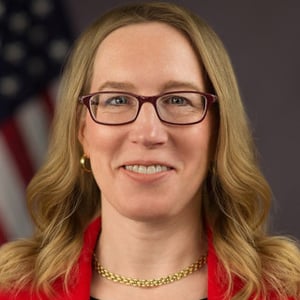
Commissioner, United States Securities and Exchange Commission
Hester M. Peirce was appointed by President Donald J. Trump to the U.S. Securities and Exchange Commission and was sworn in on January 11, 2018.
Prior to joining the SEC, Commissioner Peirce conducted research on the regulation of financial markets at the Mercatus Center at George Mason University. She was a Senior Counsel on the U.S. Senate Committee on Banking, Housing, and Urban Affairs, where she advised Ranking Member Richard Shelby and other members of the Committee on securities issues. Commissioner Peirce served as counsel to SEC Commissioner Paul S. Atkins. She also worked as a Staff Attorney in the SEC’s Division of Investment Management. Commissioner Peirce was an associate at Wilmer, Cutler & Pickering (now WilmerHale) and clerked for Judge Roger Andewelt on the Court of Federal Claims.
Commissioner Peirce earned her bachelor’s degree in Economics from Case Western Reserve University and her JD from Yale Law School.
Of Counsel, Wachtell, Lipton, Rosen & Katz
Leo E. Strine, Jr., is Of Counsel in the Corporate Department at Wachtell, Lipton, Rosen & Katz. Prior to joining the firm, he was the Chief Justice of the Delaware Supreme Court from early 2014 through late 2019. Before becoming the Chief Justice, he had served on the Delaware Court of Chancery as Chancellor since June 22, 2011, and as a Vice Chancellor since November 9, 1998.
In his judicial positions, Mr. Strine wrote hundreds of opinions in the areas of corporate law, contract law, trusts and estates, criminal law, administrative law, and constitutional law. Notably, he authored the lead decision in the Delaware Supreme Court case holding that Delaware’s death penalty statute was unconstitutional because it did not require the key findings necessary to impose a death sentence to be made by a unanimous jury.
Mr. Strine holds long-standing teaching positions at Harvard and University of Pennsylvania, where he has and continues to teach diverse classes in corporate law addressing, among other topics, mergers and acquisitions, the role of independent directors, valuation, and corporate law theories. He is a member of the American Law Institute, and currently serves as an advisor on the project to create a restatement of corporate law.
Mr. Strine also serves as the Michael L. Wachter Distinguished Fellow in Law and Policy at the University of Pennsylvania Carey Law School, the Ira M. Millstein Distinguished Senior Fellow at the Ira M. Millstein Center for Global Markets and Corporate Ownership at Columbia Law School and a Senior Fellow of the Harvard Program on Corporate Governance. From 2006 to 2019, Mr. Strine served as the special judicial consultant to the ABA’s Committee on Corporate Laws. He also was the special judicial consultant to the ABA’s Committee on Mergers & Acquisitions from 2014 to 2019.

Partner, Steptoe & Johnson LLP
Stewart Baker is a partner in the law firm of Steptoe & Johnson in Washington, D.C. From 2005 to 2009, he was the first Assistant Secretary for Policy at the Department of Homeland Security. His law practice covers cybersecurity, data protection, homeland security, and travel and foreign investment regulation; he has been awarded one patent.
Mr. Baker has been General Counsel of the National Security Agency and General Counsel of the commission that investigated WMD intelligence failures prior to the Iraq war. He is the author of Skating on Stilts, a book on terrorism, cybersecurity, and other technology issues; he also hosts the weekly Cyberlaw Podcast.
Director, Cybersecurity and Emerging Threats, R Street Institute
Tatyana Bolton is the Policy Director for R Street’s Cybersecurity & Emerging Threats team. She crafts and oversees the public policy strategy for the department with a focus on secure and competitive markets, data security and data privacy, and diversity in cybersecurity. Other areas of research for the team include cyber metrics, Bureau of Cyber Statistics, content moderation, 5G, building capacity, state and local cybersecurity, and supporting innovation.
Most recently, Tatyana worked as the senior policy director for the U.S. Cyberspace Solarium Commission focusing on U.S. government reorganization and resilience portfolios. From 2017-2020, Tatyana also served at the Cybersecurity and Infrastructure Security Agency as the cyber policy lead in the Office of Strategy, Policy and Plans where she developed strategies for strengthening the cybersecurity of our nation’s critical infrastructure. Tatyana’s work included efforts on the Cyber Deterrence Strategy of the United States, the Department of Homeland Security Cybersecurity Strategy and the National Cyber Strategy.
Tatyana has published pieces in Lawfare and Defense News on cybersecurity clinics and women in cybersecurity. She also received an award for exceptionally meritorious service from the Cyberspace Solarium Commission.
She received a Master of Arts in security studies with a focus on Asian affairs from Georgetown University’s Walsh School of Foreign Service’s Security Studies Program and earned a Bachelor of Arts with honors in political science and theatre from the Ohio State University.
Tatyana lives in Alexandria, Virginia with her family.

Courthouse Steps Oral Argument: Cox Communications, Inc. v. Sony Music Entertainment
Devlin Hartline, Zvi Rosen
In Cox Communications, Inc. v. Sony Music Entertainment, the Supreme Court is set to determine whether...
The Supreme Court's 2023 Term: Return to Original Meaning or a Dangerous "Paradigm Shift"?
Zack Smith, Donald A. Daugherty
Each Supreme Court term over the past several years seems to produce more momentous decisions...
Corner Post and 28 U.S.C. § 2401(a): Not Much to Look At?
Michael J. Showalter
This term the U.S. Supreme Court will decide Corner Post, Inc. v. Board of Governors...
Dram-Shop Liability and the State Constitution at the Arizona Supreme Court
Timothy Sandefur
The Arizona Supreme Court made surprisingly quick work of what at first appeared to be...
Artificial Intelligence, Anti-Discrimination & Bias
Curt Levey, Gary Marcus, Kenneth L. Marcus, Keith E. Sonderling
Artificial intelligence (AI) technologies are not new, but they have made rapid advances in recent...
Topics
Four Things to Watch in Gonzalez v. Google
Many Americans have heard of Section 230 of the Communications Decency Act. Not many know...
Litigation Update: Vaccination Mandates
Robert A. Destro, Aaron Siri
The ongoing, high-decibel, public debate over vaccine mandates has entered its litigation phase. Please join...
Panel 2: Big Tech and The Future of Section 230
Brian W. Barnes, Jeff Kosseff, Brantley Starr, Kate Tummarello, Eugene Volokh
On September 17-18, 2021, The Federalist Society's Texas chapters sponsored the seventh annual Texas Chapters...
Corporate Social Responsibility, Investment Strategy, and Liability Risks
Paul S. Atkins, David J. Berger, C. Boyden Gray, Hester M. Peirce, Leo E. Strine
Environmental, Social and Corporate Governance (ESG) investing is growing in popularity, especially after major investment firm BlackRock signaled support...
Deep Dive Episode 182 – Cybersecurity Threats and the Regulatory Response
Stewart A. Baker, Tatyana Bolton
The Biden administration had barely named a cabinet, let alone staffed the government, when it...