
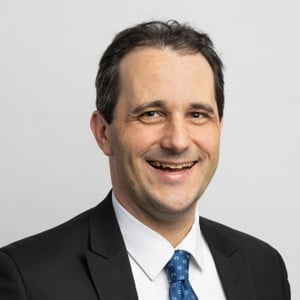
Director, Center for Judicial Engagement, Institute for Justice
Anthony Sanders is the Director of the Center for Judicial Engagement (CJE) at the Institute for Justice and a senior attorney. He joined IJ in 2010. As CJE’s director, he educates the public about the proper role of judges in enforcing constitutional limits on the size and scope of government. As a senior attorney he litigates cutting-edge constitutional cases protecting economic liberty, private property, freedom of speech and other individual liberties in both federal and state courts across the country.
One area of Anthony’s expertise is on using state constitutions to protect individual rights. He is the author of the book, published by University of Michigan Press, Baby Ninth Amendments: How Americans Embraced Unenumerated Rights and Why It Matters. He has also written several law review articles on state constitutional law, unenumerated rights, judicial review, economic liberty, property rights, international law, and other subjects. His work has appeared in publications such as the Iowa Law Review, Minnesota Law Review, American University Law Review, and Rutgers Law Review, and he has published opinion pieces in leading media outlets across the country. Further, he frequently speaks to various audiences on these matters and others, including judicial engagement, free speech, civil forfeiture, and the continuing importance of Magna Carta. Additionally, he hosts the weekly Short Circuit podcast, which often records live in front of law student audiences.
Anthony has litigated several cases in various state courts on state constitutional protections, as well as in federal courts on matters such as economic liberty, free speech, administrative law, and fines and fees abuse. Prior to joining IJ, Anthony served as a law clerk to Justice W. William Leaphart on the Montana Supreme Court. Anthony also worked for several years in private practice in Chicago where he was an active member of the Chicago Bar Association and chaired its Civil Rights Committee.
Anthony received his law degree cum laude from the University of Minnesota Law School in 2004, where he served as an articles submission editor for the Minnesota Law Review. He received his undergraduate degree from Hamline University in St. Paul, Minnesota, and his master’s degree from the University of Wisconsin-Madison. A dual U.S. and U.K. citizen, Anthony grew up on the islands of Vashon in Washington State, and Alderney in the British Channel Islands.
Professor, School of Civic Leadership, University of Texas, Austin
Yonatan Green, an Israeli-American attorney, is a Professor at the School of Civic Leadership at the University of Texas, Austin, where he also serves as Director of The Ackerman Program on Jewish and Western Civilization. He is the author of the acclaimed book Rogue Justice: The Rise of Judicial Supremacy in Israel (Academica Press, 2025). He was previously a Fellow at the Georgetown University Center for the Constitution. Yonatan is co-founder and former Executive Director of the Jerusalem-based Israel Law & Liberty Forum, a project of the Tikvah Fund inspired by the Federalist Society. He holds a degree in Law and Communications from the Hebrew University of Jerusalem.
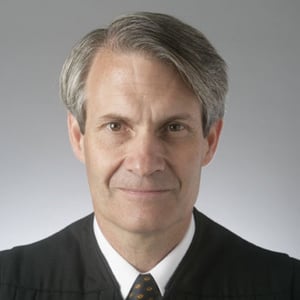
Special Counsel, Hunton Andrews Kurth
After serving on the United State Court of Appeals for the D. C. Circuit from 2005, Judge Griffith stepped down from the bench in 2020. Currently he is a Lecturer on Law at Harvard Law School, a Fellow at the Wheatley Institute at Brigham Young University, and Special Counsel in the Washington, DC office of the law firm of Hunton Andrews Kurth. Most recently, he was a member of President Biden's Commission on the Supreme Court. He is the author of Civic Charity and the Constitution , and the co-author, along with former judges Michael Luttig and Michael McConnell, of Lost, Not Stolen: The Conservative Case that Trump Lost and Biden Won the 2020 Presidential Election. https://lostnotstolen.org/ . Before being appointed to the D. C. Circuit, Judge Griffith was the General Counsel at BYU; Senate Legal Counsel, the non-partisan chief legal officer of the U. S. Senate; and a partner at Wiley, Rein & Fielding. Long active in rule-of-law programs in former communist nations, Judge Griffith is a member of the international advisory board of the CEELI Institute in Prague. He is a graduate of BYU and the University of Virginia School of Law and is a member of the American Law Institute.

Supreme Court & Appellate Litigation Chair, Lex Politica; Of Counsel, Alliance Defending Freedom
Erin Morrow Hawley serves as Chair of Lex Politica's Supreme Court and Appellate Practice overseeing the firm’s strategic appellate litigation and critical motions practice in the trial courts. Erin is an experienced litigator who represents clients in constitutional, regulatory, and appellate matters in federal and state courts throughout the country.
Erin has represented dozens of clients before the Supreme Court of the United States, served as lead counsel in high-profile cases raising novel constitutional and statutory issues, and authored numerous successful petitions for certiorari and briefs in opposition. She has argued in state and federal appellate and trial courts throughout the country, including the Supreme Court of the United States. Erin represents diverse clients in high-stakes litigation from state governments to faith-based nonprofits to Fortune 100 companies. She possesses expertise on a wide range of subject matters including administrative law, the First Amendment, religious liberty, federal jurisdiction, federal preemption, equitable jurisdiction, tax law, the Affordable Care Act, and Title IX.
Erin represents clients in cases where public communications strategy is paramount. She is a sought-after speaker and writer, has testified multiple times before Congress, and is a frequent presenter on constitutional and administrative law issues, including at the Oxford Union, the National Federalist Society Convention, and university campuses across the country. She is a frequent commentator to media outlets, including Fox News, MSNBC, the Wall Street Journal, WORLD, USA Today, the Federalist, and the Hill.
Erin previously oversaw Alliance Defending Freedom’s--where she still serves as Of Counsel--litigation strategies to empower women and protect the dignity of life, defend pregnancy centers’ First Amendment rights from government overreach, and safeguard Americans’ freedoms from the ever-encroaching administrative state.
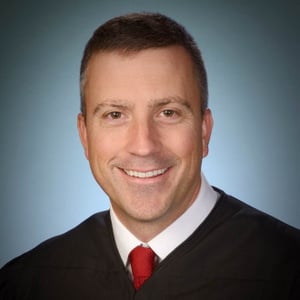
Judge, United States District Court, District of Columbia
Judge Trevor N. McFadden was appointed to the United States District Court for the District of Columbia in 2017. He received his B.A. in 2001 from Wheaton College, IL, magna cum laude. In 2006, he received his J.D. from the University of Virginia School of Law, where he graduated Order of the Coif and was an editor for the Virginia Law Review.
Following graduation from law school, Judge McFadden clerked for Judge Steven Colloton, U.S. Court of Appeals for the Eighth Circuit. He then joined the U.S. Department of Justice, where he served as Counsel to the Deputy Attorney General and as Assistant U.S. Attorney in the District of Columbia. Judge McFadden subsequently became a partner at Baker & McKenzie LLP in Washington, DC, where he focused on white collar investigations. He is also co-author of a treatise, Corporate Settlement Tools: DPAs, NPAs, and Cooperation Agreements.
After four years in private practice, Judge McFadden returned to the U.S. Department of Justice, where he was Deputy Assistant Attorney General and acted as the second-in-command of the Department's Criminal Division. As Deputy Assistant Attorney General, he managed the Division's Fraud and Appellate Sections.
Judge McFadden also has extensive experience in law enforcement. He served as an officer with the Fairfax County, VA, Police Department and as a deputy sheriff in Madison County, VA.

President, Cass & Associates, PC
Ronald A. Cass is Dean Emeritus of Boston University School of Law (where he was Dean from 1990-2004), President of Cass & Associates, PC, former Vice-Chairman and Commissioner of the U.S. International Trade Commission, former faculty member at Boston University School of Law and the University of Virginia Law School, and Distinguished Senior Fellow at the C. Boyden Gray Center for the Study of the Administrative State. Dean Cass also sits as an arbitrator for commercial, international, and intellectual property rights disputes, and is a former United States member of the Panel of Conciliators of the International Centre for Settlement of Investment Disputes. He is a member of the Council of the Administrative Conference of the United States and has received seven presidential appointments, spanning Presidents Ronald Reagan to Donald J. Trump.
As a law professor, lecturer, and scholar, Dean Cass has been teaching and writing about a wide array of legal issues on topics such as administrative law and regulation, antitrust, constitutional law, communications, intellectual property, international trade, separation of powers, and legal process. He has published more than 160 scholarly books, chapters, articles, and papers, including a leading casebook on administrative law. Dean Cass has taught judges as well as students in schools of law, economics, business, and public policy and has held academic appointments in the United States, Europe, and Latin America.
In addition to his academic work, Dean Cass has participated in numerous important legal cases as an amicus, consultant, or expert, and has advised businesses, law firms, investment funds, and government agencies on a range of trade, antitrust, intellectual property, and regulatory issues. He has a broad range of affiliations with professional groups, and has received numerous honors, fellowships and awards.
Dean Cass is a graduate of the University of Virginia and the University of Chicago Law School.
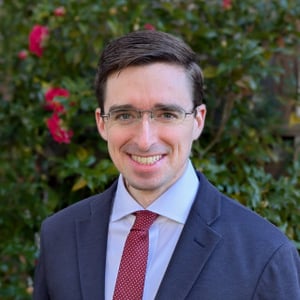
Solicitor General, Alabama Office of the Attorney General
Barrett Bowdre serves as solicitor general in the Alabama Attorney General’s Office, where he oversees the state’s appellate docket and helps defend the state’s interests in courts throughout the country. He previously served as principal deputy solicitor general and, before that, deputy solicitor general. He is a former law clerk to Judge Paul J. Kelly, Jr., of the U.S. Court of Appeals for the Tenth Circuit, then-Chief Judge W. Keith Watkins of the U.S. District Court for the Middle District of Alabama, and then-Chief Judge Ed Carnes of the U.S. Court of Appeals for the Eleventh Circuit. He holds a J.D., summa cum laude, from the University of Alabama School of Law and a B.A., cum laude, from Furman University. Before attending law school, he worked as a research assistant at the American Enterprise Institute, where he researched civic education initiatives and helped compile literary anthologies exploring the American character.
Sean Collins is a member of the University of Alabama School of Law class of 2024. After graduation, he will serve as a law clerk to Judge Allen Winsor of the U.S. District Court for the Northern District of Florida, then as a law clerk to Judge Robert Luck of the U.S. Court of Appeals for the Eleventh Circuit. Before attending law school, he graduated magna cum laude from Hillsdale College, where he studied Classics, Philosophy, and Religion and was a member of one of the only undergraduate Federalist Society chapters in the country.

Topics
Simple Rules for Jarkesy v. SEC in a Complex Administrative World
“Administrative law is not for sissies,” Justice Scalia famously quipped. It’s complex. And that’s no...
Topics
2023 National Lawyers Convention: Insurrection & the 14th Amendment
Editor's Note: On December 19th, 2023 the Colorado Supreme Court ruled that Former President Donald Trump...
Topics
2023 National Lawyers Convention: Insurrection & the 14th Amendment
Editor's Note: On December 19th, 2023 the Colorado Supreme Court ruled that Former President Donald...
Smell of Marijuana Alone Can Justify an Arrest, Even After Legalization of Hemp, Says Wisconsin Supreme Court
Anthony Sanders
In State v. Moore,[1] decided on June 20, 2023, the Wisconsin Supreme Court faced a...
The Peculiar Case of the Israeli Legal System
Yonatan Green
The Israeli legal system often draws a great deal of confused and excited attention from...
Topics
Why Three Conservative Justices Enabled California to Regulate a Nationwide Industry
10 a.m. on a Thursday is a bit early to have pork chops on the...
Bringing the Federal Courts Out of SCOTUS's Shadow
Thomas B. Griffith, Erin M. Hawley, Trevor N. McFadden
Most lawyers have little time for extracurricular legal interests outside their own practices, but those...
Chevron—Complicated, Start to Finish
Ronald A. Cass
A Review of Thomas W. Merrill, The Chevron Doctrine: Its Rise and Fall, and the...
State Court Docket Watch: Glass v. City of Montgomery
Barrett Bowdre, Sean Collins
Alabama’s constitution prohibits the legislature from enacting a “local law”—one that applies only in one...
TransUnion, Article III, and Expanding the Judicial Role
Jacob Phillips
In 2021’s TransUnion v. Ramirez, the Supreme Court confirmed that Article III standing requires a...