
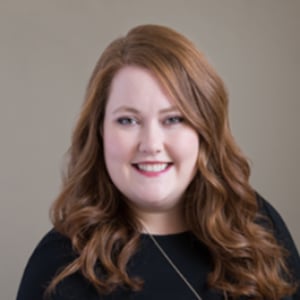
Associate, Consovoy McCarthy PLLC
Ms. Bates assists clients with a variety of litigation and appellate matters that encompass constitutional law, administrative law, and commercial litigation. Before joining the firm, Ms. Bates was a law clerk to Judge Kyle Duncan of the U.S. Court of Appeals for the Fifth Circuit. She previously served as a Legal Policy Analyst at the Heritage Foundation, where she researched and wrote about the courts, judicial nominations, and various constitutional issues. She also co-hosted Heritage’s SCOTUS 101 podcast. She earned her B.A. magna cum laude in Politics from Hillsdale College, and her J.D. from the Antonin Scalia Law School at George Mason University. Ms. Bates is a member of the Virginia Bar.
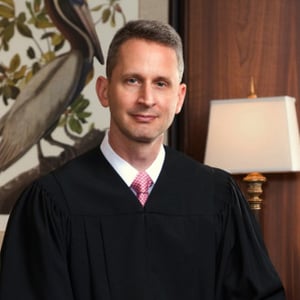
Judge, United States Court of Appeals, Fifth Circuit
Judge Duncan received his B.A. from Louisiana State University in 1994, his J.D. from the Paul M. Hebert Law Center at Louisiana State University in 1997, and his LL.M. from Columbia Law School in 2004.
After graduating from law school, he clerked for Louisiana-based Circuit Judge John Malcolm Duhé Jr. of the United States Court of Appeals for the Fifth Circuit.
From 2008–2012, Duncan served as Appellate Chief for Louisiana's Attorney General's office. From 2012–2014, he served as general counsel of the Becket Fund for Religious Liberty. From 2004-2008, he was an assistant professor of law at the University of Mississippi School of Law.
Before becoming a judge, Duncan practiced at the Washington, D.C. firm of Schaerr Duncan LLP, where he was a founding partner. He was appointed by President Trump to the United States Court of Appeals for the Fifth Circuit on May 1, 2018.
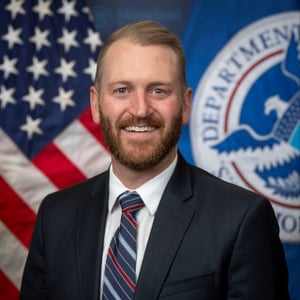
General Counsel, U.S. Department of Homeland Security
James H. Percival graduated from the University of California, Santa Barbara and the University of Virginia School of Law. Before his work at the Department of Homeland Security, he was Chief of Staff to then Florida Attorney General Ashley Moody. James previously served in a number of other roles for Attorney General Moody and as Senior Counsel at the U.S. Department of Justice. Before beginning his public service, James worked for a global law firm and clerked for Judge Emmett Ripley Cox of the U.S. Court of Appeals for the Eleventh Circuit. In between college and law school, James worked as a substitute teacher and as a missionary in South America.

Senior Fellow and Director of Constitutional Studies, Manhattan Institute
Ilya Shapiro is a senior fellow and director of constitutional studies at the Manhattan Institute and a contributing editor of City Journal. Previously he was executive director and senior lecturer at the Georgetown Center for the Constitution, and before that a vice president of the Cato Institute.
Shapiro is the author of Lawless: The Miseducation of America’s Elites (2025) and Supreme Disorder: Judicial Nominations and the Politics of America’s Highest Court (2020), coauthor of Religious Liberties for Corporations? (2014), and editor of 11 volumes of the Cato Supreme Court Review (2008-18). He has contributed to a variety of academic, popular, and professional publications, including the Wall Street Journal, Harvard Journal of Law & Public Policy, Washington Post, Los Angeles Times, USA Today, National Review, and Newsweek. He also regularly provides commentary for various media outlets, writes the Shapiro’s Gavel newsletter on Substack, and once appeared on the Colbert Report.
Shapiro has testified many times before Congress and state legislatures and has filed more than 500 amicus curiae “friend of the court” briefs in the Supreme Court. He lectures regularly on behalf of the Federalist Society, is a member of the board of fellows of the Jewish Policy Center, was an inaugural Washington Fellow at the National Review Institute, and has been an adjunct law professor at the George Washington University and University of Mississippi. He is also the chairman of the board of advisers of the Mississippi Justice Institute, a barrister in the Edward Coke Appellate Inn of Court, and a former member of the Virginia Advisory Committee to the U.S. Commission on Civil Rights.
Earlier in his career, Shapiro was a special assistant/adviser to the Multi-National Force in Iraq on rule-of-law issues and practiced at Patton Boggs and Cleary Gottlieb. Before entering private practice, he clerked for Judge E. Grady Jolly of the U.S. Court of Appeals for the Fifth Circuit. He holds an AB from Princeton University, an MSc from the London School of Economics, and a JD from the University of Chicago Law School.
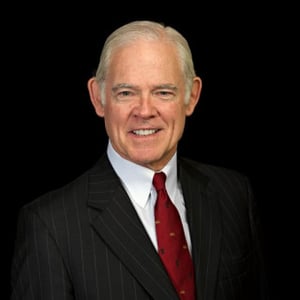
Founding Partner, Cooper & Kirk PLLC
Charles J. Cooper is a founding member and the chairman of Cooper & Kirk, PLLC, “one of the Nation’s leading litigation boutiques” (Above The Law 2017). The National Law Journal recently wrote that Mr. Cooper’s “brilliant legal career has so far spanned five decades and thrust Cooper into the spotlight in some of the most historic moments of the country’s modern history.” He has argued nine cases before the United States Supreme Court and scores of appeals before each of the 13 federal courts of appeals and several state supreme courts. He has been lead trial counsel in numerous complex, weeks-long trials in federal courts throughout the country. Named by the National Law Journal as one of the 10 best litigators in Washington D.C., Mr. Cooper’s work has been reported in numerous press accounts, and he has been called a “powerhouse attorney” (Fortune 2015), “a hard-nosed litigator” (Washington Post 2017), and “one of the country’s most in-demand civil litigators and a Washington legal institution unto himself” (The American Spectator 2014).
After graduating from the University of Alabama School of Law in 1977, where he ranked first in his class and served as Editor-in-Chief of the Alabama Law Review, Mr. Cooper began his career as a law clerk to Judge Paul Roney on the Fifth Circuit Court of Appeals and to Justice William H. Rehnquist in 1978–79. He then practiced law in Atlanta for two years before joining the Civil Rights Division of the U.S. Department of Justice, where he served as the Deputy Assistant Attorney General in charge of, among other things, appellate matters. In 1985 President Reagan appointed him to the position of Assistant Attorney General for the Office of Legal Counsel, which is the office responsible for providing legal opinions and advice to the White House, the Attorney General, and Executive Branch departments and agencies on issues covering the full spectrum of federal constitutional, statutory, and regulatory law.
In 1988 he returned to private practice as a litigation partner in the Washington, D.C. office of McGuireWoods. From 1990 until the founding of Cooper & Kirk in 1996, he was a partner at Shaw Pittman (now Pillsbury Winthrop Shaw Pittman), where he headed the firm’s Constitutional and Government Litigation Group.
Mr. Cooper has represented a wide range of public and private clients in highly complex constitutional, civil rights, antitrust, healthcare, banking, intellectual property, elections, campaign finance, administrative, commercial, and government contract cases. He has led trial teams in cases that have won judgments and settlements valued in the billions of dollars and that have established ground-breaking constitutional precedents.
Much of Mr. Cooper’s practice has involved representing high-profile clients in nationally prominent matters, including: the State of Florida in a First Amendment suit brought by the Disney Company concerning its autonomous regulatory authority over its Disney World property; the Commonwealth of Virginia in a suit seeking to enjoin the removal of noncitizens from its voter rolls; 38 members of the Duke Lacrosse team falsely accused of rape by officials of Duke University and the City of Durham; Harper Lee in a copyright dispute with the heirs of Gregory Peck; high-ranking former government officials such as former Attorneys General John Ashcroft, Jeff Sessions, and William Barr, and Ambassador John Bolton; several Governors and United States Senators; over 100 Members of Congress; and many state, territorial, and local government bodies and officials. He has also represented and advised government officials and public figures in connection with sensitive private issues that needed to be, and were, resolved discreetly without becoming matters of public record.
In 1998 Chief Justice Rehnquist appointed Mr. Cooper to the Standing Committee on Rules of Practice and Procedure of the Judicial Conference of the United States, where he served for three terms. He also served as a Public Member, appointed by President George H.W. Bush, of the National Commission on Judicial Discipline and Removal. He is a member of numerous professional associations, including the American Law Institute (since 1993) and the American Academy of Appellate Lawyers (since 1996). He is also an active member of the Federalist Society and the Republican National Lawyers Association, which in 2010 named him Republican Lawyer of the Year and in 2016 honored him with its Edwin Meese III Award.
Mr. Cooper has published scores of articles and spoken extensively on constitutional and legal policy topics. He has appeared before congressional committees on 26 occasions, testifying as an expert on a wide variety of legal issues, including the Chevron doctrine of judicial deference to administrative agencies, the diversity of citizenship jurisdiction of federal courts, statehood bills for Puerto Rico and the District of Columbia, and the impeachment of President Clinton.
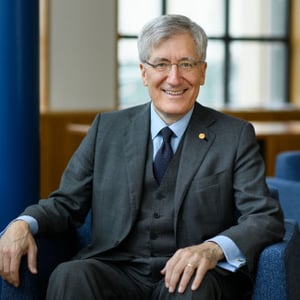
McCormick Professor of Jurisprudence; Director, James Madison Program, Princeton University
Robert P. George is McCormick Professor of Jurisprudence and Director of the James Madison Program in American Ideals and Institutions at Princeton University. He has several times been a Visiting Professor at Harvard Law School. He has served as Chairman of the U.S. Commission on International Religious Freedom and on the U.S. Commission on Civil Rights and the President’s Council on Bioethics. He has also served as the U.S. member of UNESCO’s World Commission on the Ethics of Scientific Knowledge and Technology. He was a Judicial Fellow at the Supreme Court of the United States, where he received the Justice Tom C. Clark Award. A Phi Beta Kappa graduate of Swarthmore, he holds the degrees of J.D. and M.T.S. from Harvard University and the degrees of D.Phil., B.C.L., D.C.L., and D.Litt. from Oxford University, in addition to twenty-one honorary doctorates. He is a recipient of the U.S. Presidential Citizens Medal, the Honorific Medal for the Defense of Human Rights of the Republic of Poland, the Canterbury Medal of the Becket Fund for Religious Liberty, the Bradley Prize, the Irving Kristol Award of the American Enterprise Institute, and Princeton University’s President’s Award for Distinguished Teaching. His books include Making Men Moral: Civil Liberties and Public Morality and In Defense of Natural Law (both published by Oxford University Press), as well as The Clash of Orthodoxies and Conscience and Its Enemies (both published by ISI Books).

Judge, United States Court of Appeals, District of Columbia Circuit
Judge Katsas was appointed to the D.C. Circuit in December 2017. He graduated from Princeton University and Harvard Law School, where he was an executive editor on the Harvard Law Review. Between 1989 and 1992, he served as a law clerk to Judge Edward Becker on the Third Circuit, to then-Judge Clarence Thomas on the D.C. Circuit, and to Justice Thomas on the Supreme Court. Between 1992 and 2001, he was an associate and then partner in the Washington office of Jones Day, where he specialized in appellate and complex civil litigation. Between 2001 and 2009, he served in many senior positions in the Department of Justice, including as Assistant Attorney General for the Civil Division and as Acting Associate Attorney General. In 2009, he returned to Jones Day. From January to December 2017, he served as Deputy Assistant to the President and Deputy Counsel to the President.
Before joining the bench, Judge Katsas argued more than 75 appeals, including three cases in the Supreme Court, 13 cases in the D.C. Circuit, and cases in every other federal court of appeals. By appointment of the Chief Justice, he served on the Advisory Committee on Appellate Rules from 2013 to 2017. In 2016, he was elected to membership in the American Academy of Appellate Lawyers.
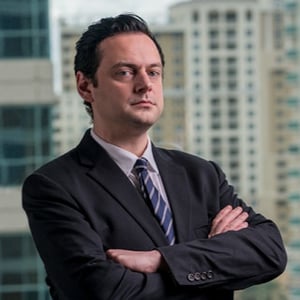
Partner, Boies Schiller Flexner LLP
Eric is an appellate and trial litigator who represents plaintiffs and defendants in high-stakes litigation and regulatory matters. His practice focuses on constitutional law, government regulation, antitrust, and class actions. A former United States Supreme Court clerk, Special Counsel to the United States Senate Judiciary Committee, and Deputy Attorney General for the state of Alabama, Eric’s experience serving at the highest levels of state and federal government informs every aspect of his approach to litigation and regulatory issues.
Eric has briefed and argued high-stakes appeals and dispositive motions in a variety of state and federal courts and briefed multiple matters at the United States Supreme Court. He has served as lead or co-lead counsel in regulatory, constitutional, and consumer-protection suits, including a pathbreaking suit challenging the Department of Commerce’s regulations governing census apportionment. Eric’s experience ranges across wide variety of substantive areas, including antitrust, civil rights, criminal law, energy, insurance, healthcare, securities and corporate law, defamation and privacy law, Indian law, gambling regulation, and international judgment enforcement.
Before joining the firm, Eric was a law clerk to the Hon. Samuel A. Alito at the United States Supreme Court and Chief Judge William H. Pryor at the Eleventh Circuit. Eric also served as a special counsel to Senator Lindsey Graham in his capacity as chairman of the Senate Judiciary Committee and as a Deputy Attorney General and the Assistant Solicitor General for the State of Alabama.
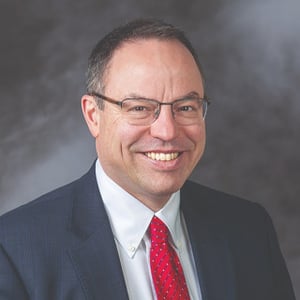
Professor of Law and J. Philip Johnson Faculty Fellow, University of North Dakota School of Law
Michael S. McGinniss is Professor of Law and J. Philip Johnson Faculty Fellow at the University of North Dakota School of Law, where he joined the faculty in 2010 and served as the Dean from 2019 to 2022. He chairs the executive committee for the Federalist Society's Practice Group on Professional Responsibility and Legal Education.
Before entering the legal academy, Professor McGinniss served for twelve years as a Disciplinary Counsel for the Supreme Court of Delaware. He currently teaches courses on Professional Responsibility, Advanced Legal Ethics, Civil Procedure, and Federal Courts. He also serves as Faculty Advisor for the North Dakota Law Review and the UND Law Federalist Society student chapter.
Professor McGinniss’ research and scholarship interests are wide-ranging and include lawyer and judicial ethics, lawyer discipline and regulation of the profession, constitutional law (especially First Amendment, separation of powers, and federalism), and cultural challenges faced by conservatives in the law schools and the legal profession. His most recent law review article, Declaring Independence to Secure Integrity: The Supreme Court Justices' Code of Conduct, was published in the Federalist Society Review. His article Expressing Conscience with Candor: Saint Thomas More and First Freedoms in the Legal Profession, was published in the Harvard Journal of Law & Public Policy.
Professor McGinniss has spoken to Federalist Society lawyer and student chapters across the country about judicial independence and ethics, especially relating to the federal courts and the United States Supreme Court Justices. In addition, he has spoken to several chapters about rising challenges to ideological diversity and targeting of conservative viewpoints in law schools and the legal profession. Although he is very pleased to speak on these and many other topics that may be of interest to lawyer and student chapters, in 2026-2027, he has particular interest in speaking on the topic “Lawyer Discipline as Political ‘Resistance’: Separation of Powers, Federalism, and the Rule of Law,” concerning his work-in-progress on the weaponization of professional disciplinary processes against conservative lawyers for political and ideological purposes.
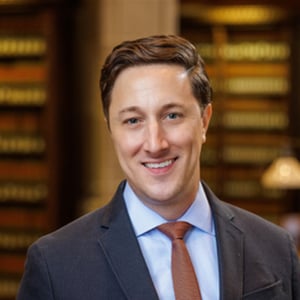
Professor of Law, Notre Dame Law School
Professor Derek Muller is a nationally-recognized scholar in the field of election law. His research focuses on the role of states in the administration of federal elections, the constitutional contours of voting rights and election administration, the limits of judicial power in the domain of elections, and the Electoral College.
He has published more than two dozen academic works, and his op-eds have appeared in the New York Times, the Los Angeles Times, and the Wall Street Journal. He has testified before Congress, and he is a contributor at the Election Law Blog. He is a co-author on a Federal Courts casebook published by Carolina Academic Press. He is also the co-reporter on a new Restatement of the Law, Election Litigation, an effort led by the American Law Institute.
Professor Muller teaches Election Law, Civil Procedure, and Evidence.
Harold Washington Professor of Law, Northwestern University Pritzker School of Law
Daniel B. Rodriguez, the Harold Washington Professor at the Law School, served as dean of the Law School from January 2012 through August 2018.
His principal academic work is in the areas of administrative law, local government law, statutory interpretation, federal and state constitutional law, and the law-business-technology interface.
Formerly, Professor Rodriguez served as Minerva House Drysdale Regents Chair in Law at the University of Texas-Austin; as a Research Fellow at Rice University’s Baker Institute for Public Policy; as Dean and Warren Distinguished Professor of Law at the University of San Diego School of Law; and, as a Professor of Law at University of California, Berkeley School of Law. He has also served as a visiting professor at several top law schools, including Stanford, Harvard, Columbia, University of Southern California, and Virginia.
Professor Rodriguez was the 2014 President of the Association of American Law Schools (AALS) and is currently serving as chair of the council of the American Bar Association Center for Innovation, a council member of the American Law Institute, and as an advisor to ROSS Intelligence, Inc.
Rodriguez received his law degree, with honors, from Harvard Law School and his undergraduate degree from California State University of Long Beach.
Shareholder, Webber & Thies PC
Mr. Thies has litigated complex commercial disputes and defended class actions throughout the state of Illinois, and in federal courts across the country, including the First, Second, Seventh, and Tenth Circuits. He has represented clients in numerous trials and arbitrations, including serving as part of a trial team winning a $64 million judgment after a jury verdict in the Northern District of New York.
Prior to joining Webber & Thies, Mr. Thies was an associate at Sidley Austin LLP (2013-2018) and clerked for Chief Judge James F. Holderman of the United States District Court for the Northern District of Illinois (2011-2013) and for Judge Jerry Smith of the United States Court of Appeals for the Fifth Circuit (2010-2011).
Judge, United States Court of Appeals, Fifth Circuit
Judge Duncan received his B.A. from Louisiana State University in 1994, his J.D. from the Paul M. Hebert Law Center at Louisiana State University in 1997, and his LL.M. from Columbia Law School in 2004.
After graduating from law school, he clerked for Louisiana-based Circuit Judge John Malcolm Duhé Jr. of the United States Court of Appeals for the Fifth Circuit.
From 2008–2012, Duncan served as Appellate Chief for Louisiana's Attorney General's office. From 2012–2014, he served as general counsel of the Becket Fund for Religious Liberty. From 2004-2008, he was an assistant professor of law at the University of Mississippi School of Law.
Before becoming a judge, Duncan practiced at the Washington, D.C. firm of Schaerr Duncan LLP, where he was a founding partner. He was appointed by President Trump to the United States Court of Appeals for the Fifth Circuit on May 1, 2018.
Justice, Supreme Court of Alabama (Retired); Professor of Law, Belmont University College of Law?
William Gardiner Hammond Professor of Law, Washington University Law
Professor Brian Z. Tamanaha is a renowned jurisprudence scholar and the author of eight books and numerous scholarly articles, including his groundbreaking book, Beyond the Formalist–Realist Divide: The Role of Politics in Judging. His articles have appeared in a variety of leading journals, and his publications have been translated into eight languages. Also an expert in law and society, he has delivered lectures in Brazil, Indonesia, Japan, France, the Netherlands, Colombia, Singapore, Australia, Canada, and the United Kingdom. He spent a year in residence as a Member of the Institute for Advanced Study in Princeton. Professor Tamanaha is the recipient of several book prizes and awards, including Professor of the Year, and a frequent speaker and lecturer at legal conferences throughout the United States and abroad. His professional affiliations include serving as a past member of the Board of Trustees of the Law and Society Association. Before becoming a law professor, he clerked for the Hon. Walter E. Hoffman, U.S. District Court for the Eastern District of Virginia. He also practiced law in Hawaii and Micronesia, where he served as legal counsel for the Micronesian Constitutional Convention, Assistant Attorney General for the Yap State, and Assistant Federal Public Defender for the District of Hawaii. He then earned a doctorate of juridical science at Harvard Law School.?
His latest book, Failing Law Schools, is available at http://www.amazon.com/Failing-Schools-Chicago-Series-Society/dp/0226923614. ?
Partner, Horvitz & Levy LLP
Jeremy Rosen is nationally renowned for his proficiency in numerous issues arising under the First Amendment and California’s anti-SLAPP law. Using that knowledge, Jeremy has helped a wide variety of clients – including churches, private businesses, and individuals – defeat lawsuits that seek to impose liability on clients for exercising their rights of petition, free speech, and free exercise of religion. He has also handled hundreds of appeals in numerous appellate courts, including the Ninth Circuit Court of Appeals, the California Supreme Court, and California’s intermediate appellate courts. In addition to First Amendment and anti-SLAPP cases, his cases have involved numerous important issues regarding anti-trust, class actions, wage and hour law, employment law, breach of contract, California’s Unfair Competition Law, CEQA, the enforceability of arbitration clauses, hospital peer review, the scope of public employee whistleblower protection, and the application of the primary assumption of risk doctrine.
Jeremy is a partner at the firm, which he joined in 2001. He is a California State Bar Certified Appellate Specialist and a member of the California Academy of Appellate Lawyers.
Jeremy directed the Pepperdine University School of Law Ninth Circuit Appellate Advocacy Clinic for 6 years. The Clinic represents individuals in the Ninth Circuit who are identified by the court as needing pro bono counsel. Jeremy also previously served a three-year term where he was appointed by the Ninth Circuit to serve as one of 18 appellate lawyer representatives to the court.
Jeremy is a member of the National Chamber Litigation Center’s California Litigation Advisory Committee. Before joining the firm, Jeremy was a Litigation Associate with Munger, Tolles & Olson.
William Gardiner Hammond Professor of Law, Washington University Law
Professor Brian Z. Tamanaha is a renowned jurisprudence scholar and the author of eight books and numerous scholarly articles, including his groundbreaking book, Beyond the Formalist–Realist Divide: The Role of Politics in Judging. His articles have appeared in a variety of leading journals, and his publications have been translated into eight languages. Also an expert in law and society, he has delivered lectures in Brazil, Indonesia, Japan, France, the Netherlands, Colombia, Singapore, Australia, Canada, and the United Kingdom. He spent a year in residence as a Member of the Institute for Advanced Study in Princeton. Professor Tamanaha is the recipient of several book prizes and awards, including Professor of the Year, and a frequent speaker and lecturer at legal conferences throughout the United States and abroad. His professional affiliations include serving as a past member of the Board of Trustees of the Law and Society Association. Before becoming a law professor, he clerked for the Hon. Walter E. Hoffman, U.S. District Court for the Eastern District of Virginia. He also practiced law in Hawaii and Micronesia, where he served as legal counsel for the Micronesian Constitutional Convention, Assistant Attorney General for the Yap State, and Assistant Federal Public Defender for the District of Hawaii. He then earned a doctorate of juridical science at Harvard Law School.?
His latest book, Failing Law Schools, is available at http://www.amazon.com/Failing-Schools-Chicago-Series-Society/dp/0226923614. ?

Shouted Down: When Protest Becomes Censorship
Tiffany H. Bates, Stuart Kyle Duncan, James Hamilton Percival, Ilya Shapiro
Colleges and universities have long been understood as marketplaces of ideas, carrying with them a...
Plenary Panel 1: Justice Alito's Impact on Statutory Interpretation
Charles J. Cooper, Robert P. George, Gregory G. Katsas, Eric M. Palmer
Justice Alito’s statutory interpretation jurisprudence reflects a sustained commitment to textual analysis, structural coherence, and...
Moving Away from ABA Accreditation?
Michael S. McGinniss, Derek T. Muller, Daniel B. Rodriguez, Daniel R. Thies
The Council of the ABA's Section of Legal Education and Admissions to the Bar has...
The Corruption of Law Schools and the Health of Our Democracy
Stuart Kyle Duncan
A review of Ilya Shapiro, Lawless: The Miseducation of America’s Elites (2025) The legal scholar...
Topics
Affirmative “Re-action”: How Are Major Bar Associations Responding to Students for Fair Admissions?
Last summer, the Supreme Court, in Students for Fair Admissions v. President and Fellows of...
Topics
ABA Proposes Making the Use of Law School Admissions Tests Optional
On May 20, 2022, the Council of the American Bar Association’s Section on Legal...
Failing Law Schools?
TeleforumAre American Law Schools Failing?: An Exchange Between Brian Tamanaha & Harold See
Harold F. See, Brian Z. Tamanaha
The Collapsing Economics of Legal Education Brian Z. Tamanaha* Introduction Many law schools around the...
Reforming Legal Education: a Two-Track Approach
Over the past five years, many law students have struggled under the hardships of rising...
California 17200: Its Nature, Function, and Limits – Remarks by Jeremy Rosen
Jeremy B. Rosen
California 17200: Its Nature, Function, and Limits In the last couple of years I have...