

Professor and Law School Fund Research Scholar, Boston College Law School
Kent Greenfield is Professor of Law and Law Fund Research Scholar at Boston College Law School, where he teaches and writes in the areas of business law, constitutional law, decision making theory, legal theory, and economic analysis of law. He is the past Chair of the Section on Business Associations of the American Association of Law Schools. In addition, he is the author of the book “The Myth of Choice,” published in 2011 from Yale University Press, Prunsoop Publishing (in Korean), and BiteBack Publishing (UK). Kirkus Reviews stated in its review: “The author deftly debunks prevailing dogma about the infallibility of free markets, especially important during a time when, as he reports, one in seven Americans are poor." He is also the author of the book “The Failure of Corporate Law” published by University of Chicago Press. The book has been called “simply the best and most well-reasoned progressive critique of corporate law yet written,” and the Law and Politics Book Review said that “it merits a place alongside Berle and Means, [and] Easterbrook and Fischel.”
Greenfield also has had journal articles published in the Yale Law Journal, the Virginia Law Review, the Boston College Law Review, the George Washington Law Review, and the Tulane Law Review, among others. His articles are widely cited, and he has been called “the leading figure” and “the most creative thinker” in the progressive, stakeholder school of corporate law scholarship. Greenfield has presented papers or lectured in 33 states, 7 foreign countries, and at 78 institutions (including Harvard, Yale, Brown, Stanford, the University of Chicago, the University of Michigan, and the London School of Economics).
Greenfield was named B.C. Law Teacher of the Year for 2003-04, a recognition bestowed by the Law Students Association on vote of the entire student body. He was also awarded the Emil Slizewski Award for outstanding teaching, given by the graduating class of 2004. Greenfield has been a Law Fund Research Scholar, a recognition of his scholarly contributions, since 2003. He has taught at the University of Connecticut School of Law and the University of Hawaii School of Law, and at Brown University in the political science department.
He is the founder and president of the Forum for Academic and Institutional Rights (FAIR), an association of three dozen law schools and other academic institutions organized to fight for academic freedom and against discrimination. FAIR brought suit against Donald Rumsfeld and others to contest the Solomon Amendment, which forces universities to assist military recruiters. The Supreme Court decided the case against FAIR on March 6, 2006. Greenfield’s work with FAIR was featured in numerous newspapers and media outlets, including the New York Times, the Wall Street Journal, the Boston Globe, the Chronicle of Higher Education, ABC News, CBS News, CNN, Fox News, MSNBC, CNBC, and NPR.
Greenfield also consults with litigators on issues of corporate accountability. He was instrumental in developing the theory of the case brought against Unocal Corporation for alleged human rights violations committed by the company in Burma.
Before joining the faculty in 1995, Greenfield served as a law clerk to Justice David H. Souter, of the United States Supreme Court, and to Judge Levin H. Campbell, of the United States Court of Appeals for the First Circuit. He also worked at the law firm of Covington & Burling, in Washington, D.C., and as an corporate policy advisor at Levi Strauss & Co., in San Francisco.
Greenfield is a graduate of the University of Chicago Law School, where he graduated with honors and was awarded membership into the honorary society Order of the Coif. He also served as Topics and Comments Editor of the University of Chicago Law Review. He received an A.B., with highest honors, from Brown University, where he studied economics and history. Before law school, he traveled extensively in South America and Africa.

Senior Fellow and Director of Constitutional Studies, Manhattan Institute
Ilya Shapiro is a senior fellow and director of constitutional studies at the Manhattan Institute and a contributing editor of City Journal. Previously he was executive director and senior lecturer at the Georgetown Center for the Constitution, and before that a vice president of the Cato Institute.
Shapiro is the author of Lawless: The Miseducation of America’s Elites (2025) and Supreme Disorder: Judicial Nominations and the Politics of America’s Highest Court (2020), coauthor of Religious Liberties for Corporations? (2014), and editor of 11 volumes of the Cato Supreme Court Review (2008-18). He has contributed to a variety of academic, popular, and professional publications, including the Wall Street Journal, Harvard Journal of Law & Public Policy, Washington Post, Los Angeles Times, USA Today, National Review, and Newsweek. He also regularly provides commentary for various media outlets, writes the Shapiro’s Gavel newsletter on Substack, and once appeared on the Colbert Report.
Shapiro has testified many times before Congress and state legislatures and has filed more than 500 amicus curiae “friend of the court” briefs in the Supreme Court. He lectures regularly on behalf of the Federalist Society, is a member of the board of fellows of the Jewish Policy Center, was an inaugural Washington Fellow at the National Review Institute, and has been an adjunct law professor at the George Washington University and University of Mississippi. He is also the chairman of the board of advisers of the Mississippi Justice Institute, a barrister in the Edward Coke Appellate Inn of Court, and a former member of the Virginia Advisory Committee to the U.S. Commission on Civil Rights.
Earlier in his career, Shapiro was a special assistant/adviser to the Multi-National Force in Iraq on rule-of-law issues and practiced at Patton Boggs and Cleary Gottlieb. Before entering private practice, he clerked for Judge E. Grady Jolly of the U.S. Court of Appeals for the Fifth Circuit. He holds an AB from Princeton University, an MSc from the London School of Economics, and a JD from the University of Chicago Law School.
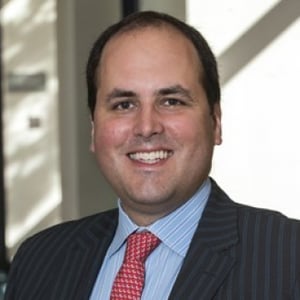
Assistant Professor, Boston College Law School
Ryan Williams joined the Boston College Law faculty as an Assistant Professor of Law in 2016. He teaches and writes in the areas of constitutional law, civil procedure, and federal courts. His research has included works focusing on the original meanings of the Fifth, Ninth, and Fourteenth Amendments as well as works exploring the intersection of constitutional rules and the civil litigation process. His prior publications have appeared or are forthcoming in the Yale Law Journal, the Columbia Law Review, the Stanford Law Review, the Notre Dame Law Review, and the Virginia Law Review.
After graduating from Columbia Law School, Williams worked as a litigation associate in the New York office of Sullivan & Cromwell, LLP where his practice focused primarily on class actions and other complex commercial litigation. After leaving practice, he was a Sharswood Fellow at the University of Pennsylvania Law School (2011-2013) and an Associate-in-Law at Columbia (2013-2016).
Professor and Law School Fund Research Scholar, Boston College Law School
Kent Greenfield is Professor of Law and Law Fund Research Scholar at Boston College Law School, where he teaches and writes in the areas of business law, constitutional law, decision making theory, legal theory, and economic analysis of law. He is the past Chair of the Section on Business Associations of the American Association of Law Schools. In addition, he is the author of the book “The Myth of Choice,” published in 2011 from Yale University Press, Prunsoop Publishing (in Korean), and BiteBack Publishing (UK). Kirkus Reviews stated in its review: “The author deftly debunks prevailing dogma about the infallibility of free markets, especially important during a time when, as he reports, one in seven Americans are poor." He is also the author of the book “The Failure of Corporate Law” published by University of Chicago Press. The book has been called “simply the best and most well-reasoned progressive critique of corporate law yet written,” and the Law and Politics Book Review said that “it merits a place alongside Berle and Means, [and] Easterbrook and Fischel.”
Greenfield also has had journal articles published in the Yale Law Journal, the Virginia Law Review, the Boston College Law Review, the George Washington Law Review, and the Tulane Law Review, among others. His articles are widely cited, and he has been called “the leading figure” and “the most creative thinker” in the progressive, stakeholder school of corporate law scholarship. Greenfield has presented papers or lectured in 33 states, 7 foreign countries, and at 78 institutions (including Harvard, Yale, Brown, Stanford, the University of Chicago, the University of Michigan, and the London School of Economics).
Greenfield was named B.C. Law Teacher of the Year for 2003-04, a recognition bestowed by the Law Students Association on vote of the entire student body. He was also awarded the Emil Slizewski Award for outstanding teaching, given by the graduating class of 2004. Greenfield has been a Law Fund Research Scholar, a recognition of his scholarly contributions, since 2003. He has taught at the University of Connecticut School of Law and the University of Hawaii School of Law, and at Brown University in the political science department.
He is the founder and president of the Forum for Academic and Institutional Rights (FAIR), an association of three dozen law schools and other academic institutions organized to fight for academic freedom and against discrimination. FAIR brought suit against Donald Rumsfeld and others to contest the Solomon Amendment, which forces universities to assist military recruiters. The Supreme Court decided the case against FAIR on March 6, 2006. Greenfield’s work with FAIR was featured in numerous newspapers and media outlets, including the New York Times, the Wall Street Journal, the Boston Globe, the Chronicle of Higher Education, ABC News, CBS News, CNN, Fox News, MSNBC, CNBC, and NPR.
Greenfield also consults with litigators on issues of corporate accountability. He was instrumental in developing the theory of the case brought against Unocal Corporation for alleged human rights violations committed by the company in Burma.
Before joining the faculty in 1995, Greenfield served as a law clerk to Justice David H. Souter, of the United States Supreme Court, and to Judge Levin H. Campbell, of the United States Court of Appeals for the First Circuit. He also worked at the law firm of Covington & Burling, in Washington, D.C., and as an corporate policy advisor at Levi Strauss & Co., in San Francisco.
Greenfield is a graduate of the University of Chicago Law School, where he graduated with honors and was awarded membership into the honorary society Order of the Coif. He also served as Topics and Comments Editor of the University of Chicago Law Review. He received an A.B., with highest honors, from Brown University, where he studied economics and history. Before law school, he traveled extensively in South America and Africa.

Professor of Law and Director of the Center for Intellectual Property Law, Maurice A. Deane School of Law at Hofstra University
Professor Manta teaches intellectual property law subjects. Her research examines the intersection between intellectual property law and social science, with a focus on psychology. She has most recently written about the hedonic value of trademarks and its legal implications, the problem of cognitive bias in copyright infringement litigation, price discrimination through software licensing in the age of the Internet of Things, and the role of criminal sanctions in intellectual property. Professor Manta has published or has forthcoming work in the Emory Law Journal, William & Mary Law Review, Iowa Law Review, Alabama Law Review, Boston College Law Review, Ohio State Law Journal, Washington and Lee Law Review, Harvard Journal of Law & Technology, Stanford Technology Law Review, Florida Law Review, Arizona Law Review, and Cornell Law Review Online, among others. She is also a co-author for a forthcoming textbook on criminal law issues in intellectual property. Professor Manta has further been a guest blogger for PrawfsBlawg and for Concurring Opinions. In 2014, she received the Lawrence A. Stessin Prize for Outstanding Scholarly Publications, which is awarded to two junior faculty members across all disciplines at Hofstra University.
Before joining the law school faculty in 2012, Professor Manta was an Assistant Professor of Law at the Case Western Reserve University School of Law. She was a Bigelow Teaching Fellow and Lecturer in Law at the University of Chicago Law School from 2007 to 2009. Professor Manta has also served on the faculties of Brooklyn Law School, The George Washington University School of Law, and the University of Arkansas at Little Rock William H. Bowen School of Law. She clerked for Judge Morris S. Arnold on the U.S. Court of Appeals for the Eighth Circuit for the 2006-2007 term.
While earning her J.D. at Yale Law School, Professor Manta was the grand prize winner of the Foley & Lardner LLP Intellectual Property Writing Competition. She also served as tributes editor of the Yale Law Journal, articles editor of the Yale Law & Policy Review, and editor of the Yale Journal on Regulation. She graduated magna cum laude from Yale University with a B.A. in psychology.

The Roberts Court
The Myth of Choice