
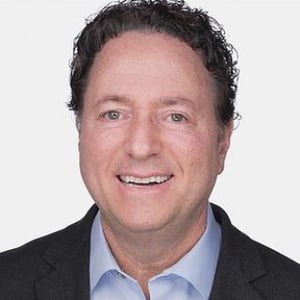
President, Committee for Justice
Curt Levey is President of the Committee For Justice, an organization devoted to advancing constitutionally limited government and individual liberty. He is a veteran of Supreme Court and other judicial confirmation battles and serves on the executive committee of the Federalist Society's Civil Rights Practice Group.
After graduating Harvard Law School with honors and clerking for the U.S. Court of Appeals for the Sixth Circuit, Mr. Levey served as Director of Legal & Public Affairs at the Center for Individual Rights (CIR). There he worked on landmark Supreme Court cases, including the University of Michigan affirmative action cases and the successful constitutional challenge to the Violence Against Women Act. After CIR, Mr. Levey headed the Title IX policy group at the U.S. Department of Education.
Before attending law school, Mr. Levey earned an M.S. and B.A. in computer science from Brown University and worked in the field of artificial intelligence (AI). He invented a new type of AI technology, for which he wrote a successful patent application.

Professor Emeritus, New York University
GARY MARCUS is a leading voice in artificial intelligence. He is a scientist, best-selling author, and serial entrepreneur (Founder of Robust.AI and Geometric.AI, acquired by Uber). He is well-known for his challenges to contemporary AI, anticipating many of the current limitations decades in advance, and for his research in human language development and cognitive neuroscience.
An Emeritus Professor of Psychology and Neural Science at NYU, he is the author of five books, including, The Algebraic Mind, Kluge, The Birth of the Mind, and the New York Times Bestseller Guitar Zero. He has often contributed to The New Yorker, Wired, and The New York Times. His most recent book, Rebooting AI, with Ernest Davis, is one of Forbes’s 7 Must Read Books in AI.
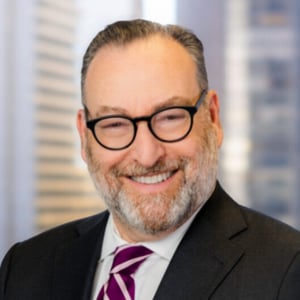
Founder, Chairman, and CEO, Louis D. Brandeis Center for Human Rights Under Law
Hon. Kenneth L. Marcus is an internationally recognized expert in civil and human rights, as well as a leader in the fight against anti-Semitism on and off university campuses. He is the Founder, Chairman, and CEO of The Louis D. Brandeis Center for Human Rights Under Law, the leading civil rights legal organization fighting against anti-Semitism. The New York Times has called him “The Man Who Helped Redefine Campus Anti-Semitism.” He been described, in that paper, as “the single most effective and respected force” to combat anti-Semitism.
During his public service career, Marcus served as Assistant U.S. Secretary of Education for Civil Rights; Staff Director at the U.S. Commission on Civil Rights; and General Deputy Assistant U.S. Secretary of Housing and Urban Development for Fair Housing and Equal Opportunity.
In academia, he serves as Professorial Lecturer in Law at George Washington University. He formerly held the Lillie and Nathan Ackerman Chair in Equality and Justice in America at the City University of New York’s Bernard M. Baruch College, served as Visiting Research Professor of Political Science at Yeshiva University, and was a Board of Visitors member George Mason University and Distinguished Senior Fellow at that university’s law school. He is a member of the editorial board of the Journal of Contemporary Antisemitism and previously served as Associate Editor of the Journal for the Study of Anti-Semitism.
Marcus is also author of The Definition of Anti-Semitism (Oxford University Press) and Jewish Identity and Civil Rights in America (Cambridge University Press). He has published widely in academic journals as well as in more popular venues such as The Wall Street Journal, Washington Post, Newsweek, USA Today, and Politico. He is a graduate of Williams College and the University of California at Berkeley School of Law.
Earlier in his career, he was a litigation partner in two major law firms, where he conducted complex commercial and constitutional litigation. He also serves as Chairman emeritus of the Executive Committee of the Federalist Society for Law & Public Policy Civil Rights Practice Group.
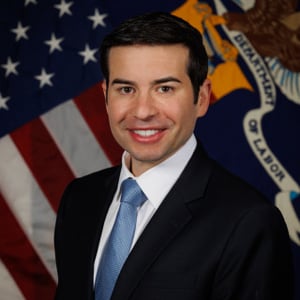
Deputy Secretary of Labor, U.S. Department of Labor
Keith E. Sonderling was confirmed by the U.S. Senate on March 12, 2025 to be the 38th United States Deputy Secretary of Labor.
As the United States Deputy Secretary of Labor, Sonderling is the second-highest-ranking official and serves as the Department's Chief Operating Officer, overseeing the agency’s $14 billion dollar budget and 16,000 employees. The Deputy Secretary oversees key operational functions such as: strategic planning; budget formulation; financial management; information technology; and human resource management. Additionally, the Deputy Secretary provides the leadership and management of DOL’s agencies necessary to support the Secretary and the Department’s mission.
Prior to becoming Deputy Secretary, he was previously confirmed by the United States Senate to serve as the Commissioner of the U.S. Equal Employment Opportunity Commission (EEOC) from September 2020 until August 2024. He also served as the Commission’s Vice-Chair from 2020-2021.
During his tenure at the EEOC, one of Sonderling’s highest priorities was ensuring that artificial intelligence and workplace technologies are designed and deployed consistent with long-standing laws. He published numerous articles on the benefits and potential harms of using artificial intelligence-based technology in the workplace and spoke globally on artificial intelligence’s impact on the workplace.
Sonderling previously served at the US Department of Labor as the Acting and Deputy Administrator of the U.S. Department of Labor’s Wage and Hour Division from 2017-2020. During his tenure, the Division accomplished back-to-back record-breaking enforcement collections and educational outreach events. Sonderling also oversaw the development and publication of large-scale deregulatory rules and authored numerous Opinion Letters, Field Assistance Bulletins, and All Agency Memorandums. Additionally, he was instrumental in developing the Division’s first comprehensive self-audit program, which collected more than $7 million for nearly eleven thousand workers.
Before his government service, Sonderling was a partner at one of Florida’s oldest and largest law firms, Gunster. At Gunster, he counseled employers and litigated labor and employment disputes. In 2012, then-Governor Rick Scott appointed Sonderling to serve as the Chair of the Judicial Nominating Committee for appellate courts in South Florida. Sonderling was also active in the community, serving on the Board of Directors for Morse Life Health System, the Boca Raton Chamber of Commerce, and Leadership Florida.
Sonderling also serves as a Professional Lecturer in the Law (Adjunct Professor) at George Washington University Law School, teaching employment discrimination.
Sonderling received his B.S., magna cum laude, from the University of Florida and his J.D., magna cum laude, from Nova Southeastern University.
President, Committee for Justice
Curt Levey is President of the Committee For Justice, an organization devoted to advancing constitutionally limited government and individual liberty. He is a veteran of Supreme Court and other judicial confirmation battles and serves on the executive committee of the Federalist Society's Civil Rights Practice Group.
After graduating Harvard Law School with honors and clerking for the U.S. Court of Appeals for the Sixth Circuit, Mr. Levey served as Director of Legal & Public Affairs at the Center for Individual Rights (CIR). There he worked on landmark Supreme Court cases, including the University of Michigan affirmative action cases and the successful constitutional challenge to the Violence Against Women Act. After CIR, Mr. Levey headed the Title IX policy group at the U.S. Department of Education.
Before attending law school, Mr. Levey earned an M.S. and B.A. in computer science from Brown University and worked in the field of artificial intelligence (AI). He invented a new type of AI technology, for which he wrote a successful patent application.
Professor Emeritus, New York University
GARY MARCUS is a leading voice in artificial intelligence. He is a scientist, best-selling author, and serial entrepreneur (Founder of Robust.AI and Geometric.AI, acquired by Uber). He is well-known for his challenges to contemporary AI, anticipating many of the current limitations decades in advance, and for his research in human language development and cognitive neuroscience.
An Emeritus Professor of Psychology and Neural Science at NYU, he is the author of five books, including, The Algebraic Mind, Kluge, The Birth of the Mind, and the New York Times Bestseller Guitar Zero. He has often contributed to The New Yorker, Wired, and The New York Times. His most recent book, Rebooting AI, with Ernest Davis, is one of Forbes’s 7 Must Read Books in AI.
Founder, Chairman, and CEO, Louis D. Brandeis Center for Human Rights Under Law
Hon. Kenneth L. Marcus is an internationally recognized expert in civil and human rights, as well as a leader in the fight against anti-Semitism on and off university campuses. He is the Founder, Chairman, and CEO of The Louis D. Brandeis Center for Human Rights Under Law, the leading civil rights legal organization fighting against anti-Semitism. The New York Times has called him “The Man Who Helped Redefine Campus Anti-Semitism.” He been described, in that paper, as “the single most effective and respected force” to combat anti-Semitism.
During his public service career, Marcus served as Assistant U.S. Secretary of Education for Civil Rights; Staff Director at the U.S. Commission on Civil Rights; and General Deputy Assistant U.S. Secretary of Housing and Urban Development for Fair Housing and Equal Opportunity.
In academia, he serves as Professorial Lecturer in Law at George Washington University. He formerly held the Lillie and Nathan Ackerman Chair in Equality and Justice in America at the City University of New York’s Bernard M. Baruch College, served as Visiting Research Professor of Political Science at Yeshiva University, and was a Board of Visitors member George Mason University and Distinguished Senior Fellow at that university’s law school. He is a member of the editorial board of the Journal of Contemporary Antisemitism and previously served as Associate Editor of the Journal for the Study of Anti-Semitism.
Marcus is also author of The Definition of Anti-Semitism (Oxford University Press) and Jewish Identity and Civil Rights in America (Cambridge University Press). He has published widely in academic journals as well as in more popular venues such as The Wall Street Journal, Washington Post, Newsweek, USA Today, and Politico. He is a graduate of Williams College and the University of California at Berkeley School of Law.
Earlier in his career, he was a litigation partner in two major law firms, where he conducted complex commercial and constitutional litigation. He also serves as Chairman emeritus of the Executive Committee of the Federalist Society for Law & Public Policy Civil Rights Practice Group.
Deputy Secretary of Labor, U.S. Department of Labor
Keith E. Sonderling was confirmed by the U.S. Senate on March 12, 2025 to be the 38th United States Deputy Secretary of Labor.
As the United States Deputy Secretary of Labor, Sonderling is the second-highest-ranking official and serves as the Department's Chief Operating Officer, overseeing the agency’s $14 billion dollar budget and 16,000 employees. The Deputy Secretary oversees key operational functions such as: strategic planning; budget formulation; financial management; information technology; and human resource management. Additionally, the Deputy Secretary provides the leadership and management of DOL’s agencies necessary to support the Secretary and the Department’s mission.
Prior to becoming Deputy Secretary, he was previously confirmed by the United States Senate to serve as the Commissioner of the U.S. Equal Employment Opportunity Commission (EEOC) from September 2020 until August 2024. He also served as the Commission’s Vice-Chair from 2020-2021.
During his tenure at the EEOC, one of Sonderling’s highest priorities was ensuring that artificial intelligence and workplace technologies are designed and deployed consistent with long-standing laws. He published numerous articles on the benefits and potential harms of using artificial intelligence-based technology in the workplace and spoke globally on artificial intelligence’s impact on the workplace.
Sonderling previously served at the US Department of Labor as the Acting and Deputy Administrator of the U.S. Department of Labor’s Wage and Hour Division from 2017-2020. During his tenure, the Division accomplished back-to-back record-breaking enforcement collections and educational outreach events. Sonderling also oversaw the development and publication of large-scale deregulatory rules and authored numerous Opinion Letters, Field Assistance Bulletins, and All Agency Memorandums. Additionally, he was instrumental in developing the Division’s first comprehensive self-audit program, which collected more than $7 million for nearly eleven thousand workers.
Before his government service, Sonderling was a partner at one of Florida’s oldest and largest law firms, Gunster. At Gunster, he counseled employers and litigated labor and employment disputes. In 2012, then-Governor Rick Scott appointed Sonderling to serve as the Chair of the Judicial Nominating Committee for appellate courts in South Florida. Sonderling was also active in the community, serving on the Board of Directors for Morse Life Health System, the Boca Raton Chamber of Commerce, and Leadership Florida.
Sonderling also serves as a Professional Lecturer in the Law (Adjunct Professor) at George Washington University Law School, teaching employment discrimination.
Sonderling received his B.S., magna cum laude, from the University of Florida and his J.D., magna cum laude, from Nova Southeastern University.
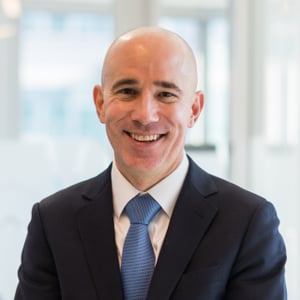
Partner, KaiserDillon PLLC
A former Assistant United States Attorney with dozens of trials under his belt, Justin Dillon now uses his years of litigation and investigative experience to defend clients in Title IX and campus discipline cases and in complex, high-stakes white-collar criminal investigations.
Justin has gained nationwide attention for his work representing students and professors in campus misconduct cases, which he and his firm have handled at more than 100 schools nationwide. Along with his partner Chris Muha, he co-authored Title IX Hearings and Litigation: A Practitioner’s Guide, published by The Foundation for Individual Rights and Expression and available here to any member of FIRE’s Legal Network.
While most of his cases are successfully resolved on campus, Justin is not afraid to take it all the way to court—he was the first lawyer in the country to win summary judgment against a university in a campus sexual assault case, and he has never lost a lawsuit against a college.
In his white-collar practice, Justin has successfully defended the General Counsel of a public company in a foreign-bribery investigation, helped a government contractor avoid criminal charges after a lengthy federal investigation, and represented numerous individuals and small-business owners.
Justin also frequently represents government employees under investigation for alleged ethical or criminal misconduct, including a former Cabinet secretary, a former Senate-confirmed head of a federal agency, and many other federal employees and federal prosecutors. He has extensive experience with Offices of Inspector General and the Justice Department’s Office of Professional Responsibility (OPR). He is also the former white-collar crime columnist for the website Above the Law; a collection of his columns is available here.
Earlier in his career, Justin worked for the Civil Rights Division of the Justice Department and later spent five and a half years as a federal prosecutor in Washington, DC, where he led more than 100 Grand Jury investigations, tried more than 60 criminal cases, and handled more than a dozen appeals.
Justin has been recognized by Chambers & Partners in Litigation: White-Collar Crime & Government Investigations in Washington, DC. He has also been recognized by Best Lawyers© in the category Criminal Defense: White-Collar; named by Super Lawyers as one of the Top Rated White Collar Crime Attorneys in Washington, D.C.; and selected by Washingtonian Magazine as one of Washington’s Best Lawyers in Criminal Defense.
Founder, Chairman, and CEO, Louis D. Brandeis Center for Human Rights Under Law
Hon. Kenneth L. Marcus is an internationally recognized expert in civil and human rights, as well as a leader in the fight against anti-Semitism on and off university campuses. He is the Founder, Chairman, and CEO of The Louis D. Brandeis Center for Human Rights Under Law, the leading civil rights legal organization fighting against anti-Semitism. The New York Times has called him “The Man Who Helped Redefine Campus Anti-Semitism.” He been described, in that paper, as “the single most effective and respected force” to combat anti-Semitism.
During his public service career, Marcus served as Assistant U.S. Secretary of Education for Civil Rights; Staff Director at the U.S. Commission on Civil Rights; and General Deputy Assistant U.S. Secretary of Housing and Urban Development for Fair Housing and Equal Opportunity.
In academia, he serves as Professorial Lecturer in Law at George Washington University. He formerly held the Lillie and Nathan Ackerman Chair in Equality and Justice in America at the City University of New York’s Bernard M. Baruch College, served as Visiting Research Professor of Political Science at Yeshiva University, and was a Board of Visitors member George Mason University and Distinguished Senior Fellow at that university’s law school. He is a member of the editorial board of the Journal of Contemporary Antisemitism and previously served as Associate Editor of the Journal for the Study of Anti-Semitism.
Marcus is also author of The Definition of Anti-Semitism (Oxford University Press) and Jewish Identity and Civil Rights in America (Cambridge University Press). He has published widely in academic journals as well as in more popular venues such as The Wall Street Journal, Washington Post, Newsweek, USA Today, and Politico. He is a graduate of Williams College and the University of California at Berkeley School of Law.
Earlier in his career, he was a litigation partner in two major law firms, where he conducted complex commercial and constitutional litigation. He also serves as Chairman emeritus of the Executive Committee of the Federalist Society for Law & Public Policy Civil Rights Practice Group.
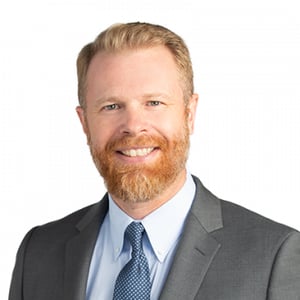
Owner, Schneider Education & Employment Law PLLC
Scott Schneider is the owner and founder of Schneider Education & Employment Law and has advised companies and educational institutions nationwide on a variety of complex legal issues with a focus on particularly sensitive matters like institutional response to sexual misconduct.
Prior to founding Schneider Education & Employment Law, Scott was an equity partner in two major national law firms and served as in-house counsel for Tulane University.
He is a prominent litigator as well as a sought-after advisor on Title IX, labor and employment law issues, and various risk management concerns. He has led numerous investigations of serial sex abuse allegations, allegations of misconduct involving senior leadership and other acts of institutional misconduct. He has also handled various high-profile program reviews of institutional response to sexual misconduct, racial discrimination, athletics department ethics and compliance, and treatment of at-risk employees and students.
Scott has provided training nationally to thousands of personnel on a variety of issues, including Title IX; labor and employment law; faculty hiring, promotion and tenure processes; and Greek Life risk management. Scott also provides expert witness testimony on matters dealing with institutional response to allegations of sexual misconduct.
Scott regularly presents to national organizations, including the National Association of College and University Attorneys (NACUA), the National Association of Independent Schools (NAIS), the Association for Student Conduct Administration (ASCA) Gehring Academy, the International Association of Campus Law Enforcement Administrators (IACLEA), the Association of College and University Housing Officers-International (ACUHO-I), EDUCAUSE and various associations of independent schools.
Additionally, Scott previously served as an award-winning professor at Tulane University, where he taught courses on higher education and labor and employment law and created the Tulane University Law School’s Title IX certification program. Scott has been retained by the National Center for Campus Public Safety to serve as a faculty member for its Trauma-Informed Sexual Assault Investigation and Adjudication training program for campus officials. Scott also serves on the faculty for the State University of New York’s Student Conduct Institute where he provides training on informal resolution and restorative justice.
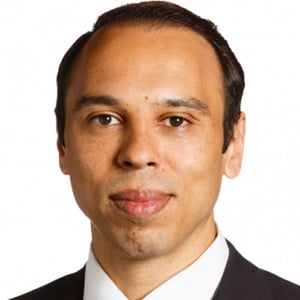
Vice President of Domestic and Economic Policy, The Heritage Foundation
Roger Severino is Vice President of Economic and Domestic Policy, and the Joseph C. and Elizabeth A. Anderlik Fellow at The Heritage Foundation.
Severino is a national authority on civil rights, conscience and religious freedom, the administrative state, and information privacy, particularly as applied to health care law and policy. Find his tweets at @RogerSeverino_.
Severino spearheaded the HHS Accountability Project while a Senior Fellow at EPPC from 2021 to 2023. Previously, Severino was Director of HHS’ Office for Civil Rights, where he led a team of over 250 staff enforcing our nation’s civil rights, conscience and religious freedom, and health information privacy laws. He served from 2017 to 2021 and was the longest-serving OCR director of the past three decades.
Prior to joining HHS, Severino served for two years as Director of the DeVos Center for Religion and Civil Society at Heritage, advocating for life, family, and religious-freedom policies. Before that, he was a trial attorney for seven years at the U.S. Department of Justice’s Civil Rights Division where he enforced the Fair Housing Act and the Civil Rights Act of 1964. Severino started his legal career at the Becket Fund for Religious Liberty, where he was Legal Counsel and Chief Operations Officer and defended the rights of people of all faiths under federal and international law.
Severino has been profiled in The New York Times, The Atlantic, The Wall Street Journal, and The Hill and has appeared on Fox News, CNN, MSNBC, NPR, and PBS, among others. In 2020, The New York Times dubbed him and his wife Carrie, “a conservative power couple” to be reckoned with.
Severino holds a JD from Harvard Law School, a master’s degree in public policy, with highest distinction, from Carnegie Mellon University, and a bachelor’s degree in business from the University of Southern California. He was appointed by President Trump to the Administrative Conference of the United States and is a member of the District of Columbia and the Commonwealth of Virginia bars.
As OCR director, Severino founded the federal government’s first division dedicated exclusively to conscience and religious freedom compliance and enforcement. He enforced the Weldon Amendment for the first time against a state (California) after it coerced families and religious organizations into paying for abortion insurance coverage, leading to a $200 million federal funding disallowance. He also enforced laws protecting pro-life pregnancy resource centers from discrimination by states hostile to their message and enforced laws prohibiting forced participation in abortions by medical professionals.
With respect to civil rights, Severino protected older persons and people with disabilities from being denied life-saving care due to discriminatory “quality of life” judgments, especially during the COVID-19 pandemic. He also achieved a landmark sexual harassment resolution with Michigan State University in the wake of the Larry Nassar sexual assault scandal and protected the rights of non-English speakers to have equal access to health and human services.
In the area of health privacy, he secured the largest HIPAA monetary settlement in history and achieved the largest number of enforcement resolutions both in a single year and across four years. He also facilitated the transformational use of Skype, Zoom, and Facetime for delivery of telehealth during the COVID-19 pandemic and beyond.
His regulatory reform activities resulted in a comprehensive conscience protection regulation and proposed a life-affirming disability rights regulation. He achieved regulatory savings of $3.6 billion in health care industry costs over five years and identified and proposed an additional $3.2 billion in cost savings from the repeal of ineffective and unnecessary regulatory burdens.
Severino is a Spanish speaker who teaches salsa and west coast swing in his spare time.
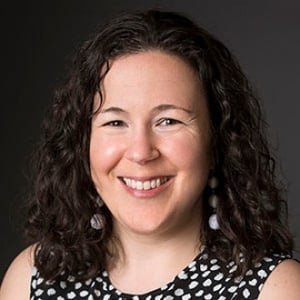
Attorney, Allen Harris Law
Samantha Harris is a nationally recognized attorney advising students and faculty on issues of campus due process, Title IX, free speech, and academic freedom. Drawing on more than 15 years at the Foundation for Individual Rights in Education (FIRE), where she served as Vice President for Policy Research, she guides students, faculty, administrators, and attorneys through complex disciplinary and constitutional issues involving free speech, fair hearings, and faculty-student rights.
A graduate of Princeton University and the University of Pennsylvania Law School (Articles Editor, Journal of Constitutional Law), Samantha clerked for the Hon. Jay C. Waldman in the U.S. District Court for the Eastern District of Pennsylvania and began her legal career at Pepper Hamilton LLP. At FIRE, she led efforts to reform campus policies and defended individuals in high-profile Title IX and free speech disputes.
Now at Allen Harris PLLC, a firm focused on Title IX and campus defense, Samantha represents students and professors in investigations, hearings, appeals, and related litigation. Samantha’s practice emphasizes strategic advocacy in campus disciplinary systems and litigation-ready defense in federal court. Her blend of policy experience, legal skill, and media visibility positions her as a leading resource for issues at the intersection of education law and constitutional rights.
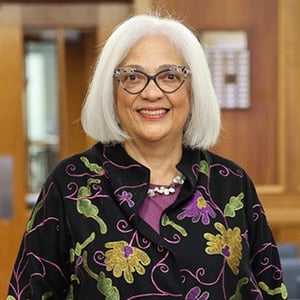
Professor of Law and Faculty Director of the Health and Biomedical Law Concentration and the Masters of Law: Life Sciences program, Suffolk University
Professor Renée Landers is a Professor of Law, Faculty Director of the Health and Biomedical Law Concentration and the Masters of Science in Law: Life Sciences program at Suffolk University Law School in Boston.
She was a Distinguished Visiting Fellow at the National Academy of Social Insurance during her fall 2018 sabbatical leave. She was also the President of the Boston Bar Association in 2003-2004, and was the first woman of color and the first law professor to serve in that position. Professor Landers has worked in private practice and served as Deputy General Counsel for the U.S. Department of Health and Human Services and as Deputy Assistant Attorney General in the Office of Policy Development at the U.S. Department of Justice during the Clinton Administration.
Professor Landers served as Chair of the Section of Administrative Law and Regulatory Practice of the American Bar Association in 2016 – 2017 and chaired the Section’s Nominating Committee in 2018 - 2019. She is a Trustee of the Massachusetts General Hospital and New England Donor Services and is a former Trustee of the Massachusetts Eye & Ear Infirmary. In 2019, she rejoined the board of Planned Parenthood League of Massachusetts and became President of the Board beginning in July 2020. Recently, she co-chaired the Boston Bar Association’s Task Force on Judicial Independence which issued a report in August 2019. She was a member of the Massachusetts Commission on Judicial Conduct and served as Vice Chair of the Commission from 2009 to 2010. She also served on the task force that drafted the revised Massachusetts Code of Judicial Conduct effective in 2016 and currently is a member of the Committee on Judicial Ethics which advises judges on compliance with the Code. Previously, she was a member of the Supreme Judicial Court’s committees studying gender bias and racial and ethnic bias in the courts.
An elected member of the National Academy of Social Insurance since 2008, she is Vice President of the NASI Board of Directors. Landers was a member of the Academy’s study panels on Strengthening Medicare’s Role in Reducing Racial and Ethnic Health Disparities, Health Insurance Exchanges, and Examining Approaches to Expand Medicare Eligibility. She currently co-chairs a study panel on Economic Security. She is the author of articles on the potential for Massachusetts health care reform initiatives to eliminate racial and ethnic disparities in health care and aspects of the Affordable Care Act. In addition to health care, Landers has written on diversity in the legal profession and privacy and is a regular commentator on legal developments in constitutional law, health law, and administrative law for media organizations.
In summer 2019, she was appointed to serve as an observer representing the ABA Section of Administrative Law & Regulatory Practice on a Telehealth Study Committee. And, after March 2020, she was appointed to serve as an observer representing the ABA Section of Administrative Law & Regulatory Practice on a Public Health Emergencies Study Committee.
Professor Landers has served as the president of the Boards of Big Sister Association of Greater Boston, the Shady Hill School, the Harvard Board of Overseers, and has also served on the Board of WGBH and the Board of Overseers of Geisel School of Medicine at Dartmouth. She is a member of the American Law Institute and Phi Beta Kappa, and has received awards from Radcliffe College, Boston College Law School, Harvard College, the Big Sister Association of Greater Boston, the Boston Bar Association, the Massachusetts Women’s Political Caucus, and the Greater Boston Chamber of Commerce Women’s Network. In November 2018 she was elected a Fellow of the ABA Section of Administrative Law and Regulatory Practice.
Founder, Chairman, and CEO, Louis D. Brandeis Center for Human Rights Under Law
Hon. Kenneth L. Marcus is an internationally recognized expert in civil and human rights, as well as a leader in the fight against anti-Semitism on and off university campuses. He is the Founder, Chairman, and CEO of The Louis D. Brandeis Center for Human Rights Under Law, the leading civil rights legal organization fighting against anti-Semitism. The New York Times has called him “The Man Who Helped Redefine Campus Anti-Semitism.” He been described, in that paper, as “the single most effective and respected force” to combat anti-Semitism.
During his public service career, Marcus served as Assistant U.S. Secretary of Education for Civil Rights; Staff Director at the U.S. Commission on Civil Rights; and General Deputy Assistant U.S. Secretary of Housing and Urban Development for Fair Housing and Equal Opportunity.
In academia, he serves as Professorial Lecturer in Law at George Washington University. He formerly held the Lillie and Nathan Ackerman Chair in Equality and Justice in America at the City University of New York’s Bernard M. Baruch College, served as Visiting Research Professor of Political Science at Yeshiva University, and was a Board of Visitors member George Mason University and Distinguished Senior Fellow at that university’s law school. He is a member of the editorial board of the Journal of Contemporary Antisemitism and previously served as Associate Editor of the Journal for the Study of Anti-Semitism.
Marcus is also author of The Definition of Anti-Semitism (Oxford University Press) and Jewish Identity and Civil Rights in America (Cambridge University Press). He has published widely in academic journals as well as in more popular venues such as The Wall Street Journal, Washington Post, Newsweek, USA Today, and Politico. He is a graduate of Williams College and the University of California at Berkeley School of Law.
Earlier in his career, he was a litigation partner in two major law firms, where he conducted complex commercial and constitutional litigation. He also serves as Chairman emeritus of the Executive Committee of the Federalist Society for Law & Public Policy Civil Rights Practice Group.
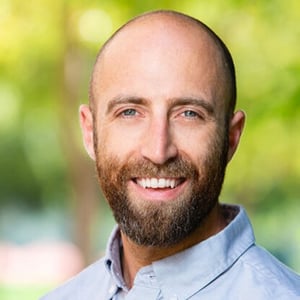
Director, Stanford Graduate School of Business
Graham Steele is the director of the Corporations and Society Initiative at Stanford Graduate School of Business. Prior to joining Stanford GSB, Graham was a member of the staff of the Federal Reserve Bank of San Francisco.
From 2015 to 2017, Graham was the Minority Chief Counsel for the Senate Committee on Banking, Housing & Urban Affairs. From 2010 to 2015 he was a Legislative Assistant for United States Senator Sherrod Brown (D-OH), handling the Senator’s work as a member of the Senate Banking Committee. He also spent four years as the staff director of the Subcommittee on Financial Institutions & Consumer Protection. Prior to joining Senator Brown’s staff, Graham was a policy counsel at Public Citizen’s Congress Watch in Washington, D.C.
Graham received his bachelors degree in political science from the University of Rochester and his law degree from The George Washington University Law School. He is a member of the Massachusetts State Bar. He is originally from Brookline, Massachusetts.
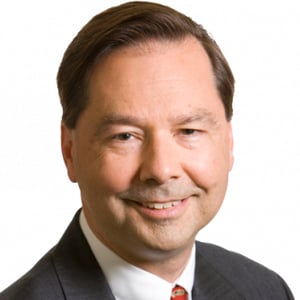
Senior Legal Fellow, Edwin Meese III Institute for the Rule of Law, Advancing American Freedom
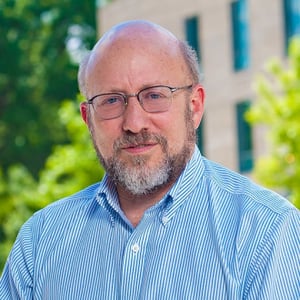
Professor of Law, American University; Washington College of Law
Robert Dinerstein is professor of law and director of the Disability Rights Law Clinic at American University Washington College of Law (AUWCL), where he has taught since 1983. His previous positions include serving as the law school's acting dean (2020-2021), associate dean for academic affairs from (1997-2004), associate dean for experiential education (2012-2018), and director of the clinical program (1988-96 and 2008-2018). He specializes in the fields of clinical education and disability law, especially mental disabilities law (including issues of consent/choice, capacity and supported decision-making and other alternatives to guardianship), the Americans with Disabilities Act, the UN Convention on the Rights of Persons with Disabilities, legal representation of clients with mental disabilities, and disability and international human rights.
Dinerstein has made numerous presentations on clinical legal education and disability law, among other topics, and has published a number of books, articles, chapters and other writing on these subjects.
He is the author/editor of two books. He is co-editor and co-author, with the late Stanley Herr and Joan O’Sullivan, of A Guide to Consent (AAMR, 1999). He is co-author, with the late Stephen Ellmann, Isabelle Gunning, Kate Kruse and Ann Shalleck, of Lawyers and Clients: Critical Issues in Interviewing and Counseling (Thomson West 2009) and the accompanying Teacher’s Manual.
Among Dinerstein’s recent publications in the disability law area, he is the author of:
In the area of legal education and lawyering, his recent articles include “New Wine and New Bottles (on experiential legal education),” 44 Syllabus 2 (Winter 2012-13), Publication of ABA Section on Legal Education and Admissions to the Bar; as co-author (with Margaret Barry, Phyllis Goldfarb, Peggy Maisel and Linda Morton) “Exploring the Meaning of Experiential Deaning,” 67(3) Journal of Legal Education 660 (2018); and ‘The Clinical Law Review at 25: What Hath We Wrought?, 26(1) Clinical Law Review 147 (2019) (25th Anniversary Symposium Issue). He has written extensively on issues of clinical pedagogy and lawyering, in particular, client-centered counseling [especially in his article, “Client-Centered Counseling: Reappraisal and Refinement,” 32 Arizona L. Rev. 501 (1990).] He has also written and presented on the US Department of Justice’s record of enforcement of the rights of persons with disabilities under several administrations.
Dinerstein was appointed by President Clinton in 1994 to serve on the President's Committee on Mental Retardation (now called the President’s Committee on People with Intellectual Disabilities), on which he served until 2001. From 2018-2021, he was a commissioner on the ABA Commission on Disability Rights, and from 2021-present serves as the ABA Section on Civil Rights and Social Justice’s liaison to the Commission. Internationally, he has consulted for the World Health Organization (Ghana and Malawi) and the Open Society Foundations (Ghana and Zambia) regarding the revision of mental health laws and was a signatory to the Montreal Declaration on Intellectual Disabilities, adopted in Montreal, Canada in October 2004. He also has consulted with the Open Society Foundations regarding disability rights clinics and disability rights curricula in Latin America and Southern Africa. Domestically, he has consulted for the Ford Foundation, Public Welfare Foundation and the US Department of Health and Human Services and the US Department of Education on issues related to legal services, disability law and poverty law. He is the principal investigator for the Disability and Human Rights Fellows program, which receives support from the Open Society Foundations.
Prior to joining AUWCL, Dinerstein worked as an attorney in the U.S. Department of Justice's Civil Rights Division, Special Litigation Section, where he handled federal court cases on the rights of people in institutions for people with psychosocial disabilities, people with intellectual disabilities and juveniles. In addition to the Disability Rights Law Clinic, which he founded (and which handles special education, supported decision making, advance mental health directives, Titles I-III of the ADA, and other cases), he teaches a seminar on law and disability and has taught interviewing and counseling, legal ethics, the supervised externship seminar, and the criminal justice clinic (which he directed from 1989-1996).
Dinerstein is actively involved in organizations related to legal education nationally. He was a member (elected) of the Council of the American Bar Association Section on Legal Education and Admissions to the Bar (2006-2011), and previously was on the section’s Standards Review Committee, where he was vice chair. He has been a member of 17 ABA-AALS joint site inspection teams, chairing four teams. Within the Association of American Law Schools, he was a member of the membership review committee and has, among other things, chaired the sections on clinical legal education, law and community, disability law and law and mental disability law, as well as the committees on clinical legal education, sections and the annual meeting, and the planning committee for the 2006 clinical teachers’ conference. He has been a member of a number of other planning committees, including for the AALS New Teachers’ Conference.
Dinerstein currently sits on the boards of directors of the Equal Rights Center (president), and the New Hope Community, Inc. and Foundation, and in the past has served on the boards of the Quality Trust for Individuals with Disabilities, Inc. (founding board member & president, 2001-2016), Washington Legal Clinic for the Homeless, Inc. (founding board member and long-term treasurer, 1986-2015), Advocates for Justice and Education (treasurer), the District of Columbia Bar Board of Governors (elected; 2002-05), Society of American Law Teachers (elected), Mental Disability Rights International (founding board member; now called Disability Rights International), Legal Counsel for the Elderly, and the Maryland Disability Law Center; and the steering committee for the Jacobus tenBroek annual disability law symposium sponsored by the National Federation of the Blind (founding member, and member until 2019).
Among his many awards and honors, Dinerstein has received the WCL Outstanding Service Award (2017-18); been named a Fellow of the American Association on Intellectual and Developmental Disabilities (2016) and received the Paul G. Hearne Award for Disability Rights (ABA, 2013); (with Ann Shalleck) the Egon Guttman Casebook Award (2011-12) for Lawyers and Clients; the William Pincus Award for his contributions to clinical legal education (2010); American University Awards for Scholar-Teacher of the Year (2013), Outstanding Teaching in a Full-Time Appointment (2009) and Faculty-Administrator Award for Outstanding Service to the University Community (2002); and the Pro Bono Service Award from the International Human Rights Law Group (1988).
He has an A.B. degree from Cornell University and a J.D. degree from Yale Law School. He is listed in Who's Who in America).
Founder, Chairman, and CEO, Louis D. Brandeis Center for Human Rights Under Law
Hon. Kenneth L. Marcus is an internationally recognized expert in civil and human rights, as well as a leader in the fight against anti-Semitism on and off university campuses. He is the Founder, Chairman, and CEO of The Louis D. Brandeis Center for Human Rights Under Law, the leading civil rights legal organization fighting against anti-Semitism. The New York Times has called him “The Man Who Helped Redefine Campus Anti-Semitism.” He been described, in that paper, as “the single most effective and respected force” to combat anti-Semitism.
During his public service career, Marcus served as Assistant U.S. Secretary of Education for Civil Rights; Staff Director at the U.S. Commission on Civil Rights; and General Deputy Assistant U.S. Secretary of Housing and Urban Development for Fair Housing and Equal Opportunity.
In academia, he serves as Professorial Lecturer in Law at George Washington University. He formerly held the Lillie and Nathan Ackerman Chair in Equality and Justice in America at the City University of New York’s Bernard M. Baruch College, served as Visiting Research Professor of Political Science at Yeshiva University, and was a Board of Visitors member George Mason University and Distinguished Senior Fellow at that university’s law school. He is a member of the editorial board of the Journal of Contemporary Antisemitism and previously served as Associate Editor of the Journal for the Study of Anti-Semitism.
Marcus is also author of The Definition of Anti-Semitism (Oxford University Press) and Jewish Identity and Civil Rights in America (Cambridge University Press). He has published widely in academic journals as well as in more popular venues such as The Wall Street Journal, Washington Post, Newsweek, USA Today, and Politico. He is a graduate of Williams College and the University of California at Berkeley School of Law.
Earlier in his career, he was a litigation partner in two major law firms, where he conducted complex commercial and constitutional litigation. He also serves as Chairman emeritus of the Executive Committee of the Federalist Society for Law & Public Policy Civil Rights Practice Group.
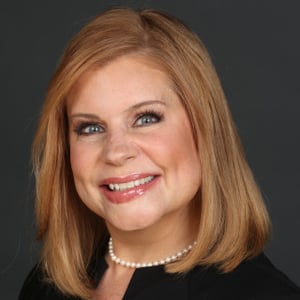
Vice President & Senior Legal Fellow, Defending Education
Sarah Parshall Perry is vice president and senior legal fellow at Defending Education.
Before coming to Defending Education, Sarah served as a Senior Legal Fellow for the Edwin Meese III Center for Legal and Judicial Studies, part of the Institute for Constitutional Government at Heritage, where her work centered on civil rights and the proper role of the courts.
Sarah joined Heritage after serving as Senior Counsel to the Assistant Secretary for Civil Rights at the U.S. Department of Education where she focused on policy reform, technical guidance, and the Office for Civil Rights’ (OCR) annual report to Congress. While at OCR, she was appointed by the Acting Assistant Secretary to co-chair the Employment Engagement, Diversity, & Inclusion Council and, in coordination with the Deputy Assistant Secretary for Enforcement oversee the hiring of dozens of attorneys for OCR’s 12 regional offices nationwide. Prior to her tenure at the Department of Education, she spent six years at the Family Research Council in Washington, D.C. where she was Senior Fellow for Education Reform and later, became the regular substitute host for the “Washington Watch” radio show. Her work at the Family Research Council also included the building and oversight of multiple policy coalitions geared toward the fight against antisemitism in academia, curbing tech censorship, and protecting religious liberty.
Before joining FRC, Sarah was in-house counsel and director of development for a Baltimore advertising agency, providing management of all new business transactions from pitch to contract execution for the multi-million-dollar enterprise. She began her practice at the litigation firm of Simms Showers, LLP where her work included Title VII employment discrimination, maritime/admiralty, and False Claims Act (“Qui Tam”) law. Sarah has a law degree from the University of Virginia School of Law, where she was an editor of the Virginia Journal of International Law, a recipient of the American Jurisprudence award, a Phi Delta Phi honor society member, and a student practitioner in the appellate litigation clinic where she argued before the 4th Circuit Court of Appeals. She holds a B.S. in Journalism with honors from Liberty University.
Her commentary and analysis have appeared in media outlets across the country, including the AP, BBC, Fox News, NPR, The Hill, Washington Post, Washington Times, and the New York Times. She is the mother of three children, and the author of just as many books on the trials and triumphs of parenting children on the autism spectrum. Sarah is a member of the Kirkpatrick Society at the American Enterprise Institute, and makes her home north of Baltimore, Maryland.
Professor of Law, American University; Washington College of Law
Robert Dinerstein is professor of law and director of the Disability Rights Law Clinic at American University Washington College of Law (AUWCL), where he has taught since 1983. His previous positions include serving as the law school's acting dean (2020-2021), associate dean for academic affairs from (1997-2004), associate dean for experiential education (2012-2018), and director of the clinical program (1988-96 and 2008-2018). He specializes in the fields of clinical education and disability law, especially mental disabilities law (including issues of consent/choice, capacity and supported decision-making and other alternatives to guardianship), the Americans with Disabilities Act, the UN Convention on the Rights of Persons with Disabilities, legal representation of clients with mental disabilities, and disability and international human rights.
Dinerstein has made numerous presentations on clinical legal education and disability law, among other topics, and has published a number of books, articles, chapters and other writing on these subjects.
He is the author/editor of two books. He is co-editor and co-author, with the late Stanley Herr and Joan O’Sullivan, of A Guide to Consent (AAMR, 1999). He is co-author, with the late Stephen Ellmann, Isabelle Gunning, Kate Kruse and Ann Shalleck, of Lawyers and Clients: Critical Issues in Interviewing and Counseling (Thomson West 2009) and the accompanying Teacher’s Manual.
Among Dinerstein’s recent publications in the disability law area, he is the author of:
In the area of legal education and lawyering, his recent articles include “New Wine and New Bottles (on experiential legal education),” 44 Syllabus 2 (Winter 2012-13), Publication of ABA Section on Legal Education and Admissions to the Bar; as co-author (with Margaret Barry, Phyllis Goldfarb, Peggy Maisel and Linda Morton) “Exploring the Meaning of Experiential Deaning,” 67(3) Journal of Legal Education 660 (2018); and ‘The Clinical Law Review at 25: What Hath We Wrought?, 26(1) Clinical Law Review 147 (2019) (25th Anniversary Symposium Issue). He has written extensively on issues of clinical pedagogy and lawyering, in particular, client-centered counseling [especially in his article, “Client-Centered Counseling: Reappraisal and Refinement,” 32 Arizona L. Rev. 501 (1990).] He has also written and presented on the US Department of Justice’s record of enforcement of the rights of persons with disabilities under several administrations.
Dinerstein was appointed by President Clinton in 1994 to serve on the President's Committee on Mental Retardation (now called the President’s Committee on People with Intellectual Disabilities), on which he served until 2001. From 2018-2021, he was a commissioner on the ABA Commission on Disability Rights, and from 2021-present serves as the ABA Section on Civil Rights and Social Justice’s liaison to the Commission. Internationally, he has consulted for the World Health Organization (Ghana and Malawi) and the Open Society Foundations (Ghana and Zambia) regarding the revision of mental health laws and was a signatory to the Montreal Declaration on Intellectual Disabilities, adopted in Montreal, Canada in October 2004. He also has consulted with the Open Society Foundations regarding disability rights clinics and disability rights curricula in Latin America and Southern Africa. Domestically, he has consulted for the Ford Foundation, Public Welfare Foundation and the US Department of Health and Human Services and the US Department of Education on issues related to legal services, disability law and poverty law. He is the principal investigator for the Disability and Human Rights Fellows program, which receives support from the Open Society Foundations.
Prior to joining AUWCL, Dinerstein worked as an attorney in the U.S. Department of Justice's Civil Rights Division, Special Litigation Section, where he handled federal court cases on the rights of people in institutions for people with psychosocial disabilities, people with intellectual disabilities and juveniles. In addition to the Disability Rights Law Clinic, which he founded (and which handles special education, supported decision making, advance mental health directives, Titles I-III of the ADA, and other cases), he teaches a seminar on law and disability and has taught interviewing and counseling, legal ethics, the supervised externship seminar, and the criminal justice clinic (which he directed from 1989-1996).
Dinerstein is actively involved in organizations related to legal education nationally. He was a member (elected) of the Council of the American Bar Association Section on Legal Education and Admissions to the Bar (2006-2011), and previously was on the section’s Standards Review Committee, where he was vice chair. He has been a member of 17 ABA-AALS joint site inspection teams, chairing four teams. Within the Association of American Law Schools, he was a member of the membership review committee and has, among other things, chaired the sections on clinical legal education, law and community, disability law and law and mental disability law, as well as the committees on clinical legal education, sections and the annual meeting, and the planning committee for the 2006 clinical teachers’ conference. He has been a member of a number of other planning committees, including for the AALS New Teachers’ Conference.
Dinerstein currently sits on the boards of directors of the Equal Rights Center (president), and the New Hope Community, Inc. and Foundation, and in the past has served on the boards of the Quality Trust for Individuals with Disabilities, Inc. (founding board member & president, 2001-2016), Washington Legal Clinic for the Homeless, Inc. (founding board member and long-term treasurer, 1986-2015), Advocates for Justice and Education (treasurer), the District of Columbia Bar Board of Governors (elected; 2002-05), Society of American Law Teachers (elected), Mental Disability Rights International (founding board member; now called Disability Rights International), Legal Counsel for the Elderly, and the Maryland Disability Law Center; and the steering committee for the Jacobus tenBroek annual disability law symposium sponsored by the National Federation of the Blind (founding member, and member until 2019).
Among his many awards and honors, Dinerstein has received the WCL Outstanding Service Award (2017-18); been named a Fellow of the American Association on Intellectual and Developmental Disabilities (2016) and received the Paul G. Hearne Award for Disability Rights (ABA, 2013); (with Ann Shalleck) the Egon Guttman Casebook Award (2011-12) for Lawyers and Clients; the William Pincus Award for his contributions to clinical legal education (2010); American University Awards for Scholar-Teacher of the Year (2013), Outstanding Teaching in a Full-Time Appointment (2009) and Faculty-Administrator Award for Outstanding Service to the University Community (2002); and the Pro Bono Service Award from the International Human Rights Law Group (1988).
He has an A.B. degree from Cornell University and a J.D. degree from Yale Law School. He is listed in Who's Who in America).
Founder, Chairman, and CEO, Louis D. Brandeis Center for Human Rights Under Law
Hon. Kenneth L. Marcus is an internationally recognized expert in civil and human rights, as well as a leader in the fight against anti-Semitism on and off university campuses. He is the Founder, Chairman, and CEO of The Louis D. Brandeis Center for Human Rights Under Law, the leading civil rights legal organization fighting against anti-Semitism. The New York Times has called him “The Man Who Helped Redefine Campus Anti-Semitism.” He been described, in that paper, as “the single most effective and respected force” to combat anti-Semitism.
During his public service career, Marcus served as Assistant U.S. Secretary of Education for Civil Rights; Staff Director at the U.S. Commission on Civil Rights; and General Deputy Assistant U.S. Secretary of Housing and Urban Development for Fair Housing and Equal Opportunity.
In academia, he serves as Professorial Lecturer in Law at George Washington University. He formerly held the Lillie and Nathan Ackerman Chair in Equality and Justice in America at the City University of New York’s Bernard M. Baruch College, served as Visiting Research Professor of Political Science at Yeshiva University, and was a Board of Visitors member George Mason University and Distinguished Senior Fellow at that university’s law school. He is a member of the editorial board of the Journal of Contemporary Antisemitism and previously served as Associate Editor of the Journal for the Study of Anti-Semitism.
Marcus is also author of The Definition of Anti-Semitism (Oxford University Press) and Jewish Identity and Civil Rights in America (Cambridge University Press). He has published widely in academic journals as well as in more popular venues such as The Wall Street Journal, Washington Post, Newsweek, USA Today, and Politico. He is a graduate of Williams College and the University of California at Berkeley School of Law.
Earlier in his career, he was a litigation partner in two major law firms, where he conducted complex commercial and constitutional litigation. He also serves as Chairman emeritus of the Executive Committee of the Federalist Society for Law & Public Policy Civil Rights Practice Group.
Vice President & Senior Legal Fellow, Defending Education
Sarah Parshall Perry is vice president and senior legal fellow at Defending Education.
Before coming to Defending Education, Sarah served as a Senior Legal Fellow for the Edwin Meese III Center for Legal and Judicial Studies, part of the Institute for Constitutional Government at Heritage, where her work centered on civil rights and the proper role of the courts.
Sarah joined Heritage after serving as Senior Counsel to the Assistant Secretary for Civil Rights at the U.S. Department of Education where she focused on policy reform, technical guidance, and the Office for Civil Rights’ (OCR) annual report to Congress. While at OCR, she was appointed by the Acting Assistant Secretary to co-chair the Employment Engagement, Diversity, & Inclusion Council and, in coordination with the Deputy Assistant Secretary for Enforcement oversee the hiring of dozens of attorneys for OCR’s 12 regional offices nationwide. Prior to her tenure at the Department of Education, she spent six years at the Family Research Council in Washington, D.C. where she was Senior Fellow for Education Reform and later, became the regular substitute host for the “Washington Watch” radio show. Her work at the Family Research Council also included the building and oversight of multiple policy coalitions geared toward the fight against antisemitism in academia, curbing tech censorship, and protecting religious liberty.
Before joining FRC, Sarah was in-house counsel and director of development for a Baltimore advertising agency, providing management of all new business transactions from pitch to contract execution for the multi-million-dollar enterprise. She began her practice at the litigation firm of Simms Showers, LLP where her work included Title VII employment discrimination, maritime/admiralty, and False Claims Act (“Qui Tam”) law. Sarah has a law degree from the University of Virginia School of Law, where she was an editor of the Virginia Journal of International Law, a recipient of the American Jurisprudence award, a Phi Delta Phi honor society member, and a student practitioner in the appellate litigation clinic where she argued before the 4th Circuit Court of Appeals. She holds a B.S. in Journalism with honors from Liberty University.
Her commentary and analysis have appeared in media outlets across the country, including the AP, BBC, Fox News, NPR, The Hill, Washington Post, Washington Times, and the New York Times. She is the mother of three children, and the author of just as many books on the trials and triumphs of parenting children on the autism spectrum. Sarah is a member of the Kirkpatrick Society at the American Enterprise Institute, and makes her home north of Baltimore, Maryland.
President, Committee for Justice
Curt Levey is President of the Committee For Justice, an organization devoted to advancing constitutionally limited government and individual liberty. He is a veteran of Supreme Court and other judicial confirmation battles and serves on the executive committee of the Federalist Society's Civil Rights Practice Group.
After graduating Harvard Law School with honors and clerking for the U.S. Court of Appeals for the Sixth Circuit, Mr. Levey served as Director of Legal & Public Affairs at the Center for Individual Rights (CIR). There he worked on landmark Supreme Court cases, including the University of Michigan affirmative action cases and the successful constitutional challenge to the Violence Against Women Act. After CIR, Mr. Levey headed the Title IX policy group at the U.S. Department of Education.
Before attending law school, Mr. Levey earned an M.S. and B.A. in computer science from Brown University and worked in the field of artificial intelligence (AI). He invented a new type of AI technology, for which he wrote a successful patent application.
Professor Emeritus, New York University
GARY MARCUS is a leading voice in artificial intelligence. He is a scientist, best-selling author, and serial entrepreneur (Founder of Robust.AI and Geometric.AI, acquired by Uber). He is well-known for his challenges to contemporary AI, anticipating many of the current limitations decades in advance, and for his research in human language development and cognitive neuroscience.
An Emeritus Professor of Psychology and Neural Science at NYU, he is the author of five books, including, The Algebraic Mind, Kluge, The Birth of the Mind, and the New York Times Bestseller Guitar Zero. He has often contributed to The New Yorker, Wired, and The New York Times. His most recent book, Rebooting AI, with Ernest Davis, is one of Forbes’s 7 Must Read Books in AI.
Founder, Chairman, and CEO, Louis D. Brandeis Center for Human Rights Under Law
Hon. Kenneth L. Marcus is an internationally recognized expert in civil and human rights, as well as a leader in the fight against anti-Semitism on and off university campuses. He is the Founder, Chairman, and CEO of The Louis D. Brandeis Center for Human Rights Under Law, the leading civil rights legal organization fighting against anti-Semitism. The New York Times has called him “The Man Who Helped Redefine Campus Anti-Semitism.” He been described, in that paper, as “the single most effective and respected force” to combat anti-Semitism.
During his public service career, Marcus served as Assistant U.S. Secretary of Education for Civil Rights; Staff Director at the U.S. Commission on Civil Rights; and General Deputy Assistant U.S. Secretary of Housing and Urban Development for Fair Housing and Equal Opportunity.
In academia, he serves as Professorial Lecturer in Law at George Washington University. He formerly held the Lillie and Nathan Ackerman Chair in Equality and Justice in America at the City University of New York’s Bernard M. Baruch College, served as Visiting Research Professor of Political Science at Yeshiva University, and was a Board of Visitors member George Mason University and Distinguished Senior Fellow at that university’s law school. He is a member of the editorial board of the Journal of Contemporary Antisemitism and previously served as Associate Editor of the Journal for the Study of Anti-Semitism.
Marcus is also author of The Definition of Anti-Semitism (Oxford University Press) and Jewish Identity and Civil Rights in America (Cambridge University Press). He has published widely in academic journals as well as in more popular venues such as The Wall Street Journal, Washington Post, Newsweek, USA Today, and Politico. He is a graduate of Williams College and the University of California at Berkeley School of Law.
Earlier in his career, he was a litigation partner in two major law firms, where he conducted complex commercial and constitutional litigation. He also serves as Chairman emeritus of the Executive Committee of the Federalist Society for Law & Public Policy Civil Rights Practice Group.
Deputy Secretary of Labor, U.S. Department of Labor
Keith E. Sonderling was confirmed by the U.S. Senate on March 12, 2025 to be the 38th United States Deputy Secretary of Labor.
As the United States Deputy Secretary of Labor, Sonderling is the second-highest-ranking official and serves as the Department's Chief Operating Officer, overseeing the agency’s $14 billion dollar budget and 16,000 employees. The Deputy Secretary oversees key operational functions such as: strategic planning; budget formulation; financial management; information technology; and human resource management. Additionally, the Deputy Secretary provides the leadership and management of DOL’s agencies necessary to support the Secretary and the Department’s mission.
Prior to becoming Deputy Secretary, he was previously confirmed by the United States Senate to serve as the Commissioner of the U.S. Equal Employment Opportunity Commission (EEOC) from September 2020 until August 2024. He also served as the Commission’s Vice-Chair from 2020-2021.
During his tenure at the EEOC, one of Sonderling’s highest priorities was ensuring that artificial intelligence and workplace technologies are designed and deployed consistent with long-standing laws. He published numerous articles on the benefits and potential harms of using artificial intelligence-based technology in the workplace and spoke globally on artificial intelligence’s impact on the workplace.
Sonderling previously served at the US Department of Labor as the Acting and Deputy Administrator of the U.S. Department of Labor’s Wage and Hour Division from 2017-2020. During his tenure, the Division accomplished back-to-back record-breaking enforcement collections and educational outreach events. Sonderling also oversaw the development and publication of large-scale deregulatory rules and authored numerous Opinion Letters, Field Assistance Bulletins, and All Agency Memorandums. Additionally, he was instrumental in developing the Division’s first comprehensive self-audit program, which collected more than $7 million for nearly eleven thousand workers.
Before his government service, Sonderling was a partner at one of Florida’s oldest and largest law firms, Gunster. At Gunster, he counseled employers and litigated labor and employment disputes. In 2012, then-Governor Rick Scott appointed Sonderling to serve as the Chair of the Judicial Nominating Committee for appellate courts in South Florida. Sonderling was also active in the community, serving on the Board of Directors for Morse Life Health System, the Boca Raton Chamber of Commerce, and Leadership Florida.
Sonderling also serves as a Professional Lecturer in the Law (Adjunct Professor) at George Washington University Law School, teaching employment discrimination.
Sonderling received his B.S., magna cum laude, from the University of Florida and his J.D., magna cum laude, from Nova Southeastern University.
Partner, KaiserDillon PLLC
A former Assistant United States Attorney with dozens of trials under his belt, Justin Dillon now uses his years of litigation and investigative experience to defend clients in Title IX and campus discipline cases and in complex, high-stakes white-collar criminal investigations.
Justin has gained nationwide attention for his work representing students and professors in campus misconduct cases, which he and his firm have handled at more than 100 schools nationwide. Along with his partner Chris Muha, he co-authored Title IX Hearings and Litigation: A Practitioner’s Guide, published by The Foundation for Individual Rights and Expression and available here to any member of FIRE’s Legal Network.
While most of his cases are successfully resolved on campus, Justin is not afraid to take it all the way to court—he was the first lawyer in the country to win summary judgment against a university in a campus sexual assault case, and he has never lost a lawsuit against a college.
In his white-collar practice, Justin has successfully defended the General Counsel of a public company in a foreign-bribery investigation, helped a government contractor avoid criminal charges after a lengthy federal investigation, and represented numerous individuals and small-business owners.
Justin also frequently represents government employees under investigation for alleged ethical or criminal misconduct, including a former Cabinet secretary, a former Senate-confirmed head of a federal agency, and many other federal employees and federal prosecutors. He has extensive experience with Offices of Inspector General and the Justice Department’s Office of Professional Responsibility (OPR). He is also the former white-collar crime columnist for the website Above the Law; a collection of his columns is available here.
Earlier in his career, Justin worked for the Civil Rights Division of the Justice Department and later spent five and a half years as a federal prosecutor in Washington, DC, where he led more than 100 Grand Jury investigations, tried more than 60 criminal cases, and handled more than a dozen appeals.
Justin has been recognized by Chambers & Partners in Litigation: White-Collar Crime & Government Investigations in Washington, DC. He has also been recognized by Best Lawyers© in the category Criminal Defense: White-Collar; named by Super Lawyers as one of the Top Rated White Collar Crime Attorneys in Washington, D.C.; and selected by Washingtonian Magazine as one of Washington’s Best Lawyers in Criminal Defense.
Founder, Chairman, and CEO, Louis D. Brandeis Center for Human Rights Under Law
Hon. Kenneth L. Marcus is an internationally recognized expert in civil and human rights, as well as a leader in the fight against anti-Semitism on and off university campuses. He is the Founder, Chairman, and CEO of The Louis D. Brandeis Center for Human Rights Under Law, the leading civil rights legal organization fighting against anti-Semitism. The New York Times has called him “The Man Who Helped Redefine Campus Anti-Semitism.” He been described, in that paper, as “the single most effective and respected force” to combat anti-Semitism.
During his public service career, Marcus served as Assistant U.S. Secretary of Education for Civil Rights; Staff Director at the U.S. Commission on Civil Rights; and General Deputy Assistant U.S. Secretary of Housing and Urban Development for Fair Housing and Equal Opportunity.
In academia, he serves as Professorial Lecturer in Law at George Washington University. He formerly held the Lillie and Nathan Ackerman Chair in Equality and Justice in America at the City University of New York’s Bernard M. Baruch College, served as Visiting Research Professor of Political Science at Yeshiva University, and was a Board of Visitors member George Mason University and Distinguished Senior Fellow at that university’s law school. He is a member of the editorial board of the Journal of Contemporary Antisemitism and previously served as Associate Editor of the Journal for the Study of Anti-Semitism.
Marcus is also author of The Definition of Anti-Semitism (Oxford University Press) and Jewish Identity and Civil Rights in America (Cambridge University Press). He has published widely in academic journals as well as in more popular venues such as The Wall Street Journal, Washington Post, Newsweek, USA Today, and Politico. He is a graduate of Williams College and the University of California at Berkeley School of Law.
Earlier in his career, he was a litigation partner in two major law firms, where he conducted complex commercial and constitutional litigation. He also serves as Chairman emeritus of the Executive Committee of the Federalist Society for Law & Public Policy Civil Rights Practice Group.
Owner, Schneider Education & Employment Law PLLC
Scott Schneider is the owner and founder of Schneider Education & Employment Law and has advised companies and educational institutions nationwide on a variety of complex legal issues with a focus on particularly sensitive matters like institutional response to sexual misconduct.
Prior to founding Schneider Education & Employment Law, Scott was an equity partner in two major national law firms and served as in-house counsel for Tulane University.
He is a prominent litigator as well as a sought-after advisor on Title IX, labor and employment law issues, and various risk management concerns. He has led numerous investigations of serial sex abuse allegations, allegations of misconduct involving senior leadership and other acts of institutional misconduct. He has also handled various high-profile program reviews of institutional response to sexual misconduct, racial discrimination, athletics department ethics and compliance, and treatment of at-risk employees and students.
Scott has provided training nationally to thousands of personnel on a variety of issues, including Title IX; labor and employment law; faculty hiring, promotion and tenure processes; and Greek Life risk management. Scott also provides expert witness testimony on matters dealing with institutional response to allegations of sexual misconduct.
Scott regularly presents to national organizations, including the National Association of College and University Attorneys (NACUA), the National Association of Independent Schools (NAIS), the Association for Student Conduct Administration (ASCA) Gehring Academy, the International Association of Campus Law Enforcement Administrators (IACLEA), the Association of College and University Housing Officers-International (ACUHO-I), EDUCAUSE and various associations of independent schools.
Additionally, Scott previously served as an award-winning professor at Tulane University, where he taught courses on higher education and labor and employment law and created the Tulane University Law School’s Title IX certification program. Scott has been retained by the National Center for Campus Public Safety to serve as a faculty member for its Trauma-Informed Sexual Assault Investigation and Adjudication training program for campus officials. Scott also serves on the faculty for the State University of New York’s Student Conduct Institute where he provides training on informal resolution and restorative justice.
Vice President of Domestic and Economic Policy, The Heritage Foundation
Roger Severino is Vice President of Economic and Domestic Policy, and the Joseph C. and Elizabeth A. Anderlik Fellow at The Heritage Foundation.
Severino is a national authority on civil rights, conscience and religious freedom, the administrative state, and information privacy, particularly as applied to health care law and policy. Find his tweets at @RogerSeverino_.
Severino spearheaded the HHS Accountability Project while a Senior Fellow at EPPC from 2021 to 2023. Previously, Severino was Director of HHS’ Office for Civil Rights, where he led a team of over 250 staff enforcing our nation’s civil rights, conscience and religious freedom, and health information privacy laws. He served from 2017 to 2021 and was the longest-serving OCR director of the past three decades.
Prior to joining HHS, Severino served for two years as Director of the DeVos Center for Religion and Civil Society at Heritage, advocating for life, family, and religious-freedom policies. Before that, he was a trial attorney for seven years at the U.S. Department of Justice’s Civil Rights Division where he enforced the Fair Housing Act and the Civil Rights Act of 1964. Severino started his legal career at the Becket Fund for Religious Liberty, where he was Legal Counsel and Chief Operations Officer and defended the rights of people of all faiths under federal and international law.
Severino has been profiled in The New York Times, The Atlantic, The Wall Street Journal, and The Hill and has appeared on Fox News, CNN, MSNBC, NPR, and PBS, among others. In 2020, The New York Times dubbed him and his wife Carrie, “a conservative power couple” to be reckoned with.
Severino holds a JD from Harvard Law School, a master’s degree in public policy, with highest distinction, from Carnegie Mellon University, and a bachelor’s degree in business from the University of Southern California. He was appointed by President Trump to the Administrative Conference of the United States and is a member of the District of Columbia and the Commonwealth of Virginia bars.
As OCR director, Severino founded the federal government’s first division dedicated exclusively to conscience and religious freedom compliance and enforcement. He enforced the Weldon Amendment for the first time against a state (California) after it coerced families and religious organizations into paying for abortion insurance coverage, leading to a $200 million federal funding disallowance. He also enforced laws protecting pro-life pregnancy resource centers from discrimination by states hostile to their message and enforced laws prohibiting forced participation in abortions by medical professionals.
With respect to civil rights, Severino protected older persons and people with disabilities from being denied life-saving care due to discriminatory “quality of life” judgments, especially during the COVID-19 pandemic. He also achieved a landmark sexual harassment resolution with Michigan State University in the wake of the Larry Nassar sexual assault scandal and protected the rights of non-English speakers to have equal access to health and human services.
In the area of health privacy, he secured the largest HIPAA monetary settlement in history and achieved the largest number of enforcement resolutions both in a single year and across four years. He also facilitated the transformational use of Skype, Zoom, and Facetime for delivery of telehealth during the COVID-19 pandemic and beyond.
His regulatory reform activities resulted in a comprehensive conscience protection regulation and proposed a life-affirming disability rights regulation. He achieved regulatory savings of $3.6 billion in health care industry costs over five years and identified and proposed an additional $3.2 billion in cost savings from the repeal of ineffective and unnecessary regulatory burdens.
Severino is a Spanish speaker who teaches salsa and west coast swing in his spare time.
Attorney, Allen Harris Law
Samantha Harris is a nationally recognized attorney advising students and faculty on issues of campus due process, Title IX, free speech, and academic freedom. Drawing on more than 15 years at the Foundation for Individual Rights in Education (FIRE), where she served as Vice President for Policy Research, she guides students, faculty, administrators, and attorneys through complex disciplinary and constitutional issues involving free speech, fair hearings, and faculty-student rights.
A graduate of Princeton University and the University of Pennsylvania Law School (Articles Editor, Journal of Constitutional Law), Samantha clerked for the Hon. Jay C. Waldman in the U.S. District Court for the Eastern District of Pennsylvania and began her legal career at Pepper Hamilton LLP. At FIRE, she led efforts to reform campus policies and defended individuals in high-profile Title IX and free speech disputes.
Now at Allen Harris PLLC, a firm focused on Title IX and campus defense, Samantha represents students and professors in investigations, hearings, appeals, and related litigation. Samantha’s practice emphasizes strategic advocacy in campus disciplinary systems and litigation-ready defense in federal court. Her blend of policy experience, legal skill, and media visibility positions her as a leading resource for issues at the intersection of education law and constitutional rights.
Professor of Law and Faculty Director of the Health and Biomedical Law Concentration and the Masters of Law: Life Sciences program, Suffolk University
Professor Renée Landers is a Professor of Law, Faculty Director of the Health and Biomedical Law Concentration and the Masters of Science in Law: Life Sciences program at Suffolk University Law School in Boston.
She was a Distinguished Visiting Fellow at the National Academy of Social Insurance during her fall 2018 sabbatical leave. She was also the President of the Boston Bar Association in 2003-2004, and was the first woman of color and the first law professor to serve in that position. Professor Landers has worked in private practice and served as Deputy General Counsel for the U.S. Department of Health and Human Services and as Deputy Assistant Attorney General in the Office of Policy Development at the U.S. Department of Justice during the Clinton Administration.
Professor Landers served as Chair of the Section of Administrative Law and Regulatory Practice of the American Bar Association in 2016 – 2017 and chaired the Section’s Nominating Committee in 2018 - 2019. She is a Trustee of the Massachusetts General Hospital and New England Donor Services and is a former Trustee of the Massachusetts Eye & Ear Infirmary. In 2019, she rejoined the board of Planned Parenthood League of Massachusetts and became President of the Board beginning in July 2020. Recently, she co-chaired the Boston Bar Association’s Task Force on Judicial Independence which issued a report in August 2019. She was a member of the Massachusetts Commission on Judicial Conduct and served as Vice Chair of the Commission from 2009 to 2010. She also served on the task force that drafted the revised Massachusetts Code of Judicial Conduct effective in 2016 and currently is a member of the Committee on Judicial Ethics which advises judges on compliance with the Code. Previously, she was a member of the Supreme Judicial Court’s committees studying gender bias and racial and ethnic bias in the courts.
An elected member of the National Academy of Social Insurance since 2008, she is Vice President of the NASI Board of Directors. Landers was a member of the Academy’s study panels on Strengthening Medicare’s Role in Reducing Racial and Ethnic Health Disparities, Health Insurance Exchanges, and Examining Approaches to Expand Medicare Eligibility. She currently co-chairs a study panel on Economic Security. She is the author of articles on the potential for Massachusetts health care reform initiatives to eliminate racial and ethnic disparities in health care and aspects of the Affordable Care Act. In addition to health care, Landers has written on diversity in the legal profession and privacy and is a regular commentator on legal developments in constitutional law, health law, and administrative law for media organizations.
In summer 2019, she was appointed to serve as an observer representing the ABA Section of Administrative Law & Regulatory Practice on a Telehealth Study Committee. And, after March 2020, she was appointed to serve as an observer representing the ABA Section of Administrative Law & Regulatory Practice on a Public Health Emergencies Study Committee.
Professor Landers has served as the president of the Boards of Big Sister Association of Greater Boston, the Shady Hill School, the Harvard Board of Overseers, and has also served on the Board of WGBH and the Board of Overseers of Geisel School of Medicine at Dartmouth. She is a member of the American Law Institute and Phi Beta Kappa, and has received awards from Radcliffe College, Boston College Law School, Harvard College, the Big Sister Association of Greater Boston, the Boston Bar Association, the Massachusetts Women’s Political Caucus, and the Greater Boston Chamber of Commerce Women’s Network. In November 2018 she was elected a Fellow of the ABA Section of Administrative Law and Regulatory Practice.
Founder, Chairman, and CEO, Louis D. Brandeis Center for Human Rights Under Law
Hon. Kenneth L. Marcus is an internationally recognized expert in civil and human rights, as well as a leader in the fight against anti-Semitism on and off university campuses. He is the Founder, Chairman, and CEO of The Louis D. Brandeis Center for Human Rights Under Law, the leading civil rights legal organization fighting against anti-Semitism. The New York Times has called him “The Man Who Helped Redefine Campus Anti-Semitism.” He been described, in that paper, as “the single most effective and respected force” to combat anti-Semitism.
During his public service career, Marcus served as Assistant U.S. Secretary of Education for Civil Rights; Staff Director at the U.S. Commission on Civil Rights; and General Deputy Assistant U.S. Secretary of Housing and Urban Development for Fair Housing and Equal Opportunity.
In academia, he serves as Professorial Lecturer in Law at George Washington University. He formerly held the Lillie and Nathan Ackerman Chair in Equality and Justice in America at the City University of New York’s Bernard M. Baruch College, served as Visiting Research Professor of Political Science at Yeshiva University, and was a Board of Visitors member George Mason University and Distinguished Senior Fellow at that university’s law school. He is a member of the editorial board of the Journal of Contemporary Antisemitism and previously served as Associate Editor of the Journal for the Study of Anti-Semitism.
Marcus is also author of The Definition of Anti-Semitism (Oxford University Press) and Jewish Identity and Civil Rights in America (Cambridge University Press). He has published widely in academic journals as well as in more popular venues such as The Wall Street Journal, Washington Post, Newsweek, USA Today, and Politico. He is a graduate of Williams College and the University of California at Berkeley School of Law.
Earlier in his career, he was a litigation partner in two major law firms, where he conducted complex commercial and constitutional litigation. He also serves as Chairman emeritus of the Executive Committee of the Federalist Society for Law & Public Policy Civil Rights Practice Group.
Director, Stanford Graduate School of Business
Graham Steele is the director of the Corporations and Society Initiative at Stanford Graduate School of Business. Prior to joining Stanford GSB, Graham was a member of the staff of the Federal Reserve Bank of San Francisco.
From 2015 to 2017, Graham was the Minority Chief Counsel for the Senate Committee on Banking, Housing & Urban Affairs. From 2010 to 2015 he was a Legislative Assistant for United States Senator Sherrod Brown (D-OH), handling the Senator’s work as a member of the Senate Banking Committee. He also spent four years as the staff director of the Subcommittee on Financial Institutions & Consumer Protection. Prior to joining Senator Brown’s staff, Graham was a policy counsel at Public Citizen’s Congress Watch in Washington, D.C.
Graham received his bachelors degree in political science from the University of Rochester and his law degree from The George Washington University Law School. He is a member of the Massachusetts State Bar. He is originally from Brookline, Massachusetts.
Senior Legal Fellow, Edwin Meese III Institute for the Rule of Law, Advancing American Freedom

Artificial Intelligence, Anti-Discrimination & Bias
Curt Levey, Gary Marcus, Kenneth L. Marcus, Keith E. Sonderling
Artificial intelligence (AI) technologies are not new, but they have made rapid advances in recent...
Artificial Intelligence, Anti-Discrimination & Bias
Curt Levey, Gary Marcus, Kenneth L. Marcus, Keith E. Sonderling
Artificial intelligence (AI) technologies are not new, but they have made rapid advances in recent...
Artificial Intelligence, Anti-Discrimination & Bias
Biden administration’s proposed rule on Title IX
Washington, DCBiden administration’s proposed rule on Title IX
Justin E. Dillon, Kenneth L. Marcus, Scott Schneider, Roger Severino
Featuring: Justin Dillon, Partner, KaiserDillon PLLC Roger Severino, Vice President, Heritage Foundation Scott Schneider, Partner,...
Breakout Panel: Selective Enforcement of Civil Rights Law by the Administrative Agencies
Samantha Harris, Renée M. Landers, Kenneth L. Marcus, Graham Steele, Hans A. Von Spakovsky
There have been numerous pieces of civil rights legislation that have been passed by Congress...
Breakout Panel: Selective Enforcement of Civil Rights Law by the Administrative Agencies
Tenth Annual Executive Branch Review
Washington, DCTenth Annual Executive Branch Review Conference —EBRX
The Administrative State, Law, and Culture
Washington, DCDiscussion: The OCR's Investigation of State Mask Mandate Bans
Robert Dinerstein, Kenneth L. Marcus, Sarah Parshall Perry
The U.S. Department of Education’s Office for Civil Rights has launched an investigation into the...
Discussion: The OCR's Investigation of State Mask Mandate Bans
Robert Dinerstein, Kenneth L. Marcus, Sarah Parshall Perry
The U.S. Department of Education’s Office for Civil Rights has launched an investigation into the...