
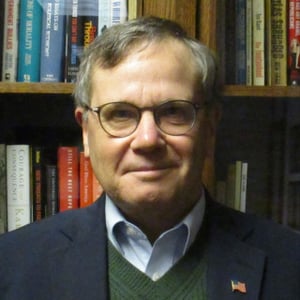
Senior Fellow in Constitutional Jurisprudence, Independence Institute
Professor Robert G. Natelson is a constitutional scholar and author.
Rob’s constitutional scholarship has been cited repeatedly by justices and parties at the U.S. Supreme Court—as well as by federal appeals courts, and at least 18 state supreme courts.
Rob’s research into the Constitution’s original meaning has carried him to libraries throughout the United States and in Britain, including four months at Oxford University. His books and articles span many different parts of the Constitution, including groundbreaking studies of the Necessary and Proper Clause, the Indian Commerce Clause, federalism, Founding-Era interpretation, regulation of elections, and the amendment process of Article V. He created the first-ever online bibliography for 18th century materials used in constitutional research. He is a contributing author to the Encyclopedia of the Supreme Court of the United States (on Magna Carta). He contributed eight essays to the third edition of the Heritage Guide to the Constitution: five on the amendment procedure and one each on the Guarantee Clause, the Postal Clause, and the Recess Appointments Clause.
U.S. Supreme Court justices have relied explicitly on Rob’s research in 41 citations in 13 separate cases.

Vice President, Edwin Meese III Institute for the Rule of Law, Advancing American Freedom
John G. Malcolm oversees Advancing American Freedom’s work to increase understanding of the Constitution and the rule of law as Vice President of the organization’s Edwin Meese III Institute for the Rule of Law. Malcolm brings to the challenge a wealth of legal expertise and experience in both the public and private sectors.
Prior to joining Advancing American Freedom in 2025, Malcolm was the Vice President of the Institute for Constitutional Government and the Director of the Meese Center for Legal and Judicial Studies at the Heritage Foundation. Prior to joining Heritage in 2012, Malcolm was general counsel at the U.S. Commission on International Religious Freedom, as well as a distinguished practitioner in residence at Pepperdine Law School. From 2004 to 2009, Malcolm was executive vice president and director of worldwide anti-piracy operations for the Motion Picture Association.
Malcolm served as a deputy assistant attorney general in the Department of Justice’s Criminal Division from 2001 to 2004, where he oversaw sections on computer crime and intellectual property, domestic security, child exploitation and obscenity, and special investigations. Immediately prior to that, he was a founding partner in the Atlanta law firm of Malcolm & Schroeder, LLP.
From 1990 to 1997, Malcolm was an assistant U.S. attorney in Atlanta, assigned to the fraud and public corruption section, and also an associate independent counsel, investigating fraud and abuse in the Department of Housing and Urban Development. He was honored with the Director’s Award for Superior Performance for his work in connection with the successful prosecution of Walter Leroy Moody Jr., who assassinated an 11th Circuit judge and the head of the Savannah chapter of the NAACP.
A graduate of Harvard Law School and Columbia College, Malcolm began his career as a law clerk to a federal district court judge and a federal appellate court judge, and as an associate at the Atlanta-based law firm of Sutherland, Asbill & Brennan (new Eversheds Sutherland).
Malcolm, who resides in Washington, D.C., serves on the Board of Trustees of the Washington National Opera and is a Senate-confirmed member of the Board of Directors of the Legal Services Corporation, the largest funder of civil legal aid in the United States.
John F. Scarpa Chair in Catholic Legal Studies, Villanova University School of Law
Patrick McKinley Brennan joined the Villanova faculty in 2004 as the inaugural holder of the John F. Scarpa Chair in Catholic Legal Studies and now also serves as the Associate Dean for Academic Affairs. Professor Brennan works in the tradition of reflection on natural law and natural rights to examine a wide range of questions in jurisprudence and public law, including sovereignty, equality authority, the rule of law, constitutionalism, the family, and punishment and forgiveness, as well as topics in administrative law, constitutional law, federal jurisdiction, religious liberty and the liberty of the church, and criminal law. He regularly teaches constitutional law, administrative law, federal courts, criminal law, and a range of courses in jurisprudence.
Professor Brennan has published some fifty articles and book chapters. His most recent book, The Sovereignty of the Good: An Essay on Law, Authority, and the Church, will be published by Oxford University Press. He has also published By Nature Equal: The Anatomy of a Western Insight (Princeton University Press 1999) (with John Coons), Civilizing Authority: Society, State, and Church (Lexington 2007), and the Vocation of the Child (W.B. Eeerdmans 2008). He currently co-authoring Christian Perspectives on Law: Cases and Materials (with William Brewbaker III).
Before coming to Villanova, Professor Brennan was for eight years a faculty member in the Sandra Day O'Connor College of Law at Arizona State University, where for several years he served as Associate Dean for Faculty Affairs and Research and later as Vice Dean. Previously, Brennan was associated with major law firms in Washington, D.C., and San Francisco. Brennan clerked for Hon. John T. Noonan, Jr., on the U.S. Court of Appeals for the Ninth Circuit, in San Francisco.
A native of California, Brennan earned his J.D. from Berkeley Law (Boalt Hall), U.C. Berkeley, where he won many awards and was elected to the Order of the Coif. Prior to law school, Brennan earned an M.A. and pursued doctoral course work in philosophy at the University of Toronto, taking many of his courses there in the Pontifical Institute of Mediaeval Studies. He was graduated from Yale College with a B.A. in philosophy with honors and distinction in the major. At Yale, Brennan also studied Greek and Latin and won the Jacob Cooper Prize for the best essay on ancient Greek philosophy.
Professor Brennan has been a visiting professor in the Boston College Law School and a senior research fellow at the Robbins Collection of Canon and Civil Law at U.C. Berkeley. Brennan has also been a scholar in residence at the Columbus School of Law, The Catholic University of America, where he delivered the Brendan F. Brown Lecture in 2006. Brennan has delivered the Yves Simon Lecture at the University of Chicago and the Donald M. Giannella Lecture at Villanova University.
At Villanova, Brennan organizes the annual John F. Scarpa Conference on Law, Politics, and Culture. Keynote speakers have included the late Avery Cardinal Dulles, S.J., Justice Antonin Scalia, Martha Nussbaum, Joseph Vining, John Ferejohn, and William Eskridge. Other speakers have included Jeremy Waldron, Geoff Stone, Jesse Choper, Lee Bollinger, Roderick Hills, Jane Schacter, Kristin Hickman, Jefferson Powell, Amy Uelmen, Richard Garnett, Kent Greenawalt, and many others.
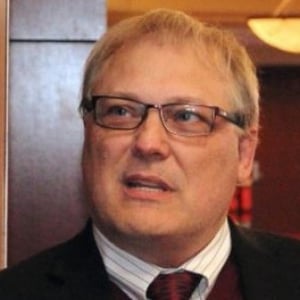
Senior Education Policy Fellow, Kansas Policy Institute
David Dorsey is a Senior Education Policy Fellow with Kansas Policy Institute. His primary emphasis in this role is combining his time spent as a public school teacher with policy research on issues related to K-12 finance, student achievement, and education reform. Prior to joining KPI, David spent 20 years as a public school elementary teacher, seventeen in Kansas. He was both a classroom and specialty teacher and served in various leadership capacities in those schools. David finished his teaching career with eight years as a mathematics interventionist at Lowman Hill Elementary School in Topeka USD 501 working with at-risk students. Prior to teaching he spent 15 years working in state and local government in Arizona as a city administrator, research analyst for the Phoenix Police Department, and a program evaluator for the largest state agency in Arizona. He earned a Master of Arts in Political Science from Arizona State University with an emphasis on research and statistical analysis in 1980. David was born and raised in South Dakota and received a BS degree from the University of South Dakota in 1977 with a major in Political Science and a minor in Economics.
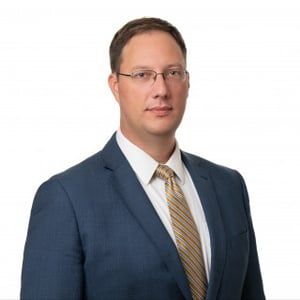
Laurence H. Silberman Chair in Constitutional Governance, American Enterprise Institute; Executive Director, Antonin Scalia Law School’s C. Boyden Gray Center for the Study of the Administrative State
Adam J. White is the Laurence H. Silberman Chair in Constitutional Governance and senior fellow at the American Enterprise Institute, where he focuses on the Supreme Court and the administrative state. He also directs the Antonin Scalia Law School’s C. Boyden Gray Center for the Study of the Administrative State.
He writes on regulation and constitutional government for a variety of publications. He practiced law in Washington, D.C., after clerking for the D.C. Circuit's Judge David Sentelle. He also has been chairman of the ABA's Administrative Law Section.
In 2021, he served on the Presidential Commission on the Supreme Court of the United States, where he criticized “Court packing” and other efforts to restructure the Supreme Court.
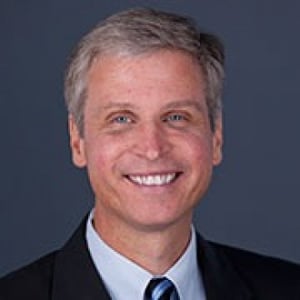
Frank Edwards Tyler Distinguished Professor of Law, University of Kansas School of Law
Stephen Ware is the author of five books, over 60 law review articles and many other publications. His writings have been cited by the Supreme Court of the United States and in at least 37 other cases. Ware teaches and writes on:
each with an international or comparative dimension. An experienced teacher of lawyering skills exercises in which student groups negotiate, mediate, and draft legal documents, Professor Ware takes this approach in his Transnational Dispute Resolution course, which he has customized for universities from Beijing to Istanbul to Kansas.
Ware has testified before both houses of the U.S. Congress, several state legislatures and, as an expert witness, in court. He is a frequent guest lecturer and speaker at academic and professional conferences—having given such presentations throughout the U.S. and in several other countries. He has appeared on numerous television and radio stations and been quoted in The New York Times, Wall Street Journal, USA Today, Financial Times, National Law Journal and many other news outlets. He is an elected member of the American Law Institute (ALI) and has served, at various times in his career, on the editorial board of the Journal of Legal Education and as an arbitrator for the American Arbitration Association.
Ware was named as the Frank Edwards Tyler Distinguished Professor of Law in 2019.

Counting to Two Thirds: How Close Are We to a Convention for Proposing Amendments to the Constitution?
Robert G. Natelson
Note from the Editor: This article argues that, in aggregating applications from states to call...
Trump, Gorsuch, & The Administrative State
Topeka Lawyers Chapter
Topeka, KSTopics
Round Two for Obamacare: Sebelius Redux
Rarely do challengers of landmark legislation get a second bite at the apple in constitutional...
Topics
Further Reflections on the Oil States Case after Oral Argument Before the Supreme Court
On November 27, 2017, the United States Supreme Court heard oral argument in Oil States...
Morally Innocent, Legally Guilty: The Case for Mens Rea Reform
John G. Malcolm
Note from the Editor: This article discusses the concept of mens rea, argues that too...
Carousel of Kansas Education Finance Lawsuits Continues in the Gannon Case
Patrick McKinley Brennan, David Dorsey
The citizens of the Sunflower State are holding their collective breaths, waiting for the Kansas...
Docket Watch: Carousel of Kansas Education Finance Lawsuits Continues in the Gannon Case
The citizens of the Sunflower State are holding their collective breaths, waiting for the Kansas...
2017 CLE Roundup
Topeka, KansasCivil Forfeiture in Kansas: Prosecuting Suspects or Cash?
Topeka, Kansas'Forced Arbitration' Giving Corporations a 'License to Steal' from Consumers and Employees?