
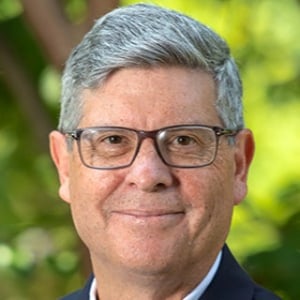
E. Claiborne Robins Distinguished Chair in Law, University of Richmond School of Law
Professor Kurt Lash teaches and writes about constitutional law. Founder and director of the Richmond Program on the American Constitution, Professor Lash has published widely on the subjects of constitutional law and constitutional history, including The Fourteenth Amendment and the Privileges or Immunities of American Citizenship (Cambridge University Press, 2014), The Lost History of the Ninth Amendment (Oxford University Press, 2009), and The American First Amendment in the Twenty-first Century: Cases and Materials(with William W. Van Alstyne) (5th ed., Foundation Press, 2014). An elected member of the American Law Institute, Professor Lash’s work has appeared in numerous legal journals including the Stanford Law Journal, Georgetown Law Journal, Virginia Law Review, andNotre Dame Law Review. He has been a visiting professor at Northwestern University School of Law and is the former director of the University of Illinois College of Law Program in Constitutional Theory, History, and Law.

Professor of Law, Notre Dame Law School
Professor Derek Muller is a nationally-recognized scholar in the field of election law. His research focuses on the role of states in the administration of federal elections, the constitutional contours of voting rights and election administration, the limits of judicial power in the domain of elections, and the Electoral College.
He has published more than two dozen academic works, and his op-eds have appeared in the New York Times, the Los Angeles Times, and the Wall Street Journal. He has testified before Congress, and he is a contributor at the Election Law Blog. He is a co-author on a Federal Courts casebook published by Carolina Academic Press. He is also the co-reporter on a new Restatement of the Law, Election Litigation, an effort led by the American Law Institute.
Professor Muller teaches Election Law, Civil Procedure, and Evidence.

Professor of Law, Antonin Scalia Law School, George Mason University
ILYA SOMIN is Professor of Law at George Mason University and the B. Kenneth Simon Chair in Constitutional Studies at the Cato Institute. His research focuses on constitutional law, property law, democratic theory, federalism, and migration rights. He is the author of Free to Move: Foot Voting, Migration, and Political Freedom (Oxford University Press, revised and expanded edition, 2022), Democracy and Political Ignorance: Why Smaller Government is Smarter (Stanford University Press, revised and expanded second edition, 2016), and The Grasping Hand: Kelo v. City of New London and the Limits of Eminent Domain (University of Chicago Press, 2015, rev. paperback ed., 2016), coauthor of A Conspiracy Against Obamacare: The Volokh Conspiracy and the Health Care Case (Palgrave Macmillan, 2013), and co-editor of Eminent Domain: A Comparative Perspective (Cambridge University Press, 2017). Democracy and Political Ignorance has been translated into Italian and Japanese.
Somin’s work has appeared in numerous scholarly journals, including the Yale Law Journal, Stanford Law Review, Northwestern University Law Review, Georgetown Law Journal, Critical Review, and others. Somin has also published articles in a variety of popular press outlets, including the New York Times, Washington Post, Wall Street Journal, Los Angeles Times, CNN, NBC, The Atlantic, USA Today, Boston Globe, US News and World Report, South China Morning Post, National Law Journal and Reason. He has been quoted or interviewed by the New York Times, Washington Post, Wall Street Journal, Time, Newsweek, The Economist, the Christian Science Monitor, the Financial Times, The Guardian, the Associated Press, CBS, MSNBC, NPR, BBC, Reuters, the Canadian Broadcasting Corporation, the Australian Broadcasting Corporation, Radio Free Europe/Radio Liberty, Al Jazeera, and the Voice of America, among other media.
Somin’s writings have been cited in decisions by the United States Supreme Court, multiple state supreme courts and lower federal courts, and the Supreme Court of Israel. He is co-counsel for the plaintiffs in VOS Selections, Inc. v. Trump, a case challenging the constitutionality of President Trump’s “Liberation Day” tariffs. Somin has testified on the use of drones for targeted killing in the War on Terror before the US Senate Judiciary Subcommittee on the Constitution, Civil Rights, and Human Rights. In 2009, he testified on property rights issues at the United States Senate Judiciary Committee confirmation hearings for Supreme Court Justice Sonia Sotomayor. Somin writes regularly for the popular Volokh Conspiracy law and politics blog, now affiliated with Reason magazine (previously affiliated with the Washington Post from 2014 to 2017). From 2006 to 2013, he served as Co-Editor of the Supreme Court Economic Review, one of the country’s top-rated law and economics journals.
Somin has served as a visiting professor at the University of Pennsylvania Law School. He has also been a visiting professor or scholar at the Georgetown University Law Center, the University of Hamburg, Germany, the University of Torcuato Di Tella in Buenos Aires, Argentina, Uriel Reichman University in Israel, and Zhengzhou University in China. He is a University Affiliate of the Schar School of Policy and Government at George Mason University, and an affiliated faculty member of the George Mason University Institute for Immigration Research. Before joining the faculty at George Mason, Somin was the John M. Olin Fellow in Law at Northwestern University Law School in 2002-2003. In 2001-2002, he clerked for the Hon. Judge Jerry E. Smith of the U.S. Court of Appeals for the Fifth Circuit. Professor Somin earned his B.A., Summa Cum Laude, at Amherst College, M.A. in Political Science from Harvard University, and J.D. from Yale Law School.

Harry Kalven, Jr. Professor of Law & Faculty Director, Constitutional Law Institute, University of Chicago Law School
William Baude is a Professor of Law and the Faculty Director of the Constitutional Law Institute at the University of Chicago Law School, where he teaches federal courts, constitutional law, and conflict of laws. His current research interests include different aspects of the Fourteenth Amendment (particularly both Section One and Section Three) and the nature of judicial discretion.
Among his other activities Baude is: the co-editor of two textbooks, The Constitution of the United States and Hart & Wechsler's Federal Courts in the Federal System; an Affiliated Scholar at the Center for the Study of Constitutional Originalism; a founding member of the Academic Freedom Alliance; a member of the American Law Institute; an occasional blogger at The Volokh Conspiracy; and a podcaster on Divided Argument. He also recently served on the Presidential Commission on the Supreme Court of the United States.
Professor Baude received his BS in Mathematics from the University of Chicago and his JD from Yale Law School. He then clerked for then-Judge Michael McConnell on the United States Court of Appeals, and Chief Justice John Roberts on the United States Supreme Court. Before joining the Chicago faculty, he was a fellow at the Stanford Constitutional Law Center, and a lawyer in Washington, DC.

John S. Battle Professor of Law, University of Virginia School of Law
Julia D. Mahoney teaches courses in property, government finance, constitutional law and nonprofit organizations. A graduate of Yale Law School, she joined the University of Virginia faculty as an associate professor in 1999 and is now John S. Battle Professor of Law. She has also taught at the University of Southern California Law School and the University of Chicago Law School, and before entering the legal academy, practiced law at the New York firm Wachtell, Lipton, Rosen & Katz. Her scholarly articles include works on land preservation, eminent domain, health care reform and property rights in human biological materials.

Richard and Frances Mallery Professor of Law and Faculty Director, Constitutional Law Center, Stanford Law School
Michael W. McConnell is the Richard and Frances Mallery Professor and Faculty Director of the Constitutional Law Center at Stanford Law School, and a Senior Fellow at the Hoover Institution. From 2002 to 2009, he served as a Circuit Judge on the United States Court of Appeals for the Tenth Circuit. He was nominated by President George W. Bush, a Republican, and confirmed by a Democratic Senate by unanimous consent. McConnell has previously held chaired professorships at the University of Chicago and the University of Utah, and visiting professorships at Harvard and NYU. He teaches courses on constitutional law, constitutional history, First Amendment, and interpretive theory. He has published widely in the fields of constitutional law and theory, especially church and state, equal protection, and separation of powers. His book, “The President Who Would Not Be King: Executive Power Under the Constitution,” was published by Princeton University Press in 2020, based on the Tanner Lectures in Human Values, which he delivered at Princeton in 2019. His latest book, co-authored with Nathan Chapman, “Agreeing to Disagree: How the Establishment Clause Protects Religious Diversity and Freedom of Conscience,” was published by Oxford University Press in mid-2023. McConnell has argued sixteen cases in the United States Supreme Court, most recently Carney v. Adams (2020). defending a provision of the Delaware Constitution requiring political balance on that state’s courts. More recently, he was co-counsel in Gonzalez v. Google. He earned his B.A. from Michigan State University and his J.D. from the University of Chicago, and has received honorary degrees from Notre Dame University and Michigan State. He served as law clerk to Supreme Court Justice William J. Brennan, Jr. and D.C. Circuit Chief Judge J. Skelly Wright. He has been Assistant General Counsel of the Office of Management & Budget, Assistant to the Solicitor General of the Department of Justice, and a member of the President’s Intelligence Oversight Board. He is Senior of Counsel to the law firm Wilson, Sonsini, Goodrich & Rosati, and is co-chair of Meta’s Oversight Review Board.
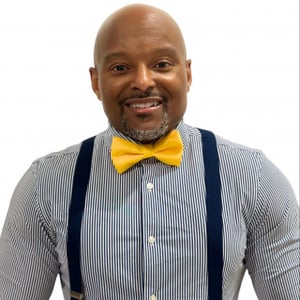
Dean, Delaware Law School
Dean Todd Clark is Dean of Delaware Law School. He joins Delaware Law School after serving as Associate Dean of Academic Affairs & Professor of Law at St. Thomas University Benjamin L. Crump College of Law. Before St. Thomas, Dean Clark was Professor of Law at North Carolina Central University School of Law where he taught Business Associations, Contracts, Corporate Justice, Employment Discrimination, and Hip Hop, Law & Justice. At NCCU, he also served on the ABA Compliance team and was the Director of the Justice in the Practice of Law Certificate Program and the Director of New Initiatives. Before that, Dean Clark was a Lecturer in Law at West Virginia University College of Law, where he taught Legal Writing and Appellate Advocacy.
Dean Clark earned his B.A. in Political Science from Wittenberg University, his M.B.A. from West Virginia University College of Business and Economics, and his J.D. from University of Pittsburgh School of Law. Following his graduation from law school, he practiced law at the law firm of Steptoe & Johnson.
His scholarship includes a book, CORPORATE JUSTICE (Carolina Academic Press), as well as numerous law review articles and other scholarship on social justice, corporate discretion, and sexual harassment. He is currently working on a casebook on Sports Law.

Founder, Chairman, and CEO, Louis D. Brandeis Center for Human Rights Under Law
Hon. Kenneth L. Marcus is an internationally recognized expert in civil and human rights, as well as a leader in the fight against anti-Semitism on and off university campuses. He is the Founder, Chairman, and CEO of The Louis D. Brandeis Center for Human Rights Under Law, the leading civil rights legal organization fighting against anti-Semitism. The New York Times has called him “The Man Who Helped Redefine Campus Anti-Semitism.” He been described, in that paper, as “the single most effective and respected force” to combat anti-Semitism.
During his public service career, Marcus served as Assistant U.S. Secretary of Education for Civil Rights; Staff Director at the U.S. Commission on Civil Rights; and General Deputy Assistant U.S. Secretary of Housing and Urban Development for Fair Housing and Equal Opportunity.
In academia, he serves as Professorial Lecturer in Law at George Washington University. He formerly held the Lillie and Nathan Ackerman Chair in Equality and Justice in America at the City University of New York’s Bernard M. Baruch College, served as Visiting Research Professor of Political Science at Yeshiva University, and was a Board of Visitors member George Mason University and Distinguished Senior Fellow at that university’s law school. He is a member of the editorial board of the Journal of Contemporary Antisemitism and previously served as Associate Editor of the Journal for the Study of Anti-Semitism.
Marcus is also author of The Definition of Anti-Semitism (Oxford University Press) and Jewish Identity and Civil Rights in America (Cambridge University Press). He has published widely in academic journals as well as in more popular venues such as The Wall Street Journal, Washington Post, Newsweek, USA Today, and Politico. He is a graduate of Williams College and the University of California at Berkeley School of Law.
Earlier in his career, he was a litigation partner in two major law firms, where he conducted complex commercial and constitutional litigation. He also serves as Chairman emeritus of the Executive Committee of the Federalist Society for Law & Public Policy Civil Rights Practice Group.
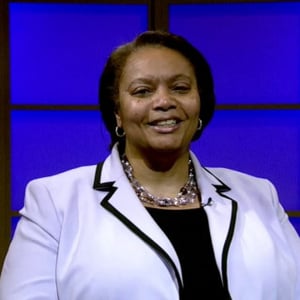
Deputy Officer for Civil Rights and Civil Liberties & Director of Equal Employment Opportunity and Diversity, Department of Homeland Security (DHS)
Veronica Venture is the Deputy Officer for Civil Rights and Civil Liberties and the Director of Equal Employment Opportunity and Diversity at the Department of Homeland Security (DHS). In this role, Ms. Venture leads the Department's EEO and diversity programs and initiatives. She also served as the Acting Officer for Civil Rights and Civil Liberties from January 2017 to September 2017.
Ms. Venture has brought significant expertise and experience with the federal EEO process and diversity management to DHS—particularly as it relates to law enforcement, having served at the Federal Bureau of Investigation for nine years before joining the Department. Prior to that, she began her career as a law clerk with the Equal Employment Opportunity Commission, and subsequently held positions as a Trial Attorney, Administrative Judge, Acting Area Director of the San Diego Field Office, Special Assistant to the Chair, and finally, as EEO Director. Ms. Venture received her BA from Connecticut College, and her JD from the Washington College of Law at American University in Washington, DC.

Senior Legal Fellow, Edwin Meese III Institute for the Rule of Law, Advancing American Freedom
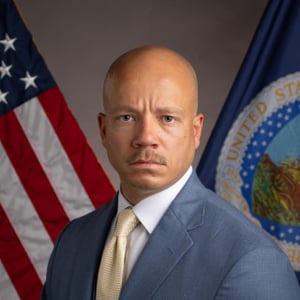
Assistant Secretary for Civil Rights, U.S. Department of Agriculture
Devon Westhill is the Assistant Secretary for Civil Rights at the U.S. Department of Agriculture. The U.S. Senate confirmed President Donald Trump’s nomination of Westhill on October 7, 2025.
Westhill returns to the USDA where he previously headed the civil rights office as Deputy Assistant Secretary in President Trump’s first term. His previous government appointments also include service at the U.S. Department of Labor, liaison to the Administrative Conference of the U.S., and liaison to the White House Initiative on Historically Black Colleges and Universities. Prior to returning to government service, Westhill was President and General Counsel of a nonprofit civil rights organization.
Westhill has testified on civil rights matters before Congress, federal agencies, and as an expert witness in federal court. He has spoken hundreds of times at college campuses, conferences, and on radio and TV programs, and he is frequently quoted in print publications, and his writing has appeared in numerous national outlets. A U.S. Navy veteran, Westhill earned his BA from the University of North Carolina at Chapel Hill and his JD from the University of Florida.

Thomas M. Siebel Senior Fellow, The Hoover Institution, Stanford University; Gary T. Schwartz Distinguished Professor of Law Emeritus, UCLA School of Law
Eugene Volokh is the Thomas M. Siebel Senior Fellow at the Hoover Institution (Stanford), as well as the Gary T. Schwartz Distinguished Professor of Law Emeritus and Distinguished Research Professor at UCLA School of Law. He recently retired from teaching at UCLA, after 30 years there, and is now focusing on research.
Volokh is the author of the textbooks The First Amendment and Related Statutes (8th ed. 2023), and Academic Legal Writing (5th ed. 2016), as well as over 100 academic law journal articles, mostly on First Amendment law. He is a member of The American Law Institute; the editor-in-chief of the Journal of Free Speech Law; and the creator and coauthor of The Volokh Conspiracy, a leading legal blog founded in 2002 (hosted at the Washington Post from 2014 to 2017 and now at Reason Magazine).
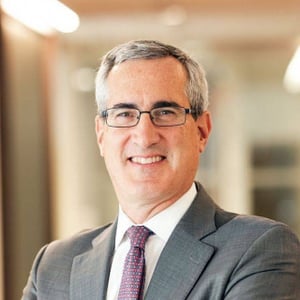
Partner and Chair, Appellate & Supreme Court Practice, Jenner & Block LLP
Ian Gershengorn is chair of Jenner & Block’s Appellate and Supreme Court Practice and is one of the nation’s premier Supreme Court and appellate advocates, having argued before the U.S. Supreme Court 16 times. Before rejoining the firm in 2017, he served in the Office of the Solicitor General during the Obama Administration, first as Principal Deputy Solicitor General and then as Acting Solicitor General of the United States. While there, Ian supervised the federal government’s briefing in a range of high-profile cases, including those involving the Affordable Care Act, Dodd-Frank, election law and redistricting, immigration reform, Title VII, and same-sex marriage.
Since leaving the federal government and returning to Jenner & Block, Ian has advised clients on a range of complex litigation and strategy problems, and he has appeared regularly in the state and federal appellate courts, representing arguing on behalf of corporate clients such as the Recording Industry Association of America, FirstTrust Bank, General Dynamics, Tsubaki, and Charter Communications.
Ian currently teaches a seminar on The Roberts Court at Harvard Law School.
Ian graduated Harvard College, magna cum laude, and Harvard Law School, magna cum laude, where he was a member of the Harvard Law Review. He served as a law clerk for Judge Amalya L. Kearse of the U.S. Court of Appeals for the Second Circuit and then for Associate Justice John Paul Stevens of the U.S. Supreme Court.
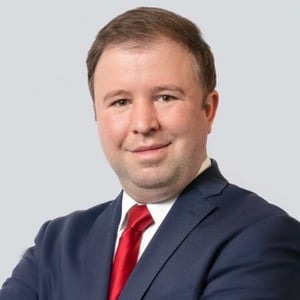
Partner, Wiley Rein LLP
Tom has over 15 years’ experience in private practice and public service at the federal and state levels representing clients in high-stakes appellate and regulatory litigation matters. Tom has argued appeals in the Fourth, Fifth, Ninth, D.C. and Federal Circuits, and the West Virginia Supreme Court of Appeals.
Prior to joining Wiley, Tom was the General Counsel at the Federal Communications Commission (FCC), where he served as the agency’s chief legal officer and briefed dozens of appeals – personally arguing two – in the federal courts of appeals in constitutional and administrative law challenges to the FCC’s orders. Tom managed a team of over 70 attorneys and staff and provided consultation and advice on a wide range of practice areas relating to the FCC’s work, including administrative law, appellate and trial litigation, bankruptcy, ethics, fiscal law, fraud, labor and employment, and public records requests. He has spent his career advising clients on all stages of federal agency rulemaking, adjudication, and litigation, in fields ranging from communications to environmental law to securities to labor and employment. He frequently speaks and writes on legal issues and his articles have appeared in the Wall Street Journal, Washington Post, National Review, Forbes, and Newark Star-Ledger.
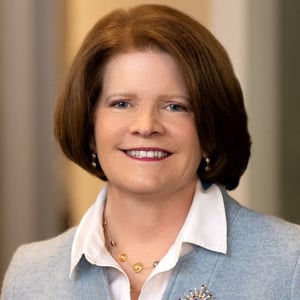
Partner, Antitrust and Competition, Wilson Sonsini Goodrich & Rosati
Maureen Ohlhausen is a partner in the Washington, D.C., office of Wilson Sonsini Goodrich & Rosati, where she advises industry-leading clients on complex antitrust and litigation matters, with a focus on high-profile cases. Sought after for her depth of experience on antitrust and Federal Trade Commission (FTC)-related issues, Maureen is known for her relationships with officials in the U.S. and abroad.
After finishing law school and clerking at the U.S. Court of Appeals for the D.C. Circuit, Maureen joined the FTC in 1997. She held a series of roles at the agency over the next 12 years, rising to the position of Director of the FTC Office of Policy Planning, where she led the agency’s work on e-commerce and headed the FTC’s Internet Access Task Force, which produced an influential report analyzing competition and consumer protection legal issues in the broadband and internet sectors. She then went into private practice at a leading telecommunications law firm, where she headed the FTC practice group.
In 2012, Maureen was confirmed by the Senate as a Commissioner of the FTC and was appointed Acting Chairman in January 2017, a role she held until May 2018. As Acting Chairman, Maureen directed all aspects of the agency’s antitrust work, including merger review, conduct enforcement, and all consumer protection enforcement, with an emphasis on privacy and technology issues. Under her leadership, the FTC won several influential merger challenges in court and reached a number of key digital privacy settlements.
To date, Maureen is the only FTC Commissioner to have received the Robert Pitofsky Lifetime Achievement Award in recognition of her contributions to the FTC.
Following the end of her term at the FTC, and immediately prior to joining Wilson Sonsini, Maureen was chair of the global antitrust and competition practice at Baker Botts, based in that firm’s Washington, D.C., office.
A recognized thought leader, Maureen is a frequent author and speaker, and is often quoted by leading print and broadcast media on antitrust, FTC, and privacy and data security matters. She has published dozens of articles on antitrust, privacy, intellectual property, regulation, FTC litigation, telecommunications, and international law issues in prestigious publications. During her tenure at the FTC and in private practice, she testified more than two dozen times before Congress, including before the Senate Commerce Committee and the House Energy and Commerce Antitrust Sub-Committee. She also testified before the Antitrust Modernization Commission.
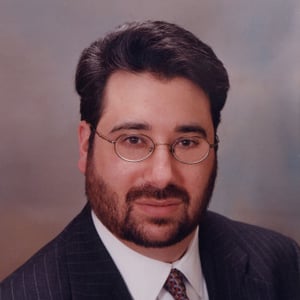
President, Phoenix Center for Advanced Legal and Economic Public Policy Studies
Lawrence J. Spiwak is President of the Phoenix Center for Advanced Legal & Economic Public Policy Studies, a non-profit 501(c)(3) organization that studies broad public-policy issues related to governance, social and economic conditions, with a particular emphasis on the law and economics of the digital age. Mr. Spiwak is a prolific scholar whose work is frequently cited by policymakers, major news media and academic journals around the world, and is in the top 1.3%of authors downloaded on the Social Science Research Network. Mr. Spiwak currently serves as the co-chair of the Federal Communications Bar Association’s (FCBA) committee responsible for overseeing the FEDERAL COMMUNICATIONS LAW JOURNAL and is a member of the program committee of the Telecommunications Policy Research Conference (“TPRC”). Mr. Spiwak is also the recipient of the FCBA’s Distinguished Service Award. Prior to joining the Phoenix Center, Mr. Spiwak was a Senior Attorney with the Competition Division in the FCC’s Office of General Counsel from 1994-1998. While in college, Mr. Spiwak was accepted into the Presidential Stay-In School program where he was responsible for delivering classified and confidential material among senior White House and Reagan Administration officials and received a full FBI security clearance. Mr. Spiwak received his B.A. with Special Honors from the George Washington University and his J.D. from the Benjamin N. Cardozo School of Law. Mr. Spiwak is a member in good standing of the bars of New York, Massachusetts, the District of Columbia, and the U.S. Court of Appeals for the D.C. Circuit.
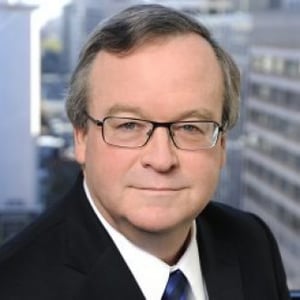
Partner, Harris, Wiltshire & Grannis LLP
Christopher Wright has been the head of the appellate group at Harris, Wiltshire & Grannis LLP since 2001. He has represented clients in a wide variety of appellate cases, with an emphasis on cases involving complex technical issues and cutting-edge constitutional law and administrative law issues.
Prior to joining the firm, Mr. Wright served as General Counsel of the Federal Communications Commission, in the Office of the Solicitor General of the United States, and as a law clerk to Chief Justice Warren E. Burger and Ninth Circuit Judge Joseph T. Sneed. Mr. Wright is one of very few lawyers who has argued more than 25 cases in both the Supreme Court and the D.C. Circuit, and he has argued in many of the other federal circuits as well.
Mr. Wright is a former President of the Edward Coke Appellate Inn of Court, the nation’s preeminent association of appellate lawyers, and a former President of the Federal Communications Bar Association, the nation’s preeminent association of communications lawyers. Mr. Wright has taught the D.C. Bar CLE courses on oral advocacy and judicial review of agency decisions on multiple occasions. He is ranked as an outstanding appellate lawyer and/or communications lawyer by numerous publications. Mr. Wright was elected to the Order of the Coif at Stanford Law School and Phi Beta Kappa at Harvard College.
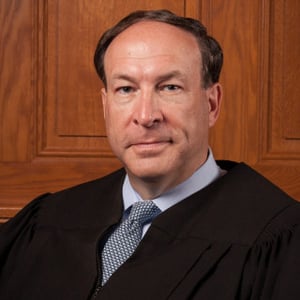
Judge, United States Court of Appeals, Seventh Circuit
Michael B. Brennan was confirmed and sworn in as a Circuit Judge for the U.S. Court of Appeals for the Seventh Circuit in May 2018.
He previously worked as a partner in the Milwaukee law firm of Gass Weber Mullins LLC, where he tried cases and handled appeals in federal and state courts, as a judge on the Milwaukee County Circuit, where he presided over a variety of criminal and civil calendars, and as an assistant district attorney in the Milwaukee County District Attorney’s office.
Brennan’s undergraduate degree is from the University of Notre Dame, and his law degree from Northwestern University School of Law, where he was an editor on the law review and the moot court champion. He served as a law clerk on the U.S. District Court for the Eastern District of Wisconsin and the U.S. Court of Appeals for the Seventh Circuit.
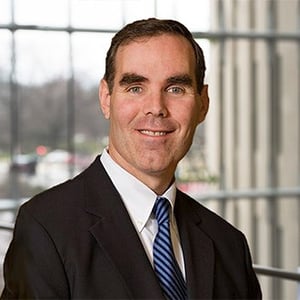
Partner, Jones Day
Eric Dreiband represents clients in investigations, litigation, and counseling in civil rights, employment discrimination, whistleblower, wage and hour, and other matters. Prior to rejoining Jones Day in 2021, Eric served as the 18th Assistant Attorney General for the Civil Rights Division at the U.S. Department of Justice (DOJ), and he also served as the 12th General Counsel of the U.S. Equal Employment Opportunity Commission (EEOC).
Under Eric's leadership, DOJ's Civil Rights Division set enforcement records for prosecutions of law enforcement officers and sexual harassment, religious liberty, and servicemember cases; charged the highest number of hate crimes cases in decades; significantly expanded resources for human trafficking prosecutions; prosecuted race and other forms of illegal discrimination in education, employment, housing, lending, and voting; reached historic disability rights settlements with several states; opposed unlawful COVID-19-related civil liberty restrictions; and successfully litigated to protect the Constitutional and civil rights of all people in the United States.
As EEOC general counsel, Eric led the Commission's litigation of the federal employment antidiscrimination laws, and he issued the Regional Attorneys' Manual, which established the policies of EEOC's litigation program. Eric also served at the Department of Labor (DOL) as deputy wage and hour administrator and directed DOL's enforcement of the Fair Labor Standards Act (FLSA), the Family and Medical Leave Act (FMLA), and other laws.
From 1997 to 2000, Eric served as a prosecutor in the Office of Independent Counsel Kenneth W. Starr.
Eric has spoken and written extensively about civil rights and other employment laws, and he has testified about these subjects before committees of the U.S. House of Representatives and the U.S. Senate.
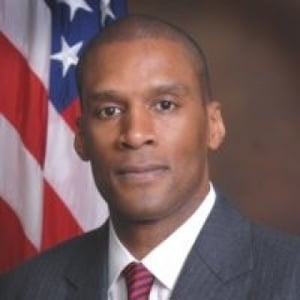
Former Director, Office of Federal Contract Compliance Programs, U.S. Department of Labo
Shareholder, Ogletree Deakins
Brian Hayes is a Shareholder in the Washington, DC office of Ogletree Deakins and serves as Co-Chair of the law firm’s Traditional Labor Practice Group. Immediately prior to his joining the firm he was a Member of the National Labor Relations Board. He was confirmed to that post by the United States Senate in 2010 and his term ended in December of 2012. He is currently a Member of the U.S. Chamber of Commerce Litigation Advisory Committee and was recently named Chairman of the U.S. Chamber’s Subcommittee on the National Labor Relations Act. He also serves as editor in chief for The Practical NLRB Advisor.
Prior to his nomination and confirmation to the NLRB, Brian Hayes served as the Republican Labor Policy Director for the United States Senate Committee on Health, Education, Labor and Pensions. He came to Capitol Hill in 2005 after nearly thirty years in private legal practice devoted exclusively to representing management clients in labor and employment matters. While in private practice he represented clients in scores of cases before NLRB, state and federal courts, and a host of other federal agencies such as the EEOC, OFCCP, OSHA, the Department of Labor and their state counterparts. He also has had extensive private practice experience representing employers in collective-bargaining negotiations, arbitrations and other forms of dispute resolution. In addition to his private practice, he served as Counsel to the Employers’ Association of the Northeast, editor-in-chief and contributor to The Health Care Labor Manual, and also served on the adjunct faculty of Western New England Law School teaching courses in labor law, and collective-bargaining, arbitration and employment litigation. Before entering private practice he began his legal career at the NLRB working as a law clerk to the Chief Administrative Law Judge while in law school and subsequently as counsel to the then-Board Chairman. He is a graduate of Boston College and of Georgetown University Law School.
Chief Counsel, U.S. Chamber Litigation Center
Steven P. Lehotsky has significant experience developing and executing litigation strategies to help businesses and trade associations address their most important regulatory and public-policy challenges.
Before founding Lehotsky Keller LLP, Mr. Lehotsky directed the litigation strategy of the U.S. Chamber of Commerce, the world's leading business federation, where he worked from 2013-2021. While at the U.S. Chamber’s Litigation Center, he served as chief litigation counsel. Mr. Lehotsky led the Chamber's efforts to bring successful challenges to federal, state, and local regulations of business. He also directed the U.S. Chamber's efforts to defend pro-growth regulatory reforms. Mr. Lehotsky also led and implemented the U.S. Chamber’s strategies for filing hundreds of amicus curiae briefs in the U.S. Supreme Court, federal appellate and district courts, and state supreme and appellate courts. He is a frequent speaker at events and conferences on litigation and regulatory trends.
Mr. Lehotsky previously was an attorney at WilmerHale LLP in both the Washington D.C. and Boston offices, where he practiced government and regulatory litigation, appellate litigation, and counseling on constitutional, statutory, and regulatory issues for clients across a wide variety of industry sectors. He also previously practiced as a commercial litigator at Goodwin Procter LLP in Boston.
In addition, Mr. Lehotsky was an Attorney-Adviser in the Office of Legal Counsel of the U.S. Department of Justice from 2006-2009, advising the White House and executive departments and agencies on constitutional and statutory issues relating to national security, immigration, international sanctions under the International Emergency Economic Powers Act and other programs, the response to the 2008 financial crisis, pandemic influenza and infectious-disease mitigation, cybersecurity, and congressional investigations, among many other subjects.
Mr. Lehotsky was a law clerk for Justice Antonin Scalia of the Supreme Court of the United States and Chief Judge Douglas H. Ginsburg of the U.S. Court of Appeals for the District of Columbia Circuit.
Chief Legal and Government Affairs Officer, BrightStar Care
Cheryl M. Stanton is Chief Legal and Government Affairs Officer at BrightStar Care. Prior to joining BrightStar Care, she served as Administrator of the Department of Labor’s Wage and Hour Division. She was sworn in as WHD’s Administrator by U.S. Secretary of Labor Alexander Acosta on April 29, 2019.
Stanton brought a wealth of experience to WHD, most recently having served as the Executive Director of the South Carolina Department of Employment and Workforce. Under her leadership, South Carolina’s jobless rate dropped to its lowest point in at least 50 years. During that time period, South Carolina’s workforce system helped place over 500,000 South Carolinians into jobs. Stanton also partnered with her colleague at the Department of Corrections to create a job re-entry program for ex-offenders, receiving national accolades. She also oversaw two major information technology modernization projects that improved customer service and increased efficiencies for employees.
Stanton served as the White House’s principal legal liaison to the DOL under President George W. Bush. She is a graduate of Williams College, and earned her law degree from the University of Chicago Law School.

Professor of Law, Michigan State University (currently serving as FCC General Counsel)
Professor Candeub joined the MSU Law faculty in fall 2004. He is also a Fellow with MSU's Institute of Public Utilities. Prior to joining MSU, he served as an advisor at the Federal Communications Commission (FCC). From 1998 to 2000, Professor Candeub was a litigation associate for the Washington D.C. firm of Jones, Day, Reavis & Pogue and also has served as a corporate associate with Cleary, Gottlieb, Steen & Hamilton, also in Washington, D.C. Immediately following law school, he clerked for Chief Judge J. Clifford Wallace, U.S. Court of Appeals for the Ninth Circuit. While in law school, Professor Candeub was an articles editor for the University of Pennsylvania Law Review.
Professor Candeub's scholarly interests focus on the law and regulation of communications, internet, technology. His numerous law review articles and scholarly papers have placed him at the center of legal and policy controversies, and he often writes for popular outlets such as the Wall Street Journal and US News. Federal courts, including the U.S. Supreme Court, have cited and relied upon his work.
He joined the Trump administration in 2019 as Deputy Assistant Secretary of Commerce for Telecommunications and Information and assumed the role of Acting Assistant Secretary. He later joined the Department of Justice as Deputy Associate Attorney General.
Professor Candeub is a senior fellow at the D.C.-based Center of Renewing America.
Senior Vice President, Public Knowledge
Harold Feld is the Senior Vice President for Public Knowledge, one of the nation’s premier consumer advocacy organizations working at the intersection of copyright, telecommunications and the Internet. Feld is a highly regarded thought leader in the areas of telecommunications and digital consumer protection, and author of The Case for the Digital Platform Act: Market Structure and Regulation of Digital Platforms. He was previously Senior Vice President at the Media Access Project (MAP), a public interest law firm, where he advanced competition policies in media, telecommunications and technology. Prior to joining MAP, Feld was an associate at Covington & Burling, and clerked for the DC Court of Appeals.

Partner, HWG LLP
Patricia Paoletta is a partner with the law firm of HWG LLP, where she specializes in telecommunications, trade and technology policy. Ms. Paoletta provides advice on regulatory, trade and legislative policy to clients before the FCC, Congress and the Administration. Her clients include providers of content, cloud, mobile broadband, VoIP, international telecommunications, small cells, cognitive radio, public safety and homeland security solutions. She serves on Advisory Boards for several entities engaged in information services, communications and technology.
Ms. Paoletta has accrued considerable experience with telecommunications trade and policy in the public sector. From 1990 to 1995, she was senior advisor to the International Bureau Chief and Office Director at the Federal Communications Commission. In the mid 1990s, Ms. Paoletta served as Director of Telecommunications Trade Policy in the Office of the U.S. Trade Representative, Executive Office of the President, where she worked on the WTO Information Technology Agreement (ITA) and the Basic Telecommunications Agreement. After USTR, Ms. Paoletta served as Majority Counsel to the House Energy and Commerce Committee. She then moved to Level 3 Communications, as Vice President, Government Relations.
Ms. Paoletta is on the Steering Committee of the Transatlantic Roundtable on Telecommunications and Information Technology of the European Institute. She is a member of the USTR Alumni Association, Washington International Trade Association, the Federal Communications Bar Association (FCBA), and Women in Technology. Ms. Paoletta has served on the Board of Advisors for the Inter-American Dialogue's Latin America Telecom Advisor, Co-Chairman of the American Bar Association International Communications Committee, and as a member of the U.S. Chamber of Commerce's Technology Policy Committee.
Ms. Paoletta served as a delegate in 2012 to the ITU-R's Study Group 6 Working Party 6A Meeting and in 2009 and 2010 to the ITU-R's Study Group I Working Party IB Meetings; the 2009 meetings of CITEL (the Committee on International Telecommunications at the Organization of American States) PCC-II; the International Telecommunication Union (ITU) World Telecommunications Standards Assembly (2000); the ITU Internet Protocol Telephony Experts Group and the ITU World Telecommunications Policy Forum in 2001; as Chairman of the National Reliability and Interoperability Council (NRIC) Steering Committee (2000-2001); as Board Member for the Voice on the Net Coalition (2001); as Co-Chairman of the FCBA's Annual Seminar Committee (2009-2011); as a member of the FCBA's Ad Hoc Speakers Committee (2006-2007); as Co-Chairman for the FCBA International Practice Committee (2001-2002 and 2005-2006); and as a Co-Chairman of the FCBA Legislative Practice Committee (1999-2000).

Senior Counsel, Chairman Brendan Carr, Federal Communications Commission
Danielle rejoins Commissioner Carr’s office following a year in the private sector where she led on state and local government relations matters for a nationwide telecommunications infrastructure provider. Before her first stint with Commissioner Carr’s office in 2021, Danielle was an Associate Attorney in the Washington, D.C., office of Wilkinson Barker Knauer. After attending the University of Virginia for her undergraduate degree, Danielle earned her J.D. cum laude from the Catholic University of America’s Columbus School of Law where she was Associate Editor of the Catholic University Law Review. She also earned a certificate from the Columbus School of Law’s Law & Technology Institute.

Courthouse Steps Preview: Trump v. Anderson
Kurt T. Lash, Derek T. Muller, Ilya Somin
On February 8, 2024, the Supreme Court will hear Oral Argument in Trump v. Anderson....
Topics
2023 National Lawyers Convention: Insurrection & the 14th Amendment
Editor's Note: On December 19th, 2023 the Colorado Supreme Court ruled that Former President Donald Trump...
Topics
2023 National Lawyers Convention: Insurrection & the 14th Amendment
Editor's Note: On December 19th, 2023 the Colorado Supreme Court ruled that Former President Donald...
Insurrection and the 14th Amendment
William Baude, Julia D. Mahoney, Michael W. McConnell
Updated 12/20/2023: The Colorado Supreme Court recently decided Former President Donald Trump in ineligible to appear...
DEI in the Executive Branch
Todd Clark, Kenneth L. Marcus, Veronica Venture, Hans A. Von Spakovsky, Devon Westhill
Join us on Tuesday, September 19th, at 12:00 PM ETfor a special lunch panel sponsored...
Major Questions Doctrine and the Tech and Telecom Sectors After West Virginia v. EPA
TeleforumLitigation Update: Volokh et al v. James
Eugene Volokh
In early December, Prof. Eugene Volokh, Rumble Canada, and Locals Technology filed a complaint in...
Regulatory Elephants in Statutory Mouse Holes?
2022 National Lawyers Convention
Washington, DCTopics
The Biden Administration’s Post-Dobbs, Post-Roe Response
On June 24, 2022, in a landmark decision in Dobbs v. Jackson Women’s Health Organization,...
Spectrum Policy in the 5G Era
Teleforum