
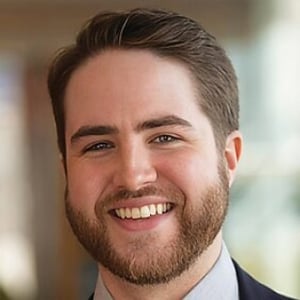
Nicholas Anthony is a policy analyst at the Cato Institute’s Center for Monetary and Financial Alternatives, a fellow at the Human Rights Foundation (HRF), and a member of the Economic Inclusion Group’s Advisory Board. Anthony’s research covers a wide range of topics within the field of monetary and financial economics, including central bank digital currency (CBDC), financial privacy, cryptocurrency, and the use of money in society. Anthony is the author of Digital Currency or Digital Control? Decoding CBDC and the Future of Money and his work has been published in the Wall Street Journal, MarketWatch, Business Insider, and numerous other outlets. Anthony has testified before Congress and maintains the HRF CBDC Tracker, which documents CBDC development and civil liberties concerns around the world.
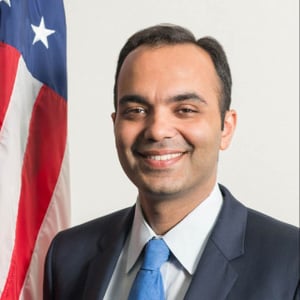
Director, Consumer Financial Protection Bureau
Rohit Chopra is Director of the Consumer Financial Protection Bureau. The CFPB is a unit of the Federal Reserve System charged with protecting families and honest businesses from illegal practices by financial institutions, and ensuring that markets for consumer financial products and services are fair, transparent, and competitive. As Director, Chopra is also a member of the Board of Directors of the Federal Deposit Insurance Corporation and the Financial Stability Oversight Council.
In 2018, Chopra was unanimously confirmed by the U.S. Senate as a Commissioner on the Federal Trade Commission, where he served until assuming office as CFPB Director. During his tenure at the FTC, he successfully worked to strengthen sanctions against repeat offenders, to reverse the agency’s reliance on no-money, no-fault settlements in fraud cases, and to halt abuses of small businesses. He also led efforts to revitalize dormant authorities, such as those to protect the Made in USA label and to promote competition.
The Director previously served at the CFPB from 2010 to 2015. In 2011, the Secretary of the Treasury designated him as the agency’s student loan ombudsman, where he led the Bureau’s efforts on student lending issues. Prior to his government service, Chopra worked at McKinsey & Company, the global management consultancy, where he worked in the financial services, health care, and consumer technology sectors.
Chopra holds a BA from Harvard University and an MBA from the Wharton School at the University of Pennsylvania.
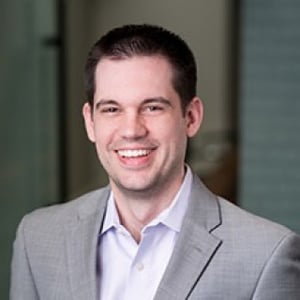
Executive Director, Consumers’ Research
Will Hild is the Executive Director of Consumers’ Research. Will has a decade of non-profit, legal and public policy experience. Prior to joining CR, Will served as the Deputy Director of the Regulatory Transparency Project. Before that, he worked at the Philanthropy Roundtable as the Director of External Affairs for the Culture of Freedom Initiative, and as the Chief Operating Officer of that Initiative when it grew to become a separate organization. He helped co-found the public interest law firm, Cause of Action, and served as the firm’s acting communications director for nearly a year.
Will received his J.D. from Georgetown University Law Center, and a B.A. in Political Science from the University of Florida. He is licensed to practice law in the Commonwealth of Virginia.
Will resides in Bethesda, MD, with his wife Cheryl, a practicing OB/GYN, and their son Liam.

Columnist, Washington Post
Megan McArdle is a Washington Post columnist and the author of "The Up Side of Down: Why Failing Well Is the Key to Success."

George Mason University Foundation Professor of Law, Antonin Scalia Law School, George Mason University
TODD J. ZYWICKI is George Mason University Foundation Professor of Law at Antonin Scalia Law School at George Mason University and Research Fellow of the George Mason Law and Economics Center. During the Fall 2023 semester he served as the Visiting Scholar in Conservative Thought and Policy for the Bruce Benson Center for the Study of Western Civilization at the University of Colorado-Boulder. From 2020-2021 he was Chair of the Consumer Financial Protection Bureau Taskforce on Federal Consumer Financial Law. In 2021 he was inducted to the American College of Consumer Financial Services Lawyers. He is also a Senior Fellow of the F.A. Hayek Program for the Advanced Study of Politics, Philosophy, and Economics at George Mason University and a former Senior Fellow of the Cato Institute. From 2015-2017 he was Executive Director of the George Mason Law and Economics Center. He served as Co-Editor of the Supreme Court Economic Review from 2006-2017. From 2003-2004, Professor Zywicki served as the Director of the Office of Policy Planning at the Federal Trade Commission. He has also taught at Vanderbilt University Law School, Georgetown University Law Center, Boston College Law School, Mississippi College School of Law, and China University of Political Science and Law.
Professor Zywicki clerked for Judge Jerry E. Smith of the U.S. Court of Appeals for the Fifth Circuit and worked as an associate at Alston & Bird in Atlanta, Georgia, where he practiced bankruptcy and commercial law. He received his J.D. from the University of Virginia, where he was executive editor of the Virginia Tax Review and John M. Olin Scholar in Law and Economics. Professor Zywicki also received an M.A. in Economics from Clemson University and an A.B. cum Laude with high honors in his major from Dartmouth College.
Professor Zywicki is also a Lone Mountain Fellow of the Property and Environment Research Center, a Fellow of the International Centre for Economic Research in Turin, Italy, and a former Senior Fellow of the Goldwater Institute. During the Fall 2008 Semester Professor Zywicki was the Searle Fellow of the George Mason University School of Law and was a 2008-09 W. Glenn Campbell and Rita Ricardo-Campbell National Fellow and the Arch W. Shaw National Fellow at the Hoover Institution on War, Revolution and Peace. He has lectured and consulted with government officials around the world, including Iceland, Italy, Japan, and Guatemala. In 2006 Professor Zywicki served as a Member of the United States Department of Justice Study Group on “Identifying Fraud, Abuse and Errors in the United States Bankruptcy System.”
Professor Zywicki is the author of more than 130 articles in leading law reviews and peer-reviewed economics journals. He is one of the Top 10 most-cited law professors in the field of Commercial Law and one of the Top 25 law professors on Twitter as measured by engagement levels. He is one of the Top 50 Most Downloaded Law Authors at the Social Science Research Network. He has testified multiple times before Congress on issues of consumer bankruptcy law and consumer credit and is a frequent commentator on legal issues in the print and broadcast media, including the Wall Street Journal, New York Times, The Washington Post, The Washington Times, Nightline, The Newshour with Jim Lehrer, Neil Cavuto Show, Fox & Friends, Smerconish, Fox News @ Night with Shannon Bream, Fox Business, CNN, CNBC, Bloomberg News, BBC, The Diane Rehm Show, Lou Dobbs Show, Jerry Doyle Show, and The Laura Ingraham Show.
Professor Zywicki is former Chairman and a current member of the Board of Directors of the Competitive Enterprise Institute, and is a member of the Board of Directors of the Institute for Humane Studies, Bill of Rights Institute, the Executive Committee for the Federalist Society's Financial Institutions and E-Commerce Practice Group, the Board of Trustees of the Foundation for Research on Economics and the Environment. He formerly served on the Governing Board and the Advisory Council for the Financial Services Research Program at George Washington University School of Business. He is currently the Chair of the Academic Advisory Council for the following organizations: The Bill of Rights Institute, the film “We the People in IMAX,” and the McCormick-Tribune Foundation “Freedom Museum” in Chicago, Illinois. He is a member of the Board of Visitors of Ralston College and was a member of the Board of Trustees of Yorktown University. From 2005-2009 he served as an elected Alumni Trustee of the Dartmouth College Board of Trustees.
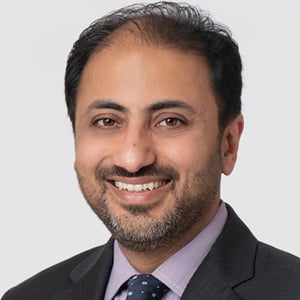
Senior Fellow, American Enterprise Institute
Sadanand Dhume writes about South Asian political economy, foreign policy, business, and society, with a focus on India and Pakistan. He is also a South Asia columnist for the Wall Street Journal. He has worked as a foreign correspondent for the Far Eastern Economic Review in India and Indonesia and was a Bernard Schwartz Fellow at the Asia Society in Washington, D.C. His political travelogue about the rise of radical Islam in Indonesia, My Friend the Fanatic: Travels with a Radical Islamist, has been published in four countries.
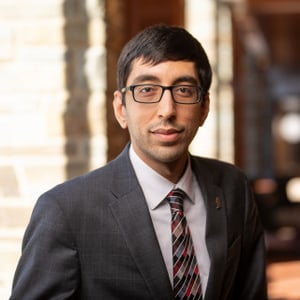
Judicial Law Clerk, U.S. District Court for the Southern District of Florida
Nitin is a recent graduate of Cornell Law School. Before his time in Ithaca, he majored in International Studies and Political Science at Johns Hopkins University and focused on power competition in South Asia during his graduate studies at the University of Oxford.
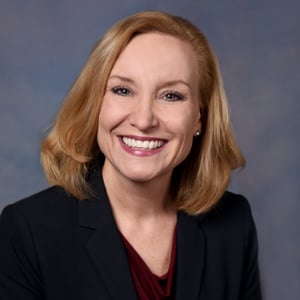
Judge, United States Court of Appeals, Sixth Circuit
The Honorable Joan L. Larsen is a judge of the United States Court of Appeals for the Sixth Circuit. She was nominated by the President on May 8, 2017 and confirmed by the Senate on November 1, 2017. Before her appointment to the federal bench, Judge Larsen served two terms as a Justice of the Michigan Supreme Court, where she was the court’s liaison to Michigan’s drug, sobriety, mental health and veteran’s courts.
Before becoming a judge, Judge Larsen was a faculty member at the University of Michigan Law School, where she was also Special Counsel to the Dean and received the L. Hart Wright Award for Excellence in Teaching. Judge Larsen's research and teaching interests included constitutional law, criminal procedure, statutory interpretation, and presidential power. Judge Larsen continues to assist the law school as the adviser to the Henry M. Campbell Moot Court Competition.
Judge Larsen began her legal career as a law clerk to the Hon. David B. Sentelle of the United States Court of Appeals for the D.C. Circuit and to Justice Antonin Scalia of the Supreme Court of the United States. Following her clerkships, she joined the law firm of Sidley Austin, where she was a member of the Constitutional, Criminal, and Civil Litigation Section. She later served as Deputy Assistant Attorney General in the United States Department of Justice, Office of Legal Counsel.
Judge Larsen graduated first in her class from Northwestern University School of Law, where she served as articles editor of the Northwestern University Law Review and earned the John Paul Stevens Award for Academic Excellence. She received her B.A., with highest honors, from the University of Northern Iowa.
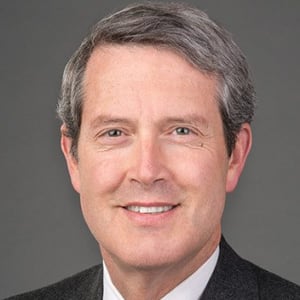
Chairman & Co-Founder, Cynosure Group
Randal Quarles is Chairman and co-founder of The Cynosure Group. Before founding Cynosure, Mr. Quarles was a long-time partner of the Carlyle Group, where he began the firm’s program of investments in the financial services industry during the 2008 financial crisis.
From October 2017 through October 2021, Mr. Quarles was Vice Chairman of the Federal Reserve System, serving as the system’s first Vice Chairman for Supervision, charged specifically with ensuring stability of the financial sector. He also served as the Chairman of the Financial Stability Board (“FSB”) from December 2018 until December 2021; a global body established after the Great Financial Crisis to coordinate international efforts to enhance financial stability. In both positions, he played a key role in crafting the US and international response to the economic and financial dislocations of COVID-19, successfully preventing widespread global disruption of the financial system. As FSB Chairman, he was a regular delegate to the finance ministers’ meetings of the G-7 and G20 Groups of nations and to the Summit meetings of the G20. As Fed Vice Chair, he was a permanent member of the Federal Open Market Committee, the body that sets monetary policy for the United States.
Earlier in his career, Mr. Quarles was Under Secretary of the U.S. Treasury, where he led the Department’s activities in financial sector and capital markets policy, including coordination of the President’s Working Group on Financial Markets.
Before serving as Under Secretary, Mr. Quarles was Assistant Secretary of the Treasury for International Affairs, where he had a key role in response to several international crises. Mr. Quarles was also the U.S. Executive Director of the International Monetary Fund, a member of the Air Transportation Stabilization Board, and board representative for the Pension Benefit Guaranty Corporation. In earlier public service, he was an integral member of the Treasury team in the George H. W. Bush Administration that developed the governmental response to the savings and loan crisis.
Between his tours of duty in public service, Mr. Quarles was a partner with the law firm of Davis Polk & Wardwell, working at various times in both the New York and London offices, where he was co-head of the firm’s financial institutions practice and advised on transactions that included a number of the largest financial sector mergers ever completed.
Mr. Quarles received an A.B. summa cum laude in philosophy and economics from Columbia in 1981 and a J.D. from the Yale Law School in 1984.
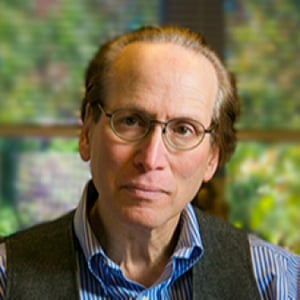
Duke University Law School, Stanley A. Star Distinguished Professor of Law & Business
Steven L. Schwarcz is the Stanley A. Star Distinguished Professor of Law & Business at Duke University and Founding Director of Duke’s interdisciplinary Global Capital Markets Center (now renamed the Global Financial Markets Center). His areas of research and scholarship include insolvency and bankruptcy law, international finance, capital markets, systemic risk, corporate governance, and commercial law. (Links to his scholarship are at http://law.duke.edu/fac/schwarcz/.) He holds a bachelor’s degree in aerospace engineering (summa cum laude) and a Juris Doctor from Columbia Law School. Prior to joining the Duke faculty, he was a partner at two of the world’s leading law firms and Visiting Lecturer at Yale Law School. He also helped to pioneer the field of asset securitization, and his book, Structured Finance, A Guide to the Principles of Asset Securitization (3d edition), is one of the most widely used texts in the field.
Professor Schwarcz has also been the Leverhulme Visiting Professor at the University of Oxford, Visiting Professor at the University of Geneva Faculty of Law, Lecturer in Law at Columbia Law School, Senior Fellow at The University of Melbourne Law School, Visiting Fellow at Ludwig-Maximilians-Universitat Munchen (LMU) Center for Advanced Studies, Guest Professor at Shanghai University of International Business and Economics, Distinguished Visiting Professor at University College London (UCL) Faculty of Laws, Distinguished Honorary Professor, University of Durham Law School, the MacCormick Fellow at The University of Edinburgh School of Law, the Liberty Fellow at the University of Leeds School of Law (scheduled for May-June 2020), and an adviser to the United Nations. He has given numerous endowed or distinguished public lectures, including at The University of Hong Kong, the University of Oxford (the Leverhulme Lectures 2010, available at http://www.law.ox.ac.uk/published/leverhulme2010.php), Georgetown University Law Center, National University of Singapore, University of Florence, Leiden University, Radboud University Nijmegen, Trinity College Dublin School of Law, and The National Assembly of the Republic of Korea. He has served as an expert at meetings of the World Economic Forum. He also has given numerous keynote speeches, including at annual conferences of the European Central Bank, the Corporate Law Teachers Association of Australia, New Zealand, and Asia-Pacific, the National Business Law Scholars Conference (at The University of Chicago Law School), Moody’s Corporation, and the Asian Securitisation Forum.
Additionally, Professor Schwarcz has testified before the U.S. Congress on topics including systemic risk, securitization, credit rating agencies, and financial regulation and has advised several U.S. and foreign governmental agencies on the financial crisis and shadow banking. His writings include Systemic Risk, 97 Georgetown Law Journal 193, the second most cited law review article of 2008; he also has been recognized as the world’s second most cited scholar, 2010-2014 and again 2013-2017, in commercial, contract, and bankruptcy law. He is also a Fellow of the American College of Bankruptcy, a Founding Member of the International Insolvency Institute, a Fellow of the American College of Commercial Finance Lawyers, Business Law Advisor to the American Bar Association Section on Business Law, a member of P.R.I.M.E. Finance’s Panel of Recognized International Market Experts in Finance, and Senior Fellow of The Centre for International Governance Innovation (CIGI).
George Mason University Foundation Professor of Law, Antonin Scalia Law School, George Mason University
TODD J. ZYWICKI is George Mason University Foundation Professor of Law at Antonin Scalia Law School at George Mason University and Research Fellow of the George Mason Law and Economics Center. During the Fall 2023 semester he served as the Visiting Scholar in Conservative Thought and Policy for the Bruce Benson Center for the Study of Western Civilization at the University of Colorado-Boulder. From 2020-2021 he was Chair of the Consumer Financial Protection Bureau Taskforce on Federal Consumer Financial Law. In 2021 he was inducted to the American College of Consumer Financial Services Lawyers. He is also a Senior Fellow of the F.A. Hayek Program for the Advanced Study of Politics, Philosophy, and Economics at George Mason University and a former Senior Fellow of the Cato Institute. From 2015-2017 he was Executive Director of the George Mason Law and Economics Center. He served as Co-Editor of the Supreme Court Economic Review from 2006-2017. From 2003-2004, Professor Zywicki served as the Director of the Office of Policy Planning at the Federal Trade Commission. He has also taught at Vanderbilt University Law School, Georgetown University Law Center, Boston College Law School, Mississippi College School of Law, and China University of Political Science and Law.
Professor Zywicki clerked for Judge Jerry E. Smith of the U.S. Court of Appeals for the Fifth Circuit and worked as an associate at Alston & Bird in Atlanta, Georgia, where he practiced bankruptcy and commercial law. He received his J.D. from the University of Virginia, where he was executive editor of the Virginia Tax Review and John M. Olin Scholar in Law and Economics. Professor Zywicki also received an M.A. in Economics from Clemson University and an A.B. cum Laude with high honors in his major from Dartmouth College.
Professor Zywicki is also a Lone Mountain Fellow of the Property and Environment Research Center, a Fellow of the International Centre for Economic Research in Turin, Italy, and a former Senior Fellow of the Goldwater Institute. During the Fall 2008 Semester Professor Zywicki was the Searle Fellow of the George Mason University School of Law and was a 2008-09 W. Glenn Campbell and Rita Ricardo-Campbell National Fellow and the Arch W. Shaw National Fellow at the Hoover Institution on War, Revolution and Peace. He has lectured and consulted with government officials around the world, including Iceland, Italy, Japan, and Guatemala. In 2006 Professor Zywicki served as a Member of the United States Department of Justice Study Group on “Identifying Fraud, Abuse and Errors in the United States Bankruptcy System.”
Professor Zywicki is the author of more than 130 articles in leading law reviews and peer-reviewed economics journals. He is one of the Top 10 most-cited law professors in the field of Commercial Law and one of the Top 25 law professors on Twitter as measured by engagement levels. He is one of the Top 50 Most Downloaded Law Authors at the Social Science Research Network. He has testified multiple times before Congress on issues of consumer bankruptcy law and consumer credit and is a frequent commentator on legal issues in the print and broadcast media, including the Wall Street Journal, New York Times, The Washington Post, The Washington Times, Nightline, The Newshour with Jim Lehrer, Neil Cavuto Show, Fox & Friends, Smerconish, Fox News @ Night with Shannon Bream, Fox Business, CNN, CNBC, Bloomberg News, BBC, The Diane Rehm Show, Lou Dobbs Show, Jerry Doyle Show, and The Laura Ingraham Show.
Professor Zywicki is former Chairman and a current member of the Board of Directors of the Competitive Enterprise Institute, and is a member of the Board of Directors of the Institute for Humane Studies, Bill of Rights Institute, the Executive Committee for the Federalist Society's Financial Institutions and E-Commerce Practice Group, the Board of Trustees of the Foundation for Research on Economics and the Environment. He formerly served on the Governing Board and the Advisory Council for the Financial Services Research Program at George Washington University School of Business. He is currently the Chair of the Academic Advisory Council for the following organizations: The Bill of Rights Institute, the film “We the People in IMAX,” and the McCormick-Tribune Foundation “Freedom Museum” in Chicago, Illinois. He is a member of the Board of Visitors of Ralston College and was a member of the Board of Trustees of Yorktown University. From 2005-2009 he served as an elected Alumni Trustee of the Dartmouth College Board of Trustees.
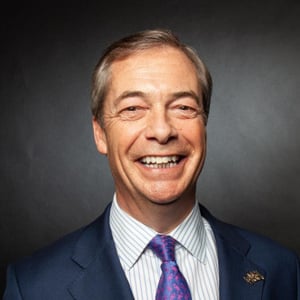
Former Member of the European Parliament, South East England Constituency

Professor Emeritus of Law, Antonin Scalia Law School, George Mason University
Jeremy A. Rabkin is a Professor Emeritus of Law at the Antonin Scalia Law School, George Mason University. Before joining the faculty in June 2007, he was for over two decades a professor in the Department of Government at Cornell University. Professor Rabkin serves on the board of directors of the Center for Individual Rights, a public interest law firm based in Washington, D.C. Previously he was a board member of the U.S. Institute of Peace and the board of academic advisors of the American Enterprise Institute.
Professor Rabkin’s books include Law Without Nations? (Princeton University Press, 2005). He authored “If You Need a Friend, Don’t Call a Cosmopolitan,” a chapter in Varieties of Sovereignty and Citizenship (Sigal R. Ben-Porath & Rogers M. Smith eds., University of Pennsylvania Press, 2012). His articles have appeared in major law reviews and political science journals and his journalistic contributions in a range of magazines and newspapers, including the Washington Post and the Wall Street Journal.
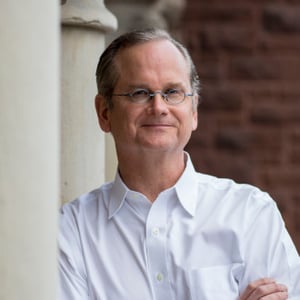
Roy L. Furman Professor of Law and Leadership, Harvard Law School
Lawrence Lessig is the Roy L. Furman Professor of Law and Leadership at Harvard Law School. Prior to returning to Harvard, he taught at Stanford Law School, where he founded the Center for Internet and Society, and at the University of Chicago. He clerked for Judge Richard Posner on the 7th Circuit Court of Appeals and Justice Antonin Scalia on the United States Supreme Court.
Lessig is a founding board member of Creative Commons and serves on the Scientific Board of AXA Research Fund. A member of the American Academy of Arts and Sciences and the American Philosophical Association, he has received numerous awards including a Webby, the Free Software Foundation's Freedom Award, Scientific American 50 Award, and Fastcase 50 Award.
Cited by The New Yorker as “the most important thinker on intellectual property in the Internet era,” Lessig has focused much of his career on law and technology, especially as it affects copyright. His current work addresses “institutional corruption”—relationships which, while legal, weaken public trust in an institution—especially as that affects democracy.
His books include: Fidelity & Constraint: How the Supreme Court Has Read the American Constitution (2019), America, Compromised (2018), Republic, Lost v2 (2015), Republic, Lost: How Money Corrupts Congress—and a Plan to Stop It (2011), Remix: Making Art and Commerce Thrive in the Hybrid Economy (2008), Code v2 (2006), The Future of Ideas (2001), and Code and Other Laws of Cyberspace (1999).
Lessig holds a BA in economics and a BS in management from the University of Pennsylvania, an MA in philosophy from Cambridge University, and a JD from Yale.

Judge, United States Court of Appeals, District of Columbia Circuit
Judge Rao was appointed to the United States Court of Appeals for the District of Columbia Circuit in March 2019. She graduated from Yale College in 1995 and the University of Chicago Law School in 1999. Following graduation, she served as a law clerk to Judge J. Harvie Wilkinson III of the U.S. Court of Appeals for the Fourth Circuit and, in the 2001 October Term, as law clerk to Justice Clarence Thomas of the U.S. Supreme Court. Between her clerkships, Judge Rao served as counsel for nominations and constitutional law to the U.S. Senate Committee on the Judiciary. In 2002, she joined the international arbitration group of Clifford Chance LLP in London, England. From 2005-2006, she served as Special Assistant and Associate White House Counsel to President George W. Bush. From 2006 to 2017, Judge Rao was a professor at the Antonin Scalia Law School at George Mason University, where she taught constitutional law, legislation and statutory interpretation, and the history and foundations of the administrative state. In 2014, she founded the Center for the Study of the Administrative State, a non-profit Center that promotes academic scholarship and public policy debates about administrative law. In July 2017, she was appointed to serve as the Administrator of the Office of Information and Regulatory Affairs in the Office of Management and Budget. She served in this position until her appointment to the D.C. Circuit.

Antonin Scalia Professor of Law, Harvard Law School
Stephen E. Sachs is the Antonin Scalia Professor of Law at Harvard Law School, where he teaches civil procedure, conflict of laws, and seminars on constitutional law. His research focuses on the law and theory of constitutional interpretation, the jurisdiction of state and federal courts, the history of procedure and private law, and the role of the general common law in the U.S. legal system.
Sachs has authored numerous articles, essays, and book chapters. He is an elected member of the American Law Institute, an adviser to the ALI’s project on the Restatement of the Law (Third), Conflict of Laws, a former member of the Judicial Conference’s Advisory Committee on Appellate Rules, and a founding member of the Academic Freedom Alliance.
In 2020, Sachs received the Federalist Society’s Joseph Story Award, which recognizes a young academic who has demonstrated excellence in legal scholarship, a commitment to teaching, a concern for students, and who has made a significant public impact in a manner that advances the rule of law in a free society.
Sachs previously taught at Duke University School of Law and as a visiting professor at the University of Chicago Law School. Before entering academia, he practiced in the Washington, D.C., litigation group of Mayer Brown LLP, and he clerked for Chief Justice John G. Roberts Jr. as well as for Judge Stephen F. Williams of the U.S. Court of Appeals for the D.C. Circuit.
Sachs received his J.D. from Yale Law School, where he was executive editor of the Yale Law Journal and served both as executive editor and articles editor of the Yale Law & Policy Review. A Rhodes Scholar, he graduated from Oxford University with a first-class BA (Hons) degree in philosophy, politics, and economics. He received his A.B. degree summa cum laude in history from Harvard University, earning the Sophia Freund Prize.
Sachs is a licensed attorney in Massachusetts and the District of Columbia, and he is authorized to practice before the D.C. Circuit, the Second Circuit, the Seventh Circuit, and the Supreme Court of the United States.
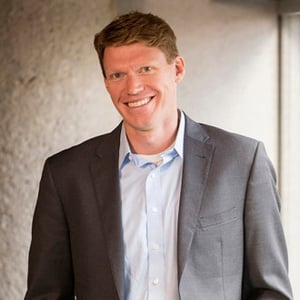
Professor of Law, Vanderbilt Law School
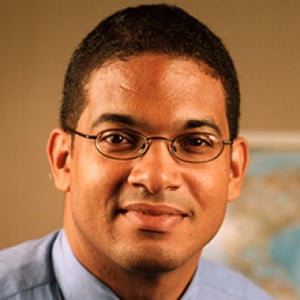
Benjamin Mazur Summer Research Professor of Law Affiliated Faculty, Ford Motor Company Center for Global Citizenship, Northwestern University School of Law
Jide Nzelibe joined Northwestern's faculty as an assistant professor in 2004 became a full Professor in 2008. He served as the Bigelow Teaching Fellow and Lecturer in Law at the University of Chicago before joining Northwestern Law. In addition to his JD from Yale Law School, he also holds an MPA in international relations from Princeton University, where he was awarded a fellowship from the Woodrow Wilson Foundation and a pre-doctoral fellowship from the Ford Foundation. His research and teaching interests include international trade, foreign relations law, public and private international law and contracts.
Professor Emeritus of Law, Antonin Scalia Law School, George Mason University
Jeremy A. Rabkin is a Professor Emeritus of Law at the Antonin Scalia Law School, George Mason University. Before joining the faculty in June 2007, he was for over two decades a professor in the Department of Government at Cornell University. Professor Rabkin serves on the board of directors of the Center for Individual Rights, a public interest law firm based in Washington, D.C. Previously he was a board member of the U.S. Institute of Peace and the board of academic advisors of the American Enterprise Institute.
Professor Rabkin’s books include Law Without Nations? (Princeton University Press, 2005). He authored “If You Need a Friend, Don’t Call a Cosmopolitan,” a chapter in Varieties of Sovereignty and Citizenship (Sigal R. Ben-Porath & Rogers M. Smith eds., University of Pennsylvania Press, 2012). His articles have appeared in major law reviews and political science journals and his journalistic contributions in a range of magazines and newspapers, including the Washington Post and the Wall Street Journal.
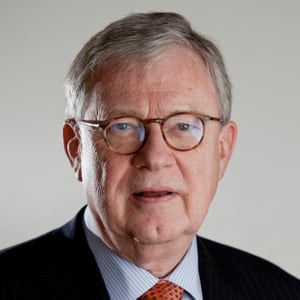
Senior Political Analyst, Washington Examiner
Michael Barone is a Senior Political Analyst for the Washington Examiner, where he writes a twice-weekly column and contributes to their Beltway Confidential blog. He is also a frequent contributor during Fox News Channel's election coverage.

Frozen Out: Debanking Practice and Policy in the New Administration
Nicholas Anthony, Rohit Chopra, Will Hild, Megan McArdle, Todd J. Zywicki
Financial institutions have faced growing scrutiny for debanking customers, with no explanation. While debanking is sometimes legally necessary...
US-India Relations: An Important but Ambiguous Partnership
Sadanand Dhume, Nitin R. Nainani
In June, Indian Prime Minister Narendra Modi completed a highly-publicized visit to Washington that included...
Central Bank Digital Currencies: A New Tool for Government Control?
Joan Larsen, Randal K. Quarles, Steven L. Schwarcz, Todd J. Zywicki
Central Bank Digital Currencies (CBDC) are the subject of global debate. While proponents see CBDC...
World Politics After Brexit: A Conversation with Nigel Farage
Nigel Farage, Jeremy A. Rabkin
Nigel Farage has been campaigning for Britain’s withdrawal from the European Union since 1999, when...
Luncheon Debate: Resolved: The Electoral College Should Be Abrogated
Lawrence Lessig, Neomi Rao, Stephen E. Sachs
On January 3-4, 2020, the Federalist Society hosted its 22nd annual Faculty Conference at the...
Trump's Emergency Tariffs: Court Says Legal, But Are They Constitutional?
Timothy Meyer, Jide Okechuku Nzelibe, Jeremy A. Rabkin
In late March, the Court of International Trade (a U.S. Article III court) upheld the...
Tariffs: Where Does the President Get His Power? [POLICYbrief]
Michael Barone
Article I, Section 8 of the U.S. Constitution grants Congress the power "To regulate Commerce...