
Judge, United States Court of Appeals, Eleventh Circuit
Britt C. Grant is a judge on the U.S. Court of Appeals for the Eleventh Circuit. Judge Grant was appointed to the federal bench in August 2018 after serving as a Justice on the Supreme Court of Georgia. Prior to her judicial appointment, she served as the Solicitor General of Georgia and practiced in the Washington, D.C. office of Kirkland & Ellis. Upon graduation from law school, Judge Grant served as a law clerk to then-Judge Brett M. Kavanaugh of the U.S. Court of Appeals for the District of Columbia Circuit. She earned her J.D., with distinction, from Stanford Law School, where she was the Co-Founder of the Stanford National Security and the Law Society, and the President of the Stanford Law chapter of the Federalist Society. Before enrolling in law school, Judge Grant served in The White House in a variety of domestic policy roles as well as on the staff of Congressman Nathan Deal. Judge Grant earned her B.A., summa cum laude, from Wake Forest University, where she was inducted into Phi Beta Kappa. She now lives in Atlanta, Georgia with her husband and three children.
Founder and Executive Director, Israel Law and Liberty Forum
President, France Law and Liberty Circle
President, Brazil Law and Liberty Society; Teaching Fellow, The Catholic University of America
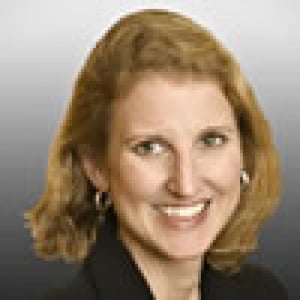
President, American Constitution Society for Law and Policy
Caroline Fredrickson joined ACS in 2009 and serves as president. She oversees the group and provides a steady hand of leadership to the nation’s leading progressive legal organization.
During her tenure, Caroline has helped grow ACS, which now has more than 40 lawyer chapters across the country, student chapters in nearly every law school in the United States, and thousands of members throughout the nation. She is an eloquent spokesperson for ACS and the progressive movement on issues such as civil and human rights, judicial nominations and the importance of the courts in America, marriage equality, voting rights, the role of money in politics, labor law, anti-discrimination efforts, and so much more.
She has been widely published on a wide range of legal and constitutional issues and is a frequent guest on television and radio shows, including a notable and well-covered appearance on Fox News’ The O’Reilly Factor in 2012 defending the constitutionality of the Affordable Care Act.
Before joining ACS, Caroline served as the director of the ACLU’s Washington legislative office and as general counsel and legal director of NARAL Pro-Choice America. In addition, Caroline was chief of staff to Sen. Maria Cantwell and deputy chief of staff to then-Senate Democratic Leader Tom Daschle. During the Clinton administration, she served as special assistant to the president for legislative affairs.
Caroline graduated summa cum laude from Yale University with a Bachelor of Arts in Russian and East European Studies in 1986 and from Columbia University School of Law with a J.D. in 1992. In law school, she was a Harlan Fiske Stone scholar, served on the Columbia Law Review and co-founded the Columbia Journal of Gender and Law. Following law school she clerked for James L. Oakes of the United States Court of Appeals for the Second Circuit. She currently is a member of Law Students for Reproductive Justice's Advisory Board.
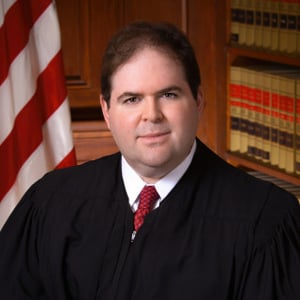
Judge, United States Court of Appeals, Eleventh Circuit
On November 19, 2019, Judge Robert J. Luck was appointed to the United States Court of Appeals for the Eleventh Circuit by President Donald Trump. Prior to serving on the federal bench, he was appointed to the Florida Supreme Court by Governor Ron DeSantis on January 14, 2019. He previously served on the Third District Court of Appeal in Miami after his appointment there by Governor Rick Scott in March 2017.
Earlier, Judge Luck served on the Eleventh Judicial Circuit Court of Florida from September 2013 to March 2017. He presided in the Criminal, Civil, and Appellate Divisions. Judge Luck, in his years as a trial court judge, tried seventy jury trials, and heard dozens of appeals from the county court and municipal agencies. Judge Luck was appointed to the circuit court in 2013 and was elected by the voters of Miami-Dade County to retain his seat in 2016.
Prior to his service on the bench, Judge Luck was an Assistant United States Attorney for the Southern District of Florida. In his years as a federal prosecutor, he was assigned to the Appeals, Major Crimes, and Economic Crimes Sections of the U.S. Attorney’s Office. Judge Luck tried nineteen jury trials before the federal district court and argued three appeals to the United States Court of Appeals for the Eleventh Circuit. In his final year in the Office, he was a Deputy Chief in the Major Crimes Section.
Earlier in his career, Judge Luck was a legislative correspondent for two United States Senators, a law clerk and staff attorney to Circuit Judge Edward E. Carnes on the United States Court of Appeals for the Eleventh Circuit, and a part of the Greenberg Traurig firm’s appellate section. Judge Luck received his Juris Doctor from the University of Florida Levin College of Law magna cum laude and was asked to join the Order of the Coif. Judge Luck also served as Editor-in-Chief of the Florida Law Review. Judge Luck received his Bachelor of Arts in Economics from the University of Florida with highest honors.
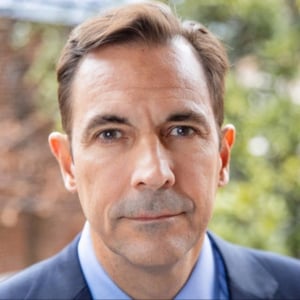
Partner, Schaerr-Jaffe
Mark Paoletta represents clients in connection with government investigations, with an emphasis on congressional investigations and hearings. He also counsels clients on how to successfully navigate legislative and regulatory issues before the government. Mr. Paoletta served in senior positions in the Legislative and Executive Branches for more than eighteen years, and he brings that experience to effectively help his clients.
In private practice, Mr. Paoletta has successfully represented many Fortune 500 companies in congressional investigations, including companies in the following areas: pharmaceutical and healthcare; telecommunications and media; privacy and technology; hedge funds and banking; energy; defense contracting and services; and education. He has represented government officials in high-profile inquiries, including a Governor, a Mayor, and a senior White House official.
Mr. Paoletta served for a decade as Chief Counsel for Oversight and Investigations for the Committee on Energy and Commerce in the U.S. House of Representatives. During his tenure, Mr. Paoletta managed nearly 200 investigative hearings, many of which involved high-profile issues and investigating some of the largest U.S. corporations. Many of those investigations led to substantial revisions to federal law, regulations and public awareness on significant issues of the day.
Mr. Paoletta most recently served as General Counsel for the Office of Management & Budget in the Executive Office of the President during the Trump Administration. As General Counsel to what many consider the most powerful agency in Washington, D.C., Mr. Paoletta worked daily with agencies across the federal government to ensure programs were implemented consistent with the President's policies. Mr. Paoletta also worked closely with the other component offices within OMB, such as the Office of Information and Regulatory Affairs (OIRA), which reviews and signs off on every regulation issued by federal agencies. Mr. Paoletta also served as Counsel to Vice President Pence during the first year of the Trump Administration.
During his time in the Trump Administration, Mr. Paoletta helped prepare many nominees for confirmation hearings, including Cabinet nominees, several Court of Appeals nominees, and two Supreme Court nominees.
Mr. Paoletta also served in the White House as Assistant Counsel to President George H.W. Bush. In that position, he played a key role in the successful confirmation effort of United States Supreme Court Justice Clarence Thomas.
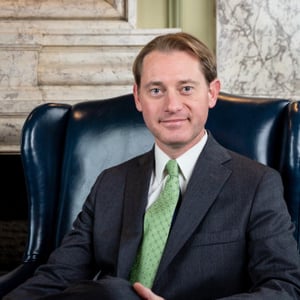
Secretary of State, Commonwealth of Kentucky
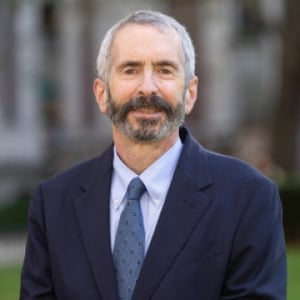
Joseph P. Chamberlain Professor of Legislation, Columbia Law
Since joining the Columbia Law School faculty in 1983, Richard Briffault has combined public and government service with teaching, research, and scholarship. He is the Law School’s authority on state and local government; the news media often turns to him for his expert insight into and analysis of issues central to democracy and the political process such as campaign finance reform, government ethics, gerrymandering, election administration, and fair elections. He is also a leading thinker on “the new preemption,” a critique of states that are increasingly passing ideological laws that override local ordinances. Working with the Local Solutions Support Center, he educates city and county government officials on how to respond to state preemption.
Briffault is a pillar of the Columbia Law School community. He has served as a vice dean at three different times during his career. He sits on the advisory board of The Max Berger ’71 Public Interest/Public Service Fellows Program and on the board of directors of the Columbia Journal of Law & Social Problems.
A prodigious scholar, Briffault has written or coauthored more than 90 law review and journal articles as well as books and monographs, including Dollars and Democracy: A Blueprint for Campaign Finance Reform; Cleaning Up Hazardous Waste: Is There a Better Way?; the fifth, sixth, seventh, eighth, and ninth editions of the casebook State and Local Government Law; and The New Preemption Reader.
Before becoming an academic, Briffault was a clerk to Judge Shirley M. Hufstedler of the 9th U.S. Circuit Court of Appeals, an assistant counsel to New York Governor Hugh L. Carey, and an associate at Paul Weiss Rifkind Wharton & Garrison. During his tenure at Columbia Law, he has served as a member of, or consultant to, an array of New York state and city commissions, including the New York State Moreland Act Commission to Investigate Public Corruption. From 2014 to 2020, Briffault served as chair of the New York City Conflicts of Interest Board. He is the reporter for the American Law Institute’s Project on Principles of Government Ethics, vice-chair of the Citizens Union of the City of New York, and a member of the New York State Bar Association Committee on Professional Ethics.
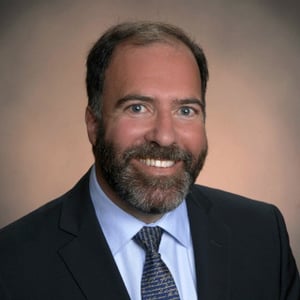
Professor of Law, Widener University Commonwealth Law School

Judge, United States Court of Appeals, Third Circuit
Judge Hardiman was appointed to the United States Court of Appeals for the Third Circuit on January 9, 2007 and was confirmed by the Senate (95-0) on March 15, 2007. Prior to becoming an appellate judge, Judge Hardiman served as a trial judge on the United States District Court for the Western District of Pennsylvania as of November 1, 2003. In 2008, Chief Justice John Roberts appointed Judge Hardiman to the Information Technology Committee of the Judicial Conference of the United States. Judge Hardiman was appointed Chairman of the IT Committee in 2013 and served in that capacity until September 2021. In 2021 he was appointed by the Director of the Administrative Office of the United States Courts to serve as Chair of the Judiciary IT Security Task Force, which completed its work in fall 2023. Chief Justice Roberts appointed Judge Hardiman to the Board of the Federal Judicial Center to serve from March 2020 until March 2024. As part of his work with the Center, Judge Hardiman now serves as Editor in Chief for the Manual for Complex Civil Litigation, Fifth.
Before entering judicial service, Judge Hardiman handled a wide variety of litigation matters in state and federal trial and appellate courts as a partner at Reed Smith LLP (1999-2003), a partner at Titus & McConomy LLP (1996-1999), and as an associate with its predecessor firm, Cindrich & Titus (1992-1996). Judge Hardiman began his legal career as an associate in the Washington, D.C. office of Skadden, Arps, Slate, Meagher & Flom (1990-1992).
A 1987 honors graduate of the University of Notre Dame, Judge Hardiman received his law degree in 1990 from the Georgetown University Law Center, where he served as a Notes and Comments Editor on the Georgetown Law Journal. In 2012, Judge Hardiman was elected as a member of the American Law Institute and was elected to its Council in 2019 and its Executive Committee in 2025. Judge Hardiman regularly teaches a seminar on Advanced Constitutional Law at Duquesne University School of Law and a one-week course entitled “Constitutional Law: the First and Second Amendments” at Georgetown University Law Center.
A native of Waltham, Massachusetts, Judge Hardiman has chambers in Pittsburgh, Pennsylvania. He and his wife Lori married in 1992 and have three children.

Sudler Family Professor of Constitutional Law, New York University School of Law
Richard H. Pildes is one of the nation’s leading scholars of constitutional law and a specialist in legal issues affecting democracy. He is a Member of the American Academy of Arts and Sciences and the American Law Institute, and has received recognition as a Guggenheim Fellow and a Carnegie Scholar. His acclaimed casebook, The Law of Democracy: Legal Structure of the Political Process (now in its fourth edition), helped create an entirely new field of study in the law schools. The Law of Democracy systematically explores legal and policy issues concerning the structure of democratic elections and institutions, such as the role of money in politics, the design of election districts, the regulation of political parties, the design of voting systems, the representation of minority interests in democratic institutions, and similar issues. He has written extensively on the rise of political polarization in the United States, the Voting Rights Act, the dysfunction of America’s political processes, the role of the Supreme Court in overseeing American democracy, the powers of the American President and Congress, and he has criticized excessively “romantic” understandings of democracy. In addition to his scholarship on these issues, he has written on national-security law, the design of the regulatory state, and American constitutional history and theory.
Respect for his expertise in these areas is reflected in frequent citations of his work in U.S. Supreme Court opinions, the translation of his work into many languages, and his frequent public lectures and appearances around the world, including his nomination with the NBC News Team for an Emmy Award for coverage of the 2000 Presidential election litigation.
His work has been translated and published in Chinese, French, Spanish, and Portuguese. In addition to his scholarship, Professor Pildes plays an active role litigating in these areas. He has won two cases before the United States Supreme Court, including a 2015 victory in Alabama Democratic Conference v. Alabama, a case involving race and redistricting. He served as counsel to a group of former chairmen of the Securities and Exchange Commission in litigation defending the constitutionality of the Sarbanes-Oxley Act; as counsel in election litigation to the Puerto Rico Electoral Commission; as counsel to the government of Puerto Rico; as a federal court-appointed independent expert on voting rights litigation; and as counsel in successful Supreme Court litigation that challenged the way the United States Tax Court operated. He was also a senior legal advisor to the 2008 and 2012 campaigns of President Obama.
Pildes received his A.B. in physical chemistry summa cum laude from Princeton, and his J.D. magna cum laude from Harvard, where he served as Supreme Court Note Editor on the Harvard Law Review. He clerked for Judge Abner J. Mikva of the U.S. Court of Appeals for the District of Columbia Circuit and for Justice Thurgood Marshall of the U.S. Supreme Court. After practicing law in Boston, he began his academic career at the University of Michigan Law School, before joining the NYU School of Law in 2001.

Chairman and Founder, Institute for Free Speech; Josiah H. Blackmore II/Shirley M. Nault Designated Professor of Law, Capital University Law School
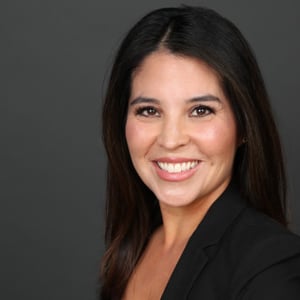
President, Defending Education
Nicole Neily is the president and founder of Defending Education, a national membership organization that gives parents, students, and others the resources and support they need to advocate for their children’s education. She is also the executive director of PDE Action, a 501(c)4 advocacy organization.
Defending Education champions equal protection and combats race and sex-based discrimination in both the court of law and the court of public opinion, and has successfully sued school districts and the US Department of Education in federal court; facilitated tens of thousands of comments submitted to the Federal Register; filed dozens of federal OCR and EEOC complaints, as well as over two thousand public records requests since its launch in 2021. The organization regularly releases deep-dive education investigations, recently covering political spending by teachers’ unions, biased accreditation agencies, and ethnic studies curriculum in both K-12 and universities.
Prior to launching Defending Education, Nicole created Speech First, a campus free speech organization that sued 6 public universities under her leadership; she has also worked as president of the Franklin Center for Government & Public Integrity; as executive director and senior fellow at the Independent Women’s Forum; and at the Cato Institute. She is the mother of two school-aged children and serves on the board of a public university.

Senior Fellow, American Enterprise Institute
Mark J. Perry is concurrently a senior fellow at AEI and a professor emeritus of economics at the University of Michigan. He is best known as the creator and editor of the popular economics blog Carpe Diem. At AEI, Perry writes about economic and financial issues for American.com and the AEIdeas blog.
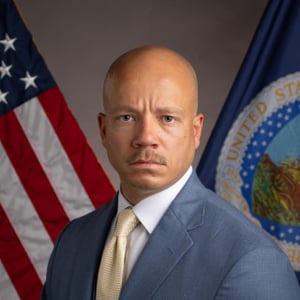
Assistant Secretary for Civil Rights, U.S. Department of Agriculture
Devon Westhill is the Assistant Secretary for Civil Rights at the U.S. Department of Agriculture. The U.S. Senate confirmed President Donald Trump’s nomination of Westhill on October 7, 2025.
Westhill returns to the USDA where he previously headed the civil rights office as Deputy Assistant Secretary in President Trump’s first term. His previous government appointments also include service at the U.S. Department of Labor, liaison to the Administrative Conference of the U.S., and liaison to the White House Initiative on Historically Black Colleges and Universities. Prior to returning to government service, Westhill was President and General Counsel of a nonprofit civil rights organization.
Westhill has testified on civil rights matters before Congress, federal agencies, and as an expert witness in federal court. He has spoken hundreds of times at college campuses, conferences, and on radio and TV programs, and he is frequently quoted in print publications, and his writing has appeared in numerous national outlets. A U.S. Navy veteran, Westhill earned his BA from the University of North Carolina at Chapel Hill and his JD from the University of Florida.
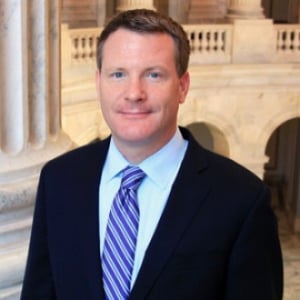
Founder, Article III Project
Mike Davis, the former Chief Counsel for Nominations to Senate Judiciary Chairman Chuck Grassley, is the founder and president of the Article III Project (A3P). A3P defends constitutionalist judges and the rule of law. Davis also leads the Internet Accountability Project (IAP), an advocacy organization fighting to rein in Big Tech, along with the Unsilenced Majority, an organization dedicated to opposing Cancel Culture and fighting back against the woke mob and their enablers.
As Chief Counsel for Nominations, Davis advised Chairman Grassley and other senators on the confirmation of federal judges and senior Executive Branch appointees, serving as staff lead for 30 hearings and 41 markup meetings. He oversaw the floor votes for 278 nominees, including the confirmations of Justice Brett Kavanaugh and the record number of circuit judges confirmed during President Trump’s first two years in office.
Davis has served in all three branches of the federal government, including for President George W. Bush, the Justice Department, House Speaker Newt Gingrich, and current Supreme Court Justice Neil Gorsuch. Davis also led the outside support team for Justice Gorsuch’s successful confirmation to the Supreme Court.
Before returning to public service in 2017, Davis spent nearly ten years as a civil litigator in Denver, working at one of the largest law firms in the world and one of the top-ranked law firms in Colorado before running his own law practice for more than five years.
Davis is from Des Moines, Iowa. He received his Bachelor of Arts in 2000 and Juris Doctor in 2004, both from the University of Iowa. In 2017, Davis received Iowa Law’s “Emerging Leader Award.” Davis also serves on the University of Iowa Political Science Advisory Board.
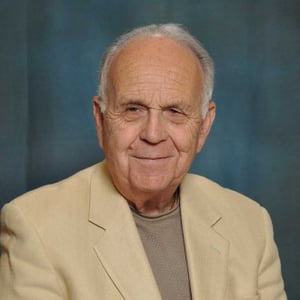
Presidential Scholar in Residence, New College of Florida
Professor Fish comes to the College of Law from Chicago, where he most recently served as Dean of the College of Liberal Arts and Sciences at the University of Illinois at Chicago. He holds a B.A. from the University of Pennsylvania (1959) and an M.A. and Ph.D. from Yale University (1960; 1962). He has previously taught at the University of California at Berkeley (1962-74); Johns Hopkins University (1974-85), where he was the Kenan Professor of English and Humanities; and Duke University, where he was Arts and Sciences Professor of English and Professor of Law (1986-1998). From 1993 through 1998 he served as Executive Director of Duke University Press. Dr. Fish served as a Distinguished Visiting Professor at The John Marshall Law School from 2000 through 2002.
In addition to being one of the country’s leading public intellectuals, Professor Fish is an extraordinarily prolific author whose works include over 200 scholarly publications and books. While his research covers a variety of fields, Professor Fish has written for many of the country’s leading law journals. including Stanford Law Review, Duke Law Journal, Yale Law Journal, University of Chicago Law Review, Columbia Law Review, and Texas Law Review. His exemplary work also includes the following books: John Skelton’s Poetry (1965); Surprised by Sin: The Reader in Paradise Lost (1967) and a Thirtieth Anniversary Edition (1997); Self-Consuming Artifacts: The Experience of Seventeenth-Century Literature (1972); The Living Temple: George Herbert and Catechizing (1978); Is there a Text in This Class? Interpretive Communities and the Sources of Authority (1980); Doing What Comes Naturally: Change, Rhetoric, and the Practice of Theory in Literary and Legal Studies (1989); There’s No Such Thing as Free Speech, and It’s a Good Thing, Too (1994); Professional Correctness: Literary Studies and Political Change (1995); The Trouble with Principle (1999); and How Milton Works (2001). The Stanley Fish Reader, edited by H. Aram Veeser, was published in 1999. He has also had five books written about his books.
Currently, Professor Fish is working on several publications, including There is No Textualist Position, San Diego Law Review (Spring 2005), Intentional Neglect, New York Times (July 2005), and Academic Cross Dressing: How Intelligent Design Gets Its Arguments from the Left, Harper’s Magazine. Professor Fish will teach a Law & Religion seminar Spring 2006.
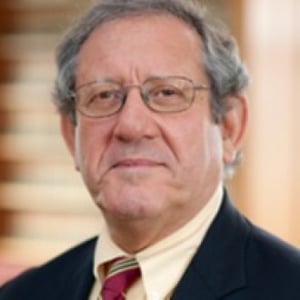
Professor of Law, Brooklyn Law School
Joel Gora has been a professor at Brooklyn Law School since 1978, teaching constitutional law, civil procedure and a number of other related courses. He also served as Associate Dean for Academic Affairs from 1993-1997 and again from 2002 through 2006. He is the author of a number of books and articles dealing with First Amendment and other constitutional law issues. He is also an expert on campaign finance law matters, working in the field as both an advocate and an academic. Prior to joining the Brooklyn Law School faculty, Professor Gora was a law clerk at the United States Court of Appeals for the Second Circuit for two years after he graduated from law school, and then a full-time lawyer with the American Civil Liberties Union for almost ten years. During his ACLU career, he worked on dozens of United States Supreme Court cases, including many landmark rulings. Chief among them was the case of Buckley v. Valeo, the Court’s historic 1976 decision on the relationship between campaign finance restrictions and First Amendment rights. He has worked, on behalf of the ACLU, on almost every one of the important campaign finance cases to come before the Court. He also served for more than 25 years on the board of directors of the New York Civil Liberties Union, and as one of its general counsel. He has served as well on a number of policy committees of the New York City Bar, and was also a member of the board of the Federal Bar Council. Professor Gora received his B.A. from Pomona College and LL.B. from Columbia Law School.
President, Defending Education
Nicole Neily is the president and founder of Defending Education, a national membership organization that gives parents, students, and others the resources and support they need to advocate for their children’s education. She is also the executive director of PDE Action, a 501(c)4 advocacy organization.
Defending Education champions equal protection and combats race and sex-based discrimination in both the court of law and the court of public opinion, and has successfully sued school districts and the US Department of Education in federal court; facilitated tens of thousands of comments submitted to the Federal Register; filed dozens of federal OCR and EEOC complaints, as well as over two thousand public records requests since its launch in 2021. The organization regularly releases deep-dive education investigations, recently covering political spending by teachers’ unions, biased accreditation agencies, and ethnic studies curriculum in both K-12 and universities.
Prior to launching Defending Education, Nicole created Speech First, a campus free speech organization that sued 6 public universities under her leadership; she has also worked as president of the Franklin Center for Government & Public Integrity; as executive director and senior fellow at the Independent Women’s Forum; and at the Cato Institute. She is the mother of two school-aged children and serves on the board of a public university.

Judge, United States Court of Appeals, Eighth Circuit
David Stras became a judge on the United States Court of Appeals for the Eighth Circuit on January 31, 2018. Before serving on the Eighth Circuit, Judge Stras was an Associate Justice of the Minnesota Supreme Court, a position he occupied from July 1, 2010 until his appointment to the Eighth Circuit.
Prior to becoming a judge, Stras was a member of the faculty of the University of Minnesota Law School from 2004 through 2010. He taught and wrote in the areas of federal courts and jurisdiction, constitutional law, criminal law, and law and politics.
Judge Stras received his Bachelor of Arts degree, with highest distinction, in 1995 and his Master of Business Administration in 1999, both from the University of Kansas. He also received his law degree from the University of Kansas School of Law in 1999, where he served as Editor-in-Chief of the Criminal Procedure Edition of the Kansas Law Review.
Following law school, Stras clerked for The Honorable Melvin Brunetti of the United States Court of Appeals for the Ninth Circuit and then for The Honorable J. Michael Luttig of the United States Court of Appeals for the Fourth Circuit.
From 2001 to 2002, he practiced white-collar criminal and appellate litigation with the Washington, D.C., office of Sidley Austin Brown & Wood. Following his year in practice, he clerked for The Honorable Clarence Thomas of the Supreme Court of the United States.

Solicitor General of Missouri
Lou Capozzi is the Solicitor General of Missouri. In that role, he oversees all appeals for the State of Missouri. He is also the Director of Special Litigation and litigates high-stakes cases at trial.
Lou previously worked at Jones Day, where he specialized in administrative and election law. At Jones Day, he helped lead a six-week bench trial in federal court, during which he cross-examined important expert and fact witnesses, delivered closing argument, asserted evidentiary objections, and argued several motions, including a motion for a directed verdict. He has also authored briefs at all phases of litigation--from evidentiary motions to dispositive motions and appeals.
Lou is also Lecturer in Law at the University of Pennsylvania Carey Law School and a Public Member of the Administrative Conference of the United States. He has published several academic articles focusing on administrative law.
Lou clerked for Justice Neil Gorsuch at the United States Supreme Court in the 2021 Term, as well as for Judges J. Harvie Wilkinson III of the United States Court of Appeals for the Fourth Circuit and Anthony Scirica of the United States Court of Appeals for the Third Circuit. He gradated as the valedictorian from the University of Pennsylvania Law School in 2019.
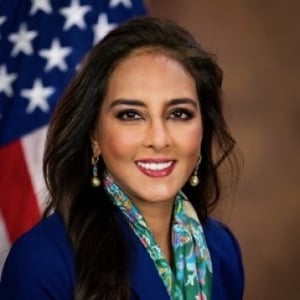
Assistant Attorney General for Civil Rights, U.S. Department of Justice
Harmeet K. Dhillon is the Assistant Attorney General for Civil Rights at the U.S. Department of Justice. She was nominated by President Donald Trump in December 2024. She was confirmed by the U.S. Senate on April 3, 2025, and sworn in as AAG by Attorney General Pam Bondi on April 7, 2025.
Prior to joining the Division, Ms. Dhillon founded both the Dhillon Law Group, Inc., a successful legal practice with offices in California, Florida, Virginia, and New Jersey; and the Center for American Liberty, a nonprofit organization dedicated to pursuing civil liberties legal claims. Her law practice focused on First Amendment / free speech, civil rights, and campaign and election law issues. Among her many notable cases, Ms. Dhillon brought legal challenges against the University of California, Berkeley over its free speech policy, against an Antifa organization for an assault on a conservative journalist, against several states for their restrictive responses to Covid-19, and against various large tech companies for a host of civil rights issues.
Assistant Attorney General Dhillon was born in Chandigarh, India, and lived in London before moving to The Bronx, New York. Her family ultimately settled in rural Smithfield, North Carolina. After graduating high school at age 16, Ms. Dhillon attended Dartmouth College where she became editor-in-chief of The Dartmouth Review. After earning her bachelor’s degree in Classical Studies, she attended the University of Virginia School of Law and served on the editorial board of the Virginia Law Review. She later clerked for the Honorable Paul V. Niemeyer of the United States Court of Appeals for the Fourth Circuit in Baltimore, Maryland.
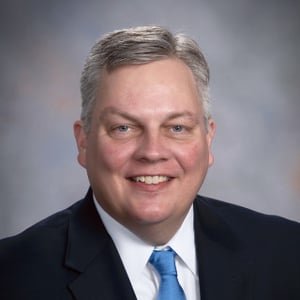
University Professor of Law and Religion and Director of the Eleanor H. McCullen Center for Law, Religion and Public Policy, Villanova University Charles Widger School of Law
Michael P. Moreland was appointed University Professor of Law and Religion and Director of the Eleanor H. McCullen Center for Law, Religion and Public Policy at Villanova University in 2017. Professor Moreland joined the Villanova faculty in 2006 and served as Vice Dean from 2012 to 2015. His research is primarily in the areas of torts, law and religion, constitutional law, and Catholic social thought, and he regularly teaches Torts, First Amendment, seminars in law and religion, and undergraduate courses in ethics.
Professor Moreland is the co-editor of Christianity and Private Law (Routledge, 2021), and his most recent publications include: “The Authority of Tradition: John Henry Newman and Legal Theory” in Christianity and the Making of Irish Law (Routledge, 2025); “Christianity and Torts” in The Oxford Handbook on Christianity and Law, (Oxford University Press, 2023); “Germaneness and Religious Liberty” in the Notre Dame Law Review (2023); “Contingency and Contestation in Christianity and Liberalism” in the Notre Dame Law Review (2023); “Friendship as the Primary Purpose of Law” in The American Journal of Jurisprudence 279 (2022); and “The Moral of Torts” (with Jeffrey Pojanowski) in Christianity and Private Law (Routledge, 2021).
Professor Moreland was a Visiting Professor of Law at the University of Notre Dame and the Mary Ann Remick Senior Visiting Fellow at the Notre Dame Center for Ethics and Culture from 2015 to 2017. He was the Forbes Visiting Fellow at Princeton University in the James Madison Program during academic year 2010-11. He has served as the project leader for grants from the John Templeton Foundation and the Charles Koch Foundation. He serves as the Chair of the Federalist Society’s Religious Liberties Practice Group Executive Committee and the Chair of the Board of Trustees of the Institute for Advanced Catholic Studies at the University of Southern California.
Professor Moreland received his BA in philosophy from the University of Notre Dame, his MA and PhD in theological ethics from Boston College, and his JD from the University of Michigan Law School. Following law school, Professor Moreland clerked for the Honorable Paul J. Kelly Jr., of the United States Court of Appeals for the Tenth Circuit and was an associate at Williams & Connolly LLP in Washington, DC, where he represented clients in First Amendment, professional liability, and products liability matters. Before coming to Villanova, he served as Associate Director for Domestic Policy at the White House under President George W. Bush, where he worked on a range of legal policy issues, including criminal justice, immigration, civil rights, and liability reform.

Senior Legal Fellow, Edwin Meese III Institute for the Rule of Law, Advancing American Freedom
Senior Attorney and Director, Election Integrity Project, Judicial Watch
Robert Popper joined Judicial Watch in September 2013 as a senior attorney and as director of Judicial Watch’s Election Integrity Project. Prior to joining Judicial Watch, Mr. Popper worked for eight years, five as deputy chief of the Voting Section, in the Civil Rights Division of the Department of Justice, in which capacity he garnered numerous professional awards. Before that, Mr. Popper worked as a private attorney in New York City for 17 years, where his practice extended to a wide range of legal matters, including voting rights. Mr. Popper served as counsel in a successful constitutional challenge alleging racial segregation in the design of New York’s congressional districts, and successfully defended the appeal to the U.S. Supreme Court. Mr. Popper is a published author on the topic of voting rights law. He developed a legal standard relating to gerrymandering that is widely cited by experts and was adopted by the Arizona Independent Redistricting Commission. He has testified before the Missouri Senate Redistricting Committee and the Pennsylvania House State Government Committee; and he has spoken about voting rights to a conference of U.S. Attorneys at the National Advocacy Center, to state officials, and to countless local community representatives. Mr. Popper is a graduate of the University of Pennsylvania and Northwestern University Law School. He is admitted to practice in the Southern and Eastern Districts of New York, the Court of Appeals for the Second Circuit, and the U.S. Supreme Court.

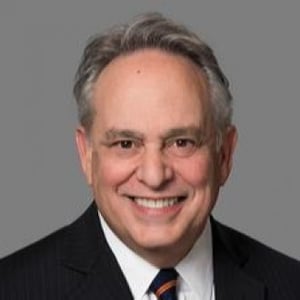
National Sovereignty and Global Governance: Emerging Fault Lines In International Law
Britt C. Grant, Aylana Meisel-Diament, Thibault Mercier, Jose Freire Nunes
Are international authorities, in the name of “global governance,” encroaching on national sovereignty? Three recent...
Daniel Webster Debate Series: Do President Biden's Proposed SCOTUS Reforms Deserve Support?
Caroline Fredrickson, Robert J. Luck, Mark Paoletta
The Federalist Society's Georgetown Law Chapter'sDaniel Webster Debate Series presents Daniel Webster Debate Series:...
Fair Elections in an Era of Partisanship
Michael G. Adams, Richard Briffault, Michael R. Dimino, Thomas M. Hardiman, Richard H. Pildes, Bradley A. Smith
Recent years have seen unprecedented controversies about election rules, including mail-in ballots and drop boxes,...
Litigation Update: Thomas Jefferson High Litigation
Nicole Neily
Last year, Thomas Jefferson High School (TJ), ranked #1 in the nation for academic excellence,...
Litigation Update: Investigating Title VI and Title IX Complaints
Mark J. Perry, Devon Westhill
Title IX of the Education Amendments of 1972 supplemented Title VI of the Civil Rights...
Is Anyone Still Committed to Free Speech?
Mike Davis, Stanley Fish, Joel M. Gora, Nicole Neily, David R. Stras
The 2021 National Lawyers Convention took place November 11-13, 2021 at the Mayflower Hotel in...
POSTPONED: Gerrymandering and Congressional Redistricting
Mineola, NYGerrymandering and Congressional Redistricting
Mineola, NYTopics
Timeless Concepts for a Trying Time: The Separation of Powers and Judicial Review
If men were angels, no government would be necessary. If angels were to govern men,...
The 2020 Elections: What Worked and What Should Change?
Louis J. Capozzi, Harmeet K. Dhillon, Jerry Goldfeder, Michael P. Moreland, Hans A. Von Spakovsky
The year 2020 is not our country's final election. After an election dominated by rule...