
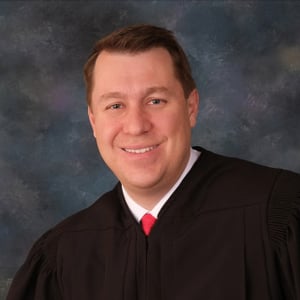
Judge, Ohio Twelfth District Court of Appeals
Judge Matthew R. Byrne was elected to the Ohio Court of Appeals for the Twelfth District in 2020, and his first term began on January 1, 2021. He is currently serving as the court's elected Administrative Judge. The Twelfth District Court of Appeals hears civil and criminal appeals from the trial courts in eight counties in southwest Ohio. Judge Byrne is active in the Ohio Judicial Conference and the Ohio Court of Appeals Judges Association. He also currently serves as a member and vice chair of the Ohio Supreme Court's Commission on the Rules of Practice and Procedure (where he previously chaired the Appellate Rules Committee). He previously served as a member of the Ohio Supreme Court's Commission on Character and Fitness.
From January 2010 to December 2020, Judge Byrne practiced law at the national law firm of Jackson Lewis P.C. He was a member of the firm's General Employment Litigation Practice Group and the Wage and Hour Practice Group. From 2007 to 2010 he practiced at Taft Stettinius & Hollister LLP. At both firms, Judge Byrne represented clients ranging from small businesses to international corporations in state and federal trial and appellate litigation, including multiple class and collective actions. He also represented clients in arbitration and before numerous administrative agencies, including the Equal Employment Opportunity Commission, the National Labor Relations Board, and the Ohio Civil Rights Commission.
Judge Byrne earned his law degree, cum laude, from The Ohio State University Moritz College of Law. During law school he was symposium editor of the Ohio State Law Journal and the winner of the Donald S. Teller Memorial Award for student writing contributing most significantly to the Ohio State Law Journal. During law school he clerked for the Acting General Counsel of the United States Department of the Treasury. Judge Byrne earned his bachelor's degree, magna cum laude, from Xavier University, where he majored in International Affairs (Business) and Political Science.
Prior to entering law school Judge Byrne served in President George W. Bush's Administration as a member of the White House staff in the Office of Presidential Personnel, the office responsible for selecting candidates to recommend to the President for appointment or nomination to high-level government positions, and for coordinating with the Offices of White House Counsel, Press Secretary, and Executive Clerk regarding candidate background clearances, press announcements, and the status of appointments/nominations.
Judge Byrne has been a member of the Federalist Society since law school and he served for five years as president of the Federalist Society's Cincinnati Lawyers Chapter. He is a member of a number of other community and civic organizations, including the Ohio State Bar Association and the bar associations of Butler, Clermont, and Warren Counties. Judge Byrne previously was a member of the Advisory Board of Pregnancy Center East and a board member and president of the St. Thomas More Lawyers Guild of Greater Cincinnati.
Judge Byrne is an active parishioner at his church, where he is a lector, a former member and president of the Education Commission, and a former member of the Finance and Administration Commission.
Judge Byrne resides in Deerfield Township, Warren County, Ohio with his wife Julie and their three children.
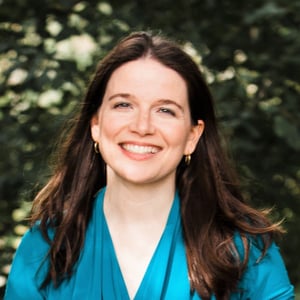
Ashbrook Byrne Kresge LLC
Julie E. Byrne is an energetic problem solver recognized by multiple publications as a rising star and leader to watch. Ms. Byrne focuses her practice on employment law and HR-related issues, advising clients on compliance with state and federal law and representing them in disputes. Ms. Byrne has a passion for helping workers thrive by helping their organizations thrive, and clients benefit from her years of experience working with businesses of all sizes and government at all levels.
A mother of three young children, Ms. Byrne was a highly respected attorney in one of the largest law firms in the State of Ohio when she decided to step out of the firm environment to invest in her family. Blessed to have grown up in a military family that took her to visit all 50 states, Ms. Byrne and her husband look forward to continuing that tradition with their children.
Ms. Byrne is a 2009 graduate of The Ohio State University Moritz College of Law where she was a national moot court champion. She has worked in large corporations, a large law firm, the U.S. Attorney's Office, and the White House.
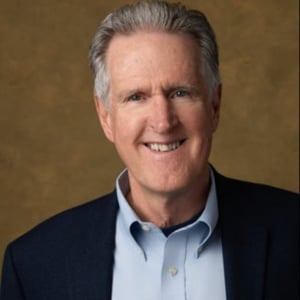
Senior Legal Counsel, Pacific Legal Foundation
Before becoming an attorney, James had been a productive member of society working as an exploration geologist in the late 1970s throughout the southwestern United States. However, after several years of dealing with irrational government bureaucrats and environmental policies untethered from reality, James decided that what the world needs is more lawyers — if they are willing to fight for rationality in regulatory regimes, property rights, and liberty.
James attended the University of Arizona College of Law in Tucson, where he served as an editor for the Law Review and received a J.D. degree in 1983. He had previously received a Masters degree in geological sciences from Brown University and an undergraduate degree from Hamilton College in New York. James received the Professional Achievement Award from the University of Arizona Alumni Association in 2018.
James has worked with Pacific Legal Foundation since 1983, litigating cases from Alaska to Florida. He is a member of the Federalist Society’s Environmental Law and Property Rights Practice Group’s Executive Committee, a member of the American College of Real Estate Lawyers, and an honorary member of Owners Counsel of America, an organization comprised of eminent domain attorneys who represent property owners. The Owners Counsel awarded James its Crystal Eagle award in 2013. In 2022, James was awarded the Brigham-Kanner Property Rights Prize at the William & Mary College of Law. The prize is awarded annually to an individual whose work has advanced the cause of property rights and has contributed to the overall awareness of the important role property rights occupy in the broader scheme of individual liberty.
In 2001, James successfully argued a major property rights case, Palazzolo v. Rhode Island, before the United States Supreme Court, a case which affirmed that rights in regulated property do not disappear when land is bought and sold. He has written extensively on all aspects of property rights and environmental law and frequently speaks on these subjects throughout the nation.
When James is not suing the government he enjoys skiing faster than he should, bicycling, hiking, swimming, and spending quality time with his wife, family, and grandchild.
Mr. Burling’s book Nowhere to Live: The Hidden Story of America’s Housing Crisis is available now on Amazon.
James is a member of the bar only in the states of Alaska and California.
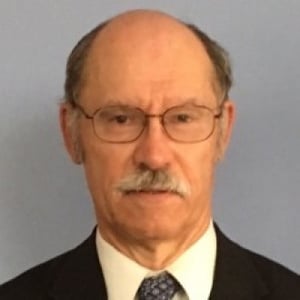
Professorial Lecturer in Law, George Washington University Law School
Theodore C. (Ted) Hirt was an attorney in the Department of Justice's Civil Division from August 1979 to March 2016. He was in its Federal Programs Branch from 1979 to 2008 (trial attorney, senior trial counsel, assistant director), and then in its Office of Immigration Litigation from 2008 to 2016 (trial attorney and senior litigation counsel). Among his responsibilities (September 2001 to March 2016) was being an advisor to the Assistant Attorneys General for the Civil Division, who serve ex officio on the Civil Rules Advisory Committee. Mr. Hirt’s areas of specialization include First Amendment issues, internet and telecommunications law, and electronic discovery. From 1976 to 1979, he was an associate at Fried, Frank, Harris, Shriver & Kampelman. From 1975 to 1976 he was an attorney in the Prehearing Division of the Michigan Court of Appeals.
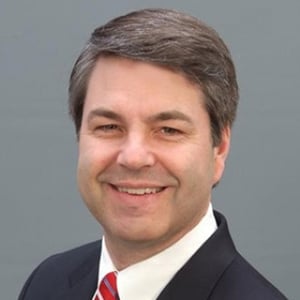
Partner and Co-Chair, Public Policy Group, Shook Hardy & Bacon LLP
Mark Behrens co-chairs Shook's Washington, DC-based Public Policy Practice Group and is a leading national expert on civil justice issues with over thirty years of experience. A substantial part of his practice is working to improve the civil litigation environment through state and federal legislation; in the courts through amicus curiae briefs; through legal scholarship and judicial education; and in the court of public opinion.
Mark is actively involved in civil justice reform efforts at the federal and state levels. He has testified before the U.S. Congress and most state legislatures on behalf of business and civil justice organizations. Mark also has an active amicus brief practice specializing in tort liability and civil justice issues. He has authored or co-authored over 150 amicus briefs in cases before the United States Supreme Court and federal and state appellate courts on behalf of business, civil justice, and defense lawyer organizations. In addition, Mark routinely files comments on behalf of business, civil justice, and defense lawyer organizations regarding potential changes to federal and state court rules. He chairs the International Association of Defense Counsel’s (IADC) Civil Justice Response Committee and serves on the Board of Directors of Lawyers for Civil Justice (LCJ).
Mark is a member of the American Law Institute (ALI). He received his J.D. in 1990 from Vanderbilt University Law School, where he was a member of the Vanderbilt Law Review. He received his B.A. in economics from the University of Wisconsin in 1987.
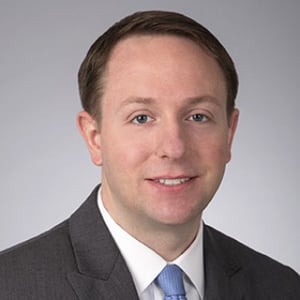
Of Counsel, Shook Hardy & Bacon LLP
Chris’ public policy work focuses on tort law and civil justice system reform. His work is generally divided among legislative efforts, appellate litigation, and liability counseling. Chris has drafted model legislation to be introduced on the state and federal level, testified on numerous legislative initiatives, and authored amicus briefs to state supreme courts and federal appellate courts, including the U.S. Supreme Court. He also serves as an adviser to various business groups and trade associations interested in tort liability issues and civil justice system reform.
In addition, Chris is an elected member of the American Law Institute (ALI), and has assisted in the development of a variety of ALI projects implicating liability law. He has also been a recurrent guest lecturer at the U.S. Department of Justice and Wake Forest University School of Law, as well as a speaker at numerous legal conferences and industry group meetings, on issues related to tort law. Chris has additionally produced significant scholarship in the area of liability law. He has authored more than 50 legal publications on a wide range of liability issues, including articles in the Harvard Journal of Law & Public Policy, UPenn Journal of Business Law, and Duke Journal of Constitutional Law & Public Policy, and has served as a contributor to tort casebooks.
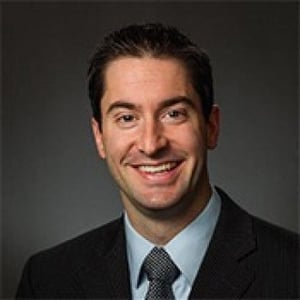
Chief Legal Counsel, Alliance Defending Freedom
Jim Campbell serves as chief legal counsel with Alliance Defending Freedom, where he leads the U.S. Legal Advocacy team. In that role, Campbell oversees all U.S. litigation teams and Allied Legal Affairs.
Prior to joining ADF in March 2023, Campbell was the solicitor general in the office of Nebraska Attorney General Douglas J. Peterson and Michael T. Hilgers. In that role, he represented the state of Nebraska in cases before state and federal courts and oversaw all civil appeals for the state. In February 2023, Campbell argued Biden v. Nebraska before the U.S. Supreme Court, a case in which Nebraska and five other states challenged the Biden administration’s attempt to forgive over $400 billion in federal student loans for over 40 million individuals.
Before joining the Nebraska attorney general’s office in January 2020, Campbell worked as senior counsel with ADF. In that role, he defended his clients’ religious freedom and freedom of speech, with a particular focus on appellate work. Campbell has also authored many articles and legal commentary pieces, including some published by USA Today and The Washington Post.
A native of northeastern Ohio, Campbell earned his Juris Doctor from the University of Akron School of Law, where he graduated summa cum laude in 2006. Following law school, he clerked for the Honorable Alice M. Batchelder of the U.S. Court of Appeals for the 6th Circuit. Campbell is admitted to the state bars of Ohio, Arizona, and Nebraska. He is also admitted to multiple federal district and appellate courts, including the U.S. Supreme Court.
Senior Legal Counsel, Pacific Legal Foundation
Before becoming an attorney, James had been a productive member of society working as an exploration geologist in the late 1970s throughout the southwestern United States. However, after several years of dealing with irrational government bureaucrats and environmental policies untethered from reality, James decided that what the world needs is more lawyers — if they are willing to fight for rationality in regulatory regimes, property rights, and liberty.
James attended the University of Arizona College of Law in Tucson, where he served as an editor for the Law Review and received a J.D. degree in 1983. He had previously received a Masters degree in geological sciences from Brown University and an undergraduate degree from Hamilton College in New York. James received the Professional Achievement Award from the University of Arizona Alumni Association in 2018.
James has worked with Pacific Legal Foundation since 1983, litigating cases from Alaska to Florida. He is a member of the Federalist Society’s Environmental Law and Property Rights Practice Group’s Executive Committee, a member of the American College of Real Estate Lawyers, and an honorary member of Owners Counsel of America, an organization comprised of eminent domain attorneys who represent property owners. The Owners Counsel awarded James its Crystal Eagle award in 2013. In 2022, James was awarded the Brigham-Kanner Property Rights Prize at the William & Mary College of Law. The prize is awarded annually to an individual whose work has advanced the cause of property rights and has contributed to the overall awareness of the important role property rights occupy in the broader scheme of individual liberty.
In 2001, James successfully argued a major property rights case, Palazzolo v. Rhode Island, before the United States Supreme Court, a case which affirmed that rights in regulated property do not disappear when land is bought and sold. He has written extensively on all aspects of property rights and environmental law and frequently speaks on these subjects throughout the nation.
When James is not suing the government he enjoys skiing faster than he should, bicycling, hiking, swimming, and spending quality time with his wife, family, and grandchild.
Mr. Burling’s book Nowhere to Live: The Hidden Story of America’s Housing Crisis is available now on Amazon.
James is a member of the bar only in the states of Alaska and California.

Did the Majority of Ohio Supreme Court Justices Signal the End of Chevron Deference?
Matthew R. Byrne, Julie E. Byrne
Ohio State ex rel. McCann v. Delaware County Board of Elections On first...
Courthouse Steps Oral Argument: Knick v. Township of Scott, Pennsylvania
James S. Burling
The Supreme Court will hear reargument in Knick v. Township of Scott, Pennsylvania on January...
Topics
Principles and Restatements: Is the American Law Institute Jumping the Shark?
The American Law Institute was formed in 1923 by such legal luminaries as Chief Justice...
Courthouse Steps Oral Argument: Knick v. Township of Scott, Pennsylvania
TeleforumTopics
Docket Watch: State ex rel. McCann v. Delaware County Board of Elections
On first glance, State ex rel. McCann v. Delaware County Board of Elections,[1] an...
Can and Should the Federal Judiciary Rein In Our Expansive Administrative State?
Ted Hirt
Note from the Editor: The Federalist Society takes no positions on particular legal and public...
2018 Civil Justice Update
Mark A. Behrens, Christopher Appel
Note from the Editor: The Federalist Society takes seriously its responsibility as a non-partisan institution...
Topics
Ninth Circuit Attempts to Moot Rule 11 Petition by Deciding DACA Appeal
Updating an earlier post regarding Solicitor General Noel Francisco’s petition for certiorari before judgment in...
Topics
West Virginia Lawmakers Vote to Impeach Entire Supreme Court
August 14, 2018 Update: The West Virginia House of Delegates on August 13 and...
Compelled Speech in Masterpiece Cakeshop: What the Supreme Court’s June 2018 Decisions Tell Us About the Unresolved Questions
Jim Campbell
Note from the Editor: This article discusses the unresolved compelled-speech questions in Masterpiece Cakeshop v....