
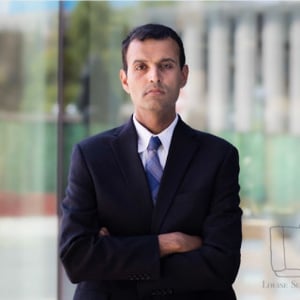
Managing Director, Berkeley Research Group (BRG)
Dr. Dasgupta served as Assistant Secretary for Trade and Economic Security, responsible for a comprehensive national security portfolio. His duties included oversight of the Committee on Foreign Investment in the United States (CFIUS), Team Telecom, the Forced Labor Enforcement Task Force (FLETF), Information and Communications Technology and Services (ICTS), Arctic security initiatives, the Icebreaker Collaboration Effort (ICE) Pact, and related trade matters. Sohan Dasgupta also served as political head of the Millennium Challenge Corporation (MCC), supporting U.S. foreign policy and national security objectives. Previously, he had served as Deputy General Counsel of the U.S. Department of Homeland Security (DHS).
Dr. Dasgupta holds a JD from the University of California, Berkeley, where he was elected to the Order of the Coif; a PhD in international trade and arbitration from the University of Cambridge; MSc from the University of Oxford; and BA in Economics–Operations Research and History from Columbia University. He commenced his legal career with clerkships on the U.S. Court of Appeals for the Ninth Circuit and the U.S. District Court for the Southern District of West Virginia.
Dr. Dasgupta has addressed the Hungarian, Romanian, and Guatemalan parliaments, and has spoken at the invitation of Members of the U.S. Congress, the British Parliament, the European Union Parliament, the Congress of the Philippines, and the Legislative Assembly of El Salvador.
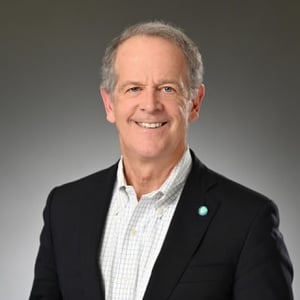
Visiting Professor of Public and International Affairs, Charles and Marie Robertson Visiting Professor, Princeton School of Public and International Affairs
Martin S. Flaherty is a longtime is Visiting Professor at the Princeton School of Public and International Affairs, where he was Fellow in the Program in Law and Public Affairs. He is also Leitner Family Professor of International Human Rights Law and Founding Co-Director of the Leitner Center for International Law and Justice at Fordham Law School. Professor Flaherty also currently teaches at Columbia Law School and Barnard College. Previously he has taught at China University of Political Science and Law and the National Judges College in Beijing, Sungkyunkwan University in Seoul, Queen’s University Belfast. Professor Flaherty earlier served as a law clerk for Justice Byron R. White of the U.S. Supreme Court and Chief Judge John Gibbons of the U.S. Court of Appeals for the Third Circuit.
Flaherty received a J.D. from Columbia Law School, where he was Book Reviews and Articles Editor of the Columbia Law Review, an M.A. and M.Phil., with distinction, from Yale (in history), and B.A. summa cum laude from Princeton. For the Leitner Center, Human Rights First, and the New York City Bar Association, he has led or participated in human rights missions to Northern Ireland, Turkey, Hong Kong, Mexico, Malaysia, Kenya, Romania and China. Professor Flaherty is currently the President of the American Association of the International Commission of Jurists, https://www.aaicj.org, a member of the Council on Foreign Relations, and a legal expert advisor at the Sixth Committee of the United Nations General Assembly.
Flaherty’s scholarly publications focus upon international human rights, foreign affairs, and constitutional law and history, and appear in such journals as the Columbia Law Review, the Yale Law Journal, the Michigan Law Review, the University of Chicago Law Review, Constitutional Commentary, the Harvard Journal of Law and Policy, and the Harvard Human Rights Journal. He has written, appeared, or been quoted in The New York Times, The Washington Post, The New Yorker, The Boston Globe, The Daily News, Newsday, the PBS Newshour, CNN, MSNBC, and NPR. He is also the author of the Restoring the Global Judiciary: Why the Supreme Court Should Rule in Foreign Affairs (Princeton University Press, 2019).

Professor Emeritus of Law, Antonin Scalia Law School, George Mason University
Jeremy A. Rabkin is a Professor Emeritus of Law at the Antonin Scalia Law School, George Mason University. Before joining the faculty in June 2007, he was for over two decades a professor in the Department of Government at Cornell University. Professor Rabkin serves on the board of directors of the Center for Individual Rights, a public interest law firm based in Washington, D.C. Previously he was a board member of the U.S. Institute of Peace and the board of academic advisors of the American Enterprise Institute.
Professor Rabkin’s books include Law Without Nations? (Princeton University Press, 2005). He authored “If You Need a Friend, Don’t Call a Cosmopolitan,” a chapter in Varieties of Sovereignty and Citizenship (Sigal R. Ben-Porath & Rogers M. Smith eds., University of Pennsylvania Press, 2012). His articles have appeared in major law reviews and political science journals and his journalistic contributions in a range of magazines and newspapers, including the Washington Post and the Wall Street Journal.

Chief Policy Counsel, Council on Criminal Justice and Senior Advisor, Right on Crime
Marc A. Levin is the Chief Policy Counsel for the Council on Criminal Justice (counciloncj.org) and Senior Advisor for Right on Crime.
An attorney and accomplished author on legal and public policy issues, Marc began the Foundation’s criminal justice program in 2005. This work contributed to nationally praised policy changes that have been followed by dramatic declines in crime and incarceration in Texas. Building on this success, in 2010, Levin developed the concept for the Right on Crime initiative, a TPPF project in partnership with Prison Fellowship and the American Conservative Union Foundation. Right on Crime has become the national clearinghouse for conservative criminal justice reforms and has contributed to the adoption of policies in dozens of states that fight crime, support victims, and protect taxpayers.
In 2014, Levin was named one of the “Politico 50” in the magazine’s annual “list of thinkers, doers, and dreamers who really matter in this age of gridlock and dysfunction.”
Marc has testified on criminal justice policy on four occasions before Congress and has testified before legislatures in states including Texas, Nevada, Kansas, Wisconsin, and California. He also has met personally with leaders such as U.S. Presidents, Speakers of the House, and the Justice Commtitee of the United Kingdom Parliament to share his ideas on criminal justice reform. In 2007, he was honored in a resolution unanimously passed by the Texas House of Representatives that stated, “Mr. Levin’s intellect is unparalleled and his research is impeccable.”
Since 2005, Marc has published dozens of policy papers on topics such as sentencing, probation, parole, reentry, and overcriminalization which are available on the TPPF website. Levin’s articles on law and public policy have been featured in publications such as the Wall Street Journal, USA Today, Texas Review of Law & Politics, National Law Journal, New York Daily News, Jerusalem Post, Toronto Star, Atlanta Journal-Constitution, Philadelphia Inquirer, San Francisco Chronicle, Washington Times, Los Angeles Daily Journal, Charlotte Observer, Dallas Morning News, Houston Chronicle, Austin American-Statesman, San Antonio Express-News and Reason Magazine.
In 1999, Marc graduated with honors from the University of Texas with a B.A. in Plan II Honors and Government. In 2002, Marc received his J.D. with honors from the University of Texas School of Law. Marc was a Charles G. Koch Summer Fellow in 1996. He served as a law clerk to Judge Will Garwood on the U.S. Court of Appeals for the Fifth Circuit and Staff Attorney at the Texas Supreme Court.

Vice President, Edwin Meese III Institute for the Rule of Law, Advancing American Freedom
John G. Malcolm oversees Advancing American Freedom’s work to increase understanding of the Constitution and the rule of law as Vice President of the organization’s Edwin Meese III Institute for the Rule of Law. Malcolm brings to the challenge a wealth of legal expertise and experience in both the public and private sectors.
Prior to joining Advancing American Freedom in 2025, Malcolm was the Vice President of the Institute for Constitutional Government and the Director of the Meese Center for Legal and Judicial Studies at the Heritage Foundation. Prior to joining Heritage in 2012, Malcolm was general counsel at the U.S. Commission on International Religious Freedom, as well as a distinguished practitioner in residence at Pepperdine Law School. From 2004 to 2009, Malcolm was executive vice president and director of worldwide anti-piracy operations for the Motion Picture Association.
Malcolm served as a deputy assistant attorney general in the Department of Justice’s Criminal Division from 2001 to 2004, where he oversaw sections on computer crime and intellectual property, domestic security, child exploitation and obscenity, and special investigations. Immediately prior to that, he was a founding partner in the Atlanta law firm of Malcolm & Schroeder, LLP.
From 1990 to 1997, Malcolm was an assistant U.S. attorney in Atlanta, assigned to the fraud and public corruption section, and also an associate independent counsel, investigating fraud and abuse in the Department of Housing and Urban Development. He was honored with the Director’s Award for Superior Performance for his work in connection with the successful prosecution of Walter Leroy Moody Jr., who assassinated an 11th Circuit judge and the head of the Savannah chapter of the NAACP.
A graduate of Harvard Law School and Columbia College, Malcolm began his career as a law clerk to a federal district court judge and a federal appellate court judge, and as an associate at the Atlanta-based law firm of Sutherland, Asbill & Brennan (new Eversheds Sutherland).
Malcolm, who resides in Washington, D.C., serves on the Board of Trustees of the Washington National Opera and is a Senate-confirmed member of the Board of Directors of the Legal Services Corporation, the largest funder of civil legal aid in the United States.
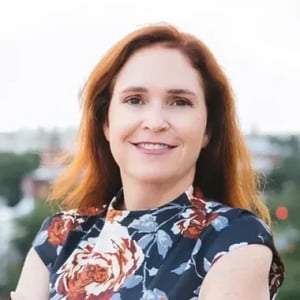
Founder & President, Due Process Institute
Shana founded the Due Process Institute because, after years of first-hand defense work and criminal legal reform advocacy, she became convinced that the Constitution needed and deserved its own lobbying firm--particularly in the area of procedural due process rights.
With 20 years of project management, lobbying, legal defense, and teaching experience, Shana's goal is to achieve meaningful solutions to as many of these problems, in the shortest amount of time possible, for the betterment of as many people as possible, as well as to prevent any of it from getting worse on her watch.
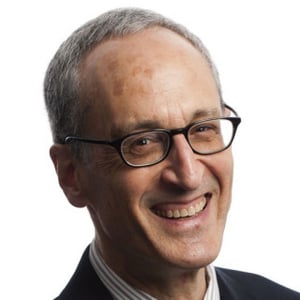
Chancellor’s Professor of Law, UC Irvine School of Law
Professor Simons is a leading scholar of tort law, criminal law, and law and philosophy and Co-director of the Center for Legal Philosophy. He has served since 2014 as Chief Reporter for the American Law Institute’s Restatement Third of Torts: Intentional Torts to Persons. In January 2019, he was the recipient of the 2019 William L. Prosser Award by the Association of American Law Schools Section on Torts and Compensation Systems, which recognizes “outstanding contributions of law teachers in scholarship, teaching and service” related to tort law and compensation systems.
Professor Simons has published influential scholarship concerning consent, assumption of risk and contributory negligence; the nature and role of mental states in criminal, tort and constitutional law; and negligence as a moral and legal concept. He has also explored such topics as bias crimes, corrective justice, the logic of egalitarian norms, mistake and impossibility in criminal law, and strict criminal liability.
Before joining UC Irvine School of Law, Prof. Simons was Professor of Law and The Honorable Frank R. Kenison Distinguished Scholar in Law at Boston University School of Law. He was a law clerk to U.S. Supreme Court Justice Thurgood Marshall and to Judge James L. Oakes, U.S. Court of Appeals for the Second Circuit. Prof. Simons also worked as an associate at Goodwin, Procter & Hoar in Boston, in the field of civil litigation. He received his J.D. from Michigan Law School, magna cum laude, and graduated from Yale University, summa cum laude, with a B.A. in philosophy.

George C. Dix Professor in Constitutional Law, Northwestern University Pritzker School of Law
John O. McGinnis is a graduate of Harvard College and Harvard Law School where he was an editor of the Harvard Law Review. He also has an MA degree from Balliol College, Oxford, in philosophy and theology. Professor McGinnis clerked on the U.S. Court of Appeals for the District of Columbia. From 1987 to 1991, he was deputy assistant attorney general in the Office of Legal Counsel at the Department of Justice. He is the author of Accelerating Democracy: Transforming Government Through Technology (Princeton 2013) and Originalism and the Good Constitution (Harvard 2013) (with M. Rappaport). He is a past winner of the Paul Bator award given by the Federalist Society to an outstanding academic under 40. He has been listed by the United States on the roster of panelists who may be called upon to decide World Trade Organization Disputes.
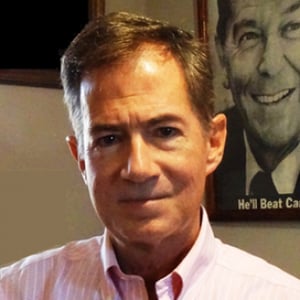
Former General Counsel of the U.S. Immigration and Naturalization, Former United States Ambassador to East Timor
Grover Joseph Rees is a Louisiana native whose family has lived in the Breaux Bridge/Lafayette area since the 1700s.
His first job after college was as an assistant to Congressman Dave Treen (R-LA3), who had just been elected as the first Republican Congressman from Louisiana since Reconstruction.
Rees graduated with honors from LSU Law School, where he served as Editor-in-Chief of the Louisiana Law Review. While in law school he worked on Ronald Reagan’s 1976 presidential campaign and was a Reagan delegate from Louisiana to the Republican National Convention. He also served as a member of the Lafayette Parish Republican Executive Committee and as a board member of Acadiana Right to Life.
In 1979, when Congressman Treen ran successfully for Governor, he asked Rees to write his authorized biography. The book, Dave Treen of Louisiana, was read and discussed widely during the campaign and after Treen’s election.
In 1985-86 Rees served as Special Counsel for Judicial Selection in President Reagan’s Justice Department, working closely with Attorney General Ed Meese to reorganize the judicial selection process to make it more philosophically oriented. These efforts resulted in the appointment of over 100 federal judges and were widely credited with transforming the federal judiciary.
From 1986 through 1991 Rees served as Chief Justice of the High Court of American Samoa, an Article I federal judicial position.
From 1991 through 1993 he was General Counsel of the U.S. Immigration and Naturalization Service.
In 1995 Rees went to work for the new Republican Congress as staff director and chief counsel of the Subcommittee on International Operations and Human Rights. He worked with subcommittee chairman Chris Smith (R.-N.J.) to cut U.S. funding for the International Planned Parenthood Federation and other organizations that perform and promote abortions overseas. Rees also worked on the drafting and enactment of the International Religious Freedom Act, the Trafficking Victims Protection Act, and other legislation that has helped to bring U.S. foreign policy into closer alignment not only with our national interests but also with our values.
In 2001-2002 Rees worked for Congressman Henry Hyde (R.-Ill.), who was then serving as Chairman of the House International Relations Committee.
From 2002 until 2006 Rees served as the first United States Ambassador to newly independent East Timor.
From 2006 until 2009 Ambassador Rees was the United States Special Representative for Social Issues, responsible for representing the United States on issues relating to vulnerable persons and the family within the United Nations system.
Ambassador Rees retired from government service in January 2009 and returned to Lafayette. He is married to Lan Dai Nguyen Rees and is a member of St. Genevieve’s Catholic parish in Lafayette. He was recently elected to serve as a member of the Louisiana Republican State Central Committee.
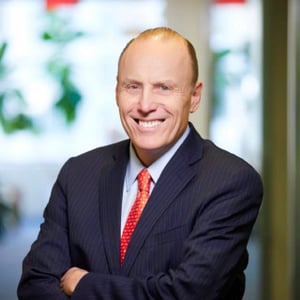
Senior Vice President, UN Foundation and President, the Better World Campaign
One of nation’s most esteemed experts on U.S.-UN affairs, Peter Yeo leads the Better World Campaign’s strategic engagement with Congress, the Administration, and organizations supporting stronger American leadership on the world stage. Yeo’s leadership has helped advance critical legislation in the U.S. Congress to ensure the country meets its obligations to the United Nations, UN Peacekeeping Operations, and UN agencies and organizations.
Yeo joined the Better World Campaign in 2009 with over twenty years of legislative, analytical, and management experience, including senior roles on Capitol Hill and in the State Department. Prior to arriving at UN Foundation, Yeo spent a decade as Deputy Staff Director on the House Foreign Affairs Committee. He has worked on a broad range of foreign policy and foreign aid issues, including leading negotiations for the landmark HIV/AIDS, Tuberculosis and Malaria Act of 2003 — PEPFAR — as well as the $50 billion reauthorization of the law in 2008. He also shepherded into law several measures dealing with China, Tibet, Burma, and East Timor.
Prior to his work with the Committee, Yeo served as a Deputy Assistant Secretary at the U.S. State Department, where he successfully advocated for repayment of the U.S. arrears to the UN, and was part of the U.S. delegation to the climate negotiations in Kyoto.
Yeo holds an master’s in East Asian Studies from Harvard University and a bachelor’s in East Asian Studies from Wesleyan University. He is a member of the Council on Foreign Relations and a Board Member of the U.S. Global Leadership Coalition.
United States Senator, Arizona

What Would the Founders Think of the War in Iran?
Sohan Dasgupta, Martin Flaherty, Jeremy A. Rabkin
In this Federalist Society America 250 series, experts analyze modern legal and policy debates through...
Discussing Attempts to Address Federal Overcriminalization
Marc Levin, John G. Malcolm, Shana O’Toole, Kenneth W. Simons
A recent executive order entitled “Fighting Overcriminalization in Federal Regulations” and two congressional proposals: the...
Reform or Withdraw? The United States and the Future of the United Nations
John O. McGinnis, Grover Joseph Rees, Peter Yeo
The United Nations was founded to promote peace, security, and international cooperation, but critics argue...
Topics
The Fed’s Remarkable ‘Independence’ Claim
This post originally appeared in The Daily Economy. In the course of human events, the...
Address by Senator John McCain
John McCain
Limited Government and the Rule of Law Thank you, Ted, for that kind introduction. I...
Book Review: Bretton Woods and Dumbarton Oaks: American Economic and Political Postwar Planning in the Summer of 1944 by Georg Schild
John Pickering
Bretton Woods and Dumbarton Oaks: American Economic and Political Postwar Planning in the Summer of...