
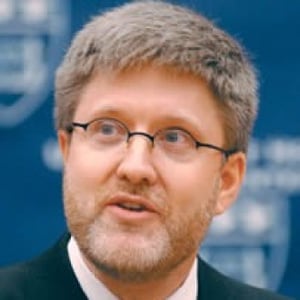
Professor of Law and the Mike and Teresa Baker College Professor, The University of Houston Law Center
Johnny Rex Buckles has been a faculty member of the University of Houston Law Center since August of 2000. He has also served as a Visiting Professor of Law at the Washington & Lee University School of Law. Professor Buckles has taught Taxation of Exempt Organizations, Federal Income Tax, Law & Theology, Estate Planning, Trusts & Wills, Contracts and Tax Policy Seminar. Professor Buckles’ primary research interests are in the law of tax and charity, and in law and theology. His publications include a number of law review articles and contributions to collective works. Professor Buckles holds a Juris Doctorate from the Harvard Law School, a Master of Arts in Biblical Studies from Dallas Theological Seminary, and a Bachelor of Science from Oklahoma State University.
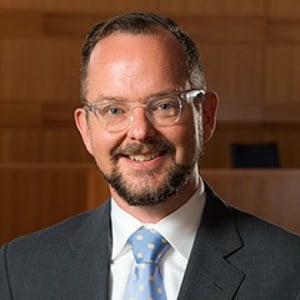
T.J. Maloney Chair in Business Law, Fordham University School of Law
Professor Griffith is an expert in corporate and financial regulatory law. He writes and speaks on corporate law, political economy, and the constitutional rights of corporations and other business associations. In addition to his academic writing, he has authored or contributed to many amicus briefs, including: Iowa v SEC, NCPPR v SEC, AFBR v SEC, and In re Tesla.
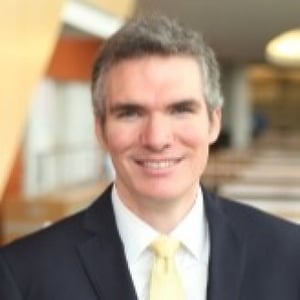
Associate Professor of Law, University of Florida Levin College of Law
Professor Ben Johnson is an Associate Professor of Law at the University of Florida Levin College of Law. He researches and writes on governance by committees. Sometimes, the governing committee is a board of directors. Other times, it is a committee of justices at the Supreme Court. His research has won awards from national organizations in law (AALS) and political science (APSA) and can be found in law reviews and peer reviewed outlets. His recent work on the Supreme Court has been published in the Columbia Law Review and Alabama Law Review. Earlier work on district judges with financial conflicts (published in the North Carolina Law Review) led to a large exposé in the Wall Street Journal. His game theoretic model of corporate fiduciary duties is forthcoming at the BYU Law Review. He has ongoing projects on the Supreme Court’s Shadow Docket, corporate fiduciary duties, shareholder voting, and machine learning.
Professor Johnson teaches Corporations (the only course in the curriculum where students learn to build and maintain institutions that can make the world a better place long after they are gone), Empirical Methods for Lawyers, and topics on the federal judiciary.
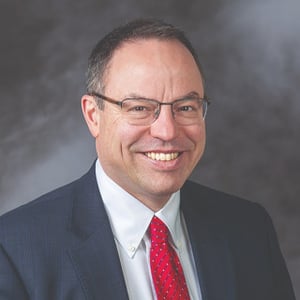
Professor of Law and J. Philip Johnson Faculty Fellow, University of North Dakota School of Law
Michael S. McGinniss is Professor of Law and J. Philip Johnson Faculty Fellow at the University of North Dakota School of Law, where he joined the faculty in 2010 and served as the Dean from 2019 to 2022. He chairs the executive committee for the Federalist Society's Practice Group on Professional Responsibility and Legal Education.
Before entering the legal academy, Professor McGinniss served for twelve years as a Disciplinary Counsel for the Supreme Court of Delaware. He currently teaches courses on Professional Responsibility, Advanced Legal Ethics, Civil Procedure, and Federal Courts. He also serves as Faculty Advisor for the North Dakota Law Review and the UND Law Federalist Society student chapter.
Professor McGinniss’ research and scholarship interests are wide-ranging and include lawyer and judicial ethics, lawyer discipline and regulation of the profession, constitutional law (especially First Amendment, separation of powers, and federalism), and cultural challenges faced by conservatives in the law schools and the legal profession. His most recent law review article, Declaring Independence to Secure Integrity: The Supreme Court Justices' Code of Conduct, was published in the Federalist Society Review. His article Expressing Conscience with Candor: Saint Thomas More and First Freedoms in the Legal Profession, was published in the Harvard Journal of Law & Public Policy.
Professor McGinniss has spoken to Federalist Society lawyer and student chapters across the country about judicial independence and ethics, especially relating to the federal courts and the United States Supreme Court Justices. In addition, he has spoken to several chapters about rising challenges to ideological diversity and targeting of conservative viewpoints in law schools and the legal profession. Although he is very pleased to speak on these and many other topics that may be of interest to lawyer and student chapters, in 2026-2027, he has particular interest in speaking on the topic “Lawyer Discipline as Political ‘Resistance’: Separation of Powers, Federalism, and the Rule of Law,” concerning his work-in-progress on the weaponization of professional disciplinary processes against conservative lawyers for political and ideological purposes.
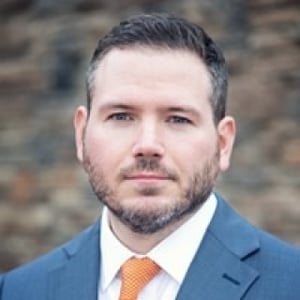
Associate Dean for Faculty Development and Scholarship, Professor of Law, Liberty University
Timothy M. Todd, Ph.D., serves as Associate Dean for Faculty Development and Scholarship and Professor of Law. He also serves as the Director of the Wealth Management and Financial Planning Program at the law school, which has the distinction of being the first exclusively JD-based, CFP Board–registered program in the country.
He earned his Ph.D. in Personal Financial Planning from Kansas State University. He also earned a Master of Science (M.S.) in Applied Economics (with a concentration in Financial Economics) from the Johns Hopkins University. Moreover, he earned a Graduate Certificate in Applied Statistics from Kansas State University.
Dr. Todd has taught an array of courses, including individual income taxation; taxation of estates and gifts; wills, trusts, and estates; mergers and acquisitions; business planning; and bankruptcy, among others.
Todd graduated summa cum laude from Liberty University School of Law, where he graduated first in his class and served as managing editor of the law review. He clerked for the Honorable Eric G. Bruggink of the United States Court of Federal Claims in Washington, D.C.
Dr. Todd has the distinct privilege of being the first Liberty Law alumnus to join the law school faculty full time. Todd also served as Associate Dean for Academic Affairs from 2016 to 2020, and he now serves as the first Associate Dean of Faculty Development & Scholarship at Liberty Law.
Dean Todd serves as a regular Forbes contributor, writing about taxes, tax planning, tax cases, and related areas.
In 2015 he was awarded an ATAX Research Fellowship, being named the 2015 John Raneri Fellow at the University of New South Wales School of Taxation and Business Law in Sydney, Australia.
Todd has been quoted in outlets such as Bloomberg, Bloomberg BNA Daily Tax Report, Tax Notes, Tax Notes Today, Accounting Today, and Business News Daily.
He is a former chair and vice chair of the ABA Section of Taxation’s Individual and Family Taxation Committee. He is a member of the AICPA National Financial Literacy Commission. He also serves as a council member for the Virginia Bar Association Taxation Section. Moreover, he has worked with the ABA’s Joint Task Force on Governance Issues for Distressed Companies, and he formerly served as a member of the AICPA’s Tax Practice and Procedures Committee.
Dr. Todd’s research and teaching interests include taxation, business planning, and corporate law, among other topics. His works have been published in Tax Notes, State Tax Notes, Texas A&M Law Review, Virginia Tax Review, Buffalo Law Review, University of Pittsburgh Law Review, Marquette Law Review, the American Bankruptcy Institute Law Review, the Journal of Taxation, the University of Kansas Law Review, the South Carolina Law Review, the Charleston Law Review, the Journal of Tax Practice and Procedure, and the Liberty University Law Review.
In addition, he also holds an M.S. in Accounting, and he graduated summa cum laude with a B.S. in Business (specializing in finance) from Liberty University.
Todd is licensed to practice law in the Commonwealth of Virginia. He is admitted to the bars of the Supreme Court of Virginia, the United States Court of Appeals for the Federal Circuit, the United States Court of Federal Claims, and the United States Tax Court. He is a member of the Virginia State Bar, the Virginia Bar Association, the U.S. Court of Federal Claims Bar Association, the American Bar Association, the American Institute of Certified Public Accountants, and the American Academy of Attorney-Certified Public Accountants.
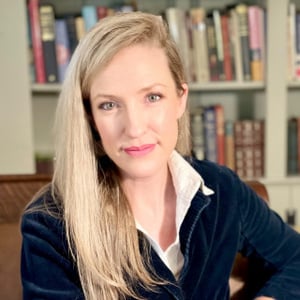
Resident Fellow, Yale Law School
Lorianne Updike Toler is a constitutional legal historian and president of Libertas Constitutional Consulting, where she specializes in constitution-writing best practices, having worked and lived in Libya and the MENA region. She was the “midwife” to The Quill Project at Oxford and the founding president of The Constitutional Sources Project (www.ConSource.org) in Washington, DC. A graduate of Brigham Young University’s School of Communications and Law School (magna cum laude) and Oxford (MSt), she has published, spoken, and taught on US constitutional history, comparative constitutional history, intellectual property, Christianity, and religious freedom.
Professor of Law and the Mike and Teresa Baker College Professor, The University of Houston Law Center
Johnny Rex Buckles has been a faculty member of the University of Houston Law Center since August of 2000. He has also served as a Visiting Professor of Law at the Washington & Lee University School of Law. Professor Buckles has taught Taxation of Exempt Organizations, Federal Income Tax, Law & Theology, Estate Planning, Trusts & Wills, Contracts and Tax Policy Seminar. Professor Buckles’ primary research interests are in the law of tax and charity, and in law and theology. His publications include a number of law review articles and contributions to collective works. Professor Buckles holds a Juris Doctorate from the Harvard Law School, a Master of Arts in Biblical Studies from Dallas Theological Seminary, and a Bachelor of Science from Oklahoma State University.

Professor of Law, Ohio Northern University Pettit College of Law
Scott Gerber clerked for U.S. District Judge Ernest C. Torres of the District of Rhode Island and practiced with the Boston-based law firm Bingham, Dana & Gould. He is a member of the Massachusetts, Colorado and Virginia bars as well as the U.S. Supreme Court bar. He is the 2002, 2009, 2011 and 2012 winner of the Fowler V. Harper Award for excellence in legal scholarship and the 2004, 2013 and 2016 recipient of the Daniel S. Guy Award for excellence in legal journalism. He held the Ella & Ernest Fisher chair in law at Ohio Northern University from 2008-10. He has served on the Ohio Advisory Committee of the U.S. Commission on Civil Rights since 2008 and was appointed to the Association of American Law Schools Committee to Review Scholarly Papers for the 2018 Annual Meeting. He is an associated scholar at Brown University's Political Theory Project. StateStats.org named him one of the top law professors in Ohio. He was on sabbatical as a visiting professor at Brown University's Political Theory Project during the 2018-19 academic year.
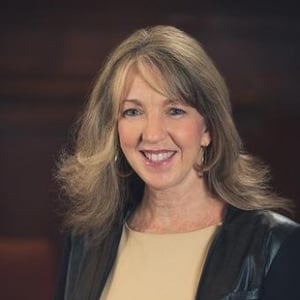
John Brown McCarty Professor of Family Law, Regent University School of Law
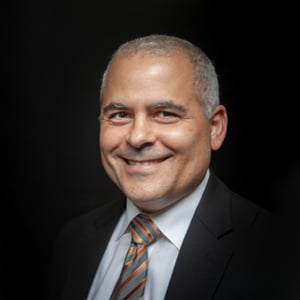
Associate Dean for Academic Affairs and Professor of Law, Ave Maria School of Law
Antony “Tony” Kolenc joined the Ave Maria School of Law faculty in 2022 as the Director of the Veterans and Servicemembers Law Clinic (VSLC), which gives students the opportunity to help those who have served in the U.S. Armed Forces, representing them in litigation, administrative proceedings, and veterans treatment courts. Professor Kolenc taught in several law schools after serving over 21 years in the United States Air Force, retiring as a Lieutenant Colonel from the Judge Advocate General’s (JAG) Corps. During his career as a JAG, he litigated both civil and criminal cases before trial and appellate courts, including the Court of Appeals for the Armed Forces and the U.S. Court of Appeals for the Tenth Circuit. He has also taught at the United States Air Force Academy in Colorado Springs and Florida Coastal School of Law as a tenured professor.
Professor Kolenc received his Juris Doctor degree in 1999, graduating at the top of his class from the University of Florida Levin College of Law. While there, he served as a senior editor on the Florida Law Review and as a competitor and coach on the Justice Campbell Thornal Moot Court Board. He also earned his Master of Arts degree in Theology and Christian Ministry from the Franciscan University of Steubenville. His professional writings have focused on matters of constitutional law and military policy, especially focusing on Freedom of Religion. His articles have appeared in several academic legal journals and magazines. He also writes a regular legal column for homeschooling families in Practical Homeschooling Magazine and has penned an award-winning historical fiction trilogy for teens. He and his wife, Alisa, homeschooled their five children. You can learn more about him at www.antonykolenc.com.
Assistant Professor of Political Science, Old Dominion University
Dean Emeritus and Harvey R. Miller Professor of Law & Economics, Columbia Law School
David Schizer served as Dean of Columbia Law School from 2004 to 2014, and as CEO of the American Jewish Joint Distribution Committee, a global Jewish humanitarian organization, from 2017 to 2019. A co-chair of Columbia University's new task force on antisemitism, he also is a co-founder and co-chair of the Center for Israeli Legal Studies at Columbia Law School; co-founder and co-chair of the Richman Center for Law, Business, and Public Policy; and a Charter Trustee of Ramaz. He served as a law clerk to Justice Ruth Bader Ginsburg on the U.S. Supreme Court.
Professor of Law, Northern Kentucky University Chase College of Law
Eric Alden is a Professor of Law who came to Chase from Palo Alto, California, where he had previously been a full equity partner with two major AmLaw 100 firms in corporate and securities law in Silicon Valley. He has broad securities regulatory and transactional experience, including public company disclosure counseling, securities regulatory compliance, corporate governance, public and private offerings of equity, debt and hybrid securities, mergers and acquisitions, the formation of private investment funds and the representation of banks and hedge funds in their interactions with the public markets, with an overall emphasis on technical securities law and SEC compliance matters.
During 2005-2006, Alden served as an Attorney Fellow at the Securities and Exchange Commission (SEC) in Washington, D.C., in the Division of Corporation Finance, Office of Chief Counsel. In that capacity, he oversaw and administered for the 2006 proxy season the SEC's Rule 14a-8 shareholder proposal program, which has functioned as the central battleground of corporate governance disputes between institutional shareholders and public company boards of directors.
Prior to joining Chase, Alden taught Corporate Governance as a Lecturer at the University of California Berkeley School of Law, and taught Securities Regulation as an Adjunct Professor at the University of California Hastings College of Law. During 2010-2011, he was a Research Fellow in Securities Regulation and Corporate Governance at the Berkeley Center for Law, Business and the Economy. He has published articles in the Harvard Journal of Law and Public Policy, the Berkeley Business Law Journal, Hawaii Law Review, the Nevada Law Journal, and Northeastern University Law Review (forthcoming), in addition to various industry publications. His areas of teaching focus are Contracts, Corporations, Business Organizations, Startups and Venture Capital, Mergers and Acquisitions, and Securities Regulation.
Assistant Professor of Law & Director of Field Placements, Belmont University College of Law
Prior to joining the Belmont faculty, Ellen Black was an associate at Chadbourne & Parke LLP in New York City where she practiced in the areas of products liability and commercial litigation. While at Chadbourne, she served on the recruiting committee and was actively engaged in pro bono projects, including counseling incarcerated women on their child visitation and custodial rights, representing a criminal defendant in a pro bono appeal, and assisting New York Interfaith Disaster Services on various legal issues. Professor Black also attended and graduated from the International Association Defense Counsel Trial Academy. Prior to practicing at Chadbourne, Professor Black worked as an associate at the firm Gholson, Hicks & Nichols in Columbus, Mississippi, where she focused on litigation involving medical malpractice, toxic tort, and construction cases. She also taught as an adjunct instructor at Mississippi University for Women.
Professor Black serves on the Tennessee Alliance for Legal Services Board and the Mississippi University for Women Foundation Board and is a member of the Food and Drug Law Institute. She is admitted to the New York, Tennessee, and Mississippi bars. She teaches Medical Malpractice, Products Liability and Family Law and serves as Director of the Field Placements Program. She is also the faculty sponsor for the Women’s Law Student Association.
Professor Black earned her Bachelor of Arts degree summa cum laude from Mississippi University for Women and her Juris Doctor degree magna cum laude from Texas Tech University School of Law, where she held the position of articles editor on the Texas Tech Law Review.
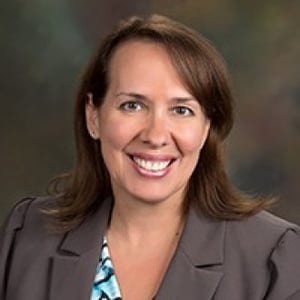
Professor of Law, Washburn University School of Law
Professor Boyack has an extensive background practicing, teaching and writing about legal topics at the nexus of contract and property law. She has written and presented on issues relating to the housing crisis, the secondary mortgage market, common interest community governance, and bankruptcy, and is currently working on projects exploring transactional freedom and individual liberties in the context of real property development and control. Professor Boyack is an innovative teacher and is involved in the Institute for Law Teaching and Learning as well as other joint pedagogical projects focused on improving teaching in law schools. Professor Boyack has participated in Washburn Law's commercial law project in the Republic of Georgia, and was a featured presenter at Free University's 2013 Commercial Law Symposium in Tbilisi. She was voted Professor of the Year at Washburn Law in 2015.
Prior to joining the faculty at Washburn University School of Law, Professor Boyack taught Contracts, Property, Real Estate Transactions, Professional Responsibility and Public International Law as a visiting professor at Fordham University School of Law, George Washington University School of Law, and Catholic University of America Columbus School of Law. She also taught Real Estate Finance as an adjunct professor at George Mason University School of Law.
After graduating from University of Virginia School of Law in 1995, Professor Boyack practiced corporate finance and real estate law for 13 years in New York City and the Washington, D.C. area with Reed Smith; Fried, Frank, Harris, Shriver & Jacobson; Orrick, Herrington & Sutcliffe; Goodwin Proctor; and O'Melveny & Myers and as in-house regional counsel to Toll Brothers, Inc., the largest publicly held national development company. While in law school, she was notes editor for the Virginia Journal of International Law and directed the Philip C. Jessup International Moot Court Competition. Professor Boyack also clerked for Judge John Gleeson of the U.S. District Court, Eastern District of New York.
Professor Boyack is admitted to practice in New York, the District of Columbia, and Virginia. She is proficient in Russian.
Professor Boyack is Co-Director of the Business and Transactional Law Center.
Professor of Law and the Mike and Teresa Baker College Professor, The University of Houston Law Center
Johnny Rex Buckles has been a faculty member of the University of Houston Law Center since August of 2000. He has also served as a Visiting Professor of Law at the Washington & Lee University School of Law. Professor Buckles has taught Taxation of Exempt Organizations, Federal Income Tax, Law & Theology, Estate Planning, Trusts & Wills, Contracts and Tax Policy Seminar. Professor Buckles’ primary research interests are in the law of tax and charity, and in law and theology. His publications include a number of law review articles and contributions to collective works. Professor Buckles holds a Juris Doctorate from the Harvard Law School, a Master of Arts in Biblical Studies from Dallas Theological Seminary, and a Bachelor of Science from Oklahoma State University.
Director of Legal Studies, The University of Southern Mississippi
Mike Lavender was born and raised in Athens, Georgia. After attending the University of Georgia and completing his undergraduate degree at Liberty University, he received his JD from the Walter F. George School of Law at Mercer University. He has studied European Human Rights Law and Russian Law at the University of London.
Mr. Lavender practiced law in Georgia for 10 years primarily in the areas of corporate law, nonprofit law and real estate law. While practicing law, he was recognized as a future leader by the Georgia Bar Association and as a Rising Star by Super Lawyer in the area of Nonprofit Organizations.
Mr. Lavender serves as the Co-Director of the Center for Human Rights and Civil Liberties. Mr. Lavender serves as a site team member for the American Bar Association and is a frequent speaker on undergraduate legal education.
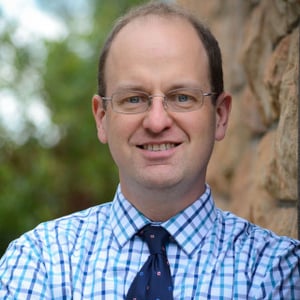
Professor of Law, University of Wyoming College of Law
George Mocsary is an expert in corporate and small-business law, and the law of firearms.
Currently, he is Professor of Law, Founder & Director of Firearms Research Center, and Director of the Business Planning Practicum and at the University of Wyoming College of Law.
Professor Mocsary teaches and writes about Agency & Partnership, Contracts, Corporations, Securities Regulation, the Second Amendment, and Firearms Law, including the intersection of Firearms Law and private law. He is a co-author of Firearms Law and the Second Amendment: Regulation, Rights, and Policy (3rd ed. 2021), the first casebook on this topic.
Prior to his appointment at Wyoming, he served as an Associate Professor of Law at the Southern Illinois University School of Law and spent two years as a Visiting Assistant Professor at the University of Connecticut School of Law. He practiced corporate and bankruptcy law at Cravath, Swaine and Moore in New York, and clerked for the Honorable Harris L. Hartz of the U.S. Court of Appeals for the Tenth Circuit.
Professor Mocsary holds a J.D. from Fordham Law School and an M.B.A. from the University of Rochester Simon School of Business. At Fordham, he graduated first in his class, and served as Notes and Articles Editor of the Fordham Law Review. He has published in the George Washington Law Review, George Mason Law Review, Fordham Law Review, Duke Law Journal Online, and other journals. His work has been cited by the Supreme Court of the United States, several U.S. Courts of Appeals, the Supreme Court of Illinois, the Delaware Court of Chancery, and other courts.
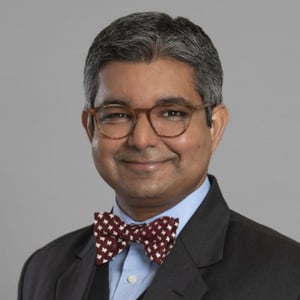
Professor of Law and Director, Intellectual Property and Information Law Program, Benjamin N. Cardozo School of Law, Yeshiva University
Saurabh Vishnubhakat is a Professor of Law and Director of the Intellectual Property and Information Law Program at Cardozo Law. He is also a Research Fellow at the Duke Law Center for Innovation Policy and a Senior Scholar at the George Mason University Center for IP and Innovation Policy. Previously, he held joint appointments as a Professor of Law and Professor of Engineering at Texas A&M University.
Professor Vishnubhakat’s expertise is in intellectual property, administrative law and federal litigation, especially from an empirical perspective. His legal writings have been cited in federal judicial opinions, agency regulations and over two dozen Supreme Court briefs. His latest work is published or forthcoming in the Indiana Law Journal, the Washington and Lee Law Review and the Iowa Law Review as well as the peer-reviewed Journal of the Copyright Society of the USA and the Journal of Economic Perspectives.
His research explores the interaction of the U.S. intellectual property system with federal courts and agencies, among other topics. With a background in the natural sciences, Professor Vishnubhakat brings a scientific mindset to legal thinking and is dedicated to teaching students how to build arguments with analytical rigor.
Prior to his appointment at Texas A&M, Professor Vishnubhakat served in the United States Patent and Trademark Office as principal legal advisor to that agency’s first two chief economists. He was also a faculty fellow at Duke Law School, where he co-taught patent law and was a postdoctoral associate at the Duke Center for Public Genomics, where he researched law and policy issues surrounding innovation in genetics and biomedicine.
Professor Vishnubhakat holds both a J.D. and LL.M. in intellectual property from the University of New Hampshire Franklin Pierce School of Law, where he was an editor of the Law Review. He also holds a B.S. in chemistry from the Georgia Institute of Technology. He is admitted to the bars of Texas, Illinois, the U.S. Court of Appeals for the Federal Circuit and the Supreme Court of the United States.
Associate Professor of Law, University of Tennessee College of Law
Professor Areheart is an Associate Professor at UT. He writes about antidiscrimination theory, disability rights, and social movements. Professor Areheart is particularly interested in the structure of employment discrimination laws and the major normative theories that animate them. His articles have been published or are forthcoming in the Yale Law Journal, Minnesota Law Review, Boston College Law Review,University of Chicago Law Review,Michigan Law Review, Indiana Law Journal, Alabama Law Review, and George Washington Law Review.
In 2017, Professor Areheart was awarded the Michael J. Zimmer Award, a national prize recognizing “a rising scholar who values workplace justice and community, and who has made significant contributions to the field of labor and employment law scholarship.” He is a current Chair of the SEALS Prospective Law Teachers Workshop. He is a past Chair of the AALS Employment Discrimination section and the AALS New Law Professors section.
Professor Areheart teaches Business Associations, Contracts, Employment Discrimination, and Employment Law.
Professor of Law and the Mike and Teresa Baker College Professor, The University of Houston Law Center
Johnny Rex Buckles has been a faculty member of the University of Houston Law Center since August of 2000. He has also served as a Visiting Professor of Law at the Washington & Lee University School of Law. Professor Buckles has taught Taxation of Exempt Organizations, Federal Income Tax, Law & Theology, Estate Planning, Trusts & Wills, Contracts and Tax Policy Seminar. Professor Buckles’ primary research interests are in the law of tax and charity, and in law and theology. His publications include a number of law review articles and contributions to collective works. Professor Buckles holds a Juris Doctorate from the Harvard Law School, a Master of Arts in Biblical Studies from Dallas Theological Seminary, and a Bachelor of Science from Oklahoma State University.
Professor of Law, Michigan State University (currently serving as FCC General Counsel)
Professor Candeub joined the MSU Law faculty in fall 2004. He is also a Fellow with MSU's Institute of Public Utilities. Prior to joining MSU, he served as an advisor at the Federal Communications Commission (FCC). From 1998 to 2000, Professor Candeub was a litigation associate for the Washington D.C. firm of Jones, Day, Reavis & Pogue and also has served as a corporate associate with Cleary, Gottlieb, Steen & Hamilton, also in Washington, D.C. Immediately following law school, he clerked for Chief Judge J. Clifford Wallace, U.S. Court of Appeals for the Ninth Circuit. While in law school, Professor Candeub was an articles editor for the University of Pennsylvania Law Review.
Professor Candeub's scholarly interests focus on the law and regulation of communications, internet, technology. His numerous law review articles and scholarly papers have placed him at the center of legal and policy controversies, and he often writes for popular outlets such as the Wall Street Journal and US News. Federal courts, including the U.S. Supreme Court, have cited and relied upon his work.
He joined the Trump administration in 2019 as Deputy Assistant Secretary of Commerce for Telecommunications and Information and assumed the role of Acting Assistant Secretary. He later joined the Department of Justice as Deputy Associate Attorney General.
Professor Candeub is a senior fellow at the D.C.-based Center of Renewing America.
Assistant Professor, Savannah Law School
Professor D’Agostino is an Assistant Professor teaching Torts and Evidence. He also has interests in contracts, international business law, law and philosophy, and law and science, particularly the effects of modern science on law. Formerly a Legal Fellow in the D.C. office of Congressman Tom Price of Georgia, a Researcher at Georgetown University Law Center, and a Visiting Scholar at the Southeastern Legal Foundation, he also served as a U.S. Senate Judiciary Committee Law Clerk for Senator Tom Coburn of Oklahoma and as a Legal Intern for the U.S. Attorney’s Office for the District of Columbia, Civil Division.
Professor D’Agostino was a member of the Editorial Board of the Virginia Law Review and Executive Editor of the Virginia Journal of International Law. In 2010, he served on the National Symposium Editorial Board of the Harvard Journal of Law & Public Policy and as a pro bono researcher for the U.N. Special Rapporteur on Violence Against Women. He helped to organize the Federalist Society’s 2011 National Student Symposium held at the University of Virginia School of Law and keynoted by U.S. Supreme Court Justice Clarence Thomas, a Savannah area native.
Welpton & Wise Professor of Law, University of Nebraska College of Law
Professor Rick Duncan is the Welpton & Wise Professor of Law at the University Of Nebraska College Of Law. He is a graduate of the Cornell Law School and served as an editor of the Cornell Law Review. He teaches Constitutional Law with a special emphasis on the law of religious freedom, free speech, and federalism. Duncan has written numerous books, articles, and commentaries on a wide variety of legal topics. His recent publications include an article on Justice Scalia’s legacy, another on Kermit Gosnell and Roe v. Wade, a piece on the Electoral College and Federalism, a 2019 piece on Masterpiece Cakeshop and the First Amendment, and three recent articles on the “no compelled speech” doctrine as a First Amendment defense against authoritarianism and tyranny. His most recent article, on School Choice and the First Amendment, will be published in 2023 in Case Western Law Review. He is also the co-author of a book on Secured Transactions under Article 9 of the UCC. He served as Chairman of the Nebraska Advisory Committee to the U.S. Commission on Civil Rights during the Reagan Administration. He also loves to speak at Federalist Society meetings around the country on life, liberty, and the pursuit of federalism.
Duncan has five children, five grandchildren, and a wonderful wife who help him pursue happiness. He loves lifting weights (particularly going heavy on the incline bench press), attending Broadway musicals and plays, including Hamilton: An American Musical which he has seen 12 times (possibly a Nebraska record). He regularly reads both the Bible and the New York Times because it is important to keep up with what both sides have to say. He loves following major league baseball, especially the San Diego Padres. And his favorite legal aphorism is “first come rights then comes government to secure those rights.”
Associate Professor, Universite de Montreal
Associate Dean for Administrative Affairs, The George Washington University, 2001-2003
Professor of Law, Roger Williams University School of Law, 1995-2001.
Selected Publications:
Regulatory Takings and the Original Understanding, 45 Wm. & Mary Law Review 2053 (2004)
Judicial Review Before John Marshall, 72 George Washington Law Review 51 (2003)
Public Use and the Original Understanding of the Takings Clause, 53 Hastings Law Journal 1245 (2002)
The Economic Origins of the Seventh Amendment, 87 Iowa Law Review 145 (2001)
The Law-Finding Function of the American Jury, 1999 Wisconsin Law Review 377 (1999)
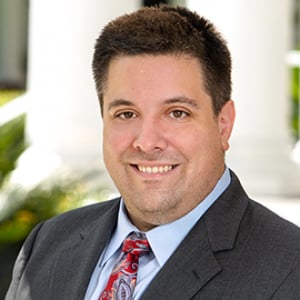
Sheila M. McDevitt Professor of Law and Faculty Director of the Election Law Center, Florida State University College of Law
Professor Morley joined FSU Law in 2018, and teaches and writes in the areas of election law, constitutional law, remedies, and the federal courts. He is best known for his work on election emergencies and post-election litigation, nationwide and other defendant-oriented injunctions, the jurisdiction of the federal courts and their equitable powers more generally. He has testified before congressional committees, made presentations to election officials for the U.S. Election Assistance Commission and participated in bipartisan blue-ribbon groups to develop election reforms. The governor of Florida also appointed Professor Morley to the Criminal Punishment Code Task Force, to propose potential revisions to the legislature.
The U.S. Supreme Court has cited several of his articles, and he was counsel of record for the successful Petitioner in a landmark campaign finance case. Professor Morley has appeared on C-SPAN, Court TV, Fox News and numerous local news programs, and has been quoted in the Washington Post, Los Angeles Times, Roll Call, Politico, U.S. News and World Report, and a wide range of other national publications. His work has been published in many of the nation’s top law reviews, including the Georgetown Law Journal, Northwestern University Law Review, Boston University Law Review and Emory Law Journal.
Before joining FSU Law, Professor Morley was a Climenko Fellow and Lecturer in Law at Harvard Law School. Prior to his experience in academia, he served in government as special assistant to the General Counsel of the Army at the Pentagon, as well as a law clerk for Judge Gerald B. Tjoflat of the U.S. Court of Appeals for the Eleventh Circuit. During his tenure with the Army General Counsel’s office, he was awarded the Meritorious Civilian Service Award and the Army Staff Lapel Pin. He also worked as an associate at Williams & Connolly LLP and the Supreme Court & Appellate group of Winston & Strawn, LLP, both in Washington, D.C.
Professor Morley earned his J.D. from Yale Law School in 2003, where he was a senior editor on the Yale Law Journal; served on the moot court board; and received the Thurman Arnold Prize for Best Oralist in the Morris Tyler Moot Court of Appeals.

Professor of Law, Florida Coastal School of Law
Prof. Shannon has expertise in civil procedure, legal process, and federal courts and litigation. Prior to joining Florida Coastal School of Law in 2004, Prof. Shannon was an Instructor/Visiting Associate Professor at University of Idaho College of Law and an Attorney with Helsell Fetterman LLP. He earned a J.D. from University of Washington School of Law and a B.A. from University of Washington.
Professor of Law and the Mike and Teresa Baker College Professor, The University of Houston Law Center
Johnny Rex Buckles has been a faculty member of the University of Houston Law Center since August of 2000. He has also served as a Visiting Professor of Law at the Washington & Lee University School of Law. Professor Buckles has taught Taxation of Exempt Organizations, Federal Income Tax, Law & Theology, Estate Planning, Trusts & Wills, Contracts and Tax Policy Seminar. Professor Buckles’ primary research interests are in the law of tax and charity, and in law and theology. His publications include a number of law review articles and contributions to collective works. Professor Buckles holds a Juris Doctorate from the Harvard Law School, a Master of Arts in Biblical Studies from Dallas Theological Seminary, and a Bachelor of Science from Oklahoma State University.
Professor of Law and the Mike and Teresa Baker College Professor, The University of Houston Law Center
Johnny Rex Buckles has been a faculty member of the University of Houston Law Center since August of 2000. He has also served as a Visiting Professor of Law at the Washington & Lee University School of Law. Professor Buckles has taught Taxation of Exempt Organizations, Federal Income Tax, Law & Theology, Estate Planning, Trusts & Wills, Contracts and Tax Policy Seminar. Professor Buckles’ primary research interests are in the law of tax and charity, and in law and theology. His publications include a number of law review articles and contributions to collective works. Professor Buckles holds a Juris Doctorate from the Harvard Law School, a Master of Arts in Biblical Studies from Dallas Theological Seminary, and a Bachelor of Science from Oklahoma State University.
Professor of Law and the Mike and Teresa Baker College Professor, The University of Houston Law Center
Johnny Rex Buckles has been a faculty member of the University of Houston Law Center since August of 2000. He has also served as a Visiting Professor of Law at the Washington & Lee University School of Law. Professor Buckles has taught Taxation of Exempt Organizations, Federal Income Tax, Law & Theology, Estate Planning, Trusts & Wills, Contracts and Tax Policy Seminar. Professor Buckles’ primary research interests are in the law of tax and charity, and in law and theology. His publications include a number of law review articles and contributions to collective works. Professor Buckles holds a Juris Doctorate from the Harvard Law School, a Master of Arts in Biblical Studies from Dallas Theological Seminary, and a Bachelor of Science from Oklahoma State University.

7 Minute Presentations of Works in Progress Panel 1-B
New Orleans, LA7 Minute Presentations of Works in Progress Panel 2-A
24th Annual Federalist Society Faculty Conference
San Diego, CA7 Minute Presentations of Works in Progress Panel 2-B
23rd Annual Federalist Society Faculty Conference
7 Minute Presentations of Works in Progress Panel 1-B
20th Annual Federalist Society Faculty Conference
San Diego, CA7 Minute Presentations of Works in Progress Panel 2-A
19th Annual Faculty Conference
San Francisco, CADebating the Constitutionality of Intelligent Design in Public Schools
East Lansing, MITax Exempt Status of Churches, the Establishment Clause, and Political Speech
Boston, MAIs Teaching Intelligent Design in Public Schools Constitutional?
Memphis, TN