
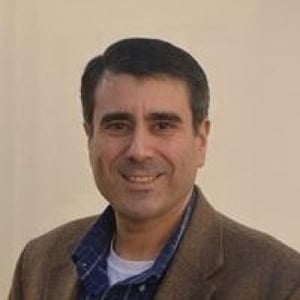

George C. Dix Professor in Constitutional Law, Northwestern University Pritzker School of Law
John O. McGinnis is a graduate of Harvard College and Harvard Law School where he was an editor of the Harvard Law Review. He also has an MA degree from Balliol College, Oxford, in philosophy and theology. Professor McGinnis clerked on the U.S. Court of Appeals for the District of Columbia. From 1987 to 1991, he was deputy assistant attorney general in the Office of Legal Counsel at the Department of Justice. He is the author of Accelerating Democracy: Transforming Government Through Technology (Princeton 2013) and Originalism and the Good Constitution (Harvard 2013) (with M. Rappaport). He is a past winner of the Paul Bator award given by the Federalist Society to an outstanding academic under 40. He has been listed by the United States on the roster of panelists who may be called upon to decide World Trade Organization Disputes.
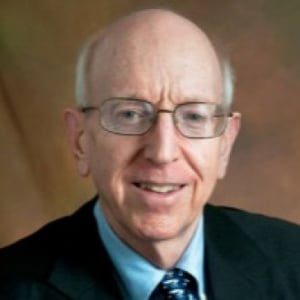
Senior Lecturer in Law, University of Chicago Law School
Following his graduation from Harvard Law School, Judge Posner clerked for Justice William J. Brennan, Jr. From 1963 to 1965, he was assistant to Commissioner Philip Elman of the Federal Trade Commission. For the next two years, he was assistant to the solicitor general of the United States. Prior to going to Stanford Law School in 1968 as Associate Professor, Judge Posner served as general counsel of the President's Task Force on Communications Policy. He first came to the University of Chicago Law School in 1969, and was Lee and Brena Freeman Professor of Law prior to his appointment in 1981 as a judge of the US Court of Appeals for the Seventh Circuit. He was the chief judge of the court from 1993 to 2000.
Judge Posner has written a number of books, including Economic Analysis of Law (9th ed., 2014); The Economics of Justice (1981); Law and Literature (3rd ed. 2009); The Problems of Jurisprudence (1990); Cardozo: A Study in Reputation (1990); The Essential Holmes (1992); Sex and Reason (1992); Overcoming Law (1995); The Federal Courts: Challenge and Reform (1996); Law and Legal Theory in England and America (1996); The Problematics of Moral and Legal Theory (1999); Antitrust Law (2d ed. 2001); Law, Pragmatism, and Democracy (2003); Catastrophe: Risk and Response (2004); Preventing Surprise Attacks: Intelligence Reform in the Wake of 9/11 (2005); How Judges Think (2008); A Failure of Capitalism: The Crisis of '08 and the Descent into Depression (2009); The Crisis of Capitalist Democracy (2010); The Behavior of Federal Judges: A Theoretical and Empirical Study of Rational Choice (coauthored with Lee Epstein and William M. Landes) (2013); and Reflections on Judging (2013). He also wrote books on the Clinton impeachment and Bush v. Gore, many articles in legal and economic journals, and book reviews in the popular press.
He has taught administrative law, antitrust, economic analysis of law, history of legal thought, conflict of laws, regulated industries, law and literature, the legislative process, family law, primitive law, torts, civil procedure, evidence, health law and economics, law and science, and jurisprudence. He was the founding editor of the Journal of Legal Studies and (with Orley Ashenfelter) the American Law and Economics Review. He is an Honorary Bencher of the Inner Temple and a corresponding fellow of the British Academy, and he was the President of the American Law and Economics Association from 1995 to 1996 and the honorary President of the Bentham Club of University College, London, for 1998. He has received honorary degrees from leading American and foreign universities, along with a number of awards, including the Thomas Jefferson Memorial Foundation Award in Law from the University of Virginia in 1994, the Marshall-Wythe Medallion from the College of William and Mary in 1998, the 2003 Research Award from the Fellows of the American Bar Foundation, the 2003 John Sherman Award from the US Department of Justice, the Learned Hand Medal for Excellence in Federal Jurisprudence from the Federal bar Council in 2005, the Thomas C. Schelling Award from the John F. Kennedy School of Government at Harvard University in 2005, and the Ronald H. Coase Medal from the American Law and Economics Association in 2010.
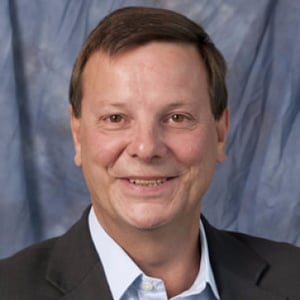
Professor of Law, Antonin Scalia Law School, George Mason University
Professor of Law Michael S. Greve joined the faculty of the Antonin Scalia Law School, George Mason University in fall 2012 after having served as John G. Searle Scholar at the American Enterprise Institute (AEI), where he specialized in constitutional law, courts, and business regulation and served as chairman of the Competitive Enterprise Institute. Prior to joining AEI, Greve was founder and co-director of the Center for Individual Rights, a public interest law firm specializing in constitutional litigation.
Greve has served previously as an adjunct professor at a number of universities, including Cornell and Johns Hopkins Universities, and has been a visiting professor at Boston College since 2004. He was awarded a PhD and an MA in government by Cornell University. Greve also earned a Diploma from the University of Hamburg in Germany.
A prolific writer, Greve is the author of nine books and a multitude of articles appearing in scholarly publications, as well as numerous editorials, short articles, and book reviews. He is a frequent speaker for professional and scholarly organizations and has made many appearances on radio and television.
In addition Greve has provided congressional and state legislative testimony, has lobbied and consulted in federal agency proceedings, and has provided litigation services and management in over 30 cases, including matters before the U.S. Supreme Court.
George C. Dix Professor in Constitutional Law, Northwestern University Pritzker School of Law
John O. McGinnis is a graduate of Harvard College and Harvard Law School where he was an editor of the Harvard Law Review. He also has an MA degree from Balliol College, Oxford, in philosophy and theology. Professor McGinnis clerked on the U.S. Court of Appeals for the District of Columbia. From 1987 to 1991, he was deputy assistant attorney general in the Office of Legal Counsel at the Department of Justice. He is the author of Accelerating Democracy: Transforming Government Through Technology (Princeton 2013) and Originalism and the Good Constitution (Harvard 2013) (with M. Rappaport). He is a past winner of the Paul Bator award given by the Federalist Society to an outstanding academic under 40. He has been listed by the United States on the roster of panelists who may be called upon to decide World Trade Organization Disputes.
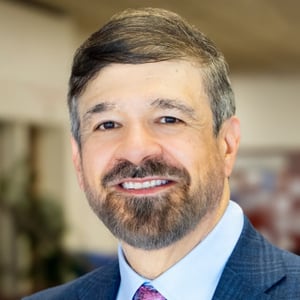
Hugh and Hazel Darling Foundation Professor of Law; Director, Center for the Study of Constitutional Originalism, University of San Diego School of Law
George C. Dix Professor in Constitutional Law, Northwestern University Pritzker School of Law
John O. McGinnis is a graduate of Harvard College and Harvard Law School where he was an editor of the Harvard Law Review. He also has an MA degree from Balliol College, Oxford, in philosophy and theology. Professor McGinnis clerked on the U.S. Court of Appeals for the District of Columbia. From 1987 to 1991, he was deputy assistant attorney general in the Office of Legal Counsel at the Department of Justice. He is the author of Accelerating Democracy: Transforming Government Through Technology (Princeton 2013) and Originalism and the Good Constitution (Harvard 2013) (with M. Rappaport). He is a past winner of the Paul Bator award given by the Federalist Society to an outstanding academic under 40. He has been listed by the United States on the roster of panelists who may be called upon to decide World Trade Organization Disputes.
George C. Dix Professor in Constitutional Law, Northwestern University Pritzker School of Law
John O. McGinnis is a graduate of Harvard College and Harvard Law School where he was an editor of the Harvard Law Review. He also has an MA degree from Balliol College, Oxford, in philosophy and theology. Professor McGinnis clerked on the U.S. Court of Appeals for the District of Columbia. From 1987 to 1991, he was deputy assistant attorney general in the Office of Legal Counsel at the Department of Justice. He is the author of Accelerating Democracy: Transforming Government Through Technology (Princeton 2013) and Originalism and the Good Constitution (Harvard 2013) (with M. Rappaport). He is a past winner of the Paul Bator award given by the Federalist Society to an outstanding academic under 40. He has been listed by the United States on the roster of panelists who may be called upon to decide World Trade Organization Disputes.
Hugh and Hazel Darling Foundation Professor of Law; Director, Center for the Study of Constitutional Originalism, University of San Diego School of Law
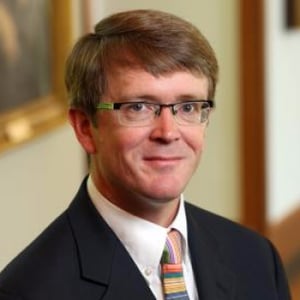
Samuel H. McCoy II Professor of Law, University of Virginia School of Law
John F. Duffy is the Samuel H. McCoy II Professor of Law and Class of 1966 Research Professor of Law at the University of Virginia School of Law, where he teaches administrative law, torts and intellectual property. Professor Duffy has published articles on a wide range of administrative law and regulatory issues in journals such as University of Chicago Law Review, Yale Law Journal, Stanford Law Review, Virginia Law Review, Columbia Law Review, Texas Law Review, Northwestern University Law Review, NYU Law Review, University of Pennsylvania Law Review and the Supreme Court Review. His 1998 article Administrative Common Law in Judicial Review, 77 Tex. L. Rev. 113 (1998), was one of the first articles to criticize the Chevron doctrine as being irreconcilable with § 706 of the APA; it won the American Bar Association’s Scholarship Award in Administrative Law. His 2008 article “Are Administrative Patent Judges Unconstitutional?” was covered on National Public Radio), in the New York Times (Adam Liptak, In One Flaw, Questions on Validity of 46 Judges, May 6, 2008), and in the Wall Street Journal (Dan Slater, Patently Unconstitutional, May 6, 2008). The NYT and WSJ agreed that he was “a different kind of law professor,” “one of the lucky few” whose “writings actually wind up changing the law.”
As an attorney in the courts, Duffy has twice successfully convinced the Supreme Court to overturn lower court doctrines that had been applied in many cases over decades but that were unanimously held to be irreconcilable with Supreme Court precedents. See TC Heartland v. Kraft Foods Group Brands, 581 U.S. 258 (2017); KSR v. Teleflex, 550 U.S. 398 (2007).
Prior to entering legal academics, Duffy clerked on the D.C. Circuit for Stephen Williams and on the Supreme Court for Antonin Scalia. While clerking, he became known as Justice Scalia’s “hapless law clerk,” who had been tasked with unearthing three-quarters of a century of legislative history that made “no difference” to the outcome in an otherwise forgettable case. See Conroy v. Aniskoff, 507 U.S. 511, 527-28 (1993) (Scalia, J., concurring in the judgment).
In earlier days, Duffy enjoyed being a professional blackjack player unwelcome in all Atlantic City casinos and a semi-professional road runner (best marathon time 2:24:33). He holds an A.B. in physics from Harvard and a J.D. from the University of Chicago.
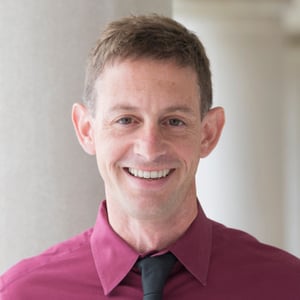
Professor of Law, University of North Carolina School of Law
Andy Hessick joined the Carolina Law faculty in 2016 and serves Judge John J. Parker Distinguished Professor of Law and Associate Dean for Strategy. His teaching and research interests include federal courts, administrative law, remedies, and criminal sentencing. His work has appeared in, among other places, the California Law Review, the Cornell Law Review, the Northwestern University Law Review, the Notre Dame Law Review, and the William and Mary Law Review. His work has been cited by the Supreme Courts of Connecticut, Iowa, Missouri, Tennessee, and Utah; various federal district and circuit courts; and the U.S. Supreme Court.
Hessick received his J.D. from Yale Law School, at which he was an editor of the Yale Law Journal. After law school, he clerked for Judge Reena Raggi on the United States Court of Appeals for the Second Circuit and Judge A. Raymond Randolph on the United States Court of Appeals for the D.C. Circuit. He then served as a Bristow Fellow in the U.S. Solicitor General’s office and practiced litigation at Kellogg Huber Hansen Todd Evans & Figel PLLC in Washington, D.C. He previously taught at the University of Utah and Arizona State University and was a visiting assistant professor at Boston University.
Professor of Law; Co-director, National Security and U.S. Foreig, The George Washington University Law School
Gregory E. Maggs joined the George Washington University Law School faculty in 1993. He is a a Co-director of the law school’s National Security and U.S. Foreign Relations LLM program. He was the Interim Dean of the law school from 2010-2011 and from 2013-2014 and the Senior Associate Dean for Academic Affairs from 2008-2010. He teaches mainly in the areas of commercial law, constitutional law, contracts, and counter-terrorism law, and he has written extensively on these subjects. By vote of the graduating class, he received the law school’s Distinguished Faculty Service Award in 1997, 1998, 2004, 2005, 2011, 2012, 2013, and 2014. In 2012, the university gave him the George Washington Award for outstanding service.
Professor Maggs is a graduate of Harvard College and Harvard Law School. He was a law clerk for Justices Clarence Thomas (1991-1992) and Anthony M. Kennedy (1989-1990) of the U.S. Supreme Court and for the late Judge Joseph T. Sneed of the U.S. Court of Appeals for the Ninth Circuit (1988-1989). He also taught for two years as an assistant professor at the University of Texas School of Law. His other past experience includes service as a special master for the U.S. Supreme Court, a consultant to Independent Counsel Kenneth Starr in the Whitewater Investigation, and an assistant to Robert H. Bork in private practice and research. He is a member of the Advisory Board for the Heritage Foundation's Center for Legal and Judicial Studies and a member of the American Law Institute.
Professor Maggs is a colonel in the U.S. Army Reserve, Judge Advocate General’s Corps. He was commissioned in 1990, and has been assigned as a trial or appellate military judge since 2007. He is a graduate of U.S. Army War College, the Military Judge Course, the Command and General Staff Officer Course, the Judge Advocate Officer Advanced and Basic Courses, the Air Assault School, and the Infantry Weapons Specialist Course. He was called to active duty in 2007-2008. In 2002, he received the Judge Advocates Association's Outstanding Career Armed Services Attorney Award.
George C. Dix Professor in Constitutional Law, Northwestern University Pritzker School of Law
John O. McGinnis is a graduate of Harvard College and Harvard Law School where he was an editor of the Harvard Law Review. He also has an MA degree from Balliol College, Oxford, in philosophy and theology. Professor McGinnis clerked on the U.S. Court of Appeals for the District of Columbia. From 1987 to 1991, he was deputy assistant attorney general in the Office of Legal Counsel at the Department of Justice. He is the author of Accelerating Democracy: Transforming Government Through Technology (Princeton 2013) and Originalism and the Good Constitution (Harvard 2013) (with M. Rappaport). He is a past winner of the Paul Bator award given by the Federalist Society to an outstanding academic under 40. He has been listed by the United States on the roster of panelists who may be called upon to decide World Trade Organization Disputes.
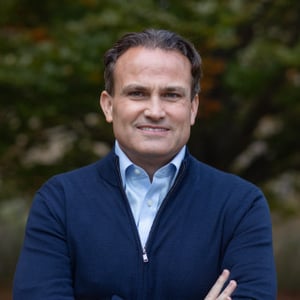
Professor of Law, University of Michigan Law School
Christopher J. Walker is a Professor of Law at the University of Michigan. Prior to joining Michigan law faculty in 2022, he spent a decade teaching at The Ohio State University Moritz College of Law. He previously clerked for Justice Anthony Kennedy of the U.S. Supreme Court, worked on the Civil Appellate Staff at the U.S. Department of Justice, and served on the Senate Judiciary Committee staff for the Gorsuch Supreme Court confirmation. Professor Walker’s research focuses on administrative law, regulation, and law and policy at the agency level. Outside the law school, he chaired the American Bar Association’s Section of Administrative Law and Regulatory Practice in 2020-21 and served as one of forty Public Members of the Administrative Conference of the United States from 2016-2022, and he continues to serve in both organizations in various capacities. He also works of counsel at the U.S. Chamber Litigation Center. In 2022, he received the Federalist Society’s Joseph Story Award.
Samuel H. McCoy II Professor of Law, University of Virginia School of Law
John F. Duffy is the Samuel H. McCoy II Professor of Law and Class of 1966 Research Professor of Law at the University of Virginia School of Law, where he teaches administrative law, torts and intellectual property. Professor Duffy has published articles on a wide range of administrative law and regulatory issues in journals such as University of Chicago Law Review, Yale Law Journal, Stanford Law Review, Virginia Law Review, Columbia Law Review, Texas Law Review, Northwestern University Law Review, NYU Law Review, University of Pennsylvania Law Review and the Supreme Court Review. His 1998 article Administrative Common Law in Judicial Review, 77 Tex. L. Rev. 113 (1998), was one of the first articles to criticize the Chevron doctrine as being irreconcilable with § 706 of the APA; it won the American Bar Association’s Scholarship Award in Administrative Law. His 2008 article “Are Administrative Patent Judges Unconstitutional?” was covered on National Public Radio), in the New York Times (Adam Liptak, In One Flaw, Questions on Validity of 46 Judges, May 6, 2008), and in the Wall Street Journal (Dan Slater, Patently Unconstitutional, May 6, 2008). The NYT and WSJ agreed that he was “a different kind of law professor,” “one of the lucky few” whose “writings actually wind up changing the law.”
As an attorney in the courts, Duffy has twice successfully convinced the Supreme Court to overturn lower court doctrines that had been applied in many cases over decades but that were unanimously held to be irreconcilable with Supreme Court precedents. See TC Heartland v. Kraft Foods Group Brands, 581 U.S. 258 (2017); KSR v. Teleflex, 550 U.S. 398 (2007).
Prior to entering legal academics, Duffy clerked on the D.C. Circuit for Stephen Williams and on the Supreme Court for Antonin Scalia. While clerking, he became known as Justice Scalia’s “hapless law clerk,” who had been tasked with unearthing three-quarters of a century of legislative history that made “no difference” to the outcome in an otherwise forgettable case. See Conroy v. Aniskoff, 507 U.S. 511, 527-28 (1993) (Scalia, J., concurring in the judgment).
In earlier days, Duffy enjoyed being a professional blackjack player unwelcome in all Atlantic City casinos and a semi-professional road runner (best marathon time 2:24:33). He holds an A.B. in physics from Harvard and a J.D. from the University of Chicago.
Professor of Law, University of North Carolina School of Law
Andy Hessick joined the Carolina Law faculty in 2016 and serves Judge John J. Parker Distinguished Professor of Law and Associate Dean for Strategy. His teaching and research interests include federal courts, administrative law, remedies, and criminal sentencing. His work has appeared in, among other places, the California Law Review, the Cornell Law Review, the Northwestern University Law Review, the Notre Dame Law Review, and the William and Mary Law Review. His work has been cited by the Supreme Courts of Connecticut, Iowa, Missouri, Tennessee, and Utah; various federal district and circuit courts; and the U.S. Supreme Court.
Hessick received his J.D. from Yale Law School, at which he was an editor of the Yale Law Journal. After law school, he clerked for Judge Reena Raggi on the United States Court of Appeals for the Second Circuit and Judge A. Raymond Randolph on the United States Court of Appeals for the D.C. Circuit. He then served as a Bristow Fellow in the U.S. Solicitor General’s office and practiced litigation at Kellogg Huber Hansen Todd Evans & Figel PLLC in Washington, D.C. He previously taught at the University of Utah and Arizona State University and was a visiting assistant professor at Boston University.
Professor of Law; Co-director, National Security and U.S. Foreig, The George Washington University Law School
Gregory E. Maggs joined the George Washington University Law School faculty in 1993. He is a a Co-director of the law school’s National Security and U.S. Foreign Relations LLM program. He was the Interim Dean of the law school from 2010-2011 and from 2013-2014 and the Senior Associate Dean for Academic Affairs from 2008-2010. He teaches mainly in the areas of commercial law, constitutional law, contracts, and counter-terrorism law, and he has written extensively on these subjects. By vote of the graduating class, he received the law school’s Distinguished Faculty Service Award in 1997, 1998, 2004, 2005, 2011, 2012, 2013, and 2014. In 2012, the university gave him the George Washington Award for outstanding service.
Professor Maggs is a graduate of Harvard College and Harvard Law School. He was a law clerk for Justices Clarence Thomas (1991-1992) and Anthony M. Kennedy (1989-1990) of the U.S. Supreme Court and for the late Judge Joseph T. Sneed of the U.S. Court of Appeals for the Ninth Circuit (1988-1989). He also taught for two years as an assistant professor at the University of Texas School of Law. His other past experience includes service as a special master for the U.S. Supreme Court, a consultant to Independent Counsel Kenneth Starr in the Whitewater Investigation, and an assistant to Robert H. Bork in private practice and research. He is a member of the Advisory Board for the Heritage Foundation's Center for Legal and Judicial Studies and a member of the American Law Institute.
Professor Maggs is a colonel in the U.S. Army Reserve, Judge Advocate General’s Corps. He was commissioned in 1990, and has been assigned as a trial or appellate military judge since 2007. He is a graduate of U.S. Army War College, the Military Judge Course, the Command and General Staff Officer Course, the Judge Advocate Officer Advanced and Basic Courses, the Air Assault School, and the Infantry Weapons Specialist Course. He was called to active duty in 2007-2008. In 2002, he received the Judge Advocates Association's Outstanding Career Armed Services Attorney Award.
George C. Dix Professor in Constitutional Law, Northwestern University Pritzker School of Law
John O. McGinnis is a graduate of Harvard College and Harvard Law School where he was an editor of the Harvard Law Review. He also has an MA degree from Balliol College, Oxford, in philosophy and theology. Professor McGinnis clerked on the U.S. Court of Appeals for the District of Columbia. From 1987 to 1991, he was deputy assistant attorney general in the Office of Legal Counsel at the Department of Justice. He is the author of Accelerating Democracy: Transforming Government Through Technology (Princeton 2013) and Originalism and the Good Constitution (Harvard 2013) (with M. Rappaport). He is a past winner of the Paul Bator award given by the Federalist Society to an outstanding academic under 40. He has been listed by the United States on the roster of panelists who may be called upon to decide World Trade Organization Disputes.
Professor of Law, University of Michigan Law School
Christopher J. Walker is a Professor of Law at the University of Michigan. Prior to joining Michigan law faculty in 2022, he spent a decade teaching at The Ohio State University Moritz College of Law. He previously clerked for Justice Anthony Kennedy of the U.S. Supreme Court, worked on the Civil Appellate Staff at the U.S. Department of Justice, and served on the Senate Judiciary Committee staff for the Gorsuch Supreme Court confirmation. Professor Walker’s research focuses on administrative law, regulation, and law and policy at the agency level. Outside the law school, he chaired the American Bar Association’s Section of Administrative Law and Regulatory Practice in 2020-21 and served as one of forty Public Members of the Administrative Conference of the United States from 2016-2022, and he continues to serve in both organizations in various capacities. He also works of counsel at the U.S. Chamber Litigation Center. In 2022, he received the Federalist Society’s Joseph Story Award.

Interpretive Methodology
New Haven, ConnecticutEngage Volume 15, Issue 1
Administrative Law & Regulation Redressing Politicized Spending By Daniel Z. Epstein The...
An Originalist Future
John O. McGinnis, Michael B. Rappaport
Note from the Editor: This article discusses the originalist method of constitutional interpretation. As always, The...
Conservative & Libertarian Legal Scholarship: International Law & Transactions
[Return to Table of Contents] XVI. International Law & Transactions Introductory Materials Emer de Vattel,...
Conservative & Libertarian Legal Scholarship: Environmental Law
[Return to Table of Contents] XII. Environmental Law Topical Overviews RICHARD L. REVESZ, FOUNDATIONS OF...
Conservative & Libertarian Legal Scholarship: Foreword
[Return to Table of Contents] Foreword At no other point in American history has so...
Originalism and the Good Constitution
TeleforumPanel II: Who Determines an Agency's Power?
John F. Duffy, F. Andrew Hessick, Gregory E. Maggs, John O. McGinnis, Christopher J. Walker
The Federalist Society's Faculty Division hosted this panel discussion which asked "Who Determines an Agency's Power?"...
Panel II: Who Determines an Agency's Power?
John F. Duffy, F. Andrew Hessick, Gregory E. Maggs, John O. McGinnis, Christopher J. Walker
The Federalist Society's Faculty Division hosted this panel discussion which asked "Who Determines an Agency's Power?"...
Originalism and the Good Constitution
Milwaukee, Wisconsin