
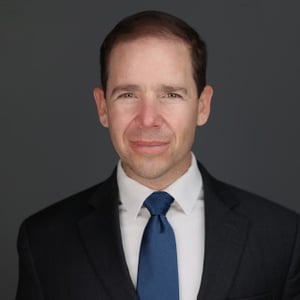
Founder and CEO, Lexpat Global Services
Adam Pearlman is the Founder and Chief Executive Officer of Lexpat Global Services. He is a National Security Law expert and a proven senior leader with experience across the U.S. Departments of Justice, Defense, and State, in the White House, and with the U.S. Federal Judiciary.
Before founding Lexpat, Mr. Pearlman served as the Senior Advisor for Legal Policy in the State Department’s Bureau of Counterterrorism. There, he counseled senior officials on matters covering the entire spectrum of programs and operations to counter terrorism and violent extremism. While participating in sensitive diplomatic engagements and helping to coordinate military operations, he also advised in the development of sanctions policy and initiatives to build legal and operational capacity in partner nations. Mr. Pearlman also managed the Bureau’s participation in federal litigation and led U.S. delegations in multilateral forums concerning criminal justice and rule of law. Separately, Mr. Pearlman supported the State Department’s Bureau of International Narcotics and Law Enforcement Affairs (INL) as the contracted Senior Justice and Rule of Law Advisor in Cabo Verde, Africa. There he was the chief implementer of a Foreign Assistance program that grew eight-fold during his tenure, building host nation capacity across the law enforcement, justice sector, rule of law, anti-money laundering, and corrections disciplines.
A former Associate Deputy General Counsel of the Department of Defense, Mr. Pearlman was agency counsel for complex civil and criminal national security matters in federal and military courts. He also led the Supreme Court and appellate unit of the team dedicated to litigating classified counterterrorism cases. His earlier service in the Department of Justice spanned four litigating divisions and the Office of the Deputy Attorney General. His diverse experience included reviewing complex international transactions and mergers, and advising on immigration removal proceedings, human rights abuses, and terrorist financing investigations. Mr. Pearlman also served with distinction in Iraq as an early advisor to the Iraqi High Tribunal’s prosecution of Saddam Hussein. He was a law clerk for The Honorable Royce C. Lamberth of the U.S. District Court for the District of Columbia, and during law school interned in the White House Counsel’s Office.
Mr. Pearlman is a Senior Fellow at the National Security Institute at George Mason University’s Antonin Scalia Law School, a member of the American Bar Association’s Advisory Committee on Law and National Security, and the Editor-in-Chief of the U.S. Intelligence Community Law Sourcebook. Previously, he has been a Term Member of the Council on Foreign Relations, National Security Fellow at the Foundation for Defense of Democracies, member of the ABA’s Africa Law Initiative Council and of the Center for Strategic & International Studies’ (CSIS) Project on Nuclear Issues, vice chairman of the ABA Section of International Law’s committees on national security, and aerospace and defense, and a liaison to the Board of Directors of the ABA’s Rule of Law Initiative. He has published articles in the Harvard National Security Journal, Stanford Law & Policy Review, Intelligence & National Security, The Foreign Service Journal, Lawfare, and many other outlets.
Mr. Pearlman earned his B.A., with honors, from UCLA, and his J.D., with honors, from The George Washington University Law School, where he was a member of the International Law Review. He also earned a Master of Science of Strategic Intelligence degree from the National Intelligence University, where he was the inaugural recipient of the Kornblum Award for national security law and ethics. Mr. Pearlman is a Certified Financial Crime Specialist and holds certificates in international human rights law from the University of Oxford and in anti-corruption law from American University’s Washington College of Law. He is admitted to the State Bars of California and Virginia, as well as to the Bar of the United States Supreme Court. He speaks and reads Portuguese at the intermediate level.
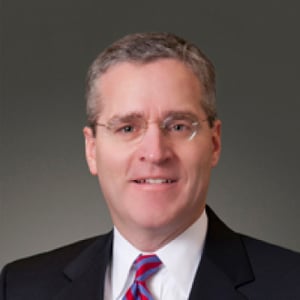
Partner, McGuireWoods LLP
Mr. Rowan's practice focuses on criminal and civil enforcement proceedings and internal investigations. He has substantial experience in federal law enforcement, as well as international and national security matters. He also advises corporate clients on compliance with the Foreign Corrupt Practices Act, the ITAR, the EAR and OFAC regulations.
Mr. Rowan spent 18 years in the Department of Justice (DOJ). He most recently served as Assistant Attorney General for National Security. In that Senate-confirmed position, Mr. Rowan led the National Security Division (NSD), which was formally created by statute in 2006 to bring together all of DOJ's national security operations under a single authority. As part of his duties, he supervised the government's practice before the Foreign Intelligence Surveillance Court; the oversight of intelligence-collection activities; the coordinated nationwide counterterrorism enforcement program; the administration of the Foreign Agents Registration Act; and the oversight of all espionage investigations.
He also oversaw DOJ's review of foreign acquisitions of U.S. companies through the interagency Committee on Foreign Investment in the United States (CFIUS). He previously served as the Principal Deputy Assistant Attorney General for the NSD, where he managed DOJ's national security investigations and prosecutions. In both positions, Mr. Rowan was responsible for supervising all of DOJ's prosecutions of export violations.
As a result of his DOJ service, he has particular experience in the application of the material support statutes, the Arms Export Control Act, the International Emergency Economic Powers Act, and statutes relating to economic espionage or disclosure of classified information. As the Principal Deputy, he directed the launch and implementation of a nationwide export enforcement initiative, an interagency effort to target the illegal export of sensitive technology and weapons components. Mr. Rowan continued to lead this initiative as Assistant Attorney General.
Mr. Rowan gained extensive courtroom experience while serving as an assistant U.S. attorney for more than 10 years in Washington, D.C. During his tenure, he handled more than 60 jury trials and a number of arguments before the District of Columbia Circuit Court of Appeals and the District of Columbia Court of Appeals.
Adjunct Faculty, Johns Hopkins University
Mark S. Zaid, Esq. is a Washington, D.C.-based attorney who specializes in innovatively handling simple and complex administrative and litigation matters relating to national security, intelligence, international law, foreign sovereign and diplomatic immunity, defamation (plaintiff) and the Freedom of Information/Privacy Acts (FOI/PA). He teaches the D.C. Bar Continuing Legal Education classes on “The Basics of Filing and Litigating Freedom of Information/Privacy Act Requests” (since 2003), “Defending Security Clearances” (since 2006), and “Handling Whistleblower Cases: More than the Basics" (since 2016). Mr. Zaid was named as a Washington, D.C. Super Lawyer in 2009 (profiled), 2010, 2011, 2012, 2013, 2014 and 2015, as well as a “Best Lawyer” by Washingtonian Magazine in 2009, 2011, 2013, and 2015 for his national security work. As the National Law Journal once wrote, “if Agent Mulder ever needed a lawyer, Zaid would be his man.”
Mr. Zaid is also the Executive Director and founder of the James Madison Project, a Washington, D.C.-based organization, with the primary purpose of educating the public on issues relating to intelligence gathering and operations, secrecy policies, national security and government wrongdoing. “Curiously for this town,” wrote the American Bar Association Journal, “Zaid is an equal opportunity thorn out to pierce the sides of suit jackets bearing both elephants and donkeys on the lapels.”
A 1992 graduate of Albany Law School of Union University in New York, where he served as an Associate Editor of the Albany Law Review and now sits as a member of its Board of Trustees, he completed his undergraduate education (cum laude) in 1989 at the University of Rochester, New York with honors in Political Science and high honors in History. Mr. Zaid is a member of the Bars of New York State, Connecticut, the District of Columbia, Maryland and numerous federal courts.
Dean & Henry R. Luce Professor of Journalism, Columbia Journalis, The New Yorker
Dean Steve Coll is a staff writer at The New Yorker, the author of seven books of nonfiction, and a two-time winner of the Pulitzer Prize. Between 1985 and 2005, he was a reporter, foreign correspondent and senior editor at the Washington Post. There he covered Wall Street, served as the paper’s South Asia correspondent in New Delhi, and was the Post’s first international investigative correspondent, based in London. He served as managing editor of the Post between 1998 and 2004. The following year, he joined The New Yorker, where he has written on international politics, American politics and national security, intelligence controversies and the media.
Coll is the author of “Ghost Wars: The Secret History of the CIA, Afghanistan, and Bin Laden, From the Soviet Invasion to September 10, 2001(link is external),” published in 2004, for which he received an Overseas Press Club Award and a Pulitzer Prize. His 2008 book, “The Bin Ladens: An Arabian Family in the American Century(link is external),” won the PEN/John Kenneth Galbraith Award for Nonfiction in 2009 and was a finalist for the Pulitzer Prize for Biography. His most recent book is “Private Empire: ExxonMobil and American Power(link is external),” which won the Financial Times/Goldman Sachs Award as the best business book of 2012.
He has four children and is married to Eliza Griswold, the journalist and poet. He has a B.A. in English and history from Occidental College.

Laurence A. Tisch Professor of Law and Director, Classical Liberal Institute, New York University School of Law; Senior Fellow, The Civitas Institute, University of Texas at Austin
Richard A. Epstein is the inaugural Laurence A. Tisch Professor of Law at NYU School of Law. Prior to his joining the faculty, he was a visiting law professor at NYU from 2007 through 2009. He served as the Peter and Kirstin Bedford Senior Fellow at the Hoover Institution from 2000 to 2024. Since 2024 to the present he is a senior lecturer at the Civitas Institute at the University of Texas—Austin. Epstein is also the James Parker Hall Distinguished Service Professor of Law Emeritus and a senior lecturer at the University of Chicago. His initial law school appointment was at the University of Southern California from 1968 to 1972. Epstein received an LL.D., h.c. from the University of Ghent, 2003. He has been a member of the American Academy of Arts and Sciences since 1985 and was a Senior Fellow of the Center for Clinical Medical Ethics at the University of Chicago Division of Biological Sciences, also from 1983. to 2022 He served as editor of the Journal of Legal Studies from 1981 to 1991, and of the Journal of Law and Economics from 1991-2001. From 2001 to 2010 he was a director of the John M. Olin Program in Law and Economics at the University of Chicago.
His newest book, The Myth of Birthright Citizenship: What the Fourteenth Amendment Really Says was published in 2026 (Encounter Books). Prior to that he has published many books including, The Dubious Morality of the Modern Administrative State (Roman & Littlefield 2020).Earlier he published th Classical Liberal Constitution: The Uncertain Quest for Limited Government (Harvard 2014) iHis previous books include Design for Liberty: Private Property, Public Administration and the Rule of Law (Harvard 2011); The Case Against the Employee Free Choice Act (Hoover 2009); Supreme Neglect: How to Revive the Constitutional Protection of Property Rights (Oxford 2008); Antitrust Decrees in Theory and Practice: Why Less is More (AEI 2007); Overdose: How Excessive Government Regulation Stifles Pharmaceutical Innovation (Yale University Press. 2006); How Progressives Rewrote the Constitution (Cato 2006); Cases and Materials on Torts (Aspen Law & Business; 8th ed. 2004); Skepticism and Freedom: A Modern Case for Classical Liberalism (University of Chicago, 2003); Torts (Aspen Law & Business 1999); Principles for a Free Society: Reconciling Individual Liberty with the Common Good (Perseus Books, 1998): Mortal Peril: Our Inalienable Rights to Health Care (Addison-Wesley, 1997); Simple Rules for a Complex World (Harvard, 1995); Bargaining With the State (Princeton, 1993); Forbidden Grounds: The Case Against Employment Discrimination Laws (Harvard , 1992); Takings: Private Property and the Power of Eminent Domain (Harvard, 1985); and Modern Products Liability Law (Greenwood Press, 1980). He has also edited(with Catherine M. Sharkey) Cases and Materials on the Law of Torts (10th edition 2012).
Professor Epstein has written numerous articles on a wide range of legal and interdisciplinary subjects. He has taught courses in administrative law, antitrust law, civil procedure, communications, constitutional law, contracts, corporations, criminal law, employment discrimination law, environmental law, food and drug law health law and policy, legal history, labor law, property, real estate development and finance, jurisprudence, labor law; land use planning, patents, individual, estate and corporate taxation, Roman Law; torts, and workers' compensation.
Professor Epstein also writes a regular column for Civitas Institute, which also sponsors his podcast, The Libertarian with Charles C.W. Cooke, and Law Talk, with Cooke and John Yoo. He also does a podcast with John Batchelor. And appears regularly on the Freedom File with Judge Andrew Napolitano.
Founding Director, Knight First Amendment Institute at Columbia University
Jameel Jaffer is the founding director of the Knight First Amendment Institute at Columbia University, which works to protect and expand the freedoms of speech and the press through strategic litigation, research, and public education. Until recently, Jaffer was deputy legal director at the American Civil Liberties Union and director of the ACLU’s Center for Democracy, in which role he oversaw the ACLU’s work relating to free speech, privacy, technology, national security, and international human rights.
Jaffer has litigated some of the most significant post-9/11 cases relating to national security and civil liberties, including cases concerning detention, interrogation, surveillance, targeted killing, and government secrecy. He co-led the litigation that resulted in the publication of the Bush administration’s “torture memos”—a lawsuit the New York Times described as “among the most successful in the history of public disclosure.” More recently, he led the ACLU’s litigation that resulted in the publication of the Obama administration’s “drone memos.”

Dean and Lucy G. Moses Professor of Law, Columbia Law School
Gillian Lester is Dean and the Lucy G. Moses Professor of Law at Columbia Law School.
She is a nationally recognized authority on employment law and policy whose research has explored workplace intellectual property law, public finance policy, and the design of social insurance laws and regulations. Dean Lester is the author of numerous books and articles and is co-author of one of the leading casebooks on employment law, Employment Law Cases and Materials. She is also a member of the American Law Institute and was an adviser to the ALI Restatement of Employment Law.
Dean Lester began her teaching career in 1994 at UCLA School of Law, becoming a full professor in 1999, and joined the Berkeley Law faculty in 2006. At Berkeley, she was the Alexander F. and May T. Morrison Professor of Law and Mimi Wolfen Research Professor, and also served as co-director of the Berkeley Center for Health, Economic and Family Security; Associate Dean for the J.D. Program and Curricular Planning; and, most recently, Acting Dean (2012-2014).
She has held external appointments as the Sidley Austin Visiting Professor at Harvard Law School and Sloan Fellow and Visiting Professor at Georgetown University Law Center. Dean Lester also held short-term visiting appointments at USC Gould School of Law, University of Chicago Law School, and Radzyner School of Law Interdisciplinary Center in Herzliya, Israel.
Dean Lester, Columbia Law School’s 15th dean, holds degrees from Stanford Law School and the University of Toronto Faculty of Law, where she served as Editor-in-Chief of the law review. She earned her undergraduate degree from the University of British Columbia.

Professor of Law and Director of the Center for Intellectual Property Law, Maurice A. Deane School of Law at Hofstra University
Professor Manta teaches intellectual property law subjects. Her research examines the intersection between intellectual property law and social science, with a focus on psychology. She has most recently written about the hedonic value of trademarks and its legal implications, the problem of cognitive bias in copyright infringement litigation, price discrimination through software licensing in the age of the Internet of Things, and the role of criminal sanctions in intellectual property. Professor Manta has published or has forthcoming work in the Emory Law Journal, William & Mary Law Review, Iowa Law Review, Alabama Law Review, Boston College Law Review, Ohio State Law Journal, Washington and Lee Law Review, Harvard Journal of Law & Technology, Stanford Technology Law Review, Florida Law Review, Arizona Law Review, and Cornell Law Review Online, among others. She is also a co-author for a forthcoming textbook on criminal law issues in intellectual property. Professor Manta has further been a guest blogger for PrawfsBlawg and for Concurring Opinions. In 2014, she received the Lawrence A. Stessin Prize for Outstanding Scholarly Publications, which is awarded to two junior faculty members across all disciplines at Hofstra University.
Before joining the law school faculty in 2012, Professor Manta was an Assistant Professor of Law at the Case Western Reserve University School of Law. She was a Bigelow Teaching Fellow and Lecturer in Law at the University of Chicago Law School from 2007 to 2009. Professor Manta has also served on the faculties of Brooklyn Law School, The George Washington University School of Law, and the University of Arkansas at Little Rock William H. Bowen School of Law. She clerked for Judge Morris S. Arnold on the U.S. Court of Appeals for the Eighth Circuit for the 2006-2007 term.
While earning her J.D. at Yale Law School, Professor Manta was the grand prize winner of the Foley & Lardner LLP Intellectual Property Writing Competition. She also served as tributes editor of the Yale Law Journal, articles editor of the Yale Law & Policy Review, and editor of the Yale Journal on Regulation. She graduated magna cum laude from Yale University with a B.A. in psychology.
U.S. Court of Appeals, Second Circuit
Reena Raggi is a United States Circuit Judge of the U.S. Court of Appeals for the Second Circuit. At the time of her appointment in 2002, she was a United States District Judge for the Eastern District of New York.
Judge Raggi earned her B.A. degree in 1973 from Wellesley College and her J.D. degree cum laude from Harvard Law School in 1976.
She was law clerk to Judge Thomas E. Fairchild of the U.S. Court of Appeals for the Seventh Circuit from 1976 to 1977. From 1977 to 1979 she was in private law practice as an associate with the New York law firm of Cahill, Gordon & Reindel. She served as an Assistant United States Attorney for the Eastern District of New York from 1979 to 1986, including assignments as Chief of the Narcotics Division (1982 to 1984), and Chief of the Special Prosecutions Division (1984 to 1986). Also in 1986, she served as United States Attorney for the Eastern District of New York under an interim court appointment. Later that year, she resumed the private practice of law as a partner in the New York firm of Windels, Marx, Davies & Ives. She remained there until her appointment in 1987 as a United States District Judge for the Eastern District of New York.
Solicitor General, Montana Attorney General's Office
Christian is currently Solicitor General of Montana, where he serves as the chief litigator and principal legal advisor to Montana Attorney General Austin Knudsen. In that capacity, he manages litigation before the federal district courts, courts of appeal, and the United States Supreme Court, as well as the Montana Supreme Court. He previously served in the Trump Administration as Senior Counsel to the Assistant Secretary for Civil Rights at the U.S. Department of Education. Prior to government service, he was a public interest constitutional litigator at Mountain States Legal Foundation and a fellow at the Institute for Justice. He clerked for Justice Caleb Stegall on the Kansas Supreme Court. He also served as Director of Publications for the Federalist Society's national headquarters.
Christian earned his B.A. in Political Science in 2009 from the University of Pennsylvania before attending the University of Kansas School of Law. Christian is admitted to practice law in Kansas and Montana. A Kansas native, he is a die-hard fan of the Kansas Jayhawks, Kansas City Chiefs, and Kansas City Royals.
Christian is a member of the Federalism & Separation of Powers Practice Group's Executive Committee.
Founder and Principal, Fillmore Global Strategies LLC
Ambassador Nathan A. Sales is the founder and principal of Fillmore Global Strategies LLC, a consultancy that provides legal and strategic advisory services on matters at the intersection of law, policy, and diplomacy.
From 2017 to 2021, Ambassador Sales served at the U.S. Department of State as Under Secretary for Civilian Security, Democracy, and Human Rights (acting). He oversaw nine bureaus and offices led by Senate-confirmed principals, with 1,300 employees and a combined foreign assistance budget of more than $5 billion annually, and the mission of preventing and countering threats to civilian security, including terrorism, mass atrocities, and violations of human rights and the rule of law.
Concurrently, Ambassador Sales was Ambassador-at-Large and Coordinator for Counterterrorism. After being nominated by the President and unanimously confirmed by the U.S. Senate, he was sworn in on August 10, 2017. He served as the principal adviser to the Secretary of State on international counterterrorism matters, and led the State Department’s Counterterrorism Bureau, a 200-person team with an annual foreign assistance budget of $400 million. He was also the Special Presidential Envoy to the Global Coalition to Defeat ISIS, leading U.S. relations with the 83-member Coalition and efforts to ensure the lasting defeat of ISIS in the Middle East and around the world.
While at the State Department, Ambassador Sales led the elements of the U.S. government’s China strategy promoting democratic values and human rights, including with respect to Hong Kong and Xinjiang. He oversaw the development and implementation of a wide range of U.S. government sanctions, including Global Magnitsky actions and Executive Order 13,936, targeting those responsible for undermining Hong Kong’s freedoms and autonomy. Ambassador Sales was the architect of the landmark 2017 UN Security Council Resolution 2396 on terrorist travel, and successfully pressed NATO to make counterterrorism a core Alliance mission. He led diplomatic engagements to persuade a dozen key partners in Europe and the Americas to designate Hizballah as a terrorist organization in its entirety. He launched the Western Hemisphere Counterterrorism Ministerial, in which heads of state and minister-level officials meet bianually to coordinate efforts against terrorist threats in the region. He led the U.S. government’s international efforts to combat white supremacist terrorism. Under his leadership, the State Department imposed terrorism sanctions on the Russian Imperial Movement – the first-ever U.S. designation of white supremacist terrorists.
Before joining the State Department, Ambassador Sales was Of Counsel at the law firm Kirkland & Ellis LLP (formerly Bancroft PLLC). He was also a tenured law professor, teaching and writing in the fields of administrative law, constitutional law, and national security law. His scholarship has been cited by the U.S. Supreme Court multiple times.
Ambassador Sales previously was Deputy Assistant Secretary for Policy at the U.S. Department of Homeland Security. He led DHS’s efforts to draft and implement legislation that strengthened the security of and expanded the Visa Waiver Program (which allows citizens of certain countries to travel to the United States without a visa). He headed the U.S. delegation in talks with seven countries to implement the new security measures and was the Secretary of Homeland Security’s Special Envoy to South Korea.
Ambassador Sales also served at the Office of Legal Policy at the U.S. Department of Justice, where he worked on regulatory initiatives, counterterrorism, and judicial confirmations. In 2005, he managed DOJ’s “war room” for the confirmation of Chief Justice John Roberts. He received the Attorney General’s Award for Exceptional Service – the Justice Department’s highest honor – for his role in drafting the USA PATRIOT Act, as well as the Attorney General’s Distinguished Service Award for his work on judicial confirmations.
In addition to his work at Fillmore Global Strategies, Ambassador Sales is a nonresident senior fellow at the Atlantic Council and a senior advisor at the Soufan Group, a global intelligence and security consultancy. He serves on a number of advisory boards, including for the Counter-Extremism Project (a nonprofit and nonpartisan international policy organization formed to combat the growing threat from extremist ideologies), the Secure Community Network (the official safety and security organization for the North American Jewish community), and the Sue J. Henry Center for Pre-Law Education at Miami University.
An Ohio native, Ambassador Sales received his B.A., summa cum laude, from Miami University in Oxford, Ohio, where he was elected to Phi Beta Kappa. He earned his J.D., magna cum laude, from Duke Law School, where he was Research Editor of the Duke Law Journal and joined the Order of the Coif. After law school, he clerked for the Honorable David B. Sentelle of the U.S. Court of Appeals for the DC Circuit.

Director, Speech, Privacy & Technology Project, American Civil Liberties Union
Ben Wizner is the Director of ACLU’s Speech, Privacy & Technology Project, which is dedicated to protecting and expanding the First Amendment freedoms of expression, association, and inquiry; expanding the right to privacy and increasing the control that individuals have over their personal information; and ensuring that civil liberties are enhanced rather than compromised by new advances in science and technology. He has litigated numerous cases involving post-9/11 civil liberties abuses, including challenges to airport security policies, government watchlists, extraordinary rendition, and torture. He has appeared regularly in the media, testified before Congress, and traveled several times to Guantánamo Bay to monitor military commission proceedings. Ben is a graduate of Harvard College and New York University School of Law and was a law clerk to the Hon. Stephen Reinhardt of the U.S. Court of Appeals for the 9th Circuit.

National Security Leaks
Adam R. Pearlman, J. Patrick Rowan, Mark S. Zaid
Leaks of classified or politically sensitive information have become part of the daily news cycle....
Panel 1: Privacy and Freedom of the Press
Steve Coll, Richard A. Epstein, Jameel Jaffer, Gillian Lester, Irina D. Manta, Reena Raggi
The Internet has made information not only much more accessible, it has allowed almost anyone...
For the Sake of National Security: Plugging in the Leaks - Podcast
Christian Corrigan, Nathan A. Sales, Ben Wizner
Leaks seem to be ubiquitous these days. Within the past several years, government employees have...