
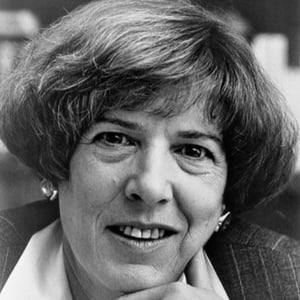
Writer, Historian, and Lecturer
Elizabeth Ann Fox-Genovese (May 28, 1941 – January 2, 2007) was an American historian best known for her works on women and society in the Antebellum South. A Marxist early on in her career, she later converted to Roman Catholicism and became a primary voice of the conservative women's movement. She was awarded the National Humanities Medal in 2003.
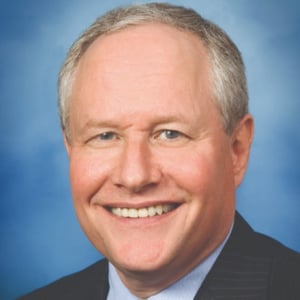
Editor, The Weekly Standard
William Kristol is the editor of The Weekly Standard. He is also a regular panelist on Fox News Sunday, a contributor for the Fox News Channel, and a monthly columnist for the Washington Post. Before starting the Weekly Standard in 1995, Mr. Kristol led the Project for the Republican Future, where he helped shape the strategy that produced the 1994 Republican congressional victory. Prior to that, Mr. Kristol served as chief of staff to Vice President Dan Quayle during the first Bush Administration, and to Education Secretary William Bennett under President Reagan. Before coming to Washington in 1985, Mr. Kristol was on the faculty of Harvard University’s Kennedy School of Government and the Department of Political Science at the University of Pennsylvania.
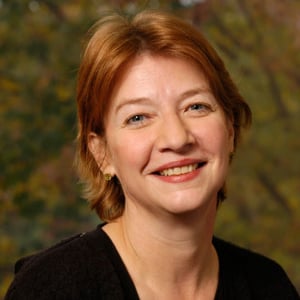
Voss-Bascom Professor of Law, University of Wisconsin Law School
Jane Larson (1958–2011) was the Voss-Bascom Professor of Law at the University of Wisconsin Law School.
Jane was born in Omaha, Neb., the oldest daughter of Donald G. and Wilma M. Larson. She graduated from Alameda West High School in Pleasanton, Calif. She received her undergraduate degree Phi Beta Kappa with a specialization in women's history from Macalester College in 1980. She received her law degree with high honors from the University of Minnesota Law School in 1985. She worked as a judicial clerk for Justice Rosalie Wahl of the Minnesota Supreme Court and for Judge Theodore McMillian of the U.S. Court of Appeals for the Eighth Circuit. From 1987 to 1990, she was an associate at the Washington, D.C., law firm of Powell, Goldstein, Frazer & Murphy.
In 1990, she joined the law faculty at Northwestern University School of Law, where she published a series of noted articles on legal history, property rights and social regulation, with particular emphasis on the rights of women and the poor (for example, "Free Markets Deep in the Heart of Texas," Georgetown Law Journal, 1995.) In 1996, she joined the faculty of University of Wisconsin Law School, where she continued her writing and lecturing on feminist legal theory and property law. Her academic writing has been called "a model of how to integrate the history of doctrine with the surrounding social values." She was an inspiring teacher, a self-taught decoder of Oriental rugs, and a jazz aficionado who requested Coltrane in lieu of epidural during the birth of her son, Simon. When she retired in October 2011, she was the Voss-Bascom Professor of Law.
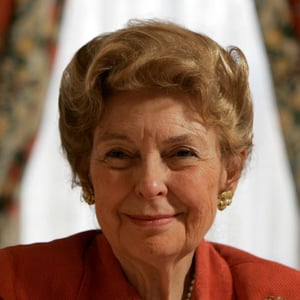
Founder, Eagle Forum
Phyllis Schlafly was a national leader of the conservative movement since the publication of her best-selling 1964 book, A Choice Not An Echo. She created the pro-family movement in 1972, when she started her national volunteer organization called Eagle Forum. In a ten-year battle, Mrs. Schlafly led the pro-family movement to victory over the principal legislative goal of the radical feminists, called the Equal Rights Amendment. An articulate and successful opponent of the radical feminist movement, she debated on college campuses more frequently than any other conservative. She was named one of the 100 most important women of the 20th century by the Ladies’ Home Journal.
Mrs. Schlafly’s monthly newsletter called The Phyllis Schlafly Report was published for fifty years. At her request, the monthly newsletter was renamed after her death to the Eagle Forum Report: the Successor to The Phyllis Schlafly Report. Eagle Forum is the publisher of the Eagle Forum Report.
Her syndicated column appeared in 100 newspapers, and on many conservative websites.
Mrs. Schlafly was the author or editor of 27 books on subjects as varied as family and feminism (The Power of the Positive Woman and Feminist Fantasies); the judiciary (The Supremacists: The Tyranny of Judges and How to Stop It); religion (No Higher Power: Obama’s War on Religious Freedom); nuclear strategy (Strike From Space and Kissinger on the Couch); education (Child Abuse in the Classroom); child care (Who Will Rock the Cradle?); and phonics (First Reader and Turbo Reader).
Mrs. Schlafly was a lawyer and served as a member of the Commission on the Bicentennial of the U.S. Constitution, 1985-1991, appointed by President Ronald Reagan. She testified before more than 50 Congressional and State Legislative committees on constitutional, national defense, and family issues.
Mrs. Schlafly was a Phi Beta Kappa graduate of Washington University, received her Master’s in Political Science from Harvard University, and received her J.D. from Washington University Law School. In 2008, Washington University/St. Louis awarded Phyllis Schlafly an honorary Doctor of Humane Letters.
Phyllis Schlafly was America’s best-known advocate of the dignity and honor that we as a society owe to the role of fulltime homemaker. The mother of six children, she was the 1992 Illinois Mother of the Year.
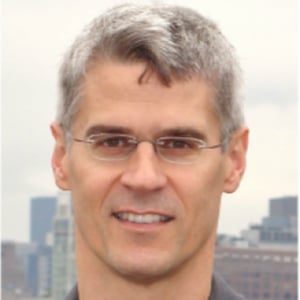
Author, Journalist, Researcher, and Consultant
Karl Zinsmeister is an experienced executive, original researcher, and productive author with deep analytical, communications, public-policy, creative, and marketing skills—including high-level experience managing a range of publications, businesses, nonprofits, and government agencies. He is currently a consultant to major business figures and wealth creators as a designer of large-scale philanthropy projects, historian of American civil society, and expert on social reform and culture change.
He has written a dozen books—embedded war reporting, histories, political analysis, reference works, a novel, literary collections, academic volumes, a storytelling cookbook, even a book-length Marvel comic book. Two of his works have recently been optioned for development into a television series and a documentary film. He has edited or co-produced many other books.
Zinsmeister's magazine and newspaper journalism totals several hundred articles. These have been published in a wide range of national publications, from cover stories for The Atlantic to essays in the Wall Street Journal, where he is a frequent contributor. Karl also has more than two decades of experience as an Editor in Chief, managing writing, artistic, and business teams producing nationally circulated magazines of thought and culture.
He created The Almanac of American Philanthropy—the authoritative 1,342-page reference on private giving that is often referred to as “the bible” documenting America's distinctive tradition of solving major problems through civil society and voluntary action. Between cash contributions and volunteer labor, philanthropy is approaching the trillion-dollar level as an annual undertaking in the U.S., and it is one of our country's most potent sources of social innovation and improvement.
Zinsmeister established the nation's first independent advisory on philanthropy for veterans and servicemembers. He raised $15 million and designed an unprecedented randomized-control experiment to prove out better ways of assisting men and women injured during military service.
He created the “Sweet Charity” podcast, presenting 5-10 minute stories on important achievements in philanthropic creativity. He wrote and edited a series of “Wise Giver's Guides” offering donors practical help in specific fields. The volumes he authored himself include one analyzing charter schools, and another on the relationship between philanthropy and public policy.
In response to national concern over polarization and government stalemate, Zinsmeister researched and released a political/historical work What Comes Next?, describing how America can be dramatically improved by private actors even amidst political gridlock, documented by encouraging examples from our past.
From 2006 to 2009 Zinsmeister served in the West Wing as President George W. Bush’s chief domestic policy adviser. His responsibilities stretched across many issues: the formulation of new immigration policies, the mortgage and student-loan credit crises, stem-cell and biotechnology innovation, improving care for military veterans, school reform, issues in health, transportation, environmental quality, and national competitiveness.
Earlier in his career Karl was a U.S. Senate aide to Senator Daniel Patrick Moynihan. He has been an adviser to many public policy groups, and has testified before Congressional committees and Presidential commissions on topics including family issues, economic policy, and the Iraq war.
For more than a decade, Zinsmeister occupied the J. B. Fuqua Chair at the American Enterprise Institute, a premier Washington, D.C. think tank, where he researched economic, demographic, and cultural topics. While there he created an acclaimed national monthly magazine of politics, business, and culture, The American Enterprise. Author and former Cabinet Secretary William Bennett called it “one of America’s finest magazines.... intellectually interesting, well-written, lively, wide-ranging, and above all useful.” Zinsmeister wrote nearly 300 articles for the magazine, and conducted interviews with public figures extending from Rudy Giuliani to Pat Moynihan, Andres Duany to Rupert Murdoch.
In concert with his wife, Zinsmeister conceived and produced a feature documentary film entitled Warriors that aired nationally on PBS in 2007. The film won $450,000 of funding from the Corporation for Public Broadcasting in a major international competition. It presented personal profiles of America’s fighting forces via on-the-scene footage that Zinsmeister and two combat cameramen shot in Iraq. The New York Times described Warriors as “entirely compelling.” Footage from the film was used as a plot item in the final week of the HBO television series The Sopranos.
In the private sector, Zinsmeister was an executive in his native region of upstate New York at the Stickley company—an historic firm that designs, manufactures, and markets iconic American Arts & Crafts furniture designs worldwide. His responsibilities included marketing and sales, advertising, catalogs, photography, websites, communications, the Stickley Museum, some product design, and the modernization of many business and data systems. Zinsmeister has also operated his own businesses over a period of years, including designing, financing, renovating, and building eight properties with historic appeal, in Washington and New York.
A graduate of Yale University, Zinsmeister did further studies at Trinity College Dublin in Ireland. During college he won national rowing championships in both the U.S. and Ireland. He has given hundreds of public lectures, originated a weekly radio commentary syndicated to 100 stations, and appeared often on a wide variety of national television and radio programs. He has lived, worked, or traveled in 40 countries, and nearly every U.S. state. He holds the highest U.S. security clearance.
Zinsmeister is married and has three grown children. He is an active outdoorsman, enjoys extended wilderness backpacking trips, and swims, bicycles, sculls, skis, and hikes often. He has been an avid photographer, woodworker, gardener and keeper of hens, taught Sunday school, and sung in church choirs. He currently lives in Washington, D.C. on a houseboat he designed and built himself.
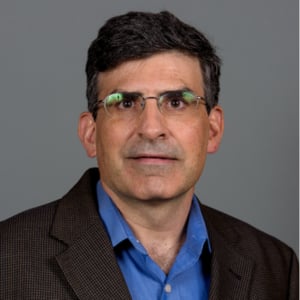
Director and Professor, School of Civic and Economic Thought and Leadership, Arizona State University
Paul Carrese is the founding director of the School of Civic and Economic Thought and Leadership at Arizona State University. For nearly two decades he was a professor of political science at the U.S. Air Force Academy, and co-founded a new honors program blending liberal arts education and leadership education. He is author of The Cloaking of Power: Montesquieu, Blackstone, and the Rise of Judicial Activism, and co-editor of three other books – on George Washington, constitutionalism, and American grand strategy. His most recent book is Democracy in Moderation: Montesquieu, Tocqueville, and Sustainable Liberalism. He has held fellowships at Oxford University as a Rhodes Scholar; Harvard University; the University of Delhi (as a Fulbright fellow); and the James Madison Program, Politics Department, Princeton University. He served on the founding advisory board of the Program on Public Discourse at University of North Carolina Chapel Hill, and currently is co-leading a national study funded by the NEH and US Department of Education on improving American history and civics education in K-12 schools with partners from Harvard and Tufts Universities and iCivics.

Professor of Law, Antonin Scalia Law School, George Mason University
Eric R. Claeys is Professor of Law at the Antonin Scalia Law School, George Mason University. He has written widely in the fields of property, private law, and constitutional law. Professor Claeys’s current research interests focus on flourishing- and labor-based natural rights justifications for property—in American property theory, in intellectual property, and in contemporary regulation of shale gas exploration and hydraulic fracturing. He is a member of the American Law Institute, he serves on the ALI’s Members’ Consultative Group for the first Restatement of Copyright, and he also serves as an adviser to the Restatement (Fourth) of the Law of Property.
Professor Claeys received his JD from the University of Southern California Gould School of Law. He received his AB from Princeton University, and he is a former visiting fellow and current member of Princeton’s Politics Department’s James Madison Program in American Ideals and Institutions. After law school, Professor Claeys clerked for the Hon. Melvin Brunetti, U.S. Court of Appeals for the Ninth Circuit, and the Hon. William H. Rehnquist, Chief Justice of the United States.
Professor Claeys’s main teaching interests include Property, Torts, Jurisprudence, and Intellectual Property. In recent years, he has also taught Water Law, Remedies, Estates and Trusts, Trade Secrecy, Constitutional Law, Torts, and Oil and Gas law. Spring 2018, he is teaching Torts and Jurisprudence as a Visiting Professor at Harvard Law School.
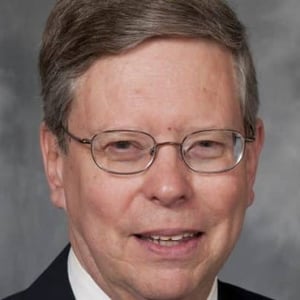
Professor of History and Charles O. Lee and Louise K. Lee Chair in the Western Heritage, Hillsdale College
After reading Litterae Humaniores at Wadham College, Oxford, on a Rhodes Scholarship from 1971-1974, Paul A. Rahe completed a Ph.D. in ancient history at Yale University under the direction of Donald Kagan in 1977. In subsequent years, he taught at Cornell University, Franklin and Marshall College, and the University of Tulsa, where he spent twenty-four years before accepting a position at Hillsdale College, where he is Professor of History and Political Science and holds The Charles O. Lee and Louise K. Lee Chair in the Western Heritage.
Professor Rahe’s entire scholarly career has been focused on studying the origins and evolution of self-government within the West. His range is considerable. His first book, Republics Ancient and Modern: Classical Republicanism and the American Revolution (1992), was 1200 pages in length and surveyed the origins and development of self-government in ancient Greece and Rome, its re-emergence in a new form in the Middle Ages, the transformation it underwent at the hands of the political philosophers of early modernity, and the statesmanship of the American Founding Fathers. Within the first thirteen months of publication, the hardback edition sold out. Thereafter, it reappeared as an alternative selection of the History Book Club. In 1994, it was reissued in a three-volume paperback edition by the University of North Carolina Press, and it remains in print.
In the course of his career, Professor Rahe has published dozens of chapters on related subjects in edited books and scholarly articles in journals such as The American Journal of Philology, Historia, The American Journal of Archaeology, The American Historical Review, The Review of Politics, The American Journal of Business and Professional Ethics, The Journal of the Historical Society, The National Interest, The Woodrow Wilson Quarterly, and History of Political Thought. He spent two years in Istanbul, Turkey in the mid-1980s as a fellow of the Institute of Current World Affairs; he has been awarded research fellowships by the National Endowment for the Humanities and the Earhart Foundation; and he has held research fellowships at the Center for Hellenic Study, the National Humanities Center, the Woodrow Wilson International Center for Scholars in Washington, D. C. , Clare College at Cambridge University, All Souls College at Oxford University, and the American Academy in Berlin; and he has given a host of public lectures at universities in the United States and abroad – most recently at the Hebrew University and at Al-Quds University in Jerusalem, at the Sorbonne in Paris, at the Royal Military Academy at Sandhurst in England and the Free University in Berlin. In 1997-98, he was named to the Templeton Honor Rolls for Education in a Free Society by The John M. Templeton Foundation, and in 2006 the Society for French Historical Studies awarded him the Koren Prize for the Best Article Published in French History the preceding year.
Professor Rahe co-edited Montesquieu’s Science of Politics: Essays on the Spirit of Laws(2001) with David W. Carrithers and Michael A. Mosher, and he edited Machiavelli’s Liberal Republican Legacy (2006). His second book, Against Throne and Altar: Machiavelli and Political Theory under the English Republic, which examines the political thought inspired by the abortive republican experiment that took place in England in the period stretching from 1649 to 1660, was published by Cambridge University Press in April, 2008. His third and fourth books, Montesquieu and the Logic of Liberty: War, Religion, Commerce, Climate, Terrain, Technology, Uneasiness of Mind, the Spirit of Political Vigilance, and the Foundations of the Modern Republic and Soft Despotism, Democracy’s Drift: Montesquieu, Rousseau, and Tocqueville on the Modern Prospect, were published by Yale University Press in 2009. For his fifth book, The Spartan Way of War, which he hopes to have finished by the end of 2010, Professor Rahe has received a contract from Yale University Press.
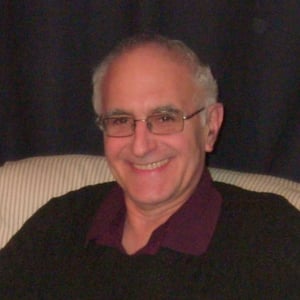
Nancy Reeves Dreux Professor of Political Science, The University of Notre Dame
Michael Zuckert (B.A., Cornell University; PhD, University of Chicago, 1974) is Nancy Reeves Dreux Professor, and Department Chair of Political Science at University of Notre Dame. Professor Zuckert teaches graduate and undergraduate courses in Political Philosophy and Theory, American Political Thought, American Constitutional Law, American Constitutional History, Constitutional Theory, and Philosophy of Law. His advising specialties are graduate programs in political science.
Professor Zuckert has published extensively on a variety of topics, including George Orwell, Plato, Shakespeare, and contemporary liberal theory. He is currently finishing a book called Completing the Constitution: The Post-Civil War Amendments and is co-authoring another book on Machiavelli and Shakespeare. He has been commissioned to write the volume on John Rawls for a series on Twentieth Century Political Philosophy. He co-authored and co-produced public radio series Mr. Adams and Mr. Jefferson: A Nine Part Drama for the Radio. He also was senior scholar for Liberty! (1997), a six hour public television series on the American Revolution, and served as senior advisor on the PBS series on Benjamin Franklin (2002) and Alexander Hamilton (2007). He is currently head of the new Tocqueville Center for the Study of Religion in American Public Life.
Zuckert has received grants from NEH, the Woodrow Wilson Center, Earhart Foundation and NSF, and has taught at Carleton College, Cornell University, Claremont Men’s College, Fordham University, the University of Minnesota, the University of Michigan at Ann Arbor, and the University of Chicago.
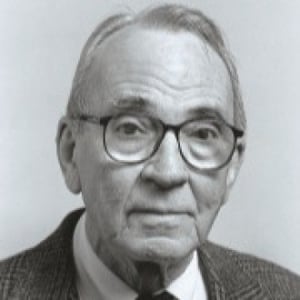
John M. Olin University Professor Emeritus, Georgetown University
Walter Berns is the John M. Olin University Professor Emeritus at Georgetown University and a resident scholar at the American Enterprise Institute. He has taught at the University of Toronto, the University of Chicago (where he earned a Ph.D. in political science), and at Cornell and Yale Universities. His government service includes membership on the National Council on the Humanities, the Council of Scholars in the Library of Congress, the Judicial Fellows Commission, and in 1983 he was the alternate United States representative to the United Nations Commission on Human Rights. He has been a Guggenheim, Rockefeller, and Fulbright Fellow and a Phi Beta Kappa lecturer. He is the author of numerous articles on American government and politics in both professional and popular journals; his many books include In Defense of Liberal Democracy, The First Amendment and the Future of American Democracy, Taking the Constitution Seriously, and Making Patriots. President George W. Bush awarded him the 2005 National Humanities Medal for his scholarship on the history of the constitution.
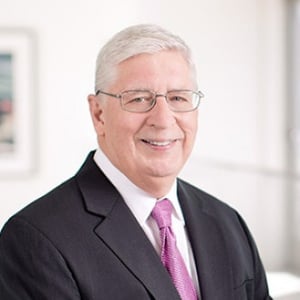
Partner, O'Melveny & Myers LLP
Walter Dellinger is an influential authority on appellate and Supreme Court decisions, lending his experience as a former Solicitor General and decades of legal knowledge to amicus briefs, a multitude of pro bono clients, and public and private companies involved in bet-the-company litigation. A frequent commentator for the Wall Street Journal, Slate, and major television networks, Walter holds the designation of the Douglas B. Maggs Emeritus Professor of Law at Duke University. He was named one of the 100 Most Influential Lawyers in America by the National Law Journal and recognized with a Lifetime Achievement Award from the American Lawyer.
Walter, who formerly served as O’Melveny’s Diversity and Inclusion Partner, helped convince the US Supreme Court that proponents of Proposition 8, California's ban on same-sex marriage, did not have standing to appeal a court order invalidating it. That ruling, Hollingsworth v. Perry, cleared the way for marriage equality in California and eventually nationwide.
Walter served as Assistant Attorney General and head of the Office of Legal Counsel (OLC) from 1993 to 1996. He was acting Solicitor General for the 1996-97 Term of the US Supreme Court. During that time, Walter argued nine cases before the Court, the most by any Solicitor General in more than 20 years. His arguments included cases dealing with physician-assisted suicide, the line item veto, the cable television act, the Brady Act, the Religious Freedom Restoration Act, and the constitutionality of remedial services for parochial school children.
Walter has served as Special Counsel to the Board of Directors of the New York Stock Exchange in connection with the NYSE’s transformation into a publicly held company and its acquisition of an electronic trading company.
After serving in early 1993 in the White House as an advisor to the President on constitutional issues, Walter was nominated by the President to be Assistant Attorney General. He was confirmed by the Senate in October 1993 and served for three years. As head of the OLC, Walter issued opinions on a wide variety of issues, including: the President's authority to deploy United States forces in Haiti and Bosnia; whether the trade agreements required treaty ratification; and a major review of separation of powers questions. He provided extensive legal advice on questions arising out of the shutdown of the federal government, on national debt ceiling issues, and on loan guarantees for Mexico.
Walter has published articles on constitutional issues for scholarly journals including the Harvard Law Review, the Yale Law Journal, and the Duke Law Journal, and has written for the New York Times, the Washington Post, Newsweek, the New Republic, and the London Times. He has been a visiting professor at the Catholic University of Belgium and has given lectures to university faculties in Florence, Siena, Nuremberg, Copenhagen, Leiden, Utrecht, Tilburg, Mexico, and Rio de Janeiro, and has delivered major lectures at Stanford, Yale, Harvard, Michigan, Berkeley, Penn, Duke, Chicago, and other US law schools. He has testified more than 25 times before committees of Congress.
In private practice, Walter’s arguments before the United States Supreme Court have included Exxon Shipping Co. v. Baker, Morgan Stanley Capital Group Inc. v. Public Utility District No. 1 of Snohomish County, Alabama v. North Carolina, Hosanna-Tabor v. EEOC, Heller v. District of Columbia, Jackson v. Birmingham School District, Brown v. Legal Foundation of Washington, US Airways v. Barnett, Utah v. Evans, Hunt v. Cromartie, and Hunt v. Easley. His most notable Court of Appeals and state supreme court arguments include Martha Stewart v. United States, Whiteside v. United States, and Exxon v. Alabama, LCI v. Phillips.
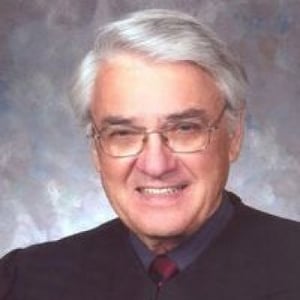
Senior Judge, United States Court of Appeals, Fifth Circuit
Patrick Errol Higginbotham is a federal judge on senior status with the United States Court of Appeals for the 5th Circuit. He joined the court in 1982 after being nominated by President Ronald Reagan.
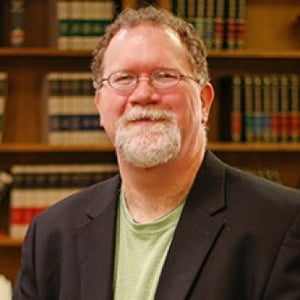
Chief Academic Officer & Vice Chancellor for Strategic Initiatives, State University System of Florida
Jason Jewell chairs the Department of Humanities at Faulkner University, where he directs online degree programs based on the Great Books at both the undergraduate and graduate levels. On campus he teaches courses in the humanities and social/behavioral science departments and the Great Books Honors Program.
He received a Ph.D. in humanities from Florida State University, an M.A. in history from Pepperdine University, and a B.A. in history and music from Harding University.
He is associate editor of the Journal of Faith and the Academy and a member of the editorial board of two other academic journals. He is a contributor to Christian Faith and Social Justice: Five Views (Bloomsbury, 2014) and The Inklings and King Arthur (2018), and he has contributed to six academic journals and five encyclopedias. His writing has also appeared in numerous magazines and popular journals..
In addition to directing honors students in the GBH program, Jacobs serves as a Faulkner Foundations teacher, a sponsor for Alpha Chi National Honor Society, and a sponsor for Images in Ink, an annual creative arts publication published by the university every spring. He also serves on the board of Cornerstone Classical Christian Academy, a private k-12 school that works with the same spiritual and academic mindset as guides him at Faulkner.
“I am convinced,” he says, “that learning centered around Christ and a classical or Great Books methodology promotes a more virtuous human being, allowing one to know God better and love His creation better, too. It is my deep hope to instill this sort of learning in future generations. One simply cannot argue with the sort of excellence and deep Christian charity such education promotes. As such, I can think of no better expenditure of my time than working among my fellow brothers and sisters in Christ and reading and discussing great books with as many and as varied students as possible.”
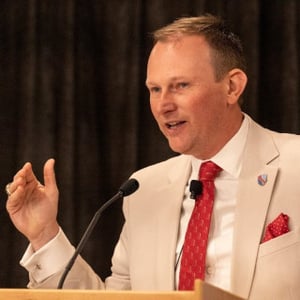
Senior Advisor and Research Fellow, The Heritage Foundation
Allen Mendenhall is a Senior Advisor for the Capital Markets Initiative and Research Fellow in the Thomas A. Roe Institute for Economic Policy Studies at the Heritage Foundation in Washington, D.C. Previously, he served as Associate Dean and Grady Rosier Professor in the Sorrell College of Business at Troy University, where he also directed the Manuel H. Johnson Center for Political Economy. He is also a Visiting Fellow at the Madden Center for Value Creation at Florida Atlantic University.
His books include Literature and Liberty: Essays in Libertarian Literary Criticism (2014), Oliver Wendell Holmes Jr., Pragmatism, and the Jurisprudence of Agon: Aesthetic Dissent and the Common Law (2017), Of Bees and Boys: Lines from a Southern Lawyer (2017), The Southern Philosopher: Collected Essays of John William Corrington (2017), Writers on Writing: Conversations with Allen Mendenhall (2019), The Three Ps of Liberty: Pragmatism, Pluralism, and Polycentricity (2020), Shouting Softly: Essays on Law, Literature, and Culture (2021), A Glooming Peace This Morning (2023, a novel), and Controversies Among Conservatives: Conversations on Conservatism, Vol. II (2024, edited with Marcus Witcher and Kevin Hughes). His monthly segment “Word to the Wise” appears on Troy Public Radio (WTSU 89.9, WRWA 88.7, WTJB 91.7), and he writes a weekly column for 1819 News, Alabama’s bold and innovative conservative news outlet.
Mendenhall holds a B.A. in English from Furman University, an M.A. in English from West Virginia University, a J.D. from West Virginia University College of Law, an LL.M. in transnational law from Temple University Beasley School of Law, and a Ph.D. in English from Auburn University.
From 2016 to 2020, he was Associate Dean and Founding Executive Director of the Blackstone & Burke Center for Law & Liberty at Faulkner University’s Thomas Goode Jones School of Law in Montgomery, Alabama. He edited Southern Literary Review for over a decade (2011–2022) and has served as a visiting scholar (2020) and trustee (2023) at the American Institute for Economic Research (AIER), an adjunct legal associate at the Cato Institute (2009), a Mises Canada Emerging Scholar with the Ludwig von Mises Institute Canada (2014), an elected member of the Mont Pelerin Society (2024), an associate of the Abbeville Institute (2011–present), a Humane Studies Fellow with the Institute for Humane Studies (2011–2012), a staff attorney for Chief Justice Roy S. Moore of the Supreme Court of Alabama (2013–2016), an Assistant Attorney General in the State of Alabama Office of Attorney General Luther Strange (2016), an AmPhil Fundraising Fellow with the Center for Civil Society of American Philanthropic (2023–2024), an Advisory Council Member of the Law & Liberty Circle at the Universidad Francisco Marroquín (2024–present), an elected member (2012) and former trustee (2018–2022) of the Philadelphia Society, an associated scholar at the Ludwig von Mises Institute (2017–present), a policy adviser for the Heartland Institute (2016–present), former president of the Alabama Association of Scholars (2017–2020), president of the Montgomery Lawyers Chapter of the Federalist Society (2013–present), and Chairman of the Board of Managers of the Alabama Center for Law & Liberty (2022–2024). In 2023, he was an inaugural recipient of the Freedom and Opportunity Academic Prize from the Heritage Foundation. In 2024, he was a Club For Growth Foundation Fellow and a Lincoln Fellow with the Claremont Institute for the Study of Statesmanship and Political Philosophy. Alabama Governor Kay Ivey appointed him to the 2025–26 State Textbook Committee of the Alabama Department of Education.
He has taught in university English departments, business schools, a humanities department, a law school, a Japanese private school (juku), and a penitentiary, and he serves or has served on numerous boards of organizations as wide-ranging as the Alabama Public Television Foundation Authority (2019–2025), the Young Professionals Board of the Alabama Humanities Foundation (2015–2016), the Society for Law and Culture (a division of the Russell Kirk Center for Cultural Renewal) (2017–present), Trinity Christian School (2017–2020), Ivy Classical Academy (2025–present), and the Philadelphia Society (2018–2022). He served on the advisory council of the Ludwig von Mises Institute’s Master of Arts degree and Certificate Program in Austrian Economics from 2021–2023. While in private practice in Atlanta, he represented non-profit corporations and litigated cases involving real property, contracts, collections, foreclosures, restrictive covenants, and real estate transactions. He graduated from Leadership Lee County (Alabama), the Alabama State Bar Leadership Forum (Class 14), and the Atlas Leadership Academy of Atlas Network. He has authored hundreds of publications, including fiction and poetry, and studied under the creative writers Gilbert Allen, Michael Blumenthal, William Aarnes, and Chantel Acevedo.
His academic writing has appeared or is forthcoming in such peer-reviewed journals as The Journal Jurisprudence, The Canadian Journal of Law and Jurisprudence, Public Choice, The Political Science Reviewer, Journal of Markets & Morality, Journal of Private Enterprise, The Texas Review of Law and Politics, European Journal of Pragmatism and American Philosophy, Contemporary Pragmatism, The South Carolina Review, Academic Questions, The Independent Review, Quarterly Journal of Austrian Economics, Modernist Cultures, The British Journal of American Legal Studies, and in law reviews published by Georgetown University Law Center, UC Berkeley School of Law, The University of Texas School of Law, Emory University School of Law, Indiana University Maurer School of Law, Texas A&M University School of Law, and Michigan State University College of Law.
His writing for popular media has appeared in Newsweek, Fox News, Fox Business, The Wall Street Journal, The Washington Times, National Review, The American Spectator, Pacific Standard, The Hill, The Los Angeles Review of Books, The American Conservative, City Journal, The Daily Caller, The Federalist, Public Discourse, Law & Liberty, The Epoch Times, The American Mind, The Freeman, Liberty, RealClearMarkets, The University Bookman, The Daily Signal, Chronicles, The Christian Lawyer, Writer’s Digest, The Conversation, and elsewhere. He has spoken at Harvard University, Brown University, Georgetown University Law Center, Francisco Marroquín University, Furman University, George Mason University, University of British Columbia, University of Nevada-Las Vegas, Auburn University, West Virginia University, the Alabama State Capitol, the Alabama Supreme Court, and other universities and locations.
He has been quoted or cited in Fox Business, Fox News, Forbes, The Washington Post, The Washington Times, The National Review, The Daily Caller, Le Monde, Times Higher Education, The College Fix, The Blaze Media, Campus Reform, Inside Higher Education, and U.S. News and World Report, and published by such organizations as the Ludwig von Mises Institute, the Ludwig von Mises Institute Canada, the Mercatus Center, the Foundation for Economic Education, the Intercollegiate Studies Institute, the American Institute for Economic Research, the Charlemagne Institute, the Independent Institute, the Rockford Institute, the Russell Kirk Center for Cultural Renewal, the American Ideas Institute, Atlas Society, the Heartland Institute, the Abbeville Institute, the National Association of Scholars, the James G. Martin Center for Academic Renewal, and the Libertarian Alliance. He frequently appears on radio and television on networks as wide-ranging as Fox News, Newsmax, Alabama Public Television, NewsNation, Al Jazeera, C-SPAN, Bill O’Reilly’s “No Spin News,” NTD News, The Daily Wire, Steve Bannon’s “War Room,” and BBC World News.
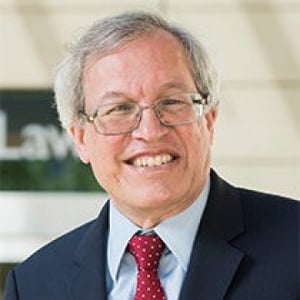
Dean and Jesse H. Choper Distinguished Professor of Law, UC Berkeley School of Law
Erwin Chemerinsky became the 13th Dean of Berkeley Law on July 1, 2017, when he joined the faculty as the Jesse H. Choper Distinguished Professor of Law.
Prior to assuming this position, from 2008-2017, he was the founding Dean and Distinguished Professor of Law, and Raymond Pryke Professor of First Amendment Law, at University of California, Irvine School of Law, with a joint appointment in Political Science. Before that he was the Alston and Bird Professor of Law and Political Science at Duke University from 2004-2008, and from 1983-2004 was a professor at the University of Southern California Law School, including as the Sydney M. Irmas Professor of Public Interest Law, Legal Ethics, and Political Science. He also has taught at DePaul College of Law and UCLA Law School.
He is the author of eleven books, including leading casebooks and treatises about constitutional law, criminal procedure, and federal jurisdiction. His most recent books are, We the People: A Progressive Reading of the Constitution for the Twenty-First Century (Picador Macmillan) published in November 2018, and two books published by Yale University Press in 2017, Closing the Courthouse Doors: How Your Constitutional Rights Became Unenforceable and Free Speech on Campus (with Howard Gillman).
He also is the author of more than 200 law review articles. He writes a regular column for the Sacramento Bee, monthly columns for the ABA Journal and the Daily Journal, and frequent op-eds in newspapers across the country. He frequently argues appellate cases, including in the United States Supreme Court.
In 2016, he was named a fellow of the American Academy of Arts and Sciences. In 2017, National Jurist magazine again named Dean Chemerinsky as the most influential person in legal education in the United States.
Legal Scholar and Solo Practitioner
Jack received his B.A. in History from the University of Virginia in 1977, graduating with Highest Distinction. After graduating Yale Law School in 1980, he served active duty in the U.S. Army's JAG Corps, rising to the rank of Major, where he represented the United States in more than 250 cases.
He practiced for a decade as an Associate for Bradley Arant in Birmingham, Alabama. He proudly served the State of Alabama in the Office of the Attorney General, both as Deputy and Assistant Attorney General, handling complex civil and criminal litigation cases for the people of Alabama. In 2000, he won the "Best Brief Award" from the National Association of Attorneys General for his brief in a case decided by the U.S. Supreme Court, James Alexander v. Martha Sandoval – a case he won. He was Special Assistant to the Inspector General for the Corporation for National and Community Service, Visiting Legal Fellow for the Center for Judicial and Legal Studies for the Heritage Foundation, Of Counsel at Strickland Brockington Lewis, a solo practitioner, and General Counsel for Indigo Energy.
Most recently, he "re-upped" for military service, volunteering his legal services to the Georgia State Defense Force where twice each month he provided legal services for National Guardsmen who were being deployed. He wore his military uniform for the last time in October 2024.
Jack Park passed away on March 16, 2026.
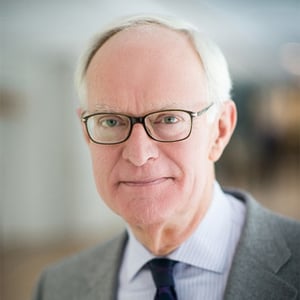
Distinguished Fellow, Hudson Institute
Christopher DeMuth is a distinguished fellow at Hudson Institute. He was president of the American Enterprise Institute for Public Policy Research (AEI) from 1986 to 2008 and was the D.C. Searle Senior Fellow at AEI from 2008 to 2011.
Mr. DeMuth was raised in Kenilworth, Illinois, and attended the Lawrenceville School (1964), Harvard College (A.B. 1968), and the University of Chicago Law School (J.D. 1973). He served as staff assistant to President Richard M. Nixon from 1969 to 1970, working first for Daniel P. Moynihan (then assistant to the President for Urban Affairs) on urban policy matters and then as chairman of the White House Task Force on Environmental Policy. Following law school, he practiced regulatory, antitrust, and general corporate law with Sidley & Austin in Chicago (1973-1976) and was associate general counsel of the Consolidated Rail Corporation (Conrail) in Philadelphia (1976-1977).
From 1977 to 1981, Mr. DeMuth was lecturer in public policy at the Kennedy School of Government at Harvard University, and director of the Harvard Faculty Project on Regulation. There he taught courses on law, economics, and regulatory policy and conducted and sponsored research on health, safety, environmental, and economic regulation.
Returning to Washington in 1981, Mr. DeMuth served as administrator for information and regulatory affairs in the U.S. Office of Management and Budget, and as executive director of the Presidential Task Force on Regulatory Relief during President Ronald Reagan’s first term of office. From 1984 to 1986, he was managing director of Lexecon Inc., a law-and-economics consulting firm; in 1986, he was also publisher and editor-in-chief of Regulation magazine. He was elected president of the American Enterprise Institute in December 1986.
Many of Mr. DeMuth’s articles, lectures, and occasional talks are posted on his website (https://www.ccdemuth.com).
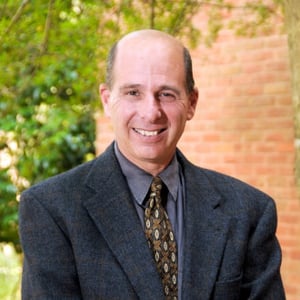
Sandra Day O'Connor Professor of Law & Professor of Government, William & Mary Law School
Neal Devins is the Sandra Day O’Connor Professor of Law and Professor of Government at the College of William and Mary. He is the author of several books and more than 100 articles and book chapters on courts, constitutional law, and law & politics. His books include The Company They Keep (Oxford 2019) (with Larry Baum), The Democratic Constitution (Oxford 2d ed. 2015) (with Louis Fisher), Political Dynamics of Constitutional Law (West 6th ed. 2019) (with Louis Fisher), and Shaping Constitutional Values: The Supreme Court, Elected Government, and the Abortion Dispute (Johns Hopkins University Press 1996). His articles have appeared in The Yale Law Journal, The Stanford Law Review, The Columbia Law Review, The Michigan Law Review, The California Law Review, The Virginia Law Review, The University of Pennsylvania Law Review, The University of Chicago Law Review, The New York University Law Review, and several other journals and magazines. Professor Devins is also the author of op-eds appearing in The Wall Street Journal, The New York Times, The Washington Post, The Los Angeles Times, Slate, and several other newspapers. He has testified before House and Senate committees on budget reform and the separation of powers. Professor Devins is a graduate of Georgetown University (A.B. 1978) and Vanderbilt Law School (J.D. 1982).
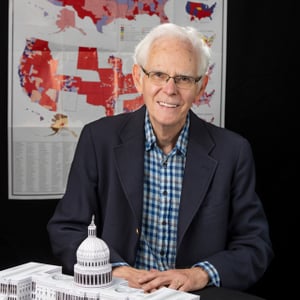
David Mayhew, Sterling Professor of Political Science Emeritus, Yale University
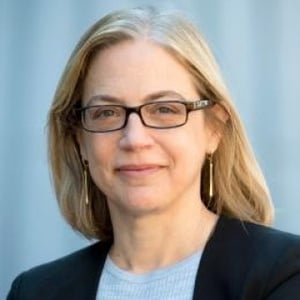
Harlan Fiske Stone Professor of Constitutional Law, Columbia Law School
A leading administrative and constitutional law scholar, Gillian Metzger ’96 writes and teaches in the areas of administrative law, constitutional law, and federal courts, with an emphasis on federalism and privatization. In 2023-2024, she served as Acting Assistant Attorney General and Deputy Assistant Attorney General in the Office of Legal Counsel in the Department of Justice.
Metzger's recent work covers topics ranging from constitutional attacks on the administrative state to appropriations, administrative law under the Roberts Court, and the role of administrative agencies in a polarized world. In 2015, Metzger won the American Bar Association Administrative Law Section Annual Scholarship Award for “The Constitutional Duty to Supervise,” which examined presidential control and oversight of the modern administrative state. She is a co-editor of Gellhorn & Byse’s Administrative Law: Cases and Comments, 13th ed. (Foundation Press, 2023), a seminal administrative law casebook.
Professor Metzger was recently elected to the American Academy of Arts & Sciences and is a Senior Fellow of the Administrative Conference of the United States. In 2020, she was awarded Columbia University's Faculty Mentorship Award and in 2014, the Law School’s graduating class awarded Metzger the Willis L.M. Reese Prize for Excellence in Teaching, recognizing, among many other accomplishments, her commitment to mentoring new generations of law students.
In 2012, Metzger helped launch Columbia Law School’s Center for Constitutional Governance (CCG)—where she now serves as faculty director—a nonpartisan legal and policy organization devoted to the study of constitutional structure and authority. CCG brings together a diverse group of constitutional scholars to explore policy areas such as health care, civil rights, immigration, financial regulation, and national security.
Metzger also has co-authored and filed numerous amicus briefs in major constitutional and administrative law challenges before the Supreme Court and other courts. Most recently, Metzger filed a brief in Seila Law Center v. CFPB, a separation of powers challenge, and in Kisor v. Wilkie, a case involving judicial deference to agencies. She has also filed briefs in cases involving reproductive rights and the Affordable Care Act, among others.
Previously, Metzger served as vice dean of intellectual life at Columbia Law School. Before joining the Law School, she worked as an attorney with the Brennan Center for Justice. Metzger also clerked for U.S. Supreme Court Justice Ruth Bader Ginsburg ’59 and Judge Patricia M. Wald of the U.S. Circuit Court of Appeals for the District of Columbia. In 2018, Metzger moderated a panel discussion with Justice Ginsburg on impact litigation at Columbia Law School.

Judge, United States Court of Appeals, District of Columbia Circuit
Judge Rao was appointed to the United States Court of Appeals for the District of Columbia Circuit in March 2019. She graduated from Yale College in 1995 and the University of Chicago Law School in 1999. Following graduation, she served as a law clerk to Judge J. Harvie Wilkinson III of the U.S. Court of Appeals for the Fourth Circuit and, in the 2001 October Term, as law clerk to Justice Clarence Thomas of the U.S. Supreme Court. Between her clerkships, Judge Rao served as counsel for nominations and constitutional law to the U.S. Senate Committee on the Judiciary. In 2002, she joined the international arbitration group of Clifford Chance LLP in London, England. From 2005-2006, she served as Special Assistant and Associate White House Counsel to President George W. Bush. From 2006 to 2017, Judge Rao was a professor at the Antonin Scalia Law School at George Mason University, where she taught constitutional law, legislation and statutory interpretation, and the history and foundations of the administrative state. In 2014, she founded the Center for the Study of the Administrative State, a non-profit Center that promotes academic scholarship and public policy debates about administrative law. In July 2017, she was appointed to serve as the Administrator of the Office of Information and Regulatory Affairs in the Office of Management and Budget. She served in this position until her appointment to the D.C. Circuit.

Executive Vice President, The Federalist Society
Dean Reuter is Executive Vice President at the Federalist Society for Law and Public Policy Studies. He has served in two federal government agency Offices of the Inspector General, as Counsel to the Inspector General and Deputy Inspector General, responsible for policing the use of federal funds granted and contracted through those agencies. As such, he helped conduct and oversee criminal investigations across the country. He is the principal author of the non-fiction book, The Hidden Nazi: The Untold Story of America's Deal with the Devil, and editor of Liberty’s Nemesis: The Unchecked Expansion of the State and Confronting Terror: 9/11 and the Future of American National Security. He was appointed by the President and served as Vice-Chairman of the Board of Directors of the Corporation for National and Community Service, and recently served as an appointee on the U.S. Commission on Presidential Scholars. He is a graduate of Hood College (BA with Honors) and the University of Maryland School of Law.

Judge, United States Court of Appeals, Fifth Circuit
Judge Smith was appointed U.S. Circuit Judge for the Fifth Circuit by President Reagan and entered on duty in January 1988. He attended public schools in Lubbock, Texas, and graduated from Yale University, receiving a B.A. in 1969 and a J.D. in 1972.
Judge Smith was a Law Clerk to U.S. District Judge Halbert Woodward, Northern District of Texas, 1972-1973; with the Houston law firm of Fulbright & Jaworski as an Associate, 1973-1981, and as Partner, 1981-1984; and as City Attorney, City of Houston, 1984-1988. He was Chairman, Civil Service Commission, City of Houston, 1982-1984; and a Director, Harris County Housing Authority, 1978-1980.
Judge Smith lives in Houston and is married to Mary Jane Smith and has four children: Ruth Ann, Clark, J.J., and Brandon. He formerly was Chair of the Advisory Committee on Federal Rules of Evidence of the Judicial Conference of the United States. He assists LexisNexis/Matthew Bender & Co. in periodic revisions of several chapters of Moore’s Federal Practice.

Chairman and Founder, Institute for Free Speech; Josiah H. Blackmore II/Shirley M. Nault Designated Professor of Law, Capital University Law School
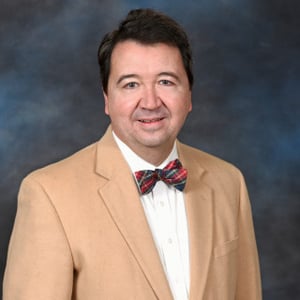
Judge, United States Court of Appeals, Sixth Circuit
John K. Bush is a Circuit Judge on the United States Court of Appeals for the Sixth Circuit.
His chambers are in Louisville, Kentucky. Prior to joining the court, Judge Bush was a partner in the
Louisville office of the firm Bingham Greenebaum Doll (now Dentons Bingham Greenebaum),
where he also was co-chair of the firm’s litigation department. He began his legal practice in the
Washington, D.C. office of Gibson Dunn & Crutcher.
Judge Bush served as a law clerk for Judge J. Smith Henley of the United States Court of
Appeals for the Eighth Circuit. He was graduated summa cum laude from Vanderbilt University,
and cum laude from Harvard Law School. He is an adjunct lecturer at The George Washington
University Law School and the Brandeis School of Law at the University of Louisville.
Professor Emeritus, Santa Clara University School of Law
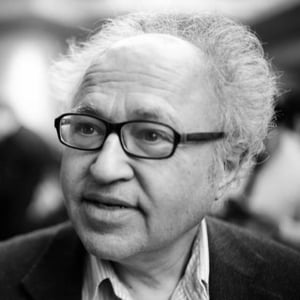
David D. Friedman is an academic economist with a doctorate in physics, retired from 23 years of teaching in a law school. His first book, The Machinery of Freedom: Guide to a Radical Capitalism, was published in 1973 and includes a description of how a society with property rights and without government might function. There, as elsewhere, he offers a consequentialist defense of libertarianism.
His most recent non-fiction book is Legal Systems Very Different from Ours, covering systems from Periclean Athens through modern Amish and Romany. He is also the author of three novels, one commercially published and two self-published, and, with his wife, a self-published medieval and renaissance cookbook and a larger self-published book related to their hobby of historical recreation. Most of his writing, including full text of most of his nonfiction books, and recordings of many of his talks can be found on his web page: www.daviddfriedman.com. His current work is available at https://daviddfriedman.substack.com/
His Substack posts covering a wide range of topics come out every three days; a list of past posts sorted by topic is on his web page. One current project is converting past posts on consequences of climate change into a book.

Family Law and Individual Responsibility [Archive Collection]
Elizabeth Fox-Genovese, William Kristol, Jane E. Larson, Phyllis Schlafly, Karl Zinsmeister
On September 13-14, 1991, the Federalist Society hosted its fifth annual National Lawyers Convention at...
Locke & Montesquieu: The Philosophers Behind the Founders
Paul Carrese, Eric R. Claeys, Paul Rahe, Michael P. Zuckert
Where did the founding ideas of Washington, Madison, and Jefferson find their origins? How did...
Can the Death Penalty be Administered Constitutionally? [Archive Collection]
Walter Berns, Walter E. Dellinger, Patrick E. Higginbotham
On September 9-10, 1988, The Federalist Society hosted its second annual National Lawyers Convention at...
Justice versus Social Justice
Jason Jewell, Allen P. Mendenhall
On August 22, 2019, the Federalist Society's Montgomery Lawyers Chapter hosted an event at the...
The Morality of Consent - Podcast
Erwin Chemerinsky, James A. Haynes, John J. Park
The Federalist Society's Legal Classics Revisited series returns to the writing of Professor Alexander Bickel...
Showcase Panel II: The Living Congress: Adaptation or Decline?
Christopher C. DeMuth, Neal E. Devins, David Mayhew, Gillian E. Metzger, Neomi Rao, Dean Reuter, Jerry E. Smith
Clearly, we live in a very different society from that of the founding period. Size...
The First Amendment and Campaign Finance: Assessing the Recently-Decided McCutcheon v. FEC Case - Podcast
Bradley A. Smith
Stating that “There is no right more basic in our democracy than the right to...
A Retrospective on the 1921 Constitution of the Democratic Republic of Georgia
INTRODUCTION Establishing a strong system of constitutionalism is crucial for the development of modern statehood...
The Constitution and the Importance of Interpretation: Original Meaning
John K. Bush, Allison Martens, Michael P. McDonald, Lynn Olympia, Charles Ziegler, David D. Friedman
The Louisville Lawyers Chapter co-sponsored this event with The Alexander Hamilton Historical Society of Kentucky...