
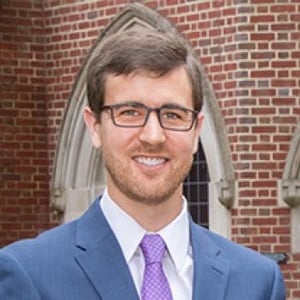
Professor of Law & Helen L. Crocker Faculty Scholar, Stanford Law School
Jud Campbell joined the faculty of Stanford Law School in 2023. He previously served as a professor of law at the University of Richmond School of Law and as a visiting professor of law at the University of Chicago Law School and at Harvard Law School. His academic focus is constitutional history and First Amendment law. His publications include articles in the Stanford Law Review, Yale Law Journal, Harvard Law Review, Texas Law Review, Constitutional Commentary, and Law and History Review. After completing his J.D. at Stanford Law School, he clerked for Judge Diane S. Sykes on the U.S. Court of Appeals for the Seventh Circuit, and for Judge José A. Cabranes on the U.S. Court of Appeals for the Second Circuit. He then served as the Executive Director of the Stanford Constitutional Law Center. He holds a bachelor’s degree from the University of North Carolina at Chapel Hill and two master’s degrees from the London School of Economics, where he studied as a Marshall Scholar.

Laurence A. Tisch Professor of Law and Director, Classical Liberal Institute, New York University School of Law; Senior Fellow, The Civitas Institute, University of Texas at Austin
Richard A. Epstein is the inaugural Laurence A. Tisch Professor of Law at NYU School of Law. Prior to his joining the faculty, he was a visiting law professor at NYU from 2007 through 2009. He served as the Peter and Kirstin Bedford Senior Fellow at the Hoover Institution from 2000 to 2024. Since 2024 to the present he is a senior lecturer at the Civitas Institute at the University of Texas—Austin. Epstein is also the James Parker Hall Distinguished Service Professor of Law Emeritus and a senior lecturer at the University of Chicago. His initial law school appointment was at the University of Southern California from 1968 to 1972. Epstein received an LL.D., h.c. from the University of Ghent, 2003. He has been a member of the American Academy of Arts and Sciences since 1985 and was a Senior Fellow of the Center for Clinical Medical Ethics at the University of Chicago Division of Biological Sciences, also from 1983. to 2022 He served as editor of the Journal of Legal Studies from 1981 to 1991, and of the Journal of Law and Economics from 1991-2001. From 2001 to 2010 he was a director of the John M. Olin Program in Law and Economics at the University of Chicago.
His newest book, The Myth of Birthright Citizenship: What the Fourteenth Amendment Really Says was published in 2026 (Encounter Books). Prior to that he has published many books including, The Dubious Morality of the Modern Administrative State (Roman & Littlefield 2020).Earlier he published th Classical Liberal Constitution: The Uncertain Quest for Limited Government (Harvard 2014) iHis previous books include Design for Liberty: Private Property, Public Administration and the Rule of Law (Harvard 2011); The Case Against the Employee Free Choice Act (Hoover 2009); Supreme Neglect: How to Revive the Constitutional Protection of Property Rights (Oxford 2008); Antitrust Decrees in Theory and Practice: Why Less is More (AEI 2007); Overdose: How Excessive Government Regulation Stifles Pharmaceutical Innovation (Yale University Press. 2006); How Progressives Rewrote the Constitution (Cato 2006); Cases and Materials on Torts (Aspen Law & Business; 8th ed. 2004); Skepticism and Freedom: A Modern Case for Classical Liberalism (University of Chicago, 2003); Torts (Aspen Law & Business 1999); Principles for a Free Society: Reconciling Individual Liberty with the Common Good (Perseus Books, 1998): Mortal Peril: Our Inalienable Rights to Health Care (Addison-Wesley, 1997); Simple Rules for a Complex World (Harvard, 1995); Bargaining With the State (Princeton, 1993); Forbidden Grounds: The Case Against Employment Discrimination Laws (Harvard , 1992); Takings: Private Property and the Power of Eminent Domain (Harvard, 1985); and Modern Products Liability Law (Greenwood Press, 1980). He has also edited(with Catherine M. Sharkey) Cases and Materials on the Law of Torts (10th edition 2012).
Professor Epstein has written numerous articles on a wide range of legal and interdisciplinary subjects. He has taught courses in administrative law, antitrust law, civil procedure, communications, constitutional law, contracts, corporations, criminal law, employment discrimination law, environmental law, food and drug law health law and policy, legal history, labor law, property, real estate development and finance, jurisprudence, labor law; land use planning, patents, individual, estate and corporate taxation, Roman Law; torts, and workers' compensation.
Professor Epstein also writes a regular column for Civitas Institute, which also sponsors his podcast, The Libertarian with Charles C.W. Cooke, and Law Talk, with Cooke and John Yoo. He also does a podcast with John Batchelor. And appears regularly on the Freedom File with Judge Andrew Napolitano.

Former Solicitor General of Texas
Jonathan F. Mitchell is Principal at Mitchell Law PLLC. He received his law degree with high honors from the University of Chicago Law School, where he was an articles editor of The University of Chicago Law Review and a member of the Order of the Coif.
After graduating from law school, Mr. Mitchell clerked for Judge J. Michael Luttig of the U.S. Court of Appeals for the Fourth Circuit and for Justice Antonin Scalia of the Supreme Court of the United States. He then served as an Attorney-Adviser in the Office of Legal Counsel of the United States Department of Justice from 2003 through 2006. After leaving the Department of Justice, Mr. Mitchell served as a Visiting Researcher at Georgetown University Law Center, a Visiting Assistant Professor at the University of Chicago Law School from 2006 through 2008, and an Assistant Professor of Law at George Mason University from 2008 through 2010.
In 2010, Mr. Mitchell was appointed Solicitor General of Texas, a position he held until January 2015. After leaving the Texas Solicitor General’s office, Mr. Mitchell served as the Searle Visiting Professor of Law at the University of Texas School of Law before joining the Hoover Institution as a Visiting Fellow from 2015 to 2016. Mr. Mitchell also served as a Visiting Professor of Law at Stanford Law School before opening his own law firm in 2018.
Mr. Mitchell has published numerous works of scholarship in top-10 law journals, and he has written articles on textualism, national-security law, criminal law and procedure, judicial review and judicial federalism, and the legality of stare decisis in constitutional adjudication.
Mr. Mitchell has argued eight times before the Supreme Court of the United States, and more than 20 times in the federal courts of appeals. He has also argued before Supreme Court of Texas and in numerous trial courts. Mr. Mitchell has authored the principal merits brief in 11 Supreme Court cases, and has written and submitted more than 20 amicus curiae briefs in the Supreme Court.
Mr. Mitchell devised the novel enforcement mechanism in the Texas Heartbeat Act, also known as Senate Bill 8, which avoids pre-enforcement judicial review by prohibiting government officials from enforcing the statute and empowering private citizens to bring lawsuits against those who violate it. This produced an end-run around Roe v. Wade and allowed Texas and other states to impose pre-viability abortion bans despite the continued existence of Roe.
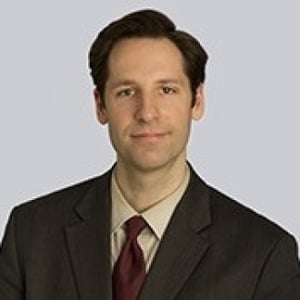
Associate Attorney, Gibson, Dunn & Crutcher LLP
Lochlan F. Shelfer is a litigation associate in the Washington, D.C. office of Gibson, Dunn & Crutcher. He is a member of the firm’s Appellate and Constitutional Law and Administrative Law practice groups.
Mr. Shelfer has litigated a wide range of appellate and trial matters in federal and state court. Mr. Shelfer’s appellate practice includes representing corporate clients in high-stakes commercial disputes, litigating cutting-edge legal issues before the Supreme Court of the United States, bringing merits and collection actions against foreign sovereigns, and representing pro bono clients before the courts of appeals. He has argued an appeal before the United States Court of Appeals for the Ninth Circuit, addressing matters of federal jurisdiction. In addition, Mr. Shelfer regularly represents clients in litigation under the Administrative Procedure Act.
Mr. Shelfer received his law degree from Yale Law School, where he served as an Articles Editor of the Yale Law Journal and was awarded the Judge William E. Miller Prize for best paper on the Bill of Rights for his work "How the Constitution Shall Not Be Construed," BYU Law Review (2017), and the Joseph Parker Prize for best paper on legal history for his work "Special Juries in the Supreme Court," Yale Law Journal (October, 2013). Prior to attending law school, Mr. Shelfer graduated summa cum laude from New York University with a B.A. in Classics and from Johns Hopkins University with a Ph.D. in Classics, specializing in the history of law. From 2013–2014, Mr. Shelfer served as a law clerk to the Honorable Carlos T. Bea of the United States Court of Appeals for the Ninth Circuit.
Mr. Shelfer is a member of the bars of Maryland and the District of Columbia.
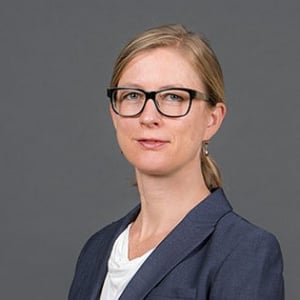
Assistant Professor of Law, George Mason University Antonin Scalia Law School
Megan Stevenson is an economist and legal scholar who became an Assistant Professor of Law at George Mason University, in 2017. Her research uses advanced econometric techniques to evaluate criminal law and policy in areas such as bail, pretrial detention, juvenile justice, and risk assessment. Her studies are published or forthcoming in top journals in both economics and law, such as the Stanford Law Review and the Review of Economics and Statistics. Her research on bail was cited extensively in a landmark federal civil rights decision, O’Donnell v. Harris, and has received widespread media coverage. In addition to legal scholarship, Professor Stevenson has written a number of op-eds for news outlets such as the Houston Chronicle and the Philadelphia Inquirer. Her research has been funded by the National Science Foundation, the Russell Sage Foundation, and the Laura and John Arnold Foundation.
Prior to joining the law faculty at George Mason, Professor Stevenson was a fellow at the Quattrone Center for the Fair Administration of Justice at the University of Pennsylvania Law School (2015-2017). She holds a BA in Interdisciplinary Studies (2009, with highest distinction) and a PhD in Agricultural and Resource Economics (2016), both from the University of California, Berkeley. She teaches Law & Economics and Criminal Law.
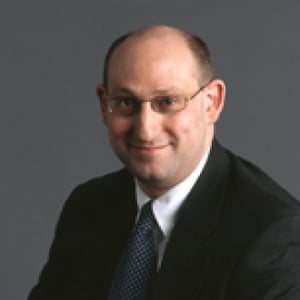
Professor of Law, Georgetown Law
Professor Teitelbaum joined the Georgetown faculty in 2009. Before coming to Georgetown, he clerked for Judge Richard M. Berman of the U.S. District Court for the Southern District of New York, practiced corporate and securities law at Cahill Gordon & Reindel LLP in New York, and was a Visiting Assistant Professor at Cornell Law School.
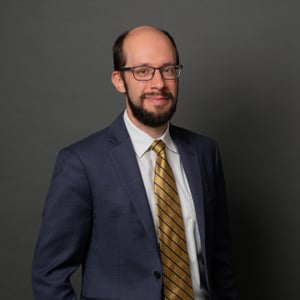
Assistant Professor of Law, Antonin Scalia Law School, George Mason University
Lael Weinberger is an assistant professor of law at George Mason University Antonin Scalia Law School. Previously, Lael clerked for Justice Neil Gorsuch on the United States Supreme Court, Judge Frank Easterbrook on the Seventh Circuit Court of Appeals, and Chief Justice Daniel Eismann on the Idaho Supreme Court. Lael also practiced law at the Washington, D.C., office of Gibson Dunn and held fellowships at Stanford and Harvard law schools. Lael earned a law degree and a Ph.D. in history, both from the University of Chicago. Lael's academic work has appeared in journals such as the University of Chicago Law Review, Notre Dame Law Review, and Constitutional Commentary, among others. He has also written widely for broader public audiences, with his writings and reviews appearing in publications including Newsweek, National Review, Claremont Review, First Things, Christianity Today, LA Review of Books, World, and the New Rambler Review.

Laurence H. Silberman Chair in Constitutional Governance, American Enterprise Institute; Executive Director, Antonin Scalia Law School’s C. Boyden Gray Center for the Study of the Administrative State
Adam J. White is the Laurence H. Silberman Chair in Constitutional Governance and senior fellow at the American Enterprise Institute, where he focuses on the Supreme Court and the administrative state. He also directs the Antonin Scalia Law School’s C. Boyden Gray Center for the Study of the Administrative State.
He writes on regulation and constitutional government for a variety of publications. He practiced law in Washington, D.C., after clerking for the D.C. Circuit's Judge David Sentelle. He also has been chairman of the ABA's Administrative Law Section.
In 2021, he served on the Presidential Commission on the Supreme Court of the United States, where he criticized “Court packing” and other efforts to restructure the Supreme Court.
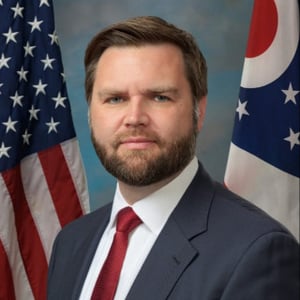
United States Senator, Ohio
JD Vance is a United States Senator for the great state of Ohio. He was elected to the U.S. Senate in 2022 and sworn into office on January 3rd, 2023.
JD was born and raised in Middletown, Ohio, a once flourishing American manufacturing town where Ohioans could live content, middle-class lives on single incomes. Over time, many of those good jobs disappeared, and JD’s family suffered the effects along with many others.
Turbulence was common at home and at school. His grandmother, called Mamaw, was his saving grace. Her tough love and discipline kept him on the straight and narrow. A “blue dog” Democrat, she owned 19 handguns and nurtured a deep Christian faith in herself and her family. She died in 2005, shortly after JD enlisted in the United States Marine Corps.
JD went on to serve our nation in the Iraq War, then graduated from The Ohio State University and Yale Law School. He wrote a bestselling book, Hillbilly Elegy, which was turned into a Netflix movie. He also started a business dedicated to growing jobs and opportunity in the American heartland.

Topics
NCAA v. Alston and the Future of Antitrust
On June 21, the Supreme Court issued its opinion in NCAA v. Alston, unanimously affirming a...
Young Legal Scholars Paper Presentations
Jud Campbell, Richard A. Epstein, Jonathan Mitchell, Lochlan Shelfer, Megan Stevenson, Joshua C. Teitelbaum, Lael Weinberger
The winners of our Young Legal Scholars Paper Competition will present their papers, and various...
Hillbilly Elegy - Podcast
Adam White, JD Vance
Hillbilly Elegy is a passionate and personal analysis of a culture in crisis—that of white working-class...
Barwatch Bulletin -- August 13, 2007
ABA MedalUnited States Supreme Court Justice Anthony Kennedy was awarded the ABA's highest honor, its...