
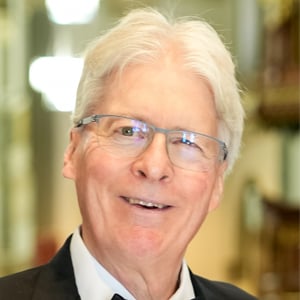
General Counsel, James Madison Center for Free Speech
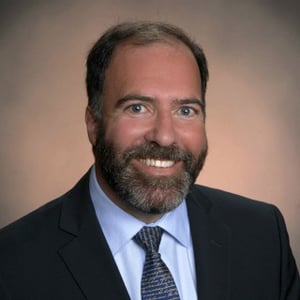
Professor of Law, Widener University Commonwealth Law School
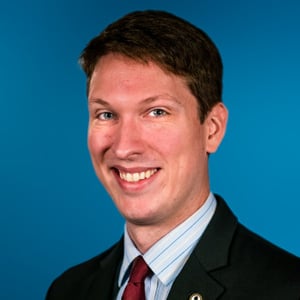
Senior Counsel, Policy & Regulatory, Defense of Freedom Institute
Paul Zimmerman is Senior Counsel, Policy & Regulatory for the Defense of Freedom Institute for Policy Studies (DFI), where he leads its Teacher Union Accountability Project and assists with its federal agency transparency and oversight efforts.
Paul was the Deputy Director of International Affairs at the Federalist Society and Director of the Society's Global Governance Watch® website. Paul was responsible for promoting the Federalist Society's principles among lawyers, judges, law students, law faculty members, and civil society groups in Western Europe. He organized and managed Federalist Society partnerships in London, Paris, and Munich. He also organized and participated in high-level conferences in Central and Eastern Europe for members of the Federalist Society's European Judicial Network. As Director of the Global Governance Watch® website, Paul researched and aggregated news and commentary related to the global governance movement and its impacts on national sovereignty and constitutional principles. As part of his firsthand reporting in this role, he observed meetings of the UN Human Rights Council, the Organization for Security and Co-operation in Europe, and European Union institutions and agencies. Paul began his work at the Federalist Society in 2009 as its Director of Publications, in which position he served as sole editor of the Society's law journal Engage (now the Federalist Society Review) and managed the publication of various legal white papers on a range of subjects relating to the rule of law and the U.S. Constitution. He received his A.B. in Political Science from Duke University in 2006 and his J.D. (cum laude) from Georgetown University Law Center in 2009. He is a member of the Maryland Bar.
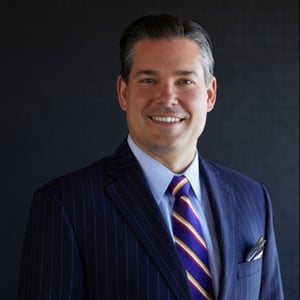
Partner, Graves Garrett Greim LLC
Edward “Eddie” Greim focuses his practice on complex commercial litigation, free speech and election law, and internal investigations and whistleblower claims. He has been recognized for his successful representation of businesses and individuals in commercial litigation while also being named a “go-to” lawyer on policy and constitutional issues.
Eddie was named a Constitutional and Election Law Trailblazer by the National Law Journal in 2020. His free speech and election law practice has included numerous constitutional challenges to election and campaign finance laws; representation of clients in state and federal ethics and campaign finance enforcement actions and investigations; initiative petition drafting and litigation; litigation and advice regarding First Amendment protections for petition circulation; representation of not-for-profit clients before state regulators; litigation of state and federal redistricting issues; and advice on campaign and election law compliance.
Eddie complements his trial work in complex, high-profile commercial and constitutional cases with oral advocacy and briefing in important appeals. Recognized as a Missouri Lawyers Media POWER 30 Appellate Attorney in 2021, he has argued before the Missouri and Kansas supreme courts multiple times, other state appellate courts across the country, and before the Sixth, Seventh, Eighth, and Tenth U.S. Courts of Appeals.
Eddie’s notable work for clients includes:
Recovering substantial compensation and injunctive relief for plaintiffs, in complex multiyear litigation, as lead counsel in the first and only nationwide class action certified against the Internal Revenue Service for violating taxpayer protection statutes when it targeted hundreds of groups based on their political viewpoints.
Successful First Amendment challenge to Missouri’s 2016 campaign finance restrictions.
Successful challenge to a vast, multiyear, secret criminal investigation into Wisconsin political groups and nonprofits, and follow-up challenge to expose role of state ethics board which secretly aided the investigation and was later dissolved by the legislature.
U.S. Supreme Court amicus brief for the National Republican Redistricting Trust in the 2019 Rucho litigation, and federal and state redistricting litigation and advice since 2011.
Challenges under the First Amendment in federal court, and in briefing to the Michigan Supreme Court on state constitutional grounds, to unprecedented emergency powers claimed by Michigan Governor in 2020.
Representation of numerous public officials and private citizens who are subject to “lawfare” attacks based on their political viewpoints or policy objectives.
Oversight of multiple internal investigations.
Eddie received his law degree from Harvard Law School in 2002, where he taught on the Board of Student Advisers, received the Dean’s Award for Leadership, and served as President of the Harvard Catholic Law Students Association. He received two bachelor’s degrees, summa cum laude, in economics and political science from the University of Missouri.
A native of Excelsior Springs, Missouri, Eddie lives in Kansas City with his family. He enjoys Missouri and military history. On many weekends, he can be found with his wife and daughters exploring sites of local interest. He enjoys reading and debating and has given presentations or organized discussions at numerous gatherings, formal and informal, of professional and personal interest.
General Counsel, James Madison Center for Free Speech

Judge, United States Court of Appeals, Third Circuit
Judge Hardiman was appointed to the United States Court of Appeals for the Third Circuit on January 9, 2007 and was confirmed by the Senate (95-0) on March 15, 2007. Prior to becoming an appellate judge, Judge Hardiman served as a trial judge on the United States District Court for the Western District of Pennsylvania as of November 1, 2003. In 2008, Chief Justice John Roberts appointed Judge Hardiman to the Information Technology Committee of the Judicial Conference of the United States. Judge Hardiman was appointed Chairman of the IT Committee in 2013 and served in that capacity until September 2021. In 2021 he was appointed by the Director of the Administrative Office of the United States Courts to serve as Chair of the Judiciary IT Security Task Force, which completed its work in fall 2023. Chief Justice Roberts appointed Judge Hardiman to the Board of the Federal Judicial Center to serve from March 2020 until March 2024. As part of his work with the Center, Judge Hardiman now serves as Editor in Chief for the Manual for Complex Civil Litigation, Fifth.
Before entering judicial service, Judge Hardiman handled a wide variety of litigation matters in state and federal trial and appellate courts as a partner at Reed Smith LLP (1999-2003), a partner at Titus & McConomy LLP (1996-1999), and as an associate with its predecessor firm, Cindrich & Titus (1992-1996). Judge Hardiman began his legal career as an associate in the Washington, D.C. office of Skadden, Arps, Slate, Meagher & Flom (1990-1992).
A 1987 honors graduate of the University of Notre Dame, Judge Hardiman received his law degree in 1990 from the Georgetown University Law Center, where he served as a Notes and Comments Editor on the Georgetown Law Journal. In 2012, Judge Hardiman was elected as a member of the American Law Institute and was elected to its Council in 2019 and its Executive Committee in 2025. Judge Hardiman regularly teaches a seminar on Advanced Constitutional Law at Duquesne University School of Law and a one-week course entitled “Constitutional Law: the First and Second Amendments” at Georgetown University Law Center.
A native of Waltham, Massachusetts, Judge Hardiman has chambers in Pittsburgh, Pennsylvania. He and his wife Lori married in 1992 and have three children.
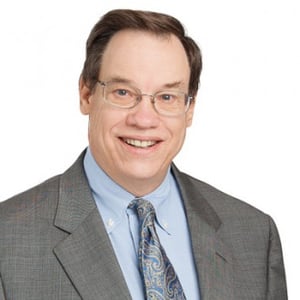
Partner, Baker Botts L.L.P.
Thomas R. Phillips, retired Chief Justice of the Supreme Court of Texas, joined the Austin office of Baker Botts in September 2005, after nearly a quarter-century of judicial service.
After graduating from law school, Mr. Phillips clerked for Justice Ruel C. Walker of the Supreme Court of Texas and practiced law in the trial department of the Houston office of Baker Botts. From 1981 to 1988, he served as judge of the 280th District Court in Harris County, Texas, and from 1988 to 2004, he was chief justice. Initially appointed to both judicial offices by Governor William P. Clements, he was elected without opposition to the district bench in 1982 and 1986 and elected in contested races to the Supreme Court in 1988, 1990, 1996 and 2002.
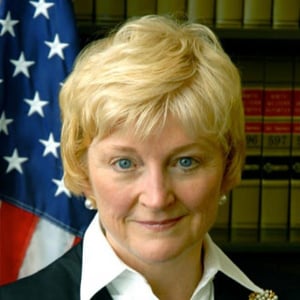
Chief Justice, Wisconsin Supreme Court
Justice Patience Drake Roggensack was elected to the Supreme Court in 2003. She was the first Wisconsin Court of Appeals judge ever elected to the Supreme Court, and continues to be the only Supreme Court justice to have served on the intermediate appellate court.
Born in Joliet, Ill., Justice Roggensack received a bachelor's degree in zoology in 1962 from Drake University. She worked as a research associate at several universities prior to entering the UW Law School, where she earned a law degree in 1977.
Before joining the Supreme Court, Justice Roggensack was elected to the Court of Appeals in 1996 and re-elected in 2002. Prior to becoming a judge, Justice Roggensack practiced law for 16 years in Madison.
During her career, Justice Roggensack has been a member of a variety of law-related organizations including the American Judicature Society and the Fellows of the American Bar Foundation. She is past president of the Western District of Wisconsin Bar Association and a past member of the State Bar of Wisconsin Bench-Bar Committee. She also has served frequently as a guest lecturer at the UW Law School and MATC.
Justice Roggensack also has served on the boards of a number of non-profit organizations, including the YMCA, YWCA, Olbrich Botanical Society, Wisconsin Center for Academically Talented Youth, Friends of the Arboretum, A Fund for Women, and the International Women's Forum, of which she is a past president.
Justice Roggensack is married and has three children. Her current term expires July 31, 2013.
Justice in Residence and Visiting Professor of Law, Ave Maria School of Law
Professor Taylor is a retired Chief Justice of the Michigan Supreme Court and served over 16 years as an appellate judge in Michigan. He is a graduate of the University of Michigan and received his J.D. from George Washington University Law School. After service as an officer in the US Navy, he began his legal career as an Assistant Prosecuting Attorney in Michigan and then practiced in a Lansing, Michigan, law firm, Denfield, Timmer and Taylor, for 19 years earning the highest ratings as to competence and character. He has lectured at law schools across the United States, been published in numerous law reviews and was the co-author of a three volume Michigan Practice Guide on Torts. He has served on the Board of Directors of the National Conference of Chief Justices, was a member, and then President, of the Michigan State Board of Law Examiners and served on the Board of Directors of the George Mason University Law School's Law and Economics Center.
General Counsel, James Madison Center for Free Speech
Judge, United States Court of Appeals, Third Circuit
Judge Hardiman was appointed to the United States Court of Appeals for the Third Circuit on January 9, 2007 and was confirmed by the Senate (95-0) on March 15, 2007. Prior to becoming an appellate judge, Judge Hardiman served as a trial judge on the United States District Court for the Western District of Pennsylvania as of November 1, 2003. In 2008, Chief Justice John Roberts appointed Judge Hardiman to the Information Technology Committee of the Judicial Conference of the United States. Judge Hardiman was appointed Chairman of the IT Committee in 2013 and served in that capacity until September 2021. In 2021 he was appointed by the Director of the Administrative Office of the United States Courts to serve as Chair of the Judiciary IT Security Task Force, which completed its work in fall 2023. Chief Justice Roberts appointed Judge Hardiman to the Board of the Federal Judicial Center to serve from March 2020 until March 2024. As part of his work with the Center, Judge Hardiman now serves as Editor in Chief for the Manual for Complex Civil Litigation, Fifth.
Before entering judicial service, Judge Hardiman handled a wide variety of litigation matters in state and federal trial and appellate courts as a partner at Reed Smith LLP (1999-2003), a partner at Titus & McConomy LLP (1996-1999), and as an associate with its predecessor firm, Cindrich & Titus (1992-1996). Judge Hardiman began his legal career as an associate in the Washington, D.C. office of Skadden, Arps, Slate, Meagher & Flom (1990-1992).
A 1987 honors graduate of the University of Notre Dame, Judge Hardiman received his law degree in 1990 from the Georgetown University Law Center, where he served as a Notes and Comments Editor on the Georgetown Law Journal. In 2012, Judge Hardiman was elected as a member of the American Law Institute and was elected to its Council in 2019 and its Executive Committee in 2025. Judge Hardiman regularly teaches a seminar on Advanced Constitutional Law at Duquesne University School of Law and a one-week course entitled “Constitutional Law: the First and Second Amendments” at Georgetown University Law Center.
A native of Waltham, Massachusetts, Judge Hardiman has chambers in Pittsburgh, Pennsylvania. He and his wife Lori married in 1992 and have three children.
Partner, Baker Botts L.L.P.
Thomas R. Phillips, retired Chief Justice of the Supreme Court of Texas, joined the Austin office of Baker Botts in September 2005, after nearly a quarter-century of judicial service.
After graduating from law school, Mr. Phillips clerked for Justice Ruel C. Walker of the Supreme Court of Texas and practiced law in the trial department of the Houston office of Baker Botts. From 1981 to 1988, he served as judge of the 280th District Court in Harris County, Texas, and from 1988 to 2004, he was chief justice. Initially appointed to both judicial offices by Governor William P. Clements, he was elected without opposition to the district bench in 1982 and 1986 and elected in contested races to the Supreme Court in 1988, 1990, 1996 and 2002.
Chief Justice, Wisconsin Supreme Court
Justice Patience Drake Roggensack was elected to the Supreme Court in 2003. She was the first Wisconsin Court of Appeals judge ever elected to the Supreme Court, and continues to be the only Supreme Court justice to have served on the intermediate appellate court.
Born in Joliet, Ill., Justice Roggensack received a bachelor's degree in zoology in 1962 from Drake University. She worked as a research associate at several universities prior to entering the UW Law School, where she earned a law degree in 1977.
Before joining the Supreme Court, Justice Roggensack was elected to the Court of Appeals in 1996 and re-elected in 2002. Prior to becoming a judge, Justice Roggensack practiced law for 16 years in Madison.
During her career, Justice Roggensack has been a member of a variety of law-related organizations including the American Judicature Society and the Fellows of the American Bar Foundation. She is past president of the Western District of Wisconsin Bar Association and a past member of the State Bar of Wisconsin Bench-Bar Committee. She also has served frequently as a guest lecturer at the UW Law School and MATC.
Justice Roggensack also has served on the boards of a number of non-profit organizations, including the YMCA, YWCA, Olbrich Botanical Society, Wisconsin Center for Academically Talented Youth, Friends of the Arboretum, A Fund for Women, and the International Women's Forum, of which she is a past president.
Justice Roggensack is married and has three children. Her current term expires July 31, 2013.
Justice in Residence and Visiting Professor of Law, Ave Maria School of Law
Professor Taylor is a retired Chief Justice of the Michigan Supreme Court and served over 16 years as an appellate judge in Michigan. He is a graduate of the University of Michigan and received his J.D. from George Washington University Law School. After service as an officer in the US Navy, he began his legal career as an Assistant Prosecuting Attorney in Michigan and then practiced in a Lansing, Michigan, law firm, Denfield, Timmer and Taylor, for 19 years earning the highest ratings as to competence and character. He has lectured at law schools across the United States, been published in numerous law reviews and was the co-author of a three volume Michigan Practice Guide on Torts. He has served on the Board of Directors of the National Conference of Chief Justices, was a member, and then President, of the Michigan State Board of Law Examiners and served on the Board of Directors of the George Mason University Law School's Law and Economics Center.
General Counsel, James Madison Center for Free Speech
Professor of Law, Widener University Commonwealth Law School
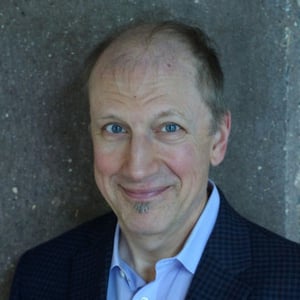
James L. Oberstar Professor of Law and Public Policy, University of St. Thomas School of Law
General Counsel, James Madison Center for Free Speech

Senior Fellow and Director of Constitutional Studies, Manhattan Institute
Ilya Shapiro is a senior fellow and director of constitutional studies at the Manhattan Institute and a contributing editor of City Journal. Previously he was executive director and senior lecturer at the Georgetown Center for the Constitution, and before that a vice president of the Cato Institute.
Shapiro is the author of Lawless: The Miseducation of America’s Elites (2025) and Supreme Disorder: Judicial Nominations and the Politics of America’s Highest Court (2020), coauthor of Religious Liberties for Corporations? (2014), and editor of 11 volumes of the Cato Supreme Court Review (2008-18). He has contributed to a variety of academic, popular, and professional publications, including the Wall Street Journal, Harvard Journal of Law & Public Policy, Washington Post, Los Angeles Times, USA Today, National Review, and Newsweek. He also regularly provides commentary for various media outlets, writes the Shapiro’s Gavel newsletter on Substack, and once appeared on the Colbert Report.
Shapiro has testified many times before Congress and state legislatures and has filed more than 500 amicus curiae “friend of the court” briefs in the Supreme Court. He lectures regularly on behalf of the Federalist Society, is a member of the board of fellows of the Jewish Policy Center, was an inaugural Washington Fellow at the National Review Institute, and has been an adjunct law professor at the George Washington University and University of Mississippi. He is also the chairman of the board of advisers of the Mississippi Justice Institute, a barrister in the Edward Coke Appellate Inn of Court, and a former member of the Virginia Advisory Committee to the U.S. Commission on Civil Rights.
Earlier in his career, Shapiro was a special assistant/adviser to the Multi-National Force in Iraq on rule-of-law issues and practiced at Patton Boggs and Cleary Gottlieb. Before entering private practice, he clerked for Judge E. Grady Jolly of the U.S. Court of Appeals for the Fifth Circuit. He holds an AB from Princeton University, an MSc from the London School of Economics, and a JD from the University of Chicago Law School.
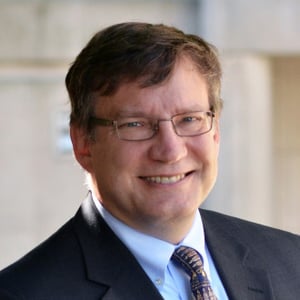
Chairman and Founder, Institute for Free Speech; Josiah H. Blackmore II/Shirley M. Nault Designated Professor of Law, Capital University Law School
Smith has authored over 40 articles on campaign finance reform, appearing in academic publications such as the Yale Law Journal and Georgetown Law Journal, and popular publications such as The Wall Street Journal, USA Today, and National Review. He has appeared on The O’Reilly Factor, Hardball with Chris Matthews, Bill Moyers Journal, the Lehrer News Hour, Fox News Special Report, ABC News, Washington Journal, and numerous other national and local television and radio programs.
As an FEC Commissioner, Smith won plaudits for his integrity and refusal to put partisan interests ahead of his duties, as well as his steadfast support for free speech. For his honesty and integrity, the Wall Street Journal dubbed him, “the only honorable man in this bordello.” Smith now serves as the Josiah H. Blackmore II/Shirley M. Nault Designated Professor of Law at Capital University Law School. He has won numerous awards for his scholarship and teaching, and is a past member of the Advisory Committee to the American Bar Association’s Standing Committee on Election Law. He currently serves on the Editorial Board of the Election Law Journal, and the Editorial Advisory Board of the Harvard Journal of Law and Public Policy. Smith also serves on the Board of Trustees of the Buckeye Institute for Public Policy Studies, is a senior fellow at the Goldwater Institute and is a member of the Board of Scholars of the Mackinac Center for Public Policy. Smith is a cum laude graduate of Harvard Law School and Kalamazoo College and holds an honorary doctorate from Augustana College.
General Counsel, James Madison Center for Free Speech
Judge, United States Court of Appeals, Third Circuit
Judge Hardiman was appointed to the United States Court of Appeals for the Third Circuit on January 9, 2007 and was confirmed by the Senate (95-0) on March 15, 2007. Prior to becoming an appellate judge, Judge Hardiman served as a trial judge on the United States District Court for the Western District of Pennsylvania as of November 1, 2003. In 2008, Chief Justice John Roberts appointed Judge Hardiman to the Information Technology Committee of the Judicial Conference of the United States. Judge Hardiman was appointed Chairman of the IT Committee in 2013 and served in that capacity until September 2021. In 2021 he was appointed by the Director of the Administrative Office of the United States Courts to serve as Chair of the Judiciary IT Security Task Force, which completed its work in fall 2023. Chief Justice Roberts appointed Judge Hardiman to the Board of the Federal Judicial Center to serve from March 2020 until March 2024. As part of his work with the Center, Judge Hardiman now serves as Editor in Chief for the Manual for Complex Civil Litigation, Fifth.
Before entering judicial service, Judge Hardiman handled a wide variety of litigation matters in state and federal trial and appellate courts as a partner at Reed Smith LLP (1999-2003), a partner at Titus & McConomy LLP (1996-1999), and as an associate with its predecessor firm, Cindrich & Titus (1992-1996). Judge Hardiman began his legal career as an associate in the Washington, D.C. office of Skadden, Arps, Slate, Meagher & Flom (1990-1992).
A 1987 honors graduate of the University of Notre Dame, Judge Hardiman received his law degree in 1990 from the Georgetown University Law Center, where he served as a Notes and Comments Editor on the Georgetown Law Journal. In 2012, Judge Hardiman was elected as a member of the American Law Institute and was elected to its Council in 2019 and its Executive Committee in 2025. Judge Hardiman regularly teaches a seminar on Advanced Constitutional Law at Duquesne University School of Law and a one-week course entitled “Constitutional Law: the First and Second Amendments” at Georgetown University Law Center.
A native of Waltham, Massachusetts, Judge Hardiman has chambers in Pittsburgh, Pennsylvania. He and his wife Lori married in 1992 and have three children.
Partner, Baker Botts L.L.P.
Thomas R. Phillips, retired Chief Justice of the Supreme Court of Texas, joined the Austin office of Baker Botts in September 2005, after nearly a quarter-century of judicial service.
After graduating from law school, Mr. Phillips clerked for Justice Ruel C. Walker of the Supreme Court of Texas and practiced law in the trial department of the Houston office of Baker Botts. From 1981 to 1988, he served as judge of the 280th District Court in Harris County, Texas, and from 1988 to 2004, he was chief justice. Initially appointed to both judicial offices by Governor William P. Clements, he was elected without opposition to the district bench in 1982 and 1986 and elected in contested races to the Supreme Court in 1988, 1990, 1996 and 2002.
Chief Justice, Wisconsin Supreme Court
Justice Patience Drake Roggensack was elected to the Supreme Court in 2003. She was the first Wisconsin Court of Appeals judge ever elected to the Supreme Court, and continues to be the only Supreme Court justice to have served on the intermediate appellate court.
Born in Joliet, Ill., Justice Roggensack received a bachelor's degree in zoology in 1962 from Drake University. She worked as a research associate at several universities prior to entering the UW Law School, where she earned a law degree in 1977.
Before joining the Supreme Court, Justice Roggensack was elected to the Court of Appeals in 1996 and re-elected in 2002. Prior to becoming a judge, Justice Roggensack practiced law for 16 years in Madison.
During her career, Justice Roggensack has been a member of a variety of law-related organizations including the American Judicature Society and the Fellows of the American Bar Foundation. She is past president of the Western District of Wisconsin Bar Association and a past member of the State Bar of Wisconsin Bench-Bar Committee. She also has served frequently as a guest lecturer at the UW Law School and MATC.
Justice Roggensack also has served on the boards of a number of non-profit organizations, including the YMCA, YWCA, Olbrich Botanical Society, Wisconsin Center for Academically Talented Youth, Friends of the Arboretum, A Fund for Women, and the International Women's Forum, of which she is a past president.
Justice Roggensack is married and has three children. Her current term expires July 31, 2013.
Justice in Residence and Visiting Professor of Law, Ave Maria School of Law
Professor Taylor is a retired Chief Justice of the Michigan Supreme Court and served over 16 years as an appellate judge in Michigan. He is a graduate of the University of Michigan and received his J.D. from George Washington University Law School. After service as an officer in the US Navy, he began his legal career as an Assistant Prosecuting Attorney in Michigan and then practiced in a Lansing, Michigan, law firm, Denfield, Timmer and Taylor, for 19 years earning the highest ratings as to competence and character. He has lectured at law schools across the United States, been published in numerous law reviews and was the co-author of a three volume Michigan Practice Guide on Torts. He has served on the Board of Directors of the National Conference of Chief Justices, was a member, and then President, of the Michigan State Board of Law Examiners and served on the Board of Directors of the George Mason University Law School's Law and Economics Center.
General Counsel, James Madison Center for Free Speech
General Counsel, James Madison Center for Free Speech
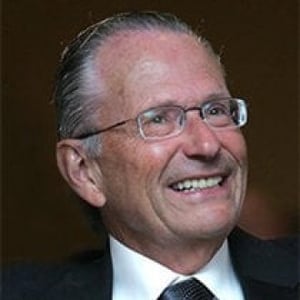
Earl Warren Professor of Public Law (Emeritus), UC Berkeley School of Law
Jesse Choper served as law clerk to Chief Justice Earl Warren of the U.S. Supreme Court following graduation from law school. He taught at the Wharton School of the University of Pennsylvania from 1957 to 1960, and at the University of Minnesota Law School from 1961 to 1965. He joined the Berkeley Law faculty in 1965. Choper has been a visiting professor at Harvard Law School, Fordham Law School, University of Milan, Free University in Amsterdam, Autonoma University in Barcelona, University of New South Wales in Sydney, University of Lucerne in Switzerland, and Catholic University of Portugal in Lisbon and Porto. He served as Berkeley Law’s dean from 1982 to 1992.
From 1979 to 1998, Choper was one of the three major lecturers at U.S. Law Week’s Annual Constitutional Law Conference in Washington, D.C. He has delivered 20 titled lectures at major universities throughout the country, including the Cooley Lectures at Michigan, the Stevens Lecture at Cornell, the Baum Lecture at Illinois, and the Lockhart Lecture at Minnesota. He has served on the executive committee of the Association of American Law Schools, and on the executive council of the American Academy of Arts and Sciences (of which he was vice president for more than ten years). He was national president of the Order of the Coif and is a member of the American Law Institute. In 1998 he received the UC Berkeley Distinguished Teaching Award and the Rutter Award for Teaching Distinction at Berkeley Law in 2006. In 2005 the Berkeley Law Alumni Association presented Choper with the Faculty Lifetime Achievement Award and the University of Pennsylvania Law School gave him the James Wilson Award, its highest award for alumni.
Choper’s major publications include the books, Judicial Review and the National Political Process: A Functional Reconsideration of the Role of the Supreme Court, which received the Order of the Coif Triennial Book Award in 1982, and Securing Religious Liberty: Principles for Judicial Interpretation of the Religion Clauses. His recent publications include the thirteenth edition of his Constitutional Law casebooks; the eighth edition of his Corporations casebook; the second edition of The Supreme Court and Its Justices; “The Political Question Doctrine: Suggested Criteria,” in Duke Law Journal (2005); “Wartime Process: A Dialogue on Congressional Power to Remove Issues From the Federal Courts,” in California Law Review (2007) (co-author); and “Who’s Afraid of the Eleventh Amendment? The Limited Impact of the Court’s Sovereign Immunity Rulings,” in Columbia Law Review (2006) (co-author).

Judicial Elections and Speech Restrictions - Podcast
James Bopp, Michael R. Dimino, Paul F. Zimmerman
To listen, please right click on the audio file you wish to hear and then...
Montana Takes on Citizens United
Justin Whitworth, Edward D. Greim
From the Montana Supreme Court comes a potential challenge to the United States Supreme Court’s...
Judicial Elections and Speech Restrictions
Citizens United v. FEC Symposium
Engage Volume 11, Issue 3, December 2010
*Online-Only Issue* Special Edition: Templeton Debates Eminent Domain after Kelo Ilya Somin & Saul Levmore...
Professional Responsibility: The Bloody Crossroads: Republican Party of Minnesota v. White Runs Into Caperton v. Massey
James Bopp, Thomas M. Hardiman, Thomas R. Phillips, Patience D. Roggensack, Clifford W. Taylor
Mr. James Bopp, Jr., Bopp, Coleson, and Bostrom and General Counsel, James Madison Center for...
Professional Responsibility: The Bloody Crossroads: Republican Party of Minnesota v. White Runs Into Caperton v. Massey
James Bopp, Thomas M. Hardiman, Thomas R. Phillips, Patience D. Roggensack, Clifford W. Taylor
Mr. James Bopp, Jr., Bopp, Coleson, and Bostrom and General Counsel, James Madison Center for...
Professional Responsibility: The Bloody Crossroads: Republican Party of Minnesota v. White Runs Into Caperton v. Massey
2010 National Lawyers Convention
Washington, DCCitizens United v. Federal Election Commission and the Future of Campaign Finance Reform
MineolaAfter Citizens United: The Constitution, Campaign Finance, & Corporate Rights