
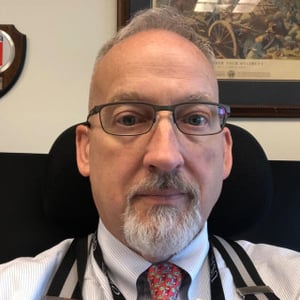
Appellate Counsel, Theodore Cooperstein PLLC
Theodore Cooperstein currently is an appellate attorney in the boutique law firm of Theodore Cooperstein PLLC, available for criminal and civil appeals in both state and federal courts. A former career prosecutor with twenty five years of service in the US Department of Justice, he was an Assistant United States Attorney for the Southern District of Florida and the Southern District of Mississippi, and has served as a Military Intelligence Officer in the Army Reserves from 1989 to 2011, retiring with the rank of Lieutenant Colonel. During the Trump Administration, he was appointed and served as the General Counsel of the U.S. Office of Personnel Management. Prior to joining the Southern District of Florida, Mr. Cooperstein served as a Special Assistant U.S. Attorney in the U.S. Attorney's Office for the District of Maryland. He previously had served as Counsel to the Deputy Attorney General at the Department of Justice, and as Assistant General Counsel in the FBI Office of the General Counsel.
A.B., Dartmouth College; J.D., Stanford University; LL.M., Comparative and International Law, Georgetown University Law Center; Masters of Strategic Studies, U.S. Army War College
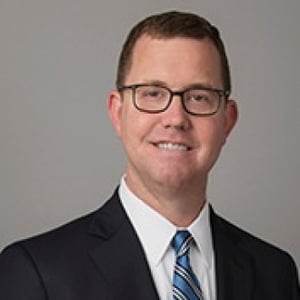
Stuart F. Delery is a litigation partner in the Washington, D.C. office of Gibson, Dunn & Crutcher. Before joining the firm, he was the Acting Associate Attorney General of the United States, the third-ranking position at the U.S. Department of Justice. Mr. Delery’s practice focuses on representing corporations and individuals in high-stakes litigation and investigations that involve the federal government across the spectrum of regulatory litigation and enforcement.
As the Acting Associate Attorney General from 2014-2016, Mr. Delery oversaw the civil and criminal work of five of DOJ’s litigating divisions — Antitrust, Civil, Civil Rights, Environment and Natural Resources, and Tax — as well as components supporting state and local law enforcement, among others. As a member of DOJ’s senior management team, he assisted the Attorney General and Deputy Attorney General in formulating and implementing DOJ policies. He routinely advised on the most significant legal questions facing the United States, including questions concerning the scope of authority of the federal government. Mr. Delery also served as Vice Chair of the Steering Committee of the President’s Financial Fraud Enforcement Task Force and oversaw the Residential Mortgage-Backed Securities (RMBS) working group.
Previously, Mr. Delery was the Assistant Attorney General for the Civil Division, the Department’s largest litigating component, a position to which he was confirmed by the Senate by unanimous consent. As head of the Civil Division from 2012-2014, he supervised nearly 1,000 lawyers representing the United States, the President and Cabinet officers, and other federal officials. The Civil Division’s docket covers the full range of government activities, including legal challenges to Congressional statutes, Administration policies and federal agency actions. He also supervised the DOJ’s enforcement efforts under the False Claims Act, FIRREA and the Food, Drug and Cosmetic Act.
While in the Civil Division, Mr. Delery personally argued some of the government’s most significant cases, including high-profile appeals involving the unconstitutionality of the Defense of Marriage Act, interpretation of the Affordable Care Act and the legality of the National Security Agency’s data collection programs. The then-Attorney General called Mr. Delery "a lawyer’s lawyer who, even as he has risen to the leadership of the department, continues to thrive in the court setting and routinely is called on to personally argue the most complex cases."
Earlier in his seven-year tenure at DOJ, Mr. Delery served in a number of senior positions, beginning as Chief of Staff and Counselor to the Deputy Attorney General in January 2009. His positions included Senior Counselor to the Attorney General, in which he advised on national security litigation and policy and matters arising from the Office of the Solicitor General, the Civil Division and the Office of Legal Counsel.
Throughout his DOJ tenure, Mr. Delery’s portfolio included national security policy issues and management of the government’s national security litigation docket. Major issues included detention policy, legal bases for use of force, access to national security information, surveillance programs, sovereign immunity, and foreign affairs. He has experience with transnational litigation under a range of statutes, including the Foreign Sovereign Immunities Act, the Alien Tort Statute, and the Anti-Terrorism Act, as well as litigation and investigations that turn on classified information or events that occurred in areas of armed conflict.
Mr. Delery led several significant DOJ initiatives. For example, in June 2013, the Attorney General asked Mr. Delery to lead the government-wide implementation of the Supreme Court’s decision in United States v. Windsor, which struck down Section 3 of the Defense of Marriage Act as unconstitutional. That effort, which addressed more than 1,000 federal statutes, regulations and programs that involved marital status, involved a team of lawyers from across the Department and was completed in less than a year. At the time, the Human Rights Campaign called the government’s implementation of Windsor "the single largest conferral of rights to LGBT people in history." In 2015, Mr. Delery led the creation of the Department’s Service members and Veterans Initiative, designed to coordinate and expand DOJ’s work to protect the rights and interests of service members, veterans and their families.
In recognition of his service, Mr. Delery received the Edmund J. Randolph award, considered the Department of Justice’s highest award.
Prior to his government service, Mr. Delery practiced with an international law firm from 1995 to 2009, where he had a diverse litigation and securities practice. Mr. Delery’s clients included large corporations, a national accounting firm, financial institutions, a public university, individuals, non-profit and public-interest organizations, and international organizations. Mr. Delery’s matters while in private practice included constitutional and public policy litigation, including representation of the University of Michigan and its law school in Grutter v. Bollinger and Gratz v. Bollinger concerning the consideration of race in admissions; high-profile, international internal corporate investigations for boards of directors or board committees, including for the Special Investigative Committees of the Boards of Enron Corp. and WorldCom, Inc.; and cases involving securities and other financial frauds in federal and state courts, and in enforcement proceedings by the SEC and other regulators.
Mr. Delery clerked for U.S. Supreme Court Justices Sandra Day O’Connor and Byron White and for Judge Gerald Bard Tjoflat of the U.S. Court of Appeals for the Eleventh Circuit. He received his law degree in 1993 from Yale Law School, where he served as an Articles Editor of the Yale Law Journal. Mr. Delery graduated with Highest Distinction from the University of Virginia in 1990.
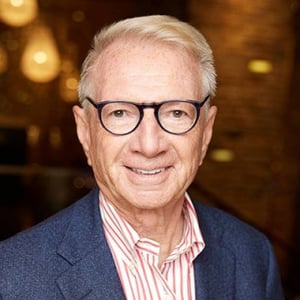
Senior Labor and Employment Counsel, CHRO Association
Roger King is a highly regarded labor relations attorney, whose career spans more than 40 years. Roger recently retired as a partner with Jones Day law firm. He now serves as Senior Labor and Employment counsel for the Association.
Roger specializes in labor and employment, healthcare, collective bargaining, contract administration and representation campaigns. Roger represented the winning side as co-counsel in the landmark U.S. Supreme Court case known as Noel Canning, which successfully challenged President Obama’s authority to make recess appointments to the National Labor Relations Board.
After graduating from Cornell University Law School, he was a Captain and Legal Services Officer in the United States Air Force, on the Staff of United States Senator Robert Taft, Jr. and, subsequently, was appointed as Professional Staff Counsel to the United States Senate Labor Committee.
Roger has testified before both the U.S. Senate and House Labor Committees, is a fellow of the College of Labor and Employment Lawyers, and serves on the Advocacy Committee of the American Society for Healthcare Human Resources Association (ASHHRA) and on the Executive Committee of the Ohio State Bar Association Labor and Employment Law Section Council.
He is a nationally recognized author/speaker on employment matters and has represented employers regarding labor and employment issues both before administrative agencies and in federal and state courts. He has represented the U.S. Chamber of Commerce, the Society for Human Resource Management (SHRM), the HR Policy Association (HRPA), the National Manufactures Association (NAM), the American Hospital Association (AHA), and the Coalition for a Democratic Workplace (CDW) in federal courts regarding numerous labor law issues.
Other clients Roger has represented include the Cleveland Clinic Foundation, Catholic Health Partners, MedStar Health, HCA, Texas Health Resources, Unity Point Health, UHS, Trinity Health, National Beef, General Cable, Orlando Health, ProMedica, Premier Health, Cedars-Sinai, Yale New Haven Health System, McLaren Health Care Corporation, Ohio, California and American Hospital Associations, Bon Secoure Health System, Kaleida Health, Sisters of Levenworth Health System, Lakeland Regional Medical Center, Clarion Clinic, Fisher-Titus Medical Center, Saint Joseph Health System, Benefis Healthcare, Community Health Systems, American Water Works, Macy’s Inc., Verizon and General Motors.
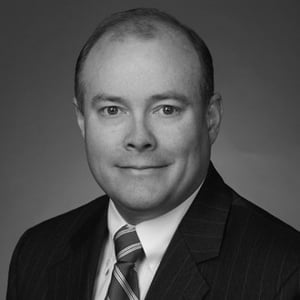
Partner, Kirkland and Ellis, LLP
John O'Quinn is a Partner in Kirkland's Washington, D.C. office. His practice focuses on litigation, including intellectual property disputes, commercial litigation, regulatory issues arising from or likely to lead to litigation, and other complex litigation matters at both the trial and appellate levels. He has extensive argument experience before both trial and appellate courts, and has argued in most of the U.S. Courts of Appeals, including the D.C. Circuit and the Federal Circuit. Mr. O'Quinn has been to trial multiple times, where he has examined expert and fact witnesses. Representative clients include Apple, Boeing, B. Braun Medical, Charter Communications, C.R. Bard, POET LLC, Siemens, and Teva Pharmaceuticals.
From 2006 to 2009, Mr. O'Quinn served in the United States Department of Justice. As Deputy Associate Attorney General, he was responsible for helping to oversee much of the government's civil litigation and reviewing proposed settlements of multi-million dollar civil cases brought by or against the government. As the Deputy Assistant Attorney General for the Federal Programs Branch of the Civil Division, Mr. O'Quinn supervised over 100 attorneys charged with defending the constitutionality of federal statutes and regulations, representing the diplomatic and national security interests of the United States in court, and conducting significant Title VII, personnel, social security, Medicare and Medicaid-related litigation. Mr. O'Quinn worked with counsel from virtually every federal agency on complex civil litigation matters and personally directed significant cases defending the government's interests, arguing more than 20 cases in federal court. In February of 2009, Mr. O'Quinn was awarded the Office of the Secretary of Defense Medal for Exceptional Public Service for his leadership in defending the Department of Defense in lawsuits challenging the detention and trial of enemy combatants captured abroad by United States Armed Forces.
Mr. O'Quinn was previously an associate with Kirkland from 2003 to 2006. While on leave from the Firm, he served as special counsel to the United States Senate Committee on the Judiciary for the nomination of Chief Justice Roberts. Prior to joining the Firm, Mr. O'Quinn was a law clerk for Justice Antonin Scalia of the U.S. Supreme Court and Judge David Sentelle of the U.S. Court of Appeals for the D.C. Circuit.
While at Kirkland, Mr. O'Quinn has also provided legal counseling and representation for individuals and organizations on a pro bono basis, including arguing a habeas petition on behalf of a defendant convicted of capital murder, and submitting FOIA requests on behalf of a civil rights organization.
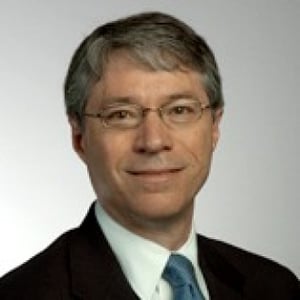
Partner, WilmerHale
A nationally recognized litigator and counselor with more than thirty years' experience, David Ogden focuses his practice on complex disputes with serious financial implications. He served as the Deputy Attorney General of the United States from 2009 to 2010 and as Assistant Attorney General for the Civil Division, United States Department of Justice, from 1999 to 2001. Mr. Ogden is chair of the firm's Government and Regulatory Litigation Group.
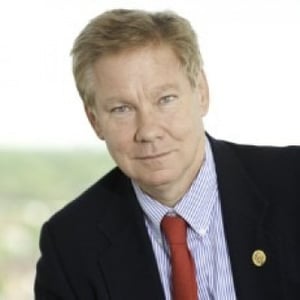
Director, Federal Government Affairs, Deloitte
The Honorable Thomas (Tom) M. Davis serves as a Director of Federal Government Affairs for Deloitte. He was first elected to office in 1979, serving on the Fairfax County Board of Supervisors. In 1994, Tom was elected to Congress to represent the 11th Congressional District of Virginia. Throughout his 14 years in Congress, Tom was widely recognized as a skilled legislator and an honest broker.
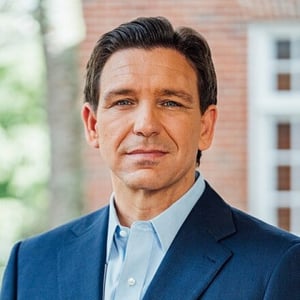
Governor, Florida
Ron DeSantis is the 46th Governor of the State of Florida. Since taking office in January 2019, he has worked hard to expand education opportunities, improve Florida’s water resources and Everglades, champion vocational training, bolster public safety, foster innovation in health care, assist with hurricane recovery, promote infrastructure development and support veterans – all while lowering taxes and being fiscally responsible.
A native Floridian, Governor DeSantis worked his way through Yale University, where he captained the university baseball team and graduated magna cum laude. He also gradated with honors from Harvard Law School. While at Harvard, he earned a commission in the U.S. Navy as a JAG Officer. During his active duty service, then- Lieutenant DeSantis deployed to Iraq as an advisor to a U.S. Navy SEAL Commander in support of the SEAL mission in Iraq. His military decorations include the Iraq Campaign Medal of the Bronze Star Medal (meritorious service).
Prior to serving as Governor, DeSantis served as the U.S. Congressman for Florida’s 6th District. As Chairman of the National Security Subcommittee, DeSantis spearheaded efforts to reform the UA, combat terrorism, identify government waste and relocate the American Embassy in Israel to Jerusalem. As a Congressman, DeSantis championed term limits, fiscal responsibility with a strong national defense.
Governor DeSantis is married to First Lady Casey DeSantis, a former Emmy Award winning television host. They are the proud parents of two children, Madison and Mason. They are the youngest family living in the Florida Governor’s Mansion in nearly fifty years.

Vice President, Networks, The Federalist Society for Law and Public Policy Studies
Nathan Kaczmarek is Vice President for Networks at the Federalist Society. He began his legal career in Detroit representing nationwide clients in all phases of healthcare litigation and complex medical malpractice claims. He has since served as a Senior Legal and Policy Advisor in the U.S. House of Representatives and as Counsel for the Subcommittee on Regulatory Affairs and Federal Management in the U.S. Senate. Prior to overseeing the Networks, he was Director of the Practice Groups, the Regulatory Transparency Project, and the Article I Initiative for the Federalist Society.
Nathan holds degrees from Hillsdale College and Thomas M. Cooley Law School. He is a Liaison Representative for The Administrative Conference of the United States. He also serves as Vice President of the Associates of St. John Bosco, a Virginia based non-profit dedicated to Catholic high school and college students.
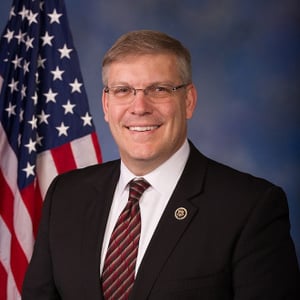
U.S. House of Representatives, Georgia 11th District
Congressman Barry Loudermilk represents Georgia’s 11th Congressional District, which includes all of Bartow and Cherokee counties as well as portions of Cobb and Fulton counties.
In the 115th Congress, Rep. Loudermilk serves as a member of three important U.S. House Committees: Financial Services, House Administration, and Space, Science and Technology. Barry also serves on the steering committee for the Republican Study Committee (RSC), conservative caucus of the House Republicans.
Before being elected to Congress in 2014, Barry Loudermilk was a small business owner for over 20 years. He also served in the Georgia State House and Senate for over 9 years.
A Georgia native, Rep. Loudermilk holds an Associate Degree in Telecommunications Technology, and a Bachelor of Science in Occupational Education and Information Systems Technology. He proudly served in the U.S. Air Force for eight years.
Loudermilk is the former owner of an Information Technology services business, and is an author, historian, and motivational speaker.

David McIntosh is a leader for the principles of limited constitutional government and individual freedom. He is president of the Club for Growth, the leading advocate for economic liberty.
Former Congressman David McIntosh represented Indiana's 2nd Congressional District in the United States Congress from 1995-2001. As a Freshman, David chaired the Subcommittee on Regulatory Relief. He passed the Congressional Review Act and held extensive oversight and field hearings to build a record of public support for regulatory relief initiatives in energy, biotechnology, pharmaceutical, healthcare, transportation and technology sectors. Another issue that he championed was the elimination of the marriage penalty in the Federal Tax Code.
David served during the Reagan administration as special assistant to Attorney General Edwin Meese III, and as special assistant to President Reagan for Domestic Affairs. During the first Bush administration, he served as executive director of the President's Council on Competitiveness and assistant to the Vice President. The Competitiveness Council coordinated the cost/benefit review of major regulations and promoted legal reform measures.
David is a co-founder of the Federalist Society for Law and Public Policy and serves on the Board of Directors. He remains active with several free market and conservative think tanks and grassroots organizations. David has also had stints at the Hudson Institute and as a Professor of Economics at Ball State School of Business.
Prior to the Club for Growth, David was a partner at Mayer Brown, LLP in Washington, DC.
David graduated from the University of Chicago Law School in 1983, and Yale University, BA, cum laude, in 1980. He and his wife, Ruthie, are the proud parents of Ellie age 17 and Davey age 13.

Patrick Hotung Professor of Constitutional Law, Georgetown University Law Center; Faculty Director, Georgetown Center for the Constitution
Randy E. Barnett is the Patrick Hotung Professor of Constitutional Law at the Georgetown University Law Center and is the Faculty Director of the Georgetown Center for the Constitution. After graduating from Northwestern University and Harvard Law School, he tried many felony cases as a prosecutor in the Cook County States’ Attorney’s Office in Chicago. A recipient of a Guggenheim Fellowship in Constitutional Studies and the Bradley Prize, Professor Barnett has been a visiting professor at Penn, Northwestern and Harvard Law School.
Professor Barnett’s publications includes thirteen books, more than one hundred articles and reviews, as well as numerous op-eds. His most recent book is Felony Review: Tales of True Crime and Corruption in Chicago (2026). His other books on the Constitution include: A Life for Liberty: The Making of an American Originalist (2024); The Original Meaning of the Fourteenth Amendment: Its Letter and Spirit (2021) (with Evan Bernick); An Introduction to Constitutional Law: 100 Supreme Court Cases Everyone Should Know (2019) (with Josh Blackman); Restoring the Lost Constitution: The Presumption of Liberty (2nd ed. 2013); Our Republican Constitution: Securing the Liberty and Sovereignty of We the People (2016); and Constitutional Law: Cases in Context (5th ed. forthcoming 2027) (with Josh Blackman). His books on contracts are The Oxford Introductions to U.S. Law: Contracts (2010) and Contracts: Cases and Doctrine (7th ed. 2021) (with Nate Oman). And he is the author of The Structure of Liberty: Justice and the Rule of Law (2nd ed. 2014).
In 2004, he argued the medical marijuana case of Gonzalez v. Raich before the U.S. Supreme Court. In 2012, he was one of the lawyers representing the National Federation of Independent Business in its constitutional challenge to the Affordable Care Act in NFIB v. Sebelius. He’s appeared in numerous documentaries and portrayed a prosecutor in the 2010 science-fiction feature film, InAlienable: The Movie. On X he is @RandyEBarnett
Associate Professor of Law, Notre Dame Law School
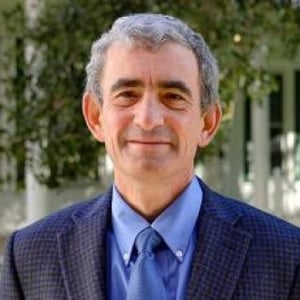
Professor and D’Alemberte Chair in Constitutional Law, Florida State University College of Law
Alexander Tsesis is the D’Alemberte chair in constitutional law at the Florida State University College of Law. He is also the general editor of the Cambridge Studies on Civil Rights and Civil Liberties and the Oxford Theoretical Foundations in Law. Tsesis’ scholarship and teaching focus on a breadth of subjects, including constitutional law, civil rights, constitutional reconstruction, interpretive methodology, free speech theory, and legal history.
Tsesis’ most recent book is Free Speech in the Balance (Cambridge University Press 2020). His previous books include Constitutional Ethos: Liberal Equality for the Common Good (Oxford University Press 2017) and For Liberty and Equality: The Life and Times of the Declaration of Independence (Oxford University Press 2012), We Shall Overcome: A History of Civil Rights and the Law (Yale University Press 2008), The Thirteenth Amendment and American Freedom (New York University Press 2004), and Destructive Messages: How Hate Speech Paved the Way for Harmful Social Movements (New York University Press 2002). He also edited a collection of essays in Promises of Liberty (Columbia University Press 2010). The subjects of his articles range from cyber speech, constitutional interpretation, civil rights law, and human rights. They have appeared or will appear in a variety of law reviews across the country, including the Boston University Law Review, Columbia Law Review, Cornell Law Review, Minnesota Law Review, Northwestern University Law Review, Southern California Law Review, Stanford Law Review, and Vanderbilt Law Review.
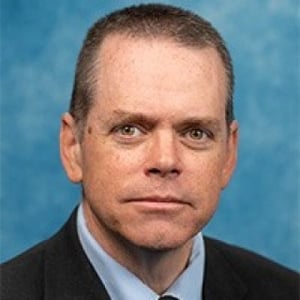
Professor of Law, St. Thomas University College of Law; Senior Fellow in Politics and Law, University of Dallas
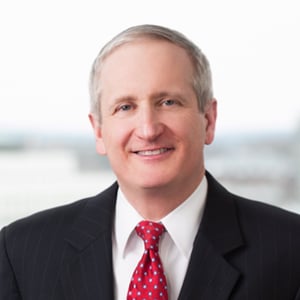
Judge, U.S. Court of International Trade
M. Miller Baker was appointed as a Judge of the United States Court of International Trade on December 18, 2019, by President Donald J. Trump. Judge Baker entered on duty on December 20, 2019.
A native of Terrebonne Parish, Louisiana, Judge Baker grew up in Louisiana and Wyoming and attended Louisiana State University. Judge Baker thereafter earned his J.D. from Tulane University Law School and was admitted to the Louisiana bar in 1984 at age 22. After graduating from Tulane, he served as a law clerk to Judge John Malcolm Duhé, Jr., of the United States District Court for the Western District of Louisiana and then for Judge Thomas Gibbs Gee of the United States Court of Appeals for the Fifth Circuit. Following his judicial clerkships, from 1986 until the end of the Reagan Administration on January 20, 1989, Judge Baker served in the Justice Department under Attorneys General Edwin Meese III and Richard Thornburgh, first as an attorney-advisor in the Office of Legal Policy, and later as a special assistant to the Assistant Attorney General for Civil Rights. Judge Baker then entered private practice in Washington, D.C., until 1991. From 1991 to 1993 he served as counsel to Senator Orrin G. Hatch on the staff of the Senate Judiciary Committee.
Following his service on the Judiciary Committee staff, Judge Baker returned to private practice in Washington, D.C., focusing on complex civil litigation involving a wide range of subjects at the law firms of Carr Goodson Warner (1993–2000) and McDermott Will & Emery LLP (2000–2019). At McDermott, Judge Baker co-chaired the firm’s appellate practice group.
When he was in private practice, Judge Baker argued before the Supreme Court, nine of the thirteen federal courts of appeals, and appellate courts in three states and the District of Columbia. In 2009, The American Lawyer named Judge Baker as “Litigator of the Week” for one of his Supreme Court wins. In addition to his appellate practice, Judge Baker litigated in state and federal trial courts in seventeen states and the District of Columbia.
From 1986 to 1995, Judge Baker served as a naval reserve intelligence officer and received an honorable discharge. His duties included serving with an anti-terrorist unit, on the battle staff of an admiral commanding a carrier battle group operating in the North Atlantic during a large NATO exercise in the Cold War, and as a watch officer in the Navy Command Center in the Pentagon during the Persian Gulf War.
In the aftermath of 9/11, Judge Baker testified before the House and Senate Judiciary Committees on constitutional and policy issues associated with continuity of government. He also testified before the Continuity of Government Commission, a bipartisan study commission established by the American Enterprise Institute and the Brookings Institution.
Judge Baker and his wife Margaret have five children, two of whom are active duty military officers.

The Role and Responsibility of the Government Employee
Theodore Cooperstein, Stuart F. Delery, G. Roger King, John C. O'Quinn, David W. Ogden
The Sixth Annual Executive Branch Review Conference is scheduled for Tuesday, April 17 at the...
House Reform Proposals
Tom Davis, Ron DeSantis, Nathan Kaczmarek, Barry Loudermilk, David M. McIntosh
Even though the Founders conceived Congress as the most powerful of the three branches of...
The Thirteenth Amendment 150 Years Later
Randy E. Barnett, Jennifer Mason McAward, Alexander Tsesis, David Upham
December 2015 marked 150 years since the ratification of the Thirteenth Amendment—an occasion of singular...
Fools, Drunkards, & Presidential Succession
M. Miller Baker
by M. Miller Baker* The terrorist attack on America on September 11, 2001, represents an...