

Professor of Law, South Texas College of Law Houston
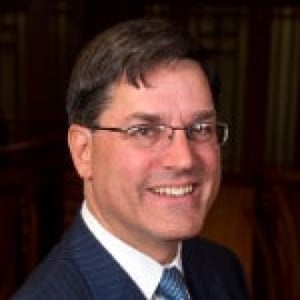
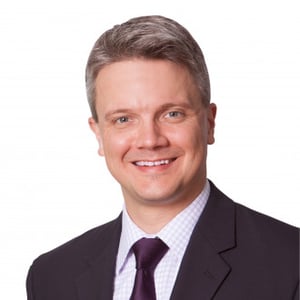
Josh Blackman is a national thought leader on constitutional law and the United States Supreme Court. Josh’s work was quoted during two presidential impeachment trials. He has testified before Congress and advises federal and state lawmakers. Josh regularly appears on TV, including NBC, CBS, ABC, Fox, and the BBC. Josh is also a frequent guest on NPR and other syndicated radio programs. He has published commentaries in the New York Times, Wall Street Journal, Washington Post, and leading national publications.
Since 2012, Josh has served as a professor at the South Texas College of Law Houston. He holds the Centennial Chair of Constitutional Law. Josh is an Adjunct Fellow at the Manhattan Institute. Josh has written more than seven dozen law review articles that have been cited more than a thousand times. Josh was selected as the Jurist of the Year by the Texas Journal of Law & Public Policy, received the inaugural Meese III Originalism Award, and was awarded the Inaugural Joseph Story Award. Josh was selected by Forbes Magazine for the “30 Under 30” in Law and Policy. Josh is the President of the Harlan Institute, and founded FantasySCOTUS, the Internet’s Premier Supreme Court Fantasy League. He blogs at the Volokh Conspiracyand posts@JoshMBlackman.

Professor of Practice and Distinguished Scholar in Residence; Co-Director of the Legislative and Regulatory Process Clinic, New York University School of Law
Sally Katzen served in the Clinton administration as administrator of the Office of Information and Regulatory Affairs in the Office of Management and Budget (OMB), as deputy assistant to the president for economic policy and deputy director of the National Economic Council in the White House, and then as the deputy director for management at OMB. She served as the head of the Agency Review Group for the Obama/Biden transition with responsibility for the Executive Office of the President and all government-wide agencies. She has taught both undergraduates and at various law schools. She is a member of the American Law Institute and the National Academy of Public Administration, has served on multiple panels for the National Academy of Sciences, testified frequently before Congress, and is on the board of several non-profit organizations. Before joining the Clinton administration, Katzen was a partner in the Washington, DC, law firm of Wilmer, Cutler & Pickering, specializing in regulatory and legislative matters, while serving in leadership roles in the American Bar Association (including chair of the Section on Administrative Law and Regulatory Practice and as DC delegate to the ABA’s House of Delegates), as president of the Federal Communications Bar Association and as president of the Women’s Legal Defense Fund. She graduated from Smith College and the University of Michigan Law School, where she was the first woman editor-in-chief of the Law Review. She clerked for Judge J. Skelly Wright of the United States Court of Appeals for the District of Columbia Circuit and served in the Carter administration as the general counsel of the Council on Wage and Price Stability in the Executive Office of the President.
Vice President for Public Policy, American Forest and Paper Association
Paul Noe serves as Vice President for Public Policy at the American Forest and Paper Association. Paul has extensive regulatory, legislative and technical experience, including in environmental regulation, regulatory reform, renewable energy, biomass carbon neutrality, chemicals and product stewardship, workplace health and safety, and sustainability. He previously served as the Vice President of Regulatory Affairs at the Grocery Manufacturers Association.
Paul also has broad experience in public service, including as Counselor to the Administrator in the Office of Information and Regulatory Affairs, Office of Management and Budget (2001-2006), where he helped to lead the development of regulatory policy and White House review of regulations in the Administration of George W. Bush. He previously served as Senior Counsel to the U.S. Senate Committee on Governmental Affairs under Chairmen Fred Thompson, Ted Stevens and Bill Roth (1995-2001), where his work focused on reforming the regulatory process. He also has been a lawyer in private practice, most recently as a partner with C&M Capitolink LLC, as well as counsel in Crowell & Moring’s Environment and Natural Resources Group.
Paul currently serves as the Co-Chair of the Legislation Committee in the American Bar Association’s Section of Administrative Law and Regulatory Practice, and recently coauthored a chapter, “Beyond Process Excellence: Enhancing Societal Well-Being,” published in a book by Brookings Institution Press entitled, “Achieving Regulatory Excellence.” In the spring of 2016, he also served as a Policy Fellow at the University of Pennsylvania Law School, where he offered lectures in environmental law, advanced regulatory policy, legislation, and administrative law.
Paul is a graduate of The Georgetown University Law Center, where he was a John M. Olin fellow in law and economics and an editor on the law journal, and Williams College, where he was a member of Phi Beta Kappa.
Of Counsel, Covington & Burling LLP
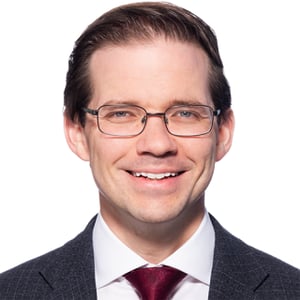
The Honorable Paul J. Ray is currently Of Counsel at Covington & Burling LLP where he advises clients on regulatory opportunities and challenges and helps them formulate and execute advocacy strategies for their regulatory policy priorities before the executive branch and Congress.
During the first Trump Administration, Paul held various senior positions at the Office of Information and Regulatory Affairs (OIRA) within the White House’s Office of Management and Budget, including as acting, and then Senate-confirmed, head of the office. As OIRA Administrator (the "regulations czar"), Paul supervised the review of hundreds of regulations from across the government, drafted numerous executive orders governing the regulatory process, and led the Administration’s regulatory reform effort. As a result of this experience, Paul is well-positioned to help clients understand and achieve regulatory policy priorities in the context of the government’s regulatory agenda and ongoing reform efforts.
Most recently, Paul was also the Director of the Roe Institute for Economic Policy Studies at The Heritage Foundation. In that role, he supervised the formulation of the Foundation’s economic and regulatory policy recommendations and provided technical assistance to congressional committees and staff regarding legislative changes to the regulatory process. In addition to his role at The Heritage Foundation, Paul also served as a Senior Advisor at a strategic advisory firm. Before his time in government, Paul practiced law at a law firm in Washington, specializing in administrative law matters.
Prior to his role at the White House, Paul was Counselor to the Secretary at the U.S. Department of Labor. There he led departmental efforts in high-profile rulemakings and helped formulate the Department’s legal positions and strategy.
Paul served as a law clerk to Supreme Court Justice Samuel Alito and as a law clerk to the Honorable Debra Livingston of the U.S. Court of Appeals for the Second Circuit.
Paul is a thought leader in the conservative legal movement and is a frequent commentator and speaker on regulatory policy and reform matters, including at law schools, professional gatherings, and other venues. He is the Chairman of Innovations in Peacebuilding International and the Regulatory Process Working Group of the Federalist Society’s Regulatory Transparency Project and a public member of the Administrative Conference of the United States. Paul is also an adjunct lecturer at the Hillsdale College School of Government.

Partner, Clement & Murphy, PLLC
Paul served as the 43rd Solicitor General of the United States from June 2005 until June 2008. Before his confirmation as Solicitor General, he served as Acting Solicitor General for nearly a year and as Principal Deputy Solicitor General for over three years.
Paul has argued over 100 cases before the United States Supreme Court, including McConnell v. FEC, Tennessee v. Lane, United States v. Booker, MGM v. Grokster, Hobby Lobby v. Burwell, Epic Systems Corp. v. Lewis, Rucho v. Common Cause, Facebook v. Duguid, and TransUnion v. Ramirez. Paul has argued more Supreme Court cases since 2000 than any lawyer in or out of government. He has also argued many important cases in the lower courts, including Walker v. Cheney, United States v. Moussaoui and NFL v. Brady.
Paul’s practice focuses on appellate matters, constitutional litigation and strategic counseling. He represents a broad array of clients in the Supreme Court and in federal and state appellate courts. Last year, for example, he successfully argued Supreme Court cases involving significant issues of energy regulation, statutory interpretation, state sovereign immunity and Article III standing, and successfully argued a trademark appeal in the Fourth Circuit, and a constitutional appeal before the en banc Eleventh Circuit.
Paul focuses on high-stakes appeals. In recent years, he successfully defended a $1.2 billion jury verdict for clients in a Tenth Circuit case, while securing the reversal of an over $2 billion jury verdict for another client in the Seventh Circuit and the approval of a nearly $1 billion dollar class action settlement in the Third Circuit. He has initiated major administrative law challenges and constitutional litigation against the federal government, such as the successful challenge to the HHS drug-pricing rule and threatened challenges that led to the withdrawal of the Treasury Department’s proposed cryptocurrency regulations. He also counsels clients on a variety of strategic legal questions, whether arising from pending legislation, government inquiries or ongoing litigation.
Paul has undertaken substantial pro bono engagements in the Supreme Court, such as twice successfully representing the defendant in Bond v. United States and successfully representing the Omaha Tribe in Nebraska v. Parker, the guardian ad litem in Adoptive Couple v. Baby Girl, the defendant in Sekhar v. United States, a high school football coach in Kennedy v. Bremerton, and the Little Sisters of the Poor. Paul’s pro bono representation also precipitated the federal government’s confession of error in United States v. Rojas.
Following law school, Paul clerked for Judge Laurence H. Silberman of the U.S. Court of Appeals for the D.C. Circuit and for Associate Justice Antonin Scalia of the U.S. Supreme Court. After his clerkships, he went on to serve as Chief Counsel of the U.S. Senate Subcommittee on the Constitution, Federalism and Property Rights.
Paul is a Distinguished Lecturer in Law at the Georgetown University Law Center, where he has taught in various capacities since 1998. He also serves as a Senior Fellow of the Law Center’s Supreme Court Institute. He is the Justice Joseph Story Distinguished Practitioner in Residence at the Gray Center at Scalia Law School.
President, Arizona State Student Chapter
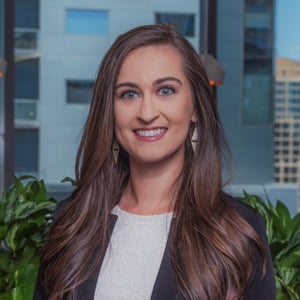
Morgan N. Larson is a J.D. candidate at the Sandra Day O’Connor College of Law at Arizona State University, where she serves as President of the Federalist Society and Business Editor of the Arizona State Law Journal. She has received multiple CALI Excellence for the Future Awards, given to the student earning the highest grade in a course, in Statutory Interpretation, Legal Method & Writing, and Public Interest Litigation, and is a four-time Pedrick Scholar.
Before attending law school, Morgan worked for seven years in the Financial Services Tax practice at Ernst & Young LLP in Phoenix, advising national banking and capital-markets clients on complex federal tax issues, IRS controversies, and accounting-method changes.
Morgan’s legal experience includes serving as a judicial extern to the Honorable Jennifer M. Perkins on the Arizona Court of Appeals and as a Summer Associate at Skadden, Arps, Slate, Meagher & Flom LLP in Washington, D.C., where she will return post-graduation to join the firm’s Tax Controversy & Litigation Group. She is also a Ronald Reagan Fellow at the Goldwater Institute and a Blackstone Legal Fellow.
United States District Judge, United States District Court for the Middle District of Florida
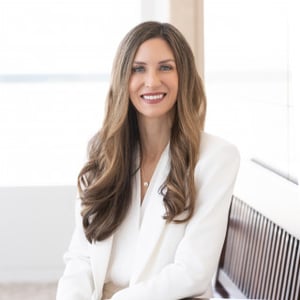
In November 2020, the Senate confirmed Kathryn Kimball Mizelle as a United States District Judge for the Middle District of Florida. At age 33, she became the youngest Article III judge in the country. Prior to her confirmation, Judge Mizelle was in private practice at Jones Day, where she focused on complex civil and criminal litigation and appeals. Judge Mizelle previously served at the United States Department of Justice in the Office of the Associate Attorney General, in the Southern Criminal Enforcement Section of the Tax Division, and in the United States Attorney’s Office for the Eastern District of Virginia. Judge Mizelle has also taught as an adjunct professor of law at the University of Florida Levin College of Law and at George Mason University’s Antonin Scalia Law School.
Judge Mizelle earned her B.A., summa cum laude, from Covenant College, and her J.D., summa cum laude, from the University of Florida Levin College of Law. After graduation, Judge Mizelle served as a law clerk at every level of the federal judiciary: at the Supreme Court for Justice Clarence Thomas, at the D.C. Circuit for Judge Gregory G. Katsas, at the Eleventh Circuit for Chief Judge William H. Pryor Jr., and at the Middle District of Florida for Judge James S. Moody Jr.
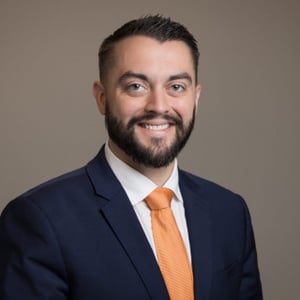
Partner, Consovoy McCarthy PLLC
Mr. Norris helps clients win important questions of federal law in trial and appellate courts across the country. He has represented prominent nonprofits, many States, the Republican Party, and the former President of the United States. He has argued in eight of the twelve federal circuits and twice at the U.S. Supreme Court, including the landmark case Students for Fair Admissions v. Harvard.
Mr. Norris is barred in Tennessee and Virginia, and is an elected member of the American Law Institute. Mr. Norris lives with his family in Knoxville, Tennessee.
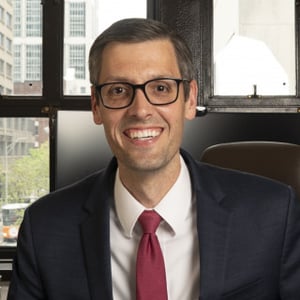
Solicitor General, Tennessee Attorney General's Office
Matt Rice serves as the Solicitor General of Tennessee. Before joining the State, Matt worked in private practice at Williams & Connolly LLP. He clerked for Justice Clarence Thomas on the United States Supreme Court as well as Judge Sandra Ikuta on the United States Court of Appeals for the Ninth Circuit. Before his legal career, Matt played professional baseball in the Tampa Bay Rays organization.
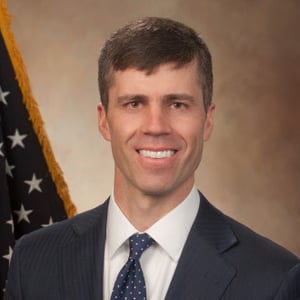
Solicitor General, Mississippi Attorney General's Office
Scott G. Stewart is the Solicitor General of Mississippi. He has litigated and presented oral argument in the U.S. Supreme Court, in all regional federal courts of appeals, and in trial-level courts across the country. Stewart previously served as a Deputy Assistant Attorney General in the U.S. Department of Justice and worked in private practice as a litigator. He served as a law clerk to Justice Clarence Thomas of the Supreme Court of the United States and to Judge Diarmuid F. O’Scannlain of the U.S. Court of Appeals for the Ninth Circuit. Stewart graduated from Princeton University and Stanford Law School.
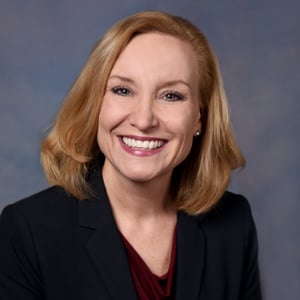
Judge, United States Court of Appeals, Sixth Circuit
The Honorable Joan L. Larsen is a judge of the United States Court of Appeals for the Sixth Circuit. She was nominated by the President on May 8, 2017 and confirmed by the Senate on November 1, 2017. Before her appointment to the federal bench, Judge Larsen served two terms as a Justice of the Michigan Supreme Court, where she was the court’s liaison to Michigan’s drug, sobriety, mental health and veteran’s courts.
Before becoming a judge, Judge Larsen was a faculty member at the University of Michigan Law School, where she was also Special Counsel to the Dean and received the L. Hart Wright Award for Excellence in Teaching. Judge Larsen's research and teaching interests included constitutional law, criminal procedure, statutory interpretation, and presidential power. Judge Larsen continues to assist the law school as the adviser to the Henry M. Campbell Moot Court Competition.
Judge Larsen began her legal career as a law clerk to the Hon. David B. Sentelle of the United States Court of Appeals for the D.C. Circuit and to Justice Antonin Scalia of the Supreme Court of the United States. Following her clerkships, she joined the law firm of Sidley Austin, where she was a member of the Constitutional, Criminal, and Civil Litigation Section. She later served as Deputy Assistant Attorney General in the United States Department of Justice, Office of Legal Counsel.
Judge Larsen graduated first in her class from Northwestern University School of Law, where she served as articles editor of the Northwestern University Law Review and earned the John Paul Stevens Award for Academic Excellence. She received her B.A., with highest honors, from the University of Northern Iowa.

Richard and Frances Mallery Professor of Law and Faculty Director, Constitutional Law Center, Stanford Law School
Michael W. McConnell is the Richard and Frances Mallery Professor and Faculty Director of the Constitutional Law Center at Stanford Law School, and a Senior Fellow at the Hoover Institution. From 2002 to 2009, he served as a Circuit Judge on the United States Court of Appeals for the Tenth Circuit. He was nominated by President George W. Bush, a Republican, and confirmed by a Democratic Senate by unanimous consent. McConnell has previously held chaired professorships at the University of Chicago and the University of Utah, and visiting professorships at Harvard and NYU. He teaches courses on constitutional law, constitutional history, First Amendment, and interpretive theory. He has published widely in the fields of constitutional law and theory, especially church and state, equal protection, and separation of powers. His book, “The President Who Would Not Be King: Executive Power Under the Constitution,” was published by Princeton University Press in 2020, based on the Tanner Lectures in Human Values, which he delivered at Princeton in 2019. His latest book, co-authored with Nathan Chapman, “Agreeing to Disagree: How the Establishment Clause Protects Religious Diversity and Freedom of Conscience,” was published by Oxford University Press in mid-2023. McConnell has argued sixteen cases in the United States Supreme Court, most recently Carney v. Adams (2020). defending a provision of the Delaware Constitution requiring political balance on that state’s courts. More recently, he was co-counsel in Gonzalez v. Google. He earned his B.A. from Michigan State University and his J.D. from the University of Chicago, and has received honorary degrees from Notre Dame University and Michigan State. He served as law clerk to Supreme Court Justice William J. Brennan, Jr. and D.C. Circuit Chief Judge J. Skelly Wright. He has been Assistant General Counsel of the Office of Management & Budget, Assistant to the Solicitor General of the Department of Justice, and a member of the President’s Intelligence Oversight Board. He is Senior of Counsel to the law firm Wilson, Sonsini, Goodrich & Rosati, and is co-chair of Meta’s Oversight Review Board.
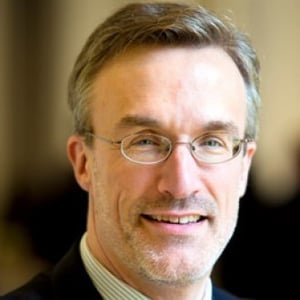
James G. Phillipp Professor of Law, University of Michigan Law School
Julian Davis Mortenson writes on constitutional and international law. His current book project—The Founders' President (under contract, Harvard University Press)—develops a comprehensive account of presidential power at the American Founding. He is also co-authoring a new constitutional law casebook, scheduled for publication by Foundation Press in 2020.
Professor Mortenson is an award-winning teacher and an active litigator. Representative constitutional matters include his work as lead counsel in a pre-Obergefell suit that required Michigan to recognize the marriages of more than 300 same-sex couples; his representation of discharged military service members challenging the "Don't Ask, Don't Tell" law; and his work as one of the principal drafters of the merits briefs in the landmark case Boumediene v. Bush, which secured the right of Guantanamo detainees to challenge their incarceration. He regularly litigates complex transnational matters in the U.S. courts, and has served as arbitrator, counsel, and expert witness in a wide variety of commercial and investor-state disputes.
Before joining the faculty, Professor Mortenson worked at the law firm WilmerHale, in the President's Office of the International Criminal Tribunal for the former Yugoslavia, and as a law clerk for both Justice David H. Souter and The Hon. J. Harvie Wilkinson III. Prior to law school, he was a management consultant with a client portfolio spanning the finance, manufacturing, oil and gas, and information technology industries. Professor Mortenson was salutatorian of his class at Stanford Law School and received an AB in history, summa cum laude, from Harvard College.
Partner, Clement & Murphy, PLLC
Paul served as the 43rd Solicitor General of the United States from June 2005 until June 2008. Before his confirmation as Solicitor General, he served as Acting Solicitor General for nearly a year and as Principal Deputy Solicitor General for over three years.
Paul has argued over 100 cases before the United States Supreme Court, including McConnell v. FEC, Tennessee v. Lane, United States v. Booker, MGM v. Grokster, Hobby Lobby v. Burwell, Epic Systems Corp. v. Lewis, Rucho v. Common Cause, Facebook v. Duguid, and TransUnion v. Ramirez. Paul has argued more Supreme Court cases since 2000 than any lawyer in or out of government. He has also argued many important cases in the lower courts, including Walker v. Cheney, United States v. Moussaoui and NFL v. Brady.
Paul’s practice focuses on appellate matters, constitutional litigation and strategic counseling. He represents a broad array of clients in the Supreme Court and in federal and state appellate courts. Last year, for example, he successfully argued Supreme Court cases involving significant issues of energy regulation, statutory interpretation, state sovereign immunity and Article III standing, and successfully argued a trademark appeal in the Fourth Circuit, and a constitutional appeal before the en banc Eleventh Circuit.
Paul focuses on high-stakes appeals. In recent years, he successfully defended a $1.2 billion jury verdict for clients in a Tenth Circuit case, while securing the reversal of an over $2 billion jury verdict for another client in the Seventh Circuit and the approval of a nearly $1 billion dollar class action settlement in the Third Circuit. He has initiated major administrative law challenges and constitutional litigation against the federal government, such as the successful challenge to the HHS drug-pricing rule and threatened challenges that led to the withdrawal of the Treasury Department’s proposed cryptocurrency regulations. He also counsels clients on a variety of strategic legal questions, whether arising from pending legislation, government inquiries or ongoing litigation.
Paul has undertaken substantial pro bono engagements in the Supreme Court, such as twice successfully representing the defendant in Bond v. United States and successfully representing the Omaha Tribe in Nebraska v. Parker, the guardian ad litem in Adoptive Couple v. Baby Girl, the defendant in Sekhar v. United States, a high school football coach in Kennedy v. Bremerton, and the Little Sisters of the Poor. Paul’s pro bono representation also precipitated the federal government’s confession of error in United States v. Rojas.
Following law school, Paul clerked for Judge Laurence H. Silberman of the U.S. Court of Appeals for the D.C. Circuit and for Associate Justice Antonin Scalia of the U.S. Supreme Court. After his clerkships, he went on to serve as Chief Counsel of the U.S. Senate Subcommittee on the Constitution, Federalism and Property Rights.
Paul is a Distinguished Lecturer in Law at the Georgetown University Law Center, where he has taught in various capacities since 1998. He also serves as a Senior Fellow of the Law Center’s Supreme Court Institute. He is the Justice Joseph Story Distinguished Practitioner in Residence at the Gray Center at Scalia Law School.
Edward B. Shils Professor of Law and Professor of Political Science; Director, Penn Program on Regulation, University of Pennsylvania Law School
Cary Coglianese is the Edward B. Shils Professor of Law and Professor of Political Science at the University of Pennsylvania, where he currently serves as the director of the Penn Program on Regulation and has served as the law school’s Deputy Dean for Academic Affairs. He specializes in the study of regulation and regulatory processes, with an emphasis on the empirical evaluation of alternative regulatory strategies and the role of public participation, negotiation, and business-government relations in policy making. His most recent books include: Achieving Regulatory Excellence; Does Regulation Kill Jobs?; Regulatory Breakdown: The Crisis of Confidence in U.S. Regulation; Import Safety: Regulatory Governance in the Global Economy; and Regulation and Regulatory Processes.
Prior to joining Penn Law, Coglianese spent a dozen years on the faculty at Harvard University’s John F. Kennedy School of Government. He also has taught as a visiting law professor at Stanford and Vanderbilt, founded the Law & Society Association’s international collaborative research network on regulatory governance, served as a founding editor of the peer-reviewed journal Regulation & Governance, and created and now advises the daily production of The Regulatory Review. The chair of the Administrative Conference of the United States' committee on rulemaking, he has led a National Science Foundation initiative on e-rulemaking, served on the ABA’s task force on improving Regulations.Gov, and chaired a task force on transparency and public participation in the regulatory process that offered a blueprint to the Obama Administration on open government. He is a co-chair of the American Bar Association’s administrative law section committee on e-government, past co-chair of the section's committee on rulemaking, and a past member of the section's Council. He currently serves as a member of a committee of the National Academies of Sciences, Engineering, and Medicine studying performance-based safety regulation and of an Aspen Institute dialogue on energy policy governance. He has served as a consultant to the Administrative Conference of the United States, Environment Canada, the Organization for Economic Cooperation and Development, the U.S. Department of Commerce, the U.S. Department of Transportation, and the U.S. Environmental Protection Agency.

Maurice and Hilda Friedman Professor of Law, Columbia Law School; CEO, New Civil Liberties Alliance
Philip Hamburger is the Maurice and Hilda Friedman Professor of Law at Columbia Law School, and Chief Executive Officer at the New Civil Liberties Alliance. Before coming to Columbia, he was the John P. Wilson Professor at the University of Chicago Law School.
He writes on constitutional law and its history—with particular emphasis on religious liberty, freedom of speech and the press, judicial office, administrative power, and unconstitutional conditions.
His books are Separation of Church and State (Harvard 2002), Law and Judicial Duty (Harvard 2008), Is Administrative Law Unlawful? (Chicago 2014), The Administrative Threat (Encounter 2017), and Liberal Suppression: Section 501(c)(3) and the Taxation of Speech (Chicago 2018). A forthcoming book is Purchasing Submission: Conditions, Power, and Freedom (Harvard 2021).
He is a member of the American Academy of Arts and Sciences, and he has served on the board of directors of the American Society for Legal History. He has twice received the Sutherland Prize for the most significant contribution to English legal history, and has been awarded the Henry Paolucci - Walter Bagehot Book Award, the Hayek Book Prize, and the Bradley Prize.
United States District Judge, United States District Court for the Middle District of Florida
In November 2020, the Senate confirmed Kathryn Kimball Mizelle as a United States District Judge for the Middle District of Florida. At age 33, she became the youngest Article III judge in the country. Prior to her confirmation, Judge Mizelle was in private practice at Jones Day, where she focused on complex civil and criminal litigation and appeals. Judge Mizelle previously served at the United States Department of Justice in the Office of the Associate Attorney General, in the Southern Criminal Enforcement Section of the Tax Division, and in the United States Attorney’s Office for the Eastern District of Virginia. Judge Mizelle has also taught as an adjunct professor of law at the University of Florida Levin College of Law and at George Mason University’s Antonin Scalia Law School.
Judge Mizelle earned her B.A., summa cum laude, from Covenant College, and her J.D., summa cum laude, from the University of Florida Levin College of Law. After graduation, Judge Mizelle served as a law clerk at every level of the federal judiciary: at the Supreme Court for Justice Clarence Thomas, at the D.C. Circuit for Judge Gregory G. Katsas, at the Eleventh Circuit for Chief Judge William H. Pryor Jr., and at the Middle District of Florida for Judge James S. Moody Jr.
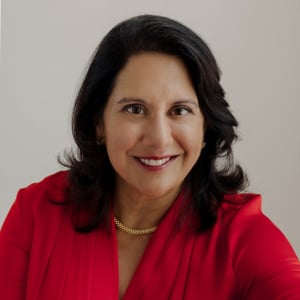
Judge, United States Court of Appeals, District of Columbia Circuit
Judge Rao was appointed to the United States Court of Appeals for the District of Columbia Circuit in March 2019. She graduated from Yale College in 1995 and the University of Chicago Law School in 1999. Following graduation, she served as a law clerk to Judge J. Harvie Wilkinson III of the U.S. Court of Appeals for the Fourth Circuit and, in the 2001 October Term, as law clerk to Justice Clarence Thomas of the U.S. Supreme Court. Between her clerkships, Judge Rao served as counsel for nominations and constitutional law to the U.S. Senate Committee on the Judiciary. In 2002, she joined the international arbitration group of Clifford Chance LLP in London, England. From 2005-2006, she served as Special Assistant and Associate White House Counsel to President George W. Bush. From 2006 to 2017, Judge Rao was a professor at the Antonin Scalia Law School at George Mason University, where she taught constitutional law, legislation and statutory interpretation, and the history and foundations of the administrative state. In 2014, she founded the Center for the Study of the Administrative State, a non-profit Center that promotes academic scholarship and public policy debates about administrative law. In July 2017, she was appointed to serve as the Administrator of the Office of Information and Regulatory Affairs in the Office of Management and Budget. She served in this position until her appointment to the D.C. Circuit.
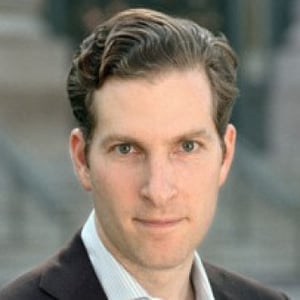
Felix Frankfurter Professor of Law and Director, Julis-Rabinowitz Program on Jewish and Israeli Law, Harvard Law School
Noah Feldman specializes in constitutional studies, with a particular emphasis on the relationship between law and religion, free speech, constitutional design, and the history of legal theory. Felix Frankfurter Professor of Law at Harvard Law School, he is also a Senior Fellow of the Society of Fellows at Harvard. In 2003 he served as senior constitutional advisor to the Coalition Provisional Authority in Iraq, and subsequently advised members of the Iraqi Governing Council on the drafting of the Transitional Administrative Law or interim constitution. He received his A.B. summa cum laude in Near Eastern Languages and Civilizations from Harvard University in 1992. Selected as a Rhodes Scholar, he earned a D.Phil. in Oriental Studies from Oxford University in 1994. From 1999 to 2002, he was a Junior Fellow of the Society of Fellows at Harvard. Before that he served as a law clerk to Justice David H. Souter of the U.S. Supreme Court (1998 to 1999) and to Chief Judge Harry T. Edwards of the U.S. Court of Appeals for the D.C. Circuit (1997 to 1998). He received his J.D. from Yale Law School in 1997, serving as Book Reviews Editor of the Yale Law Journal. He’s the author of eight books: The Three Lives of James Madison: Genius, Partisan, President (Random House, 2017); Cool War: The Future of Global Competition (Random House, 2013); Scorpions: The Battles and Triumphs of FDR’s Great Supreme Court Justices (Twelve Publishing, 2010); The Fall and Rise of the Islamic State (Princeton University Press, 2008); Divided By God: America's Church-State Problem and What We Should Do About It (Farrar, Straus & Giroux 2005); What We Owe Iraq: War and the Ethics of Nation building (Princeton University Press 2004); and After Jihad: America and the Struggle for Islamic Democracy (Farrar, Straus & Giroux 2003. He also co-authored two textbooks with Kathleen Sullivan: Constitutional Law, Twentieth Edition (Foundation Press, Fall 2019) and First Amendment (Foundation Press, 2016).
Richard and Frances Mallery Professor of Law and Faculty Director, Constitutional Law Center, Stanford Law School
Michael W. McConnell is the Richard and Frances Mallery Professor and Faculty Director of the Constitutional Law Center at Stanford Law School, and a Senior Fellow at the Hoover Institution. From 2002 to 2009, he served as a Circuit Judge on the United States Court of Appeals for the Tenth Circuit. He was nominated by President George W. Bush, a Republican, and confirmed by a Democratic Senate by unanimous consent. McConnell has previously held chaired professorships at the University of Chicago and the University of Utah, and visiting professorships at Harvard and NYU. He teaches courses on constitutional law, constitutional history, First Amendment, and interpretive theory. He has published widely in the fields of constitutional law and theory, especially church and state, equal protection, and separation of powers. His book, “The President Who Would Not Be King: Executive Power Under the Constitution,” was published by Princeton University Press in 2020, based on the Tanner Lectures in Human Values, which he delivered at Princeton in 2019. His latest book, co-authored with Nathan Chapman, “Agreeing to Disagree: How the Establishment Clause Protects Religious Diversity and Freedom of Conscience,” was published by Oxford University Press in mid-2023. McConnell has argued sixteen cases in the United States Supreme Court, most recently Carney v. Adams (2020). defending a provision of the Delaware Constitution requiring political balance on that state’s courts. More recently, he was co-counsel in Gonzalez v. Google. He earned his B.A. from Michigan State University and his J.D. from the University of Chicago, and has received honorary degrees from Notre Dame University and Michigan State. He served as law clerk to Supreme Court Justice William J. Brennan, Jr. and D.C. Circuit Chief Judge J. Skelly Wright. He has been Assistant General Counsel of the Office of Management & Budget, Assistant to the Solicitor General of the Department of Justice, and a member of the President’s Intelligence Oversight Board. He is Senior of Counsel to the law firm Wilson, Sonsini, Goodrich & Rosati, and is co-chair of Meta’s Oversight Review Board.

Judge, United States Court of Appeals, Second Circuit
Judge Menashi was appointed to the U.S. Court of Appeals for the Second Circuit on November 14, 2019. Previously, he served as special assistant and associate counsel to the President in the White House and as acting general counsel at the U.S. Department of Education. He was assistant professor of law at Scalia Law School, George Mason University, where he taught administrative law and civil procedure, and a research fellow at New York University School of Law and Georgetown University Law Center. He was also a partner at Kirkland & Ellis LLP in New York, where he practiced appellate and commercial litigation, and served as a law clerk to Justice Samuel Alito on the Supreme Court of the United States and to Judge Douglas Ginsburg on the U.S. Court of Appeals for the District of Columbia Circuit. He graduated from Stanford Law School, where he was elected to Order of the Coif and served as senior articles editor of the Stanford Law Review, and from Dartmouth College, where he was elected to Phi Beta Kappa.
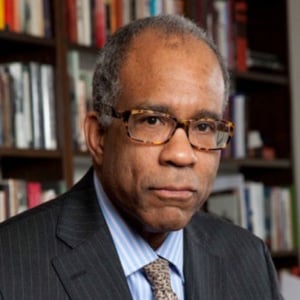
Michael R. Klein Professor of Law, Harvard Law School
Randall Kennedy is Michael R. Klein Professor at Harvard Law School where he teaches courses on contracts, criminal law, and the regulation of race relations. He was born in Columbia, South Carolina. For his education he attended St. Albans School, Princeton University, Oxford University, and Yale Law School. He served as a law clerk for Judge J. Skelly Wright of the United States Court of Appeals and for Justice Thurgood Marshall of the United States Supreme Court. He is a member of the bar of the District of Columbia and the Supreme Court of the United States. Awarded the 1998 Robert F. Kennedy Book Award for Race, Crime, and the Law, Mr Kennedy writes for a wide range of scholarly and general interest publications. His other books are For Discrimination: Race, Affirmative Action, and the Law (2013), The Persistence of the Color Line: Racial Politics and the Obama Presidency (2011), Sellout: The Politics of Racial Betrayal (2008), Interracial Intimacies: Sex, Marriage, Identity, and Adoption (2003), and Nigger: The Strange Career of a Troublesome Word (2002). A member of the American Law Institute, the American Academy of Arts and Sciences, and the American Philosophical Association, Mr. Kennedy is also a Trustee emeritus of Princeton University.
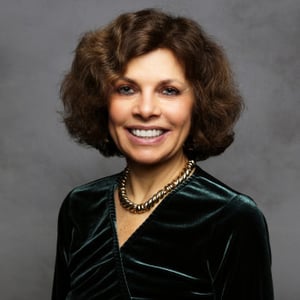
John Marshall Harlan II Professor of Law Emerita, New York Law School; Former President, American Civil Liberties Union
Nadine Strossen, New York Law School Professor Emerita and Senior Fellow at FIRE (the Foundation for Individual Rights and Expression), was national President of the American Civil Liberties Union from 1991 to 2008. An internationally acclaimed free speech scholar and advocate, who regularly addresses diverse audiences and provides media commentary around the world, Strossen is also the Host and Project Consultant for Free To Speak, a 3-hour documentary film series distributed on public television in 2023. Her books about free speech include: Free Speech: What Everyone Needs to Know® (Oxford University Press 2023); HATE: Why We Should Resist It with Free Speech, Not Censorship (Oxford University Press 2018); and Defending Pornography: Free Speech, Sex, and the Fight for Women’s Rights (Scribner 1995), which was republished with a new Preface in 2024 as part of the NYU Classics Series. Her many honors and awards include the National Coalition Against Censorship’s Judy Blume Lifetime Achievement Award for Free Speech. She serves on the Advisory Boards of several organizations that do free speech work, including: ACLU, Academic Freedom Alliance, Foundation Against Intolerance and Racism (FAIR), Heterodox Academy, National Coalition Against Censorship, and the University of Austin.

Deputy Secretary of Transportation, US Department of Transportation
Steven G. Bradbury was sworn in as the Deputy Secretary of Transportation on March 13, 2025, following his confirmation by the U.S. Senate on March 11, 2025. In this role, he oversees the Department’s operating administrations and spearheads initiatives to ensure a safe, efficient, and modern transportation system that strengthens economic productivity and global competitiveness. Deputy Secretary Bradbury also assists Secretary Duffy in managing the Department’s activities, including its workforce of over 58,000 employees and an annual budget exceeding $109 billion.
Bradbury previously served as the 23rd General Counsel of the Department of Transportation from 2017 to 2021, as the Acting Deputy Secretary from 2019, and as Acting Secretary of Transportation in 2021. As General Counsel, he was the chief legal officer, advising on all legal matters and ensuring the integrity and compliance of the Department’s policies and programs.
Before rejoining DOT, Bradbury was a Distinguished Fellow at The Heritage Foundation from December 2022 to March 2025. He has extensive experience in the public and private sector, having served as Principal Deputy and Acting Assistant Attorney General at the U.S. Department of Justice and as a partner at Kirkland & Ellis LLP and Dechert LLP. Earlier in his career, he clerked for Justice Clarence Thomas and Judge James L. Buckley.
Bradbury holds a J.D., magna cum laude, from the University of Michigan Law School and a B.A. in English from Stanford University.
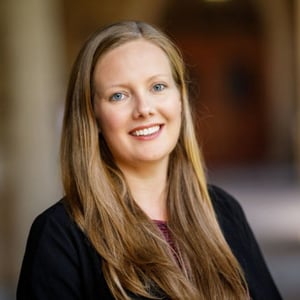
Professor of Law, University of Notre Dame Law School
Emily Bremer teaches and writes in the areas of administrative law, regulatory process, and civil procedure. Her scholarship focuses primarily on matters of procedural design, with a recent focus on the history and interpretation of the Administrative Procedure Act (APA). She is a recipient of the AALS’s award for the year’s best administrative law scholarship by a junior scholar and the AALL’s Joseph L. Andrew’s Legal Literature Award for her contribution to the Bremer-Kovacs Collection of Historical Documents Related to the APA (HeinOnline). Bremer’s articles include a defense forthcoming in the Virginia Law Review of the constitutionality of the APA’s regime for ensuring the competence and impartiality of Administrative Law Judges; a plea in the Yale Journal on Regulation for administrative law to take greater account of the on-the-ground reality of administration; twin articles uncovering the intellectual foundation and meaning of the APA’s adjudication and rulemaking provisions; and three separate studies that served as the basis of recommendations of the Administrative Conference of the United States (ACUS) on the subjects of agency declaratory orders, incorporation by reference, and statutory limitations on the jurisdiction of the Court of Federal Claims. Bremer serves as a Senior Fellow of ACUS, a co-editor of the administrative law section of Jotwell, and a regular contributor to the Yale Journal on Regulation’s Notice & Comment blog.
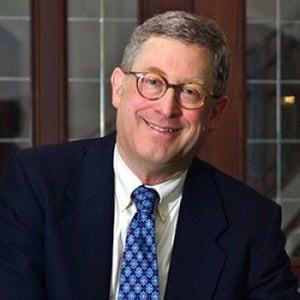
William R. Orthwein Distinguished Professor of Law, Washington University in St. Louis School of Law
Professor Ronald M. Levin is a nationally known scholar who specializes in administrative law and related public law issues. He is the co-author of a casebook on state and federal administrative law, now in its third edition, as well as a nutshell on administrative law and process, now in its fifth edition. Formerly the law school's associate dean, he has published numerous articles and book chapters on administrative law topics, including judicial review, rulemaking, and legislative reform of the regulatory process. He also has written about the law of legislation, lobbying, and legislative ethics. Among his professional affiliations, Professor Levin has chaired the ABA Section of Administrative Law and Regulatory Practice and served as the ABA's advisor to the drafting committee to revise the Model State Administrative Procedure Act. He also has chaired the Section on Administrative Law and the Section on Legislation of the Association of American Law Schools (AALS). Currently a public member of the Administrative Conference of the United States (ACUS), he previously served as a consultant to ACUS and to the Supreme Court of Indonesia. Before joining the law faculty, Professor Levin clerked for the Hon. John C. Godbold, U.S. Court of Appeals for the Fifth Circuit, and practiced for three years in Washington, D.C., with the firm of Sutherland, Asbill & Brennan.
Judge, United States Court of Appeals, Second Circuit
Judge Menashi was appointed to the U.S. Court of Appeals for the Second Circuit on November 14, 2019. Previously, he served as special assistant and associate counsel to the President in the White House and as acting general counsel at the U.S. Department of Education. He was assistant professor of law at Scalia Law School, George Mason University, where he taught administrative law and civil procedure, and a research fellow at New York University School of Law and Georgetown University Law Center. He was also a partner at Kirkland & Ellis LLP in New York, where he practiced appellate and commercial litigation, and served as a law clerk to Justice Samuel Alito on the Supreme Court of the United States and to Judge Douglas Ginsburg on the U.S. Court of Appeals for the District of Columbia Circuit. He graduated from Stanford Law School, where he was elected to Order of the Coif and served as senior articles editor of the Stanford Law Review, and from Dartmouth College, where he was elected to Phi Beta Kappa.
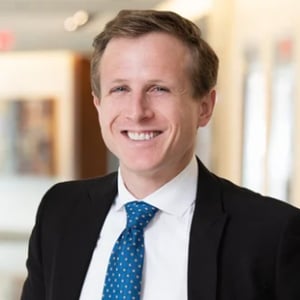
Andrew Tutt focuses on Supreme Court, appellate, and complex litigation. He has won cases in federal courts across a broad cross-section of subjects, with particular experience in administrative law, intellectual property law, and civil rights law. He has argued and won three cases in the United States Supreme Court, led appeals in the First, Second, Third, Fourth, Fifth, Sixth, Seventh, Ninth, Tenth, and D.C. Circuits and led the strategy, briefing, and argument in complex cases in federal district courts nationwide.
Recently, Andrew argued and won a significant victory in the United States Supreme Court establishing an important structural constitutional principle and safeguarding the reemployment rights of thousands of veterans and servicemembers. The Court took the rare step of granting certiorari to a state intermediate court of appeals, without a circuit conflict, over the Solicitor Generals recommendation that the Court deny the case.
In another recent matter before the United States Supreme Court, Andrew identified a meritorious pro se petition for certiorari. Representing the petitioner pro bono, Andrew and a team of Arnold & Porter attorneys persuaded the United States Supreme Court to grant the petition, securing reversal and his clients release from federal custody.
In a recent case, Andrew persuaded the Fourth Circuit to recognize that livestreaming police officers in the discharge of their duties is First Amendment protected activity.
In another recent case, Andrew convinced the Tenth Circuit to join six other federal courts of appeals in recognizing that individuals have a clearly established First Amendment right to record police officers in the discharge of their duties in public subject only to reasonable time, place, and manner restrictions.
In another case, Andrew persuaded the Fourth Circuit that a federal district court fundamentally misapprehended the evidence and arguments in a high-stakes bench trial, winning, on clear error review, a reversal and remand with instructions to enter judgment in favor of his client.
In another case in the Fourth Circuit, Andrew won a preliminary injunction and summary judgment for the City of Baltimore against changes to grant criteria used to award nearly US$300 million annually. On appeal, the Fourth Circuit granted initial hearing en banc, split with the en banc Ninth Circuit, and affirmed the district court's grant of summary judgment on four independent grounds.
In the Ninth Circuit, Andrew successfully represented three federal grantees in a high-profile challenge to the criteria used to award US$100 million in annual federal grants. Andrew persuaded the court of appeals to reverse the district court's dismissal for lack of jurisdiction and exercise its discretion to reach the merits and strike down the unlawful award criteria in light of the case's "national impact."
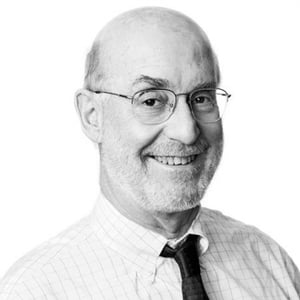
Director, Climate & Clean Air Program, Natural Resources Defense Council
David Doniger has been at the forefront of the battle against air pollution and global climate change since he joined NRDC in 1978. He helped formulate the Montreal Protocol, an international agreement designed to stop the depletion of the earth's ozone layer, as well as several essential amendments to the Clean Air Act. In 1993, he left NRDC to serve on the White House Council on Environmental Quality, followed by key posts at the U.S. Environmental Protection Agency. He rejoined NRDC in 2001 and has since been working to defend the Clean Air Act from assaults in Congress. He is based in Washington, D.C.
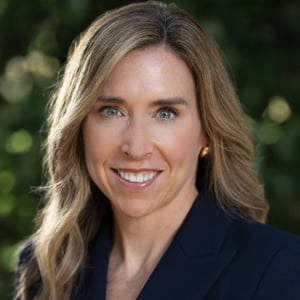
Chief of Staff and Associate Chief Counsel, U.S. Chamber Litigation Center
Stephanie Maloney is chief of staff and associate chief counsel at the U.S. Chamber Litigation Center, the litigation arm of the U.S. Chamber of Commerce. In this capacity, Maloney handles a variety of matters for the Chamber, including environment and energy litigation.
Most recently, Maloney served as Chief of Staff and Counsel in the Environment and Natural Resources Division of the U.S. Department of Justice. In that capacity, she directed litigation strategy, oversaw case briefing, and managed coordination and communication with agency clients in priority cases. And she served as government counsel in cases arising under various environmental and natural resources laws.
Before that, Maloney practiced as an associate in the Appellate and Critical Motions Practice Group at Winston & Strawn LLP. Her work focused on briefing and strategy in complex commercial and appellate litigation at the federal and state level, including merits and amicus curiae briefs to the Supreme Court of the United States.
Maloney served as a law clerk to both the Honorable Edith Brown Clement, of the U.S. Court of Appeals for the Fifth Circuit, and the Honorable Stephen J. Murphy, III, of the U.S. District Court for the Eastern District of Michigan. She graduated cum laude from Notre Dame Law School, where she served as Symposium Editor of the Notre Dame Law Review, and summa cum laude from Loyola University Maryland, where she received a B.A. in Political Science. Maloney also holds a master’s degree in theology from Emory University.
United States District Judge, United States District Court for the Middle District of Florida
In November 2020, the Senate confirmed Kathryn Kimball Mizelle as a United States District Judge for the Middle District of Florida. At age 33, she became the youngest Article III judge in the country. Prior to her confirmation, Judge Mizelle was in private practice at Jones Day, where she focused on complex civil and criminal litigation and appeals. Judge Mizelle previously served at the United States Department of Justice in the Office of the Associate Attorney General, in the Southern Criminal Enforcement Section of the Tax Division, and in the United States Attorney’s Office for the Eastern District of Virginia. Judge Mizelle has also taught as an adjunct professor of law at the University of Florida Levin College of Law and at George Mason University’s Antonin Scalia Law School.
Judge Mizelle earned her B.A., summa cum laude, from Covenant College, and her J.D., summa cum laude, from the University of Florida Levin College of Law. After graduation, Judge Mizelle served as a law clerk at every level of the federal judiciary: at the Supreme Court for Justice Clarence Thomas, at the D.C. Circuit for Judge Gregory G. Katsas, at the Eleventh Circuit for Chief Judge William H. Pryor Jr., and at the Middle District of Florida for Judge James S. Moody Jr.
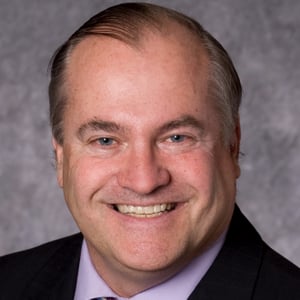
Robert F. Stanton Professor of Law, University of Maryland Carey School of Law
Robert V. Percival is the Robert F. Stanton Professor of Law and the Director of the Environmental Law Program at the University of Maryland School of Law. He received a B.A. summa cum laude from Macalester College, a J.D. from Stanford Law School and an M.A. in economics from Stanford University. At Stanford Percival was named the Nathan Abbott Scholar for graduating first in his law school class. Following graduation, he served as a law clerk for Judge Shirley M. Hufstedler of the U.S. Court of Appeals for the Ninth Circuit and for U.S. Supreme Court Justice Byron R. White. He joined the Maryland faculty in 1987 after serving as a senior attorney for the Environmental Defense Fund. Percival has served as a visiting professor of law at Harvard Law School, Georgetown University Law Center, the China University of Political Science and Law (Beijing), and Comenius University (Bratislava). He is the principal author of a leading environmental law casebook, now in its 9th edition, and the author of several articles about the Supreme Court and presidential authority over executive agencies. Percival wrote one of the first articles on the propriety of consent decrees to effectuate and enforce federal law “The Bounds of Consent: Consent Decrees, Settlements and Federal Environmental Policymaking,” 1987 Univ. Chic. Leg. F. 327 (1987). He also is the author of the first comprehensive analyses of what the papers of the late Justices Thurgood Marshall and Harry Blackmun reveal about the Supreme Court’s handling of environmental cases (“Environmental Law in the Supreme Court: Highlights from the Blackmun Papers,” 35 ELR 10637 (2005), and “Environmental Law in the Supreme Court: Highlights from the Marshall Papers,” 13 ELR 10606 (Oct. 1993)).
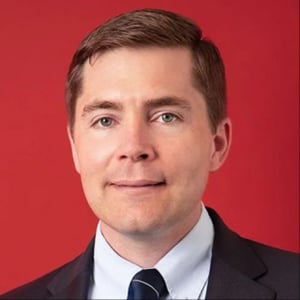
Senior Attorney, Pacific Legal Foundation
Damien Schiff is a senior attorney at Pacific Legal Foundation. He leads its environmental practice group, a unique initiative that draws broadly from PLF’s expertise and success in property rights and separation of powers litigation. Over the years, Damien has represented hundreds of landowners and property rights advocates to defend their liberties against heavy-handed and unwarranted environmental and land-use regulation. His litigation experience includes Sackett v. U.S. Environmental Protection Agency, a groundbreaking decision in which the U.S. Supreme Court upheld the right of landowners to challenge Clean Water Act compliance orders issued by EPA, and Contoski v. Norton, PLF’s successful effort to force the federal government to make good on its promise to delist the bald eagle from the Endangered Species Act.
Besides litigation, Damien has written academic articles on a variety of subjects, including the Endangered Species Act, the Clean Water Act, greenhouse gas torts, the duty to rescue, and international water law. He has appeared on a variety of television and radio programs and has been quoted in The New York Times, The Wall Street Journal, Harper’s Magazine, and The Economist, among other publications.
He obtained his law degree magna cum laude from the University of San Diego School of Law, and his undergraduate degree magna cum laude from Georgetown University. While at USD, he was a research assistant for Professor Bernard Siegan, a leading constitutional theorist and advocate for property rights and economic liberty. Immediately prior to joining PLF, Damien clerked for Judge (and former PLF attorney) Victor Wolski of the United States Court of Federal Claims. Damien credits the mentoring and examples of Professor Siegan and Judge Wolski for his decision to pursue a career in liberty-based public interest litigation.
Damien lives in Sacramento with his wife, two young sons, four chickens, and a cat named Princess. In his off hours he enjoys stamp collecting, Gregorian chant, and martinis—preferably at the same time.
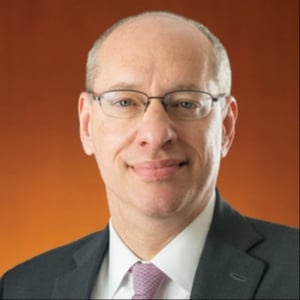
Former Chairman, Federal Trade Commission; Former Partner, Davis Polk & Wardwell
Mr. Leibowitz is a former partner in Davis Polk’s Washington DC and New York offices. His practice focuses on the complex antitrust aspects of mergers and acquisitions, as well as government and private antitrust investigations and litigation. He also provides counsel in the developing area of privacy law and with respect to advocacy involving Congress.
Mr. Leibowitz was Chairman of the Federal Trade Commission from 2009 through 2013, and was noted for his bipartisanship. He served as a Commissioner from 2004 to 2009. While at the FTC, his priorities included health care and high-tech competition.
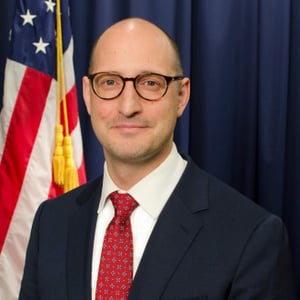
Partner, Cravath, Swaine & Moore LLP
Noah Joshua Phillips is Co-Chair of the Antitrust Practice and previously served as a Commissioner of the Federal Trade Commission. He advises clients on a range of antitrust issues, including mergers and acquisitions, business conduct and compliance, litigation and investigations, and data security and privacy.
On the FTC, Mr. Phillips played an integral role in precedent setting enforcement actions and regulatory efforts concerning antitrust, consumer protection and privacy. He decided dozens of merger and other antitrust enforcement matters across the economy, including in the consumer product, defense, energy, entertainment, healthcare, technology, pharmaceutical and retail industries. Mr. Phillips’ written antitrust opinions were consistently upheld by federal appellate courts.
As Commissioner, Mr. Phillips frequently testified before Congress and represented the FTC before international bodies, including the G7, the Competition Committee of the Organisation for Economic Co-operation and Development, and the International Conference of Data Protection and Privacy Commissioners. He speaks and writes frequently on a range of antitrust, consumer protection and privacy issues.
Prior to the FTC, Mr. Phillips served as Chief Counsel to U.S. Senator John Cornyn, of Texas, on the Senate Judiciary Committee. He advised Senator Cornyn on a variety of legal and policy issues, as well as judicial nominations.
Mr. Phillips received an A.B. magna cum laude from Dartmouth College in 2000 and a J.D. from Stanford Law School in 2005. He began his career at a New York-based investment bank. After law school, Mr. Phillips clerked for Hon. Edward C. Prado of the U.S. Court of Appeals for the Fifth Circuit and joined Cravath’s Litigation Department in 2006. He left the Firm in 2010, and he rejoined Cravath as a partner in December 2022.
Judge, United States Court of Appeals, District of Columbia Circuit
Judge Rao was appointed to the United States Court of Appeals for the District of Columbia Circuit in March 2019. She graduated from Yale College in 1995 and the University of Chicago Law School in 1999. Following graduation, she served as a law clerk to Judge J. Harvie Wilkinson III of the U.S. Court of Appeals for the Fourth Circuit and, in the 2001 October Term, as law clerk to Justice Clarence Thomas of the U.S. Supreme Court. Between her clerkships, Judge Rao served as counsel for nominations and constitutional law to the U.S. Senate Committee on the Judiciary. In 2002, she joined the international arbitration group of Clifford Chance LLP in London, England. From 2005-2006, she served as Special Assistant and Associate White House Counsel to President George W. Bush. From 2006 to 2017, Judge Rao was a professor at the Antonin Scalia Law School at George Mason University, where she taught constitutional law, legislation and statutory interpretation, and the history and foundations of the administrative state. In 2014, she founded the Center for the Study of the Administrative State, a non-profit Center that promotes academic scholarship and public policy debates about administrative law. In July 2017, she was appointed to serve as the Administrator of the Office of Information and Regulatory Affairs in the Office of Management and Budget. She served in this position until her appointment to the D.C. Circuit.

Panel 4: Going Nuclear: European Decline and American Revival?
CLE credit for this event is available at On-Demand CLE. The contrast between American and European...
The Presidential Toolbox: Instruments of Executive Power
Josh Blackman, Sally Katzen, Paul R. Noe, Paul J. Ray
What are the legal tools available to a President to shape policy and execute the...
Showcase Panel 1: Landmark SCOTUS Decisions of the 2020s
Paul D. Clement, Morgan Larson, Kathryn Kimball Mizelle, Cameron T. Norris, Matt Rice, Scott G. Stewart
CLE credit for this event is available at On-Demand CLE. This year marks the 20th anniversary...
Debate: Presidential Power and Congress's Response
Joan Larsen, Michael W. McConnell, Julian Davis Mortenson
Featuring: Prof. Michael W. McConnell, Richard and Frances Mallery Professor and Director of the Constitutional...
Administrative Law and Regulation: What Is the Future of Administrative Law?
Paul D. Clement, Cary Coglianese, Philip A. Hamburger, Kathryn Kimball Mizelle, Neomi Rao
The Supreme Court's latest term was one of its most significant for administrative law. The...
Cocktail Hour Reception and Banquet, Arthur N. Rupe Debate and Presentation of the Annual Joseph Story Award and Feddie Awards
Noah Feldman, Michael W. McConnell, Steven J. Menashi
Join us for a closing banquet and the Arthur N. Rupe Debate, entitled "Resolved: The...
A Plea for Free Speech in Boston, Remembering Frederick Douglass's 1860 Speech
Randall Kennedy, Nadine Strossen
On Wednesday, November 29, the Harvard Student Chapter held a conversation, produced in partnership with...
The Administrative State, Its Supporters and Its Discontents
Steven Gill Bradbury, Emily Bremer, Ronald M. Levin, Steven J. Menashi, Andrew Tutt
The administrative state - the agencies comprising the Executive Branch of the U.S. federal government...
Defend the Constitution, Save the Planet: The Role of Public Interest Groups in Shaping Environmental Law
David D. Doniger, Stephanie Ann Maloney, Kathryn Kimball Mizelle, Robert V. Percival, Damien Michael Schiff
The United States adopted its modern environmental statutes in the 1970s. Among other innovations, Congress...
Luncheon Panel: Fireside Chat on the State of Antitrust
Jon Leibowitz, Noah Joshua Phillips, Neomi Rao
Antitrust law has made recent headlines for a host of reasons, ranging from Chairwoman Lina...