
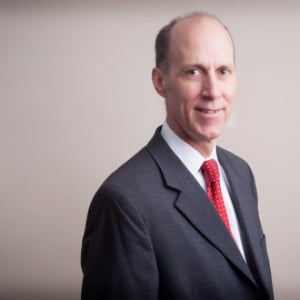
Distinguished Senior Fellow and Antonin Scalia Chair in Constitutional Studies, Ethics and Public Policy Center
Edward Whelan is a Distinguished Senior Fellow of the Ethics and Public Policy Center and holds EPPC’s Antonin Scalia Chair in Constitutional Studies. He is the longest-serving President in EPPC’s history, having held that position from March 2004 through January 2021.
Mr. Whelan directs EPPC’s program on The Constitution, the Courts, and the Culture. His areas of expertise include constitutional law and the judicial confirmation process. As a contributor to National Review Online’s Bench Memos blog, he has been a leading commentator on nominations to the Supreme Court and the lower courts and on issues of constitutional law. He has written essays and op-eds for leading newspapers—including the Wall Street Journal, the New York Times, and the Washington Post—opinion journals, and academic symposia and law reviews. The National Law Journal has named Mr. Whelan among its “Champions and Visionaries” in the practice of law in D.C.
Mr. Whelan is co-editor of three volumes of Supreme Court Justice Antonin Scalia’s work: Scalia Speaks: Reflections on Law, Faith, and Life Well Lived (Crown Forum, 2017), a New York Times bestselling collection of speeches by Justice Scalia; On Faith: Lessons from an American Believer (Crown Forum, 2019), a collection of Justice Scalia’s writings on faith and religion; and The Essential Scalia: On the Constitution, the Courts, and the Rule of Law (Crown Forum, 2020), a collection of Justice Scalia’s views on legal issues.
Mr. Whelan, a lawyer and a former law clerk to Justice Scalia, has served in positions of responsibility in all three branches of the federal government. From just before the terrorist attacks of September 11, 2001, until joining EPPC in 2004, Mr. Whelan was the Principal Deputy Assistant Attorney General for the Office of Legal Counsel in the U.S. Department of Justice. In that capacity, he advised the White House Counsel’s Office, the Attorney General and other senior DOJ officials, and departments and agencies throughout the executive branch on difficult and sensitive legal questions. Mr. Whelan previously served on Capitol Hill as General Counsel to the U.S. Senate Committee on the Judiciary. In addition to clerking for Justice Scalia, he was a law clerk to Judge J. Clifford Wallace of the U.S. Court of Appeals for the Ninth Circuit.
In 1981 Mr. Whelan graduated with honors from Harvard College and was inducted into Phi Beta Kappa. He received his J.D. magna cum laude in 1985 from Harvard Law School, where he was a member of the Board of Editors of the Harvard Law Review.
For more on Mr. Whelan’s background, see this interview.
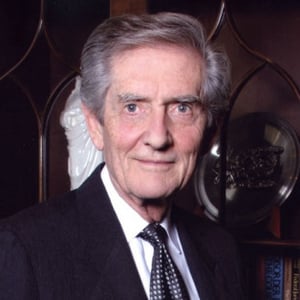
U.S. Court of Appeals, Ninth Circuit
Judge, U.S. District Court for the Southern District of California
Nominated by Richard M. Nixon on October 7, 1970, to a new seat authorized by 84 Stat. 294. Confirmed by the Senate on October 13, 1970, and received commission on October 16, 1970. Service terminated on July 14, 1972, due to appointment to another judicial position.
Judge, U.S. Court of Appeals for the Ninth Circuit
Nominated by Richard M. Nixon on May 22, 1972, to a seat vacated by James Marshall Carter. Confirmed by the Senate on June 28, 1972, and received commission on June 28, 1972. Served as chief judge, 1991-1996. Assumed senior status on April 8, 1996.
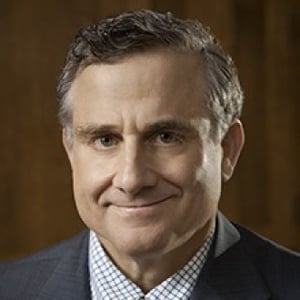
Sam Harris Professor of Corporate Law, Corporate Finance, and Securities Law, Yale Law School
Jonathan R. Macey is Sam Harris Professor of Corporate Law, Corporate Finance, and Securities Law at Yale University, and Professor in the Yale School of Management. From 1991 – 2004, Professor Macey was J. DuPratt White Professor of Law, Director of the John M. Olin Program in Law and Economics at Cornell Law School, and Professor of Law and Business at the Cornell University Johnson Graduate School of Business. Professor Macey earned his B.A. cum laude from Harvard in 1977, and his J.D. from Yale Law School in 1982, where he was Article and Book Review editor of The Yale Law Journal. In 1996, Professor Macey received a Ph.D. honoris causa from the Stockholm School of Economics. Following law school, Professor Macey was law clerk to Judge Henry J. Friendly on the U.S. Court of Appeals for the Second Circuit.
Professor Macey is the author of several books including the two-volume treatise, Macey on Corporation Laws, published in 1998 (Aspen Law & Business), and co-author of two leading casebooks, Corporations: Including Partnerships and Limited Liability Companies (2003 Thomson West), which is in its eighth edition, and Banking Law and Regulation (2002 Aspen Law & Business), which is now in its third edition. He also is the author of over 100 scholarly articles. His recent articles have appeared in the Banking Law Journal, the University of Chicago Law Review, the Stanford Law Review, The Yale Law Journal, the Cornell Law Review, the Journal of Law and Economics, and the Brookings Wharton Papers on Financial Institutions. He has published numerous editorials in such publications as The Wall Street Journal, Forbes, The Los Angeles Times, and The National Law Journal.
Professor Macey has taught at major universities throughout the world, including Bocconi University (Milan), the University of Tokyo; the University of Toronto; the University of Turin, the University of Amsterdam Department of Finance, and the Stockholm School of Economics, Department of Law. He also has been Professor of Law at the University of Chicago (1990) and Visiting Professor of Law at Harvard Law School (1999). Professor Macey is a Senior Research Fellow at the International Centre for Economic Research (ICER) in Turin, Italy. Professor Macey also serves on the Academic Advisory Board (Comitato Scientifico) of the Associazione Disiano Preite for the study of corporate law (per lo studio del diritto dell’impresa). In 1995, Professor Macey was awarded the Paul M. Bator prize for excellence in Teaching, Scholarship and Public Service by the Federalist Society for Law and Public Policy. In 1996, he received a Ph.D., honoris causa from the Stockholm School of Economics. And in 1998, he received the D.P. Jacobs prize for the most significant paper in volume 6 of the Journal of Financial Intermediation for his paper (co-authored with Maureen O’Hara), “The Law & Economics of Best Execution.”
In 1999 Professor Macey was made an honorary Fellow of the Society For Advanced Legal Studies. In 2000, Professor Macey became a member of the Legal Advisory Committee to the Board of Directors of the New York Stock Exchange. In 2001 Professor Macey was appointed a Bertil Daniellson Distinguished Visiting Professor in Banking and Finance at the Stockholm School of Economics. In 2002 Professor Macey was appointed to the Economic Advisory Board of the National Association of Securities Dealers (NASD). In 2004 Professor Macey was awarded a Teaching Award by the Yale Law Women in recognition of his “commitment to excellence in teaching, mentoring and inspiring.” In 2005 Professor Macey became a member of the Board of Editors of Thomson West Publishing Company.
U.S. Court of Appeals, Ninth Circuit
Judge, U.S. District Court for the Southern District of California
Nominated by Richard M. Nixon on October 7, 1970, to a new seat authorized by 84 Stat. 294. Confirmed by the Senate on October 13, 1970, and received commission on October 16, 1970. Service terminated on July 14, 1972, due to appointment to another judicial position.
Judge, U.S. Court of Appeals for the Ninth Circuit
Nominated by Richard M. Nixon on May 22, 1972, to a seat vacated by James Marshall Carter. Confirmed by the Senate on June 28, 1972, and received commission on June 28, 1972. Served as chief judge, 1991-1996. Assumed senior status on April 8, 1996.
U.S. Court of Appeals, Ninth Circuit
Judge, U.S. District Court for the Southern District of California
Nominated by Richard M. Nixon on October 7, 1970, to a new seat authorized by 84 Stat. 294. Confirmed by the Senate on October 13, 1970, and received commission on October 16, 1970. Service terminated on July 14, 1972, due to appointment to another judicial position.
Judge, U.S. Court of Appeals for the Ninth Circuit
Nominated by Richard M. Nixon on May 22, 1972, to a seat vacated by James Marshall Carter. Confirmed by the Senate on June 28, 1972, and received commission on June 28, 1972. Served as chief judge, 1991-1996. Assumed senior status on April 8, 1996.
U.S. Court of Appeals, Ninth Circuit
Judge, U.S. District Court for the Southern District of California
Nominated by Richard M. Nixon on October 7, 1970, to a new seat authorized by 84 Stat. 294. Confirmed by the Senate on October 13, 1970, and received commission on October 16, 1970. Service terminated on July 14, 1972, due to appointment to another judicial position.
Judge, U.S. Court of Appeals for the Ninth Circuit
Nominated by Richard M. Nixon on May 22, 1972, to a seat vacated by James Marshall Carter. Confirmed by the Senate on June 28, 1972, and received commission on June 28, 1972. Served as chief judge, 1991-1996. Assumed senior status on April 8, 1996.
U.S. Court of Appeals, Ninth Circuit
Judge, U.S. District Court for the Southern District of California
Nominated by Richard M. Nixon on October 7, 1970, to a new seat authorized by 84 Stat. 294. Confirmed by the Senate on October 13, 1970, and received commission on October 16, 1970. Service terminated on July 14, 1972, due to appointment to another judicial position.
Judge, U.S. Court of Appeals for the Ninth Circuit
Nominated by Richard M. Nixon on May 22, 1972, to a seat vacated by James Marshall Carter. Confirmed by the Senate on June 28, 1972, and received commission on June 28, 1972. Served as chief judge, 1991-1996. Assumed senior status on April 8, 1996.

Justice Scalia’s Legacy After 10 Years - OC
Orange County Lawyer Chapter
Irvine, CAThe Founders had a Better Interpretation of the Establishment Clause
Idaho Lawyers Chapter
Sun Valley, ID23rd Annual Siegan Award Dinner
San Diego, CaliforniaEd Whelan on the Supreme Court, the Scalia Vacancy, and the 2016 Elections
Palo Alto, CaliforniaAlways Right: Reflections on Justice Antonin Scalia
Hartford, ConnecticutInsider Trading
Yale Student Chapter
New Haven, CTWhat We Can Learn from the Losing Party in a Constitutional Election
California-Hastings Student Chapter
San Francisco, CAThe Founders' View of the Religion Clause: How High Is the Wall?
California-Davis Student Chapter
Davis, CAWhat Can We Learn From the Political Party that Lost the Adoption of the Constitution Election?
California-Berkeley Student Chapter
Berkeley, CAMarriage and Federalism – the Constitution, the Courts, and the Culture