
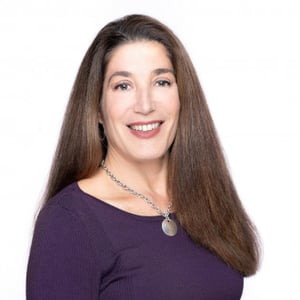
Director, Independent Women's Law Center, Independent Women's
Jennifer C. Braceras, a member of the Federalist Society Board of Visitors, is the director of Independent Women’s Law Center and a former member of the U.S. Commission on Civil Rights.
Ms. Braceras is a graduate of the Harvard Law School, where she served as an editor of the Law Review. After law school, she clerked for two federal judges and practiced labor and employment law with the Boston law firm Ropes & Gray.
A long time political columnist and editor, Ms. Braceras's writing has appeared in a variety of publications, including the Wall Street Journal, the Boston Globe, the Hill, and National Review Online. She co-hosts At the Bar, a bimonthly virtual happy hour discussion about issues at the intersection of law, politics, and culture.
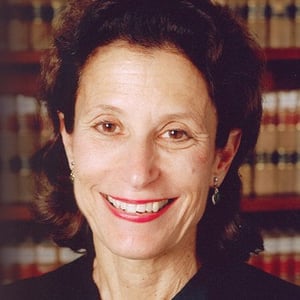
Former Associate Justice, Massachusetts Supreme Judicial Court
Judith Cathy Arnold Cowin is a retired justice of the Massachusetts Supreme Judicial Court. She was born in Boston. Cowin received her undergraduate degree from Wellesley College and her J.D. degree from Harvard Law School.
Senior Lecturer on Law, Harvard Law School
Nancy Gertner is a former U.S. federal judge who built her career around standing up for women’s rights, civil liberties and justice for all. Gertner was appointed to the federal bench of the U.S. District Court of Massachusetts by President Bill Clinton in 1994. She retired from the bench in 2011 to teach at Harvard Law School.
Named one of “The Most Influential Lawyers of the Past 25 Years” by Massachusetts Lawyers Weekly, Gertner has written and spoken throughout the U.S., Europe and Asia. She has published widely on sentencing, discrimination, and forensic evidence; women’s rights; and the jury system. Her autobiography, “In Defense of Women: Memoirs of an Unrepentant Advocate,” was published in 2011.
She is a graduate of Barnard College, Columbia University, and holds a M.A in Political Science and J.D. from Yale University. She has received numerous awards, including the Margaret Brent Award from the ABA commission on the status of Women, Massachusetts Bar Association’s Hennessey Award for judicial excellence in 2011; the Morton A. Brody Distinguished Judicial Service Award from Colby College in 2010; the National Association of Women Lawyers’ highest honor, the Arabella Babb Mansfield Award, in 2011,The Women's Bar Association's highest award, The Lelia Robinson Award, in 2012, and, in 2008, the Thurgood Marshall Award from the American Bar Association, Section of Individual Rights and Responsibilities, which recognized her contributions to advancing human rights and civil liberties. The Marshall award has been given to one other woman, Justice Ruth Ginsburg.
In November 2014, she gave the Pope and John lecture at Northwestern University. In October 2014, she was a resident scholar at the Rockefeller Foundation in Bellagio, Italy; In September she gave the keynote address at the 18th Anniversary Celebration of the Jewish Women’s archive (September 14, 2014).
Gertner is presently working on her second book, Incomplete Sentences, concerning the men who she sentenced over her 17 year career as a federal judge. In addition to writing about them, highlighting the unfairness and disproportionality of their sentences, she is assisting in clemency petitions where appropriate.
Drawing on her wide ranging experience in practice and as a judge, Gertner also consults and litigates in civil right cases (she is of counsel to Neufeld, Scheck & Brustin, a civil rights firm in New York City), white collar criminal case (she is of counsel to Fick and Marx, a white collar criminal defense firm in Boston), as well as in employment discrimination and false claims cases.
Drawing on her judicial experience, Gertner engages in mediation and arbitration with Resolutions, LLC. (with Eric Green) and the Southeast Regional Mediation, Arbitration and Compliance Association (with Bill Nettles and Paul Zwier).
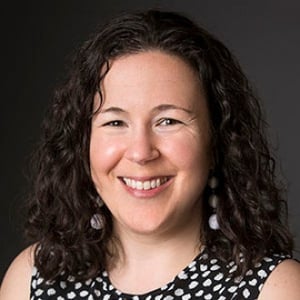
Attorney, Allen Harris Law
Samantha Harris is a nationally recognized attorney advising students and faculty on issues of campus due process, Title IX, free speech, and academic freedom. Drawing on more than 15 years at the Foundation for Individual Rights in Education (FIRE), where she served as Vice President for Policy Research, she guides students, faculty, administrators, and attorneys through complex disciplinary and constitutional issues involving free speech, fair hearings, and faculty-student rights.
A graduate of Princeton University and the University of Pennsylvania Law School (Articles Editor, Journal of Constitutional Law), Samantha clerked for the Hon. Jay C. Waldman in the U.S. District Court for the Eastern District of Pennsylvania and began her legal career at Pepper Hamilton LLP. At FIRE, she led efforts to reform campus policies and defended individuals in high-profile Title IX and free speech disputes.
Now at Allen Harris PLLC, a firm focused on Title IX and campus defense, Samantha represents students and professors in investigations, hearings, appeals, and related litigation. Samantha’s practice emphasizes strategic advocacy in campus disciplinary systems and litigation-ready defense in federal court. Her blend of policy experience, legal skill, and media visibility positions her as a leading resource for issues at the intersection of education law and constitutional rights.
U. S. District Court Judge, District of Massachusetts
Nominated by Barack H. Obama on November 30, 2011, to a seat vacated by Nancy Gertner; Confirmed by the Senate on June 4, 2012, and received commission on June 6, 2012.
U. S. Magistrate Judge, U. S. District Court for the District of Massachusetts, 2006-2012
Op-Ed Columnist, The Boston Globe
Jeff Jacoby, who has been a columnist for The Boston Globe since 1994, is a conservative writer with a national reputation.
A native of Cleveland, Jeff has degrees from George Washington University and from Boston University Law School. Before entering journalism, he (briefly) practiced law at the prominent firm of Baker & Hostetler, worked on several political campaigns in Massachusetts, and was an assistant to Dr. John Silber, the president of Boston University. In 1999, Jeff became the first recipient of the Breindel Prize, a major award for excellence in opinion journalism. In 2014, he was included in the “Forward 50,” a list of the most influential American Jews.
Author, Lawyer and Social Critic
Wendy Kaminer, a lawyer and social critic, writes about law, liberty, feminism, religion, and popular culture. Her latest book is Worst Instincts: Cowardice, Conformity and the ACLU, (Beacon Press.) A former Guggenheim fellow and recipient of the Smith College Medal, she is the author of seven previous books, including Free for All: Defending Liberty in America Today; Sleeping with Extra-Terrestrials: The Rise of Irrationalism and Perils of Piety; True Love Waits: Essays and Criticism; It’s All the Rage: Crime and Culture; I’m Dysfunctional, You’re Dysfunctional: The Recovery Movement & Other Self-Help Fashions; and A Fearful Freedom: Women’s Flight from Equality.
Her articles and reviews, dating back to the 1980s, have appeared in numerous publications including The New York Times, The Atlantic Monthly, The Wall Street Journal, The Village Voice, The American Prospect, Dissent, The Nation, The Wilson Quarterly, Free Inquiry, Slate.com, thefreeforall.net and spiked-online.com. Her commentaries have aired on National Public Radio.
Before embarking on her writing career, Ms. Kaminer briefly practiced law, as a criminal defense attorney for the New York Legal Aid Society and a staff attorney in the New York City Mayor's Office. Law has remained one of her primary subjects, and her writings on such apparently disparate topics as feminism, criminal justice, free speech, religion, spirituality, and popular culture are shaped by common concerns for liberty, individualism, ethics, and rationality. A former board member of the American Civil Liberties Union, Kaminer is an ardent civil libertarian and currently serves on the advisory boards of the Foundation for Individual Rights in Education and the Secular Coalition for America. She does not twitter.
Partner, McCarter & English, LLP
Daniel Kelly brings over thirty years of experience to the firm’s government contracts group. His practice combines both counseling and acting as an advocate on behalf of clients doing business in the government marketplace. Dan has knowledge of the government contracting process both on a federal and state level, and the specific laws, regulations, contract clauses and dispute resolution mechanisms in this specialized area. He provides advice and guidance to clients who are in the government supply chain, either as prime contractors, subcontractors or vendors. He reviews government solicitations with clients, prepares proposals, and negotiates teaming arrangements and subcontracts with other suppliers. He helps clients build and enhance their compliance programs. He assists clients in protecting their intellectual property and proprietary information concerning their businesses when doing business with the government. He advocates for clients who wrongfully were passed over for a contract award. He prepares claims arising under government contracts as a result of change orders, delays, and terminations for default or convenience. Dan’s practice extends to a broad spectrum of industries and federal and state authorities for whom they supply research, products and services, including emerging and established biomedical, intelligence, pharma, security, and textile R&D, manufacturing and production houses working under prime and subcontracts, SBIRs, CRADAs, OTAs, and grants for DoD and civilian agencies; Medicare and Medicaid audit and investigation service providers; commercial software developers who modify their software for military applications; professional services providers; and raw materials and component suppliers to large military prime contractors.
Dan is the author of the August 2018 edition Thomson Reuters’ Briefing Papers, which provides a comprehensive review of patent rights under “Other Transaction Agreements” (OTAs) with DoD and NASA. Heavily promoted by Congress, and only partially understood by industry, OTAs are quickly becoming DoD’s and NASA’s contractual vehicle of choice to lure commercial companies to sell the Government their latest and greatest technologies. However, OTAs are not governed by standard government contracts laws and regulations, meaning there are significant changes to the common provisions of ownership and license rights incident to government contracts and grants. The Briefing Paper should be required reading before entities enter into an OTA as a vehicle for developing new technologies for NASA and DoD to ensure their company’s intellectual property efforts are properly protected
In the matters, AdvanceMed Corporation, B-415360,B-415360.2,B-415360.3 (Dec 19, 2017), and AdvanceMed Corporation, B-414373.3 (Jan 10, 2018) Dan and the Government Contracts team at McCarter successfully defended its client Health Integrity, LLC (now Qlarant) against protests launched at the Government Accountability Office challenging awards by the Centers for Medicare and Medicaid Services (CMS) for Medicare and Medicaid audit and program integrity services.
Dan serves on the Board of Directors for NCMA Boston (National Contract Management Association) and NDIA New England (National Defense Industrial Association), and is a frequent speaker at NCMA and NDIA events.
Dan serves as an adjunct member of the faculty at Suffolk University Law School where he has taught Government Contracts.
Dan receives Mentor of the Year Award in recognition of his contributions and support to NCMA Boston Chapter’s 2017-2018 Program Year.
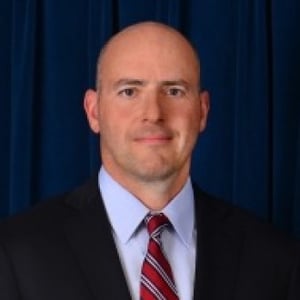
U.S. Attorney, District of Massachusetts
Before his appointment as U.S. Attorney for the District of Massachusetts, Andrew Lelling was a federal prosecutor for over 15 years, serving first in the Civil Rights Division at the Justice Department and later at the U.S. Attorney’s Offices for the Eastern District of Virginia and the District of Massachusetts.
During his time as a prosecutor in the District of Massachusetts, Mr. Lelling served as Senior Litigation Counsel and as an Assistant U.S. Attorney in the Economic Crimes Unit and on the Organized Crime and Drug Enforcement Task Force. He was the lead prosecutor in a number of complex fraud, immigration and international drug trafficking investigations including, most recently, the successful prosecution of one of the largest pyramid schemes ever charged by the Department of Justice, which involved over a million victims worldwide and losses of $3 billion. In addition, Mr. Lelling has prosecuted major drug trafficking organizations, domestic branches of Mexican drug cartels, and global drug traffickers based in Eastern Europe. In his role as the Senior Litigation Counsel, Mr. Lelling developed enforcement policy for criminal prosecutions and trained prosecutors and law enforcement officers on criminal practice.
Before serving as a federal prosecutor, Mr. Lelling was Counsel to the Assistant Attorney General for the Civil Rights Division, focusing on criminal civil rights enforcement, voting rights enforcement actions, and civil investigations of major city police departments. In this role, Mr. Lelling led the Department’s investigation of the 2000 Presidential election in Florida and negotiated human rights issues with the Chinese government. In addition, Mr. Lelling advised on the drafting of the USA PATRIOT Act in the wake of the September 11, 2001, terrorist attacks and led the Department’s task force for responding to backlash crimes.
Before joining the Justice Department, Mr. Lelling was a senior litigation associate at Goodwin Procter in Boston and a litigation associate at LeBoeuf, Lamb, Greene & MacRae in New York. He also clerked for the U.S. District Court Chief Judge B. Avant Edenfield in the Southern District of Georgia.
Mr. Lelling graduated cum laude from University of Pennsylvania Law School in 1994 and received a Bachelor of Arts in Literature & Rhetoric from Binghamton University in 1991. He is a member of the Federalist Society and a former member of the Boston Bar Journal’s Board of Editors.
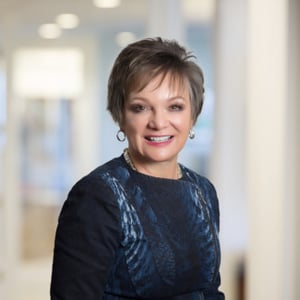
Practice Group Leader - Complex Trial & Appellate Litigation, Choate Hall & Stewart LLP
For more than thirty years, Joan Lukey has tried complex business litigation, employment and other cases in state and federal court in Massachusetts and New Hampshire and nationwide. She has tried approximately 100 jury trials and a myriad of bench trials and arbitrations in all aspects of business disputes. In addition, she is an accomplished appellate lawyer, having argued approximately 60 federal and state appeals.
Since 1983, Ms. Lukey has been selected by her peers for each edition of The Best Lawyers in America in the areas of business, bet-the-company, commercial, personal injury, employment and First Amendment litigation. She has also been routinely recognized for the last several years in Chambers USA and Chambers Global as a Band One Litigator.
Ms. Lukey is a past President of the prestigious American College of Trial Lawyers, the first woman ever to hold this position. Before joining Choate in 2014, she was a partner at Ropes & Gray in the Complex Business Litigation Practice Group from 2008 until 2014, after almost thirty years as a partner at WilmerHale. She has served twice as a Massachusetts Special Assistant Attorney General and has written extensively on issues of Gubernatorial and Presidential Executive Privilege.
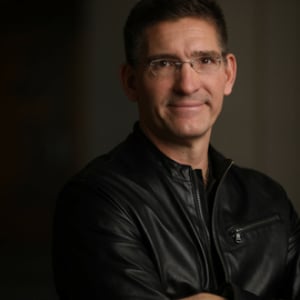
Founding Artistic Director, Commonwealth Shakespeare Company
Steven Maler is the Founding Artistic Director of Commonwealth Shakespeare Company (CSC). At CSC he has been directing Free Shakespeare on the Boston Common productions since 1996, including Love’s Labour’s Lost, King Lear, Twelfth Night, The Two Gentlemen of Verona, Coriolanus, All’s Well That Ends Well, Othello, The Comedy of Errors, As You Like It, A Midsummer Night’s Dream, The Taming of the Shrew, Hamlet, Much Ado About Nothing, Macbeth, Henry V, The Tempest, Julius Caesar, and Romeo & Juliet. In collaboration with Boston Landmarks Orchestra, he directed A Midsummer Night’s Dream, featuring the Overture and Incidental Music of Felix Mendelssohn, as well as concert stagings of The Boys from Syracuse and Kiss Me, Kate at Boston’s iconic Hatch Shell.
In a joint venture between CSC and Google, he most recently directed a Virtual Reality adaption of Hamlet entitled Hamlet 360: Thy Father’s Spirit, which is currently available for viewing on Boston public media producer WGBH’s YouTube channel.
Other CSC works include the critically acclaimed production of Ariel Dorfman’s Death and the Maiden, the world premiere of Jake Broder’s Our American Hamlet, and the world premiere of Robert Brustein’s The Last Will. He directed Peter Eötvös’s operatic treatment of Tony Kushner’s Angels in America (U.S. Premiere) and Thomas Adès’ Powder Her Face, The Turn of the Screw at New Repertory Theatre, Santaland Diaries and Chay Yew’s Porcelain at SpeakEasy Stage Company, Top Girls and Weldon Rising at Coyote Theatre, and The L.A. Plays by Han Ong at A.R.T. His New York City credits include the New York Musical Theatre Festival production of Without You, written by and starring Anthony Rapp. The production has been seen in Boston, Edinburgh, Toronto, London and Seoul.
He received the Elliot Norton Award for Sustained Excellence as well as for Best Production, Twelfth Night;Outstanding Director, A Midsummer Night’s Dream; Best Production, Suburbia; Best Solo Performance, John Kuntz’s Starf***ers (which also won Best Solo Performance Award at New York International Fringe Festival).
His feature film “The Autumn Heart”, starring Tyne Daly and Ally Sheedy, was in the Dramatic Competition at the Sundance Film Festival.
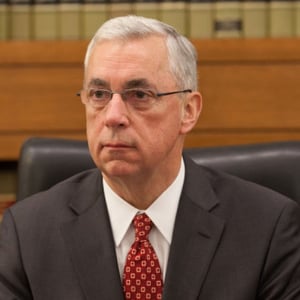
U.S. District Court Judge, District of Massachusetts
Nominated by William J. Clinton on April 4, 1995, to a new seat created by 104 Stat. 5089; Confirmed by the Senate on May 25, 1995, and received commission on May 26, 1995.
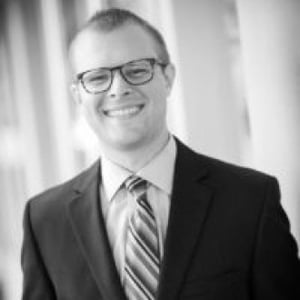
Associate Artistic Director, Commonwealth Shakespeare Company
Adam Sanders is the Associate Artistic Director at Commonwealth Shakespeare Company, theater-in-residence at Babson College. He serves as director of the Apprentice Program, and is the director and originator of CSC2, a cohort of early-career actors. Directing credits for CSC include: Romeo and Juliet, A Midsummer Night’s Dream, Julius Caesar (CSC2 Company), Symphonic Shakespeare, (in collaboration with Boston Landmarks Orchestra at the Boston Hatch Shell); co-director: Kiss Me Kate, A Midsummer Night’s Dream, and The Boys From Syracuse (also BLO/Hatch Shell collaborations), co-director/dramaturg: Shakespeare and Leadership (2013 – 2017), and CSCs unprecedented Shakespeare at Fenway performance in 2014; director: Shakespeare and the Law (2017). At Babson College, Adam is the Associate Director of the Sorenson Center for the Arts where he supports the artistic development of undergraduate students within a business focused curriculum. Adam holds a Master of Arts in theater education from Emerson College and is a Master of Business Administration candidate at Babson College.
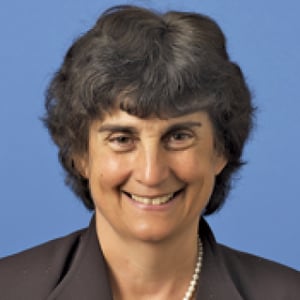
United States District Judge for the District of Massachusetts
Patti B. Saris is the Chief United States District Judge of the United States District Court for the District of Massachusetts. She is also the former Chair of the United States Sentencing Commission.
U.S. District Court Judge, District of Massachusetts
F. Dennis Saylor IV is a federal judge for the United States District Court for the District of Massachusetts. He joined the court in 2004 after being nominated by President George W. Bush. At the time of appointment, Saylor served as Special Counsel & Chief of Staff to the Assistant Attorney General in the Criminal Division of the U.S. Department of Justice in Washington, DC. Saylor also serves on the United States Foreign Intelligence Surveillance Court. His term runs from May 19, 2011 until May 18, 2018.
U.S. District Court Judge, District of Massachusetts
Douglas Preston Woodlock is a federal judge for the U.S. District Court for the District of Massachusetts. He joined the court in 1986 after being nominated by President Ronald Reagan. At the time of appointment, Woodlock served as Chairman of the Massachusetts Committee for Public Counsel Services.
U.S. District Court Judge, District of Massachusetts
Rya Weickert Zobel is a federal judge of the United States District Court for the District of Massachusetts. She joined the court in 1979 after being nominated by President Jimmy Carter. At the time of her appointment, Zobel was a private practice attorney inMassachusetts.
Contributing Editor, The Weekly Standard
Jay Cost is an elections analyst, political historian, and a contributing editor at The Weekly Standard. His most recent book is The Price of Greatness: Alexander Hamilton, James Madison, and the Creation of American Oligarchy.
He received a B.A. with High Distinction in government and history from the University of Virginia and an M.A. in political science from the University of Chicago. He resides in Pennsylvania with his wife and two children.

Vice President, Networks, The Federalist Society for Law and Public Policy Studies
Nathan Kaczmarek is Vice President for Networks at the Federalist Society. He began his legal career in Detroit representing nationwide clients in all phases of healthcare litigation and complex medical malpractice claims. He has since served as a Senior Legal and Policy Advisor in the U.S. House of Representatives and as Counsel for the Subcommittee on Regulatory Affairs and Federal Management in the U.S. Senate. Prior to overseeing the Networks, he was Director of the Practice Groups, the Regulatory Transparency Project, and the Article I Initiative for the Federalist Society.
Nathan holds degrees from Hillsdale College and Thomas M. Cooley Law School. He is a Liaison Representative for The Administrative Conference of the United States. He also serves as Vice President of the Associates of St. John Bosco, a Virginia based non-profit dedicated to Catholic high school and college students.
Former Congressman
Former Congressman Shays was first elected to the House of Representatives in the Connecticut General Assembly where he served from 1975 to 1987. He next served as a member of the United States House of Representatives and represented the 4th District of Connecticut from 1987 to 2009. During his 21 years in Congress, Congressman Shays served on the Government Reform Committee, Financial Services Committee, Budget Committee and the Homeland Security Committee.
Segal Family Professor of Regulatory Law and Policy, New York University School of Law
Rachel Barkow is the Segal Family Professor of Regulatory Law and Policy and the Faculty Director of the Center on the Administration of Criminal Law at NYU. In June of 2013, the Senate confirmed her as a Member of the United States Sentencing Commission. Since 2010, she has also been a member of the Manhattan District Attorney's Office Conviction Integrity Policy Advisory Panel.
Professor Barkow teaches courses in criminal law, administrative law, and constitutional law. In 2013, she was the recipient of the NYU Distinguished Teaching Award. The Law School awarded her its Podell Distinguished Teaching Award in 2007.
Her scholarship focuses on criminal law, and she is especially interested in applying the lessons and theory of administrative and constitutional law to the administration of criminal justice. She has written more than 20 articles that span a range of topics. She has written several articles on sentencing, including the relationship between modern sentencing laws and the constitutional role of the criminal jury; federalism and the politics of sentencing; the role of cost-benefit and risk tradeoff analysis in sentencing policy; what institutional model works for designing agencies that regulate criminal punishment; the political factors that lead to guideline and commission formation; and the flawed bifurcation between capital and noncapital constitutional sentencing jurisprudence. Professor Barkow has also explored in numerous articles the role of prosecutors in the criminal justice system. For example, she has analyzed how the lessons of institutional design from administrative law could improve the way prosecutors' offices are structured; she has looked to organizational guidelines and compliance programs as a model for prosecutorial oversight; and she has considered the increasing role of prosecutors as regulators through the conditions they place on corporations. Professor Barkow has also explored larger structural questions of how criminal justice is administered in the United States. In a series of major articles, she has explored the relationship between separation of powers and the criminal law and the relationship between federalism and the criminal law. Professor Barkow has also considered the role of mercy and clemency in criminal justice, paying particular attention to the relationship between administrative law's dominance and the increasing reluctance of scholars and experts to accept pockets of unreviewable discretion in criminal law.
Barkow has been invited to present her work in various settings. In the summer of 2009, Barkow testified before the House of Representatives Subcommittee on Commerce, Trade, and Consumer Protection regarding the institutional design of the proposed Consumer Financial Protection Agency. Barkow testified before the United States Sentencing Commission at a 2009 regional hearing on the 25th Anniversary of the Sentencing Reform Act. In the summer of 2004, Barkow testified before the Senate Judiciary Committee at a hearing on the future of the Federal Sentencing Guidelines. She has also presented her work on sentencing to the National Association of Sentencing Commissions Conference, the Federal Judicial Center's National Sentencing Policy Institute, and the Judicial Conference of the Courts of Appeals for the First and Seventh Circuits. In addition, Barkow has presented papers at numerous law schools.
After graduating from Northwestern University (B.A. 1993), Barkow attended Harvard Law School (J.D. 1996), where she won the Sears Prize, which is awarded annually to two students with the top overall grade averages in the first-year class. Barkow served as a law clerk to Judge Laurence H. Silberman on the District of Columbia Circuit, and Justice Antonin Scalia on the U.S. Supreme Court. Barkow was an associate at Kellogg, Huber, Hansen, Todd, Evans & Figel, PLLC, in Washington, D.C., from 1998-2002, where she focused on telecommunications and administrative law issues in proceedings before the FCC, state regulatory agencies, and federal and state courts. She took a leave from the firm in 2001 to serve as the John M. Olin Fellow in Law at Georgetown University Law Center.
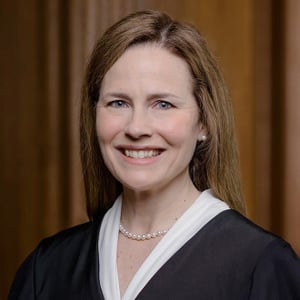
Associate Justice, United States Supreme Court
The Honorable Amy Coney Barrett is an Associate Justice of the Supreme Court of the United States. She was nominated by President Donald Trump and was confirmed on October 27, 2020. She is the fifth woman to serve on the Court.
Justice Barrett earned her J.D., summa cum laude, from Notre Dame, where she was a Kiley Fellow, earned the Hoynes Prize, the Law School’s highest honor, and served as executive editor of the Notre Dame Law Review. She clerked for Judge Laurence H. Silberman of the U.S. Court of Appeals for the D.C. Circuit and for Associate Justice Antonin Scalia of the U.S. Supreme Court. As an associate at Miller, Cassidy, Larroca & Lewin in Washington, D.C., she litigated constitutional, criminal, and commercial cases in both trial and appellate courts.
In 2002, Justice Barrett joined the faculty of Notre Dame Law School. She continued to teach following her appointment to the U.S. Court of Appeals for the Seventh Circuit in November 2017. Justice Barrett also served by appointment of the Chief Justice on the Advisory Committee for the Federal Rules of Appellate Procedure from 2010 to 2016.
Justice Barrett has published widely in the areas of federal courts, constitutional law, and statutory interpretation. Her scholarship in these fields has been published in leading journals, including the Columbia, Virginia, and Texas Law Reviews.
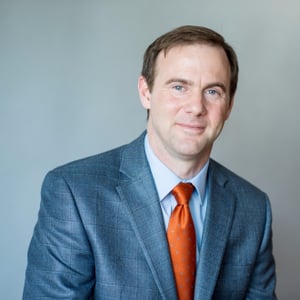
Author, Scalia Speaks: Reflections on Law, Faith, and Life Well Lived
Christopher J. Scalia is the eighth of Justice Scalia's nine children and a former professor of English. He works at a public relations firm near Washington, DC. His book reviews and political commentary have appeared in The Wall Street Journal, The Washington Post, The Weekly Standard, and elsewhere. He lives in Virginia with his wife and three children.

Chief Judge, United States Court of Appeals, Sixth Circuit
JEFFREY S. SUTTON is the Chief Judge of the United States Court of Appeals for the Sixth Circuit. He has served as Chair of the Federal Judicial Conference Committee on Rules of Practice and Procedure, Chair of the Advisory Committee on Appellate Rules, and Chair of the Supreme Court Fellows Commission. He currently serves as Chair of the Executive Committee of the Judicial Conference of the United States. Since 1993, Chief Judge Sutton has been an adjunct professor at The Ohio State University College of Law, where he teaches seminars on State Constitutional Law, the United States Supreme Court, and Appellate Advocacy. He also teaches a class on State Constitutional Law at Harvard Law School. Among other publications, he is the author of Who Decides? States as Laboratories of Constitutional Experimentation and 51 Imperfect Solutions: States and the Making of American Constitutional Law. He is the co-author of a casebook, State Constitutional Law: The Modern Experience, as well as The Law of Judicial Precedent. He is also the co-editor of The Essential Scalia: On the Constitution, the Courts, and the Rule of Law. In 2006, Chief Judge Sutton was elected to the American Law Institute, and in 2017 he was elected to its Council.

Distinguished Senior Fellow and Antonin Scalia Chair in Constitutional Studies, Ethics and Public Policy Center
Edward Whelan is a Distinguished Senior Fellow of the Ethics and Public Policy Center and holds EPPC’s Antonin Scalia Chair in Constitutional Studies. He is the longest-serving President in EPPC’s history, having held that position from March 2004 through January 2021.
Mr. Whelan directs EPPC’s program on The Constitution, the Courts, and the Culture. His areas of expertise include constitutional law and the judicial confirmation process. As a contributor to National Review Online’s Bench Memos blog, he has been a leading commentator on nominations to the Supreme Court and the lower courts and on issues of constitutional law. He has written essays and op-eds for leading newspapers—including the Wall Street Journal, the New York Times, and the Washington Post—opinion journals, and academic symposia and law reviews. The National Law Journal has named Mr. Whelan among its “Champions and Visionaries” in the practice of law in D.C.
Mr. Whelan is co-editor of three volumes of Supreme Court Justice Antonin Scalia’s work: Scalia Speaks: Reflections on Law, Faith, and Life Well Lived (Crown Forum, 2017), a New York Times bestselling collection of speeches by Justice Scalia; On Faith: Lessons from an American Believer (Crown Forum, 2019), a collection of Justice Scalia’s writings on faith and religion; and The Essential Scalia: On the Constitution, the Courts, and the Rule of Law (Crown Forum, 2020), a collection of Justice Scalia’s views on legal issues.
Mr. Whelan, a lawyer and a former law clerk to Justice Scalia, has served in positions of responsibility in all three branches of the federal government. From just before the terrorist attacks of September 11, 2001, until joining EPPC in 2004, Mr. Whelan was the Principal Deputy Assistant Attorney General for the Office of Legal Counsel in the U.S. Department of Justice. In that capacity, he advised the White House Counsel’s Office, the Attorney General and other senior DOJ officials, and departments and agencies throughout the executive branch on difficult and sensitive legal questions. Mr. Whelan previously served on Capitol Hill as General Counsel to the U.S. Senate Committee on the Judiciary. In addition to clerking for Justice Scalia, he was a law clerk to Judge J. Clifford Wallace of the U.S. Court of Appeals for the Ninth Circuit.
In 1981 Mr. Whelan graduated with honors from Harvard College and was inducted into Phi Beta Kappa. He received his J.D. magna cum laude in 1985 from Harvard Law School, where he was a member of the Board of Editors of the Harvard Law Review.
For more on Mr. Whelan’s background, see this interview.

Partner, Steptoe & Johnson LLP
Stewart Baker is a partner in the law firm of Steptoe & Johnson in Washington, D.C. From 2005 to 2009, he was the first Assistant Secretary for Policy at the Department of Homeland Security. His law practice covers cybersecurity, data protection, homeland security, and travel and foreign investment regulation; he has been awarded one patent.
Mr. Baker has been General Counsel of the National Security Agency and General Counsel of the commission that investigated WMD intelligence failures prior to the Iraq war. He is the author of Skating on Stilts, a book on terrorism, cybersecurity, and other technology issues; he also hosts the weekly Cyberlaw Podcast.
Counsel, Steptoe & Johnson LLP
Alan Cohn advises clients from a range of industries on cybersecurity, blockchain, and distributed ledger technology issues, and other national security and emerging technology issues. Mr. Cohn is co-chair of the firm’s Blockchain and Digital Currency practice. He serves as counsel to the Blockchain Alliance, a public-private forum established by a broad coalition of companies and organizations to help combat criminal activity on the blockchain, and advises companies and investors concerning a range of issues associated with the adoption and use of blockchain and distributed ledger technology. Mr. Cohn also coordinates the Coalition for Responsible Cybersecurity, which was formed by leading cybersecurity companies to prevent dual-use export control rules from harming defensive cybersecurity products, services, and technologies.
Prior to joining the firm, Mr. Cohn served in senior policy positions at the US Department of Homeland Security (DHS) for almost a decade, most recently as the assistant secretary for strategy, planning, analysis & risk and second-in-charge overall of the DHS Office of Policy. While at DHS, Mr. Cohn established the cyber policy office within the DHS Office of Policy, and helped shape department policy on issues such as cybersecurity information sharing, cybercrime and cyber-related sanctions, and cyber incident management. He also represented DHS on the Committee on Foreign Investments in the United States (CFIUS) and related national security review processes for foreign investments, acquisitions, and US license applications. Mr. Cohn also designed and led the first two Quadrennial Homeland Security Reviews—comprehensive year-long reviews of homeland security—and helped implement DHS Secretary Jeh Johnson’s Unity of Effort Initiative, a major corporate-level DHS governance, integration, and management reform effort.
Prior to government service, Mr. Cohn represented major corporations in federal and state court litigation, labor negotiations, and compliance matters involving federal agencies, including the US Department of Labor.

Executive Vice President, Chief Legal Officer, Gates Corporation
Matthew R. A. Heiman joined the Company in May 2026 and has served as the Company’s Chief Legal Officer and Corporate Secretary since June 2026. As Chief Legal Officer, Mr. Heiman is responsible for all legal functions for Gates, including securities and corporate governance, M&A, litigation, commercial, regulatory, compliance, patents and trademarks, real estate, employment and labor, sustainability and environmental matters. Prior to joining Gates, Mr. Heiman held senior legal leadership roles at Waystar, where he served as Chief Legal & Administrative Officer from 2023 to 2025 and as General Counsel and Corporate Secretary from 2020 to 2023. Prior to that, he was with Johnson Controls, where he served as Vice President, Corporate Secretary, and Associate General Counsel. Mr. Heiman has been a Senior Fellow for the National Security Institute at George Mason University’s Antonin Scalia School of Law since 2018.
Author, Scalia Speaks: Reflections on Law, Faith, and Life Well Lived
Christopher J. Scalia is the eighth of Justice Scalia's nine children and a former professor of English. He works at a public relations firm near Washington, DC. His book reviews and political commentary have appeared in The Wall Street Journal, The Washington Post, The Weekly Standard, and elsewhere. He lives in Virginia with his wife and three children.
Distinguished Senior Fellow and Antonin Scalia Chair in Constitutional Studies, Ethics and Public Policy Center
Edward Whelan is a Distinguished Senior Fellow of the Ethics and Public Policy Center and holds EPPC’s Antonin Scalia Chair in Constitutional Studies. He is the longest-serving President in EPPC’s history, having held that position from March 2004 through January 2021.
Mr. Whelan directs EPPC’s program on The Constitution, the Courts, and the Culture. His areas of expertise include constitutional law and the judicial confirmation process. As a contributor to National Review Online’s Bench Memos blog, he has been a leading commentator on nominations to the Supreme Court and the lower courts and on issues of constitutional law. He has written essays and op-eds for leading newspapers—including the Wall Street Journal, the New York Times, and the Washington Post—opinion journals, and academic symposia and law reviews. The National Law Journal has named Mr. Whelan among its “Champions and Visionaries” in the practice of law in D.C.
Mr. Whelan is co-editor of three volumes of Supreme Court Justice Antonin Scalia’s work: Scalia Speaks: Reflections on Law, Faith, and Life Well Lived (Crown Forum, 2017), a New York Times bestselling collection of speeches by Justice Scalia; On Faith: Lessons from an American Believer (Crown Forum, 2019), a collection of Justice Scalia’s writings on faith and religion; and The Essential Scalia: On the Constitution, the Courts, and the Rule of Law (Crown Forum, 2020), a collection of Justice Scalia’s views on legal issues.
Mr. Whelan, a lawyer and a former law clerk to Justice Scalia, has served in positions of responsibility in all three branches of the federal government. From just before the terrorist attacks of September 11, 2001, until joining EPPC in 2004, Mr. Whelan was the Principal Deputy Assistant Attorney General for the Office of Legal Counsel in the U.S. Department of Justice. In that capacity, he advised the White House Counsel’s Office, the Attorney General and other senior DOJ officials, and departments and agencies throughout the executive branch on difficult and sensitive legal questions. Mr. Whelan previously served on Capitol Hill as General Counsel to the U.S. Senate Committee on the Judiciary. In addition to clerking for Justice Scalia, he was a law clerk to Judge J. Clifford Wallace of the U.S. Court of Appeals for the Ninth Circuit.
In 1981 Mr. Whelan graduated with honors from Harvard College and was inducted into Phi Beta Kappa. He received his J.D. magna cum laude in 1985 from Harvard Law School, where he was a member of the Board of Editors of the Harvard Law Review.
For more on Mr. Whelan’s background, see this interview.
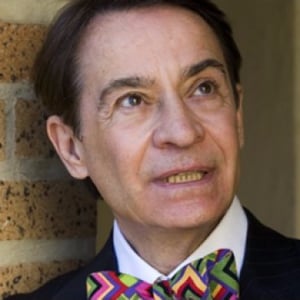
Doy & Dee Henley Chair and Distinguished Professor of Jurisprude, Chapman University Dale E. Fowler School of Law
Ronald D. Rotunda was the Doy & Dee Henley Chair and Distinguished Professor of Jurisprudence, at Chapman University, the Dale E. Fowler School of Law. He joined the faculty in 2008. Before that, he was University Professor and Professor of Law at George Mason University School of Law. From 2002 to 2006, he was the George Mason University Foundation Professor of Law. Before that, he was the Albert E. Jenner, Jr. Professor of Law, at the University of Illinois. He was a magna cum laude graduate of both Harvard College and Harvard Law School, where he was a member of Harvard Law Review. He joined the University of Illinois faculty in 1974 after clerking for Judge Walter R. Mansfield of the United States Court of Appeals for the Second Circuit, practicing law in Washington, D.C., and serving as assistant majority counsel for the Senate Watergate Committee. He has co-authored the most widely used course book on legal ethics, Problems and Materials on Professional Responsibility(Foundation Press, 12th ed. 2014) and was the author of a leading course book on constitutional law, Modern Constitutional Law (West Academic Co., 11th ed. 2015)(Abridged & Unabridged editions). He was the coauthor of, Legal Ethics: The Lawyer's Deskbook on Professional Responsibility (ABA- West/Thompson Reuters Publishing, St. Paul, Minnesota, 2016-2017 ed.) (Jointly published by the ABA and West/Thompson Reuters Publishing) (with John Dzienkowski). Rotunda also co-authored (with John Nowak) the six-volume Treatise on Constitutional Law (West/Thompson Reuters Publishing, 5th ed. 2012)(with annual updates), and a one volume Treatise on Constitutional Law (West Academic, 8th ed. 2010). He was also the author of several other books and more than 500 articles in various law reviews, journals, newspapers, and books in this country and abroad. His works have been translated into French, Portuguese German, Romanian, Czech, Russian, Japanese, and Korean. These books and articles have been cited more than 2000 times by law reviews, by state and federal courts at every level, from trial courts to the U.S. Supreme Court, and by foreign courts in Europe, Africa, Asia, and South America. He has been interviewed on radio and television on legal issues, both in this country and abroad. In 1993 he was the Constitutional Law Adviser to the Supreme National Council of Cambodia and assisted that country in writing its first democratic constitution. He has consulted with various new democracies in Eastern Europe and the former Soviet Union, including Moldova, Romania, and Ukraine, on their proposed constitutions and judicial codes. He chaired the subcommittee that drafted the American Bar Association's Model Rules for Lawyer Disciplinary Enforcement; was a member of the Publications Board of the A.B.A. Center for Professional Responsibility from 1994 to 2016; was a member of the A.B.A. Standing Committee on Professional Discipline (1991-1997); and was Liaison to the A.B.A. Standing Committee on Ethics and Professional Responsibility (1994-1997). He was a Fulbright Professor in Venezuela in 1986 and a Fulbright Research Scholar in Italy in 1981. In 1996 he assisted the Czech Republic in drafting the first Rules of Ethics for lawyers in that country. During the Spring, 1999 semester, he was Visiting Professor at the University of Alabama School of Law, holding the John S. Stone Endowed Chair of Law. During the summer and fall of 2000, he was the Visiting Senior Fellow in Constitutional Studies at the Cato Institute, in Washington, DC. In the fall of 2001, he was visiting professor at George Mason University School of Law. During November-December, 2002, he was Visiting Scholar, Katholieke Universiteit Leuven, Faculty of Law, Leuven, Belgium. In May, 2004, and December, 2005, he was visiting lecturer at the Institute of Law and Economics, Institut für Recht und Ökonomik, at the University of Hamburg. From early June 2004 to May 2005, he was the Special Counsel to the Department of Defense. He was on the Panel of Contributing Editors that produced, Black's Law Dictionary (West/Thompson Reuters Publishing, 8th ed. 2004; Thomson-Reuters, 10th ed. 2014). From 2005-2006, he was a member of the Task Force on Judicial Functions of the Commission on Virginia Courts in the 21st Century: To Benefit All, to Exclude None.
In May, 2000, American Law Media, publisher of The American Lawyer, the National Law Journal, and the Legal Times picked Professor Rotunda as one of the ten most influential Illinois Lawyers. Also in 2000, a lengthy study that the University of Chicago Press published, which sought to determine the influence, productivity, and reputations of law professors over the last several decades, listed Professor Rotunda as the 17th highest in the nation. The 2002-2003 New Educational Quality Ranking of U.S. Law Schools (EQR) [the last year for which such records are available] ranks Professor Rotunda as the eleventh most cited of all law faculty in the United States. Seehttp://www.leiterrankings.com/faculty/2002faculty_impact_cites.shtml.
In July, 2007, he was one of the main speakers at the International Judicial Conference hosted by the United States Embassy, the Supreme Court of Latvia, and the Latvian Ministry of Justice. The other main speakers were Justice Samuel Alito, the President of Latvia, the Prime Minister of Latvia, the Chief Justice of Latvia, and the Minister of Justice of Latvia. On February 27, 2008, President George W. Bush nominated Ronald D. Rotunda to become a member of the Privacy and Civil Liberties Oversight Board (PCLOB) for an initial four-year term and sent his nomination to the Senate Committee on Homeland Security and Governmental Affairs for confirmation hearings on the nominees. He was selected the Best Lawyer in Washington, DC, in 2009 in Ethics and Professional Responsibility Law, as published in November 2008 in the Washington Post in association with the Legal Times. When he moved to California, he was also selected as one of the Best Lawyers in Southern California, in 2009, 2010, 2011, 2012, 2013, 2014, 2015, 2016, 2017, also in Ethics and Professional Responsibility Law as published in the Los Angeles Times, U.S. News, and American Law Media. On June 17, 2009, he became a Commissioner of the Fair Political Practices Commission, a state regulatory agency (analogous to the Federal Election Commission) that is California's independent political watchdog. He served until January 31, 2013, when his term expired. In 2012, he became a Distinguished International Research Fellow at the World Engagement Institute, a non-profit, multidisciplinary and academically-based non-governmental organization with the mission to facilitate professional global engagement for international development and poverty reduction http://www.weinstitute.org/fellows.html. In 2012, Chapman University honored him with The Chapman University Excellence In Scholarly/Creative Work Award, 2011-2012. Since 2014, he has been a member of the Editorial Board of, The International Journal of Sustainable Human Security (IJSHS), a peer-reviewed publication of the World Engagement Institute (WEI). Rotunda was a Member of the Editorial Board of ABA's Journal of Legal Education (2014 to 2016).
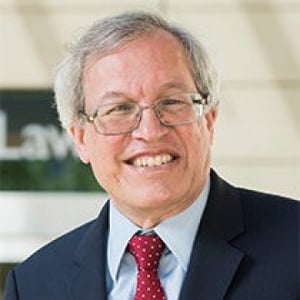
Dean and Jesse H. Choper Distinguished Professor of Law, UC Berkeley School of Law
Erwin Chemerinsky became the 13th Dean of Berkeley Law on July 1, 2017, when he joined the faculty as the Jesse H. Choper Distinguished Professor of Law.
Prior to assuming this position, from 2008-2017, he was the founding Dean and Distinguished Professor of Law, and Raymond Pryke Professor of First Amendment Law, at University of California, Irvine School of Law, with a joint appointment in Political Science. Before that he was the Alston and Bird Professor of Law and Political Science at Duke University from 2004-2008, and from 1983-2004 was a professor at the University of Southern California Law School, including as the Sydney M. Irmas Professor of Public Interest Law, Legal Ethics, and Political Science. He also has taught at DePaul College of Law and UCLA Law School.
He is the author of eleven books, including leading casebooks and treatises about constitutional law, criminal procedure, and federal jurisdiction. His most recent books are, We the People: A Progressive Reading of the Constitution for the Twenty-First Century (Picador Macmillan) published in November 2018, and two books published by Yale University Press in 2017, Closing the Courthouse Doors: How Your Constitutional Rights Became Unenforceable and Free Speech on Campus (with Howard Gillman).
He also is the author of more than 200 law review articles. He writes a regular column for the Sacramento Bee, monthly columns for the ABA Journal and the Daily Journal, and frequent op-eds in newspapers across the country. He frequently argues appellate cases, including in the United States Supreme Court.
In 2016, he was named a fellow of the American Academy of Arts and Sciences. In 2017, National Jurist magazine again named Dean Chemerinsky as the most influential person in legal education in the United States.
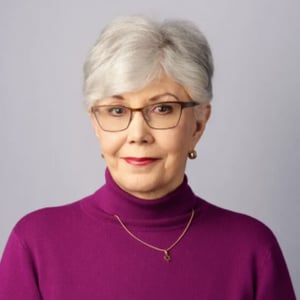
Chairman, Center for Equal Opportunity
Linda Chavez is Chairman of the Center for Equal Opportunity. She has published opinions and columns in newspapers across the country and appears regularly on cable news. Chavez is the author of the three books: Out of the Barrio: Toward a New Politics of Hispanic Assimilation, An Unlikely Conservative: The Transformation of an Ex-Liberal, and Betrayal: How Union Bosses Shake Down Their Members and Corrupt American Politics. She has been honored by the Library of Congress as a "Living Legend" and as nominee for Secretary of Labor by President George W. Bush.
Chavez has held many appointed positions and has served on numerous corporate and nonprofit boards. Among her appointed positions has been Chairman, National Commission on Migrant Education (1988-1992); White House Director of Public Liaison (1985); Staff Director of the U.S. Commission on Civil Rights (1983-1985); and member of the Administrative Conference of the United States (1984-1986). Chavez was also the Republican nominee for U.S. Senator from Maryland in 1986 and was elected by the United Nations' Human Rights Commission to serve a four-year term as U.S. Expert to the U.N. Sub-commission on the Prevention of Discrimination and Protection of Minorities.
Chavez earned her BA from the University of Colorado.
Co-chairman, Team America PAC, and President, Rocky Mountain Foundation
Tom Tancredo represented Colorado's 6th Congressional District from 1999 until 2009 where he chaired the 100+ member bipartisan Immigration Reform Caucus. He currently serves as co-chairman of Team America PAC and president of the Rocky Mountain Foundation. He authored "In Mortal Danger: The Battle for America's Border and Security".

Executive Vice President and Senior Counselor to the President, The Federalist Society for Law and Public Policy Studies
B.A., Yale; J.D., University of Chicago. Lee Liberman Otis is the Executive Vice President and Senior Counselor to the President at the Federalist Society. She also serves as a member of the American Law Institute (ALI), a senior fellow of the Administrative Conference (ACUS), and as the co-chair of the National Constitution Center's Coalition of Freedom Advisory Board. She previously was a special assistant and an Associate Deputy Attorney General at the U.S. Department of Justice, General Counsel of the Department of Energy, an associate in the appellate section of Jones, Day, Reavis & Pogue, an associate counsel to President George H.W. Bush, and a law clerk to Associate Justice Antonin Scalia. She also served as an assistant professor of law at George Mason, where she taught legislation, federal jurisdiction, constitutional law, civil procedure, and appellate advocacy. Ms. Otis has been an important member of the Federalist Society team since the organization’s beginnings. Together with David McIntosh, she led the effort to start what became the Chicago chapter of the Society. She also helped organize the Society’s first conference at Yale, its second conference at Chicago, and its first Lawyers Division chapter in Washington DC, as well as the effort to incorporate the Society, recruit its permanent staff, and obtain its early funding. She was a Founding Director of the Federalist Society.
Paul Hastings Distinguished Professor of Corporate and Securitie, UCLA School of Law
Professor Lynn A. Stout is the Paul Hastings Distinguished Professor of Corporate and Securities Law at the University of California, Los Angeles School of Law. Professor Stout is an internationally recognized expert in the fields of corporate governance, securities regulation, financial derivatives, law and economics, and moral behavior. She is the author of numerous articles and books on these topics and lectures widely. Her most recent book is Cultivating Conscience: How Good Laws Make Good People (Princeton University Press, 2011).
Professor Stout also serves as an Independent Trustee and as Chair of the Governance Committee for the Eaton Vance family of mutual funds; as a member of the Board of Advisors for the Aspen Institute’s Business & Society Program; and as a Research Fellow for the Gruter Institute for Law and Behavioral Research. She has also served as Principal Investigator for the UCLA-Sloan Foundation Research Program on Business Organizations; as a member of the Board of Directors of the American Law and Economics Association; as Chair of the American Association of Law Schools Section on Law and Economics; and as Chair of the American Association of Law Schools Section on Business Associations. Professor Stout has also taught at Harvard Law School, NYU Law School, Georgetown University Law School, and the George Washington University National Law Center, and served as a Guest Scholar at the Brookings Institution in Washington, DC. She holds a B.A. summa cum laude and a Masters in Public Affairs from Princeton University and a J.D. from the Yale Law School.
Dean and Alumni Centennial Professor, Florida State University College of Law
A recognized authority on partnerships, fiduciary duties, and real estate finance, Dean Weidner is co-author ofThe Revised Uniform Partnership Act(West Group, 2011). He also has recently written on academic freedom, the taxation of real estate transactions and organizations, and on the use of special purpose entities by large corporations to keep debt off their books. Dean Weidner teaches Property, Agency and Partnership, and Real Estate Finance.
A member of the American Law Institute and Reporter for the Uniform Partnership Act, he served as Dean of Florida State University College of Law from 1991-1997, as Interim Dean from 1998-2000, and as Dean from 2000-present. He has also served as a Visiting Professor at the law schools of University of Texas, University of New Mexico, Stanford University and University of North Carolina. He began his legal career at the New York firm of Willkie Farr & Gallagher. Dean Weidner is an honors graduate of University of Texas Law School, where he was project editor of theTexas Law Review.
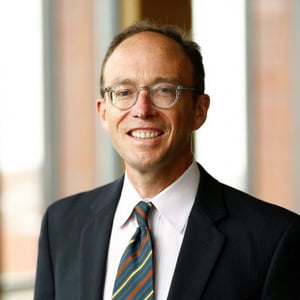
Professor of Legal Studies & Business Ethics, The Wharton School, The University of Pennsylvania
David Zaring’s scholarship addresses administrative and regulatory law from an international perspective. Professor Zaring comes to the business school from the Washington & Lee University School of Law. At Washington & Lee, he was an assistant professor and Alumni Faculty Fellow from 2005 to 2007. He had previously served as Acting Assistant Professor in the Lawyering Program at New York University School of Law from 2002 to 2005, and as a visiting professor at Vanderbilt Law School in the fall of 2007. After graduating magna cum laude from Harvard Law School, Professor Zaring clerked for Chief Judge William Matthew Byrne Jr. of the U.S. District Court for the Central District of California and then for Judge Judith Rogers on the US. Court of Appeals for the D.C. Circuit. He served as a trial attorney for the U.S. Department of Justice in the Federal Programs Branch of the Civil Division and as a special assistant to the General Counsel in the U.S. Department of Housing and Urban Development before entering the academy.

Associate Professor of Law, Antonin Scalia Law School, George Mason University
Associate Professor of Law J.W. Verret joined the Antonin Scalia Law School, George Mason University faculty in 2008. In 2013, he took leave for two years to serve as the Chief Economist and Senior Counsel for the U.S. House Committee on Financial Services. He received his JD and MA in Public Policy from Harvard Law School and the Harvard Kennedy School of Government, respectively, in 2006. While in law school, Professor Verret served an Olin Fellowship in Law and Economics at the Harvard Program on Corporate Governance under the guidance of Prof. Lucian Bebchuk.
Professor Verret then served as a law clerk for Vice-Chancellor John W. Noble of the Delaware Court of Chancery. Prior to joining the faculty at Scalia Law, Professor Verret was an associate in the SEC Enforcement Defense Practice Group at Skadden, Arps in Washington, D.C. He has written extensively on corporate law topics, including Delaware's Guidance, co-written with Chief Justice Myron T. Steele of the Delaware Supreme Court. His academic work has been featured in the Yale Journal on Regulation, The Business Lawyer, the Delaware Journal of Corporate Law, the Stanford Law Review, the University of Pennsylvania Journal of Business Law, and the Virginia Law and Business Review. Professor Verret was selected by the Northwestern Law School Searle Center on Law, Regulation, and Economic Growth for a 2009-2010 Searle-Kaufmann Research Fellowship.
Professor Verret is also a Senior Scholar at the Mercatus Center Working Group on Financial Markets, where he regularly briefs Congressional staff, members of Congress, SEC Commissioners and other financial regulatory agencies on financial regulation topics. He also directs the Corporate Federalism Initiative, where he obtains research grants for a network of students and faculty scholars who study the division between states and the federal government as sources of corporate law. Professor Verret has been invited to testify before various House and Senate Committees four times during the financial crisis of 2009 regarding all of the central provisions of the Obama Administration's 2009 financial regulatory reform proposals. For a full list of Professor Verret's C-Span appearances, including testimony before the U.S. House of Representatives and the U.S. Senate, see http://www.c-spanvideo.org/jwverret.
Professor Verret has been an invited panelist for various television appearances, including an interview on The NewsHour with Jim Lehrer. Professor Verret has been quoted in various media on financial regulation and corporate law topics, including the New York Times, CNN Money, the CNN Political Ticker, CNBC, ABC News, Investor's Business Daily, ESPN.com, The American Banker, The American Lawyer, The Huffington Post, CBS.com, and AP News. Professor Verret's op-eds have been featured in Forbes, The Chicago Tribune, The Orange County Register, and The Wall Street Journal. Professor Verret is also a regular guest contributor to three of the most noted corporate law and financial regulation law blogs: the Harvard Law School Corporate Governance and Financial Regulation Forum, Deallawyers.com, and The Conglomerate.
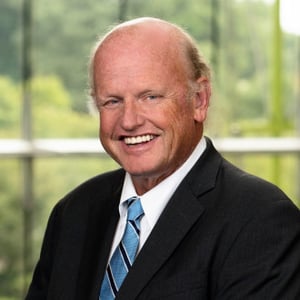
In his 35 years at the Justice Department and in private practice, Mike Carvin was one of the leading appellate and trial lawyers challenging state and federal regulations on constitutional and statutory grounds, with 10 Supreme Court arguments and numerous high-profile victories. In addition to his numerous cases in the United States Supreme Court, he argued in virtually every federal appeals court. His major cases include the recent constitutional challenge to the Affordable Care Act and the decisions invalidating Sarbanes-Oxley's accounting board, preventing the Justice Department from obtaining monetary relief against the tobacco industry under RICO, overturning the federal government's plan to statistically adjust the census, limiting the Justice Department's ability to create "majority-minority" districts, and upholding Proposition 209's ban on racial preferences in California.
Mike was one of the lead lawyers, and argued before the Florida Supreme Court, on behalf of George W. Bush in the 2000 presidential election Florida recount controversy. He also has represented state governments, financial institutions, telecommunications, and energy companies in "takings," First Amendment, civil rights, and statutory challenges to federal government actions.
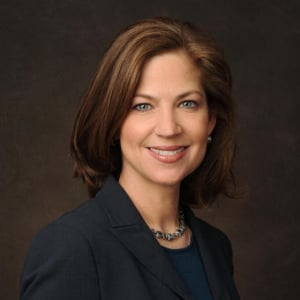
Chief Legal Correspondent, CBS News
Jan Crawford is CBS News' chief legal correspondent and contributes regularly to the "CBS Evening News," "CBS This Morning," and "Face the Nation," as well as CBS News Radio and CBSNews.com.
Crawford joined CBS News in October 2009. She had been a regular contributor to CBS News in 2005 to 2006.
Crawford is a recognized authority on the Supreme Court whose 2007 book, "Supreme Conflict: The Inside Story of the Struggle for the Control of the United States Supreme Court" (Penguin Press), gained critical acclaim and became an instant New York Times Bestseller. She began covering the Court in 1994 for the Chicago Tribune and went on to become a law and political correspondent for all ABC News programs, a Supreme Court analyst for The NewsHour With Jim Lehrer on PBS and a legal analyst for CBS News' "CBS Evening News" and "Face the Nation." She has reported on most of the major judicial appointments and confirmation hearings of the past 15 years and amassed crucial sources in the White House, the Justice Department and Congress along the way.
Chief Justice John Roberts granted his first network television interview to Crawford, just one of the rare interviews she was able to obtain with a total of five of the Court's current members, as well as retired Justice Sandra Day O'Connor. Crawford also sat down with then-86-year-old Justice John Paul Stevens in his first television interview, as well as Justices Clarence Thomas, Antonin Scalia and Stephen Breyer.
Crawford's in-depth reports on the Bush Administration's legal war on terror and her exclusive reports on controversial interrogation techniques used for terror suspects have received wide acclaim and been credited with being a catalyst for congressional hearings. Washingtonian Magazine named her one of Washington's top journalists.
Crawford began her journalistic career at the Tribune in 1987, joining the legal affairs beat in 1993, after her graduation from the University of Chicago Law School. The newspaper awarded Crawford its highest award in 2001, for her role on a team of reporters covering the presidential election of 2000, and the legal battles over the White House. She won the same prize for her 13-part series on the post-civil rights South, a project that brought her back to her native Alabama.
Crawford graduated from the University of Alabama in 1987. She has taught journalism at American University and frequently speaks about the Court to universities, law schools, legal organizations and civic groups across the country. She is a member of the New York Bar. She and her family live in Washington D.C.
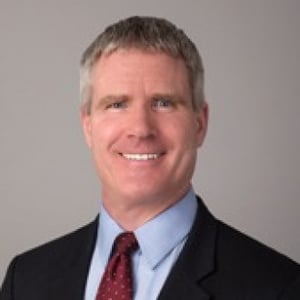
Partner, Gibson, Dunn & Crutcher LLP
Thomas G. Hungar is a partner in the Washington, D.C., office of Gibson Dunn. His practice focuses on appellate litigation, and he assists clients with congressional investigations and complex trial court litigation matters as well. He has presented oral argument before the Supreme Court of the United States in 28 cases, including some of the Court’s most important patent, antitrust, securities, and environmental law decisions, and he has also appeared before numerous lower federal and state courts.
Thomas served as General Counsel to the U.S. House of Representatives from July 2016 until January 2019. As General Counsel, he provided legal advice and litigation representation on a non-partisan basis to the House and its leadership, members, officers, and staff, and he worked closely with numerous House committees in connection with their oversight and investigative activities. Previously, he served as a Deputy Solicitor General of the United States. In that position, he supervised business-related appellate litigation for the federal government, with particular emphasis on patent, antitrust, securities, and environmental appellate cases, and he also oversaw appellate litigation in banking, bankruptcy, tax, government contracts, communications, copyright, labor, trademark, and international trade matters. In private practice, Thomas’s appellate experience has encompassed those areas as well as class actions, constitutional law, employment law, product liability, administrative procedure, insurance coverage and bad faith, and general commercial litigation. He has handled scores of business-related appeals in the Supreme Court and lower appellate courts, and has briefed and argued many high-profile matters.
Thomas is a Fellow of the American Academy of Appellate Lawyers and is a frequent lecturer in his areas of expertise. While at the Department of Justice, he served as Appellate Counsel to the Intellectual Property Task Force Executive Staff, and he was awarded the John Marshall Award for Outstanding Legal Achievement, the Department’s highest award presented to attorneys for contributions and excellence in legal performance, in recognition of his handling of patent-law matters before the Supreme Court.
Most recently, Thomas has garnered national recognition for his Appellate Practice in The Legal 500 – United States, Best Lawyers in America, and in Chambers USA, which has repeatedly highlighted Thomas for his “expertise in appellate litigation” and experience with employment and antitrust disputes, as well as Congressional Investigations. Thomas was also recently named a “Litigation Star” by Benchmark Litigation.
Thomas served as an Assistant to the Solicitor General of the United States from 1992-1994. He also served as a law clerk to Justice Anthony M. Kennedy of the Supreme Court and to Circuit Judge Alex Kozinski of the United States Court of Appeals for the Ninth Circuit. He received his law degree from Yale Law School in 1987, where he was a Senior Editor of the Yale Law & Policy Review. He received his Bachelor of Science degree magna cum laude in mathematics/computer science and economics from Willamette University in 1984.
Thomas is admitted to practice in the District of Columbia.

Partner, Millbank LLP
Mr. Katyal, the former Acting Solicitor General of the United States, focuses on appellate and complex litigation. He has argued 54 cases before the Supreme Court of the United States.
He has extensive experience in matters of antitrust, corporate, constitutional, securities, technology, criminal, patent, copyright, trademark, ERISA, products liability, labor, employment and tribal law. In the 2022-23 Supreme Court term, he argued five separate cases (nearly 10% of the docket), including winning the landmark voting case Moore v. Harper, which Judge Michael Luttig described as “the most important case for American democracy in the almost two and a half centuries since America’s founding.” Judge Luttig also said Mr. Katyal’s argument “was the single best oral argument I have ever heard made in the Supreme Court of the United States.” His cases include successfully striking down the Guantanamo military tribunals, successfully defending the constitutionality of the Voting Rights Act and successfully defending the Peace Cross in Maryland. His 2017 win in Bristol Myers Squibb v. Superior Court was a landmark victory for personal jurisdiction law and his 2006 win in Hamdan v. Rumsfeld was described by former Acting Solicitor General Walter Dellinger as “simply the most important decision on presidential power and the rule of law ever. Ever.”
From 2010 to 2011, Mr. Katyal served as Acting Solicitor General of the United States, where he argued several major Supreme Court cases involving a variety of issues, such as his successful defense of the constitutionality of the Voting Rights Act of 1965, his victorious defense of former Attorney General John Ashcroft for alleged abuses in the war on terror, his unanimous victory against eight states who sued the nation's leading power plants for contributing to global warming, and a variety of other matters. As Acting Solicitor General, he was responsible for representing the federal government of the United States in all appellate matters before the US Supreme Court and the Courts of Appeals throughout the nation. He served as Counsel of Record hundreds of times in the US Supreme Court. He was also the only head of the Solicitor General's office to argue a case in the US Court of Appeals for the Federal Circuit, on the important question of whether certain aspects of the human genome were patentable.
After graduating from Yale Law School, Mr. Katyal clerked for The Honorable Guido Calabresi of the US Court of Appeals for the Second Circuit as well as for The Honorable Justice Stephen G. Breyer of the US Supreme Court. He also served in the Deputy Attorney General's Office at the Justice Department as National Security Advisor and as Special Assistant to the Deputy Attorney General during 1998-1999.
Mr. Katyal is a best-selling New York Times author and has published dozens of scholarly articles in law journals (including several in the Harvard Law Review and Yale Law Journal), as well as many op-ed articles in publications such as the New York Times and the Washington Post. He has testified numerous times before various committees of both the US House of Representatives and the US Senate.

Professor of Law, Antonin Scalia Law School, George Mason University
Adam Mossoff is Professor of Law at Antonin Scalia Law School, George Mason University. He has published extensively on why patents, copyrights, and other intellectual property rights have been—and should be—legally secured to innovators and creators as property rights. His scholarship has been relied on by the United States Supreme Court, by lower federal courts, and by U.S. federal agencies. He has been invited to testify numerous times before the U.S. Senate and the House of Representatives on intellectual property legislation. His writings on intellectual property policy have also appeared in the Wall Street Journal, New York Times, Forbes, Investors Business Daily, and in other media outlets. His journal articles can be downloaded here.
Professor Mossoff is a longstanding member of the Executive Committee of the Intellectual Property Practice Group of the Federalist Society, on which he served as Chairperson from 2016-2018, and he is Chair of the Intellectual Property Working Group of the Regulatory Transparency Project of the Federalist Society. He is a Senior Fellow and Chair of the Forum for Intellectual Property at the Hudson Institute, a Visiting Intellectual Property Fellow at the Heritage Foundation, and a member of the Board of Directors of the Center for Intellectual Property Understanding. He is a member of the Intellectual Property Rights Policy Committee of ANSI and he has served as Chair and Vice-Chair of the Intellectual Property Committee of the IEEE-USA, on which he remains a member in good standing.
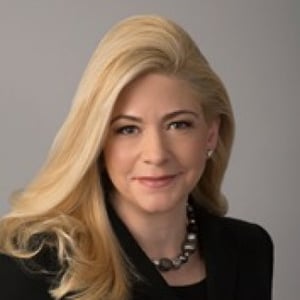
Partner, Gibson, Dunn & Crutcher LLP
Elizabeth Papez is a partner in the Washington, D.C. office of Gibson, Dunn & Crutcher LLP and a member of the firm’s litigation group. Her practice focuses on high-stakes class actions, complex commercial litigation, and related government investigations and appeals.
As a seasoned litigator and former U.S. Deputy Assistant Attorney General, Ms. Papez has substantial experience representing clients in the financial services, pharmaceutical, consumer, and product sectors. She regularly handles federal class actions, multidistrict litigation (MDLs) and other complex commercial disputes under federal and state antitrust statutes, banking and securities laws, and false claims acts, as well as parallel regulatory investigations with the U.S. Department of Justice (DOJ), the Securities and Exchange Commission (SEC), the Commodity Futures Trading Commission (CFTC), and the Food and Drug Administration (FDA).
Ms. Papez has been repeatedly recognized as one of Benchmark USA’s Top 250 Women in Litigation nationwide, which named her a “client favorite” who is “extremely smart and practical and very charismatic,” and is praised by peers as a “fierce, dynamic, bright, powerhouse of a litigator.” Ms. Papez is also recognized in The Legal 500 for her antitrust and appellate work, and by The Best Lawyers in America 2019 for her appellate practice.
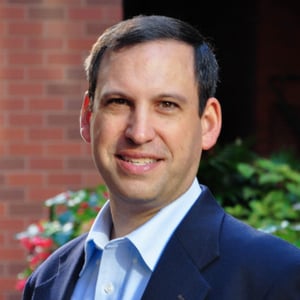
President, Becket Fund for Religious Liberty; Professor of Law and Co-Director of the Center for Religious Liberty, Catholic University; Visiting Professor, Harvard Law School
Mark joined the Becket team in 2011 and splits his time as Associate Professor at The Catholic University of America, Columbus School of Law, and as Visiting Professor at Harvard Law School. Mark teaches constitutional law, religious liberty, torts, and evidence. He has been voted Teacher of the Year three years in a row by the Law School’s Student Bar Association.
Mark has broad experience litigating First Amendment religious exercise and free speech cases. He has represented the winning parties in a variety of Supreme Court First Amendment cases including Hobby Lobby, Little Sisters, Wheaton College, and Holt. In January 2014, Mark argued before the Supreme Court in McCullen v. Coakley, a First Amendment challenge to a Massachusetts speech restriction outside of abortion clinics. The Justices ruled in favor of his clients 9-0. Mark also led a successful eight-year litigation battle against Governor Blagojevich’s effort to force religious pharmacists to distribute the morning-after and week-after pills.
Mark’s academic writing focuses on the First and Fourteenth Amendments, and has appeared in a variety of prestigious journals, including the Harvard Law Review.
Mark is a widely sought after speaker on constitutional issues, particularly concerning abortion and the First Amendment. Professor Rienzi has been invited to discuss these issues at Harvard Law School, Columbia University Law School, Georgetown University Law Center, Boston College Law School, Notre Dame Law School, the National Press Club, and the Capitol. He has been quoted on constitutional law issues on NPR, in the Washington Times, The New York Daily News, and the Chicago Sun-Times. Mark has also been featured on the Kelly File, Fox News Sunday, Your World with Neil Cavuto, Geraldo at Large, CNN Tonight, CNN Live, Andrea Mitchell Reports, and Wall Street Journal Live.
Prior to joining Becket, Mark served as counsel for the litigation department and the intellectual property litigation practice group of WilmerHale LLP. His practice focused on complex civil and appellate litigation with a particular emphasis on intellectual property and First Amendment issues. Prior to joining WilmerHale, he served as law clerk to the Hon. Stephen F. Williams, senior circuit judge for the U.S. Court of Appeals for the D.C. Circuit. Prior to that, Mark was an editor of the Harvard Law Review, and earned his J.D. from Harvard Law School and B.A. from Princeton University, both with honors.
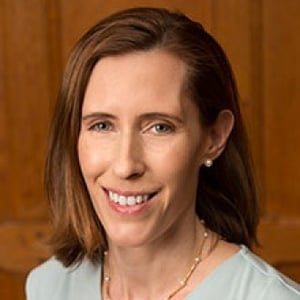
Gerard C. and Bernice Latrobe Smith Professor of International Law and Counselor to the Dean, Yale Law School
Oona A. Hathaway is the Gerard C. and Bernice Latrobe Smith Professor of International Law at Yale Law School, Professor of International Law and Area Studies at the Yale University MacMillan Center, Professor of the Yale University Department of Political Science, and Director of the Yale Law School Center for Global Legal Challenges. She is also Counselor to the Dean at Yale Law School. She has been a member of the Advisory Committee on International Law for the Legal Adviser at the United States Department of State since 2005. In 2014–15, she took leave to serve as Special Counsel to the General Counsel at the U.S. Department of Defense, where she was awarded the Office of the Secretary of Defense Award for Excellence. She is the Director of the annual Yale Cyber Leadership Forum. She has published more than 30 law review articles, and The Internationalists: How a Radical Plan to Outlaw War Remade the World (with Scott Shapiro, 2017).
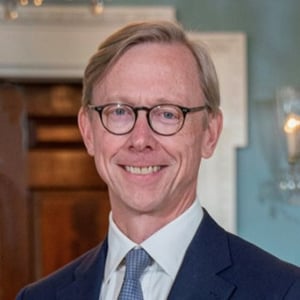
Founder, Latitude, LLC
Brian Hook is the founder of Latitude, LLC, an international strategic consulting firm based in Washington, DC.
Mr. Hook worked on the Romney campaign as senior advisor on foreign policy. He chaired the foreign policy and national security task forces of the Romney Readiness Project. From 2010-2011, he was the foreign policy director of Governor Tim Pawlenty’s presidential campaign.
Mr. Hook served in a number of positions during the Bush Administration, including Assistant Secretary of State for International Organizations; Senior Advisor to the U.S. Ambassador to the United Nations; Special Assistant to the President for Policy, Office of the Chief of Staff; and Counsel, Office of Legal Policy, at the Justice Department.
From 1999-2003, he practiced corporate law at Hogan & Hartson in Washington, D.C.
Before practicing law, he served as a policy advisor to Iowa Governor Terry Branstad and to U.S. Congressman James Leach.
Senior Counsel, The Constitution Project

Professor Emeritus of Law, Antonin Scalia Law School, George Mason University
Jeremy A. Rabkin is a Professor Emeritus of Law at the Antonin Scalia Law School, George Mason University. Before joining the faculty in June 2007, he was for over two decades a professor in the Department of Government at Cornell University. Professor Rabkin serves on the board of directors of the Center for Individual Rights, a public interest law firm based in Washington, D.C. Previously he was a board member of the U.S. Institute of Peace and the board of academic advisors of the American Enterprise Institute.
Professor Rabkin’s books include Law Without Nations? (Princeton University Press, 2005). He authored “If You Need a Friend, Don’t Call a Cosmopolitan,” a chapter in Varieties of Sovereignty and Citizenship (Sigal R. Ben-Porath & Rogers M. Smith eds., University of Pennsylvania Press, 2012). His articles have appeared in major law reviews and political science journals and his journalistic contributions in a range of magazines and newspapers, including the Washington Post and the Wall Street Journal.
Deputy Editorial Page Editor, Foreign Affairs Columnist, The Wall Street Journal
Bret Stephens writes “Global View,” the weekly foreign-affairs column of The Wall Street Journal, for which he won the 2013 Pulitzer Prize for distinguished commentary. He is the paper’s deputy editorial-page editor, responsible for the opinion content of its overseas editions, as well as a member of the editorial board. Previously, he was editor-in-chief of the Jerusalem Post, a position he assumed in 2002 at the age of 28. He was raised in Mexico City, educated at the University of Chicago and the London School of Economics, and lives with his family in New York.

Partner, Supreme Court Attorney, Cabinet Briard LLP
François-Henri Briard is a Knight of the Legion of Honor, an Officer of the National Order of Merit and a Knight of the Palmes Académiques.
He was a member of the Governing Board of the Bar of the French Supreme Courts (2003-2005).
François-Henri Briard was a trustee of Sarah Lawrence College in New York for eight years. He is President of the Institut Vergennes, a member of the U.S. Supreme Court Historical Society and an honorary member of the Society of the Cincinnati and of the Sons of the American Revolution. He is also an expert with the Federalist Society, a U.S. think tank that focuses on constitutional and judicial issues.
He is a member of the Institute of Consulting Tax Attorneys (IACF) and an associate member of the Academy of Moral Sciences, Letters and Arts of Versailles and Ile de France.
He is a member of the French Navy civilian reserve with the rank of frigate captain and has been awarded a medal by the voluntary military services. On behalf of the Firm, he received the Military Reserve Prize (2011).

Shakespeare and the Law 2019 - Belief and the Burden of Proof through the Lens of Six of the Bard's Plays
Jennifer C. Braceras, Judith A. Cowin, Nancy Gertner, Samantha Harris, Timothy Hillman, Jeff Jacoby, Wendy Kaminer, Daniel J. Kelly, Andrew E. Lelling, Joan Lukey, Steven Maler, George O'Toole, Adam Sanders, Patti B. Saris, Dennis Saylor IV, Douglas P. Woodlock, Rya W. Zobel
The Federalist Society, McCarter & English,and Commonwealth Shakespeare Company present Shakespeare and the Law 2019...
Congressional Redistricting: Gerrymandering and the People’s House
Jay Cost, Nathan Kaczmarek, Christopher Shays
Congressional redistricting is the process by which voter district boundaries are drawn for the election...
Special Session: Scalia Speaks: Reflections on Law, Faith, and Life Well Lived
Rachel Barkow, Amy Coney Barrett, Christopher J. Scalia, Jeffrey S. Sutton, Edward Whelan
Christopher J. Scalia and Edward Whelan have published a definitive collection of beloved Supreme Court...
Discussion on the Wassenaar Arrangement
Stewart A. Baker, Alan Cohn, Matthew R. A. Heiman
Should software be regulated like a military weapon? That’s the direction in which most Western...
Scalia Speaks: Reflections on Law, Faith, and Life Well Lived
Christopher J. Scalia, Edward Whelan
This definitive collection of beloved Supreme Court Justice Antonin Scalia's finest speeches covers topics as...
The Least Dangerous Branch? Reflections on Bickel’s Classic - Podcast
Ronald D. Rotunda, Erwin Chemerinsky, James A. Haynes
The Federalist Society's Teleforum series, Legal Classics Revisited, will consider Professor Alexander Bickel's 1962 book,...
Immigration Law and Policy - Podcast
Linda L. Chavez, Thomas G. Tancredo
Is there a way out of the morass on immigration policy that is consistent with...
Panel 1: The Sovereign Shareholder? Government Ownership and Corporate Law Post-Bailout
Lee Liberman Otis, Lynn A. Stout, Donald J. Weidner, David Zaring, J.W. Verret
The Federalist Society's Facutly Division hosted this panel on "The Sovereign Shareholder? Government Ownership and...
Supreme Court Preview: What Is in Store for October Term 2011?
Michael A. Carvin, Jan Crawford, Thomas G. Hungar, Neal K. Katyal, Adam Mossoff, Elizabeth P. Papez, Mark L. Rienzi
October 3rd marks the first day of the 2011 Supreme Court term. This term the...
International: International Law: Agreements Between Sovereigns or World Government?
Oona A. Hathaway, Brian H. Hook, Laura M. Olson, Jeremy A. Rabkin, Bret Stephens, François-Henri Briard
International law consists of reciprocal agreements on specific and limited matters. For the U.S., these...