
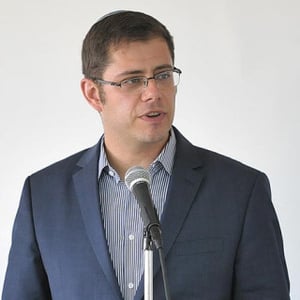
Professor of Law and Director, Center for the Middle East and International Law, George Mason University Antonin Scalia Law School
Professor of Law Eugene Kontorovich is one of the world’s preeminent experts on universal jurisdiction and maritime piracy, as well as international law and the Israel-Arab conflict. He is also the Director of Scalia Law School's Center for the Middle East and International Law. Professor Kontorovich joined the Scalia Law School from Northwestern University Pritzker School of Law where he was a Professor of Law from 2011 to 2018 and an Associate Professor from 2007 to 2011. Previously, he was a Visiting Professor at the University of Chicago from 2005 to 2007 and an Assistant Professor at George Mason School of Law from 2003 to 2007.
Professor Kontorovich has published over thirty major scholarly articles and book chapters in leading law reviews and peer-reviewed journals in the United States and Europe, including the American Journal of International Law, International Review of Law & Economics, Stanford Law Review, California Law Review, University of Pennsylvania Law Review, and Virginia Law Review. His scholarship has been cited in leading foreign relations and international law
His expertise is often sought out and quoted by major news organizations such the New York Times, Wall Street Journal, NPR News, The New Yorker, Los Angeles Times, and numerous television and radio programs. Prof. Kontorovich’s popular writings have appeared in the New York Times, Wall Street Journal, Los Angeles Times, POLITICO, Commentary, Haaretz, and numerous other leading publications. He is also a regular contributor to the Washington Post’s Volokh Conspiracy legal blog.
He attended the University of Chicago for college and law school. After law school, he clerked for Judge Richard Posner on the United States Court of Appeals for the Seventh Circuit. He has been honored with a fellowship at the Institute for Advanced Study in Princeton, in 2011-12, and with the Federalist Society’s prestigious Bator Award, given annually to a young scholar (under 40), for outstanding scholarship and teaching.
Professor of Law, Quinnipiac University School of Law
Stephen G. Gilles joined the Quinnipiac School of Law faculty in 1995. He teaches courses in tort, insurance, administrative, and advanced constitutional law and in law and economics. His research interests include tort law, especially negligence and strict liability, and constitutional law, especially parental and abortion rights. His recent publications include “The Judgment-Proof Society,” in the Washington & Lee Law Review and “Parental (and Grandparental) Rights after Troxel v Granville” in the Supreme Court Economic Review. Before joining the School of Law, he clerked for Judge Robert Bork and U.S. Supreme Court Justice Sandra Day O’Connor, practiced as an appellate litigator, and taught at the University of Chicago Law School. He is married and has six children.

Tad and Dianne Taube Senior Fellow, Hoover Institution, Stanford University; Former Director of Policy Planning Staff, U.S. Department of State
Peter Berkowitz is the Tad and Dianne Taube Senior Fellow at the Hoover Institution, Stanford University. From 2019-2021, he served as the Director of the State Department’s Policy Planning Staff, executive secretary of the department’s Commission on Unalienable Rights, and senior adviser to the Secretary of State. Peter studies and writes about, among other things, constitutional government, conservatism and progressivism, liberal education, national security and law, and Middle East politics. He is the author of Constitutional Conservatism: Liberty, Self-Government, and Political Moderation; Israel and the Struggle over the International Laws of War; Virtue and the Making of Modern Liberalism; and Nietzsche: The Ethics of an Immoralist. He has edited seven volumes on American politics and political institutions. He is a contributor at RealClearPolitics, and has written hundreds of essays, articles, and reviews on many subjects for a variety of publications, including the American Political Science Review, the Atlantic, the Chronicle of Higher Education, the Claremont Review of Books, Commentary, First Things, Haaretz, the Jerusalem Post, National Review, the New Republic, the New York Post, the New York Sun, PJ Media, Policy Review, the Public Interest, the Times Literary Supplement, the Wall Street Journal, the Washington Post, the Weekly Standard, the Wilson Quarterly, and the Yale Law Journal. Peter holds a JD and a PhD in political science from Yale University; an MA in philosophy from the Hebrew University of Jerusalem; and a BA in English literature from Swarthmore College.
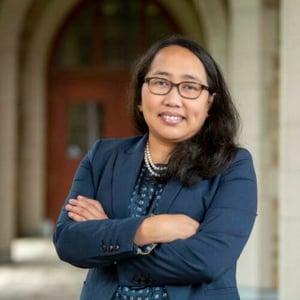
Professor of Law and Global Affairs Faculty Director, LL.M. in International Human Rights Law; Global Director, Notre Dame Law School Global Human Rights Clinic, Notre Dame Law School
Diane A. Desierto joined the Law School in January 2021 as Professor of Law and LL.M. Faculty Director, with a joint appointment at the Keough School of Global Affairs. Desierto teaches, publishes, and practices in the areas of international law and human rights, international economic law and development, international arbitration, maritime security, Association of Southeast Asian Nations (ASEAN) Law, and comparative public law. At Notre Dame, Desierto is a Faculty Fellow at the Klau Institute for Civil Human Rights, Kellogg Institute of International Studies, Liu Institute for Asia and Asian Studies, Pulte Institute for Global Development, and Nanovic Institute of European Studies. She is also Co-Principal Investigator of the Notre Dame Reparations Design and Compliance Lab.
Desierto is a Member and former Chair-Rapporteur of the Expert Group of the United Nations Working Group on the Right to Development, Resource Expert for the Association of Southeast Asian Nations (ASEAN), former Director of Studies and Faculty of the Hague Academy of International Law, President of the Friends of the Hague Academy Foundation, and the Philippines Focal Point for the International Criminal Court Bar Association. She is active as international counsel at matters successfully litigated at the Permanent Court of Arbitration, the UN Human Rights Committee, the Philippine Supreme Court and Southeast Asian agencies, and was appointed by the Philippine Supreme Court as Professor of International Law and Human Rights at the Philippines Judicial Academy. Desierto is a Member of the Editorial Boards of the European Journal of International Law (and Editor of its leading international law blog EJIL:Talk!), Journal of World Investment and Trade, and the Global Community Yearbook of International Law and Jurisprudence, and the Kluwer Law monograph series on Human Society and International Law, and also serves on the Scientific Advisory Boards of international journals such as International Law Studies, the Revista Chilena de Derecho, and the Indonesian Journal of International and Comparative Law. Desierto previously taught as tenure-track/tenured law faculty at the University of the Philippines, Peking University School of Transnational Law in China, and the University of Hawaii Richardson School of Law. She is a recipient of faculty fellowships awarded by Stanford University's Center for Advanced Studies in the Behavioral Sciences (CASBS) and the Stanford Center for Human Rights and International Justice, the Max Planck Institute for Comparative Public Law and International Law in Heidelberg, the Humboldt-Potsdam-Berlin Senior Fellowship, the East-West Center in Honolulu, the Grotius Fellowship at University of Michigan Law School, and the National University of Singapore's Asian Law Institute Fellowship. Desierto has served Visiting Professor appointments at the University of Paris-Nanterre X Faculty of Law, University of the Philippines College of Law Graduate Program at Bonifacio Global City, the University of Navarre Faculty of Law in Spain, and Universidad Panamericana Faculty of Law in Mexico City.
Desierto holds JSD and LLM degrees from Yale Law School, as well as JD cum laude class salutatorian and BSc Economics summa cum laude class valedictorian degrees from the University of the Philippines, and was a former Yale Law clerk at the International Court of Justice for H.E. Judges Bruno Simma and Bernardo Sepulveda-Amor. She authored and/or edited several books, such as Necessity and National Emergency Clauses: Sovereignty in Modern Treaty Interpretation (Martinus Nijhoff, 2012, recipient of the Ambrose Gherini Prize in International Law at Yale Law), Public Policy in International Economic Law: The ICESCR in Trade, Investment and Finance (Oxford University Press, 2015), ASEAN Law and Regional Integration: Governance and the Rule of Law in Southeast Asia's Single Market (with D. Cohen, Routledge, 2020), The International Legal System: Cases and Materials (8th Edition, with M.E. O'Connell, N. Roht-Arriaza, and D. Bradlow, 2022), as well as, to date, around 180 law review articles, book chapters, essays, and book reviews with leading international law journals and publishers in the United States, Europe, and Asia. She is a member of the Institute of Transnational Arbitration Academic Council, the UNCITRAL Academic Forum on Investor-State Dispute Settlement Reform, the 2019 Hague Rules on Business and Human Rights Arbitration Drafting Team, Co-Chair of the Oxford Investment Claims Summer Academy, and has been recognized repeatedly by Who's Who Legal as one of the Future Leaders in Arbitration. The 2020 ND Women Lead featured Desierto here.
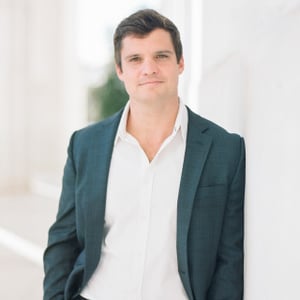
Managing Director, SCF Partners
Daniel G. West invests in energy services, equipment, and technology companies at SCF Partners in Houston, Texas. He provides equity capital and strategic growth assistance to entrepreneurs and leaders of both start-up ventures and established, growing businesses.
Prior to joining the private sector, Mr. West served as an infantry officer in the United States Marine Corps. As a platoon commander with the 22nd Marine Expeditionary Unit aboard the USS Mesa Verde, he led the Tactical Recovery of Aircraft and Personnel force in support of the NATO aerial campaign over Libya. He then served as executive officer of India Company, 3rd Battalion, 9th Marines as it mentored Afghan forces to assume lead security responsibility and executed counter-narcotics missions in Marjah, Helmand Province, Afghanistan. He also served as a clerk for Judge Laurence H. Silberman on the U.S. Court of Appeals for the D.C. Circuit.
Mr. West holds degrees in law, business administration, and economics from Harvard University, where he served as an editor of the Harvard Law Review and taught undergraduate courses in economics and government. He is a member of the Executive Committee of the International & National Security Law Practice Group of the Federalist Society and a term member of the Council on Foreign Relations.

Senior Fellow for Middle Eastern Studies, Council on Foreign Relations
Elliott Abrams is senior fellow for Middle Eastern studies at the Council on Foreign Relations (CFR) in Washington, DC. He served as deputy assistant to the president and deputy national security advisor in the administration of President George W. Bush, where he supervised U.S. policy in the Middle East for the White House, and as Special Representative for Iran and Venezuela in the administration of Donald Trump.
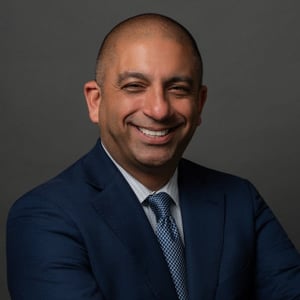
Founder and Executive Director, National Security Institute; Assistant Professor of Law, Antonin Scalia Law School, George Mason University
Jamil N. Jaffer is the Founder and Executive Director of the National Security Institute at the Antonin Scalia Law School at George Mason University where he also serves as an Assistant Professor of Law, Director of the National Security Law and Policy Program, and Director of the Cyber, Intelligence, and National Security LLM Program. Jamil also teaches classes on counterterrorism, intelligence, surveillance, cybersecurity, and other national security matters, as well as a summer course held abroad with U.S. Supreme Court Justice Neil M. Gorsuch. Jamil is also affiliated with Stanford University’s Center for International Security and Cooperation and previously served as a Visiting Fellow at the Hoover Institution from 2016 to 2019.
Jamil is also a Venture Partner with Paladin Capital Group, where he assists the firm with investments across the full range of its themes and theses, including a focus on dual-use national security technologies. Jamil also serves on the board of directors of RangeForce, a cybersecurity training and readiness platform startup and Tozny, a digital identity startup, and on the advisory boards of U.S. Strategic Metals, North America’s largest primary producer of cobalt, a critical mineral used in EV batteries, aerospace, and other national security applications; and Constella Intelligence, a deep and dark web intelligence startup. Jamil also serves as an advisor to Beacon Global Strategies, a strategic advisory firm and Duco, a technology platform startup that connects corporations with geopolitical and international business experts. Jamil is also the managing director of Trigraph Caveat Capital, a private investment vehicle.
Among other things, Jamil currently serves on the Board of Directors for the Greater Washington Board of Trade, the Board of Advisors for the Global Cyber Alliance, and the Advisory Board of the Foundation for the Defense of Democracies’ Center on Cyber and Tech Innovation, the Executive Committee of the Reagan Institute Strategy Group. Jamil is also a Fellow at the Academy for Judaic, Christian, and Islamic Studies, an advisor to the Concordia Summit, and is a member of the Board of Directors for the Center for Intelligence Policy, the Board of Directors of Speech First, and the Executive Committee of the International Law and National Security Practice Group of the Federalist Society.
Immediately prior to his current positions, from 2015-2021, Jamil served as a senior business leader at IronNet Cybersecurity, helping take the company from a bootstrapped first-year technology products startup through two rounds of venture capital fundraising, growing from 40 employees to over 300, and through its listing on New York Stock Exchange. In his role as IronNet's Senior Vice President for Strategy, Partnerships & Corporate Development, Jamil worked directly for the co-CEOs of the company, Gen (ret.) Keith B. Alexander, the former Director of the National Security Agency and Founding Commander of U.S. Cyber Command, and Bill Welch, the former COO of Zscaler and Duo; in that role, Jamil led all of the company’s strategic and technology partnership efforts, including developing go-to-market and technology integration plans with some of the largest cloud platforms and cybersecurity companies in the market, evaluating potential acquisition targets, and developing overall corporate strategy and thought leadership around collective security and collaborative defense in the cyber arena.
Prior to his time at IronNet, Jamil served on the leadership team of the Senate Foreign Relations Committee as Chief Counsel and Senior Advisor under Chairman Bob Corker (R-TN), where he worked on key national security and foreign policy issues, including leading the drafting of the proposed Authorization for the Use of Military Force against ISIS in 2014 and 2015, the AUMF against Syria in 2013, and revisions to the 9/11 AUMF against al Qaeda. Jamil was also the lead architect of the Iran Nuclear Agreement Review Act and two sanctions laws against Russia for its first intervention in Ukraine.
Prior to joining SFRC, Jamil served as Senior Counsel to the House Permanent Select Committee on Intelligence under Chairman Mike Rogers (R-MI) where he led the committee’s oversight of NSA surveillance, NRO intelligence issues, and NGA analytic and collection matters, as well as intelligence community-wide counterterrorism issues. Jamil was also the lead architect of the Cyber Intelligence Sharing and Protection Act, the nation’s first cyber threat intelligence sharing legislation that was signed into law in 2015.
In the Bush Administration, Jamil served in the White House as an Associate Counsel to the President, handling Defense Department, State Department, and intelligence community matters, and serving as one of the White House Counsel’s primary representatives to the National Security Council Deputies Committee.
Prior to the White House, Jamil served on the leadership team of the Justice Department’s National Security Division as Counsel to the Assistant Attorney General for National Security, where he focused on counterterrorism and intelligence matters. At NSD, Jamil helped lead the division’s work on In re: Directives, the first ever two-party litigated matter in the FISA Court and the second case before the FISA Court of Review in its 30-year history. Jamil also led NSD’s efforts on the President’s Comprehensive National Cybersecurity Initiative (CNCI), including the drafting of NSPD-54/HSPD-23, and related classified matters, and advised the National Security Agency (NSA) and U.S. Cyber Command’s predecessor organization, the Joint Function Component Command for Network Warfare (JFCC-NW), on matters related to cyber intelligence collection and offensive cyber activities. For his work on these matters, Jamil was awarded the Assistant Attorney General’s Award for Special Initiative and was among the group of lawyers awarded the Director of National Intelligence’s 2008 Legal Award (Team of the Year – Cyber Legal).
Jamil also served in other positions in the Justice Department, including in the Office of Legal Policy, where he worked on the confirmations of Chief Justice John G. Roberts, Jr. and Justice Samuel A. Alito, Jr. to the United States Supreme Court.
Jamil also served as a lawyer in private practice at Kellogg Huber, a Washington, DC-based litigation boutique, as a policy advisor to Congressman Bob Goodlatte (R-VA), and as a staff member or senior advisor on a number of political campaigns, including two presidential campaigns and a presidential transition team. While in law school, Jamil was a member of the University of Chicago Law Review, managing editor of the Chicago Journal of International Law, and National Symposium Editor of the Harvard Journal of Law & Public Policy. Following law school, Jamil served as a law clerk to Judge Edith H. Jones of the United States Court of Appeals for the Fifth Circuit and, later in his career, as a law clerk to then-Judge Neil M. Gorsuch when he first joined the United States Court of Appeals for the Tenth Circuit as well as a law clerk to Justice Neil Gorsuch when he joined the U.S. Supreme Court.
Jamil has published multiple op-eds and academic articles on national security, foreign policy, cybersecurity, counterterrorism, encryption, and intelligence matters, and is the co-author of a book chapter with former NSA Director Gen. (Ret.) Keith B. Alexander on national security and the press in National Security, Leaks, and the Freedom of the Press: The Pentagon Papers Fifty Years On (2021) and a book chapter with former CIA Director Gen. (ret.) Mike Hayden on ISIS, al Qaeda, and other international terrorist groups in Choosing to Lead: American Foreign Policy for a Disordered World (2015). Jamil has also written book chapters on cybersecurity and surveillance, as well as op-eds and policy papers with former Attorney General Michael B. Mukasey, former National Counterterrorism Center Director Matt Olsen, and Congressman Mike Waltz (R-FL), among others.
Jamil has previously taught graduate-level courses in intelligence law and policy at George Washington University’s Elliott School of International Affairs and the National Intelligence University, served an outside advisor to the Cyberspace Solarium Commission, and has recently testified before committees of the U.S. Senate and House of Representatives on China, cybersecurity, counterterrorism, and other national security matters. Jamil has also recently appeared on a range of national television and radio outlets including CNN, Fox News, Fox Business, MSNBC, Bloomberg, PBS, Voice of America, and National Public Radio, and in various print and online publications, including the Wall Street Journal, New York Times, and the Washington Post on a range of national security matters including cybersecurity, counterterrorism, surveillance, encryption, privacy, and foreign policy issues.
Jamil holds degrees from UCLA (BA, cum laude), the University of Chicago Law School (JD, with honors), and the United States Naval War College (MA, with distinction).

Senior Fellow for U.S. Foreign Policy, Middle East Institute
Brian Katulis is Senior Fellow for US Foreign Policy at the Middle East Institute. He was formerly a senior fellow at the Center for American Progress (CAP), where he built the Center’s Middle East program and also worked on broader issues related to U.S. national security.
He has produced influential studies that have shaped important discussions around regional policy, often providing expert testimony to key congressional committees on his findings. Katulis has also conducted extensive research in countries such as Egypt, Israel, Jordan, and the Palestinian territories. His past experience includes work at the National Security Council and the U.S. Departments of State and Defense.
Tad and Dianne Taube Senior Fellow, Hoover Institution, Stanford University; Former Director of Policy Planning Staff, U.S. Department of State
Peter Berkowitz is the Tad and Dianne Taube Senior Fellow at the Hoover Institution, Stanford University. From 2019-2021, he served as the Director of the State Department’s Policy Planning Staff, executive secretary of the department’s Commission on Unalienable Rights, and senior adviser to the Secretary of State. Peter studies and writes about, among other things, constitutional government, conservatism and progressivism, liberal education, national security and law, and Middle East politics. He is the author of Constitutional Conservatism: Liberty, Self-Government, and Political Moderation; Israel and the Struggle over the International Laws of War; Virtue and the Making of Modern Liberalism; and Nietzsche: The Ethics of an Immoralist. He has edited seven volumes on American politics and political institutions. He is a contributor at RealClearPolitics, and has written hundreds of essays, articles, and reviews on many subjects for a variety of publications, including the American Political Science Review, the Atlantic, the Chronicle of Higher Education, the Claremont Review of Books, Commentary, First Things, Haaretz, the Jerusalem Post, National Review, the New Republic, the New York Post, the New York Sun, PJ Media, Policy Review, the Public Interest, the Times Literary Supplement, the Wall Street Journal, the Washington Post, the Weekly Standard, the Wilson Quarterly, and the Yale Law Journal. Peter holds a JD and a PhD in political science from Yale University; an MA in philosophy from the Hebrew University of Jerusalem; and a BA in English literature from Swarthmore College.
Professor of Law and Global Affairs Faculty Director, LL.M. in International Human Rights Law; Global Director, Notre Dame Law School Global Human Rights Clinic, Notre Dame Law School
Diane A. Desierto joined the Law School in January 2021 as Professor of Law and LL.M. Faculty Director, with a joint appointment at the Keough School of Global Affairs. Desierto teaches, publishes, and practices in the areas of international law and human rights, international economic law and development, international arbitration, maritime security, Association of Southeast Asian Nations (ASEAN) Law, and comparative public law. At Notre Dame, Desierto is a Faculty Fellow at the Klau Institute for Civil Human Rights, Kellogg Institute of International Studies, Liu Institute for Asia and Asian Studies, Pulte Institute for Global Development, and Nanovic Institute of European Studies. She is also Co-Principal Investigator of the Notre Dame Reparations Design and Compliance Lab.
Desierto is a Member and former Chair-Rapporteur of the Expert Group of the United Nations Working Group on the Right to Development, Resource Expert for the Association of Southeast Asian Nations (ASEAN), former Director of Studies and Faculty of the Hague Academy of International Law, President of the Friends of the Hague Academy Foundation, and the Philippines Focal Point for the International Criminal Court Bar Association. She is active as international counsel at matters successfully litigated at the Permanent Court of Arbitration, the UN Human Rights Committee, the Philippine Supreme Court and Southeast Asian agencies, and was appointed by the Philippine Supreme Court as Professor of International Law and Human Rights at the Philippines Judicial Academy. Desierto is a Member of the Editorial Boards of the European Journal of International Law (and Editor of its leading international law blog EJIL:Talk!), Journal of World Investment and Trade, and the Global Community Yearbook of International Law and Jurisprudence, and the Kluwer Law monograph series on Human Society and International Law, and also serves on the Scientific Advisory Boards of international journals such as International Law Studies, the Revista Chilena de Derecho, and the Indonesian Journal of International and Comparative Law. Desierto previously taught as tenure-track/tenured law faculty at the University of the Philippines, Peking University School of Transnational Law in China, and the University of Hawaii Richardson School of Law. She is a recipient of faculty fellowships awarded by Stanford University's Center for Advanced Studies in the Behavioral Sciences (CASBS) and the Stanford Center for Human Rights and International Justice, the Max Planck Institute for Comparative Public Law and International Law in Heidelberg, the Humboldt-Potsdam-Berlin Senior Fellowship, the East-West Center in Honolulu, the Grotius Fellowship at University of Michigan Law School, and the National University of Singapore's Asian Law Institute Fellowship. Desierto has served Visiting Professor appointments at the University of Paris-Nanterre X Faculty of Law, University of the Philippines College of Law Graduate Program at Bonifacio Global City, the University of Navarre Faculty of Law in Spain, and Universidad Panamericana Faculty of Law in Mexico City.
Desierto holds JSD and LLM degrees from Yale Law School, as well as JD cum laude class salutatorian and BSc Economics summa cum laude class valedictorian degrees from the University of the Philippines, and was a former Yale Law clerk at the International Court of Justice for H.E. Judges Bruno Simma and Bernardo Sepulveda-Amor. She authored and/or edited several books, such as Necessity and National Emergency Clauses: Sovereignty in Modern Treaty Interpretation (Martinus Nijhoff, 2012, recipient of the Ambrose Gherini Prize in International Law at Yale Law), Public Policy in International Economic Law: The ICESCR in Trade, Investment and Finance (Oxford University Press, 2015), ASEAN Law and Regional Integration: Governance and the Rule of Law in Southeast Asia's Single Market (with D. Cohen, Routledge, 2020), The International Legal System: Cases and Materials (8th Edition, with M.E. O'Connell, N. Roht-Arriaza, and D. Bradlow, 2022), as well as, to date, around 180 law review articles, book chapters, essays, and book reviews with leading international law journals and publishers in the United States, Europe, and Asia. She is a member of the Institute of Transnational Arbitration Academic Council, the UNCITRAL Academic Forum on Investor-State Dispute Settlement Reform, the 2019 Hague Rules on Business and Human Rights Arbitration Drafting Team, Co-Chair of the Oxford Investment Claims Summer Academy, and has been recognized repeatedly by Who's Who Legal as one of the Future Leaders in Arbitration. The 2020 ND Women Lead featured Desierto here.
Managing Director, SCF Partners
Daniel G. West invests in energy services, equipment, and technology companies at SCF Partners in Houston, Texas. He provides equity capital and strategic growth assistance to entrepreneurs and leaders of both start-up ventures and established, growing businesses.
Prior to joining the private sector, Mr. West served as an infantry officer in the United States Marine Corps. As a platoon commander with the 22nd Marine Expeditionary Unit aboard the USS Mesa Verde, he led the Tactical Recovery of Aircraft and Personnel force in support of the NATO aerial campaign over Libya. He then served as executive officer of India Company, 3rd Battalion, 9th Marines as it mentored Afghan forces to assume lead security responsibility and executed counter-narcotics missions in Marjah, Helmand Province, Afghanistan. He also served as a clerk for Judge Laurence H. Silberman on the U.S. Court of Appeals for the D.C. Circuit.
Mr. West holds degrees in law, business administration, and economics from Harvard University, where he served as an editor of the Harvard Law Review and taught undergraduate courses in economics and government. He is a member of the Executive Committee of the International & National Security Law Practice Group of the Federalist Society and a term member of the Council on Foreign Relations.
Tad and Dianne Taube Senior Fellow, Hoover Institution, Stanford University; Former Director of Policy Planning Staff, U.S. Department of State
Peter Berkowitz is the Tad and Dianne Taube Senior Fellow at the Hoover Institution, Stanford University. From 2019-2021, he served as the Director of the State Department’s Policy Planning Staff, executive secretary of the department’s Commission on Unalienable Rights, and senior adviser to the Secretary of State. Peter studies and writes about, among other things, constitutional government, conservatism and progressivism, liberal education, national security and law, and Middle East politics. He is the author of Constitutional Conservatism: Liberty, Self-Government, and Political Moderation; Israel and the Struggle over the International Laws of War; Virtue and the Making of Modern Liberalism; and Nietzsche: The Ethics of an Immoralist. He has edited seven volumes on American politics and political institutions. He is a contributor at RealClearPolitics, and has written hundreds of essays, articles, and reviews on many subjects for a variety of publications, including the American Political Science Review, the Atlantic, the Chronicle of Higher Education, the Claremont Review of Books, Commentary, First Things, Haaretz, the Jerusalem Post, National Review, the New Republic, the New York Post, the New York Sun, PJ Media, Policy Review, the Public Interest, the Times Literary Supplement, the Wall Street Journal, the Washington Post, the Weekly Standard, the Wilson Quarterly, and the Yale Law Journal. Peter holds a JD and a PhD in political science from Yale University; an MA in philosophy from the Hebrew University of Jerusalem; and a BA in English literature from Swarthmore College.
Professor of Law and Global Affairs Faculty Director, LL.M. in International Human Rights Law; Global Director, Notre Dame Law School Global Human Rights Clinic, Notre Dame Law School
Diane A. Desierto joined the Law School in January 2021 as Professor of Law and LL.M. Faculty Director, with a joint appointment at the Keough School of Global Affairs. Desierto teaches, publishes, and practices in the areas of international law and human rights, international economic law and development, international arbitration, maritime security, Association of Southeast Asian Nations (ASEAN) Law, and comparative public law. At Notre Dame, Desierto is a Faculty Fellow at the Klau Institute for Civil Human Rights, Kellogg Institute of International Studies, Liu Institute for Asia and Asian Studies, Pulte Institute for Global Development, and Nanovic Institute of European Studies. She is also Co-Principal Investigator of the Notre Dame Reparations Design and Compliance Lab.
Desierto is a Member and former Chair-Rapporteur of the Expert Group of the United Nations Working Group on the Right to Development, Resource Expert for the Association of Southeast Asian Nations (ASEAN), former Director of Studies and Faculty of the Hague Academy of International Law, President of the Friends of the Hague Academy Foundation, and the Philippines Focal Point for the International Criminal Court Bar Association. She is active as international counsel at matters successfully litigated at the Permanent Court of Arbitration, the UN Human Rights Committee, the Philippine Supreme Court and Southeast Asian agencies, and was appointed by the Philippine Supreme Court as Professor of International Law and Human Rights at the Philippines Judicial Academy. Desierto is a Member of the Editorial Boards of the European Journal of International Law (and Editor of its leading international law blog EJIL:Talk!), Journal of World Investment and Trade, and the Global Community Yearbook of International Law and Jurisprudence, and the Kluwer Law monograph series on Human Society and International Law, and also serves on the Scientific Advisory Boards of international journals such as International Law Studies, the Revista Chilena de Derecho, and the Indonesian Journal of International and Comparative Law. Desierto previously taught as tenure-track/tenured law faculty at the University of the Philippines, Peking University School of Transnational Law in China, and the University of Hawaii Richardson School of Law. She is a recipient of faculty fellowships awarded by Stanford University's Center for Advanced Studies in the Behavioral Sciences (CASBS) and the Stanford Center for Human Rights and International Justice, the Max Planck Institute for Comparative Public Law and International Law in Heidelberg, the Humboldt-Potsdam-Berlin Senior Fellowship, the East-West Center in Honolulu, the Grotius Fellowship at University of Michigan Law School, and the National University of Singapore's Asian Law Institute Fellowship. Desierto has served Visiting Professor appointments at the University of Paris-Nanterre X Faculty of Law, University of the Philippines College of Law Graduate Program at Bonifacio Global City, the University of Navarre Faculty of Law in Spain, and Universidad Panamericana Faculty of Law in Mexico City.
Desierto holds JSD and LLM degrees from Yale Law School, as well as JD cum laude class salutatorian and BSc Economics summa cum laude class valedictorian degrees from the University of the Philippines, and was a former Yale Law clerk at the International Court of Justice for H.E. Judges Bruno Simma and Bernardo Sepulveda-Amor. She authored and/or edited several books, such as Necessity and National Emergency Clauses: Sovereignty in Modern Treaty Interpretation (Martinus Nijhoff, 2012, recipient of the Ambrose Gherini Prize in International Law at Yale Law), Public Policy in International Economic Law: The ICESCR in Trade, Investment and Finance (Oxford University Press, 2015), ASEAN Law and Regional Integration: Governance and the Rule of Law in Southeast Asia's Single Market (with D. Cohen, Routledge, 2020), The International Legal System: Cases and Materials (8th Edition, with M.E. O'Connell, N. Roht-Arriaza, and D. Bradlow, 2022), as well as, to date, around 180 law review articles, book chapters, essays, and book reviews with leading international law journals and publishers in the United States, Europe, and Asia. She is a member of the Institute of Transnational Arbitration Academic Council, the UNCITRAL Academic Forum on Investor-State Dispute Settlement Reform, the 2019 Hague Rules on Business and Human Rights Arbitration Drafting Team, Co-Chair of the Oxford Investment Claims Summer Academy, and has been recognized repeatedly by Who's Who Legal as one of the Future Leaders in Arbitration. The 2020 ND Women Lead featured Desierto here.
Managing Director, SCF Partners
Daniel G. West invests in energy services, equipment, and technology companies at SCF Partners in Houston, Texas. He provides equity capital and strategic growth assistance to entrepreneurs and leaders of both start-up ventures and established, growing businesses.
Prior to joining the private sector, Mr. West served as an infantry officer in the United States Marine Corps. As a platoon commander with the 22nd Marine Expeditionary Unit aboard the USS Mesa Verde, he led the Tactical Recovery of Aircraft and Personnel force in support of the NATO aerial campaign over Libya. He then served as executive officer of India Company, 3rd Battalion, 9th Marines as it mentored Afghan forces to assume lead security responsibility and executed counter-narcotics missions in Marjah, Helmand Province, Afghanistan. He also served as a clerk for Judge Laurence H. Silberman on the U.S. Court of Appeals for the D.C. Circuit.
Mr. West holds degrees in law, business administration, and economics from Harvard University, where he served as an editor of the Harvard Law Review and taught undergraduate courses in economics and government. He is a member of the Executive Committee of the International & National Security Law Practice Group of the Federalist Society and a term member of the Council on Foreign Relations.
Senior Fellow for Middle Eastern Studies, Council on Foreign Relations
Elliott Abrams is senior fellow for Middle Eastern studies at the Council on Foreign Relations (CFR) in Washington, DC. He served as deputy assistant to the president and deputy national security advisor in the administration of President George W. Bush, where he supervised U.S. policy in the Middle East for the White House, and as Special Representative for Iran and Venezuela in the administration of Donald Trump.
Founder and Executive Director, National Security Institute; Assistant Professor of Law, Antonin Scalia Law School, George Mason University
Jamil N. Jaffer is the Founder and Executive Director of the National Security Institute at the Antonin Scalia Law School at George Mason University where he also serves as an Assistant Professor of Law, Director of the National Security Law and Policy Program, and Director of the Cyber, Intelligence, and National Security LLM Program. Jamil also teaches classes on counterterrorism, intelligence, surveillance, cybersecurity, and other national security matters, as well as a summer course held abroad with U.S. Supreme Court Justice Neil M. Gorsuch. Jamil is also affiliated with Stanford University’s Center for International Security and Cooperation and previously served as a Visiting Fellow at the Hoover Institution from 2016 to 2019.
Jamil is also a Venture Partner with Paladin Capital Group, where he assists the firm with investments across the full range of its themes and theses, including a focus on dual-use national security technologies. Jamil also serves on the board of directors of RangeForce, a cybersecurity training and readiness platform startup and Tozny, a digital identity startup, and on the advisory boards of U.S. Strategic Metals, North America’s largest primary producer of cobalt, a critical mineral used in EV batteries, aerospace, and other national security applications; and Constella Intelligence, a deep and dark web intelligence startup. Jamil also serves as an advisor to Beacon Global Strategies, a strategic advisory firm and Duco, a technology platform startup that connects corporations with geopolitical and international business experts. Jamil is also the managing director of Trigraph Caveat Capital, a private investment vehicle.
Among other things, Jamil currently serves on the Board of Directors for the Greater Washington Board of Trade, the Board of Advisors for the Global Cyber Alliance, and the Advisory Board of the Foundation for the Defense of Democracies’ Center on Cyber and Tech Innovation, the Executive Committee of the Reagan Institute Strategy Group. Jamil is also a Fellow at the Academy for Judaic, Christian, and Islamic Studies, an advisor to the Concordia Summit, and is a member of the Board of Directors for the Center for Intelligence Policy, the Board of Directors of Speech First, and the Executive Committee of the International Law and National Security Practice Group of the Federalist Society.
Immediately prior to his current positions, from 2015-2021, Jamil served as a senior business leader at IronNet Cybersecurity, helping take the company from a bootstrapped first-year technology products startup through two rounds of venture capital fundraising, growing from 40 employees to over 300, and through its listing on New York Stock Exchange. In his role as IronNet's Senior Vice President for Strategy, Partnerships & Corporate Development, Jamil worked directly for the co-CEOs of the company, Gen (ret.) Keith B. Alexander, the former Director of the National Security Agency and Founding Commander of U.S. Cyber Command, and Bill Welch, the former COO of Zscaler and Duo; in that role, Jamil led all of the company’s strategic and technology partnership efforts, including developing go-to-market and technology integration plans with some of the largest cloud platforms and cybersecurity companies in the market, evaluating potential acquisition targets, and developing overall corporate strategy and thought leadership around collective security and collaborative defense in the cyber arena.
Prior to his time at IronNet, Jamil served on the leadership team of the Senate Foreign Relations Committee as Chief Counsel and Senior Advisor under Chairman Bob Corker (R-TN), where he worked on key national security and foreign policy issues, including leading the drafting of the proposed Authorization for the Use of Military Force against ISIS in 2014 and 2015, the AUMF against Syria in 2013, and revisions to the 9/11 AUMF against al Qaeda. Jamil was also the lead architect of the Iran Nuclear Agreement Review Act and two sanctions laws against Russia for its first intervention in Ukraine.
Prior to joining SFRC, Jamil served as Senior Counsel to the House Permanent Select Committee on Intelligence under Chairman Mike Rogers (R-MI) where he led the committee’s oversight of NSA surveillance, NRO intelligence issues, and NGA analytic and collection matters, as well as intelligence community-wide counterterrorism issues. Jamil was also the lead architect of the Cyber Intelligence Sharing and Protection Act, the nation’s first cyber threat intelligence sharing legislation that was signed into law in 2015.
In the Bush Administration, Jamil served in the White House as an Associate Counsel to the President, handling Defense Department, State Department, and intelligence community matters, and serving as one of the White House Counsel’s primary representatives to the National Security Council Deputies Committee.
Prior to the White House, Jamil served on the leadership team of the Justice Department’s National Security Division as Counsel to the Assistant Attorney General for National Security, where he focused on counterterrorism and intelligence matters. At NSD, Jamil helped lead the division’s work on In re: Directives, the first ever two-party litigated matter in the FISA Court and the second case before the FISA Court of Review in its 30-year history. Jamil also led NSD’s efforts on the President’s Comprehensive National Cybersecurity Initiative (CNCI), including the drafting of NSPD-54/HSPD-23, and related classified matters, and advised the National Security Agency (NSA) and U.S. Cyber Command’s predecessor organization, the Joint Function Component Command for Network Warfare (JFCC-NW), on matters related to cyber intelligence collection and offensive cyber activities. For his work on these matters, Jamil was awarded the Assistant Attorney General’s Award for Special Initiative and was among the group of lawyers awarded the Director of National Intelligence’s 2008 Legal Award (Team of the Year – Cyber Legal).
Jamil also served in other positions in the Justice Department, including in the Office of Legal Policy, where he worked on the confirmations of Chief Justice John G. Roberts, Jr. and Justice Samuel A. Alito, Jr. to the United States Supreme Court.
Jamil also served as a lawyer in private practice at Kellogg Huber, a Washington, DC-based litigation boutique, as a policy advisor to Congressman Bob Goodlatte (R-VA), and as a staff member or senior advisor on a number of political campaigns, including two presidential campaigns and a presidential transition team. While in law school, Jamil was a member of the University of Chicago Law Review, managing editor of the Chicago Journal of International Law, and National Symposium Editor of the Harvard Journal of Law & Public Policy. Following law school, Jamil served as a law clerk to Judge Edith H. Jones of the United States Court of Appeals for the Fifth Circuit and, later in his career, as a law clerk to then-Judge Neil M. Gorsuch when he first joined the United States Court of Appeals for the Tenth Circuit as well as a law clerk to Justice Neil Gorsuch when he joined the U.S. Supreme Court.
Jamil has published multiple op-eds and academic articles on national security, foreign policy, cybersecurity, counterterrorism, encryption, and intelligence matters, and is the co-author of a book chapter with former NSA Director Gen. (Ret.) Keith B. Alexander on national security and the press in National Security, Leaks, and the Freedom of the Press: The Pentagon Papers Fifty Years On (2021) and a book chapter with former CIA Director Gen. (ret.) Mike Hayden on ISIS, al Qaeda, and other international terrorist groups in Choosing to Lead: American Foreign Policy for a Disordered World (2015). Jamil has also written book chapters on cybersecurity and surveillance, as well as op-eds and policy papers with former Attorney General Michael B. Mukasey, former National Counterterrorism Center Director Matt Olsen, and Congressman Mike Waltz (R-FL), among others.
Jamil has previously taught graduate-level courses in intelligence law and policy at George Washington University’s Elliott School of International Affairs and the National Intelligence University, served an outside advisor to the Cyberspace Solarium Commission, and has recently testified before committees of the U.S. Senate and House of Representatives on China, cybersecurity, counterterrorism, and other national security matters. Jamil has also recently appeared on a range of national television and radio outlets including CNN, Fox News, Fox Business, MSNBC, Bloomberg, PBS, Voice of America, and National Public Radio, and in various print and online publications, including the Wall Street Journal, New York Times, and the Washington Post on a range of national security matters including cybersecurity, counterterrorism, surveillance, encryption, privacy, and foreign policy issues.
Jamil holds degrees from UCLA (BA, cum laude), the University of Chicago Law School (JD, with honors), and the United States Naval War College (MA, with distinction).
Senior Fellow for U.S. Foreign Policy, Middle East Institute
Brian Katulis is Senior Fellow for US Foreign Policy at the Middle East Institute. He was formerly a senior fellow at the Center for American Progress (CAP), where he built the Center’s Middle East program and also worked on broader issues related to U.S. national security.
He has produced influential studies that have shaped important discussions around regional policy, often providing expert testimony to key congressional committees on his findings. Katulis has also conducted extensive research in countries such as Egypt, Israel, Jordan, and the Palestinian territories. His past experience includes work at the National Security Council and the U.S. Departments of State and Defense.
Senior Fellow for Middle Eastern Studies, Council on Foreign Relations
Elliott Abrams is senior fellow for Middle Eastern studies at the Council on Foreign Relations (CFR) in Washington, DC. He served as deputy assistant to the president and deputy national security advisor in the administration of President George W. Bush, where he supervised U.S. policy in the Middle East for the White House, and as Special Representative for Iran and Venezuela in the administration of Donald Trump.
Founder and Executive Director, National Security Institute; Assistant Professor of Law, Antonin Scalia Law School, George Mason University
Jamil N. Jaffer is the Founder and Executive Director of the National Security Institute at the Antonin Scalia Law School at George Mason University where he also serves as an Assistant Professor of Law, Director of the National Security Law and Policy Program, and Director of the Cyber, Intelligence, and National Security LLM Program. Jamil also teaches classes on counterterrorism, intelligence, surveillance, cybersecurity, and other national security matters, as well as a summer course held abroad with U.S. Supreme Court Justice Neil M. Gorsuch. Jamil is also affiliated with Stanford University’s Center for International Security and Cooperation and previously served as a Visiting Fellow at the Hoover Institution from 2016 to 2019.
Jamil is also a Venture Partner with Paladin Capital Group, where he assists the firm with investments across the full range of its themes and theses, including a focus on dual-use national security technologies. Jamil also serves on the board of directors of RangeForce, a cybersecurity training and readiness platform startup and Tozny, a digital identity startup, and on the advisory boards of U.S. Strategic Metals, North America’s largest primary producer of cobalt, a critical mineral used in EV batteries, aerospace, and other national security applications; and Constella Intelligence, a deep and dark web intelligence startup. Jamil also serves as an advisor to Beacon Global Strategies, a strategic advisory firm and Duco, a technology platform startup that connects corporations with geopolitical and international business experts. Jamil is also the managing director of Trigraph Caveat Capital, a private investment vehicle.
Among other things, Jamil currently serves on the Board of Directors for the Greater Washington Board of Trade, the Board of Advisors for the Global Cyber Alliance, and the Advisory Board of the Foundation for the Defense of Democracies’ Center on Cyber and Tech Innovation, the Executive Committee of the Reagan Institute Strategy Group. Jamil is also a Fellow at the Academy for Judaic, Christian, and Islamic Studies, an advisor to the Concordia Summit, and is a member of the Board of Directors for the Center for Intelligence Policy, the Board of Directors of Speech First, and the Executive Committee of the International Law and National Security Practice Group of the Federalist Society.
Immediately prior to his current positions, from 2015-2021, Jamil served as a senior business leader at IronNet Cybersecurity, helping take the company from a bootstrapped first-year technology products startup through two rounds of venture capital fundraising, growing from 40 employees to over 300, and through its listing on New York Stock Exchange. In his role as IronNet's Senior Vice President for Strategy, Partnerships & Corporate Development, Jamil worked directly for the co-CEOs of the company, Gen (ret.) Keith B. Alexander, the former Director of the National Security Agency and Founding Commander of U.S. Cyber Command, and Bill Welch, the former COO of Zscaler and Duo; in that role, Jamil led all of the company’s strategic and technology partnership efforts, including developing go-to-market and technology integration plans with some of the largest cloud platforms and cybersecurity companies in the market, evaluating potential acquisition targets, and developing overall corporate strategy and thought leadership around collective security and collaborative defense in the cyber arena.
Prior to his time at IronNet, Jamil served on the leadership team of the Senate Foreign Relations Committee as Chief Counsel and Senior Advisor under Chairman Bob Corker (R-TN), where he worked on key national security and foreign policy issues, including leading the drafting of the proposed Authorization for the Use of Military Force against ISIS in 2014 and 2015, the AUMF against Syria in 2013, and revisions to the 9/11 AUMF against al Qaeda. Jamil was also the lead architect of the Iran Nuclear Agreement Review Act and two sanctions laws against Russia for its first intervention in Ukraine.
Prior to joining SFRC, Jamil served as Senior Counsel to the House Permanent Select Committee on Intelligence under Chairman Mike Rogers (R-MI) where he led the committee’s oversight of NSA surveillance, NRO intelligence issues, and NGA analytic and collection matters, as well as intelligence community-wide counterterrorism issues. Jamil was also the lead architect of the Cyber Intelligence Sharing and Protection Act, the nation’s first cyber threat intelligence sharing legislation that was signed into law in 2015.
In the Bush Administration, Jamil served in the White House as an Associate Counsel to the President, handling Defense Department, State Department, and intelligence community matters, and serving as one of the White House Counsel’s primary representatives to the National Security Council Deputies Committee.
Prior to the White House, Jamil served on the leadership team of the Justice Department’s National Security Division as Counsel to the Assistant Attorney General for National Security, where he focused on counterterrorism and intelligence matters. At NSD, Jamil helped lead the division’s work on In re: Directives, the first ever two-party litigated matter in the FISA Court and the second case before the FISA Court of Review in its 30-year history. Jamil also led NSD’s efforts on the President’s Comprehensive National Cybersecurity Initiative (CNCI), including the drafting of NSPD-54/HSPD-23, and related classified matters, and advised the National Security Agency (NSA) and U.S. Cyber Command’s predecessor organization, the Joint Function Component Command for Network Warfare (JFCC-NW), on matters related to cyber intelligence collection and offensive cyber activities. For his work on these matters, Jamil was awarded the Assistant Attorney General’s Award for Special Initiative and was among the group of lawyers awarded the Director of National Intelligence’s 2008 Legal Award (Team of the Year – Cyber Legal).
Jamil also served in other positions in the Justice Department, including in the Office of Legal Policy, where he worked on the confirmations of Chief Justice John G. Roberts, Jr. and Justice Samuel A. Alito, Jr. to the United States Supreme Court.
Jamil also served as a lawyer in private practice at Kellogg Huber, a Washington, DC-based litigation boutique, as a policy advisor to Congressman Bob Goodlatte (R-VA), and as a staff member or senior advisor on a number of political campaigns, including two presidential campaigns and a presidential transition team. While in law school, Jamil was a member of the University of Chicago Law Review, managing editor of the Chicago Journal of International Law, and National Symposium Editor of the Harvard Journal of Law & Public Policy. Following law school, Jamil served as a law clerk to Judge Edith H. Jones of the United States Court of Appeals for the Fifth Circuit and, later in his career, as a law clerk to then-Judge Neil M. Gorsuch when he first joined the United States Court of Appeals for the Tenth Circuit as well as a law clerk to Justice Neil Gorsuch when he joined the U.S. Supreme Court.
Jamil has published multiple op-eds and academic articles on national security, foreign policy, cybersecurity, counterterrorism, encryption, and intelligence matters, and is the co-author of a book chapter with former NSA Director Gen. (Ret.) Keith B. Alexander on national security and the press in National Security, Leaks, and the Freedom of the Press: The Pentagon Papers Fifty Years On (2021) and a book chapter with former CIA Director Gen. (ret.) Mike Hayden on ISIS, al Qaeda, and other international terrorist groups in Choosing to Lead: American Foreign Policy for a Disordered World (2015). Jamil has also written book chapters on cybersecurity and surveillance, as well as op-eds and policy papers with former Attorney General Michael B. Mukasey, former National Counterterrorism Center Director Matt Olsen, and Congressman Mike Waltz (R-FL), among others.
Jamil has previously taught graduate-level courses in intelligence law and policy at George Washington University’s Elliott School of International Affairs and the National Intelligence University, served an outside advisor to the Cyberspace Solarium Commission, and has recently testified before committees of the U.S. Senate and House of Representatives on China, cybersecurity, counterterrorism, and other national security matters. Jamil has also recently appeared on a range of national television and radio outlets including CNN, Fox News, Fox Business, MSNBC, Bloomberg, PBS, Voice of America, and National Public Radio, and in various print and online publications, including the Wall Street Journal, New York Times, and the Washington Post on a range of national security matters including cybersecurity, counterterrorism, surveillance, encryption, privacy, and foreign policy issues.
Jamil holds degrees from UCLA (BA, cum laude), the University of Chicago Law School (JD, with honors), and the United States Naval War College (MA, with distinction).
Senior Fellow for U.S. Foreign Policy, Middle East Institute
Brian Katulis is Senior Fellow for US Foreign Policy at the Middle East Institute. He was formerly a senior fellow at the Center for American Progress (CAP), where he built the Center’s Middle East program and also worked on broader issues related to U.S. national security.
He has produced influential studies that have shaped important discussions around regional policy, often providing expert testimony to key congressional committees on his findings. Katulis has also conducted extensive research in countries such as Egypt, Israel, Jordan, and the Palestinian territories. His past experience includes work at the National Security Council and the U.S. Departments of State and Defense.

War Crimes or Self-Defense? Israel in the Courts of Law and Public Opinion
Connecticut Student Chapter
Hartford, CTTopics
Does Israel’s Destiny Depend on the West or Vice-Versa?: A Review of Josh Hammer’s New Book, Israel & Civilization: The Fate of the Jewish Nation and the Destiny of the West
In the late 1730s, Rabbi Moshe Chaim Luzatto—known by his name’s Hebrew acronym “Ramchal”—published his...
Topics
Refocus Civilian Harm Mitigation on Fighting Enemy War Crimes, Not Tying American Warfighters’ Hands
Secretary Hegseth replaced the military services’ top lawyers last Friday, and this move will help...
Israel & the War Against Hamas on Gaza: The Right to Self-Defense & Int'l Law
Quinnipiac Student Chapter
North Haven, CTRockets, Pagers, and Targeted Strikes: Law-of-War Issues in the Israeli-Hezbollah Conflict
Rockets, Pagers, and Targeted Strikes: Law-of-War Issues in the Israeli-Hezbollah Conflict
Peter Berkowitz, Diane A. Desierto, Daniel G. West
The international community has focused on the conflict in Gaza between Israel and Hamas following...
Rockets, Pagers, and Targeted Strikes: Law-of-War Issues in the Israeli-Hezbollah Conflict
Peter Berkowitz, Diane A. Desierto, Daniel G. West
The international community has focused on the conflict in Gaza between Israel and Hamas following...
The Future of U.S.-Iran Policy
Elliott Abrams, Jamil N. Jaffer, Brian Katulis
As President Donald Trump embarks on a second term, U.S. policy toward Iran stands at...
The Future of U.S.-Iran Policy
Elliott Abrams, Jamil N. Jaffer, Brian Katulis
As President Donald Trump embarks on a second term, U.S. policy toward Iran stands at...
The Future of U.S.-Iran Policy