
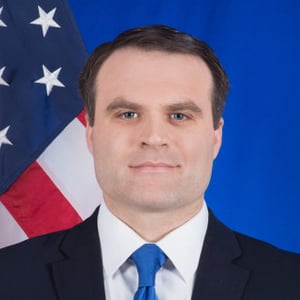
Deputy Coordinator for Countering Violent Extremism, U.S. Department of State
Christopher K. Harnisch is the Deputy Coordinator for Countering Violent Extremism. In this capacity, he is responsible for developing and implementing strategies to counter terrorist messaging and recruitment, including terrorists’ use of the Internet. He also oversees terrorist detention policy.
Prior to his appointment to the Bureau of Counterterrorism, Harnisch served as the Director for Transnational Threats and the Director for Afghanistan at the National Security Council. A Virginia native, he returned to the area following several years in Silicon Valley where he served as a Strategic Sourcing and Operations Product Development Manager at Apple. Before his time in the private sector, Harnisch worked in the public policy and defense arenas. From 2011 to 2012, he served as an Army Intelligence Officer on NATO’s counter-corruption task force in Afghanistan. Previous to that, he worked on the Critical Threats Project at the American Enterprise Institute, where he researched and wrote about al-Qa’ida’s emerging safe havens, focusing especially on those in Yemen and Somalia. He served on the staff of Vice President Dick Cheney.
Chris earned a B.A. in International Studies from Middlebury College and an MBA and M.A. in International Relations from Yale University.
He has published pieces on foreign policy in numerous publications, including The Wall Street Journal, Washington Post, and National Review Online, and he has appeared as a guest analyst on various public panels and television and radio broadcasts. Recently, he has worked on initiatives aimed at bridging the civil-military divide, including co-chairing the Veterans Summit at Yale University. He is a Term Member at the Council on Foreign Relations.
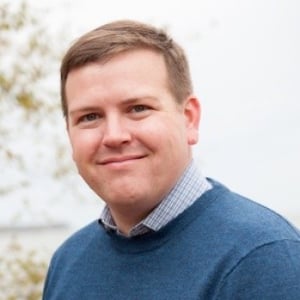
Deputy Director, Program on Extremism, George Washington University
Seamus Hughes is the Deputy Director of the Program on Extremism at George Washington University. He is an expert on terrorism, homegrown violent extremism, and countering violent extremism (CVE). Hughes has authored numerous reports for the Program including ‘ISIS in America: From Retweets to Raqqa’ and ‘The Travelers: American Jihadists in Syria and Iraq.’ He regularly provides commentary to media outlets, including the New York Times, The Washington Post, The Wall Street Journal, Los Angeles Times, The Atlantic, CNN, MSNBC, FoxNews, BBC, PBS, and CBS’ 60 Minutes. He has testified before the U.S. Congress on multiple occasions.
Hughes previously worked at the National Counterterrorism Center (NCTC), serving as a lead staffer on U.S. government efforts to implement a national CVE strategy. He regularly led engagements with Muslim American communities across the country, provided counsel to civic leaders after high-profile terror-related incidents, and met with families of individuals who joined terrorist organizations. Hughes created a groundbreaking intervention program to help steer individuals away from violence through non-law enforcement means, and worked closely with the FBI Joint Terrorism Task Force, Fusion Centers, and U.S. Attorney Offices.
Prior to NCTC, Hughes served as the Senior Counterterrorism Advisor for the U.S. Senate Homeland Security and Governmental Affairs Committee. He organized over a dozen congressional hearings on the threat of homegrown violent extremism, and led fact-finding delegations to the various European and Middle Eastern countries. He authored two reports for the Senate: “A Ticking Time Bomb: Counterterrorism Lessons from the U.S. Government’s Failure to Prevent the Fort Hood Attack” and “Zachary Chesser: A Case Study in Online Islamist Radicalization and Its Meaning for the Threat of Homegrown Terrorism.”
Hughes has authored numerous legislative bills, including sections of the 9/11 Commission Recommendations Act and the Special Agent Samuel Hicks Families of Fallen Heroes Act. He is a graduate of the University of Maryland, and a recipient of the National Security Council Outstanding Service Award and two NCTC Director’s Awards for outstanding service. He teaches classes at George Washington University and Georgetown University.
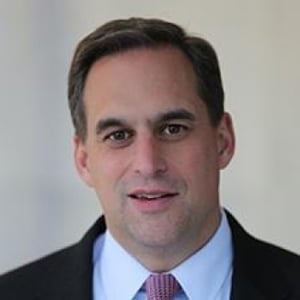
Harold Brown Chair; Director, Transnational Threats Project; and Senior Adviser, International Security Program, Center for Strategic and International Studies
Seth G. Jones holds the Harold Brown Chair, is director of the Transnational Threats Project, and is a senior adviser to the International Security Program at the Center for Strategic and International Studies (CSIS). He teaches at Johns Hopkins University’s School of Advanced International Studies (SAIS) and the Center for Homeland Defense and Security (CHDS) at the U.S. Naval Postgraduate School.
Prior to joining CSIS, Dr. Jones was the director of the International Security and Defense Policy Center at the RAND Corporation. He also served as representative for the commander, U.S. Special Operations Command, to the assistant secretary of defense for special operations. Before that, he was a plans officer and adviser to the commanding general, U.S. Special Operations Forces, in Afghanistan (Combined Forces Special Operations Component Command–Afghanistan). In 2014, Dr. Jones served on a congressionally mandated panel that reviewed the FBI’s implementation of counterterrorism recommendations contained in the 9/11 Commission Report.
Dr. Jones specializes in counterterrorism, counterinsurgency, unconventional warfare, and covert action, including a focus on al Qaeda and ISIS. He is the author of A Covert Action: Reagan, the CIA, and the Cold War Struggle in Poland (W.W. Norton, 2018), Waging Insurgent Warfare (Oxford University Press, 2016), Hunting in the Shadows: The Pursuit of al Qa'ida after 9/11 (W.W. Norton, 2012), and In the Graveyard of Empires: America’s War in Afghanistan (W.W. Norton, 2009). Dr. Jones has published articles in a range of journals, such as Foreign Affairs, Foreign Policy, and International Security, as well as newspapers and magazines like the New York Times, Washington Post, and Wall Street Journal. Dr. Jones is a graduate of Bowdoin College and received his M.A. and Ph.D. from the University of Chicago.
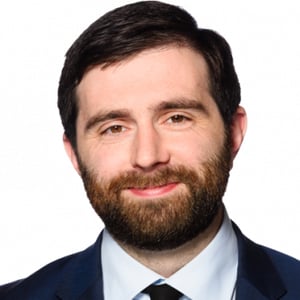
Margaret Thatcher Fellow, Margaret Thatcher Center for Freedom, The Heritage Foundation
Robin Simcox is the Margaret Thatcher Fellow at The Heritage Foundation’s Margaret Thatcher Center for Freedom, where he specializes in counter-terrorism and national security policy.
Simcox has testified before Congress on multiple occasions on issues related to ISIS, al-Qaeda and associated movements. He has also provided oral evidence to a committee of Parliament established to examine British intelligence policy.
Simcox’s commentary has been published in newspapers such as The Washington Post, The Wall Street Journal, Los Angeles Times, The (London) Telegraph, and The Guardian. It also has appeared in magazines and journals such as Foreign Affairs, Foreign Policy, The Atlantic, West Point’s CTC Sentinel, and The Weekly Standard. He regularly appears on a variety of broadcast and cable news outlets, including Fox News Channel, MSNBC, CNN, CBS, BBC, and Sky News.
Prior to arriving at Heritage in January 2016, Simcox was a research fellow at the Henry Jackson Society, a foreign policy think tank in London. While there, he authored several important works on the terrorist group al-Qaeda, including "Al-Qaeda in the United States," a 728-page monograph profiling every known court conviction in America linked to al-Qaeda.
In joining Heritage’s Thatcher Center for Freedom and assuming the fellowship that bears the name of the former British prime minister, he became part of the leading policy center in Washington dedicated to strengthening the Anglo-American “special relationship” as well as U.S. and British leadership of the broader transatlantic alliance. Established in 2005, the Thatcher Center is the only public policy center in the world dedicated to advancing the vision and ideals of Lady Thatcher, who died in 2013.
Robin received a master of science degree in U.S. foreign policy from the Institute for the Study of the Americas, University of London, and a bachelor of arts degree in international history from the University of Leeds. He studied for a year at the University of Newcastle, Australia.
Senior Fellow, International Security Program, New America
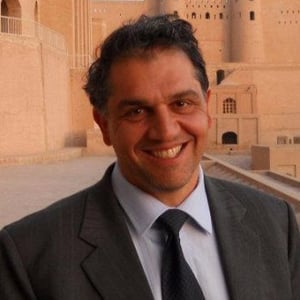
As a Senior Fellow with the International Security Program at New America, Ioannis "Gianni" Koskinas focuses on foreign policy issues with an emphasis on Afghanistan, Pakistan, Iraq, and the Levant. He is the CEO of the Hoplite Group, a company focused on sustainable and innovative solutions to complex problems, in the most challenging environments and harshest conditions. Previously he was the Executive Vice President of the Asia Africa Projects Group and the President of the Global Initiatives Group, focusing on natural resources development and national security projects, respectively. Gianni retired from the U.S. Air Force in 2011 after a twenty-year career in Special Operations. He has a B.S. in Biology from the University of Connecticut, as well as three Master's degrees in Operational Art, Strategy, and International Relations. He is also a candidate for a Ph.D. in War Studies from King's College, London.
Managing Director, SCF Partners
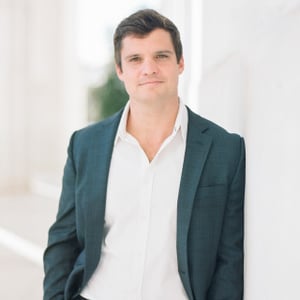
Daniel G. West invests in energy services, equipment, and technology companies at SCF Partners in Houston, Texas. He provides equity capital and strategic growth assistance to entrepreneurs and leaders of both start-up ventures and established, growing businesses.
Prior to joining the private sector, Mr. West served as an infantry officer in the United States Marine Corps. As a platoon commander with the 22nd Marine Expeditionary Unit aboard the USS Mesa Verde, he led the Tactical Recovery of Aircraft and Personnel force in support of the NATO aerial campaign over Libya. He then served as executive officer of India Company, 3rd Battalion, 9th Marines as it mentored Afghan forces to assume lead security responsibility and executed counter-narcotics missions in Marjah, Helmand Province, Afghanistan. He also served as a clerk for Judge Laurence H. Silberman on the U.S. Court of Appeals for the D.C. Circuit.
Mr. West holds degrees in law, business administration, and economics from Harvard University, where he served as an editor of the Harvard Law Review and taught undergraduate courses in economics and government. He is a member of the Executive Committee of the International & National Security Law Practice Group of the Federalist Society and a term member of the Council on Foreign Relations.
Agnes Williams Sesquicentennial Professor of Federal Courts, Georgetown Law
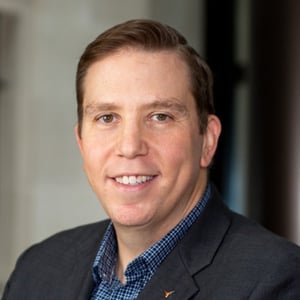
Stephen I. Vladeck is a professor of law at the Georgetown University Law Center, and is a nationally recognized expert on the federal courts; the Supreme Court; national security law; and military justice.
Vladeck is author of the New York Times bestselling book, “The Shadow Docket: How the Supreme Court Uses Stealth Rulings to Amass Power and Undermine the Republic,” which won the 2023 Writers’ League of Texas Book Award for Non-Fiction and was a finalist for the 2024 ABA Silver Gavel Award for Media and the Arts. Vladeck is also a highly regarded appellate advocate, having argued three cases before the U.S. Supreme Court and over a dozen before various lower federal civilian and military courts. He has received numerous awards for his influential and widely cited legal scholarship, his prolific popular writing, his teaching, and his service to the legal profession—including the 2024 University of Texas President’s Research Impact Award and his selection by the Order of the Coif to serve as its Distinguished Visiting Professor for 2025.
Vladeck is CNN’s Supreme Court analyst and editor and author of “One First,” a popular weekly newsletter about the Supreme Court. Together with Bobby Chesney, Vladeck co-hosts the popular and award-winning “National Security Law Podcast.” He is also a co-author of Aspen Publishers’ leading national security law and counterterrorism law casebooks. And he is a member of the Board of Trustees of EarthJustice—the nation’s premier nonprofit public interest environmental law organization.
Vladeck graduated from Yale Law School in 2004—where he was executive editor of the Yale Law Journal and won the Harlan Fiske Stone Prize for outstanding moot court oralist and shared the Potter Stewart Prize for best moot court team performance. After law school, he clerked for the Honorable Marsha S. Berzon on the U.S. Court of Appeals for the Ninth Circuit and the Honorable Rosemary Barkett on the U.S. Court of Appeals for the Eleventh Circuit. He earned a B.A. summa cum laude with Highest Distinction in History and Mathematics from Amherst College in 2001—where he wrote his senior thesis on “Leipzig’s Shadow: The War Crimes Trials of the First World War and Their Implications from Nuremberg to the Present.” A native New Yorker and hopeless Mets fan, Vladeck lives in the District with his wife, Karen (Founder and Managing Partner of Risepoint Search Partners); their daughters, Madeleine and Sydney; and their eleven-year-old pug, Roxanna.
Senior Fellow, National Security Institute, Antonin Scalia School of Law, George Mason University; Retired Professor, Distinguished Fellow and Co-Founder, Center for National Security Law, University of Virginia School of Law (1987-2020)
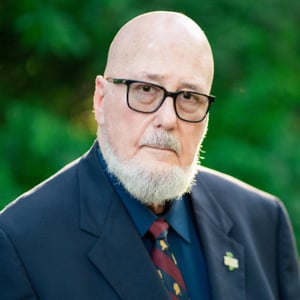
Robert F. Turner holds both professional and academic doctorates from the University of Virginia School of Law. He co-founded the Center for National Security Law with Professor John Norton Moore in April 1981 and served as its associate director for 39 years, except for two periods of government service in the 1980s and during 1994-95, when he occupied the Charles H. Stockton Chair of International Law at the U.S. Naval War College in Newport, Rhode Island. He retired from UVA in January 2020 and currently serves as a non-resident senior fellow at the GMU National Security Institute. He also served briefly in 2020 as President of the Crime Prevention Research Center—one of the most respected pro-Second Amendment groups in the country—while its founder, Dr. John Lott, was on leave of absence.
A former Army captain and veteran of two tours in Vietnam, Turner served as a research associate and public affairs fellow at Stanford's Hoover Institution on War, Revolution and Peace before spending five years in the mid-1970s as national security adviser to U.S. Senator Robert P. Griffin, a member of the Senate Foreign Relations Committee (where Turner anticipated by seven years the Supreme Court’s landmark INS v. Chadha decision, striking down legislative vetoes). He also served in the executive branch during the Reagan administration as a member of the Senior Executive Service, first in the Pentagon as special assistant to the undersecretary of defense for policy, then in the White House as counsel to the President's Intelligence Oversight Board, and at the State Department as principal deputy and then acting assistant secretary for legislative affairs. In 1986, he became the first president of the congressionally established United States Institute of Peace.
A former three-term chairman of the ABA Standing Committee on Law and National Security (and for many years editor of the ABA National Security Law Report), Turner also chaired the Executive-Congressional Relations Subcommittee of the ABA Section on International Law and Practice and chaired or co-chaired the National Security Law Subcommittee of the Federalist Society’s International and National Security Law Practice Group for several years.
Turner taught undergraduate courses at Virginia on international law, U.S. foreign policy, the Vietnam War and foreign policy and the law in what is now the Woodrow Wilson Department of Politics. In addition, he co-taught National Security Law and advanced national security law seminars on the Indochina War and on war and peace with Moore at the Law School.
The author or editor of 18 books and monographs (including co-editor of the Center's 1,600-page National Security Law & Policy casebook, National Security Law Documents, and Legal Issues in the Struggle Against Terror) and numerous articles in law reviews and other professional journals, Turner has also contributed articles to most of the major U.S. newspapers, including The New York Times and USA Today. In an op-ed published in The International Herald Tribune in September 1990, he and Moore were the first to call for a war-crimes trial for Iraqi dictator Saddam Hussein and for international controls over Iraq's weapons of mass destruction, and the following month he wrote the lead story in The Washington Post Sunday Outlook Section, “Killing Saddam: Would It Be a Crime?,” arguing that Hussein would be a lawful target during Operation Desert Storm. (His reasoning contributed to the modern legal justification for drone strikes targeting specific terrorist leaders.) Three years before the terrorist attacks of September 11, 2001, Turner published an op-ed in USA Today entitled: “In Self-defense, U.S. Has Right to Kill bin Laden.”
In July 2007, he co-authored an article in The Washington Post with former U.S. Marine Corps Commandant General P.X. Kelley, “War Crimes and the White House,” criticizing the use of unlawful “enhanced interrogation techniques” by the Central Intelligence Agency. On the 40th anniversary of the fall of Saigon he authored an article in The Wall Street Journal, “Saigon’s Fall Still Echoes Today,” noting that after the war ended, Hanoi admitted it had made a decision in 1959 to open the Ho Chi Minh Trail and start sending troops, weapons and supplies into South Vietnam to overthrow its government — just as the United States had charged. In 2010 Turner received the first “person of the year” award from SACEI, a major Vietnamese-American human rights organization.
A frequent lecturer and debater, Turner has spoken at more than 100 law schools around the nation and in other fora — taking on as many as four opponents at a time. His debate opponents have included former or future deans of Yale, Stanford, the University of Chicago and Berkeley law schools. Following a 1987 debate against Dean Harlan Cleveland (Rhodes Scholar, U.S. Ambassador to NATO, and Presidential Medal of Freedom recipient) in which Turner defended the legality of U.S. support for the Nicaraguan contras during the Reagan Administration, the host student debating societies awarded Turner the victory by an 85-to-15 percent margin.
Turner has also written and lectured widely on University of Virginia founder and America’s third president Thomas Jefferson. In 2000-2001 he chaired the Jefferson-Hemings Scholars Commission. In his 2012 book Master of the Mountain, Jefferson critic Henry Wiencek described Turner as “Jefferson’s chief scholarly defender."
A former distinguished lecturer at the U.S. Military Academy at West Point, Turner is a member of the Council on Foreign Relations, the Academy of Political Science, the Committee on the Present Danger, The Heterodox Academy, and other professional organizations. He maintained a 4.0 gpa as a graduate student at Stanford in History and Political Science and in the UVA Department of Government and Foreign Affairs and was the first person admitted directly to the UVA academic law doctorate (SJD) program without first being required to earn an LL.M. master’s degree. He was selected for inclusion in Who’s Who in American Law less than two years after graduating from law school and Who’s Who in the World before he reached the age of 40. Turner has testified before more than a dozen different congressional committees on issues of international or constitutional law and other topics.
Director, Center for Religious Freedom, Hudson Institute
An international human-rights lawyer for over thirty years, Nina Shea joined Hudson Institute as a Senior Fellow in November 2006, where she directs the Center for Religious Freedom. Shea works extensively for the advancement of individual religious freedom and other human rights in U.S. foreign policy as it confronts an ascendant Islamic extremism, as well as nationalist and remnant communist regimes. She undertakes scholarship and advocacy in defense of those persecuted for their religious beliefs and identities and on behalf of diplomatic measures to end religious repression and violence abroad, whether from state actors or extremist groups.
Ms. Shea was appointed by the U.S. House of Representatives to serve seven terms as a Commissioner on the U.S. Commission on International Religious Freedom (June 1999 - March 2012). During the Soviet era, Shea’s first client before the United Nations was Soviet Nobel Peace Laureate Andrei Sakharov. Since then, she has been appointed as a U.S. delegate to the United Nation's main human rights body by both Republican and Democratic administrations. She also served as a member of the Clinton administration's Advisory Committee on Religious Freedom Abroad. In 2009, she was appointed to serve as a member of the U.S. National Commission to UNESCO.
Ms. Shea played a leading role in building grassroot support for the adoption of the International Religious Freedom Act (1998). For seven years ending in 2005, she helped organize and lead a coalition of churches and religious groups that worked to end a religious war against non-Muslims and dissident Muslims in southern Sudan. In 2014, she initiated and helped lead a coalition of hundreds of prominent American religious leaders to issue The Pledge of Solidarity for Persecuted Iraqi, Syrian and Egyptian Christians and Other Minorities, which was released by a bi-partisan Congressional panel on May 7. In summer 2014, she met with Pope Francis to discuss the persecution of Christians in the Middle East.
At Hudson, she has organized conferences for Nigerian schoolgirls and others who survived Boko Haram attacks, Christian converts formerly imprisoned in Iran, Coptic bishops from Egypt, Catholic bishops from China and the Gulf, Muslim scholars, and many others. Ms. Shea advocates in the nation's capital on behalf of a broad range of persecuted religious minorities around the world; and, for such work, was honored by the Ahmadiyya Muslim Community USA with the Community's inaugural "Ahmadiyya Muslim Humanitarian Award."
She has authored and/or edited four widely-acclaimed reports on Saudi state educational materials that promote extremist views and in 2011 had an opportunity to travel to Saudi Arabia and speak directly about her findings with the Ministers of Education, Justice and Islamic Affairs. Her reports include: Ten Years On: Saudi Arabia's Textbooks Still Promote Religious Violence (2011), Update: Saudi Arabia's Curriculum of Intolerance (2008), Saudi Arabia's Curriculum of Intolerance (2006), and Saudi Publications on Hate Ideology Invade American Mosques (2005), all of which translated and analyzed Saudi governmental publications that teach hatred and violence against the religious "other."
She is the co-author of Silenced: How Apostasy & Blasphemy Codes are Choking Freedom Worldwide, with a Foreword by Kyai Haji Abdurrahman Wahid, the former President of Indonesia and head of Nahdlatul Ulama, the world's largest Muslim organization (Oxford University Press, 2011). Her most recent book, which she also co-authored, is Persecuted: The Global Assault on Christians (Thomas Nelson Publishers, 2013). She regularly presents testimony before Congress, delivers public lectures, organizes briefings and conferences, and writes frequently on religious freedom issues. Her writings have appeared in the Wall Street Journal, Washington Post, CQ Researcher, Weekly Standard, National Review Online, CNN, Fox, The Daily Beast, HuffingtonPost, and RealClearWorld, among others.
For the ten years prior to joining Hudson, Ms. Shea worked at Freedom House, where she directed the Center for Religious Freedom, an entity which she had helped found in 1986 as the Puebla Institute.
She is a member of the bar of the District of Columbia. She is a graduate of Smith College, and American University's Washington College of Law.
Distinguished Professor of Law, Jamie L. Whitten Chair of Law and Government, University of Mississippi School of Law
Professor Ronald J. Rychlak is the Jamie L. Whitten Chair of Law and Government and Distinguished Professor of Law at the University of Mississippi. He is a legal advisor to the Holy See’s delegation to the United Nations and chair of the Mississippi Advisory Committee to the U.S. Civil Rights Commission. He serves as the university’s Faculty Athletic Representative and is on the executive committee of the Southeastern Conference (SEC). In 2019 he received the university’s highest research and publication recognition, the “Distinguished Research and Creative Achievement Award” based upon his reputation for scholarly activity and leadership roles in professional societies. In 2023, he received the Algernon Sydney Sullivan Award, the University’s highest award in honor of service, for “placing service to others and the community before oneself, while embodying the qualities of honesty, morality, ethics, integrity, responsibility, determination, courage, and compassion.” In 2024, he was voted “Outstanding Law Professor” by the law school student body.
Ron is the author, co-author, or editor of twelve books and over 100 articles. The Congregation for the Causes of Saints at the Vatican called his book, Hitler, the War, and the Pope “definitive” in its response to charges made against the leader of the Catholic Church during World War II. He has been published in Notre Dame Law Review, UCLA Law Review, The Washington Post, The Wall Street Journal, and numerous other periodicals and journals. Media appearances include CNN, ABC, Fox News, The National Geographic TV Network, The Military Channel, C-SPAN, and more.
Ron and his wife Claire are proud of their six children, two sons-in-law, one daughter-in-law, and three granddaughters. They live in Oxford, Mississippi.
Deputy Coordinator for Countering Violent Extremism, U.S. Department of State
Christopher K. Harnisch is the Deputy Coordinator for Countering Violent Extremism. In this capacity, he is responsible for developing and implementing strategies to counter terrorist messaging and recruitment, including terrorists’ use of the Internet. He also oversees terrorist detention policy.
Prior to his appointment to the Bureau of Counterterrorism, Harnisch served as the Director for Transnational Threats and the Director for Afghanistan at the National Security Council. A Virginia native, he returned to the area following several years in Silicon Valley where he served as a Strategic Sourcing and Operations Product Development Manager at Apple. Before his time in the private sector, Harnisch worked in the public policy and defense arenas. From 2011 to 2012, he served as an Army Intelligence Officer on NATO’s counter-corruption task force in Afghanistan. Previous to that, he worked on the Critical Threats Project at the American Enterprise Institute, where he researched and wrote about al-Qa’ida’s emerging safe havens, focusing especially on those in Yemen and Somalia. He served on the staff of Vice President Dick Cheney.
Chris earned a B.A. in International Studies from Middlebury College and an MBA and M.A. in International Relations from Yale University.
He has published pieces on foreign policy in numerous publications, including The Wall Street Journal, Washington Post, and National Review Online, and he has appeared as a guest analyst on various public panels and television and radio broadcasts. Recently, he has worked on initiatives aimed at bridging the civil-military divide, including co-chairing the Veterans Summit at Yale University. He is a Term Member at the Council on Foreign Relations.
Deputy Director, Program on Extremism, George Washington University
Seamus Hughes is the Deputy Director of the Program on Extremism at George Washington University. He is an expert on terrorism, homegrown violent extremism, and countering violent extremism (CVE). Hughes has authored numerous reports for the Program including ‘ISIS in America: From Retweets to Raqqa’ and ‘The Travelers: American Jihadists in Syria and Iraq.’ He regularly provides commentary to media outlets, including the New York Times, The Washington Post, The Wall Street Journal, Los Angeles Times, The Atlantic, CNN, MSNBC, FoxNews, BBC, PBS, and CBS’ 60 Minutes. He has testified before the U.S. Congress on multiple occasions.
Hughes previously worked at the National Counterterrorism Center (NCTC), serving as a lead staffer on U.S. government efforts to implement a national CVE strategy. He regularly led engagements with Muslim American communities across the country, provided counsel to civic leaders after high-profile terror-related incidents, and met with families of individuals who joined terrorist organizations. Hughes created a groundbreaking intervention program to help steer individuals away from violence through non-law enforcement means, and worked closely with the FBI Joint Terrorism Task Force, Fusion Centers, and U.S. Attorney Offices.
Prior to NCTC, Hughes served as the Senior Counterterrorism Advisor for the U.S. Senate Homeland Security and Governmental Affairs Committee. He organized over a dozen congressional hearings on the threat of homegrown violent extremism, and led fact-finding delegations to the various European and Middle Eastern countries. He authored two reports for the Senate: “A Ticking Time Bomb: Counterterrorism Lessons from the U.S. Government’s Failure to Prevent the Fort Hood Attack” and “Zachary Chesser: A Case Study in Online Islamist Radicalization and Its Meaning for the Threat of Homegrown Terrorism.”
Hughes has authored numerous legislative bills, including sections of the 9/11 Commission Recommendations Act and the Special Agent Samuel Hicks Families of Fallen Heroes Act. He is a graduate of the University of Maryland, and a recipient of the National Security Council Outstanding Service Award and two NCTC Director’s Awards for outstanding service. He teaches classes at George Washington University and Georgetown University.
Harold Brown Chair; Director, Transnational Threats Project; and Senior Adviser, International Security Program, Center for Strategic and International Studies
Seth G. Jones holds the Harold Brown Chair, is director of the Transnational Threats Project, and is a senior adviser to the International Security Program at the Center for Strategic and International Studies (CSIS). He teaches at Johns Hopkins University’s School of Advanced International Studies (SAIS) and the Center for Homeland Defense and Security (CHDS) at the U.S. Naval Postgraduate School.
Prior to joining CSIS, Dr. Jones was the director of the International Security and Defense Policy Center at the RAND Corporation. He also served as representative for the commander, U.S. Special Operations Command, to the assistant secretary of defense for special operations. Before that, he was a plans officer and adviser to the commanding general, U.S. Special Operations Forces, in Afghanistan (Combined Forces Special Operations Component Command–Afghanistan). In 2014, Dr. Jones served on a congressionally mandated panel that reviewed the FBI’s implementation of counterterrorism recommendations contained in the 9/11 Commission Report.
Dr. Jones specializes in counterterrorism, counterinsurgency, unconventional warfare, and covert action, including a focus on al Qaeda and ISIS. He is the author of A Covert Action: Reagan, the CIA, and the Cold War Struggle in Poland (W.W. Norton, 2018), Waging Insurgent Warfare (Oxford University Press, 2016), Hunting in the Shadows: The Pursuit of al Qa'ida after 9/11 (W.W. Norton, 2012), and In the Graveyard of Empires: America’s War in Afghanistan (W.W. Norton, 2009). Dr. Jones has published articles in a range of journals, such as Foreign Affairs, Foreign Policy, and International Security, as well as newspapers and magazines like the New York Times, Washington Post, and Wall Street Journal. Dr. Jones is a graduate of Bowdoin College and received his M.A. and Ph.D. from the University of Chicago.
Margaret Thatcher Fellow, Margaret Thatcher Center for Freedom, The Heritage Foundation
Robin Simcox is the Margaret Thatcher Fellow at The Heritage Foundation’s Margaret Thatcher Center for Freedom, where he specializes in counter-terrorism and national security policy.
Simcox has testified before Congress on multiple occasions on issues related to ISIS, al-Qaeda and associated movements. He has also provided oral evidence to a committee of Parliament established to examine British intelligence policy.
Simcox’s commentary has been published in newspapers such as The Washington Post, The Wall Street Journal, Los Angeles Times, The (London) Telegraph, and The Guardian. It also has appeared in magazines and journals such as Foreign Affairs, Foreign Policy, The Atlantic, West Point’s CTC Sentinel, and The Weekly Standard. He regularly appears on a variety of broadcast and cable news outlets, including Fox News Channel, MSNBC, CNN, CBS, BBC, and Sky News.
Prior to arriving at Heritage in January 2016, Simcox was a research fellow at the Henry Jackson Society, a foreign policy think tank in London. While there, he authored several important works on the terrorist group al-Qaeda, including "Al-Qaeda in the United States," a 728-page monograph profiling every known court conviction in America linked to al-Qaeda.
In joining Heritage’s Thatcher Center for Freedom and assuming the fellowship that bears the name of the former British prime minister, he became part of the leading policy center in Washington dedicated to strengthening the Anglo-American “special relationship” as well as U.S. and British leadership of the broader transatlantic alliance. Established in 2005, the Thatcher Center is the only public policy center in the world dedicated to advancing the vision and ideals of Lady Thatcher, who died in 2013.
Robin received a master of science degree in U.S. foreign policy from the Institute for the Study of the Americas, University of London, and a bachelor of arts degree in international history from the University of Leeds. He studied for a year at the University of Newcastle, Australia.
Senior Fellow, International Security Program, New America
As a Senior Fellow with the International Security Program at New America, Ioannis "Gianni" Koskinas focuses on foreign policy issues with an emphasis on Afghanistan, Pakistan, Iraq, and the Levant. He is the CEO of the Hoplite Group, a company focused on sustainable and innovative solutions to complex problems, in the most challenging environments and harshest conditions. Previously he was the Executive Vice President of the Asia Africa Projects Group and the President of the Global Initiatives Group, focusing on natural resources development and national security projects, respectively. Gianni retired from the U.S. Air Force in 2011 after a twenty-year career in Special Operations. He has a B.S. in Biology from the University of Connecticut, as well as three Master's degrees in Operational Art, Strategy, and International Relations. He is also a candidate for a Ph.D. in War Studies from King's College, London.
Managing Director, SCF Partners
Daniel G. West invests in energy services, equipment, and technology companies at SCF Partners in Houston, Texas. He provides equity capital and strategic growth assistance to entrepreneurs and leaders of both start-up ventures and established, growing businesses.
Prior to joining the private sector, Mr. West served as an infantry officer in the United States Marine Corps. As a platoon commander with the 22nd Marine Expeditionary Unit aboard the USS Mesa Verde, he led the Tactical Recovery of Aircraft and Personnel force in support of the NATO aerial campaign over Libya. He then served as executive officer of India Company, 3rd Battalion, 9th Marines as it mentored Afghan forces to assume lead security responsibility and executed counter-narcotics missions in Marjah, Helmand Province, Afghanistan. He also served as a clerk for Judge Laurence H. Silberman on the U.S. Court of Appeals for the D.C. Circuit.
Mr. West holds degrees in law, business administration, and economics from Harvard University, where he served as an editor of the Harvard Law Review and taught undergraduate courses in economics and government. He is a member of the Executive Committee of the International & National Security Law Practice Group of the Federalist Society and a term member of the Council on Foreign Relations.
George R. Killam Jr. Chair of Criminal Law; Director, Center for Military Law & Policy, Texas Tech University School of Law
Geoffrey S. Corn is the George R. Killam Jr. Chair of Criminal Law and Director of the Center for Military Law and Policy.
Professor Corn comes to Texas Tech University School of Law from South Texas College of Law Houston where he was the Gary A. Kuiper Distinguished Professor of National Security.
Prior to joining the South Texas College of Law Houston faculty in 2005, Professor Corn served in the U.S. Army for 21 years as an officer, and a final year as a civilian legal advisor, retiring in the rank of Lieutenant Colonel. Professor Corn’s teaching and scholarship focuses on the law of armed conflict, national security law, criminal law and procedure, and prosecutorial ethics. He has appeared an expert witness at the Military Commission in Guantanamo, the International Criminal Tribunal for the Former Yugoslavia, and in federal court.
He is co-author of Criminal Law: Classroom to Courtroom (forthcoming), The Law of Armed Conflict: An Operational Perspective, The Laws of War and the War on Terror, National Security Law and the Constitution, National Security Law and Policy: a Student Treatise, The Law in War: A Concise Overview, and Principles of Counter-Terrorism Law.
His Army career included service as the Army’s senior law of war expert advisor, tactical intelligence officer in Panama; supervisory defense counsel for the Western United States; Chief of International Law for US Army Europe; Professor of International and National Security Law at the US Army Judge Advocate General’s School; and Chief Prosecutor for the 101st Airborne Division. He earned is B.A. from Hartwick College in Oneonta, NY, his J.D. with highest honors from George Washington University, his LLM as the distinguished graduate from the U.S. Army Judge Advocate General’s School. He is also a distinguished military graduate of U.S. Army Officer Candidate School, and a graduate of U.S. Army Command and General Staff Course.
Senior Fellow, National Security Institute, Antonin Scalia School of Law, George Mason University; Retired Professor, Distinguished Fellow and Co-Founder, Center for National Security Law, University of Virginia School of Law (1987-2020)
Robert F. Turner holds both professional and academic doctorates from the University of Virginia School of Law. He co-founded the Center for National Security Law with Professor John Norton Moore in April 1981 and served as its associate director for 39 years, except for two periods of government service in the 1980s and during 1994-95, when he occupied the Charles H. Stockton Chair of International Law at the U.S. Naval War College in Newport, Rhode Island. He retired from UVA in January 2020 and currently serves as a non-resident senior fellow at the GMU National Security Institute. He also served briefly in 2020 as President of the Crime Prevention Research Center—one of the most respected pro-Second Amendment groups in the country—while its founder, Dr. John Lott, was on leave of absence.
A former Army captain and veteran of two tours in Vietnam, Turner served as a research associate and public affairs fellow at Stanford's Hoover Institution on War, Revolution and Peace before spending five years in the mid-1970s as national security adviser to U.S. Senator Robert P. Griffin, a member of the Senate Foreign Relations Committee (where Turner anticipated by seven years the Supreme Court’s landmark INS v. Chadha decision, striking down legislative vetoes). He also served in the executive branch during the Reagan administration as a member of the Senior Executive Service, first in the Pentagon as special assistant to the undersecretary of defense for policy, then in the White House as counsel to the President's Intelligence Oversight Board, and at the State Department as principal deputy and then acting assistant secretary for legislative affairs. In 1986, he became the first president of the congressionally established United States Institute of Peace.
A former three-term chairman of the ABA Standing Committee on Law and National Security (and for many years editor of the ABA National Security Law Report), Turner also chaired the Executive-Congressional Relations Subcommittee of the ABA Section on International Law and Practice and chaired or co-chaired the National Security Law Subcommittee of the Federalist Society’s International and National Security Law Practice Group for several years.
Turner taught undergraduate courses at Virginia on international law, U.S. foreign policy, the Vietnam War and foreign policy and the law in what is now the Woodrow Wilson Department of Politics. In addition, he co-taught National Security Law and advanced national security law seminars on the Indochina War and on war and peace with Moore at the Law School.
The author or editor of 18 books and monographs (including co-editor of the Center's 1,600-page National Security Law & Policy casebook, National Security Law Documents, and Legal Issues in the Struggle Against Terror) and numerous articles in law reviews and other professional journals, Turner has also contributed articles to most of the major U.S. newspapers, including The New York Times and USA Today. In an op-ed published in The International Herald Tribune in September 1990, he and Moore were the first to call for a war-crimes trial for Iraqi dictator Saddam Hussein and for international controls over Iraq's weapons of mass destruction, and the following month he wrote the lead story in The Washington Post Sunday Outlook Section, “Killing Saddam: Would It Be a Crime?,” arguing that Hussein would be a lawful target during Operation Desert Storm. (His reasoning contributed to the modern legal justification for drone strikes targeting specific terrorist leaders.) Three years before the terrorist attacks of September 11, 2001, Turner published an op-ed in USA Today entitled: “In Self-defense, U.S. Has Right to Kill bin Laden.”
In July 2007, he co-authored an article in The Washington Post with former U.S. Marine Corps Commandant General P.X. Kelley, “War Crimes and the White House,” criticizing the use of unlawful “enhanced interrogation techniques” by the Central Intelligence Agency. On the 40th anniversary of the fall of Saigon he authored an article in The Wall Street Journal, “Saigon’s Fall Still Echoes Today,” noting that after the war ended, Hanoi admitted it had made a decision in 1959 to open the Ho Chi Minh Trail and start sending troops, weapons and supplies into South Vietnam to overthrow its government — just as the United States had charged. In 2010 Turner received the first “person of the year” award from SACEI, a major Vietnamese-American human rights organization.
A frequent lecturer and debater, Turner has spoken at more than 100 law schools around the nation and in other fora — taking on as many as four opponents at a time. His debate opponents have included former or future deans of Yale, Stanford, the University of Chicago and Berkeley law schools. Following a 1987 debate against Dean Harlan Cleveland (Rhodes Scholar, U.S. Ambassador to NATO, and Presidential Medal of Freedom recipient) in which Turner defended the legality of U.S. support for the Nicaraguan contras during the Reagan Administration, the host student debating societies awarded Turner the victory by an 85-to-15 percent margin.
Turner has also written and lectured widely on University of Virginia founder and America’s third president Thomas Jefferson. In 2000-2001 he chaired the Jefferson-Hemings Scholars Commission. In his 2012 book Master of the Mountain, Jefferson critic Henry Wiencek described Turner as “Jefferson’s chief scholarly defender."
A former distinguished lecturer at the U.S. Military Academy at West Point, Turner is a member of the Council on Foreign Relations, the Academy of Political Science, the Committee on the Present Danger, The Heterodox Academy, and other professional organizations. He maintained a 4.0 gpa as a graduate student at Stanford in History and Political Science and in the UVA Department of Government and Foreign Affairs and was the first person admitted directly to the UVA academic law doctorate (SJD) program without first being required to earn an LL.M. master’s degree. He was selected for inclusion in Who’s Who in American Law less than two years after graduating from law school and Who’s Who in the World before he reached the age of 40. Turner has testified before more than a dozen different congressional committees on issues of international or constitutional law and other topics.

Topics
Presidential Use of Social Media as a Means of Formulating Military Policy
There is ample historical precedent for a president, pursuant to his authority as commander-in-chief, to...
ISIS Today: Prisoners, Escapees, Returnees, and Resurgent Fighters
Christopher K. Harnisch, Seamus Hughes, Seth Jones, Robin Simcox
What is the current status of ISIS worldwide? Some European countries have cancelled ISIS-travelers’ citizenship...
ISIS Today: Prisoners, Escapees, Returnees, and Resurgent Fighters
TeleforumThe Stakes: Reinstating Afghanistan Withdrawal?
Ioannis "Gianni" Koskinas, Daniel G. West
Whether an Afghanistan “peace accord” process that includes negotiations with Taliban agents is resumed, or...
The Stakes: Reinstating Afghanistan Withdrawal?
TeleforumISIS, Syria, and the History of Foreign Entanglements
Pace Student Chapter
White Plains, NYA Look at the Role of Congress in Korea, Vietnam, Afghanistan & ISIS
South Texas Student Chapter
Houston, TXThe AUMF: Is an Update Required?
Stephen I. Vladeck, Robert F. Turner
The Authorization for the Use of Military Force was passed by Congress on September 14,...
The Authorization for the Use of Military Force: Is an Update Required?
International & National Security Law Practice Group Teleforum
TeleforumThe Persecution and Genocide of Christians in the Middle East: Prevention, Prohibition, & Prosecution - Podcast
Nina Shea, Ronald J. Rychlak
Since the summer of 2014, ISIS has been waging a blitz through Iraq's Nineveh province,...