
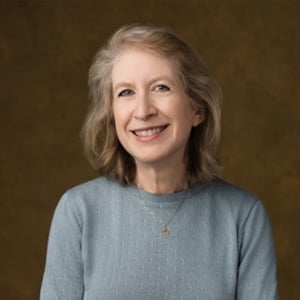
Senior Attorney, Pacific Legal Foundation
Debbie is a senior attorney in Pacific Legal Foundation’s Property Rights practice, where she primarily focuses on Supreme Court litigation. Debbie found her perfect vocational home at PLF, where she has litigated for the entirety of her 30+ year career.
Debbie has contributed to several of PLF’s Supreme Court victories, including Minnesota Voters Alliance v. Mansky (2018) (First Amendment), Pakdel v. City and County of San Francisco (ripeness doctrine), and Tyler v. Hennepin County (2023) (home equity theft), and currently serves on the litigation teams of many pending and forthcoming petitions for writs of certiorari. In conjunction with litigation, she publishes articles in both the mainstream and scholarly press, including Miranda for Janus: The Government’s Obligation to Ensure Informed Waiver of Constitutional Rights, 55 Loyola L.A. L. Rev. 405 (2022); Amicus briefs: A primer on a vital legal tool for protecting individual liberty, Daily Journal, Two Court Cases Prove Why Free Speech Protections Still Matter at Polling Places, End discrimination against corporate speech, Medical Marijuana and the Limits of the Compassionate Use Act: Ross v. Ragingwire Telecommunications, 12 Chapman L. Rev. 71 (2008), Kick It Up a Notch: First Amendment Protection for Commercial Speech, 54 Case Western Res. L. Rev. 1205 (2004), and Freedom, Responsibility and Risk: Fundamental Premises of Tort Reform, 36 Ind. L. Rev. 645 (2003). She also enjoys mentoring less-experienced attorneys and law clerks in the course of her practice.
Debbie grew up in an economically striving lower–middle–class family. Watching and learning from her exceptionally hard-working father, she grew to appreciate the bounty of political and economic freedom that can move a person up the ladder of success. Working her way through college and law school, Debbie studied political science, history, and literature at Claremont McKenna College (B.A. cum laude 1987) and law at the University of Southern California (J.D. 1990).
Debbie is PLF’s original telecommuter. She was an early adopter who started working from home in 1993—using DOS and a 48,800bps dial-up modem. Since then, she has furthered the cause of liberty and constitutional government while, alongside her husband, raising and homeschooling two children, both of whom are now graduated with the freedom to pursue their own dreams.
Debbie is licensed to practice in California, Arizona (inactive), various federal district and circuit courts, and the U.S. Supreme Court.

Professor of Law, Antonin Scalia Law School, George Mason University
ILYA SOMIN is Professor of Law at George Mason University and the B. Kenneth Simon Chair in Constitutional Studies at the Cato Institute. His research focuses on constitutional law, property law, democratic theory, federalism, and migration rights. He is the author of Free to Move: Foot Voting, Migration, and Political Freedom (Oxford University Press, revised and expanded edition, 2022), Democracy and Political Ignorance: Why Smaller Government is Smarter (Stanford University Press, revised and expanded second edition, 2016), and The Grasping Hand: Kelo v. City of New London and the Limits of Eminent Domain (University of Chicago Press, 2015, rev. paperback ed., 2016), coauthor of A Conspiracy Against Obamacare: The Volokh Conspiracy and the Health Care Case (Palgrave Macmillan, 2013), and co-editor of Eminent Domain: A Comparative Perspective (Cambridge University Press, 2017). Democracy and Political Ignorance has been translated into Italian and Japanese.
Somin’s work has appeared in numerous scholarly journals, including the Yale Law Journal, Stanford Law Review, Northwestern University Law Review, Georgetown Law Journal, Critical Review, and others. Somin has also published articles in a variety of popular press outlets, including the New York Times, Washington Post, Wall Street Journal, Los Angeles Times, CNN, NBC, The Atlantic, USA Today, Boston Globe, US News and World Report, South China Morning Post, National Law Journal and Reason. He has been quoted or interviewed by the New York Times, Washington Post, Wall Street Journal, Time, Newsweek, The Economist, the Christian Science Monitor, the Financial Times, The Guardian, the Associated Press, CBS, MSNBC, NPR, BBC, Reuters, the Canadian Broadcasting Corporation, the Australian Broadcasting Corporation, Radio Free Europe/Radio Liberty, Al Jazeera, and the Voice of America, among other media.
Somin’s writings have been cited in decisions by the United States Supreme Court, multiple state supreme courts and lower federal courts, and the Supreme Court of Israel. He is co-counsel for the plaintiffs in VOS Selections, Inc. v. Trump, a case challenging the constitutionality of President Trump’s “Liberation Day” tariffs. Somin has testified on the use of drones for targeted killing in the War on Terror before the US Senate Judiciary Subcommittee on the Constitution, Civil Rights, and Human Rights. In 2009, he testified on property rights issues at the United States Senate Judiciary Committee confirmation hearings for Supreme Court Justice Sonia Sotomayor. Somin writes regularly for the popular Volokh Conspiracy law and politics blog, now affiliated with Reason magazine (previously affiliated with the Washington Post from 2014 to 2017). From 2006 to 2013, he served as Co-Editor of the Supreme Court Economic Review, one of the country’s top-rated law and economics journals.
Somin has served as a visiting professor at the University of Pennsylvania Law School. He has also been a visiting professor or scholar at the Georgetown University Law Center, the University of Hamburg, Germany, the University of Torcuato Di Tella in Buenos Aires, Argentina, Uriel Reichman University in Israel, and Zhengzhou University in China. He is a University Affiliate of the Schar School of Policy and Government at George Mason University, and an affiliated faculty member of the George Mason University Institute for Immigration Research. Before joining the faculty at George Mason, Somin was the John M. Olin Fellow in Law at Northwestern University Law School in 2002-2003. In 2001-2002, he clerked for the Hon. Judge Jerry E. Smith of the U.S. Court of Appeals for the Fifth Circuit. Professor Somin earned his B.A., Summa Cum Laude, at Amherst College, M.A. in Political Science from Harvard University, and J.D. from Yale Law School.
Senior Attorney, Pacific Legal Foundation
Debbie is a senior attorney in Pacific Legal Foundation’s Property Rights practice, where she primarily focuses on Supreme Court litigation. Debbie found her perfect vocational home at PLF, where she has litigated for the entirety of her 30+ year career.
Debbie has contributed to several of PLF’s Supreme Court victories, including Minnesota Voters Alliance v. Mansky (2018) (First Amendment), Pakdel v. City and County of San Francisco (ripeness doctrine), and Tyler v. Hennepin County (2023) (home equity theft), and currently serves on the litigation teams of many pending and forthcoming petitions for writs of certiorari. In conjunction with litigation, she publishes articles in both the mainstream and scholarly press, including Miranda for Janus: The Government’s Obligation to Ensure Informed Waiver of Constitutional Rights, 55 Loyola L.A. L. Rev. 405 (2022); Amicus briefs: A primer on a vital legal tool for protecting individual liberty, Daily Journal, Two Court Cases Prove Why Free Speech Protections Still Matter at Polling Places, End discrimination against corporate speech, Medical Marijuana and the Limits of the Compassionate Use Act: Ross v. Ragingwire Telecommunications, 12 Chapman L. Rev. 71 (2008), Kick It Up a Notch: First Amendment Protection for Commercial Speech, 54 Case Western Res. L. Rev. 1205 (2004), and Freedom, Responsibility and Risk: Fundamental Premises of Tort Reform, 36 Ind. L. Rev. 645 (2003). She also enjoys mentoring less-experienced attorneys and law clerks in the course of her practice.
Debbie grew up in an economically striving lower–middle–class family. Watching and learning from her exceptionally hard-working father, she grew to appreciate the bounty of political and economic freedom that can move a person up the ladder of success. Working her way through college and law school, Debbie studied political science, history, and literature at Claremont McKenna College (B.A. cum laude 1987) and law at the University of Southern California (J.D. 1990).
Debbie is PLF’s original telecommuter. She was an early adopter who started working from home in 1993—using DOS and a 48,800bps dial-up modem. Since then, she has furthered the cause of liberty and constitutional government while, alongside her husband, raising and homeschooling two children, both of whom are now graduated with the freedom to pursue their own dreams.
Debbie is licensed to practice in California, Arizona (inactive), various federal district and circuit courts, and the U.S. Supreme Court.
Professor of Law, Antonin Scalia Law School, George Mason University
ILYA SOMIN is Professor of Law at George Mason University and the B. Kenneth Simon Chair in Constitutional Studies at the Cato Institute. His research focuses on constitutional law, property law, democratic theory, federalism, and migration rights. He is the author of Free to Move: Foot Voting, Migration, and Political Freedom (Oxford University Press, revised and expanded edition, 2022), Democracy and Political Ignorance: Why Smaller Government is Smarter (Stanford University Press, revised and expanded second edition, 2016), and The Grasping Hand: Kelo v. City of New London and the Limits of Eminent Domain (University of Chicago Press, 2015, rev. paperback ed., 2016), coauthor of A Conspiracy Against Obamacare: The Volokh Conspiracy and the Health Care Case (Palgrave Macmillan, 2013), and co-editor of Eminent Domain: A Comparative Perspective (Cambridge University Press, 2017). Democracy and Political Ignorance has been translated into Italian and Japanese.
Somin’s work has appeared in numerous scholarly journals, including the Yale Law Journal, Stanford Law Review, Northwestern University Law Review, Georgetown Law Journal, Critical Review, and others. Somin has also published articles in a variety of popular press outlets, including the New York Times, Washington Post, Wall Street Journal, Los Angeles Times, CNN, NBC, The Atlantic, USA Today, Boston Globe, US News and World Report, South China Morning Post, National Law Journal and Reason. He has been quoted or interviewed by the New York Times, Washington Post, Wall Street Journal, Time, Newsweek, The Economist, the Christian Science Monitor, the Financial Times, The Guardian, the Associated Press, CBS, MSNBC, NPR, BBC, Reuters, the Canadian Broadcasting Corporation, the Australian Broadcasting Corporation, Radio Free Europe/Radio Liberty, Al Jazeera, and the Voice of America, among other media.
Somin’s writings have been cited in decisions by the United States Supreme Court, multiple state supreme courts and lower federal courts, and the Supreme Court of Israel. He is co-counsel for the plaintiffs in VOS Selections, Inc. v. Trump, a case challenging the constitutionality of President Trump’s “Liberation Day” tariffs. Somin has testified on the use of drones for targeted killing in the War on Terror before the US Senate Judiciary Subcommittee on the Constitution, Civil Rights, and Human Rights. In 2009, he testified on property rights issues at the United States Senate Judiciary Committee confirmation hearings for Supreme Court Justice Sonia Sotomayor. Somin writes regularly for the popular Volokh Conspiracy law and politics blog, now affiliated with Reason magazine (previously affiliated with the Washington Post from 2014 to 2017). From 2006 to 2013, he served as Co-Editor of the Supreme Court Economic Review, one of the country’s top-rated law and economics journals.
Somin has served as a visiting professor at the University of Pennsylvania Law School. He has also been a visiting professor or scholar at the Georgetown University Law Center, the University of Hamburg, Germany, the University of Torcuato Di Tella in Buenos Aires, Argentina, Uriel Reichman University in Israel, and Zhengzhou University in China. He is a University Affiliate of the Schar School of Policy and Government at George Mason University, and an affiliated faculty member of the George Mason University Institute for Immigration Research. Before joining the faculty at George Mason, Somin was the John M. Olin Fellow in Law at Northwestern University Law School in 2002-2003. In 2001-2002, he clerked for the Hon. Judge Jerry E. Smith of the U.S. Court of Appeals for the Fifth Circuit. Professor Somin earned his B.A., Summa Cum Laude, at Amherst College, M.A. in Political Science from Harvard University, and J.D. from Yale Law School.
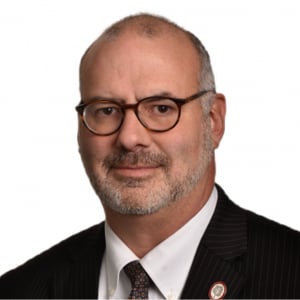
Senior Litigator, The Buckeye Institute; Partner, Wegman Hessler Valore
Jay R. Carson is the senior litigator at The Buckeye Institute. In this role he oversees all of Buckeye’s efforts to protect people’s rights and good public policy through the courts.
Carson brings 20 years of private-sector litigation and public policy experience to The Buckeye Institute, and has served as a legislative aide to the Ohio General Assembly, a law clerk to the Sixth Circuit Court of Appeals, as well as a Common Pleas Court Magistrate.
In addition to his work for The Buckeye Institute, Carson continues to practice at Wegman Hessler in Cleveland, where he focuses on business litigation, regulatory compliance counseling, and dispute resolution. Carson draws on his experiences in the public and private sectors to advocate for economic liberty and against burdensome government regulations on behalf of The Buckeye Institute and the people that it represents.
Carson is active in his community, the Cleveland Metropolitan Bar Association, the Northern District of Ohio Chapter of the Federal Bar Foundation, and is a life member of the Sixth Circuit Judicial Conference. Carson has also served on the Lakewood Civil Service Commission, the Lakewood Charter Review Commission, and the Cleveland-Cuyahoga County Workforce Investment Board. He currently serves on the boards of the North Coast Health Foundation and the Three Arches Foundation, which focus on providing health care to the uninsured, as well as the Lakewood Chamber of Commerce Board of Directors.
Jay earned his J.D. from The Ohio State University College of Law and his B.A. from Baldwin-Wallace College.
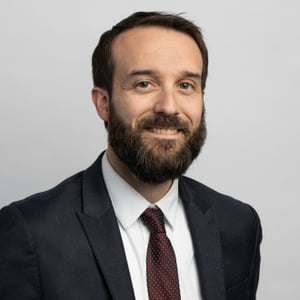
Senior Attorney, Institute for Justice
Sam Gedge is a senior attorney at the Institute for Justice. He joined IJ in June 2015 and litigates cases to promote economic liberty, protect political speech, and secure individuals’ rights to private property.
In 2017, Sam was named IJ’s second Elfie Gallun Fellow for Freedom and the Constitution. The fellowship comes with an emphasis on publishing written materials and speaking to students and others about the vital role the U.S. Constitution plays in protecting our most precious freedoms.
In his time at IJ, Sam has launched cases battling civil forfeiture and overzealous licensing boards, which generated widespread coverage and conversation in media outlets from Wired and The Atlantic to London’s Daily Mail.
Before joining IJ, Sam was an attorney at Wiley Rein LLP, in Washington, D.C., where he focused on litigation and election law. He is a former law clerk to Judge Raymond W. Gruender of the U.S. Court of Appeals for the Eighth Circuit.
Sam received his law degree cum laude from Harvard Law School in 2010.
Assistant Attorney General, Opinions Unit, Ohio Attorney General’s Office
Jeff Hobday serves as an Assistant Attorney General in the Opinions Unit at the Ohio Attorney General’s Office, where he researches and drafts formal opinions to guide state agencies, county officials, and townships on complex questions of statutory interpretation. He recently co-authored an amicus brief filed in the U.S. Supreme Court on behalf of Ohio and 28 other states in Montgomery v. Caribe Transport II, LLC, addressing federal preemption and the States’ authority to regulate highway safety through tort law.
Previously, Jeff held leadership roles at the Ohio Secretary of State’s Office, including as Senior Elections Counsel and Deputy Elections Director. He began his public service career as an attorney with the Ohio Legislative Service Commission, where he drafted legislation and advised lawmakers on criminal justice, tort law, and the state’s court system.
Jeff Hobday earned his law degree from Cornell Law School and holds a Bachelor of Music in Piano Performance and Psychology from Wheaton College in Illinois.
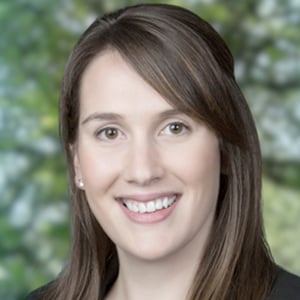
Partner, Lehotsky Keller Cohn LLP
Mary Miller is an experienced litigator focusing on complex trial and appellate litigation in state and federal courts. She has represented clients in matters involving antitrust, fraud, breach of contract, class actions, misappropriation of trade secrets, false advertising, and the False Claims Act. Mary previously first chaired a federal jury trial to successful verdict, and she has authored numerous motions and briefs at all stages of litigation.
Before joining Lehotsky Keller Cohn LLP, Mary was a partner at Kirkland & Ellis LLP in Washington, D.C. Mary previously clerked for the Honorable Justice Samuel A. Alito, Jr. of the Supreme Court of the United States, Judge Priscilla Richman of the United States Court of Appeals for the Fifth Circuit, and Judge Richard J. Leon of the United States District Court for the District of Columbia.

Senior Legal Fellow, Courts and the Constitution, Legal Policy Center, The Heritage Foundation
Zack is a Senior Legal Fellow of Courts and the Constitution at The Heritage Foundation.
He previously served for several years as an Assistant United States Attorney in the Northern District of Florida. Prior to that, he spent two years as an associate in the Washington, D.C. office of Cleary Gottlieb Steen & Hamilton, which he joined after clerking for the Hon. Emmett R. Cox on the United States Court of Appeals for the Eleventh Circuit.
Smith received his undergraduate, master’s, and law degrees from the University of Florida. During law school, Smith served as the Editor in Chief of the Florida Law Review and served on the executive boards of several student organizations, including the UF Chapter of the Federalist Society.
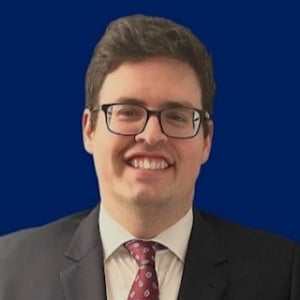
U.S. Chamber Litigation Center, Senior Counsel
Jordan Von Bokern is senior counsel at the U.S. Chamber Litigation Center, the litigation arm of the U.S. Chamber of Commerce. In this capacity, Von Bokern focuses on regulatory litigation, especially affirmative litigation in which the Chamber is suing to challenge federal, state, and local regulations.
Before joining the Litigation Center, Von Bokern served as a trial attorney in the Federal Programs Branch in the Civil Division of the U.S. Department of Justice. In this role, Von Bokern defended the United States and various federal agencies and officers against lawsuits that raised constitutional and statutory challenges to federal statutes, regulations, guidance documents, and other executive branch actions. Von Bokern litigated those claims in federal district courts across the country.
Prior to that, Von Bokern served as senior counsel in the Office of Legal Policy at the U.S. Department of Justice. Here, Von Bokern advised Department of Justice leadership and the White House on the selection, nomination, and confirmation of federal judges. He also worked on Department of Justice policy initiatives.
Von Bokern served as a law clerk for both then-Seventh Circuit Court of Appeals Judge Amy Coney Barrett and Fifth Circuit Court of Appeals Judge Jerry E. Smith. Between his clerkships, he was an associate at Jones Day in their Labor and Employment practice. He graduated cum laude from The University of Chicago Law School, where he served as managing editor of The University of Chicago Law Review. Von Bokern received his B.A. in Political Science, summa cum laude, from Colorado State University.

Director, Project on Criminal Justice, Cato Institute
Matthew Cavedon is the Director of the Cato Institute’s Project on Criminal Justice. He focuses on reforming plea-driven mass adjudication, ensuring police accountability, and defending constitutional criminal originalism. Cavedon’s scholarship has been published (or is forthcoming in) publications including the Arizona State Law Journal, Cato Supreme Court Review, Seattle University Law Review, and Georgetown Journal of Law and Public Policy. Formerly a Georgia public defender and fellow at the Institute for Justice, Cavedon has taught law school courses on criminal law and procedure, as well as the First Amendment. Cavedon clerked for a U.S. district court and the Supreme Court of Georgia. He came to Cato following a fellowship at the Emory University Center for the Study of Law and Religion.
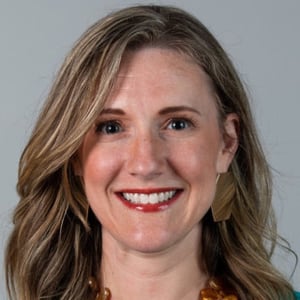
Chief Counsel, Legal Policy, Koch Capabilities, LLC
Sarah Field is Chief Counsel, Legal Policy at Koch Capabilities, LLC, where she develops and scales Koch-wide strategic policy initiatives on a variety of legal, judicial, and regulatory topics.
Sarah specializes in leading initiatives that require rapid vision development, start-up, and scaling expertise. This has included leading criminal justice reform and constitutionally limited government initiatives for the Stand Together community, overseeing the comprehensive portfolio of the Stand Together community’s issue areas, driving Americans for Prosperity’s long-term vision and strategy for addressing the country’s political environment, and leading judicial engagement strategy at Americans for Prosperity.
Before that, Sarah served as Executive Director of the Center for Shared Services, which provided compliance, talent development, and operational support for the Stand Together community. Previously, Sarah held roles at the Charles Koch Foundation, the Federalist Society, and a variety of other nonprofit organizations.
Sarah serves on the board of Americans for Public Safety, an organization dedicated to public safety, justice, and the rule of law.
Sarah received her B.A. from Grove City College, her law degree from Case Western Reserve University School of Law, and is an alumna of the Koch Associate Program.
Senior Attorney, Pacific Legal Foundation
Debbie is a senior attorney in Pacific Legal Foundation’s Property Rights practice, where she primarily focuses on Supreme Court litigation. Debbie found her perfect vocational home at PLF, where she has litigated for the entirety of her 30+ year career.
Debbie has contributed to several of PLF’s Supreme Court victories, including Minnesota Voters Alliance v. Mansky (2018) (First Amendment), Pakdel v. City and County of San Francisco (ripeness doctrine), and Tyler v. Hennepin County (2023) (home equity theft), and currently serves on the litigation teams of many pending and forthcoming petitions for writs of certiorari. In conjunction with litigation, she publishes articles in both the mainstream and scholarly press, including Miranda for Janus: The Government’s Obligation to Ensure Informed Waiver of Constitutional Rights, 55 Loyola L.A. L. Rev. 405 (2022); Amicus briefs: A primer on a vital legal tool for protecting individual liberty, Daily Journal, Two Court Cases Prove Why Free Speech Protections Still Matter at Polling Places, End discrimination against corporate speech, Medical Marijuana and the Limits of the Compassionate Use Act: Ross v. Ragingwire Telecommunications, 12 Chapman L. Rev. 71 (2008), Kick It Up a Notch: First Amendment Protection for Commercial Speech, 54 Case Western Res. L. Rev. 1205 (2004), and Freedom, Responsibility and Risk: Fundamental Premises of Tort Reform, 36 Ind. L. Rev. 645 (2003). She also enjoys mentoring less-experienced attorneys and law clerks in the course of her practice.
Debbie grew up in an economically striving lower–middle–class family. Watching and learning from her exceptionally hard-working father, she grew to appreciate the bounty of political and economic freedom that can move a person up the ladder of success. Working her way through college and law school, Debbie studied political science, history, and literature at Claremont McKenna College (B.A. cum laude 1987) and law at the University of Southern California (J.D. 1990).
Debbie is PLF’s original telecommuter. She was an early adopter who started working from home in 1993—using DOS and a 48,800bps dial-up modem. Since then, she has furthered the cause of liberty and constitutional government while, alongside her husband, raising and homeschooling two children, both of whom are now graduated with the freedom to pursue their own dreams.
Debbie is licensed to practice in California, Arizona (inactive), various federal district and circuit courts, and the U.S. Supreme Court.
Professor of Law, Antonin Scalia Law School, George Mason University
ILYA SOMIN is Professor of Law at George Mason University and the B. Kenneth Simon Chair in Constitutional Studies at the Cato Institute. His research focuses on constitutional law, property law, democratic theory, federalism, and migration rights. He is the author of Free to Move: Foot Voting, Migration, and Political Freedom (Oxford University Press, revised and expanded edition, 2022), Democracy and Political Ignorance: Why Smaller Government is Smarter (Stanford University Press, revised and expanded second edition, 2016), and The Grasping Hand: Kelo v. City of New London and the Limits of Eminent Domain (University of Chicago Press, 2015, rev. paperback ed., 2016), coauthor of A Conspiracy Against Obamacare: The Volokh Conspiracy and the Health Care Case (Palgrave Macmillan, 2013), and co-editor of Eminent Domain: A Comparative Perspective (Cambridge University Press, 2017). Democracy and Political Ignorance has been translated into Italian and Japanese.
Somin’s work has appeared in numerous scholarly journals, including the Yale Law Journal, Stanford Law Review, Northwestern University Law Review, Georgetown Law Journal, Critical Review, and others. Somin has also published articles in a variety of popular press outlets, including the New York Times, Washington Post, Wall Street Journal, Los Angeles Times, CNN, NBC, The Atlantic, USA Today, Boston Globe, US News and World Report, South China Morning Post, National Law Journal and Reason. He has been quoted or interviewed by the New York Times, Washington Post, Wall Street Journal, Time, Newsweek, The Economist, the Christian Science Monitor, the Financial Times, The Guardian, the Associated Press, CBS, MSNBC, NPR, BBC, Reuters, the Canadian Broadcasting Corporation, the Australian Broadcasting Corporation, Radio Free Europe/Radio Liberty, Al Jazeera, and the Voice of America, among other media.
Somin’s writings have been cited in decisions by the United States Supreme Court, multiple state supreme courts and lower federal courts, and the Supreme Court of Israel. He is co-counsel for the plaintiffs in VOS Selections, Inc. v. Trump, a case challenging the constitutionality of President Trump’s “Liberation Day” tariffs. Somin has testified on the use of drones for targeted killing in the War on Terror before the US Senate Judiciary Subcommittee on the Constitution, Civil Rights, and Human Rights. In 2009, he testified on property rights issues at the United States Senate Judiciary Committee confirmation hearings for Supreme Court Justice Sonia Sotomayor. Somin writes regularly for the popular Volokh Conspiracy law and politics blog, now affiliated with Reason magazine (previously affiliated with the Washington Post from 2014 to 2017). From 2006 to 2013, he served as Co-Editor of the Supreme Court Economic Review, one of the country’s top-rated law and economics journals.
Somin has served as a visiting professor at the University of Pennsylvania Law School. He has also been a visiting professor or scholar at the Georgetown University Law Center, the University of Hamburg, Germany, the University of Torcuato Di Tella in Buenos Aires, Argentina, Uriel Reichman University in Israel, and Zhengzhou University in China. He is a University Affiliate of the Schar School of Policy and Government at George Mason University, and an affiliated faculty member of the George Mason University Institute for Immigration Research. Before joining the faculty at George Mason, Somin was the John M. Olin Fellow in Law at Northwestern University Law School in 2002-2003. In 2001-2002, he clerked for the Hon. Judge Jerry E. Smith of the U.S. Court of Appeals for the Fifth Circuit. Professor Somin earned his B.A., Summa Cum Laude, at Amherst College, M.A. in Political Science from Harvard University, and J.D. from Yale Law School.

From the Courthouse Steps: Pung v. Isabella County, Michigan
Deborah J. La Fetra, Ilya Somin
In Pung v. Isabella County, the U.S. Supreme Court rejected claims under the Takings Clause...
From the Courthouse Steps: Pung v. Isabella County, Michigan
Deborah J. La Fetra, Ilya Somin
In Pung v. Isabella County, the U.S. Supreme Court rejected claims under the Takings Clause...
From the Courthouse Steps: Pung v. Isabella County, Michigan
A Seat at the Sitting - February 2026
Jay R. Carson, Sam Gedge, Jeffrey S. Hobday, Mary Elizabeth Miller, Zack Smith, Jordan Von Bokern
Each month, a panel of constitutional experts convenes to discuss the Court’s upcoming docket sitting...
Courthouse Steps Decision: Ellingburg v. United States
Matthew P. Cavedon, Sarah Field
Ellingburg v. United States concerned whether forced restitution under the Mandatory Victims Restitution Act of 1996...