
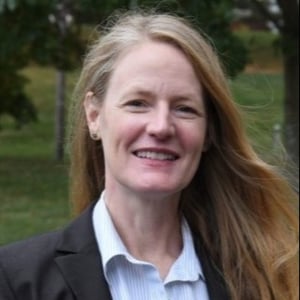
Professor of Law, University of Cincinnati College of Law
Professor Stephanie Hunter McMahon has taught courses in tax law and legal history at the University of Cincinnati College of Law since 2008, and while doing so has won two of the law school’s teaching awards, its faculty excellence award, and its award for scholarship.
To date, much of her scholarship explores the relationship between taxation and the public’s perception of taxation with respect to families and the application of administrative law to tax. Her interest in the development of tax policy led her to write Principles of Tax Policy for West’s Concise Hornbook Series. In the last two years, she has begun scholarship focusing on the tax treatment of disadvantaged groups, both women seeking abortions in states that do not provide access to care and the discriminatory tax treatment of inmate labor.
Her writings have been published in peer-reviewed journals, The Tax Lawyer (ABA journal), Florida Tax Review, and the Virginia Tax Review, as well as student-reviewed journals, such as Northwestern Law Review, Washington Law Review, and Michigan State Law Review. Professor McMahon received her J.D. from Harvard Law School and PhD in American history from the University of Virginia. Following law school, Professor McMahon practiced in the New York offices of Cravath, Swaine & Moore and Skadden, Arps, Slate, Meagher & Flom.
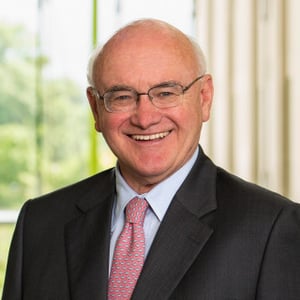
Partner, Jones Day
Ray Wiacek is one of the world’s leading international tax lawyers. He represents multinational corporations on cross-border financings, international acquisitions and reorganizations, and transfer pricing. He is particularly skilled at global planning involving intellectual property. Ray also defends his advice, favorably resolving tax disputes ranging from the proper pricing of foreign autos to the effectiveness of an agreement to share R&D costs worldwide. He is currently challenging the IRS’ anti-inversion regulations in court.
Ray negotiated and closed billions of dollars of cross-border financings for Bank of America against many of the leading banks in Europe. He led the worldwide team integrating Warner-Lambert and Pharmacia with Pfizer after Pfizer’s overhaul of those companies. This included the disposition of nonstrategic assets, such as Schick and Wilkinson Sword to Energizer and Chiclets and Dentyne to Cadbury. Ray also led the team that implemented a worldwide business and tax plan for Halliburton.
In addition to Bank of America, Pfizer, and Halliburton, representative clients have included Bridgestone/Firestone, Celgene, Dow Corning, H.J. Heinz, Isuzu Motors, JP Morgan, Transworld Oil, and United Coal.
Ray has testified many times on international tax matters before Congress and the Internal Revenue Service. He has been listed every year in the Chambers guide to best lawyers, with clients describing him as “pragmatic and deal oriented,” “an excellent negotiator,” with “superb technical skills and analytic ability.”
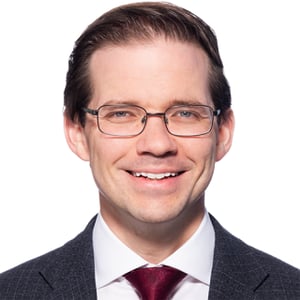
Of Counsel, Covington & Burling LLP
The Honorable Paul J. Ray is currently Of Counsel at Covington & Burling LLP where he advises clients on regulatory opportunities and challenges and helps them formulate and execute advocacy strategies for their regulatory policy priorities before the executive branch and Congress.
During the first Trump Administration, Paul held various senior positions at the Office of Information and Regulatory Affairs (OIRA) within the White House’s Office of Management and Budget, including as acting, and then Senate-confirmed, head of the office. As OIRA Administrator (the "regulations czar"), Paul supervised the review of hundreds of regulations from across the government, drafted numerous executive orders governing the regulatory process, and led the Administration’s regulatory reform effort. As a result of this experience, Paul is well-positioned to help clients understand and achieve regulatory policy priorities in the context of the government’s regulatory agenda and ongoing reform efforts.
Most recently, Paul was also the Director of the Roe Institute for Economic Policy Studies at The Heritage Foundation. In that role, he supervised the formulation of the Foundation’s economic and regulatory policy recommendations and provided technical assistance to congressional committees and staff regarding legislative changes to the regulatory process. In addition to his role at The Heritage Foundation, Paul also served as a Senior Advisor at a strategic advisory firm. Before his time in government, Paul practiced law at a law firm in Washington, specializing in administrative law matters.
Prior to his role at the White House, Paul was Counselor to the Secretary at the U.S. Department of Labor. There he led departmental efforts in high-profile rulemakings and helped formulate the Department’s legal positions and strategy.
Paul served as a law clerk to Supreme Court Justice Samuel Alito and as a law clerk to the Honorable Debra Livingston of the U.S. Court of Appeals for the Second Circuit.
Paul is a thought leader in the conservative legal movement and is a frequent commentator and speaker on regulatory policy and reform matters, including at law schools, professional gatherings, and other venues. He is the Chairman of Innovations in Peacebuilding International and the Regulatory Process Working Group of the Federalist Society’s Regulatory Transparency Project and a public member of the Administrative Conference of the United States. Paul is also an adjunct lecturer at the Hillsdale College School of Government.

Partner, Steptoe & Johnson LLP
Stewart Baker is a partner in the law firm of Steptoe & Johnson in Washington, D.C. From 2005 to 2009, he was the first Assistant Secretary for Policy at the Department of Homeland Security. His law practice covers cybersecurity, data protection, homeland security, and travel and foreign investment regulation; he has been awarded one patent.
Mr. Baker has been General Counsel of the National Security Agency and General Counsel of the commission that investigated WMD intelligence failures prior to the Iraq war. He is the author of Skating on Stilts, a book on terrorism, cybersecurity, and other technology issues; he also hosts the weekly Cyberlaw Podcast.

Founder, NOYB
Max Schrems is an Austrian activist, lawyer, and author who is widely known for his campaigns against Facebook for its privacy infringements, including violations of European privacy laws and the alleged transmission of personal data to the US National Security Agency (NSA) as part of the NSA's PRISM program. Schrems is the founder of None of Your Business (NOYB), a European non-profit organization that focuses on privacy issue and privacy violations in the private sector. NOYB initiatives support the EU's General Data Protection Regulation (GDPR), the ePrivacy Regulation, and information privacy in general.

Executive Vice President, Chief Legal Officer, Gates Corporation
Matthew R. A. Heiman joined the Company in May 2026 and has served as the Company’s Chief Legal Officer and Corporate Secretary since June 2026. As Chief Legal Officer, Mr. Heiman is responsible for all legal functions for Gates, including securities and corporate governance, M&A, litigation, commercial, regulatory, compliance, patents and trademarks, real estate, employment and labor, sustainability and environmental matters. Prior to joining Gates, Mr. Heiman held senior legal leadership roles at Waystar, where he served as Chief Legal & Administrative Officer from 2023 to 2025 and as General Counsel and Corporate Secretary from 2020 to 2023. Prior to that, he was with Johnson Controls, where he served as Vice President, Corporate Secretary, and Associate General Counsel. Mr. Heiman has been a Senior Fellow for the National Security Institute at George Mason University’s Antonin Scalia School of Law since 2018.
Partner, Steptoe & Johnson LLP
Stewart Baker is a partner in the law firm of Steptoe & Johnson in Washington, D.C. From 2005 to 2009, he was the first Assistant Secretary for Policy at the Department of Homeland Security. His law practice covers cybersecurity, data protection, homeland security, and travel and foreign investment regulation; he has been awarded one patent.
Mr. Baker has been General Counsel of the National Security Agency and General Counsel of the commission that investigated WMD intelligence failures prior to the Iraq war. He is the author of Skating on Stilts, a book on terrorism, cybersecurity, and other technology issues; he also hosts the weekly Cyberlaw Podcast.
Executive Vice President, Chief Legal Officer, Gates Corporation
Matthew R. A. Heiman joined the Company in May 2026 and has served as the Company’s Chief Legal Officer and Corporate Secretary since June 2026. As Chief Legal Officer, Mr. Heiman is responsible for all legal functions for Gates, including securities and corporate governance, M&A, litigation, commercial, regulatory, compliance, patents and trademarks, real estate, employment and labor, sustainability and environmental matters. Prior to joining Gates, Mr. Heiman held senior legal leadership roles at Waystar, where he served as Chief Legal & Administrative Officer from 2023 to 2025 and as General Counsel and Corporate Secretary from 2020 to 2023. Prior to that, he was with Johnson Controls, where he served as Vice President, Corporate Secretary, and Associate General Counsel. Mr. Heiman has been a Senior Fellow for the National Security Institute at George Mason University’s Antonin Scalia School of Law since 2018.
Founder, NOYB
Max Schrems is an Austrian activist, lawyer, and author who is widely known for his campaigns against Facebook for its privacy infringements, including violations of European privacy laws and the alleged transmission of personal data to the US National Security Agency (NSA) as part of the NSA's PRISM program. Schrems is the founder of None of Your Business (NOYB), a European non-profit organization that focuses on privacy issue and privacy violations in the private sector. NOYB initiatives support the EU's General Data Protection Regulation (GDPR), the ePrivacy Regulation, and information privacy in general.
Partner, Steptoe & Johnson LLP
Stewart Baker is a partner in the law firm of Steptoe & Johnson in Washington, D.C. From 2005 to 2009, he was the first Assistant Secretary for Policy at the Department of Homeland Security. His law practice covers cybersecurity, data protection, homeland security, and travel and foreign investment regulation; he has been awarded one patent.
Mr. Baker has been General Counsel of the National Security Agency and General Counsel of the commission that investigated WMD intelligence failures prior to the Iraq war. He is the author of Skating on Stilts, a book on terrorism, cybersecurity, and other technology issues; he also hosts the weekly Cyberlaw Podcast.
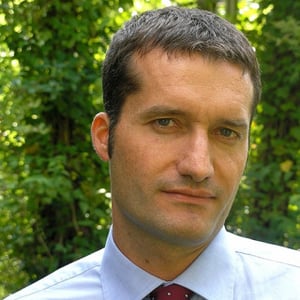
Professor of International and European Law, University Grenoble Alpes
Theodore Christakis is Professor of International and European Law at University Grenoble Alpes, Director of Research for Europe with the Cross-Border Data Forum, and a former Distinguished Visiting Fellow at the New York University Cybersecurity Centre. He is also Chair on the Legal and Regulatory Implications of Artificial Intelligence with the Multidisciplinary Institute on AI (ai-regulation.com), Director of the Centre for International Security and European Studies, and Co-Director of the Grenoble Alpes Data Institute. He is a honorary member of the Institut Universitaire de France.
At the national level, he has exercised responsibilities on digital issues as an active member of the French National Committee for Digital Ethics (created in December 2019 at the request of the French Prime Minister) and as a past member of the French National Digital Council, an independent advisory commission of the French government (2018-2020).
He has published or co-edited 11 books, he is author or co-author of more than 90 academic articles and book chapters, and he has been invited to give lectures and present his work at conferences, workshops, and seminars on over a hundred occasions in more than 31 different countries.
As an international expert he has advised governments, international organisations, and private companies on issues concerning international and European law, cybersecurity, artificial intelligence, and data protection law. He also has experience working as external Data Protection Officer (GDPR compliance) for tech companies.

Professorial Lecturer in Law, The George Washington University
Paul Rosenzweig is an accomplished writer and speaker with a national reputation in cyber security and homeland security. He is the founder of Red Branch Consulting PLLC, a homeland security consulting company. He is also a Senior Advisor to The Chertoff Group. Mr. Rosenzweig formerly served as Deputy Assistant Secretary for Policy in the Department of Homeland Security.
He is a Professorial Lecturer in Law at George Washington University, and a Senior Fellow in the Tech, Law & Security Program at the American University, Washington College of Law. He serves as an advisor to and former member of the American Bar Association Standing Committee on Law and National Security, and a Contributing Editor of the Lawfare blog. He is a member of the ABA Cybersecurity Legal Task Force and of the United States Court of Appeals for the District of Columbia Circuit Advisory Committee on Admissions and Grievances. He serves, as well, as a Hearing Committee Member of the District of Columbia Board of Professional Responsibility. In 2011 he was a Carnegie Fellow in National Security Journalism at the Medill School of Journalism, Northwestern University.
Mr. Rosenzweig is a cum laude graduate of the University of Chicago Law School. He has an M.S. in Chemical Oceanography from the Scripps Institution of Oceanography, University of California at San Diego and a B.A from Haverford College. Following graduation from law school he served as a law clerk to the Honorable R. Lanier Anderson, III of the United States Court of Appeals for the Eleventh Circuit.
He is the author of Cyber Warfare: How Conflicts in Cyberspace are Challenging America and Changing the World and of three video lecture series from The Great Courses, Thinking About Cybersecurity: From Cyber Crime to Cyber Warfare; The Surveillance State: Big Data, Freedom, and You; and Investigating American Presidents.
He is the co-author (with James Jay Carafano) of Winning the Long War: Lessons from the Cold War for Defeating Terrorism and Preserving Freedom and co-editor (with Jill D. Rhodes and Robert S. Litt) of the Cybersecurity Handbook (3rd ed.). He is also co-editor (with Timothy McNulty and Ellen Shearer) of two books, Whistleblowers, Leaks and the Media: The First Amendment and National Security, and National Security Law in the News: A Guide for Journalists, Scholars, and Policymakers. Mr. Rosenzweig is a member of the Literary Society of Washington.
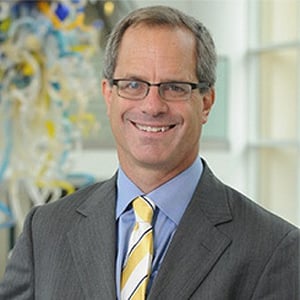
Elizabeth and Thomas Holder Chair, Scheller College of Business, Georgia Institute of Technology
Peter Swire has been a leading privacy and cyberlaw scholar, government leader, and practitioner since the rise of the Internet in the 1990’s. He came to the Georgia Institute of Technology in 2013, where he is the Elizabeth and Tommy Holder Chair in the Scheller College of Business, and Professor in the School of Cybersecurity and Privacy. He is senior counsel with the law firm of Alston & Bird LLP.
Swire served as one of five members of President Obama’s Review Group on Intelligence and Communications Technology. Prior to that, he was co-chair of the global Do Not Track process for the World Wide Web Consortium. He is a Senior Fellow with the Future of Privacy Forum, and has served on the National Academy of Sciences & Engineering Forum on Cyber Resilience.
Under President Clinton, Swire was the Chief Counselor for Privacy, in the U.S. Office of Management and Budget, the first person to have U.S. government-wide responsibility for privacy policy. Under President Obama, he was Special Assistant to the President for Economic Policy.

Professor of International Relations, Stanford University
Stephen D. Krasner is the Graham H. Stuart Professor of International Relations at Stanford, and a Senior Fellow at the Freeman Spogli Institute, the Hoover Institution, and at SIEPR.
From February 2005 to April 2007 he was Director of the Policy Planning Staff at the Department of State. In 2002 he served as Director for Governance and Development at the National Security Council. He is a member of the Board of Directors of the United States Institute of Peace, and was a member of the Foreign Policy Advisory Board of the Department of State from 2012 to 2014. He received his B.A. from Cornell in 1963, M.A. from Columbia in 1967, and Ph.D. from Harvard in 1972.
Before coming to Stanford in 1981 he taught at Harvard and UCLA. He was the Chair of the Political Science Department from 1984 until 1991, Senior Associate Dean for the Social Sciences from 2010-2013, and Deputy Director of the Freeman Spogli Institute from 2007 to 2013. He edited International Organization from 1986 to 1992. His writings have dealt primarily with the political determinants of international economic relations, American foreign policy, and sovereignty. He is currently investigating the impact of external actors on domestic authority structures in weak states.
He was a fellow at the Center for Advanced Studies in the Behavioral Science in 1987-88 and at the Wissenschaftskolleg zu Berlin 2000-2001. He has been a Marcator Fellow at the Free University Berlin since 2014. Professor Krasner is a Fellow of the American Academy of Arts and Sciences and a Member of the Council on Foreign Relations.

Professor Emeritus of Law, Antonin Scalia Law School, George Mason University
Jeremy A. Rabkin is a Professor Emeritus of Law at the Antonin Scalia Law School, George Mason University. Before joining the faculty in June 2007, he was for over two decades a professor in the Department of Government at Cornell University. Professor Rabkin serves on the board of directors of the Center for Individual Rights, a public interest law firm based in Washington, D.C. Previously he was a board member of the U.S. Institute of Peace and the board of academic advisors of the American Enterprise Institute.
Professor Rabkin’s books include Law Without Nations? (Princeton University Press, 2005). He authored “If You Need a Friend, Don’t Call a Cosmopolitan,” a chapter in Varieties of Sovereignty and Citizenship (Sigal R. Ben-Porath & Rogers M. Smith eds., University of Pennsylvania Press, 2012). His articles have appeared in major law reviews and political science journals and his journalistic contributions in a range of magazines and newspapers, including the Washington Post and the Wall Street Journal.
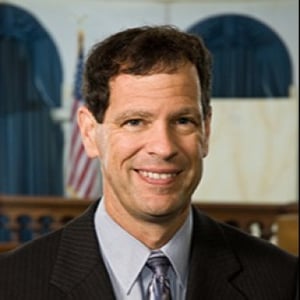
Warren Distinguished Professor of Law, University of San Diego School of Law
Michael D. Ramsey is Warren Distinguished Professor of Law at the University of San Diego School of Law, where he teaches and writes in the areas of Constitutional Law, Foreign Relations Law and International Law. He is the author of The Constitution’s Text in Foreign Affairs (Harvard University Press), co-editor of International Law in the U.S. Supreme Court: Continuity and Change (Cambridge University Press), and co-author of two casebooks, Transnational Law and Practice (2d ed., Aspen) and International Business Transactions: A Problem-Oriented Coursebook (14th ed., West). His scholarly articles have appeared in publications such as the Yale Law Journal, the University of Chicago Law Review, the Georgetown Law Journal and the American Journal of International Law. He received his B.A. magna cum laude from Dartmouth College and his J.D. summa cum laude from Stanford Law School. Prior to teaching, he served as a judicial clerk for Judge J. Clifford Wallace of the United States Court of Appeals for the Ninth Circuit and for Justice Antonin Scalia of the United States Supreme Court, and practiced law with the law firm of Latham & Watkins, where he specialized in international finance and investment. He has taught as a visiting professor at the University of California, San Diego, in the Department of Political Science and at the University of Paris – Sorbonne, in the Department of Comparative Law.
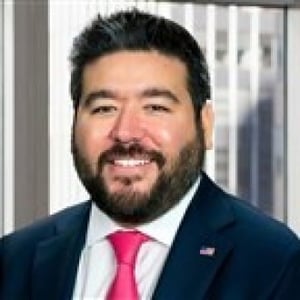
Counsel, Latham & Watkins LLP
Joshua Wu, former Deputy Assistant Attorney General (DAAG) for Appellate and Review in the Tax Division of the US Department of Justice (DOJ), counsels and advocates for companies and high net worth individuals on all aspects of tax controversies and litigation.
Mr. Wu advises on issues ranging from tax accounting disputes, to corporate and partnership transactional issues, international questions, employee benefits matters, and tax exempt controversies. He brings a unique knowledge base and skillset to his clients, drawing on his experience both in senior leadership roles in the DOJ’s Tax Division and in private practice.
Most recently, when Mr. Wu served as DAAG, he oversaw virtually all appeals in civil federal tax cases throughout the country and managed a 40-lawyer team. He also represented the United States in appellate oral arguments, evaluated and approved significant civil settlement offers, and furnished advice to the Tax Division’s trial sections in complex tax cases.
Mr. Wu previously served as DAAG for Policy and Planning, where he led the Office of Management and Administration (OMA) at DOJ. In that role, he led the operational functions of the Tax Division, and led the Office of Legislation and Policy, which works with the Department of Treasury, the IRS, and other agencies on legislative, regulatory, and policy initiatives. Prior to his government service, Mr. Wu was a partner at a large international law firm. He also worked as an associate at Latham.

Chairman and Founder, Institute for Free Speech; Josiah H. Blackmore II/Shirley M. Nault Designated Professor of Law, Capital University Law School
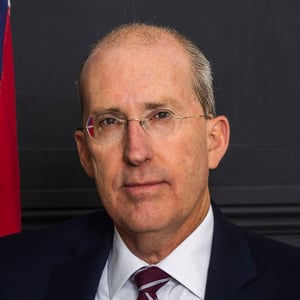
Staff Attorney, Eighth Texas Court of Appeals
David Vandenberg is a staff attorney with the Eighth Texas Court of Appeals in El Paso. He is also the President-Elect of the Texas Association of Appellate Court Attorneys. Prior to working at the Texas Court of Appeals, he was Supervising Attorney for the Third Judicial District Court in Las Cruces, New Mexico, the second largest court of general jurisdiction in the state. He served as summer clerk at the Supreme Court of Micronesia, a former American territory, and at the Texas Third Court of Appeals in Austin. In addition to his law degree from John Marshall School of Law in Atlanta, he earned a doctorate in philosophy with a concentration in epistemology from the University of North Carolina at Chapel Hill with highest awards of the graduate faculty. He is the author of a highly cited article on royalty determination for horizontal and stacked (fracked) oil and gas wells in cross-boundary contexts with the Journal of World Business and Energy Law at Oxford University Press and is a designated reporter for developments in American law for OUP. He has been invited to speak on legal aspects of fracking technology at international energy conferences in Europe and Asia.

Deputy Director, Election Reform Program, Brennan Center for Justice, NYU Law
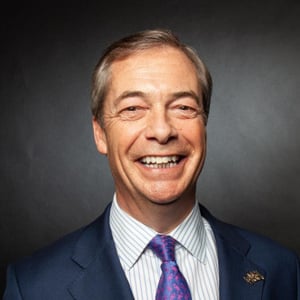
Former Member of the European Parliament, South East England Constituency
Professor Emeritus of Law, Antonin Scalia Law School, George Mason University
Jeremy A. Rabkin is a Professor Emeritus of Law at the Antonin Scalia Law School, George Mason University. Before joining the faculty in June 2007, he was for over two decades a professor in the Department of Government at Cornell University. Professor Rabkin serves on the board of directors of the Center for Individual Rights, a public interest law firm based in Washington, D.C. Previously he was a board member of the U.S. Institute of Peace and the board of academic advisors of the American Enterprise Institute.
Professor Rabkin’s books include Law Without Nations? (Princeton University Press, 2005). He authored “If You Need a Friend, Don’t Call a Cosmopolitan,” a chapter in Varieties of Sovereignty and Citizenship (Sigal R. Ben-Porath & Rogers M. Smith eds., University of Pennsylvania Press, 2012). His articles have appeared in major law reviews and political science journals and his journalistic contributions in a range of magazines and newspapers, including the Washington Post and the Wall Street Journal.
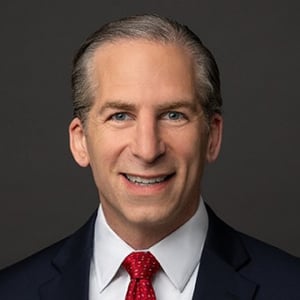
Partner, Cahill Gordon & Reindel LLP; Special Professor of Law, Maurice A. Dean School of Law, Hofstra University
Gary E. Kalbaugh is a nationally recognized leader in commodities, futures, and derivatives law.
Gary is a partner in the New York office of Cahill Gordon & Reindel LLP as well as a Special Professor of Law at the Maurice A. Deane School of Law at Hofstra University, where he teaches derivatives law and banking law.
A preeminent authority in the derivatives field, Gary is the author of the principal treatise Derivatives Law and Regulation (3rd ed. 2021) and serves as Editor-in-Chief of the Futures and Derivatives Law Report, the foremost industry publication. He is a past chair of the New York City Bar Association’s Committee on the Regulation of Futures and Derivatives and has over 15 years of experience as a professor teaching derivatives and banking law.
Gary is the leading derivatives lawyer in the digital assets space, and one of few to truly understand the technical side of emerging financial technology. He serves on the CFTC’s Future of Finance Subcommittee, reflecting his recognized leadership at the intersection of financial regulation and emerging technologies. A frequent speaker, writer, and commentator on derivatives, banking law, artificial intelligence, and digital assets regulation, he has served as conference co-chair for the American Bar Association’s “Artificial Intelligence and Derivatives Market” conference and regularly speaks at major industry conferences on cutting-edge issues in financial regulation and technology. Gary is sought after as a thought leader on the evolving landscape of digital asset regulation and the regulatory implications of AI in financial markets.
At ING, Gary served as Deputy General Counsel and Director, where he chaired swap dealer and security-based swap dealer regulatory committees and provided strategic leadership on U.S., European, and other regulations impacting the organization. He had global responsibility for U.S. derivatives regulatory issues and maintained strong relationships with regulators. Gary also co-developed ING legal’s global artificial intelligence training program and was responsible for U.S. regulatory issues relating to ING’s blockchain-based pilot programs and crypto initiatives.
Previously, Gary served as a lecturer-in-law at Columbia Law School and held senior roles at WestLB, where he was executive director, counsel, and chief U.S. data protection officer and chaired the global Dodd-Frank and underwriting committees. He began his career as an associate at a notable international firm.

Senior Adviser, Crito Capital
Dr. Oonagh McDonald, CBE is currently a senior adviser to Crito Capital, a private placement company based in New York.
A former British Member of Parliament, she became an international expert in financial regulation, after losing her seat in the General Election, 1987. She worked with the Asian Development Bank, advising regulatory authorities in a number of countries, including Sri Lanka and Indonesia. More recently, she has worked with USAID in Ukraine and Moldova. She has served as a non-executive director on the board of both financial services companies and regulatory authorities. In 1998, she was awarded the CBE (Commander of the British Empire), a national honor by the Queen for her work in financial regulation.
She is the author of numerous articles and seven books, of which the most recent are: “Holding bankers to account: A decade of market manipulation, regulatory failures and regulatory reforms” (Manchester University Press, 2019) and “Cryptocurrencies: Money, Trust and Regulation” (Agenda Publishing, 2021).

Senior Fellow, Mises Institute
Alex J. Pollock is a Senior Fellow with the Mises Institute, providing thought and policy leadership on financial issues and the study of financial systems. His work includes cycles of booms and busts, financial crises with their political responses, housing finance, government-sponsored enterprises, risk and uncertainty, central banking, banking and financial regulation, corporate governance, retirement finance, student loans, and the politics of finance.
He previously served as the Principal Deputy Director of the Office of Financial Research in the U.S. Treasury Department 2019-2021. He was a Distinguished Senior Fellow with the R Street Institute 2015-2019 and 2021, and a resident fellow at the American Enterprise Institute, 2004-2015. Among the many aspects of his AEI work, he developed the One Page Mortgage Form to give borrowers in clear form the key information they need in order to know what they are committing themselves to. He was President and CEO of the Federal Home Loan Bank of Chicago from 1991 to 2004. There he invented the Mortgage Partnership Finance program, which successfully created front-end mortgage credit risk sharing beginning in 1997. His decades of banking experience include being a Visiting Scholar at the Federal Reserve Bank of St. Louis, 1991.
Pollock was a director of the CME Group 2004-2019 and of Ascendium Education Group 1989-2019. He is a director and past-chairman of the Great Books Foundation and a past president of the International Union for Housing Finance.
He is the co-author of Surprised Again! - The COVID Crisis and the New Market Bubble (2022), and the author of Finance and Philosophy—Why We’re Always Surprised (2018) and Boom and Bust: Financial Cycles and Human Prosperity (2011), as well as numerous articles and Congressional testimony.
Pollock is a graduate of Williams College, the University of Chicago, and Princeton University.
His work is available on alexjpollock.com.

Executive Director, ADF International
Paul Coleman serves as executive director of ADF International from its headquarters in Vienna, overseeing the advocacy and operations of the global, alliance-building human rights organization.
Specializing in international human rights and European law, Mr. Coleman has been involved in more than 20 cases before the European Court of Human Rights and has authored complaints and submissions to the Inter-American Court of Human Rights, International Criminal Court, Court of Justice of the European Union, UN Human Rights Committee, and numerous national courts.
Mr. Coleman was part of the legal team in the historic Eweida and others v. United Kingdom case, where the court handed down a landmark ruling on religious freedom. Mr. Coleman has also authored legal submissions in numerous precedent-setting cases before the European Court, including three Grand Chamber victories. In Gross v. Switzerland, he submitted that no right to assisted suicide or euthanasia exists under the European Convention on Human Rights. In F.G. v. Sweden, Mr. Coleman argued that European countries have a duty to protect Christian converts escaping persecution in their native countries. In Nagy v. Hungary, he argued that churches must have the freedom to manage their internal affairs without interference from the government or other state bodies.
Coleman earned his LL.M. and postgraduate diploma in legal practice, with distinction, from the Northumbria Law School. He obtained a Bachelor of Laws, with first-class honours, from Newcastle University. Coleman is a solicitor of the Senior Courts of England and Wales and is the author of two books and numerous articles.
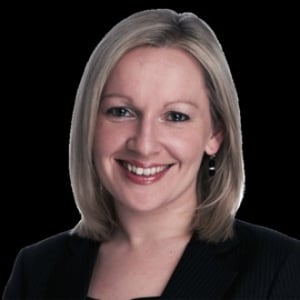
CEO, Vulcan Consulting Ltd
Lucinda Creighton is a former Irish Minister for European Affairs and CEO of Vulcan Consulting Ltd. As a member of the Irish Parliament for nine years, she ran Ireland’s Presidency of the Council of the European Union in 2013, and represented the EU in trade talks with the United States, leading to the formal start of TTIP negotiations in 2013. From 2012 to 2014 she also served as Vice President of the European People’s Party – the largest political party in Europe. Ms. Creighton is an advisory board member of the International Republican Institute and the European Council on Foreign Relations. By training, she is a Barrister and qualified as a New York attorney.
In addition to leading Vulcan Consulting, she is retained as a special advisor on Brexit by Fipra, the international public affairs company. Through this connection, she also collaborates with the London School of Economics providing advisory services on the fallout from Brexit. Vulcan Consulting advises a range of corporate clients on EU policy, regulatory and political issues. They specialise in assisting CEOs and other members of leadership teams in understanding the political and decision making environment in Europe.

Distinguished Senior Fellow, Gatestone Institute
Soeren Kern is a Distinguished Senior Fellow of the Gatestone Institute, and the Senior Analyst for Transatlantic Relations at the Madrid-based Grupo de Estudios Estratégicos / Strategic Studies Group. One of the oldest and most influential foreign policy think tanks in Spain, the Strategic Studies Group is closely tied to Spain's center-right Partido Popular/Popular Party and former Spanish Prime Minister José Maria Aznar.
A political scientist by training, Soeren specializes in European politics as well as US and European defense- and security-related issues. He is also an essayist on European anti-Americanism and the roles of America and Europe in the world.
Mr. Kern is a contributing analyst for Jane's Information Group on Basque and Islamist terrorism in Spain. He writes for Jane's Intelligence Review, Jane's Intelligence Weeklyand Jane's Terrorism and Security Monitor.
Mr. Kern is a regular commentator about European politics and transatlantic relations for newspapers and radio programs in Spain, Europe and the United States. He teaches international relations at the Universidad Antonio de Nebrija, a private university in Madrid.
Previously, Mr. Kern was Senior Analyst for Transatlantic Relations at the Madrid-based Elcano Royal Institute for Strategic and International Affairs. He served in the US Air Force(stationed in Germany) during the last decade of the Cold War, and worked as a defense analyst at Science Applications International Corporation (SAIC), one of the leading corporate think tanks advising the Pentagon on nuclear non-proliferation. He was also the Washington-based managing editor of Arms Control Today, the strategic affairs monthly magazine.
Mr. Kern graduated from the School of Foreign Service at Georgetown University in Washington, DC, and has also studied at the Hebrew University of Jerusalem. He has visited more than one hundred countries, including most of those in the Middle East.
Mr. Kern is a dual citizen of the United States and Germany, and is fluent in English, German and Spanish. He lives in Spain with his wife Mónica.

Founder, Libertas-West Project
Karen Lugo is a constitutional law consultant and national security analyst. She was Director of the Center for Tenth Amendment at Texas Public Policy Foundation from 2013 to 2015. When living in California, she was Co-Director of the Center for Constitutional Jurisprudence Center. From 2005 – 2012, she was a clinical visiting and adjunct professor at Chapman University School of Law where she co-taught the advanced Constitutional Law Clinic. Karen has co-authored and written circuit-level and Supreme Court amicus briefs on such issues as FISA Surveillance, Healthcare Reform, Arizona’s Border Security, Gay Marriage, The Ten Commandments, Eminent Domain, Christian Clubs on University Campuses, and Material Support for Terrorists.
Karen is the founder of the Libertas-West Project, a center for study Islamic integration and radicalization issues. In this capacity, she consulted with the Center for Security Policy to write a book on local over-watch of mosque construction and community engagement called: Mosques in America: A Guide to Accountable Permit Hearings and Continuing Citizen Oversight.
Karen writes and speaks for European and American groups on the importance of basing assimilation efforts on principles of Western exceptionalism. She presented a policy brief to the French Conseil d’Etat analyzing the legal implications of banning the burqa. Ms. Lugo has written one of the most comprehensive overviews of sharia law in American courts, American Family Law and Sharia-Compliant Marriages, for the Federalist Society law journal, Engage. She has written several white papers on the American Law for American Courts legislation and sharia tribunals in America.
Ms. Lugo was an appointee to the California Advisory Committee to the U.S. Commission on Civil Rights. She also taught a Human Rights law course on the contrast between French and English Enlightenment theories in Strasbourg, France.
Until moving from California, Ms. Lugo was a member of the David Horowitz Freedom Center Board of Directors. She was also a regular guest on the Orange County PBS local issues debate program, Inside OC, and she is a contributor to Pajamas Media, National Review Online, City Journal, American Spectator, American Greatness, Townhall.com, American Thinker, Daily Caller, and Family Security Matters. She has been interviewed by dozens of radio hosts and has spoken for civic groups on constitutional and cultural concerns.

Partner, Arnold & Porter
John Elwood is the head of Arnold & Porter’s Appellate and Supreme Court practice. He has argued before the Supreme Court nine times, and appeared before most of the federal courts of appeals. He has successfully argued cases across a broad cross-section of subjects, with particular experience in environmental law, the False Claims Act, government contracting, and federal criminal law
Mr. Elwood’s work has earned him recognition as one of Washington’s top Supreme Court lawyers (Washingtonian, 2013), as one of “a small group of lawyers” with an “outsized influence at the U.S. Supreme Court” (Reuters, 2014), and as one of the country’s most innovative lawyers (Financial Times, 2014). Chambers USA reports that “[t]he much-admired John Elwood is praised for his advocacy skills” (2013), and describes Mr. Elwood as “phenomenal” (2014), “incredibly talented” (2012), and “a much-loved and widely respected lawyer who is quick on his feet” (2010).
Before joining the firm, Mr. Elwood served in senior-level positions in the U.S. Department of Justice. Beginning as an Assistant to the Solicitor General, and continuing with the firm, he has briefed more than 20 merits cases before the Supreme Court of the United States, and has briefed approximately 135 cases at the certiorari stage. As the senior Deputy in the Office of Legal Counsel, he advised the White House and federal agencies on a range of constitutional, statutory, and regulatory issues.

Regulation and Red Tape: Tax Inversions: Unpacking the Pfizer Case
Stephanie McMahon, Raymond Wiacek, Paul J. Ray
In 2014, the pharmaceutical company Pfizer initiated a restructuring, only to encounter impediments from the...
Deep Dive Episode 279 – Transatlantic Debate: Evaluating the EU-US Data Privacy Framework
Stewart A. Baker, Max Schrems, Matthew R. A. Heiman
In October 2022, President Biden issued an executive order regarding the European Union - U.S....
Transatlantic Debate: Evaluating the EU-US Data Privacy Framework
Stewart A. Baker, Matthew R. A. Heiman, Max Schrems
In October 2022, President Biden issued an executive order regarding the European Union - U.S....
A Discussion on the US-EU Trans-Atlantic Data Privacy Framework
Stewart A. Baker, Theodore Christakis, Paul Rosenzweig, Peter Swire
The US-EU Trans-Atlantic Data Privacy Framework, announced in March of this year, is a new...
Taxation by International Consent?
Stephen Krasner, Jeremy A. Rabkin, Michael D. Ramsey, Joshua Wu
Finance ministers from leading industrial states have been trying, this summer, to work out an...
Resolved: That Congress Should Pass H.R. 1, the For the People Act
Bradley A. Smith, David Vandenberg, Daniel I. Weiner
On April 8, 2021, the Federalist Society's El Paso Lawyers Chapter hosted a debate between...
World Politics After Brexit: A Conversation with Nigel Farage
Nigel Farage, Jeremy A. Rabkin
Nigel Farage has been campaigning for Britain’s withdrawal from the European Union since 1999, when...
LIBOR – Will a $200 Trillion Global Benchmark Disappear – or Not?
Gary Kalbaugh, Oonagh Ann McDonald, Alex J. Pollock
LIBOR is a hugely important interest rate benchmark, used globally and embedded in over $200...
EU ‘Incitement to Hate’ Policies: Targets, Cases, and Consequences
Paul Coleman, Lucinda Creighton, Soeren Kern, Karen J. Lugo
As member states of the European Union have adopted laws and programs to curtail inflammatory...
Courthouse Steps: U.S. v. Microsoft
John P. Elwood
The Stored Communications Act of 1986 authorizes federal, state, and local law enforcement officers to...