
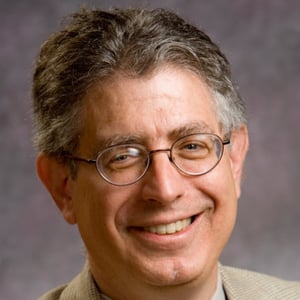
Sho Sato Professor of Law; Faculty Director, Center for Law, Energy, & the Environment, University of California, Berkeley
Dan Farber is the Sho Sato Professor of Law at the University of California, Berkeley. He is also the Co-Director of the Center for Law, Energy, and the Environment. Professor Farber serves on the editorial board of Foundation Press. He is a member of the American Academy of Arts and Sciences and a Life Member of the American Law Institute. He is the editor of Issues in Legal Scholarship.
Professor Farber is a graduate of the University of Illinois, where he earned his B.A., M.A., and J.D. degrees. He graduated, summa cum laude, from the College of Law, where he was the class valedictorian and served as Editor-in-Chief of the University of Illinois Law Review. After graduation from law school, he was a law clerk for Judge Philip W. Tone of the United States Court of Appeals for the Seventh Circuit and then for Justice John Paul Stevens of the Supreme Court of the United States. Professor Farber practiced law with Sidley & Austin, where he primarily worked on energy issues, before joining the University of Illinois College of Law faculty in 1978. He was a member of the University of Minnesota Law School faculty from1981 to 2002, where he was the McKnight Presidential Professor of Public Law. He also has been a Visiting Professor at the Stanford Law School, Harvard Law School, and the University of Chicago Law School.
Among Professor Farber’s eighteen books are RESEARCH HANDBOOK ON PUBLIC CHOICE AND PUBLIC LAW (Elgar 2010) (with A. O’Connell); JUDGMENT CALLS: POLITICS AND PRINCIPLE IN CONSTITUTIONAL LAW (Oxford University Press 2008) (with S. Sherry); RETAINED BY THE PEOPLE: THE “SILENT” NINTH AMENDMENT AND THE RIGHTS AMERICANS DON’T KNOW THEY HAVE (Basic Books 2007); and LINCOLN’S CONSTITUTION (University of Chicago Press 2003).

Special Counsel, Hunton Andrews Kurth
After serving on the United State Court of Appeals for the D. C. Circuit from 2005, Judge Griffith stepped down from the bench in 2020. Currently he is a Lecturer on Law at Harvard Law School, a Fellow at the Wheatley Institute at Brigham Young University, and Special Counsel in the Washington, DC office of the law firm of Hunton Andrews Kurth. Most recently, he was a member of President Biden's Commission on the Supreme Court. He is the author of Civic Charity and the Constitution , and the co-author, along with former judges Michael Luttig and Michael McConnell, of Lost, Not Stolen: The Conservative Case that Trump Lost and Biden Won the 2020 Presidential Election. https://lostnotstolen.org/ . Before being appointed to the D. C. Circuit, Judge Griffith was the General Counsel at BYU; Senate Legal Counsel, the non-partisan chief legal officer of the U. S. Senate; and a partner at Wiley, Rein & Fielding. Long active in rule-of-law programs in former communist nations, Judge Griffith is a member of the international advisory board of the CEELI Institute in Prague. He is a graduate of BYU and the University of Virginia School of Law and is a member of the American Law Institute.

Executive Vice President, The Federalist Society
Dean Reuter is Executive Vice President at the Federalist Society for Law and Public Policy Studies. He has served in two federal government agency Offices of the Inspector General, as Counsel to the Inspector General and Deputy Inspector General, responsible for policing the use of federal funds granted and contracted through those agencies. As such, he helped conduct and oversee criminal investigations across the country. He is the principal author of the non-fiction book, The Hidden Nazi: The Untold Story of America's Deal with the Devil, and editor of Liberty’s Nemesis: The Unchecked Expansion of the State and Confronting Terror: 9/11 and the Future of American National Security. He was appointed by the President and served as Vice-Chairman of the Board of Directors of the Corporation for National and Community Service, and recently served as an appointee on the U.S. Commission on Presidential Scholars. He is a graduate of Hood College (BA with Honors) and the University of Maryland School of Law.

President, JCN
Carrie Campbell Severino is the president of the JCN, and co-author with Mollie Hemingway of the bestselling book Justice on Trial: The Kavanaugh Confirmation and the Future of the Court. As a go-to expert on the confirmation process, Mrs. Severino has been extensively quoted in the media. She regularly appears on television, including FOX, CNN, MSNBC, C-SPAN, and ABC’s This Week.
Severino writes and speaks on a wide range of judicial issues, including the constitutional limits on government, the federal nomination process, and state judicial selection. She has testified before Congress on constitutional questions and briefed Senators on judicial nominations, and regularly files briefs in high-profile Supreme Court cases. She was a law clerk to Supreme Court Justice Clarence Thomas and to Judge David B. Sentelle of the U.S. Court of Appeals for the D.C. Circuit, and is a graduate of Harvard Law School (J.D.), Duke University (B.A., Biology), and Michigan State University (M.A., Linguistics).
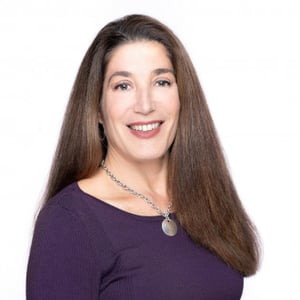
Director, Independent Women's Law Center, Independent Women's
Jennifer C. Braceras, a member of the Federalist Society Board of Visitors, is the director of Independent Women’s Law Center and a former member of the U.S. Commission on Civil Rights.
Ms. Braceras is a graduate of the Harvard Law School, where she served as an editor of the Law Review. After law school, she clerked for two federal judges and practiced labor and employment law with the Boston law firm Ropes & Gray.
A long time political columnist and editor, Ms. Braceras's writing has appeared in a variety of publications, including the Wall Street Journal, the Boston Globe, the Hill, and National Review Online. She co-hosts At the Bar, a bimonthly virtual happy hour discussion about issues at the intersection of law, politics, and culture.
Sho Sato Professor of Law; Faculty Director, Center for Law, Energy, & the Environment, University of California, Berkeley
Dan Farber is the Sho Sato Professor of Law at the University of California, Berkeley. He is also the Co-Director of the Center for Law, Energy, and the Environment. Professor Farber serves on the editorial board of Foundation Press. He is a member of the American Academy of Arts and Sciences and a Life Member of the American Law Institute. He is the editor of Issues in Legal Scholarship.
Professor Farber is a graduate of the University of Illinois, where he earned his B.A., M.A., and J.D. degrees. He graduated, summa cum laude, from the College of Law, where he was the class valedictorian and served as Editor-in-Chief of the University of Illinois Law Review. After graduation from law school, he was a law clerk for Judge Philip W. Tone of the United States Court of Appeals for the Seventh Circuit and then for Justice John Paul Stevens of the Supreme Court of the United States. Professor Farber practiced law with Sidley & Austin, where he primarily worked on energy issues, before joining the University of Illinois College of Law faculty in 1978. He was a member of the University of Minnesota Law School faculty from1981 to 2002, where he was the McKnight Presidential Professor of Public Law. He also has been a Visiting Professor at the Stanford Law School, Harvard Law School, and the University of Chicago Law School.
Among Professor Farber’s eighteen books are RESEARCH HANDBOOK ON PUBLIC CHOICE AND PUBLIC LAW (Elgar 2010) (with A. O’Connell); JUDGMENT CALLS: POLITICS AND PRINCIPLE IN CONSTITUTIONAL LAW (Oxford University Press 2008) (with S. Sherry); RETAINED BY THE PEOPLE: THE “SILENT” NINTH AMENDMENT AND THE RIGHTS AMERICANS DON’T KNOW THEY HAVE (Basic Books 2007); and LINCOLN’S CONSTITUTION (University of Chicago Press 2003).

Paul J. Schierl Professor of Law, University of Notre Dame Law School
Professor Richard W. Garnett teaches and writes in the areas of constitutional law, criminal law, the First Amendment, and law and religion. He is a leading authority on questions and debates regarding religious freedom and church-state relations, and is the founding director of Notre Dame Law School’s Program on Church, State, and Society.
Garnett clerked for the late Chief Justice of the United States, William H. Rehnquist, and also for the late Chief Judge of the United States Court of Appeals for the Eighth Circuit, Richard S. Arnold. He earned his J.D. from Yale Law School in 1995 and his B.A., summa cum laude, from Duke University in 1990. He joined the faculty in 1999 after practicing law in Washington, D.C. with Miller, Cassidy, Larroca & Lewin.
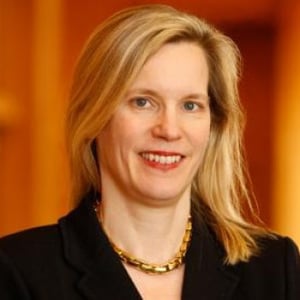
John S. Battle Professor of Law, University of Virginia School of Law
Julia D. Mahoney teaches courses in property, government finance, constitutional law and nonprofit organizations. A graduate of Yale Law School, she joined the University of Virginia faculty as an associate professor in 1999 and is now John S. Battle Professor of Law. She has also taught at the University of Southern California Law School and the University of Chicago Law School, and before entering the legal academy, practiced law at the New York firm Wachtell, Lipton, Rosen & Katz. Her scholarly articles include works on land preservation, eminent domain, health care reform and property rights in human biological materials.
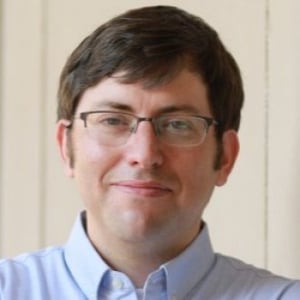
Joel B. Piassick Research Professor of Law, University of Virginia School of Law
Richard M. Re’s primary research and teaching interests are in criminal procedure, federal courts and constitutional law. He joined Virginia’s faculty in 2020 after serving on the faculty of the UCLA School of Law.
Re’s 2016 article, “Narrowing Supreme Court Precedent From Below” received the annual prize from the AALS Federal Courts Section for the best paper on federal courts by an untenured professor. In 2017, the law school's graduating class selected Re as Professor of the Year. And during the oral argument in Hughes v. United States (2018), the justices of the U.S. Supreme Court discussed Re’s amicus brief criticizing the Marks rule.
Re earned an A.B. in social studies from Harvard University and an M.Phil. in political thought and intellectual history from the University of Cambridge. He received his J.D. from Yale Law School. After law school, Re clerked for Judge Brett M. Kavanaugh of the U.S. Court of Appeals for the D.C. Circuit and then for Justice Anthony M. Kennedy of the Supreme Court of the United States. Re also worked as an Honors Program attorney in the Criminal Appellate Section of the U.S. Department of Justice and practiced law at a firm in Washington, D.C.
Re is also a member of PrawfsBlawg and maintains his own blog, Re’s Judicata.
Stearns Weaver Miller Professor, Florida State University College of Law
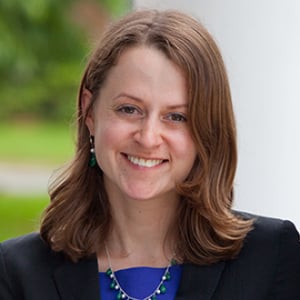
Mary Ziegler is the Stearns Weaver Miller Professor at Florida State University College of Law. She specializes in the legal history of reproduction, the family, sexuality, and the Constitution. In the spring of 2022, she is visiting at Harvard Law School.
Her most recent book, Abortion and the Law in America: A Legal History, Roe v. Wade to the Present, was published by Cambridge University Press in 2020, and received positive reviews in outlets from the Washington Post to the Christian Science Monitor. Her new book, Dollars for Life: The Antiabortion Movement and the Fall of the Republican Establishment, will be published by Yale University Press in the summer of 2022. She also has a forthcoming book with Routledge, Reproduction and the Constitution.
Ziegler's first book, After Roe: The Lost History of the Abortion Debate, was published by Harvard University Press in 2015 and won the 2014 Harvard University Press Thomas J. Wilson Memorial Prize for best first manuscript published by the press in any discipline. Her second book, Beyond Abortion: Roe v. Wade and the Fight for Privacy, was published by Harvard University Press in 2018.
Her law review articles have appeared in leading journals, and she has served as a commentator for or been quoted in leading mass media outlets, including The Atlantic, CNN, Fox News, NBC, MSNBC, the New Republic, Newsweek, The New Yorker, The New York Times, NPR, PBS, Politico, Time, and The Washington Post. She has chaired committees for major legal history organizations, including the American Society for Legal History, the American Association of Law Schools Legal History Section and the American Bar Association’s Committee on Historic Commemorations. She is currently a member of the board of directors of the American Society for Legal History. She has also received recognition for her work in the classroom, including the 2016 Florida State University Teaching Award and the 2015 Transformation Through Teaching Award.
Senior Fellow, Manhattan Institute
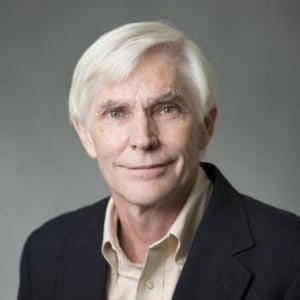
Peter Huber, who died in 2021, was a senior fellow at the Manhattan Institute, where he wrote on drug development, energy, technology, and the law. He was the author of The Cure in the Code: How 20th Century Law Is Undermining 21st Century Medicine (2013); The Bottomless Well: The Twilight of Fuel, the Virtue of Waste, and Why We Will Never Run Out of Energy (2005), coauthored with Mark P. Mills, which Bill Gates said “is the only book I’ve ever seen that really explains energy, its history and what it will be like going forward”; and Hard Green: Saving the Environment from the Environmentalists (2000), which William F. Buckley, Jr., called “the richest contribution ever made to the greening of the political mind” and which set out a new conservative manifesto on the environment that advocates a return to conservation and environmental policy based on sound science and market economics.
Huber’s other books included Judging Science: Scientific Knowledge and the Federal Courts (1999), Law and Disorder in Cyberspace: Abolish the FCC and Let Common Law Rule the Telecosm (1997), Orwell’s Revenge: The 1984 Palimpsest (1994), Galileo’s Revenge: Junk Science in the Courtroom (1991), and Liability: The Legal Revolution and Its Consequences (1988). He published articles in scholarly journals, such as the Harvard Law Review and Yale Law Journal, and in such publications as Science, Wall Street Journal, Reason, Regulation, and National Review. He appeared on numerous TV and radio programs, including Face the Nation and The NewsHour with Jim Lehrer.
Before joining MI, Huber was an associate professor at MIT. He clerked on the D.C. Circuit Court of Appeals for Ruth Bader Ginsburg and on the U.S. Supreme Court for Sandra Day O’Connor. Huber was a partner at the Washington, D.C., law firm Kellogg, Huber, Hansen and Todd. He held a J.D. from Harvard University and a Ph.D. in mechanical engineering from MIT.
Former Judge, United States Court of Appeals, Ninth Circuit
Judge Kozinski served as a United States Circuit Judge for the Ninth Circuit from November 1985 until December 2017. He served as Chief Judge from 2007 to 2014. He graduated from UCLA, receiving an A.B. degree in 1972, and from UCLA Law School, receiving a J.D. degree in 1975.
Prior to his appointment to the appellate bench, Judge Kozinski served as Chief Judge of the United States Claims Court, 1982-85; Special Counsel, Merit Systems Protection Board, 1981-82; Assistant Counsel, Office of Counsel to the President, 1981; Deputy Legal Counsel, Office of President-Elect Reagan, 1980-81; Attorney, Covington & Burling, 1979-81; Attorney, Forry Golbert Singer & Gelles, 1977-79; Law Clerk to Chief Justice Warren E. Burger, 1976-77; and Law Clerk to Circuit Judge Anthony M. Kennedy, 1975-76.
Judge Kozinski is married to Marcy Jane Tiffany and has three children: Yale, Wyatt and Clayton, and three grandchildren: Quinn, Owen and Anna.
Professor Emeritus, Georgetown University Law Center
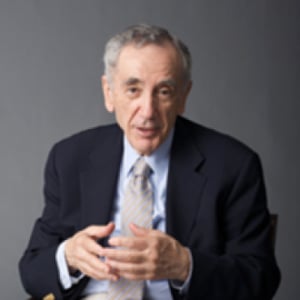
Professor Page’s academic work lies in the fields of torts, products liability, and food, drug and cosmetics regulation. His most recent scholarship includes a book entitled Torts: Proximate Cause (2003); articles entitled “Roscoe Pound, Melvin Belli and the Personal-Injury Bar: The Tale of an Odd Coupling,’ in 26 Thomas M. Cooley Law Review 639 (2009), and “The Voice of Reason: The Products Liability Scholarship of Gary T. Schwartz,” in 53 South Carolina Law Review 797 (2002); and chapters entitled “American Tort Law and the Right to Privacy,” in Personality Rights in European Tort Law (G. Bruggemeier et al. Eds., 2010), and “Reflections on Pain-and-Suffering Damages in the United States,” in Liability in the Third Millennium (A. Ciacchi et al. Eds., 2009).
Professor Page has engaged in advocacy promoting consumer product safety and workplace health and safety before committees of Congress and in the national media, has served on the Board of Directors of Public Citizen, Inc., and is currently the faculty advisor to the Stabile Graduate Law Fellow, dealing with issues relating to the safety of personal-care products.
In addition, he writes about Latin America. His latest volume on the subject, The Brazilians,explains what makes Brazilians Brazilian. His other Latin America-related publications include The Revolution That Never Was: Northeast Brazil, 1955-1964 (1972); Perón: A Biography (1983); a lengthy introduction to Eva Perón, In My Own Words (1996); the prologue to Argentina y la Europa del nazismo: Sus secuelas (I. Klich & C. Buchrucker Eds., 2009); and numerous articles and reviews in newspapers and magazines in the U.S., Argentina and Brazil. From 2003 to 2017 he served as the Director of the Center for the Advancement of the Rule of Law in the Americas at the Law Center. He continues to be a member of the Associated Faculty of the Latin American Studies Program at Georgetown University.

Partner, Arnold & Porter LLP
John Bellinger heads the firm's Global Law and Public Policy practice. He joined the firm in 2009, after holding several senior Presidential appointments in the US government, including as the Senate-confirmed Legal Adviser to the Department of State and Senior Associate Counsel to the President and Legal Adviser to the National Security Council (NSC) at the White House in the George W. Bush Administration.
Mr. Bellinger represents individuals, corporations, and sovereign governments in litigation in US courts and before international institutions. He has extensive experience in US foreign relations litigation involving the Alien Tort Statute, the Foreign Sovereign Immunities Act, the Anti-Terrorism Act, and the diplomatic and official immunities of foreign governments and government officials. He advises clients on other public international law matters, including treaties and international agreements as well as international humanitarian law and human rights law. He also counsels US and foreign clients on national security legal and policy issues, including US and multilateral financial sanctions and asset controls, the extraterritorial application of US criminal and civil laws, and transactions reviewed by the Committee on Foreign Investment in the United States (CFIUS).
Chambers Global ranks Mr. Bellinger among the best international lawyers in the world, reporting that he has "second-to-none experience in public international law, international litigation and foreign sovereign immunity" and that his "experience at the highest levels of the Executive branch...gives him a distinct and important vantage point on legal issues." Chambers adds: "For any cross border work he's just extraordinary, he knows the area inside-out."
Mr. Bellinger was the State Department Legal Adviser–the most senior international lawyer in the US Government–from 2005 to 2009, serving under Secretary of State Condoleezza Rice. He directed more than 170 lawyers on domestic and international law matters affecting US foreign relations. Before joining the State Department, Mr. Bellinger managed Secretary Rice's Senate confirmation process and co-directed her State Department transition team. In 2009, Mr. Bellinger received the Secretary of State's Distinguished Service Award.
Mr. Bellinger has argued cases before the International Court of Justice (Mexico v. United States–(Medellin)) and the Iran-United States Claims Tribunal in The Hague. He has appeared on numerous briefs in US federal courts, including the Supreme Court, in litigation involving international law issues.
As Legal Adviser to the NSC from 2001 to 2005, Mr. Bellinger advised President Bush, Cabinet officials, National Security Advisor Rice, and NSC staff on a wide range of national security and international law issues, including counterterrorism issues after the 9-11 attacks. He was one of the principal drafters of the legislation that created the Director of National Intelligence.
Prior to his service in the Bush Administration, Mr. Bellinger served as Counsel for National Security Matters in the Criminal Division at the US Department of Justice (1997-2001); Of Counsel to the Senate Select Committee on Intelligence (1996); General Counsel of the Commission on the Roles and Capabilities of the US Intelligence Community (1995-1996); and Special Assistant to Director of Central Intelligence William Webster (1988-1991). Mr. Bellinger is an Adjunct Senior Fellow in International and National Security Law at the Council on Foreign Relations. He has testified before Congress on numerous occasions, is quoted regularly in the media on international and national security law matters, and has lectured at numerous US and foreign universities and law schools. He is the author of many law review articles and op-eds on international law, including op-eds in The Washington Post, The New York Times, and The Wall Street Journal. Mr. Bellinger is a senior contributor to the Lawfare blog.
Mr. Bellinger is a member of the Secretary of State's Advisory Committee on International Law. He served from 2005-2019 as one of four US Members of the Permanent Court of Arbitration in The Hague and a member of the US "National Group", which nominates judges to the International Court of Justice. He is also a member of the Council on Foreign Relations and the American Society of International Law. He is a member of the Council of the American Law Institute; the boards of directors of the American Ditchley Foundation, the Salzburg Global Seminar, and the Stimson Center; and the advisory committee of Foreign Affairs magazine.
Mr. Bellinger is a graduate of Princeton University's Woodrow Wilson School of Public and International Affairs, and he holds an MA in Foreign Affairs from the University of Virginia and a JD from Harvard Law School, where he was an editor of the Harvard International Law Journal.
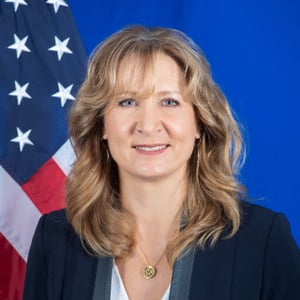
US Department of State, Ambassador At-Large for Global Criminal Justice
Dr. Beth Van Schaack was sworn in as the Department’s sixth Ambassador-at-Large for Global Criminal Justice (GCJ) on March 17, 2022. In this role, she advises the Secretary of State and other Department leadership on issues related to the prevention of and response to atrocity crimes, including war crimes, crimes against humanity, and genocide.
Ambassador Van Schaack served as Deputy to the Ambassador-at-Large in GCJ from 2012 to 2013. Prior to returning to public service in 2022, Ambassador Van Schaack was the Leah Kaplan Visiting Professor in Human Rights at Stanford Law School, where she taught international criminal law, human rights, human trafficking, and a policy lab on Legal & Policy Tools for Preventing Atrocities. In addition, she directed Stanford’s International Human Rights & Conflict Resolution Clinic. Ambassador Van Schaack began her academic career at Santa Clara University School of Law, where, in addition to teaching and writing on international human rights issues, she served as the Academic Adviser to the United States interagency delegation to the International Criminal Court Review Conference in Kampala, Uganda. Earlier in her career, she was a practicing lawyer at Morrison & Foerster, LLP; the Center for Justice & Accountability, a human rights law firm; and the Office of the Prosecutor of the International Criminal Tribunals for Rwanda and the Former Yugoslavia in The Hague.
Ambassador Van Schaack has published numerous articles and papers on international human rights and justice issues, including her 2020 thesis, Imagining Justice for Syria (Oxford University Press). From 2014 to 2022, she served as Executive Editor for Just Security, an online forum for the analysis of national security, foreign policy, and rights. She is a graduate of Stanford (BA), Yale (JD) and Leiden (PhD) Universities.
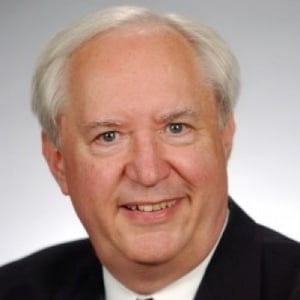
Oppenheim Professor Emeritus of Antitrust and Trade Regulation Law, George Washington University Law School
Thomas D. Morgan is Oppenheim Professor of Antitrust and Trade Regulation Law Emeritus at George Washington University. He was Dean of the Emory University School of Law and on the faculties of the University of Illinois and Brigham Young University. He is co-author of Problems and Materials on Professional Responsibility (14th Ed. 2022), with Professors Mitt Regan and John Dzienkowski. Professor Morgan served as an Associate Reporter for both the American Law Institute’s Restatement of the Law (Third): The Law Governing Lawyers and the American Bar Association’s Ethics 2000 Commission. He is an Executive Committee member of the Federalist Society’s Professional Responsibility and Legal Education Practice Group and a member of the ABA Business Law Section’s Professional Responsibility committee. His book, “The Vanishing American Lawyer” (2010), was published by Oxford University Press.
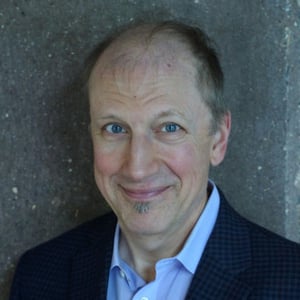
James L. Oberstar Professor of Law and Public Policy, University of St. Thomas School of Law

William Rand Kenan, Jr. Distinguished Professor of Law, University of North Carolina School of Law
William (Bill) Marshall joined the Carolina Law faculty in 2001 and serves as the William R. Kenan Jr. Distinguished Professor of Law. His teaching and research interests include the first amendment, presidential power, election law, federal jurisdiction, federal judicial selection, civil procedure, and media law. Marshall is the author of numerous book chapters, articles, and essays on free speech, separation of powers, the Establishment Clause, and the Free Exercise Clause. His work has appeared in the Harvard Law Review, the Yale Law Journal, the Supreme Court Review, and the University of Chicago Law Review, among others.
Marshall received his law degree from the University of Chicago and his undergraduate degree from the University of Pennsylvania. Marshall was Deputy Counsel to the President and Deputy Assistant to the President during the Clinton Administration and also served as the Solicitor General for the State of Ohio. He has taught at the Northwestern, Boston University, Vanderbilt, Ohio State, DePaul, Case Western Reserve, William and Mary, and the University Connecticut law schools. Prior to beginning his teaching career, Marshall was a Special Assistant Attorney General for the State of Minnesota.
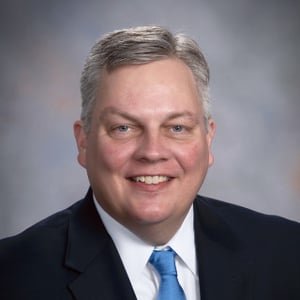
University Professor of Law and Religion and Director of the Eleanor H. McCullen Center for Law, Religion and Public Policy, Villanova University Charles Widger School of Law
Michael P. Moreland was appointed University Professor of Law and Religion and Director of the Eleanor H. McCullen Center for Law, Religion and Public Policy at Villanova University in 2017. Professor Moreland joined the Villanova faculty in 2006 and served as Vice Dean from 2012 to 2015. His research is primarily in the areas of torts, law and religion, constitutional law, and Catholic social thought, and he regularly teaches Torts, First Amendment, seminars in law and religion, and undergraduate courses in ethics.
Professor Moreland is the co-editor of Christianity and Private Law (Routledge, 2021), and his most recent publications include: “The Authority of Tradition: John Henry Newman and Legal Theory” in Christianity and the Making of Irish Law (Routledge, 2025); “Christianity and Torts” in The Oxford Handbook on Christianity and Law, (Oxford University Press, 2023); “Germaneness and Religious Liberty” in the Notre Dame Law Review (2023); “Contingency and Contestation in Christianity and Liberalism” in the Notre Dame Law Review (2023); “Friendship as the Primary Purpose of Law” in The American Journal of Jurisprudence 279 (2022); and “The Moral of Torts” (with Jeffrey Pojanowski) in Christianity and Private Law (Routledge, 2021).
Professor Moreland was a Visiting Professor of Law at the University of Notre Dame and the Mary Ann Remick Senior Visiting Fellow at the Notre Dame Center for Ethics and Culture from 2015 to 2017. He was the Forbes Visiting Fellow at Princeton University in the James Madison Program during academic year 2010-11. He has served as the project leader for grants from the John Templeton Foundation and the Charles Koch Foundation. He serves as the Chair of the Federalist Society’s Religious Liberties Practice Group Executive Committee and the Chair of the Board of Trustees of the Institute for Advanced Catholic Studies at the University of Southern California.
Professor Moreland received his BA in philosophy from the University of Notre Dame, his MA and PhD in theological ethics from Boston College, and his JD from the University of Michigan Law School. Following law school, Professor Moreland clerked for the Honorable Paul J. Kelly Jr., of the United States Court of Appeals for the Tenth Circuit and was an associate at Williams & Connolly LLP in Washington, DC, where he represented clients in First Amendment, professional liability, and products liability matters. Before coming to Villanova, he served as Associate Director for Domestic Policy at the White House under President George W. Bush, where he worked on a range of legal policy issues, including criminal justice, immigration, civil rights, and liability reform.
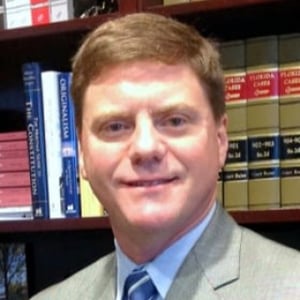
Chief Judge, Florida First District Court of Appeal
Judge Timothy Osterhaus was appointed to the First District Court of Appeal by Governor Rick Scott on May 20, 2013.
Before his appointment Judge Osterhaus served as the Solicitor General of Florida. As Florida’s SG, and as Deputy SG before that, he handled appeals on behalf of the State and its agencies in Florida’s district courts of appeal and in the Florida Supreme Court, as well in the federal courts, including in the United States Supreme Court. He also worked as counsel at the Florida Department of Education; worked in private practice in Washington, D.C.; and served as a law clerk to U.S. District Court Judge Kenneth Ryskamp in West Palm Beach (with a co-clerk who later became his wife).
Judge Osterhaus spent his childhood in South Florida, where he attended Westminster Christian School. After moving away from Florida with his family, he attended high school at Charlotte Christian School in North Carolina, before moving again and graduating from Bristol Tennessee High School in 1989.
Judge Osterhaus received his bachelor’s degree with highest honors from King College (Bristol, Tenn.) in 1993, and his law degree from the University of Virginia in 1997.
President, American Constitution Society for Law and Policy
Caroline Fredrickson joined ACS in 2009 and serves as president. She oversees the group and provides a steady hand of leadership to the nation’s leading progressive legal organization.
During her tenure, Caroline has helped grow ACS, which now has more than 40 lawyer chapters across the country, student chapters in nearly every law school in the United States, and thousands of members throughout the nation. She is an eloquent spokesperson for ACS and the progressive movement on issues such as civil and human rights, judicial nominations and the importance of the courts in America, marriage equality, voting rights, the role of money in politics, labor law, anti-discrimination efforts, and so much more.
She has been widely published on a wide range of legal and constitutional issues and is a frequent guest on television and radio shows, including a notable and well-covered appearance on Fox News’ The O’Reilly Factor in 2012 defending the constitutionality of the Affordable Care Act.
Before joining ACS, Caroline served as the director of the ACLU’s Washington legislative office and as general counsel and legal director of NARAL Pro-Choice America. In addition, Caroline was chief of staff to Sen. Maria Cantwell and deputy chief of staff to then-Senate Democratic Leader Tom Daschle. During the Clinton administration, she served as special assistant to the president for legislative affairs.
Caroline graduated summa cum laude from Yale University with a Bachelor of Arts in Russian and East European Studies in 1986 and from Columbia University School of Law with a J.D. in 1992. In law school, she was a Harlan Fiske Stone scholar, served on the Columbia Law Review and co-founded the Columbia Journal of Gender and Law. Following law school she clerked for James L. Oakes of the United States Court of Appeals for the Second Circuit. She currently is a member of Law Students for Reproductive Justice's Advisory Board.
Guy Anderson Chair and Professor of Law, Brigham Young University Law School
Professor Gedicks holds the Guy Anderson Chair, one of three endowed chairs at the Law School. He is widely published on law and religion, constitutional law, and constitutional interpretation, including two books,The Rhetoric of Church and State: A Critical Analysis of Religion Clause Jurisprudence (Duke University Press, 1995), and Choosing the Dream: The Future of Religion in American Public Life (Greenwood Press, 1991) (with Roger Hendrix).
Professor Gedicks is an active defender of the contraception mandate of the Affordable Care Act and opposes efforts by owners of for-profit businesses to obtain religious exemptions from the mandate. See "One Cheer for Hobby Lobby: Improbably Alternatives, Trutly Strict Scrutiny, and Third-Party Employee Burdens," 38 Harvard Journal of Law & Gender 153 (2015); "RFRA Exemptions from the Contraception Mandate: An Unconstitutional Accommodation of Religion," 49 Harvard Civil Rights-Civil Liberties Law Review (Spring 2014); (with Rebecca Van Tassell); "Invisible Women" Why an Exemption for Hobby Lobby Would Violate the Establishment Clause," 67 Vanderbilt Law Review En Banc 51 (2014) (with Andrew Koppelman); and "With Religious LIberty for All: A Defense of the Affordable Care Act's Contraception Coverage Mandate," 6 Advance 135 (Fall 2012). He was principal author and counsel of record on a U.S. Supreme Court amicus brief filed for himself and twenty other church-state scholars in the Hobby Lobbyand Conestoga Wood cases, arguing that for-profit employer exemptions would violate the Establishment Clause, and also published a widely read op-ed in the Washington Post making the same argument, "Paying for the Boss's Religion" (January 20, 2014).
Other recent publications include "Cross, Crucifix, Culture: An Approach to the Constitutional Meaning of Confessional Symbols," 13 First Amendment Law Review (forthcoming 2015) (with Pasquale Annicchino); "Incorporation of the Establishment Clause Against the States: A Logical, Textual, and HIstorical Account," 88Indiana Law Journal 699 (2013); and "Narrative Pluralism and Doctrinal Incoherence in Hosanna-Tabor," 64 Mercer Law Review 405 (2013). Professor Gedicks is currently working with Professors Robert Tuttle, Micah Schwartzman, and Nelson Tebbe on a freedom of religion casebook for West Publishing.
Professor Gedicks has lectured in Italian at universities throughout Italy, including the Catholic University of the Sacred Heart (at both its Milan and Piacenza campuses), the Graduate Institute of Sant'Anna in Pisa, and the Universities of Alessandria, Como, Florence, Genoa, Milan, Salerno, Siena, and Turin. He was a Visiting Research Fellow for the ReligioWest project at the European University Institute in Florence, Italy during November and December 2012.
Professor Gedicks grew up in New Jersey and southern California. Following graduation from law school and a clerkship on the Ninth Circuit, he practiced corporation and securities law in Phoenix, Arizona, until he entered law teaching. Professor Gedicks joined the BYU law faculty in 1990 after four years at Mercer University in Macon, Georgia, and a year at the University of Denver. He has been a visiting professor at the law schools of the University of North Carolina (Chapel Hill), the University of Notre Dame, and the University of Utah.

Professor of Law, The George Washington University Law School; CEO Emeritus, National Constitution Center
Jeffrey Rosen is the CEO Emeritus of the National Constitution Center, a professor of law at the George Washington University Law School, a senior fellow at the Foundation for Individual Rights and Expression (FIRE), and a contributing editor of The Atlantic. Host of "The Blessings of Liberty" podcast, he was previously the legal affairs editor of The New Republic and a staff writer for the New Yorker.
Rosen is the author of the New York Times bestsellers The Pursuit of Happiness and Conversations with RBG. His new book is The Pursuit of Liberty: How Hamilton vs. Jefferson Ignited the Lasting Battle Over Power in America.
Rosen is a graduate of Harvard College; Oxford University, where he was a Marshall Scholar; and Yale Law School. He is an elected member of the American Philosophical Society and the American Law Institute. In 2024, the French government recognized him as a Chevalier in the Ordre des Arts et des Lettres.
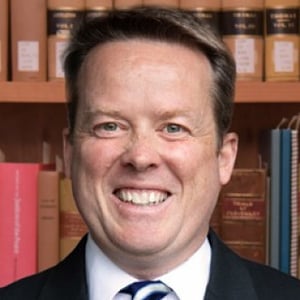
Knights of Columbus Professor of Law and the Catholic Tradition, The Catholic University of America Columbus School of Law
Kevin C. Walsh teaches and writes in the areas of federal jurisdiction, constitutional law, and the U.S. Supreme Court. His scholarship explores the doctrines that define—and delimit—the scope of federal judicial power.
Professor Walsh graduated from Harvard Law School, where he was Articles Chair for Volume 115 of the Harvard Law Review. After graduation, he clerked for Judge Paul V. Niemeyer of the United States Court of Appeals for the Fourth Circuit and Associate Justice Antonin Scalia of the Supreme Court of the United States. He then practiced law at Hunton & Williams LLP and taught as a visiting assistant professor at Villanova University School of Law. Walsh received his A.B. from Dartmouth College, and an M.A. in Theological Studies from the University of Notre Dame. He taught at the University of Richmond School of Law for thirteen years prior to joining The Catholic University of America, where he currently resides.
In early 2011, Professor Walsh filed two amicus curiae briefs addressing jurisdictional issues in the State challenges to the individual mandate in the federal healthcare reform legislation: a brief in Virginia v. Sebelius (United States Court of Appeals for the Fourth Circuit), and a brief in Florida v. HHS (United States Court of Appeals for the Eleventh Circuit).
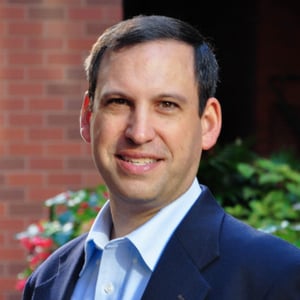
President, Becket Fund for Religious Liberty; Professor of Law and Co-Director of the Center for Religious Liberty, Catholic University; Visiting Professor, Harvard Law School
Mark joined the Becket team in 2011 and splits his time as Associate Professor at The Catholic University of America, Columbus School of Law, and as Visiting Professor at Harvard Law School. Mark teaches constitutional law, religious liberty, torts, and evidence. He has been voted Teacher of the Year three years in a row by the Law School’s Student Bar Association.
Mark has broad experience litigating First Amendment religious exercise and free speech cases. He has represented the winning parties in a variety of Supreme Court First Amendment cases including Hobby Lobby, Little Sisters, Wheaton College, and Holt. In January 2014, Mark argued before the Supreme Court in McCullen v. Coakley, a First Amendment challenge to a Massachusetts speech restriction outside of abortion clinics. The Justices ruled in favor of his clients 9-0. Mark also led a successful eight-year litigation battle against Governor Blagojevich’s effort to force religious pharmacists to distribute the morning-after and week-after pills.
Mark’s academic writing focuses on the First and Fourteenth Amendments, and has appeared in a variety of prestigious journals, including the Harvard Law Review.
Mark is a widely sought after speaker on constitutional issues, particularly concerning abortion and the First Amendment. Professor Rienzi has been invited to discuss these issues at Harvard Law School, Columbia University Law School, Georgetown University Law Center, Boston College Law School, Notre Dame Law School, the National Press Club, and the Capitol. He has been quoted on constitutional law issues on NPR, in the Washington Times, The New York Daily News, and the Chicago Sun-Times. Mark has also been featured on the Kelly File, Fox News Sunday, Your World with Neil Cavuto, Geraldo at Large, CNN Tonight, CNN Live, Andrea Mitchell Reports, and Wall Street Journal Live.
Prior to joining Becket, Mark served as counsel for the litigation department and the intellectual property litigation practice group of WilmerHale LLP. His practice focused on complex civil and appellate litigation with a particular emphasis on intellectual property and First Amendment issues. Prior to joining WilmerHale, he served as law clerk to the Hon. Stephen F. Williams, senior circuit judge for the U.S. Court of Appeals for the D.C. Circuit. Prior to that, Mark was an editor of the Harvard Law Review, and earned his J.D. from Harvard Law School and B.A. from Princeton University, both with honors.

A Discussion on Dobbs
Daniel Farber, Thomas B. Griffith, Dean Reuter, Carrie Campbell Severino
Please join the Federalist Society's Practice Groups for a virtual event on Dobbs v. Jackson...
Topics
Religious Liberty Update on Congressional and Executive Branch Actions
Congress On June 16, 2022, Reps. Jim Banks of Indiana and Doug LaMalfa of California...
Courthouse Steps Oral Argument Webinar: Dobbs v. Jackson Women's Health Organization
Jennifer C. Braceras, Daniel Farber, Richard W. Garnett, Julia D. Mahoney, Richard M. Re, Mary Ziegler
On December 1, 2021, the U.S. Supreme Court will hear Dobbs v. Jackson Women's Health Organization,...
Debate: Liability: The New "New Property" [Archive Collection]
Peter Huber, Alex Kozinski, Joseph A. Page
On March 10-11, 1989, the Federalist Society's University of Michigan student chapter hosted the eighth...
China's Treatment of Turkic Muslims
John B. Bellinger, Beth Van Schaack
The Federalist Society hosts Prof. Beth Van Schaack and Mr. John Bellinger for a discussion...
In Memoriam: Ronald Rotunda and Legal Ethics
Thomas D. Morgan
Ronald D. Rotunda was a highly-respected, widely-published professor of both Legal Ethics and Constitutional Law. ...
Religious Exemptions and Third-Party Harms
Thomas C. Berg
Note from the Editor: This article discusses the effect that third-party harms should have on religious...
Federalism and Religious Liberties
William P. Marshall, Michael P. Moreland, Timothy D. Osterhaus
This panel will address the religious rights of persons and corporate entities in the context...
Debate: Hobby Lobby Decision
Caroline Fredrickson, Frederick Gedicks, Jeffrey Rosen, Kevin C. Walsh
The Freedom Restoration Act prohibits the federal government from requiring closely held corporations to provide contraceptive...
The Little Sisters of the Poor and the HHS Mandate - Podcast
Mark L. Rienzi
On December 8, 2014, the Tenth Circuit Court of Appeals heard arguments in three cases...