
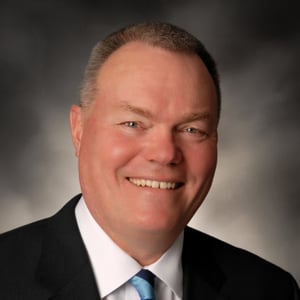
Chief Operating Officer and General Counsel, North American Meat Institute
Mark Dopp is the chief operating officer and general counsel for the North American Meat Institute (NAMI), previously serving as its senior vice president of regulatory affairs and general counsel. In his role, Dopp oversees policy development and represents industry views on significant regulatory, scientific, legislative, and communications matters. He also provides legal counsel to NAMI and oversees its administration and financial matters.
Dopp became the Meat Institute’s outside general counsel in May 1995 and in 1999 he formally joined the Institute and assumed responsibility for its legal and regulatory affairs. Before joining NAMI, Dopp worked at Hogan and Hartson (now Hogan Lovells), where he was active in areas of food and agricultural law on behalf of many clients, including domestic and foreign corporations. He joined Hogan and Hartson in 1989 as an associate and in January 1993 became a partner. Dopp began his career in USDA's Office of the General Counsel in 1984 and entered private practice in 1985.
Dopp received his Bachelor of Science-Agriculture degree in agricultural economics from the University of Wisconsin and his Master of Science from Michigan State University in 1981, also in agricultural economics. He received his law degree in 1984 from the University of Missouri.
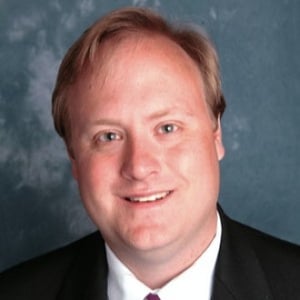
Sean Heather is senior vice president for International Regulatory Affairs and Antitrust at the U.S. Chamber of Commerce. He leads the Chamber’s Center for Global Regulatory Cooperation (GRC), which seeks to align trade, regulatory, and competition policy in support of open and competitive markets, and oversees the organization’s antitrust policy on behalf of its members.
On the international level, Heather directs policy related to data governance, cross-border data flows, artificial intelligence, cybersecurity, and other emerging regulatory frameworks related to the digital transformation of the economy. His efforts focus on advancing sound regulatory practices as the foundation of better regulation and cooperation across jurisdictions. In addition, he is responsible for policy related to foreign direct investment and investment screening.
Heather has made significant contributions to update trade disciplines that address issues ranging from digital trade and regulatory cooperation to competition policy and state-owned enterprises.
Heather has held a variety of positions during his long career at the Chamber. He served in the Congressional and Public Affairs Division and was head of the Chamber’s regional office in Chicago.
Before joining the Chamber, Heather worked for the Illinois comptroller and with several political campaigns across the state. He holds an undergraduate degree and an M.B.A. from the University of Illinois.
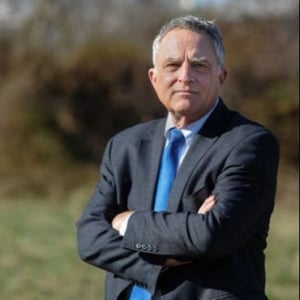
President, Board of Directors, Farm Action
Joe Maxwell is a co-founder of Farm Action. He focuses his work on a vision of an inclusive U.S. economy that works for all people, providing them an equitable opportunity to share in the prosperity they help build, rather than an economy that works for just a handful of individuals and multi-national corporations.
Joe has held key positions in both political and initiative petition campaigns. During the last election cycle, he assisted Presidential, U.S. Senate and U.S. House of Representatives candidates in developing their antitrust, agriculture, and food policy positions.
Joe holds degrees in agriculture economics and law from the University of Missouri. He served as a Missouri state legislator, as Missouri’s Lieutenant Governor, and is retired from the Army National Guard, where he served as a First Sergeant in the Field Artillery. Joe and his brother, Steve, are Missouri family farmers. Joe’s work has been profiled by The Hill, Huffington Post, Mother Jones, Politico, and The Nation. He has been cited by CNN, The New York Times, NPR, USA Today, Washington Post, and more.
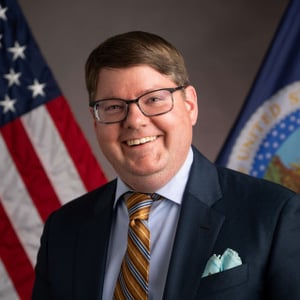
Deputy Secretary of Agriculture, U.S. Department of Agriculture
Judge Stephen Alexander Vaden was appointed as the Deputy Secretary of the U.S. Department of Agriculture on July 7, 2025. Alongside Secretary Brooke L. Rollins, Deputy Secretary Vaden leads the Department’s operations and implements policies that support America’s food and farm systems. A native of Union City, Tennessee, Deputy Secretary Vaden brings expertise in agricultural policy, law, and rural development. Previously, he served as a judge on the U.S. Court of International Trade and as General Counsel of USDA. Throughout Deputy Secretary Vaden’s time as General Counsel, he led successful Supreme Court litigation, advanced regulatory reform, and supported the implementation of the 2018 Farm Bill. He is a graduate of Yale Law School and Vanderbilt University. A public servant with strong agricultural roots, Deputy Secretary Vaden is committed to revitalizing rural America and ensuring an abundant, affordable, and safe U.S. food supply.
Chief Operating Officer and General Counsel, North American Meat Institute
Mark Dopp is the chief operating officer and general counsel for the North American Meat Institute (NAMI), previously serving as its senior vice president of regulatory affairs and general counsel. In his role, Dopp oversees policy development and represents industry views on significant regulatory, scientific, legislative, and communications matters. He also provides legal counsel to NAMI and oversees its administration and financial matters.
Dopp became the Meat Institute’s outside general counsel in May 1995 and in 1999 he formally joined the Institute and assumed responsibility for its legal and regulatory affairs. Before joining NAMI, Dopp worked at Hogan and Hartson (now Hogan Lovells), where he was active in areas of food and agricultural law on behalf of many clients, including domestic and foreign corporations. He joined Hogan and Hartson in 1989 as an associate and in January 1993 became a partner. Dopp began his career in USDA's Office of the General Counsel in 1984 and entered private practice in 1985.
Dopp received his Bachelor of Science-Agriculture degree in agricultural economics from the University of Wisconsin and his Master of Science from Michigan State University in 1981, also in agricultural economics. He received his law degree in 1984 from the University of Missouri.
Sean Heather is senior vice president for International Regulatory Affairs and Antitrust at the U.S. Chamber of Commerce. He leads the Chamber’s Center for Global Regulatory Cooperation (GRC), which seeks to align trade, regulatory, and competition policy in support of open and competitive markets, and oversees the organization’s antitrust policy on behalf of its members.
On the international level, Heather directs policy related to data governance, cross-border data flows, artificial intelligence, cybersecurity, and other emerging regulatory frameworks related to the digital transformation of the economy. His efforts focus on advancing sound regulatory practices as the foundation of better regulation and cooperation across jurisdictions. In addition, he is responsible for policy related to foreign direct investment and investment screening.
Heather has made significant contributions to update trade disciplines that address issues ranging from digital trade and regulatory cooperation to competition policy and state-owned enterprises.
Heather has held a variety of positions during his long career at the Chamber. He served in the Congressional and Public Affairs Division and was head of the Chamber’s regional office in Chicago.
Before joining the Chamber, Heather worked for the Illinois comptroller and with several political campaigns across the state. He holds an undergraduate degree and an M.B.A. from the University of Illinois.
President, Board of Directors, Farm Action
Joe Maxwell is a co-founder of Farm Action. He focuses his work on a vision of an inclusive U.S. economy that works for all people, providing them an equitable opportunity to share in the prosperity they help build, rather than an economy that works for just a handful of individuals and multi-national corporations.
Joe has held key positions in both political and initiative petition campaigns. During the last election cycle, he assisted Presidential, U.S. Senate and U.S. House of Representatives candidates in developing their antitrust, agriculture, and food policy positions.
Joe holds degrees in agriculture economics and law from the University of Missouri. He served as a Missouri state legislator, as Missouri’s Lieutenant Governor, and is retired from the Army National Guard, where he served as a First Sergeant in the Field Artillery. Joe and his brother, Steve, are Missouri family farmers. Joe’s work has been profiled by The Hill, Huffington Post, Mother Jones, Politico, and The Nation. He has been cited by CNN, The New York Times, NPR, USA Today, Washington Post, and more.
Deputy Secretary of Agriculture, U.S. Department of Agriculture
Judge Stephen Alexander Vaden was appointed as the Deputy Secretary of the U.S. Department of Agriculture on July 7, 2025. Alongside Secretary Brooke L. Rollins, Deputy Secretary Vaden leads the Department’s operations and implements policies that support America’s food and farm systems. A native of Union City, Tennessee, Deputy Secretary Vaden brings expertise in agricultural policy, law, and rural development. Previously, he served as a judge on the U.S. Court of International Trade and as General Counsel of USDA. Throughout Deputy Secretary Vaden’s time as General Counsel, he led successful Supreme Court litigation, advanced regulatory reform, and supported the implementation of the 2018 Farm Bill. He is a graduate of Yale Law School and Vanderbilt University. A public servant with strong agricultural roots, Deputy Secretary Vaden is committed to revitalizing rural America and ensuring an abundant, affordable, and safe U.S. food supply.
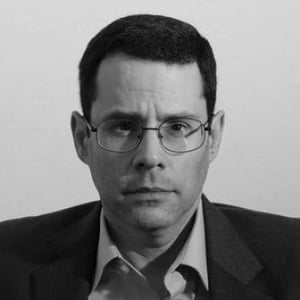
Payson J. Treat Distinguished Research Fellow in Contemporary Asia, Hoover Institution
Michael Auslin, PhD, is the Payson J. Treat Distinguished Research Fellow in Contemporary Asia at the Hoover Institution, Stanford University. A historian by training, he specializes in US policy in Asia and geopolitical issues in the Indo-Pacific region.
Auslin is the author of six books, including Asia’s New Geopolitics: Essays on Reshaping the Indo-Pacific and the best-selling The End of the Asian Century: War, Stagnation, and the Risks to the World's Most Dynamic Region. He is a longtime contributor to the Wall Street Journal and National Review, and his writing appears in other leading publications, including the Financial Times, The Spectator, and Foreign Policy. He comments regularly for US and foreign print and broadcast media.
Previously, Auslin was an associate professor of history at Yale University, a resident scholar at the American Enterprise Institute, and a visiting professor at the University of Tokyo. He is a fellow of the Royal Historical Society, the senior advisor for Asia at the Halifax International Security Forum, a senior fellow at London’s Policy Exchange, and a senior fellow at the Foreign Policy Research Institute. Among his honors are being named a Young Global Leader by the World Economic Forum, a Fulbright Scholar, and a German Marshall Fund Marshall Memorial Fellow. He serves on the board of the Wilton Park USA Foundation.
Auslin cohosts the podcast "The Pacific Century" with John Yoo, where they broadly address developments in China and Asia. They discuss the latest politics, economics, law, and cultural news, with a focus on US policy in the region.
Payson J. Treat, for whom Auslin’s current Stanford position is named, held the first professorship at an American university in what was then called Far Eastern history, a post created for him at Stanford in 1906.
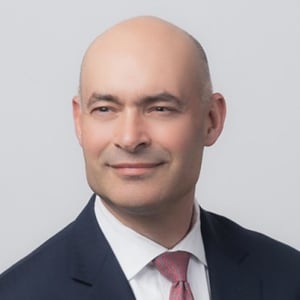
Senior Public Policy Advisor, Wiley Rein LLP
Nova Daly, an experienced international investment and trade policy professional, has held senior leadership positions at the U.S. Departments of the Treasury and Commerce, the White House, and the U.S. Senate. Drawing on his experience in the management, development, and implementation of the U.S. economic and national security policies and programs, he provides both high-level insight and deep operational experience to help clients navigate the policy and regulatory environment surrounding cross-border business activities, especially through the Committee on Foreign Investment in the United States (CFIUS).
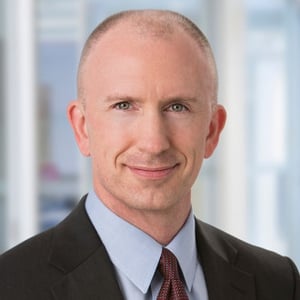
Partner, CFIUS and Foreign Investment Reviews; National Security; International Trade, Skadden, Arps, Slate, Meagher & Flom LLP and Affiliates
Ambassador Gerrish returned to Skadden in 2020 after serving as the deputy U.S. trade representative for Asia, Europe, the Middle East and Industrial Competitiveness. In this role, he formulated and implemented U.S. trade policy for the regions and issues under his purview, led critically important trade negotiations, and developed and executed strategies to address trade barriers and unfair trade practices in countries around the world. In addition, he was responsible for global trade policy in the areas of intellectual property and innovation. Ambassador Gerrish served as lead negotiator for the U.S.-China Economic and Trade Agreement and played a key role in the negotiation or renegotiation of several other major trade agreements, including the U.S.-Japan Trade Agreement, the U.S.-Japan Digital Trade Agreement, the United States-Mexico-Canada Agreement and the U.S.-Korea Free Trade Agreement. From April 2018 to May 2019, Ambassador Gerrish also served as acting president and chairman of the Export-Import Bank of the United States, where he developed and implemented major policy initiatives, including an increased focus on programs to aid small businesses.
Ambassador Gerrish helps clients navigate challenges and barriers in international trade and investment. He advises on the market access opportunities and compliance challenges presented by trade agreements, and counsels clients on how to address market access issues, trade barriers and unfair trade practices that affect their ability to export to, operate within or invest in other countries. He develops strategies for clients to open or maintain international markets for their products or services, and he advocates on their behalf before the U.S. government and foreign governments. Additionally, Ambassador Gerrish advises clients on how best to structure their operations and supply chains to avoid supply chain disruptions and take advantage of current trade agreements and structures.
Ambassador Gerrish also works with clients in ongoing negotiations relating to international trade agreements, including negotiations at the World Trade Organization and for bilateral trade agreements. He advises clients on how such negotiations may affect their interests and operations and helps them to develop and execute strategies for the negotiations.
Another important part of Ambassador Gerrish’s practice is working closely with clients in matters involving U.S. export controls and U.S. customs laws and regulations. He has helped a broad array of clients in handling compliance issues, interpreting the scope and applicability of the requirements in these areas, developing and implementing company compliance programs, and resolving internal investigations and government enforcement matters.
Ambassador Gerrish has extensive experience assisting companies in complex antidumping, countervailing duty and safeguards cases and in other high-stakes trade disputes before the U.S. government and foreign governments and international institutions. He has litigated hundreds of cases before the U.S. Department of Commerce, U.S. International Trade Commission, U.S. Court of International Trade, U.S. Court of Appeals for the Federal Circuit, North American Free Trade Agreement binational panels and World Trade Organization dispute settlement panels. In addition, Ambassador Gerrish works with clients on national security investigations under Section 232 of the Trade Expansion Act of 1962 and in investigations into unfair trade policies and practices before the U.S. Trade Representative’s Office under Section 301 of the Trade Act of 1974. He has achieved highly successful outcomes for clients in these matters in industries ranging from steel to geosynthetics.
Ambassador Gerrish also assists clients in navigating national security reviews before the Committee on Foreign Investment in the United States (CFIUS). In this capacity, he draws upon his experience at the U.S. Trade Representative’s Office, where he advised on CFIUS reviews and helped to formulate the regulations and policies implementing the Foreign Investment Risk Review Modernization Act.
Ambassador Gerrish is a frequent speaker on international trade topics. He also was previously appointed (and reappointed) by the chief judge of the U.S. Court of International Trade to serve as a member of the court’s Rules Advisory Committee, and he served as co-chair of the International Trade Committee and a board member of the Customs and International Trade Bar Association. Ambassador Gerrish repeatedly has been selected for inclusion in The Best Lawyers in America.

Professor Emeritus of Law, Antonin Scalia Law School, George Mason University
Jeremy A. Rabkin is a Professor Emeritus of Law at the Antonin Scalia Law School, George Mason University. Before joining the faculty in June 2007, he was for over two decades a professor in the Department of Government at Cornell University. Professor Rabkin serves on the board of directors of the Center for Individual Rights, a public interest law firm based in Washington, D.C. Previously he was a board member of the U.S. Institute of Peace and the board of academic advisors of the American Enterprise Institute.
Professor Rabkin’s books include Law Without Nations? (Princeton University Press, 2005). He authored “If You Need a Friend, Don’t Call a Cosmopolitan,” a chapter in Varieties of Sovereignty and Citizenship (Sigal R. Ben-Porath & Rogers M. Smith eds., University of Pennsylvania Press, 2012). His articles have appeared in major law reviews and political science journals and his journalistic contributions in a range of magazines and newspapers, including the Washington Post and the Wall Street Journal.
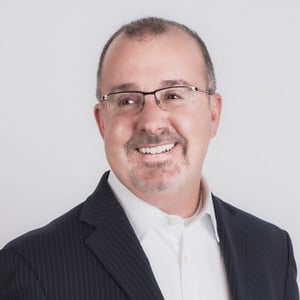
Chair, International Trade & National Security Practice Group, Buchanan Ingersoll & Rooney
Mr. Pickard counsels U.S. and international clients on the laws and regulations governing international trade, with particular emphasis on import remedy, anti-bribery, national security, and export control issues. He represents and advises clients in matters related to trade remedy investigations (including antidumping, countervailing duty, and safeguard cases), U.S. economic sanctions, export controls, anti-boycott measures, and the Foreign Corrupt Practices Act (FCPA). Mr. Pickard provides comprehensive international trade law compliance guidance, including assessing and resolving sensitive national security matters; developing corporate compliance programs; establishing compliance with the National Industrial Security Program (NISP) and mitigating Foreign Ownership, Control, or Influence (FOCI) issues; conducting internal investigations relating to potential violations; and appearing before the relevant agencies in connection with investigations, licensing, and enforcement actions. He also teams with the firm’s Election Law & Government Ethics Group to provide guidance pertaining to the Foreign Agents Registration Act (FARA).
Mr. Pickard represents clients before the U.S. International Trade Commission (ITC), the U.S. Department of the Treasury’s Office of Foreign Assets Control (OFAC), the U.S. Department of Justice (DOJ), the U.S. Department of State’s Directorate of Defense Trade Controls (DDTC), the U.S. Department of Commerce’s Bureau of Industry and Security (BIS) and International Trade Administration (ITA), the U.S. Department of Defense’s Defense Security Service (DSS), the Committee on Foreign Investment in the United States (CFIUS), the U.S. Court of International Trade, and the U.S. Court of Appeals for the Federal Circuit.
Partner, International Trade, King & Spalding LLP
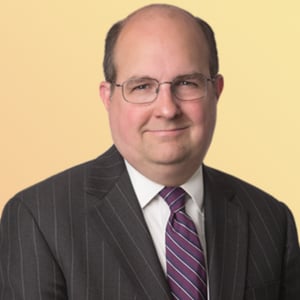
Stephen P. Vaughn is a Partner in the International Trade Team of King & Spalding who works primarily on international trade litigation and policy matters. In April 2019, Stephen completed more than two years of service as the General Counsel for the Office of the United States Trade Representative (USTR). In that position, he managed a team of government attorneys representing U.S. interests in both trade negotiations and trade litigation. During two months in early 2017, Stephen also served as the acting U.S. Trade Representative. He is widely regarded as one of the world’s foremost authorities on current U.S. trade policy, as well as one of the most talented U.S. trade remedy litigators.
Counsel, International Trade; National Security; CFIUS, Skadden, Arps, Slate, Meagher & Flom LLP
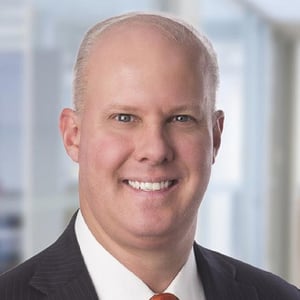
Dan Gerkin advises on issues involving the transnational flow of goods, software, technology and services, as well as investments in the United States and abroad.
Specifically, Mr. Gerkin counsels a variety of U.S., international and multinational clients in matters concerning U.S. export controls, economic embargoes and sanctions, investment security reviews, customs, and trade remedies and other trade-related investigations, often in connection with mergers and acquisitions and other business transactions.
Mr. Gerkin represents clients regarding compliance with the Export Administration Regulations (EAR), including anti-boycott compliance, the International Traffic in Arms Regulations (ITAR), the embargoes and sanctions programs administered by the Office of Foreign Assets Control, and sanctions-related legislation. Additionally, he assists clients with commodity classification requests, commodity jurisdiction requests, advisory opinion requests, applications for licenses and other export authorizations, voluntary prior disclosures and responses to administrative subpoenas, and has created comprehensive export compliance policies and procedures manuals.
Mr. Gerkin has counseled clients in connection with matters implicating the Committee on Foreign Investment in the United States (CFIUS) and has successfully led a number of clients through the CFIUS clearance process. His experience includes transactions in the energy, telecommunications, financial services and industrial sectors, among others.
Additionally, Mr. Gerkin represents U.S. importers before U.S. Customs and Border Protection (CBP) and the U.S. Court of International Trade in connection with a wide variety of customs matters, including tariff classification, import valuation, country of origin, country of origin marking, preferential programs and free trade agreements, drawback, reconciliation, temporary importations under bond, Foreign Trade Zones, and textile quota and visa requirements. He also represents foreign manufacturers and exporters and U.S. importers in traditional and nonmarket anti-dumping and countervailing duty proceedings, as well as in Section 201, 232 and 301 proceedings.
Professor and Co-Director of the Herbert Smith Freehills China International Business and Economic Law (CIBEL) Centre, UNSW Law
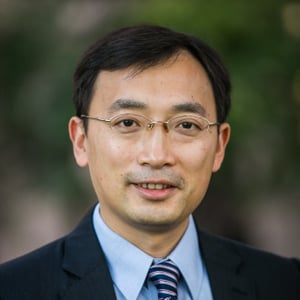
Prof. Heng Wang is a professor and co-director of UNSW Law's Herbert Smith Freehills China International Business and Economic Law (CIBEL) Centre, the largest centre in this field outside China. He is also a co-director of Tsinghua-UNSW Joint Research Centre for International Commercial and Economic Law (JCICEL). Previously, as a professor at Southwest University of Political Science and Law (SWUPL), China, he headed a WTO law center (established by the Department of Treaty and Law, the Ministry of Commerce and SWUPL) and has been the recipient of top research awards and several major grants, including the triennial China Outstanding Law Research Award, twice, (China Law Society) and the Outstanding Research Award in Humanities and Social Science (the Ministry of Education). He was a visiting professorial fellow at UNSW Law (2012-2015). Heng’s research interest focuses on the frontline of China’s international economic law practice (e.g. the Belt and Road Initiative, China-US economic relationship, free trade agreements, possible central bank digital currency), its rationale and implications. His recent papers study US-China trade war, and China’s approach to the Belt and Road Initiative.
Heng has spoken at the WTO Headquarters and over 50 universities in America, Europe, Asia, and Africa, including Harvard University, Oxford University, Columbia University, New York University, University of Pennsylvania, University of Virginia, the LSE, University of Paris 1 and Waseda University. He was a Fernand Braudel Senior Fellow and a Max Weber Fellow at European University Institute. As a visiting professor, he taught at UNSW, University of Ottawa, Case Western Reserve University, Yokohama National University, Xiamen University, and China University of Political Science and Law. In 2019, he taught courses at National University of Singapore and Chinese University of Hong Kong (Shenzhen). Besides being a visiting professor at Sant'Anna School of Advanced Studies and the University of Cagliari, he conducted research at the WTO Secretariat and was the university professorial fellow at SWUPL.
Besides books, he published widely within and outside of China in journals including Journal of International Economic Law, Journal of World Trade, Cornell International Law Journal, Columbia Journal of Asian Law, and Tsinghua China Law Review. Heng was an Executive Council member of the Society of International Economic Law (2008-2015) and is a founding member of the Asian International Economic Law Network, a member of the Asian WTO Research Network, and an executive member of governing council of all three Chinese societies of international economic law or WTO law.
Heng has advised or provided training to the government, international organization (the APEC), and the private sector, and is an arbitrator of arbitration institutions in China and Europe.
He has been often interviewed by media in Australia, China, the US and elsewhere, including by the BBC, Reuters, the Australian Broadcasting Corporation, the South China Morning Post, SBS, Australia Financial Review, and the Australian.
Chief Operating Officer and General Counsel, North American Meat Institute
Mark Dopp is the chief operating officer and general counsel for the North American Meat Institute (NAMI), previously serving as its senior vice president of regulatory affairs and general counsel. In his role, Dopp oversees policy development and represents industry views on significant regulatory, scientific, legislative, and communications matters. He also provides legal counsel to NAMI and oversees its administration and financial matters.
Dopp became the Meat Institute’s outside general counsel in May 1995 and in 1999 he formally joined the Institute and assumed responsibility for its legal and regulatory affairs. Before joining NAMI, Dopp worked at Hogan and Hartson (now Hogan Lovells), where he was active in areas of food and agricultural law on behalf of many clients, including domestic and foreign corporations. He joined Hogan and Hartson in 1989 as an associate and in January 1993 became a partner. Dopp began his career in USDA's Office of the General Counsel in 1984 and entered private practice in 1985.
Dopp received his Bachelor of Science-Agriculture degree in agricultural economics from the University of Wisconsin and his Master of Science from Michigan State University in 1981, also in agricultural economics. He received his law degree in 1984 from the University of Missouri.
Sean Heather is senior vice president for International Regulatory Affairs and Antitrust at the U.S. Chamber of Commerce. He leads the Chamber’s Center for Global Regulatory Cooperation (GRC), which seeks to align trade, regulatory, and competition policy in support of open and competitive markets, and oversees the organization’s antitrust policy on behalf of its members.
On the international level, Heather directs policy related to data governance, cross-border data flows, artificial intelligence, cybersecurity, and other emerging regulatory frameworks related to the digital transformation of the economy. His efforts focus on advancing sound regulatory practices as the foundation of better regulation and cooperation across jurisdictions. In addition, he is responsible for policy related to foreign direct investment and investment screening.
Heather has made significant contributions to update trade disciplines that address issues ranging from digital trade and regulatory cooperation to competition policy and state-owned enterprises.
Heather has held a variety of positions during his long career at the Chamber. He served in the Congressional and Public Affairs Division and was head of the Chamber’s regional office in Chicago.
Before joining the Chamber, Heather worked for the Illinois comptroller and with several political campaigns across the state. He holds an undergraduate degree and an M.B.A. from the University of Illinois.
President, Board of Directors, Farm Action
Joe Maxwell is a co-founder of Farm Action. He focuses his work on a vision of an inclusive U.S. economy that works for all people, providing them an equitable opportunity to share in the prosperity they help build, rather than an economy that works for just a handful of individuals and multi-national corporations.
Joe has held key positions in both political and initiative petition campaigns. During the last election cycle, he assisted Presidential, U.S. Senate and U.S. House of Representatives candidates in developing their antitrust, agriculture, and food policy positions.
Joe holds degrees in agriculture economics and law from the University of Missouri. He served as a Missouri state legislator, as Missouri’s Lieutenant Governor, and is retired from the Army National Guard, where he served as a First Sergeant in the Field Artillery. Joe and his brother, Steve, are Missouri family farmers. Joe’s work has been profiled by The Hill, Huffington Post, Mother Jones, Politico, and The Nation. He has been cited by CNN, The New York Times, NPR, USA Today, Washington Post, and more.
Deputy Secretary of Agriculture, U.S. Department of Agriculture
Judge Stephen Alexander Vaden was appointed as the Deputy Secretary of the U.S. Department of Agriculture on July 7, 2025. Alongside Secretary Brooke L. Rollins, Deputy Secretary Vaden leads the Department’s operations and implements policies that support America’s food and farm systems. A native of Union City, Tennessee, Deputy Secretary Vaden brings expertise in agricultural policy, law, and rural development. Previously, he served as a judge on the U.S. Court of International Trade and as General Counsel of USDA. Throughout Deputy Secretary Vaden’s time as General Counsel, he led successful Supreme Court litigation, advanced regulatory reform, and supported the implementation of the 2018 Farm Bill. He is a graduate of Yale Law School and Vanderbilt University. A public servant with strong agricultural roots, Deputy Secretary Vaden is committed to revitalizing rural America and ensuring an abundant, affordable, and safe U.S. food supply.
Payson J. Treat Distinguished Research Fellow in Contemporary Asia, Hoover Institution
Michael Auslin, PhD, is the Payson J. Treat Distinguished Research Fellow in Contemporary Asia at the Hoover Institution, Stanford University. A historian by training, he specializes in US policy in Asia and geopolitical issues in the Indo-Pacific region.
Auslin is the author of six books, including Asia’s New Geopolitics: Essays on Reshaping the Indo-Pacific and the best-selling The End of the Asian Century: War, Stagnation, and the Risks to the World's Most Dynamic Region. He is a longtime contributor to the Wall Street Journal and National Review, and his writing appears in other leading publications, including the Financial Times, The Spectator, and Foreign Policy. He comments regularly for US and foreign print and broadcast media.
Previously, Auslin was an associate professor of history at Yale University, a resident scholar at the American Enterprise Institute, and a visiting professor at the University of Tokyo. He is a fellow of the Royal Historical Society, the senior advisor for Asia at the Halifax International Security Forum, a senior fellow at London’s Policy Exchange, and a senior fellow at the Foreign Policy Research Institute. Among his honors are being named a Young Global Leader by the World Economic Forum, a Fulbright Scholar, and a German Marshall Fund Marshall Memorial Fellow. He serves on the board of the Wilton Park USA Foundation.
Auslin cohosts the podcast "The Pacific Century" with John Yoo, where they broadly address developments in China and Asia. They discuss the latest politics, economics, law, and cultural news, with a focus on US policy in the region.
Payson J. Treat, for whom Auslin’s current Stanford position is named, held the first professorship at an American university in what was then called Far Eastern history, a post created for him at Stanford in 1906.
Senior Public Policy Advisor, Wiley Rein LLP
Nova Daly, an experienced international investment and trade policy professional, has held senior leadership positions at the U.S. Departments of the Treasury and Commerce, the White House, and the U.S. Senate. Drawing on his experience in the management, development, and implementation of the U.S. economic and national security policies and programs, he provides both high-level insight and deep operational experience to help clients navigate the policy and regulatory environment surrounding cross-border business activities, especially through the Committee on Foreign Investment in the United States (CFIUS).
Partner, CFIUS and Foreign Investment Reviews; National Security; International Trade, Skadden, Arps, Slate, Meagher & Flom LLP and Affiliates
Ambassador Gerrish returned to Skadden in 2020 after serving as the deputy U.S. trade representative for Asia, Europe, the Middle East and Industrial Competitiveness. In this role, he formulated and implemented U.S. trade policy for the regions and issues under his purview, led critically important trade negotiations, and developed and executed strategies to address trade barriers and unfair trade practices in countries around the world. In addition, he was responsible for global trade policy in the areas of intellectual property and innovation. Ambassador Gerrish served as lead negotiator for the U.S.-China Economic and Trade Agreement and played a key role in the negotiation or renegotiation of several other major trade agreements, including the U.S.-Japan Trade Agreement, the U.S.-Japan Digital Trade Agreement, the United States-Mexico-Canada Agreement and the U.S.-Korea Free Trade Agreement. From April 2018 to May 2019, Ambassador Gerrish also served as acting president and chairman of the Export-Import Bank of the United States, where he developed and implemented major policy initiatives, including an increased focus on programs to aid small businesses.
Ambassador Gerrish helps clients navigate challenges and barriers in international trade and investment. He advises on the market access opportunities and compliance challenges presented by trade agreements, and counsels clients on how to address market access issues, trade barriers and unfair trade practices that affect their ability to export to, operate within or invest in other countries. He develops strategies for clients to open or maintain international markets for their products or services, and he advocates on their behalf before the U.S. government and foreign governments. Additionally, Ambassador Gerrish advises clients on how best to structure their operations and supply chains to avoid supply chain disruptions and take advantage of current trade agreements and structures.
Ambassador Gerrish also works with clients in ongoing negotiations relating to international trade agreements, including negotiations at the World Trade Organization and for bilateral trade agreements. He advises clients on how such negotiations may affect their interests and operations and helps them to develop and execute strategies for the negotiations.
Another important part of Ambassador Gerrish’s practice is working closely with clients in matters involving U.S. export controls and U.S. customs laws and regulations. He has helped a broad array of clients in handling compliance issues, interpreting the scope and applicability of the requirements in these areas, developing and implementing company compliance programs, and resolving internal investigations and government enforcement matters.
Ambassador Gerrish has extensive experience assisting companies in complex antidumping, countervailing duty and safeguards cases and in other high-stakes trade disputes before the U.S. government and foreign governments and international institutions. He has litigated hundreds of cases before the U.S. Department of Commerce, U.S. International Trade Commission, U.S. Court of International Trade, U.S. Court of Appeals for the Federal Circuit, North American Free Trade Agreement binational panels and World Trade Organization dispute settlement panels. In addition, Ambassador Gerrish works with clients on national security investigations under Section 232 of the Trade Expansion Act of 1962 and in investigations into unfair trade policies and practices before the U.S. Trade Representative’s Office under Section 301 of the Trade Act of 1974. He has achieved highly successful outcomes for clients in these matters in industries ranging from steel to geosynthetics.
Ambassador Gerrish also assists clients in navigating national security reviews before the Committee on Foreign Investment in the United States (CFIUS). In this capacity, he draws upon his experience at the U.S. Trade Representative’s Office, where he advised on CFIUS reviews and helped to formulate the regulations and policies implementing the Foreign Investment Risk Review Modernization Act.
Ambassador Gerrish is a frequent speaker on international trade topics. He also was previously appointed (and reappointed) by the chief judge of the U.S. Court of International Trade to serve as a member of the court’s Rules Advisory Committee, and he served as co-chair of the International Trade Committee and a board member of the Customs and International Trade Bar Association. Ambassador Gerrish repeatedly has been selected for inclusion in The Best Lawyers in America.
Professor Emeritus of Law, Antonin Scalia Law School, George Mason University
Jeremy A. Rabkin is a Professor Emeritus of Law at the Antonin Scalia Law School, George Mason University. Before joining the faculty in June 2007, he was for over two decades a professor in the Department of Government at Cornell University. Professor Rabkin serves on the board of directors of the Center for Individual Rights, a public interest law firm based in Washington, D.C. Previously he was a board member of the U.S. Institute of Peace and the board of academic advisors of the American Enterprise Institute.
Professor Rabkin’s books include Law Without Nations? (Princeton University Press, 2005). He authored “If You Need a Friend, Don’t Call a Cosmopolitan,” a chapter in Varieties of Sovereignty and Citizenship (Sigal R. Ben-Porath & Rogers M. Smith eds., University of Pennsylvania Press, 2012). His articles have appeared in major law reviews and political science journals and his journalistic contributions in a range of magazines and newspapers, including the Washington Post and the Wall Street Journal.
Chair, International Trade & National Security Practice Group, Buchanan Ingersoll & Rooney
Mr. Pickard counsels U.S. and international clients on the laws and regulations governing international trade, with particular emphasis on import remedy, anti-bribery, national security, and export control issues. He represents and advises clients in matters related to trade remedy investigations (including antidumping, countervailing duty, and safeguard cases), U.S. economic sanctions, export controls, anti-boycott measures, and the Foreign Corrupt Practices Act (FCPA). Mr. Pickard provides comprehensive international trade law compliance guidance, including assessing and resolving sensitive national security matters; developing corporate compliance programs; establishing compliance with the National Industrial Security Program (NISP) and mitigating Foreign Ownership, Control, or Influence (FOCI) issues; conducting internal investigations relating to potential violations; and appearing before the relevant agencies in connection with investigations, licensing, and enforcement actions. He also teams with the firm’s Election Law & Government Ethics Group to provide guidance pertaining to the Foreign Agents Registration Act (FARA).
Mr. Pickard represents clients before the U.S. International Trade Commission (ITC), the U.S. Department of the Treasury’s Office of Foreign Assets Control (OFAC), the U.S. Department of Justice (DOJ), the U.S. Department of State’s Directorate of Defense Trade Controls (DDTC), the U.S. Department of Commerce’s Bureau of Industry and Security (BIS) and International Trade Administration (ITA), the U.S. Department of Defense’s Defense Security Service (DSS), the Committee on Foreign Investment in the United States (CFIUS), the U.S. Court of International Trade, and the U.S. Court of Appeals for the Federal Circuit.
Partner, International Trade, King & Spalding LLP
Stephen P. Vaughn is a Partner in the International Trade Team of King & Spalding who works primarily on international trade litigation and policy matters. In April 2019, Stephen completed more than two years of service as the General Counsel for the Office of the United States Trade Representative (USTR). In that position, he managed a team of government attorneys representing U.S. interests in both trade negotiations and trade litigation. During two months in early 2017, Stephen also served as the acting U.S. Trade Representative. He is widely regarded as one of the world’s foremost authorities on current U.S. trade policy, as well as one of the most talented U.S. trade remedy litigators.
Counsel, International Trade; National Security; CFIUS, Skadden, Arps, Slate, Meagher & Flom LLP
Dan Gerkin advises on issues involving the transnational flow of goods, software, technology and services, as well as investments in the United States and abroad.
Specifically, Mr. Gerkin counsels a variety of U.S., international and multinational clients in matters concerning U.S. export controls, economic embargoes and sanctions, investment security reviews, customs, and trade remedies and other trade-related investigations, often in connection with mergers and acquisitions and other business transactions.
Mr. Gerkin represents clients regarding compliance with the Export Administration Regulations (EAR), including anti-boycott compliance, the International Traffic in Arms Regulations (ITAR), the embargoes and sanctions programs administered by the Office of Foreign Assets Control, and sanctions-related legislation. Additionally, he assists clients with commodity classification requests, commodity jurisdiction requests, advisory opinion requests, applications for licenses and other export authorizations, voluntary prior disclosures and responses to administrative subpoenas, and has created comprehensive export compliance policies and procedures manuals.
Mr. Gerkin has counseled clients in connection with matters implicating the Committee on Foreign Investment in the United States (CFIUS) and has successfully led a number of clients through the CFIUS clearance process. His experience includes transactions in the energy, telecommunications, financial services and industrial sectors, among others.
Additionally, Mr. Gerkin represents U.S. importers before U.S. Customs and Border Protection (CBP) and the U.S. Court of International Trade in connection with a wide variety of customs matters, including tariff classification, import valuation, country of origin, country of origin marking, preferential programs and free trade agreements, drawback, reconciliation, temporary importations under bond, Foreign Trade Zones, and textile quota and visa requirements. He also represents foreign manufacturers and exporters and U.S. importers in traditional and nonmarket anti-dumping and countervailing duty proceedings, as well as in Section 201, 232 and 301 proceedings.
Professor and Co-Director of the Herbert Smith Freehills China International Business and Economic Law (CIBEL) Centre, UNSW Law
Prof. Heng Wang is a professor and co-director of UNSW Law's Herbert Smith Freehills China International Business and Economic Law (CIBEL) Centre, the largest centre in this field outside China. He is also a co-director of Tsinghua-UNSW Joint Research Centre for International Commercial and Economic Law (JCICEL). Previously, as a professor at Southwest University of Political Science and Law (SWUPL), China, he headed a WTO law center (established by the Department of Treaty and Law, the Ministry of Commerce and SWUPL) and has been the recipient of top research awards and several major grants, including the triennial China Outstanding Law Research Award, twice, (China Law Society) and the Outstanding Research Award in Humanities and Social Science (the Ministry of Education). He was a visiting professorial fellow at UNSW Law (2012-2015). Heng’s research interest focuses on the frontline of China’s international economic law practice (e.g. the Belt and Road Initiative, China-US economic relationship, free trade agreements, possible central bank digital currency), its rationale and implications. His recent papers study US-China trade war, and China’s approach to the Belt and Road Initiative.
Heng has spoken at the WTO Headquarters and over 50 universities in America, Europe, Asia, and Africa, including Harvard University, Oxford University, Columbia University, New York University, University of Pennsylvania, University of Virginia, the LSE, University of Paris 1 and Waseda University. He was a Fernand Braudel Senior Fellow and a Max Weber Fellow at European University Institute. As a visiting professor, he taught at UNSW, University of Ottawa, Case Western Reserve University, Yokohama National University, Xiamen University, and China University of Political Science and Law. In 2019, he taught courses at National University of Singapore and Chinese University of Hong Kong (Shenzhen). Besides being a visiting professor at Sant'Anna School of Advanced Studies and the University of Cagliari, he conducted research at the WTO Secretariat and was the university professorial fellow at SWUPL.
Besides books, he published widely within and outside of China in journals including Journal of International Economic Law, Journal of World Trade, Cornell International Law Journal, Columbia Journal of Asian Law, and Tsinghua China Law Review. Heng was an Executive Council member of the Society of International Economic Law (2008-2015) and is a founding member of the Asian International Economic Law Network, a member of the Asian WTO Research Network, and an executive member of governing council of all three Chinese societies of international economic law or WTO law.
Heng has advised or provided training to the government, international organization (the APEC), and the private sector, and is an arbitrator of arbitration institutions in China and Europe.
He has been often interviewed by media in Australia, China, the US and elsewhere, including by the BBC, Reuters, the Australian Broadcasting Corporation, the South China Morning Post, SBS, Australia Financial Review, and the Australian.

Where's the Beef? Inflation at the Grocery Store and Proposed Regulatory Responses
Mark Dopp, Sean Heather, Joe Maxwell, Stephen Alexander Vaden
Although inflation has broadly scattered across the economy, it is the food we buy where...
Where's the Beef? Inflation at the Grocery Store and Proposed Regulatory Responses
Mark Dopp, Sean Heather, Joe Maxwell, Stephen Alexander Vaden
Although inflation has broadly scattered across the economy, it is the food we buy where...
Where's the Beef? Inflation at the Grocery Store and Proposed Regulatory Responses
TeleforumChina Policy and the Pacific Trade Pact
Michael R. Auslin, Nova Daly, Jeffrey Gerrish, Jeremy A. Rabkin
President Trump declined to join the Trans-Pacific Trade Partnership but many of China’s neighbors (with...
China Policy and the Pacific Trade Pact
TeleforumThe U.S. and the World Trade Organization (WTO): Predictions for What Comes Next – A Virtual Conversation with Stephen Vaughn
Daniel B. Pickard, Stephen P. Vaughn
The World Trade Organization (WTO) was intended to be the principal forum for setting the...
The U.S. and the World Trade Organization (WTO): Predictions for What Comes Next – A Virtual Conversation with Stephen Vaughn
TeleforumWill COVID-19 Affect International Trade and Globalization?
Daniel J. Gerkin, Heng Wang
The Federalist Society will host two world-renowned experts—Daniel Gerkin and Prof. Heng Wang—for a conversation...
Will COVID-19 Affect International Trade and Globalization?
TeleforumConservative & Libertarian Legal Scholarship: International Law & Transactions
[Return to Table of Contents] XVI. International Law & Transactions Introductory Materials Emer de Vattel,...