
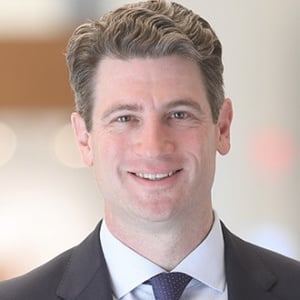
General Counsel and Corporate Secretary, Citigroup
Brent McIntosh joined Citi as General Counsel and Corporate Secretary in October 2021. Brent leads Citi's global legal team, including Citi security and investigative services, and oversees Citi’s independent compliance risk management function.
Brent served as Under Secretary of the Treasury for International Affairs from 2019 to 2021. He led the Treasury Department’s engagement in the G7 and G20, represented the United States on the Financial Stability Board, and managed U.S. participation at the IMF and World Bank. He oversaw Treasury’s international economic and financial policy work, including significant engagements on investment security and regulation of digital currencies. During 2020, he coordinated initiatives to alleviate the COVID-19 pandemic’s economic consequences.
From 2017 to 2019, Brent served as Treasury’s General Counsel, leading the department’s approximately 2,000 lawyers and spearheading its regulatory reform efforts. Prior to that, he was a partner in the law firm of Sullivan & Cromwell, where his practice focused on complex disputes involving financial institutions and multinational corporations.
Brent served in the White House from 2006 until 2009, first as Associate Counsel to the President and then as Deputy Assistant to the President and Deputy Staff Secretary. Before that, he was a Deputy Assistant Attorney General at the Justice Department, where his work focused on national security matters.
A Michigan native, Brent holds an A.B. in economics and political science from the University of Michigan and a J.D. from Yale Law School. Following law school, he was a law clerk to two federal appellate judges, Dennis Jacobs of the Second Circuit and Laurence H. Silberman of the D.C. Circuit. Brent serves on the Board of Directors of the Alexander Hamilton Society, the Board of Advisors for the National Security Institute at George Mason University’s Antonin Scalia Law School, and the Advisory Council of the Official Monetary and Financial Institutions Forum. He is a member of the Council on Foreign Relations, where he previously served as an Adjunct Senior Fellow for International Economics and Finance, as well as the Bretton Woods Committee and the International Institute for Strategic Studies.
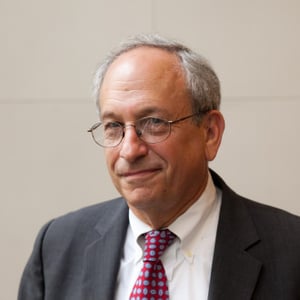
Robert V. Roosa Chair in International Economics; Senior Fellow - Economic Studies, The Brookings Institution
Donald Kohn holds the Robert V. Roosa Chair in International Economics and is a senior fellow in the Economic Studies program at the Brookings Institution. He also currently serves as an external member of the Financial Policy Committee at the Bank of England. Kohn is a 40-year veteran of the Federal Reserve system, serving as member and then vice chair of the Board of Governors from 2002-2010. Kohn is an expert on monetary policy, financial regulation, and macroeconomics and has written extensively on these issues. Prior to taking office as a member of the Board of Governors he served in a number of staff roles at the Board, including secretary of the Federal Open Market Committee (1987-2002) and director of the Division of Monetary Affairs (1987-2001). He has also served as chairman of the Committee on the Global Financial System (CGFS), a central bank panel that monitors and examines broad issues related to financial markets and systems. He advised Federal Reserve Chairman Ben Bernanke throughout the 2008-2009 financial crisis and served as a key adviser to former Fed Chairman Alan Greenspan. He was awarded the Distinguished Achievement Award from The Money Marketeers of New York University (2002), lifetime achievement awards from The Clearing House (2012) and Central Banking magazine (2017), the Distinguished Alumni Award from the College of Wooster (1998), and the Honorary Degree, Doctor of Laws, from the College of Wooster (2006). In 2016, he was made honorary Commander of the British Empire. Kohn was born in November 1942 in Philadelphia. He received a B.A. in economics in 1964 from the College of Wooster and a Ph.D. in economics in 1971 from the University of Michigan. He is married and has two adult children and four grandchildren.
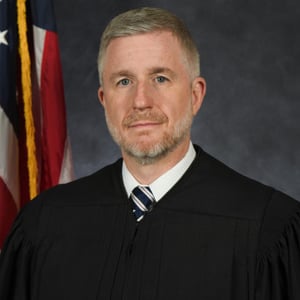
Judge, United States Court of Appeals, Third Circuit
Judge Paul Matey was appointed to the United States Court of Appeals for the Third Circuit in 2019 by President Trump.
Before his judicial service, Judge Matey was a partner at Lowenstein Sandler in New Jersey where he practiced complex commercial litigation and criminal defense. Earlier, Judge Matey was the Senior Vice President, General Counsel and Secretary for University Hospital Newark, an academic medical center and teaching hospital.
He also served as the Deputy Chief Counsel to Governor Chris Christie, and as an Assistant United States Attorney in the District of New Jersey, where he was awarded the Justice Department’s Director’s Award for Superior Performance. He also practiced at the Washington D.C. firm of Kellogg, Hansen, Todd, Figel & Frederick, and served as a law clerk to judges on the United States Court of Appeals for the Third Circuit and the United States District Court for the District of New Jersey.
He earned his bachelor’s degree from the University of Scranton, a Jesuit University, in 1993, and his juris doctorate, summa cum laude, from Seton Hall University School of Law in 2001, where he served as Editor-in-Chief of the Seton Hall Law Review.
In 2019, Judge Matey was elected to membership in the American Law Institute and, since 2020, has lectured on administrative law and the American legal history at Seton Hall.

Senior Fellow, Mises Institute
Alex J. Pollock is a Senior Fellow with the Mises Institute, providing thought and policy leadership on financial issues and the study of financial systems. His work includes cycles of booms and busts, financial crises with their political responses, housing finance, government-sponsored enterprises, risk and uncertainty, central banking, banking and financial regulation, corporate governance, retirement finance, student loans, and the politics of finance.
He previously served as the Principal Deputy Director of the Office of Financial Research in the U.S. Treasury Department 2019-2021. He was a Distinguished Senior Fellow with the R Street Institute 2015-2019 and 2021, and a resident fellow at the American Enterprise Institute, 2004-2015. Among the many aspects of his AEI work, he developed the One Page Mortgage Form to give borrowers in clear form the key information they need in order to know what they are committing themselves to. He was President and CEO of the Federal Home Loan Bank of Chicago from 1991 to 2004. There he invented the Mortgage Partnership Finance program, which successfully created front-end mortgage credit risk sharing beginning in 1997. His decades of banking experience include being a Visiting Scholar at the Federal Reserve Bank of St. Louis, 1991.
Pollock was a director of the CME Group 2004-2019 and of Ascendium Education Group 1989-2019. He is a director and past-chairman of the Great Books Foundation and a past president of the International Union for Housing Finance.
He is the co-author of Surprised Again! - The COVID Crisis and the New Market Bubble (2022), and the author of Finance and Philosophy—Why We’re Always Surprised (2018) and Boom and Bust: Financial Cycles and Human Prosperity (2011), as well as numerous articles and Congressional testimony.
Pollock is a graduate of Williams College, the University of Chicago, and Princeton University.
His work is available on alexjpollock.com.
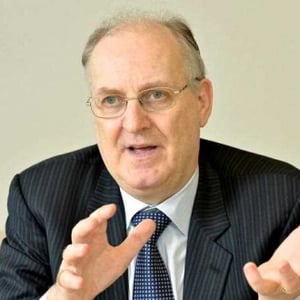
Senior Fellow, Mossavar-Rahmani Center for Business and Government, Harvard Kennedy School
Paul Sheard is Senior Fellow of the Mossavar-Rahmani Center for Business and Government at Harvard Kennedy School. Previously, he was Vice Chairman of S&P Global, after serving as Executive Vice President and Chief Economist. Earlier, he held chief economist positions at Standard & Poor’s Ratings Services, Nomura Securities and Lehman Brothers, and was Head of Japan Equity Investments at Baring Asset Management. Sheard was on the faculty of the Australian National University (ANU) and of Osaka University, and was a visiting assistant professor at Stanford University and foreign visiting scholar at the Bank of Japan.
Sheard is a member of the World Economic Forum’s Global Future Council on the New Economic Agenda (2018-2020) and was a member of the WEF’s Global Agenda Council on the International Monetary System (2010-2012). He was appointed twice, by Prime Minister Hashimoto and by Prime Minister Obuchi, to serve on committees of the Japanese Government’s Economic Deliberation Council. He is on the board of the Foreign Policy Association and is a member of the Bretton Woods Committee, the Council on Foreign Relations, and the Economic Club of New York. Sheard served as a non-executive director of ORIX Corporation (2003-2010). He speaks regularly at conferences around the world, and his views on the global economy and policy are frequently cited in the international press.
Author or editor of several books and numerous academic articles, Sheard’s book in Japanese, Mein Banku Shihon Shugi no Kiki (The Crisis of Main Bank Capitalism), won the Suntory-Gakugei Prize in the Economics–Politics Division. Sheard received a BA (Hons) from Monash University and a Master of Economics and Ph.D. from the ANU. In 2019, he received a Doctor of Laws honoris causa from Monash University.
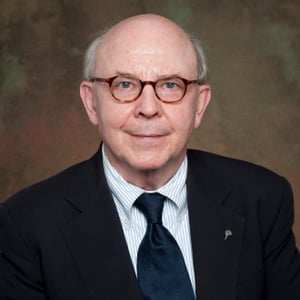
Professor Emeritus of Economics, New York University Stern School of Business
Richard Sylla is Professor Emeritus of Economics at the Stern School of Business, New York University, where from 1990 to 2015 he was Henry Kaufman Professor of the History of Financial Institutions and Markets. Sylla is also a Research Associate of the National Bureau of Economic Research, a Fellow of the Cliometric Society, and a Fellow of the American Academy of Arts & Sciences.
Professor Sylla received the B.A., the M.A., and the Ph.D. from Harvard University, where he was elected to Phi Beta Kappa. His research focus is on the financial history of the United States in comparative contexts. He is the author of Alexander Hamilton: The Illustrated Biography (2016) and The American Capital Market, 1846-1914 (1975); co-author of Alexander Hamilton on Finance, Credit, and Debt (2018), The Evolution of the American Economy (1993; 1st ed., 1980) and A History of Interest Rates, (4th ed., 2005; 3rd ed. Rev., 1996; 3rd ed., 1991); and co-editor of Patterns of European Industrialization—The Nineteenth Century (1991), The State, the Financial System, and Economic Modernization (1999); Founding Choices: American Economic Policy in the 1790s (2011); and Genealogy of American Finance (2015), as well as articles, essays, and reviews in business, economic, and financial history.
Sylla is a former editor of The Journal of Economic History. During 1998-2000, Sylla served as chairman of the board of trustees of the Cliometric Society, an association of quantitative economic historians. In 2000-2001, he was president of the Economic History Association, the professional organization of economic historians in the United States. In 2005-2006, he served as president of the Business History Conference (BHC), the leading professional association of business historians; BHC presented its Lifetime Achievement Award to him in 2011. Currently, Sylla serves as chairman of the board of trustees of the Museum of American Finance, a Smithsonian affiliate museum located at 48 Wall Street in New York.

Wayne A. Abernathy, Wild Bells
Wayne A. Abernathy is a former U.S. Treasury Assistant Secretary for Financial Institutions under President George W. Bush, receiving the Alexander Hamilton Award in recognition of his service. In that office he was also a member of the Board of Directors of the Securities Investor Protection Corporation. Prior to his work at the Treasury, Mr. Abernathy served as Staff Director of the Senate Banking Committee, under Chairman Phil Gramm.
Following his service at the Treasury, Mr. Abernathy worked for 15 years on the staff of the American Bankers Association, as Executive Vice President for Financial Institutions Policy and Regulatory Affairs.
Previous experience with the Senate Banking Committee includes serving as Staff Director of the Subcommittee on Securities during 1995-1998. From 1989 until 1994, Mr. Abernathy was a Republican economist for the committee. He previously worked as a senior legislative assistant for Senator Gramm during 1987-1989 and as an economist for the Banking Committee’s Subcommittee on International Finance and Monetary Policy during 1981-1986, under Chairman Jake Garn.
Mr. Abernathy earned his bachelor’s degree in International Studies from The Johns Hopkins University in 1978. In 1980, he received a master’s degree in International Studies from the School of Advanced International Studies of The Johns Hopkins University.
Robert V. Roosa Chair in International Economics; Senior Fellow - Economic Studies, The Brookings Institution
Donald Kohn holds the Robert V. Roosa Chair in International Economics and is a senior fellow in the Economic Studies program at the Brookings Institution. He also currently serves as an external member of the Financial Policy Committee at the Bank of England. Kohn is a 40-year veteran of the Federal Reserve system, serving as member and then vice chair of the Board of Governors from 2002-2010. Kohn is an expert on monetary policy, financial regulation, and macroeconomics and has written extensively on these issues. Prior to taking office as a member of the Board of Governors he served in a number of staff roles at the Board, including secretary of the Federal Open Market Committee (1987-2002) and director of the Division of Monetary Affairs (1987-2001). He has also served as chairman of the Committee on the Global Financial System (CGFS), a central bank panel that monitors and examines broad issues related to financial markets and systems. He advised Federal Reserve Chairman Ben Bernanke throughout the 2008-2009 financial crisis and served as a key adviser to former Fed Chairman Alan Greenspan. He was awarded the Distinguished Achievement Award from The Money Marketeers of New York University (2002), lifetime achievement awards from The Clearing House (2012) and Central Banking magazine (2017), the Distinguished Alumni Award from the College of Wooster (1998), and the Honorary Degree, Doctor of Laws, from the College of Wooster (2006). In 2016, he was made honorary Commander of the British Empire. Kohn was born in November 1942 in Philadelphia. He received a B.A. in economics in 1964 from the College of Wooster and a Ph.D. in economics in 1971 from the University of Michigan. He is married and has two adult children and four grandchildren.
Judge, United States Court of Appeals, Third Circuit
Judge Paul Matey was appointed to the United States Court of Appeals for the Third Circuit in 2019 by President Trump.
Before his judicial service, Judge Matey was a partner at Lowenstein Sandler in New Jersey where he practiced complex commercial litigation and criminal defense. Earlier, Judge Matey was the Senior Vice President, General Counsel and Secretary for University Hospital Newark, an academic medical center and teaching hospital.
He also served as the Deputy Chief Counsel to Governor Chris Christie, and as an Assistant United States Attorney in the District of New Jersey, where he was awarded the Justice Department’s Director’s Award for Superior Performance. He also practiced at the Washington D.C. firm of Kellogg, Hansen, Todd, Figel & Frederick, and served as a law clerk to judges on the United States Court of Appeals for the Third Circuit and the United States District Court for the District of New Jersey.
He earned his bachelor’s degree from the University of Scranton, a Jesuit University, in 1993, and his juris doctorate, summa cum laude, from Seton Hall University School of Law in 2001, where he served as Editor-in-Chief of the Seton Hall Law Review.
In 2019, Judge Matey was elected to membership in the American Law Institute and, since 2020, has lectured on administrative law and the American legal history at Seton Hall.
Senior Fellow, Mises Institute
Alex J. Pollock is a Senior Fellow with the Mises Institute, providing thought and policy leadership on financial issues and the study of financial systems. His work includes cycles of booms and busts, financial crises with their political responses, housing finance, government-sponsored enterprises, risk and uncertainty, central banking, banking and financial regulation, corporate governance, retirement finance, student loans, and the politics of finance.
He previously served as the Principal Deputy Director of the Office of Financial Research in the U.S. Treasury Department 2019-2021. He was a Distinguished Senior Fellow with the R Street Institute 2015-2019 and 2021, and a resident fellow at the American Enterprise Institute, 2004-2015. Among the many aspects of his AEI work, he developed the One Page Mortgage Form to give borrowers in clear form the key information they need in order to know what they are committing themselves to. He was President and CEO of the Federal Home Loan Bank of Chicago from 1991 to 2004. There he invented the Mortgage Partnership Finance program, which successfully created front-end mortgage credit risk sharing beginning in 1997. His decades of banking experience include being a Visiting Scholar at the Federal Reserve Bank of St. Louis, 1991.
Pollock was a director of the CME Group 2004-2019 and of Ascendium Education Group 1989-2019. He is a director and past-chairman of the Great Books Foundation and a past president of the International Union for Housing Finance.
He is the co-author of Surprised Again! - The COVID Crisis and the New Market Bubble (2022), and the author of Finance and Philosophy—Why We’re Always Surprised (2018) and Boom and Bust: Financial Cycles and Human Prosperity (2011), as well as numerous articles and Congressional testimony.
Pollock is a graduate of Williams College, the University of Chicago, and Princeton University.
His work is available on alexjpollock.com.
Senior Fellow, Mossavar-Rahmani Center for Business and Government, Harvard Kennedy School
Paul Sheard is Senior Fellow of the Mossavar-Rahmani Center for Business and Government at Harvard Kennedy School. Previously, he was Vice Chairman of S&P Global, after serving as Executive Vice President and Chief Economist. Earlier, he held chief economist positions at Standard & Poor’s Ratings Services, Nomura Securities and Lehman Brothers, and was Head of Japan Equity Investments at Baring Asset Management. Sheard was on the faculty of the Australian National University (ANU) and of Osaka University, and was a visiting assistant professor at Stanford University and foreign visiting scholar at the Bank of Japan.
Sheard is a member of the World Economic Forum’s Global Future Council on the New Economic Agenda (2018-2020) and was a member of the WEF’s Global Agenda Council on the International Monetary System (2010-2012). He was appointed twice, by Prime Minister Hashimoto and by Prime Minister Obuchi, to serve on committees of the Japanese Government’s Economic Deliberation Council. He is on the board of the Foreign Policy Association and is a member of the Bretton Woods Committee, the Council on Foreign Relations, and the Economic Club of New York. Sheard served as a non-executive director of ORIX Corporation (2003-2010). He speaks regularly at conferences around the world, and his views on the global economy and policy are frequently cited in the international press.
Author or editor of several books and numerous academic articles, Sheard’s book in Japanese, Mein Banku Shihon Shugi no Kiki (The Crisis of Main Bank Capitalism), won the Suntory-Gakugei Prize in the Economics–Politics Division. Sheard received a BA (Hons) from Monash University and a Master of Economics and Ph.D. from the ANU. In 2019, he received a Doctor of Laws honoris causa from Monash University.
Professor Emeritus of Economics, New York University Stern School of Business
Richard Sylla is Professor Emeritus of Economics at the Stern School of Business, New York University, where from 1990 to 2015 he was Henry Kaufman Professor of the History of Financial Institutions and Markets. Sylla is also a Research Associate of the National Bureau of Economic Research, a Fellow of the Cliometric Society, and a Fellow of the American Academy of Arts & Sciences.
Professor Sylla received the B.A., the M.A., and the Ph.D. from Harvard University, where he was elected to Phi Beta Kappa. His research focus is on the financial history of the United States in comparative contexts. He is the author of Alexander Hamilton: The Illustrated Biography (2016) and The American Capital Market, 1846-1914 (1975); co-author of Alexander Hamilton on Finance, Credit, and Debt (2018), The Evolution of the American Economy (1993; 1st ed., 1980) and A History of Interest Rates, (4th ed., 2005; 3rd ed. Rev., 1996; 3rd ed., 1991); and co-editor of Patterns of European Industrialization—The Nineteenth Century (1991), The State, the Financial System, and Economic Modernization (1999); Founding Choices: American Economic Policy in the 1790s (2011); and Genealogy of American Finance (2015), as well as articles, essays, and reviews in business, economic, and financial history.
Sylla is a former editor of The Journal of Economic History. During 1998-2000, Sylla served as chairman of the board of trustees of the Cliometric Society, an association of quantitative economic historians. In 2000-2001, he was president of the Economic History Association, the professional organization of economic historians in the United States. In 2005-2006, he served as president of the Business History Conference (BHC), the leading professional association of business historians; BHC presented its Lifetime Achievement Award to him in 2011. Currently, Sylla serves as chairman of the board of trustees of the Museum of American Finance, a Smithsonian affiliate museum located at 48 Wall Street in New York.
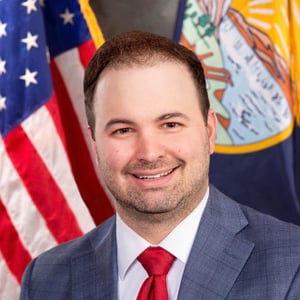
Solicitor General, Montana Attorney General's Office
Christian is currently Solicitor General of Montana, where he serves as the chief litigator and principal legal advisor to Montana Attorney General Austin Knudsen. In that capacity, he manages litigation before the federal district courts, courts of appeal, and the United States Supreme Court, as well as the Montana Supreme Court. He previously served in the Trump Administration as Senior Counsel to the Assistant Secretary for Civil Rights at the U.S. Department of Education. Prior to government service, he was a public interest constitutional litigator at Mountain States Legal Foundation and a fellow at the Institute for Justice. He clerked for Justice Caleb Stegall on the Kansas Supreme Court. He also served as Director of Publications for the Federalist Society's national headquarters.
Christian earned his B.A. in Political Science in 2009 from the University of Pennsylvania before attending the University of Kansas School of Law. Christian is admitted to practice law in Kansas and Montana. A Kansas native, he is a die-hard fan of the Kansas Jayhawks, Kansas City Chiefs, and Kansas City Royals.
Christian is a member of the Federalism & Separation of Powers Practice Group's Executive Committee.
Assistant Professor of Law, Marquette University Law School
Professor Bruce Boyden teaches and writes in the areas of copyright, Internet law, privacy, legal history, and civil procedure. His scholarship focuses on the ways in which law adapts to turbulence caused by sudden changes in the technological, social, or economic landscape. Recent articles includeGames and Other Uncopyrightable Systems, 18 Geo. Mason L. Rev. 439 (2011), and Constitutional Safety Valve: The Privileges or Immunities Clause and Status Regimes in a Federalist System, 62 Ala. L. Rev. 111 (2011).
Prior to joining the faculty at Marquette, Professor Boyden was a visiting professor at Washington & Lee University School of Law and at Michigan State University College of Law. Before that, he was in private practice for several years with the law firm Proskauer Rose LLP, where his practice focused on copyright, digital rights management, privacy, and Internet law. Professor Boyden is a graduate of Yale Law School, where he served as Notes Editor of the Yale Law Journal and as an Editor of the Yale Journal of Law & Feminism. He received his M.A. in history from Northwestern University and his B.A.,summa cum laude, from the University of Arkansas in history and philosophy. His current research focuses on the interaction between copyright and changing technology.
CoFounder, RightsClick
Steven’s extensive background in IP law and policy began as an attorney for the U.S. Senate Judiciary Committee, after which, he served as senior counsel for Policy and International Affairs at the U.S. Copyright Office and then as Chief Intellectual Property Counsel for the Global Intellectual Property Center of the U.S. Chamber of Commerce. Before co-founding RightsClick, he started the IP consultancy Sentinel Worldwide, and teaches copyright law at George Washington University Law School.

Professor of Law, Antonin Scalia Law School, George Mason University
Adam Mossoff is Professor of Law at Antonin Scalia Law School, George Mason University. He has published extensively on why patents, copyrights, and other intellectual property rights have been—and should be—legally secured to innovators and creators as property rights. His scholarship has been relied on by the United States Supreme Court, by lower federal courts, and by U.S. federal agencies. He has been invited to testify numerous times before the U.S. Senate and the House of Representatives on intellectual property legislation. His writings on intellectual property policy have also appeared in the Wall Street Journal, New York Times, Forbes, Investors Business Daily, and in other media outlets. His journal articles can be downloaded here.
Professor Mossoff is a longstanding member of the Executive Committee of the Intellectual Property Practice Group of the Federalist Society, on which he served as Chairperson from 2016-2018, and he is Chair of the Intellectual Property Working Group of the Regulatory Transparency Project of the Federalist Society. He is a Senior Fellow and Chair of the Forum for Intellectual Property at the Hudson Institute, a Visiting Intellectual Property Fellow at the Heritage Foundation, and a member of the Board of Directors of the Center for Intellectual Property Understanding. He is a member of the Intellectual Property Rights Policy Committee of ANSI and he has served as Chair and Vice-Chair of the Intellectual Property Committee of the IEEE-USA, on which he remains a member in good standing.

Professor of Law, Southern Illinois University School of Law
Professor Mark F. Schultz joined the faculty in 2003. He teaches and writes primarily in the area of intellectual property.
Professor Schultz is a frequent author and speaker known for his work on the law and economics of the global intellectual property system. In one of his most influential projects, he worked with the Organization for Economic Cooperation and Development (OECD) to construct a groundbreaking global trade secret protection index (the TSPI). The TSPI is influencing policy discussions on this cutting-edge topic in capitals around the world. Other recent projects have included an empirical study that quantified for the first time the backlogs in patent offices worldwide, a report on how patented innovation is meeting global health challenges, and the construction of a new global index of copyright strength.
Professor Schultz is an influential voice in public policy debates regarding intellectual property. He has testified before the U.S. Congress on copyright law at the invitation of the House Judiciary Committee and has briefed the staff of the U.S. Senate Judiciary Committee on trade secret legislation. He speaks frequently around the world about the connection between secure and effective intellectual property rights and flourishing national economies and individual lives, with invitations from the U.S. Patent and Trademark Office, the U.S. Trade Representative, and the U.S. Copyright Office, as well as numerous academic institutions, think tanks, and industry groups. He served as an NGO delegate to the World Intellectual Property Organization (WIPO) for several years during the WIPO Development Agenda talks. He is also one of the organizers of an ongoing multilateral diplomatic dialogue on best practices in national trade secret laws, and is co-founder of the Center for Protection of Intellectual Property (CPIP) at George Mason University in Washington, D.C.
Among the awards and recognition he has received for his scholarship was the School of Law's Outstanding Scholar of the Year award in 2008. He has been a distinguished visiting scholar at the University of Botswana and a visiting professor at DePaul University College of Law.
Professor Schultz graduated with honors from the George Washington University School of Law. Following law school, he was a judicial clerk for the Hon. Daniel M. Friedman of the United States Court of Appeals for the Federal Circuit in Washington, D.C., and the Hon. Eric G. Bruggink of the United States Court of Federal Claims. Prior to joining academia, he practiced law for a decade, serving as outside general counsel to several tech startups and helping technology companies to expand their businesses and commercialize their intellectual property in dozens of countries. He holds a B.A. in International Economics from George Washington University and has done PhD level coursework in development economics at Southern Illinois University.
He is active in leadership roles in local and national organizations. He has served as chair of the Federalist Society's Intellectual Property Practice Group and the AALS Section on Internet and Computer Law. He is an officer of the American Bar Association's International IP Committee of the International Law Section and the American Intellectual Property Law Association’s Trade Secret Law Committee. He currently is chair of the Academic Advisory Board of the Copyright Alliance.
Professor Schultz teaches Copyright Law, Trade Secret Law, Trademark Law, and a senior seminar on Intellectual Property and Global Development. He established and directs both the Specialization in Intellectual Property Law and the IP Semester in Practice Externship Program. He also co-founded a Legal Globalization Class, offered every other year, that takes students to South Africa and Botswana after spending a semester learning about the legal system, culture, history, and politics of southern Africa. The popular course is a once-in-a-lifetime experience that introduces students to leading lawyers, judges, government officials, and human rights advocates, taking them from Cape Town to Johannesburg to Gaborone as well as many popular destinations including game reserves, national parks, the Cape of Good Hope, and the Cradle of Humankind.
Wayne A. Abernathy, Wild Bells
Wayne A. Abernathy is a former U.S. Treasury Assistant Secretary for Financial Institutions under President George W. Bush, receiving the Alexander Hamilton Award in recognition of his service. In that office he was also a member of the Board of Directors of the Securities Investor Protection Corporation. Prior to his work at the Treasury, Mr. Abernathy served as Staff Director of the Senate Banking Committee, under Chairman Phil Gramm.
Following his service at the Treasury, Mr. Abernathy worked for 15 years on the staff of the American Bankers Association, as Executive Vice President for Financial Institutions Policy and Regulatory Affairs.
Previous experience with the Senate Banking Committee includes serving as Staff Director of the Subcommittee on Securities during 1995-1998. From 1989 until 1994, Mr. Abernathy was a Republican economist for the committee. He previously worked as a senior legislative assistant for Senator Gramm during 1987-1989 and as an economist for the Banking Committee’s Subcommittee on International Finance and Monetary Policy during 1981-1986, under Chairman Jake Garn.
Mr. Abernathy earned his bachelor’s degree in International Studies from The Johns Hopkins University in 1978. In 1980, he received a master’s degree in International Studies from the School of Advanced International Studies of The Johns Hopkins University.
Robert V. Roosa Chair in International Economics; Senior Fellow - Economic Studies, The Brookings Institution
Donald Kohn holds the Robert V. Roosa Chair in International Economics and is a senior fellow in the Economic Studies program at the Brookings Institution. He also currently serves as an external member of the Financial Policy Committee at the Bank of England. Kohn is a 40-year veteran of the Federal Reserve system, serving as member and then vice chair of the Board of Governors from 2002-2010. Kohn is an expert on monetary policy, financial regulation, and macroeconomics and has written extensively on these issues. Prior to taking office as a member of the Board of Governors he served in a number of staff roles at the Board, including secretary of the Federal Open Market Committee (1987-2002) and director of the Division of Monetary Affairs (1987-2001). He has also served as chairman of the Committee on the Global Financial System (CGFS), a central bank panel that monitors and examines broad issues related to financial markets and systems. He advised Federal Reserve Chairman Ben Bernanke throughout the 2008-2009 financial crisis and served as a key adviser to former Fed Chairman Alan Greenspan. He was awarded the Distinguished Achievement Award from The Money Marketeers of New York University (2002), lifetime achievement awards from The Clearing House (2012) and Central Banking magazine (2017), the Distinguished Alumni Award from the College of Wooster (1998), and the Honorary Degree, Doctor of Laws, from the College of Wooster (2006). In 2016, he was made honorary Commander of the British Empire. Kohn was born in November 1942 in Philadelphia. He received a B.A. in economics in 1964 from the College of Wooster and a Ph.D. in economics in 1971 from the University of Michigan. He is married and has two adult children and four grandchildren.
Judge, United States Court of Appeals, Third Circuit
Judge Paul Matey was appointed to the United States Court of Appeals for the Third Circuit in 2019 by President Trump.
Before his judicial service, Judge Matey was a partner at Lowenstein Sandler in New Jersey where he practiced complex commercial litigation and criminal defense. Earlier, Judge Matey was the Senior Vice President, General Counsel and Secretary for University Hospital Newark, an academic medical center and teaching hospital.
He also served as the Deputy Chief Counsel to Governor Chris Christie, and as an Assistant United States Attorney in the District of New Jersey, where he was awarded the Justice Department’s Director’s Award for Superior Performance. He also practiced at the Washington D.C. firm of Kellogg, Hansen, Todd, Figel & Frederick, and served as a law clerk to judges on the United States Court of Appeals for the Third Circuit and the United States District Court for the District of New Jersey.
He earned his bachelor’s degree from the University of Scranton, a Jesuit University, in 1993, and his juris doctorate, summa cum laude, from Seton Hall University School of Law in 2001, where he served as Editor-in-Chief of the Seton Hall Law Review.
In 2019, Judge Matey was elected to membership in the American Law Institute and, since 2020, has lectured on administrative law and the American legal history at Seton Hall.
Senior Fellow, Mises Institute
Alex J. Pollock is a Senior Fellow with the Mises Institute, providing thought and policy leadership on financial issues and the study of financial systems. His work includes cycles of booms and busts, financial crises with their political responses, housing finance, government-sponsored enterprises, risk and uncertainty, central banking, banking and financial regulation, corporate governance, retirement finance, student loans, and the politics of finance.
He previously served as the Principal Deputy Director of the Office of Financial Research in the U.S. Treasury Department 2019-2021. He was a Distinguished Senior Fellow with the R Street Institute 2015-2019 and 2021, and a resident fellow at the American Enterprise Institute, 2004-2015. Among the many aspects of his AEI work, he developed the One Page Mortgage Form to give borrowers in clear form the key information they need in order to know what they are committing themselves to. He was President and CEO of the Federal Home Loan Bank of Chicago from 1991 to 2004. There he invented the Mortgage Partnership Finance program, which successfully created front-end mortgage credit risk sharing beginning in 1997. His decades of banking experience include being a Visiting Scholar at the Federal Reserve Bank of St. Louis, 1991.
Pollock was a director of the CME Group 2004-2019 and of Ascendium Education Group 1989-2019. He is a director and past-chairman of the Great Books Foundation and a past president of the International Union for Housing Finance.
He is the co-author of Surprised Again! - The COVID Crisis and the New Market Bubble (2022), and the author of Finance and Philosophy—Why We’re Always Surprised (2018) and Boom and Bust: Financial Cycles and Human Prosperity (2011), as well as numerous articles and Congressional testimony.
Pollock is a graduate of Williams College, the University of Chicago, and Princeton University.
His work is available on alexjpollock.com.
Senior Fellow, Mossavar-Rahmani Center for Business and Government, Harvard Kennedy School
Paul Sheard is Senior Fellow of the Mossavar-Rahmani Center for Business and Government at Harvard Kennedy School. Previously, he was Vice Chairman of S&P Global, after serving as Executive Vice President and Chief Economist. Earlier, he held chief economist positions at Standard & Poor’s Ratings Services, Nomura Securities and Lehman Brothers, and was Head of Japan Equity Investments at Baring Asset Management. Sheard was on the faculty of the Australian National University (ANU) and of Osaka University, and was a visiting assistant professor at Stanford University and foreign visiting scholar at the Bank of Japan.
Sheard is a member of the World Economic Forum’s Global Future Council on the New Economic Agenda (2018-2020) and was a member of the WEF’s Global Agenda Council on the International Monetary System (2010-2012). He was appointed twice, by Prime Minister Hashimoto and by Prime Minister Obuchi, to serve on committees of the Japanese Government’s Economic Deliberation Council. He is on the board of the Foreign Policy Association and is a member of the Bretton Woods Committee, the Council on Foreign Relations, and the Economic Club of New York. Sheard served as a non-executive director of ORIX Corporation (2003-2010). He speaks regularly at conferences around the world, and his views on the global economy and policy are frequently cited in the international press.
Author or editor of several books and numerous academic articles, Sheard’s book in Japanese, Mein Banku Shihon Shugi no Kiki (The Crisis of Main Bank Capitalism), won the Suntory-Gakugei Prize in the Economics–Politics Division. Sheard received a BA (Hons) from Monash University and a Master of Economics and Ph.D. from the ANU. In 2019, he received a Doctor of Laws honoris causa from Monash University.
Professor Emeritus of Economics, New York University Stern School of Business
Richard Sylla is Professor Emeritus of Economics at the Stern School of Business, New York University, where from 1990 to 2015 he was Henry Kaufman Professor of the History of Financial Institutions and Markets. Sylla is also a Research Associate of the National Bureau of Economic Research, a Fellow of the Cliometric Society, and a Fellow of the American Academy of Arts & Sciences.
Professor Sylla received the B.A., the M.A., and the Ph.D. from Harvard University, where he was elected to Phi Beta Kappa. His research focus is on the financial history of the United States in comparative contexts. He is the author of Alexander Hamilton: The Illustrated Biography (2016) and The American Capital Market, 1846-1914 (1975); co-author of Alexander Hamilton on Finance, Credit, and Debt (2018), The Evolution of the American Economy (1993; 1st ed., 1980) and A History of Interest Rates, (4th ed., 2005; 3rd ed. Rev., 1996; 3rd ed., 1991); and co-editor of Patterns of European Industrialization—The Nineteenth Century (1991), The State, the Financial System, and Economic Modernization (1999); Founding Choices: American Economic Policy in the 1790s (2011); and Genealogy of American Finance (2015), as well as articles, essays, and reviews in business, economic, and financial history.
Sylla is a former editor of The Journal of Economic History. During 1998-2000, Sylla served as chairman of the board of trustees of the Cliometric Society, an association of quantitative economic historians. In 2000-2001, he was president of the Economic History Association, the professional organization of economic historians in the United States. In 2005-2006, he served as president of the Business History Conference (BHC), the leading professional association of business historians; BHC presented its Lifetime Achievement Award to him in 2011. Currently, Sylla serves as chairman of the board of trustees of the Museum of American Finance, a Smithsonian affiliate museum located at 48 Wall Street in New York.

Capital Conversations: Brent J. McIntosh, Under Secretary, International Affairs, U.S. Department of the Treasury
Brent J. McIntosh
Join us as Brent J. McIntosh, Under Secretary for International Affairs at the U.S. Department...
Money and the Constitution
Donald Kohn, Paul B. Matey, Alex J. Pollock, Paul Sheard, Richard E. Sylla, Wayne A. Abernathy
On November 15, 2019, the Federalist Society's Financial Services & E-Commerce Practice Group hosted a...
Money and the Constitution
Wayne A. Abernathy, Donald Kohn, Paul B. Matey, Alex J. Pollock, Paul Sheard, Richard E. Sylla
On November 15, 2019, the Federalist Society's Financial Services & E-Commerce Practice Group hosted a...
Money and the Constitution
2019 National Lawyers Convention
Washington, DCWhat's Next for Copyright Enforcement? Rogue Sites and Other Challenges - Podcast
Christian Corrigan, Bruce Boyden, Steven M. Tepp, Adam Mossoff, Mark F. Schultz
How can copyright owners enforce their rights in a challenging online and digital environment? Widespread...
Milton Friedman Birthday Celebration