

Dr. John Eastman is the former Henry Salvatori Professor of Law & Community Service and former Dean at Chapman University's Dale E. Fowler School of Law, where he had been a member of the faculty since 1999, specializing in Constitutional Law, Legal History, and Property. He is a founding director of the Center for Constitutional Jurisprudence, a public interest law firm affiliated with the Claremont Institute that he founded in 1999. He has a Ph.D. in Government from the Claremont Graduate School and a J.D. from the University of Chicago Law School, and a B.A. in Politics and Economics from the University of Dallas. He serves as the Chairman of the Board of the National Organization for Marriage.
Prior to joining the Chapman law faculty, Dr. Eastman served as a law clerk to the Honorable Clarence Thomas, Associate Justice, Supreme Court of the United States, and to the Honorable J. Michael Luttig, Judge, United States Court of Appeals for the Fourth Circuit and practiced law with the national law firm of Kirkland & Ellis. Dr. Eastman has also represented numerous clients in important constitutional law matters and has argued before the Supreme Court. On behalf of the Claremont Institute Center for Constitutional Jurisprudence, he has participated as amicus curiae before the Supreme Court of the United States, U.S. Courts of Appeals, and State Supreme Courts in more than one hundred cases of constitutional significance, including Boy Scouts of America v. Dale, Zelman v. Simmons-Harris (the school vouchers case), Kelo v. New London, Ct. (eminent domain), and Van Orden v. Perry (the 10 Commandments case). He has also appeared as an expert legal commentator on numerous television and radio programs, including C-SPAN, Fox News, PBS, NewsHour, and The O'Reilly Factor.
Adjunct Professor, George Washington University
Howard W. Cox is a former federal prosecutor, criminal investigator and Senior Intelligence Service officer. After almost 40 years of federal service, he retired as the Assistant Inspector General for Investigations of the Central Intelligence Agency. In this capacity, Mr. Cox supervised criminal, civil and administrative investigations conducted by the Office of Inspector General (OIG). Prior to his employment with the CIA, Mr. Cox was the Assistant Deputy Chief of the Computer Crime and Intellectual Property Section of the Department of Justice, where he was responsible for supervising criminal prosecutions of federal hacking and identity theft cases. While at the Department of Justice, Mr. Cox received the Attorney General’s Distinguished Service Award.
Prior to his service with the Department of Justice, Mr. Cox served as a manager, attorney and criminal investigator at OIG offices at the US Postal Service, the Department of Defense, and the General Services Administration. He also served as Staff Counsel for the US Senate Permanent Subcommittee on Investigations. Prior to his federal civilian service, Mr. Cox was also a Captain and trial attorney in the US Army’s Judge Advocate General’s Corps. Mr. Cox also served as Law Secretary to the Hon. Sherwin D. Lester, NJ Superior Court.
Mr. Cox is an adjunct professor at George Washington University, where he teaches graduate level courses in computer forensics. He is also an instructor with the Graduate School USA, and the Federal Law Enforcement Training Center, where he teaches courses related to procurement fraud and electronic search and seizure. Mr. Cox received his AB degree from Seton Hall University, South Orange, NJ. He received his law degree from Georgetown University Law Center, Washington, DC.
Senior Legal Fellow, the Meese Institute for the Rule of Law, Advancing American Freedom
Paul J. Larkin is a Senior Legal Fellow in the Meese Institute for the Rule of Law at Advancing American Freedom. Paul has held various positions in the federal and state governments throughout his career, such as being an attorney in the Organized Crime and Racketeering Section of the Criminal Division at the U.S. Department of Justice, an Assistant to the Solicitor General in the Office of the Solicitor General at the U.S. Department of Justice, Special Agent-in-Charge and Acting Director of the Criminal Investigation Division at the Environmental Protection Agency, and a member of the Parole Abolition and Sentencing Reform Commission and of the Juvenile Justice Reform Commission in the Office of Virginia Governor George Allen.
He has also worked at Verizon Communications and two law firms in Washington, D.C. His current research is principally in the fields of drug policy, criminal justice policy, and administrative law and policy. He has published numerous articles in law and public policy journals, both in print and online.
President, Cass & Associates, PC
Ronald A. Cass is Dean Emeritus of Boston University School of Law (where he was Dean from 1990-2004), President of Cass & Associates, PC, former Vice-Chairman and Commissioner of the U.S. International Trade Commission, former faculty member at Boston University School of Law and the University of Virginia Law School, and Distinguished Senior Fellow at the C. Boyden Gray Center for the Study of the Administrative State. Dean Cass also sits as an arbitrator for commercial, international, and intellectual property rights disputes, and is a former United States member of the Panel of Conciliators of the International Centre for Settlement of Investment Disputes. He is a member of the Council of the Administrative Conference of the United States and has received seven presidential appointments, spanning Presidents Ronald Reagan to Donald J. Trump.
As a law professor, lecturer, and scholar, Dean Cass has been teaching and writing about a wide array of legal issues on topics such as administrative law and regulation, antitrust, constitutional law, communications, intellectual property, international trade, separation of powers, and legal process. He has published more than 160 scholarly books, chapters, articles, and papers, including a leading casebook on administrative law. Dean Cass has taught judges as well as students in schools of law, economics, business, and public policy and has held academic appointments in the United States, Europe, and Latin America.
In addition to his academic work, Dean Cass has participated in numerous important legal cases as an amicus, consultant, or expert, and has advised businesses, law firms, investment funds, and government agencies on a range of trade, antitrust, intellectual property, and regulatory issues. He has a broad range of affiliations with professional groups, and has received numerous honors, fellowships and awards.
Dean Cass is a graduate of the University of Virginia and the University of Chicago Law School.
Deputy Secretary of Agriculture, U.S. Department of Agriculture
Judge Stephen Alexander Vaden was appointed as the Deputy Secretary of the U.S. Department of Agriculture on July 7, 2025. Alongside Secretary Brooke L. Rollins, Deputy Secretary Vaden leads the Department’s operations and implements policies that support America’s food and farm systems. A native of Union City, Tennessee, Deputy Secretary Vaden brings expertise in agricultural policy, law, and rural development. Previously, he served as a judge on the U.S. Court of International Trade and as General Counsel of USDA. Throughout Deputy Secretary Vaden’s time as General Counsel, he led successful Supreme Court litigation, advanced regulatory reform, and supported the implementation of the 2018 Farm Bill. He is a graduate of Yale Law School and Vanderbilt University. A public servant with strong agricultural roots, Deputy Secretary Vaden is committed to revitalizing rural America and ensuring an abundant, affordable, and safe U.S. food supply.
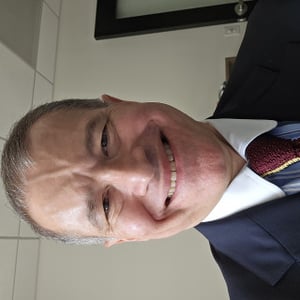
Attorney Specializing in Government Relations
Alec D. Rogers is an attorney specializing in government practice and policy in Washington, DC.
A graduate of James Madison College at Michigan State University and the University of Michigan Law School, he practiced law for several years before spending over a decade on Capitol Hill as a staffer to various Members and Committees.
He has reviewed books for the Washington Times, Hardball Times, The Journal of the American Revolution, and The Weekly Standard, and writes on legal matters in Engage, an online publication of the Federalist Society.
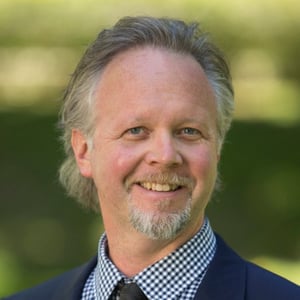
Senior Attorney, Pacific Legal Foundation
Brian Hodges is a Senior Attorney at PLF’s Pacific Northwest office in Bellevue, Washington. Brian focuses his practice on defending of the right of individuals to make reasonable use of their property, free of unnecessary and oppressive regulations.
In 2013, Brian second-chaired Koontz v. St. Johns River Water Management District before the U.S. Supreme Court, a case that placed constitutional limits on the government’s common practice of demanding that landowners fund unrelated public projects in exchange for a permit approval. And in the 2008 case, Citizens’ Alliance for Property Rights v. Sims, Brian successfully challenged a Seattle-area ordinance that required all rural property owners to dedicate at least half their land as conservation areas as a mandatory condition of any new development without any showing that rural development would impact the environment.
Brian graduated from Seattle University of Law in 2001 with honors. After which, he served as a judicial clerk at the Washington State Court of Appeals, then entered private practice where he focused on appellate advocacy for several years before joining PLF in 2006.
Brian came to the liberty movement by an uncommon route: the arts. Brian played guitar and keyboards in several Seattle-area bands before eventually studying music composition and literature at the University of Washington—earning two Bachelor’s Degrees and a Master of Arts. Through that experience, he came to firmly believe that the goal of art—indeed, the goal of any creative ambition—is to maximize individual freedom and expression, tempered by personal responsibility and ownership, rather than outside oversight or arbitrary restriction. Carrying that philosophy into law school naturally led him to fight for individual rights.
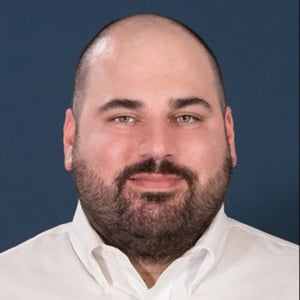
Senior Attorney, Pacific Legal Foundation
Chris Kieser practices in PLF’s property rights and equality before the law practice groups.
His property rights clients include Cedar Point Nursery, which challenged a California regulation requiring them to allow union organizers to invade their private property, as well as Randall and Kimberley Pavlock, who are fighting back against Indiana’s beachfront land grab along Lake Michigan.
Under equality before the law, Chris represents coalitions of Asian-American parents challenging discriminatory admissions policies for selective K-12 schools in New York City; Montgomery County, Maryland; and Fairfax County, Virginia. He also represents a parent organization in Connecticut challenging a racial quota that prevents many Black and Hispanic students from enrolling at the state’s magnet schools.
Chris has published law review articles in the William & Mary Environmental Law Review and the Federalist Society Review. His op-eds have appeared in the New York Daily News, National Review, The Blaze, the Daily Journal, and SCOTUSblog.
Chris clerked for the Honorable Daniel A. Manion of the United States Court of Appeals for the Seventh Circuit and the Honorable Thomas D. Schroeder of the United States District Court for the Middle District of North Carolina. He holds a B.A., cum laude, from the University of Notre Dame, and graduated magna cum laude from Notre Dame Law School in 2013. At Notre Dame, he was an articles editor of the Notre Dame Law Review.
Growing up on Long Island, Chris developed a deep passion for limited government and individual liberty, arguing with his more numerous progressive classmates. This experience made him deeply skeptical that government tinkering at the expense of individual rights ever works, whether it be denying a property owner the use of his land or a student a seat at her desired school because of her race. He chose PLF because it is the national leader in litigation that furthers individual liberty.
When he’s not working, you’re likely to find Chris rooting for the Mets and Fighting Irish or debating some arcane point of law (because apparently that doesn’t happen enough at work).
Chris is currently licensed to practice in California and admitted to practice before the Supreme Court of the United States, the United States Courts of Appeal for the Second, Seventh, and Ninth Circuits, and the U.S. District Courts for the Eastern and Central Districts of California, the Northern District of Indiana, and the Northern District of Illinois.
Partner, Stone Pigman Walther Wittmann LLC
Mr. Thomson concentrates his practice in white collar criminal defense, government investigations, and corporate compliance. He has tried over 50 criminal trials to verdict in federal and state courts, and has experience in appellate litigation. His practice also includes civil litigation and information security. Prior to joining Stone Pigman, Mr. Thomson had a 23 year career as a federal prosecutor with the U.S. Department of Justice. He served on special assignment with the National Security Agency, where he worked on matters involving information assurance and intelligence collection.
Prior to private practice, Mr. Thomson was recognized numerous times by government agencies, including a Special Commendation Award given by the U.S. Attorney General for completing the Justice Department's Leadership Excellence and Achievement Program; Special Commendation by FBI Director for outstanding performance for successful corruption prosecution after Hurricane Katrina; Special Award from the U.S. Postal Service for prosecution of corrupt employee; Special Award by New Orleans Police Department, ATF and U.S. Department of Justice for his contributions to Project Exile; and Special Awards for Outstanding Contributions to Drug Law Enforcement from the Drug Enforcement Administration.
Dr. John Eastman is the former Henry Salvatori Professor of Law & Community Service and former Dean at Chapman University's Dale E. Fowler School of Law, where he had been a member of the faculty since 1999, specializing in Constitutional Law, Legal History, and Property. He is a founding director of the Center for Constitutional Jurisprudence, a public interest law firm affiliated with the Claremont Institute that he founded in 1999. He has a Ph.D. in Government from the Claremont Graduate School and a J.D. from the University of Chicago Law School, and a B.A. in Politics and Economics from the University of Dallas. He serves as the Chairman of the Board of the National Organization for Marriage.
Prior to joining the Chapman law faculty, Dr. Eastman served as a law clerk to the Honorable Clarence Thomas, Associate Justice, Supreme Court of the United States, and to the Honorable J. Michael Luttig, Judge, United States Court of Appeals for the Fourth Circuit and practiced law with the national law firm of Kirkland & Ellis. Dr. Eastman has also represented numerous clients in important constitutional law matters and has argued before the Supreme Court. On behalf of the Claremont Institute Center for Constitutional Jurisprudence, he has participated as amicus curiae before the Supreme Court of the United States, U.S. Courts of Appeals, and State Supreme Courts in more than one hundred cases of constitutional significance, including Boy Scouts of America v. Dale, Zelman v. Simmons-Harris (the school vouchers case), Kelo v. New London, Ct. (eminent domain), and Van Orden v. Perry (the 10 Commandments case). He has also appeared as an expert legal commentator on numerous television and radio programs, including C-SPAN, Fox News, PBS, NewsHour, and The O'Reilly Factor.

True the Vote v. IRS - Podcast
John C. Eastman
True the Vote, a Texas-based vote monitoring organization intent on policing and preventing voter fraud,...
True the Vote v. IRS
TeleforumStingRay Technology and Reasonable Expectations of Privacy in the Internet of Everything
Howard W. Cox
Note from the Editor: This article discusses cell site simulators, also known as StingRays, and...
Domestic Convictions for Foreign Violations
Paul James Larkin
Note from the Editor: This article discusses the Lacey Act and argues that its incorporation of...
Power Failures: Prosecution, Power, and Problems
Ronald A. Cass
I. Introduction: Prosecution, Power, and Problems Prosecutors wield an awesome power. They make the first...
Perez v. Mortgage Bankers Association: Portending a Return to Judicial Engagement
Stephen Alexander Vaden
In a Term full of blockbuster cases considering the fate of Obamacare and establishing gay...
REINING in the Agencies: Oversight of Executive Branch Rulemaking in the 21st Century
Alec D. Rogers
Note from the Editor: This article critiques current procedures for agency rulemaking and proposes an...
Countdown to the National Lawyers Convention: Free Speech, Anti-Corruption, and the Criminalization of Government Affairs
Looking forward to the convention; I always enjoy seeing old friends and being challenged to think...
Horne v. United States Department of Agriculture: The Takings Clause and the Administrative State
Brian T. Hodges, Christopher M. Kieser
Note from the Editor: This article discusses and praises Horne v. United States Department of...
Interpol’s Transnational Policing By “Red Notice” and “Diffusions”: Procedural Standards, Systemic Abuses, and Reforms Necessary to Assure Fairness and Integrity
Peter M. Thomson
Note from the Editor: This article is about Interpol’s use of Red Notices and Diffusions;...