
Owner, Coleman Law Firm, PC
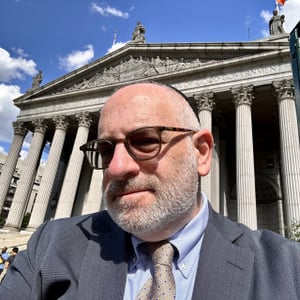
Ron Coleman has shaped the law relating to the use and abuse of intellectual property as a tool of competition. A leader in social media for lawyers, his blog about copyright, trademark and free speech, LIKELIHOOD OF CONFUSION®, has since its inception in 2005 become one of the most influential publications in IP law.
Recent representations include:
Author of the first article on Internet law in the ABA Journal (1995), Ron was co-author of the chapter on “Responses to Complaints” in Business and Commercial Litigation in the Federal Courts (ABA / West Group 1998). More recently, his chapter on the interplay of rights of publicity and trademark was included in In the Arena: A Sports Law Handbook. Other publications include the Computer and Internet Law Journal, the NYSBA Journal and the NJ Law Journal. Ron has been a featured speaker at a host of legal conferences. These include the International Trademark Association (INTA), the New Jersey, New York City and New York County Bar Associations, the Copyright Society of the USA, the American Intellectual Property Law Association, the Intellectual Property Owners Association, the Ohio Intellectual Property Law Society, Minnesota CLE and the Berkman Center for Internet and Society at Harvard. He was recently reappointed to the Internet Committee of INTA.
Ron has represented clients of every size in state and federal courts, bench and jury trials, the TTAB and in arbitrations and mediations throughout the country. He has also been retained as an expert on trademark law and practice in professional liability litigation. A graduate of Princeton University, he received his JD from Northwestern University School of Law.

Professor of Law, Willamette University College of Law
 Jeffrey Standen joined the Willamette University College of Law faculty in 1990 after serving as deputy general counsel to the U.S. Sentencing Commission. He earned tenure at the college in 1996. Professor Standen has been a visiting professor at the University of San Diego and a scholar in residence at the University of Virginia. He serves as international advisor to the Philippines Court of the Sandiganbayan, the tribunal that adjudicates public corruption cases.
Professor Standen was graduated from the University of Virginia Law School in 1986. He was editor of the Virginia Law Review and articles editor of the Virginia Tax Review. After graduation, he served as law clerk to the Honorable Robert Chapman of the U.S. Court of Appeals for the Fourth Circuit. He entered private practice as an associate with the law firm of Hunton & Williams.
Professor Standen is an active scholar and lecturer and has published articles in prestigious periodicals, such as the California Law Review, the Iowa Law Review and the Washington University Law Quarterly, among others. At Willamette’s College of Law, he teaches Remedies, Evidence, Criminal Law and Procedure, and Sports Law. His Web site, http://thesportslawprofessor.blogspot.com/, is “dedicated to the complete integration of sports and law.”
Professor Standen received the Robert L. Misner Award for Excellence in Scholarship and was WUCL Professor of the Year in 2004. He serves as chair of the 2007 WUCL Self-Study Committee and as faculty advisor to the Willamette Law Review. Professor Standen is a member of the state bars of Virginia and Oregon. He is a cum laude graduate of Georgetown University, where he earned an A.B. in Political Philosophy in 1982; he studied at the London School of Economics in 1981.

Laurence A. Tisch Professor of Law and Director, Classical Liberal Institute, New York University School of Law; Senior Fellow, The Civitas Institute, University of Texas at Austin
Richard A. Epstein is the inaugural Laurence A. Tisch Professor of Law at NYU School of Law. Prior to his joining the faculty, he was a visiting law professor at NYU from 2007 through 2009. He served as the Peter and Kirstin Bedford Senior Fellow at the Hoover Institution from 2000 to 2024. Since 2024 to the present he is a senior lecturer at the Civitas Institute at the University of Texas—Austin. Epstein is also the James Parker Hall Distinguished Service Professor of Law Emeritus and a senior lecturer at the University of Chicago. His initial law school appointment was at the University of Southern California from 1968 to 1972. Epstein received an LL.D., h.c. from the University of Ghent, 2003. He has been a member of the American Academy of Arts and Sciences since 1985 and was a Senior Fellow of the Center for Clinical Medical Ethics at the University of Chicago Division of Biological Sciences, also from 1983. to 2022 He served as editor of the Journal of Legal Studies from 1981 to 1991, and of the Journal of Law and Economics from 1991-2001. From 2001 to 2010 he was a director of the John M. Olin Program in Law and Economics at the University of Chicago.
His newest book, The Myth of Birthright Citizenship: What the Fourteenth Amendment Really Says was published in 2026 (Encounter Books). Prior to that he has published many books including, The Dubious Morality of the Modern Administrative State (Roman & Littlefield 2020).Earlier he published th Classical Liberal Constitution: The Uncertain Quest for Limited Government (Harvard 2014) iHis previous books include Design for Liberty: Private Property, Public Administration and the Rule of Law (Harvard 2011); The Case Against the Employee Free Choice Act (Hoover 2009); Supreme Neglect: How to Revive the Constitutional Protection of Property Rights (Oxford 2008); Antitrust Decrees in Theory and Practice: Why Less is More (AEI 2007); Overdose: How Excessive Government Regulation Stifles Pharmaceutical Innovation (Yale University Press. 2006); How Progressives Rewrote the Constitution (Cato 2006); Cases and Materials on Torts (Aspen Law & Business; 8th ed. 2004); Skepticism and Freedom: A Modern Case for Classical Liberalism (University of Chicago, 2003); Torts (Aspen Law & Business 1999); Principles for a Free Society: Reconciling Individual Liberty with the Common Good (Perseus Books, 1998): Mortal Peril: Our Inalienable Rights to Health Care (Addison-Wesley, 1997); Simple Rules for a Complex World (Harvard, 1995); Bargaining With the State (Princeton, 1993); Forbidden Grounds: The Case Against Employment Discrimination Laws (Harvard , 1992); Takings: Private Property and the Power of Eminent Domain (Harvard, 1985); and Modern Products Liability Law (Greenwood Press, 1980). He has also edited(with Catherine M. Sharkey) Cases and Materials on the Law of Torts (10th edition 2012).
Professor Epstein has written numerous articles on a wide range of legal and interdisciplinary subjects. He has taught courses in administrative law, antitrust law, civil procedure, communications, constitutional law, contracts, corporations, criminal law, employment discrimination law, environmental law, food and drug law health law and policy, legal history, labor law, property, real estate development and finance, jurisprudence, labor law; land use planning, patents, individual, estate and corporate taxation, Roman Law; torts, and workers' compensation.
Professor Epstein also writes a regular column for Civitas Institute, which also sponsors his podcast, The Libertarian with Charles C.W. Cooke, and Law Talk, with Cooke and John Yoo. He also does a podcast with John Batchelor. And appears regularly on the Freedom File with Judge Andrew Napolitano.

Associate General Counsel, Indiana University
Beth Cate is Associate General Counsel for Indiana University, and practices in a variety of areas, with emphases on intellectual property law and the law and ethics concerning research and the use of information technologies. Beth is also an adjunct member of the faculty in the University's School for Public and Environmental Affairs. Before joining the University in 1998, Beth served as in-house counsel for Eli Lilly and Company, practicing in a variety of areas; clerked for the Hon. S. Jay Plager of the United States Court of Appeals for the Federal Circuit; and practiced with the law firm of McKenna & Cuneo (now McKenna Long & Aldridge) in Washington D.C., focusing on civil litigation and international trade. Beth holds a B.A. in Economics from The George Washington University and a J.D. from Harvard Law School, both with honors. She is a member of both EDUCAUSE and the National Association of College and University Attorneys (NACUA) and a frequent speaker for these and other organizations.
Distinguished Scholar in Intellectual Property Law, Indiana University Maurer School of Law
Professor Leaffer, formerly the Anderson-Fornoff Professor of Law and Values at the University of Toledo College of Law, is an internationally known intellectual property law scholar. He received his JD at the University of Texas and his LLM in Trade Regulation at New York University Law School.
At Indiana since 1997, Leaffer teaches Copyright Law, Trademark Law, Intellectual Property Survey, and International Intellectual Property. He is the author of three books and numerous articles, including the best-selling treatise, Understanding Copyright Law, now in its fourth edition. Leaffer is also the author of Copyright Law: Cases and Materials, 7th edition and International Treaties on Intellectual Property, 2d edition. His current research focuses on the interplay of intellectual property law in a global marketplace.
Before becoming a full-time teacher, he practiced trademark law with American Home Products Corp. and the firm of Haseltine Lake & Waters in New York. He also has served as attorney-advisor to the U.S. Patent and Trademark Office and the U.S. Copyright Office.
Leaffer is a popular speaker in both the United States and Europe on all areas of intellectual property law, and has been honored as both a scholar and lecturer. He currently serves on the international executive committee of the Association Littéraire et Artistique Internationale, a non-governmental institution based in Paris, that promotes the rights of authors worldwide.

Vice President, Edwin Meese III Institute for the Rule of Law, Advancing American Freedom
John G. Malcolm oversees Advancing American Freedom’s work to increase understanding of the Constitution and the rule of law as Vice President of the organization’s Edwin Meese III Institute for the Rule of Law. Malcolm brings to the challenge a wealth of legal expertise and experience in both the public and private sectors.
Prior to joining Advancing American Freedom in 2025, Malcolm was the Vice President of the Institute for Constitutional Government and the Director of the Meese Center for Legal and Judicial Studies at the Heritage Foundation. Prior to joining Heritage in 2012, Malcolm was general counsel at the U.S. Commission on International Religious Freedom, as well as a distinguished practitioner in residence at Pepperdine Law School. From 2004 to 2009, Malcolm was executive vice president and director of worldwide anti-piracy operations for the Motion Picture Association.
Malcolm served as a deputy assistant attorney general in the Department of Justice’s Criminal Division from 2001 to 2004, where he oversaw sections on computer crime and intellectual property, domestic security, child exploitation and obscenity, and special investigations. Immediately prior to that, he was a founding partner in the Atlanta law firm of Malcolm & Schroeder, LLP.
From 1990 to 1997, Malcolm was an assistant U.S. attorney in Atlanta, assigned to the fraud and public corruption section, and also an associate independent counsel, investigating fraud and abuse in the Department of Housing and Urban Development. He was honored with the Director’s Award for Superior Performance for his work in connection with the successful prosecution of Walter Leroy Moody Jr., who assassinated an 11th Circuit judge and the head of the Savannah chapter of the NAACP.
A graduate of Harvard Law School and Columbia College, Malcolm began his career as a law clerk to a federal district court judge and a federal appellate court judge, and as an associate at the Atlanta-based law firm of Sutherland, Asbill & Brennan (new Eversheds Sutherland).
Malcolm, who resides in Washington, D.C., serves on the Board of Trustees of the Washington National Opera and is a Senate-confirmed member of the Board of Directors of the Legal Services Corporation, the largest funder of civil legal aid in the United States.
Laurence A. Tisch Professor of Law and Director, Classical Liberal Institute, New York University School of Law; Senior Fellow, The Civitas Institute, University of Texas at Austin
Richard A. Epstein is the inaugural Laurence A. Tisch Professor of Law at NYU School of Law. Prior to his joining the faculty, he was a visiting law professor at NYU from 2007 through 2009. He served as the Peter and Kirstin Bedford Senior Fellow at the Hoover Institution from 2000 to 2024. Since 2024 to the present he is a senior lecturer at the Civitas Institute at the University of Texas—Austin. Epstein is also the James Parker Hall Distinguished Service Professor of Law Emeritus and a senior lecturer at the University of Chicago. His initial law school appointment was at the University of Southern California from 1968 to 1972. Epstein received an LL.D., h.c. from the University of Ghent, 2003. He has been a member of the American Academy of Arts and Sciences since 1985 and was a Senior Fellow of the Center for Clinical Medical Ethics at the University of Chicago Division of Biological Sciences, also from 1983. to 2022 He served as editor of the Journal of Legal Studies from 1981 to 1991, and of the Journal of Law and Economics from 1991-2001. From 2001 to 2010 he was a director of the John M. Olin Program in Law and Economics at the University of Chicago.
His newest book, The Myth of Birthright Citizenship: What the Fourteenth Amendment Really Says was published in 2026 (Encounter Books). Prior to that he has published many books including, The Dubious Morality of the Modern Administrative State (Roman & Littlefield 2020).Earlier he published th Classical Liberal Constitution: The Uncertain Quest for Limited Government (Harvard 2014) iHis previous books include Design for Liberty: Private Property, Public Administration and the Rule of Law (Harvard 2011); The Case Against the Employee Free Choice Act (Hoover 2009); Supreme Neglect: How to Revive the Constitutional Protection of Property Rights (Oxford 2008); Antitrust Decrees in Theory and Practice: Why Less is More (AEI 2007); Overdose: How Excessive Government Regulation Stifles Pharmaceutical Innovation (Yale University Press. 2006); How Progressives Rewrote the Constitution (Cato 2006); Cases and Materials on Torts (Aspen Law & Business; 8th ed. 2004); Skepticism and Freedom: A Modern Case for Classical Liberalism (University of Chicago, 2003); Torts (Aspen Law & Business 1999); Principles for a Free Society: Reconciling Individual Liberty with the Common Good (Perseus Books, 1998): Mortal Peril: Our Inalienable Rights to Health Care (Addison-Wesley, 1997); Simple Rules for a Complex World (Harvard, 1995); Bargaining With the State (Princeton, 1993); Forbidden Grounds: The Case Against Employment Discrimination Laws (Harvard , 1992); Takings: Private Property and the Power of Eminent Domain (Harvard, 1985); and Modern Products Liability Law (Greenwood Press, 1980). He has also edited(with Catherine M. Sharkey) Cases and Materials on the Law of Torts (10th edition 2012).
Professor Epstein has written numerous articles on a wide range of legal and interdisciplinary subjects. He has taught courses in administrative law, antitrust law, civil procedure, communications, constitutional law, contracts, corporations, criminal law, employment discrimination law, environmental law, food and drug law health law and policy, legal history, labor law, property, real estate development and finance, jurisprudence, labor law; land use planning, patents, individual, estate and corporate taxation, Roman Law; torts, and workers' compensation.
Professor Epstein also writes a regular column for Civitas Institute, which also sponsors his podcast, The Libertarian with Charles C.W. Cooke, and Law Talk, with Cooke and John Yoo. He also does a podcast with John Batchelor. And appears regularly on the Freedom File with Judge Andrew Napolitano.

Stevenson Bernard Professor, George Washington University Law School
The Honorable F. Scott Kieff is the Stevenson Bernard Professor at George Washington University Law School and a Visiting Fellow at Stanford University’s Hoover Institution.
He served as Commissioner of the U.S. International Trade Commission from 2013-2017. He also served during the Bush, Obama, and Trump Administrations in the part-time leadership of the national security defense-intelligence community.
He was previously a professor of law and medicine at Washington University in Saint Louis and a Senior Fellow at Hoover. A former law clerk to U.S. Circuit Judge Giles S. Rich, he is a graduate of Penn Law School and MIT, where he studied molecular biology and microeconomics. He was elected to the European Academy of Sciences and Arts in 2012 and the Academia Europaea in 2024.
His private sector work through Kieff Strategies LLC (www.kieffstrategies.com) provides neutral services including mediation and compliance, and expert services including crisis management, advising, and testimony.

Professor of Law, Boston University School of Law
The son of an economics professor, Michael Meurer knew by the time he was 13 that he, too, wanted to teach at the university level. An S.B., J.D. and Ph.D. later, he became an economics professor at Duke University and later a law professor at the University of Buffalo. He came to Boston University School of Law in 1999, where he has taught courses in patents, intellectual property and public policy toward the high-tech industry. "It's a special privilege to be able to speak three times a week to an attentive and thoughtful audience," he says.
Professor Meurer has received several grants and fellowships, including two grants from the Pew Charitable Trust, a Ford Foundation grant, an Olin Faculty Fellowship at Yale Law School and a postdoctoral fellowship at AT&T Bell Labs. He has served as an expert witness for the Federal Trade Commission on a merger case presenting issues related to patent licensing. He also has consulted with government officials from developing countries about antitrust law, and taught short courses in American intellectual property law at the law faculties of the University of Victoria and the National University of Singapore. "I'm excited by the prospect of having a positive influence on American technology law and policy," Professor Meurer says. Outside of work, he enjoys playing and watching basketball.

Lecturer in Law; Executive Director, Public Patent Foundation, Cardozo School of Law
Daniel B. Ravicher is a Lecturer in Law at Benjamin N. Cardozo School of Law and Executive Director of the Public Patent Foundation (“PUBPAT”). Labeled a modern day 'Robin Hood' by Science, named one of "The 50 Most Influential People in IP" by Managing Intellectual Property, and awarded anEchoing Green Fellowship for social entrepreneurship, Professor Ravicher is a registered patent attorney who writes and speaks frequently on patent law and policy, including testifying as an invited witness before Congress on the topic of patent reform. Professor Ravicher writes about patent policy issues for the Huffington Post and patent related corporate valuations issues for Seeking Alpha and through the Ravicher Reports. He is on Twitter@danravicher.
Professor Ravicher received his law degree from the University of Virginia School of Law, where he was the Franklin O'Blechman Scholar of his class, a Mortimer Caplin Public Service Award recipient and an Editor of the Virginia Journal of Law and Technology, and his bachelors degree in materials science magna cum laude with University Honors from the University of South Florida. He is admitted to the United States Supreme Court, the Courts of Appeals for the Federal, 2nd and 11th Circuits, the District Courts for the Southern and Eastern Districts of New York, the State of New York, and the United States Patent and Trademark Office.

Professor of Law, Southern Illinois University School of Law
Professor Mark F. Schultz joined the faculty in 2003. He teaches and writes primarily in the area of intellectual property.
Professor Schultz is a frequent author and speaker known for his work on the law and economics of the global intellectual property system. In one of his most influential projects, he worked with the Organization for Economic Cooperation and Development (OECD) to construct a groundbreaking global trade secret protection index (the TSPI). The TSPI is influencing policy discussions on this cutting-edge topic in capitals around the world. Other recent projects have included an empirical study that quantified for the first time the backlogs in patent offices worldwide, a report on how patented innovation is meeting global health challenges, and the construction of a new global index of copyright strength.
Professor Schultz is an influential voice in public policy debates regarding intellectual property. He has testified before the U.S. Congress on copyright law at the invitation of the House Judiciary Committee and has briefed the staff of the U.S. Senate Judiciary Committee on trade secret legislation. He speaks frequently around the world about the connection between secure and effective intellectual property rights and flourishing national economies and individual lives, with invitations from the U.S. Patent and Trademark Office, the U.S. Trade Representative, and the U.S. Copyright Office, as well as numerous academic institutions, think tanks, and industry groups. He served as an NGO delegate to the World Intellectual Property Organization (WIPO) for several years during the WIPO Development Agenda talks. He is also one of the organizers of an ongoing multilateral diplomatic dialogue on best practices in national trade secret laws, and is co-founder of the Center for Protection of Intellectual Property (CPIP) at George Mason University in Washington, D.C.
Among the awards and recognition he has received for his scholarship was the School of Law's Outstanding Scholar of the Year award in 2008. He has been a distinguished visiting scholar at the University of Botswana and a visiting professor at DePaul University College of Law.
Professor Schultz graduated with honors from the George Washington University School of Law. Following law school, he was a judicial clerk for the Hon. Daniel M. Friedman of the United States Court of Appeals for the Federal Circuit in Washington, D.C., and the Hon. Eric G. Bruggink of the United States Court of Federal Claims. Prior to joining academia, he practiced law for a decade, serving as outside general counsel to several tech startups and helping technology companies to expand their businesses and commercialize their intellectual property in dozens of countries. He holds a B.A. in International Economics from George Washington University and has done PhD level coursework in development economics at Southern Illinois University.
He is active in leadership roles in local and national organizations. He has served as chair of the Federalist Society's Intellectual Property Practice Group and the AALS Section on Internet and Computer Law. He is an officer of the American Bar Association's International IP Committee of the International Law Section and the American Intellectual Property Law Association’s Trade Secret Law Committee. He currently is chair of the Academic Advisory Board of the Copyright Alliance.
Professor Schultz teaches Copyright Law, Trade Secret Law, Trademark Law, and a senior seminar on Intellectual Property and Global Development. He established and directs both the Specialization in Intellectual Property Law and the IP Semester in Practice Externship Program. He also co-founded a Legal Globalization Class, offered every other year, that takes students to South Africa and Botswana after spending a semester learning about the legal system, culture, history, and politics of southern Africa. The popular course is a once-in-a-lifetime experience that introduces students to leading lawyers, judges, government officials, and human rights advocates, taking them from Cape Town to Johannesburg to Gaborone as well as many popular destinations including game reserves, national parks, the Cape of Good Hope, and the Cradle of Humankind.
Laurence A. Tisch Professor of Law and Director, Classical Liberal Institute, New York University School of Law; Senior Fellow, The Civitas Institute, University of Texas at Austin
Richard A. Epstein is the inaugural Laurence A. Tisch Professor of Law at NYU School of Law. Prior to his joining the faculty, he was a visiting law professor at NYU from 2007 through 2009. He served as the Peter and Kirstin Bedford Senior Fellow at the Hoover Institution from 2000 to 2024. Since 2024 to the present he is a senior lecturer at the Civitas Institute at the University of Texas—Austin. Epstein is also the James Parker Hall Distinguished Service Professor of Law Emeritus and a senior lecturer at the University of Chicago. His initial law school appointment was at the University of Southern California from 1968 to 1972. Epstein received an LL.D., h.c. from the University of Ghent, 2003. He has been a member of the American Academy of Arts and Sciences since 1985 and was a Senior Fellow of the Center for Clinical Medical Ethics at the University of Chicago Division of Biological Sciences, also from 1983. to 2022 He served as editor of the Journal of Legal Studies from 1981 to 1991, and of the Journal of Law and Economics from 1991-2001. From 2001 to 2010 he was a director of the John M. Olin Program in Law and Economics at the University of Chicago.
His newest book, The Myth of Birthright Citizenship: What the Fourteenth Amendment Really Says was published in 2026 (Encounter Books). Prior to that he has published many books including, The Dubious Morality of the Modern Administrative State (Roman & Littlefield 2020).Earlier he published th Classical Liberal Constitution: The Uncertain Quest for Limited Government (Harvard 2014) iHis previous books include Design for Liberty: Private Property, Public Administration and the Rule of Law (Harvard 2011); The Case Against the Employee Free Choice Act (Hoover 2009); Supreme Neglect: How to Revive the Constitutional Protection of Property Rights (Oxford 2008); Antitrust Decrees in Theory and Practice: Why Less is More (AEI 2007); Overdose: How Excessive Government Regulation Stifles Pharmaceutical Innovation (Yale University Press. 2006); How Progressives Rewrote the Constitution (Cato 2006); Cases and Materials on Torts (Aspen Law & Business; 8th ed. 2004); Skepticism and Freedom: A Modern Case for Classical Liberalism (University of Chicago, 2003); Torts (Aspen Law & Business 1999); Principles for a Free Society: Reconciling Individual Liberty with the Common Good (Perseus Books, 1998): Mortal Peril: Our Inalienable Rights to Health Care (Addison-Wesley, 1997); Simple Rules for a Complex World (Harvard, 1995); Bargaining With the State (Princeton, 1993); Forbidden Grounds: The Case Against Employment Discrimination Laws (Harvard , 1992); Takings: Private Property and the Power of Eminent Domain (Harvard, 1985); and Modern Products Liability Law (Greenwood Press, 1980). He has also edited(with Catherine M. Sharkey) Cases and Materials on the Law of Torts (10th edition 2012).
Professor Epstein has written numerous articles on a wide range of legal and interdisciplinary subjects. He has taught courses in administrative law, antitrust law, civil procedure, communications, constitutional law, contracts, corporations, criminal law, employment discrimination law, environmental law, food and drug law health law and policy, legal history, labor law, property, real estate development and finance, jurisprudence, labor law; land use planning, patents, individual, estate and corporate taxation, Roman Law; torts, and workers' compensation.
Professor Epstein also writes a regular column for Civitas Institute, which also sponsors his podcast, The Libertarian with Charles C.W. Cooke, and Law Talk, with Cooke and John Yoo. He also does a podcast with John Batchelor. And appears regularly on the Freedom File with Judge Andrew Napolitano.
Stevenson Bernard Professor, George Washington University Law School
The Honorable F. Scott Kieff is the Stevenson Bernard Professor at George Washington University Law School and a Visiting Fellow at Stanford University’s Hoover Institution.
He served as Commissioner of the U.S. International Trade Commission from 2013-2017. He also served during the Bush, Obama, and Trump Administrations in the part-time leadership of the national security defense-intelligence community.
He was previously a professor of law and medicine at Washington University in Saint Louis and a Senior Fellow at Hoover. A former law clerk to U.S. Circuit Judge Giles S. Rich, he is a graduate of Penn Law School and MIT, where he studied molecular biology and microeconomics. He was elected to the European Academy of Sciences and Arts in 2012 and the Academia Europaea in 2024.
His private sector work through Kieff Strategies LLC (www.kieffstrategies.com) provides neutral services including mediation and compliance, and expert services including crisis management, advising, and testimony.
Senior Staff Attorney, Electronic Frontier Foundation

Professor of Law, Antonin Scalia Law School, George Mason University
Adam Mossoff is Professor of Law at Antonin Scalia Law School, George Mason University. He has published extensively on why patents, copyrights, and other intellectual property rights have been—and should be—legally secured to innovators and creators as property rights. His scholarship has been relied on by the United States Supreme Court, by lower federal courts, and by U.S. federal agencies. He has been invited to testify numerous times before the U.S. Senate and the House of Representatives on intellectual property legislation. His writings on intellectual property policy have also appeared in the Wall Street Journal, New York Times, Forbes, Investors Business Daily, and in other media outlets. His journal articles can be downloaded here.
Professor Mossoff is a longstanding member of the Executive Committee of the Intellectual Property Practice Group of the Federalist Society, on which he served as Chairperson from 2016-2018, and he is Chair of the Intellectual Property Working Group of the Regulatory Transparency Project of the Federalist Society. He is a Senior Fellow and Chair of the Forum for Intellectual Property at the Hudson Institute, a Visiting Intellectual Property Fellow at the Heritage Foundation, and a member of the Board of Directors of the Center for Intellectual Property Understanding. He is a member of the Intellectual Property Rights Policy Committee of ANSI and he has served as Chair and Vice-Chair of the Intellectual Property Committee of the IEEE-USA, on which he remains a member in good standing.
William H. Neukom Professor of Law, Stanford University Law School
Mark Lemley is the William H. Neukom Professor of Law at Stanford Law School, the Director of the Stanford Program in Law, Science and Technology, and the Director of Stanford's LLM Program in Law, Science and Technology. He teaches intellectual property, computer and Internet law, patent law, and antitrust. He is the author of seven books (most in multiple editions) and 123 articles on these and related subjects, including the two-volume treatise IP and Antitrust. His works have been cited more than 130 times by courts, including seven United States Supreme Court opinions, and over 9,000 times in books and law review articles. His articles have been reprinted throughout the world, and translated into Chinese, Japanese, Korean, Spanish, Italian, and Danish. He has taught intellectual property law to federal and state judges at numerous Federal Judicial Center and ABA programs, has testified seven times before Congress and numerous times before the California legislature, the Federal Trade Commission and the Antitrust Modernization Commission on patent, trade secret, antitrust and constitutional law matters, and has filed numerous amicus briefs before the U.S. Supreme Court, the California Supreme Court, and the federal circuit courts of appeals.
Mark is a founding partner of Durie Tangri LLP. He litigates and counsels clients in all areas of intellectual property, antitrust, and Internet law. He has argued six Federal appellate cases and numerous district court cases, and represented clients including Comcast, Genentech, Google, Grokster, Hummer Winblad, Impax, Intel, NetFlix, Palm, TiVo, and the University of Colorado Foundation in over 80 cases in two decades as as lawyer.
Mark is the founder and a board member of Lex Machina, Inc., a startup company providing data and analytics around IP disputes to law firms, companies, courts, and policy-makers.
Mark has been named California Lawyer's Attorney of the Year (2005), Best Lawyers’ San Francisco IP Lawyer of the Year (2010), and a Young Global Leader by the Davos World Economic Forum (2007). In 2009 he received the California State Bar’s inaugural IP Vanguard award. In 2002 he was chosen Boalt's Young Alumnus of the Year. He has been recognized as one of the top 50 litigators in the country under 45 by the American Lawyer (2007), one of the 100 most influential lawyers in the nation by the National Law Journal (2006), one of the 10 most admired attorneys in IP (2010) by IP360, one of the 25 most influential people in IP (2010) by the American Lawyer, one of the top intellectual property lawyers in California (2003, 2007, 2009, 2010), and one of the 100 most influential lawyers in California (2004, 2005, 2006, 2008, 2009, 2011) by the Daily Journal, among other honors.
After graduating from law school, Mark clerked for Judge Dorothy Nelson on the United States Court of Appeals for the Ninth Circuit, and has practiced law in Silicon Valley with Brown & Bain and with Fish & Richardson and in San Francisco with Keker & Van Nest. Until January 2000, he was the Marrs McLean Professor of Law at the University of Texas School of Law, and until June 2004 he was the Elizabeth Josslyn Boalt Professor of Law at the Boalt Hall School of Law, University of California at Berkeley.
Professor of Law, Antonin Scalia Law School, George Mason University
Adam Mossoff is Professor of Law at Antonin Scalia Law School, George Mason University. He has published extensively on why patents, copyrights, and other intellectual property rights have been—and should be—legally secured to innovators and creators as property rights. His scholarship has been relied on by the United States Supreme Court, by lower federal courts, and by U.S. federal agencies. He has been invited to testify numerous times before the U.S. Senate and the House of Representatives on intellectual property legislation. His writings on intellectual property policy have also appeared in the Wall Street Journal, New York Times, Forbes, Investors Business Daily, and in other media outlets. His journal articles can be downloaded here.
Professor Mossoff is a longstanding member of the Executive Committee of the Intellectual Property Practice Group of the Federalist Society, on which he served as Chairperson from 2016-2018, and he is Chair of the Intellectual Property Working Group of the Regulatory Transparency Project of the Federalist Society. He is a Senior Fellow and Chair of the Forum for Intellectual Property at the Hudson Institute, a Visiting Intellectual Property Fellow at the Heritage Foundation, and a member of the Board of Directors of the Center for Intellectual Property Understanding. He is a member of the Intellectual Property Rights Policy Committee of ANSI and he has served as Chair and Vice-Chair of the Intellectual Property Committee of the IEEE-USA, on which he remains a member in good standing.

Professor of Law, Seton Hall University School of Law
Professor Opderbeck's work focuses on the regulation of access to scientific and technological information. His published work has employed the tools of game theory, classical microeconomics, and statistical analysis to address issues such as intellectual property restrictions on essential medicines in developing countries, open source biotechnology, patent damages reform, and the interaction of law and social norms concerning music file sharing.
In addition to his traditional legal scholarship, Professor Opderbeck is interested in the philosophical and moral foundations of information policy and other aspects of the law. He has written on a virtue ethics approach to biotechnology law, and most recently has explored the philosophical aspects of information policy in a groundbreaking essay that seeks to apply a critical realist approach to the ontology of information. He is a principal organizer of a conference on "Religious Legal Theory: State of the Art" that will be held at the Law School in 2009.
Professor Opderbeck graduated cum laude from Seton Hall Law School in 1991 and earned an LL.M. in Trade Regulation from New York University Law School in 1998. He previously was a Partner in the Intellectual Property / Trade Regulation group at McCarter & English, LLP, where he represented clients in the life sciences, consumer products, telecommunications, computer software, and other industries. Representative litigated cases include Wedeco UV Technologies, Inc. v. Calgon Corp, 2006 WL 1867201 (D.N.J. 2006); Bamberger v. Rohm & Hass Corp., 1998 WL 684263, 40 Fed.R.Serv.3d 667 (D.N.J. 1998); McCall v. Metropolitan Life Ins. Co., 956 F. Supp. 1172 (D.N.J. 1996).
Professor of Law, Antonin Scalia Law School, George Mason University
Adam Mossoff is Professor of Law at Antonin Scalia Law School, George Mason University. He has published extensively on why patents, copyrights, and other intellectual property rights have been—and should be—legally secured to innovators and creators as property rights. His scholarship has been relied on by the United States Supreme Court, by lower federal courts, and by U.S. federal agencies. He has been invited to testify numerous times before the U.S. Senate and the House of Representatives on intellectual property legislation. His writings on intellectual property policy have also appeared in the Wall Street Journal, New York Times, Forbes, Investors Business Daily, and in other media outlets. His journal articles can be downloaded here.
Professor Mossoff is a longstanding member of the Executive Committee of the Intellectual Property Practice Group of the Federalist Society, on which he served as Chairperson from 2016-2018, and he is Chair of the Intellectual Property Working Group of the Regulatory Transparency Project of the Federalist Society. He is a Senior Fellow and Chair of the Forum for Intellectual Property at the Hudson Institute, a Visiting Intellectual Property Fellow at the Heritage Foundation, and a member of the Board of Directors of the Center for Intellectual Property Understanding. He is a member of the Intellectual Property Rights Policy Committee of ANSI and he has served as Chair and Vice-Chair of the Intellectual Property Committee of the IEEE-USA, on which he remains a member in good standing.
Professor of Law, Seton Hall University School of Law
Professor Opderbeck's work focuses on the regulation of access to scientific and technological information. His published work has employed the tools of game theory, classical microeconomics, and statistical analysis to address issues such as intellectual property restrictions on essential medicines in developing countries, open source biotechnology, patent damages reform, and the interaction of law and social norms concerning music file sharing.
In addition to his traditional legal scholarship, Professor Opderbeck is interested in the philosophical and moral foundations of information policy and other aspects of the law. He has written on a virtue ethics approach to biotechnology law, and most recently has explored the philosophical aspects of information policy in a groundbreaking essay that seeks to apply a critical realist approach to the ontology of information. He is a principal organizer of a conference on "Religious Legal Theory: State of the Art" that will be held at the Law School in 2009.
Professor Opderbeck graduated cum laude from Seton Hall Law School in 1991 and earned an LL.M. in Trade Regulation from New York University Law School in 1998. He previously was a Partner in the Intellectual Property / Trade Regulation group at McCarter & English, LLP, where he represented clients in the life sciences, consumer products, telecommunications, computer software, and other industries. Representative litigated cases include Wedeco UV Technologies, Inc. v. Calgon Corp, 2006 WL 1867201 (D.N.J. 2006); Bamberger v. Rohm & Hass Corp., 1998 WL 684263, 40 Fed.R.Serv.3d 667 (D.N.J. 1998); McCall v. Metropolitan Life Ins. Co., 956 F. Supp. 1172 (D.N.J. 1996).
Executive Vice President, U.S. Chamber Of Commerce
Former Congressman, United States House of Representatives
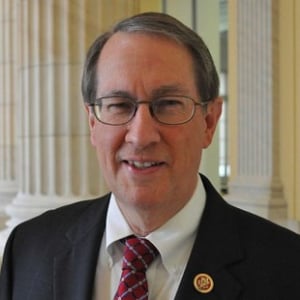
Bob Goodlatte served in the United States House of Representatives representing Virginia's 6th congressional district for 13 terms.
Goodlatte’s service to the people of the Sixth District began in 1977 when he became District Director for former Congressman Caldwell Butler. He served in this position for two years until 1979, and was responsible for helping folks across the District seeking assistance with or encountering problems from various federal agencies. In 1979, he founded his own private law practice in Roanoke. Later, he was a partner in the law firm of Bird, Kinder and Huffman, working there from 1981 until taking office.
Rep. Goodlatte was first elected to serve as Chairman of the House Judiciary Committee in the 113th Congress. He was the first Judiciary Committee Chairman from Virginia in the last 125 years. Rep. Goodlatte was an active Member of the Judiciary Committee since arriving in Congress, serving in a variety of leadership positions on the Committee including taking the lead on many intellectual property issues. During his time in Congress, Rep. Goodlatte made a name for himself as a leader on Internet and technology issues. He was Co-Chair of the Congressional Internet Caucus and the International Creativity and Theft-Prevention Caucus.
Rep. Goodlatte is a graduate of Washington and Lee University School of Law, and his undergraduate degree in Government was earned at Bates College in Lewiston, Maine.
Author, Cult of the Amateur: How the Internet Is Killing Our Culture
Columnist, The Hill
Merrill Matthews, Ph.D., was for 25 years a resident scholar with the Institute for Policy Innovation. Prior to that he was Vice President of Domestic Policy at the National Center for Policy Analysis. He is a public policy analyst specializing in health care, entitlements and energy issues and is the author of numerous public policy studies. He is past president of the Health Economics Roundtable for the National Association for Business Economics, the largest trade association of business economists.
For nine years Dr. Matthews was executive director of the Washington, DC-based Council for Affordable Health Insurance, a health insurance trade association. While he was executive director, National Journal recognized the Council as one of the most effective health policy organizations in Washington.
Dr. Matthews served for 10 years as a medical ethicist for the University of Texas Southwestern Medical Center’s Institutional Review Board for Human Experimentation. He is the co-author of On the Edge: America Faces the Entitlements Cliff (2019) and has contributed chapters to several books, including Physician Assisted Suicide: Expanding the Debate, The 21st Century Health Care Leader and, in 2009, Stop Paying the Crooks (on Medicare fraud). And for several years he co-authored a column on dental ethics for the Texas Dental Journal.
For several years he also served as chairman on the Texas Advisory Committee of the U.S. Commission on Civil Rights.
He is currently a weekly columnist for The Hill and has been published in numerous journals and newspapers, including the Wall Street Journal, the New York Times, Forbes, USA Today and the Washington Times.
Matthews is a frequent guest host on Point of View radio talk show, which airs nationwide. He was an award-winning political analyst for the USA Radio Network, and for several years had a daily one-minute commentary on Sirius-XM Radio. In 2008 and again in 2014, the BBC featured him in a television program on welfare reform in Great Britain, specifically Wales.
Dr. Matthews received a BBA in Economics from the University of Texas at Arlington, an M.Div. from Southwestern Baptist Theological Seminary, and has a Ph.D. in Humanities from the University of Texas at Dallas. And he is an 8th degree black belt in Tae Kwon Do.
Professor of Law, Antonin Scalia Law School, George Mason University
Adam Mossoff is Professor of Law at Antonin Scalia Law School, George Mason University. He has published extensively on why patents, copyrights, and other intellectual property rights have been—and should be—legally secured to innovators and creators as property rights. His scholarship has been relied on by the United States Supreme Court, by lower federal courts, and by U.S. federal agencies. He has been invited to testify numerous times before the U.S. Senate and the House of Representatives on intellectual property legislation. His writings on intellectual property policy have also appeared in the Wall Street Journal, New York Times, Forbes, Investors Business Daily, and in other media outlets. His journal articles can be downloaded here.
Professor Mossoff is a longstanding member of the Executive Committee of the Intellectual Property Practice Group of the Federalist Society, on which he served as Chairperson from 2016-2018, and he is Chair of the Intellectual Property Working Group of the Regulatory Transparency Project of the Federalist Society. He is a Senior Fellow and Chair of the Forum for Intellectual Property at the Hudson Institute, a Visiting Intellectual Property Fellow at the Heritage Foundation, and a member of the Board of Directors of the Center for Intellectual Property Understanding. He is a member of the Intellectual Property Rights Policy Committee of ANSI and he has served as Chair and Vice-Chair of the Intellectual Property Committee of the IEEE-USA, on which he remains a member in good standing.
States Register of Copyrights, U.S. Copyright Office
Deputy Director General of Patents, World Intellectual Property Organization

Professor of Law, DePaul University College of Law
Joshua D. Sarnoff is a professor of law at DePaul University and a faculty member in and former director of the Center for Intellectual Property Law & Information Technology (CIPLIT®). He teaches patent law, advanced patent law, administrative law, law and climate change, and other intellectual property law courses. He was previously a professor at the Washington College of Law, American University, in the Glushko-Samuelson Intellectual Property Law Clinic, and at the University of Arizona College of Law. In academic year 2014-2015, Professor Sarnoff was a Thomas A. Edison Distinguished Scholar at the United States Patent and Trademark Office. He is a registered patent attorney and a member of the bars of Washington D.C. and California, a former member of the board of governors of the Federal Circuit Bar Association, and a member of the boards of directors and advisory boards of various nonprofit organizations. He has written numerous articles and book chapters on patent law and climate change and has been involved in a wide range of intellectual property legal and policy disputes. He has submitted testimony on domestic patent law reform bills, has filed numerous amicus briefs in the United States Supreme Court and in the U.S. Court of Appeals for the Federal Circuit on important patent law issues, has been a pro bono mediator for the Federal Circuit, and has been a consultant to the United Nations Conference on Trade and Development on international intellectual property, trade and environmental issues. Professor Sarnoff was formerly in the private practice of intellectual property, environmental, and food and drug law in Washington, D.C. He received his BS from MIT and JD from Stanford.
Professor of Law, Southern Illinois University School of Law
Professor Mark F. Schultz joined the faculty in 2003. He teaches and writes primarily in the area of intellectual property.
Professor Schultz is a frequent author and speaker known for his work on the law and economics of the global intellectual property system. In one of his most influential projects, he worked with the Organization for Economic Cooperation and Development (OECD) to construct a groundbreaking global trade secret protection index (the TSPI). The TSPI is influencing policy discussions on this cutting-edge topic in capitals around the world. Other recent projects have included an empirical study that quantified for the first time the backlogs in patent offices worldwide, a report on how patented innovation is meeting global health challenges, and the construction of a new global index of copyright strength.
Professor Schultz is an influential voice in public policy debates regarding intellectual property. He has testified before the U.S. Congress on copyright law at the invitation of the House Judiciary Committee and has briefed the staff of the U.S. Senate Judiciary Committee on trade secret legislation. He speaks frequently around the world about the connection between secure and effective intellectual property rights and flourishing national economies and individual lives, with invitations from the U.S. Patent and Trademark Office, the U.S. Trade Representative, and the U.S. Copyright Office, as well as numerous academic institutions, think tanks, and industry groups. He served as an NGO delegate to the World Intellectual Property Organization (WIPO) for several years during the WIPO Development Agenda talks. He is also one of the organizers of an ongoing multilateral diplomatic dialogue on best practices in national trade secret laws, and is co-founder of the Center for Protection of Intellectual Property (CPIP) at George Mason University in Washington, D.C.
Among the awards and recognition he has received for his scholarship was the School of Law's Outstanding Scholar of the Year award in 2008. He has been a distinguished visiting scholar at the University of Botswana and a visiting professor at DePaul University College of Law.
Professor Schultz graduated with honors from the George Washington University School of Law. Following law school, he was a judicial clerk for the Hon. Daniel M. Friedman of the United States Court of Appeals for the Federal Circuit in Washington, D.C., and the Hon. Eric G. Bruggink of the United States Court of Federal Claims. Prior to joining academia, he practiced law for a decade, serving as outside general counsel to several tech startups and helping technology companies to expand their businesses and commercialize their intellectual property in dozens of countries. He holds a B.A. in International Economics from George Washington University and has done PhD level coursework in development economics at Southern Illinois University.
He is active in leadership roles in local and national organizations. He has served as chair of the Federalist Society's Intellectual Property Practice Group and the AALS Section on Internet and Computer Law. He is an officer of the American Bar Association's International IP Committee of the International Law Section and the American Intellectual Property Law Association’s Trade Secret Law Committee. He currently is chair of the Academic Advisory Board of the Copyright Alliance.
Professor Schultz teaches Copyright Law, Trade Secret Law, Trademark Law, and a senior seminar on Intellectual Property and Global Development. He established and directs both the Specialization in Intellectual Property Law and the IP Semester in Practice Externship Program. He also co-founded a Legal Globalization Class, offered every other year, that takes students to South Africa and Botswana after spending a semester learning about the legal system, culture, history, and politics of southern Africa. The popular course is a once-in-a-lifetime experience that introduces students to leading lawyers, judges, government officials, and human rights advocates, taking them from Cape Town to Johannesburg to Gaborone as well as many popular destinations including game reserves, national parks, the Cape of Good Hope, and the Cradle of Humankind.

Trademark, Copyright, and the Internet: Time to Return Balance to Civil Litigation
Ronald D. Coleman
The law and business of intellectual property are in upheaval today. Essentially, the concepts that...
Bar Watch Bulletin for Tuesday, August 10
The ABA House of Delegates met again Tuesday morning to wrap up its deliberation for...
American Needle v. NFL - Post-Decision SCOTUScast
Jeffrey Standen
On May 24, 2010, the Supreme Court announced its decision in American Needle v. NFL....
Bilski v. Kappos - Post-Decision SCOTUScast
Richard A. Epstein
On June 28, 2010, the Supreme Court announced its decision in Bilski v. Kappos. The...
Intellectual Property's Impact on Jobs and the Global Economy
Institute for Policy Innovation's Fifth Annual World Intellectual Property Day Forum
Washington, DCThe Scurvy of Hollywood: International Film Piracy and the Pirate Bay Cases
Beth Cate, Marshall Leaffer, John G. Malcolm
The Indiana-Bloomington Student Chapter hosted this debate on "The Scurvy of Hollywood: International Film Piracy...
Intellectual Property: Intellectual Property and Economic Growth
Richard A. Epstein, F. Scott Kieff, Michael J. Meurer, Daniel B. Ravicher, Mark F. Schultz
Strong property rights are generally believed to be essential for a healthy (and free) economy. ...
Quanta: Patent Rights in the Supreme Court
Richard A. Epstein, F. Scott Kieff, Fred von Lohmann, Adam Mossoff, Mark Lemley
LG Electronics owned a patent for a microprocessor chip, which it licensed to Intel, but...
Copyright v. Copyleft
Adam Mossoff, David W. Opderbeck
The Federalist Society's Seton Hall Student Chapter presented this panel discussion on September 17, 2009, at Seton...
Copyright v. Copyleft
Adam Mossoff, David W. Opderbeck
The Federalist Society's Seton Hall Student Chapter presented this panel discussion on September 17, 2009, at Seton...