
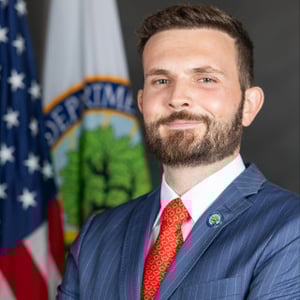
Fellow, Manhattan Institute
Tim Rosenberger serves as Senior Counsel at the United States Department of Education. He was previously a fellow at the Manhattan Institute and Stanford University’s Center for Entrepreneurial Studies. He was also the founding COO of Verbum Labs and serves as a Chaplain with the Cleveland Division of Police. Before matriculating to law school, he was a legal policy fellow at the Cicero Institute, a parish pastor, and a management consultant with McKinsey & Company.
Tim has contributed to a variety of academic, popular, and professional publications, including the Wall Street Journal, The Hill, The New York Post, and City Journal. He also regularly provides commentary for various media outlets, testifies before state legislatures, and files dozens of amicus curiae “friend of the court” briefs in the Supreme Court and various circuit courts.
He holds an AB from Georgetown University, a M.Div. from United Lutheran Seminary, a D.Min from the Rawlings School of Divinity, an LL.M. from Universität Wien, and a JD/MBA from Stanford University, where he was Federalist Society Chapter President and served on Law Review. Tim’s research interests lie at the intersection of law, faith, education and entrepreneurship—with a particular focus on leveraging policy to help America’s overlooked populations build lives of dignity.
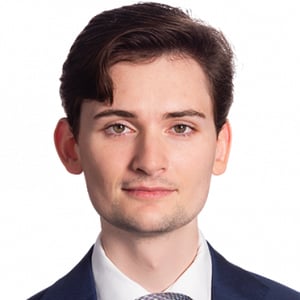
Deputy Assistant Attorney General, Office of Legal Policy, Department of Justice
GianCarlo Canaparo serves as Deputy Assistant Attorney General in the Office of Legal Policy at the Department of Justice. There, he oversees the Office's regulatory work and is the Department's liaison to the Office of Information and Regulatory Affairs. He also assists the White House in the process of selecting nominees for federal judgeships and advises Department leadership on policy and legal matters.
Before joining the Department, Canaparo was a senior legal fellow at The Heritage Foundation’s Edwin Meese III Center for Legal and Judicial Studies where he researched constitutional law, administrative law, and civil rights.
Canaparo’s scholarship has appeared in various law reviews including the Harvard Journal of Law and Public Policy, the Notre Dame Law Review, the Georgetown Journal of Law and Public Policy, the Texas Review of Law and Politics, and the Administrative Law Review. His research has been cited by Justice Neil Gorsuch and featured in the Wall Street Journal and Washington Post. His analysis has appeared in Law & Liberty, Civitas, Fox News, The National Review, Law 360, FedSoc Blog, and other outlets.
Canaparo co-hosted The Heritage Foundation’s SCOTUS 101 podcast, which follows the Supreme Court’s arguments and opinions and features interviews with judges, advocates, and scholars.
After graduating Georgetown law, Canaparo spent three years at the law firm of Skadden, Arps, Slate, Meagher & Flom and two years as a federal law clerk. He earned his bachelor’s degree in economics from the University of California at Davis.
Canaparo is a classical pianist and organist.
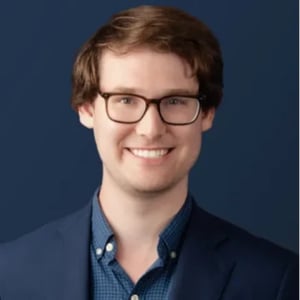
Litigation Fellow, Pacific Legal Foundation
Nick Clifford is a litigation fellow at Pacific Legal Foundation. He is a graduate of Indiana University Maurer School of Law.
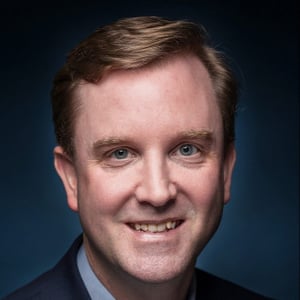
Vice President and Deputy Counsel, Wisconsin Institute for Law and Liberty
Shareholder & Co-Chair of the Workplace Policy Institute, Littler Mendelson P.C.
Alexander T. MacDonald advises employers on all aspects of the employment and labor landscape, focusing on emerging legislation and regulation. He has extensive experience advising businesses on worker classification, arbitration, the administrative and regulatory process, and the future of work. He frequently writes, publishes, and speaks on these subjects. His work has been cited by scholars and appellate courts. He is a recognized voice for the management perspective.
Alexander is a co-chair of the Workplace Policy Institute (WPI) team. With WPI, he advises employers on legislative, administrative, and regulatory developments at the state and federal level. He advocates for employers in the regulatory and administrative process. He also helps employers protect their businesses by understanding and anticipating cutting-edge legal developments.
Alexander also has extensive experience in traditional labor law. He represents management in all aspects of labor-management relations, including unfair labor practice charges, grievance arbitrations, representation elections, contract negotiations, and related litigation, including litigation in the U.S. courts of appeals.
Before joining Littler, Alexander served as the director, future of work, for a major technology company. He also worked in a national labor and employment law firm and a major public-sector general counsel’s office. He was a law clerk to the senior judges in the District of Columbia Court of Appeals.
He is also a veteran of the U.S. Air Force. He served in Operations Enduring Freedom and Iraqi Freedom. In law school, he graduated first in his class
Executive Director & Secretary, American Civil Rights Project
Dan Morenoff is the executive director at the American Civil Rights Project and an adjunct fellow at the Manhattan Institute.
His work focuses on protecting and, where necessary, restoring the primacy of all Americans' shared civil rights against the identitarian alternative.
Before practicing law, Morenoff served on the legislative staff of Sen. Phil Gramm (R-TX). Morenoff holds a B.A. from Columbia College of Columbia University in the City of New York and a J.D. from the University of Chicago Law School. He has also served as an officer or director of several community organizations in Dallas, Texas.
Executive Director, James Wilson Institute on Natural Rights & the American Founding
Garrett Snedeker is the James Wilson Institute's Executive Director. In addition to close collaboration with JWI's Co-Directors on the intellectual focuses of the Institute, he is the main point of contact for all partnership opportunities and media inquiries as well as the producer of Natural Law Moment and the host of the Anchoring Truths Podcast. He is a graduate of the Antonin Scalia Law School at George Mason University, where he served on the George Mason Law Review as Articles Editor. He graduated from Amherst College, as a one-time student of Prof. Hadley Arkes, and formerly worked as editor of the congressional research website LegiStorm. His writing has been featured in Newsweek, The Federalist, The American Mind, The American Conservative, Starting Points Journal, and the Online Library of Law & Liberty. He has been quoted in Politico, Roll Call, and the Boston Herald and collaborated on stories for the New York Times, Wall Street Journal, Washington Post, and National Journal. He has also, since 2023, been a staff attorney at New Civil Liberties Alliance.
State’s Attorney, DuPage County, Illinois
A career prosecutor with over 31 years of experience and counting, Bob Berlin was sworn in as DuPage County State’s Attorney on December 14, 2010, after being appointed to complete the unexpired term of Joseph Birkett. In 2012, 2016, and 2020, Bob was elected to full four-year terms as DuPage County State’s Attorney. He serves as the Chief Law Enforcement Officer for the 2nd largest county in Illinois and leads an office of 87 Assistant State’s Attorneys and 90 support staff and investigators.
Berlin began his career in 1987 as an Assistant State’s Attorney in Cook County. During his tenure in Cook County, Bob’s assignments included the criminal appeals, misdemeanor, felony review, homicide-sexual assault preliminary hearing, child exploitation, and felony trial divisions. In 2001, Bob left the Cook County State’s Attorney’s Office opting to continue his career as First Assistant State’s Attorney for the Kane County State’s Attorney’s Office. As First Assistant State’s Attorney, Bob managed and supervised the entire Office staff of more than 140 lawyers and support staff.
While in Kane County, Bob developed and implemented new policies including the Community Prosecutions and a Felony Review Unit. Bob also served as Chief of the Priority Prosecutions Unit. In 2004, Bob began working for the DuPage County State’s Attorney’s Office as Deputy Chief of the Office’s Juvenile Division. During the next several years, Bob was promoted to Deputy Chief of the Felony Trial Division and in April 2010, Chief of the Criminal Bureau, where he supervised all Assistant State’s Attorneys charged with the criminal prosecutions function of the Office.
In his 31-year career as a prosecutor, Bob has tried more than 85 felony jury trials, 55 of which involved first-degree murder. Bob has also tried hundreds of felony bench trials, including more than 50 homicide cases.
Appellate Court Justice, Illinois Appellate Court for the Fourth District
Justice Eugene Doherty graduated summa cum laude from the Northern Illinois University School of Law in 1989. After serving as a law clerk to Honorable Philip G. Reinhard at the Illinois Appellate Court, Justice Doherty engaged in a civil litigation practice in Rockford, Illinois. The Illinois Supreme Court appointed him to the 17th Judicial Circuit Court in 2007, a position to which he was elected in 2008 and retained in 2012 and 2020. He served as chief judge of the 17th Circuit from 2018 through 2021. Justice Doherty is the author of a variety of articles in several legal publications including the Illinois Bar Journal, and he has been an instructor at the Illinois Education Conference multiple times. He serves on several Supreme Court Committees, including serving as chair of the e-Business Policy Advisory Board and vice-chair of the COVID-19 Task Force. In 2022, the Illinois Supreme Court assigned him to the Illinois Appellate Court for the Fourth District.
Chief Policy Counsel, Council on Criminal Justice and Senior Advisor, Right on Crime
Marc A. Levin is the Chief Policy Counsel for the Council on Criminal Justice (counciloncj.org) and Senior Advisor for Right on Crime.
An attorney and accomplished author on legal and public policy issues, Marc began the Foundation’s criminal justice program in 2005. This work contributed to nationally praised policy changes that have been followed by dramatic declines in crime and incarceration in Texas. Building on this success, in 2010, Levin developed the concept for the Right on Crime initiative, a TPPF project in partnership with Prison Fellowship and the American Conservative Union Foundation. Right on Crime has become the national clearinghouse for conservative criminal justice reforms and has contributed to the adoption of policies in dozens of states that fight crime, support victims, and protect taxpayers.
In 2014, Levin was named one of the “Politico 50” in the magazine’s annual “list of thinkers, doers, and dreamers who really matter in this age of gridlock and dysfunction.”
Marc has testified on criminal justice policy on four occasions before Congress and has testified before legislatures in states including Texas, Nevada, Kansas, Wisconsin, and California. He also has met personally with leaders such as U.S. Presidents, Speakers of the House, and the Justice Commtitee of the United Kingdom Parliament to share his ideas on criminal justice reform. In 2007, he was honored in a resolution unanimously passed by the Texas House of Representatives that stated, “Mr. Levin’s intellect is unparalleled and his research is impeccable.”
Since 2005, Marc has published dozens of policy papers on topics such as sentencing, probation, parole, reentry, and overcriminalization which are available on the TPPF website. Levin’s articles on law and public policy have been featured in publications such as the Wall Street Journal, USA Today, Texas Review of Law & Politics, National Law Journal, New York Daily News, Jerusalem Post, Toronto Star, Atlanta Journal-Constitution, Philadelphia Inquirer, San Francisco Chronicle, Washington Times, Los Angeles Daily Journal, Charlotte Observer, Dallas Morning News, Houston Chronicle, Austin American-Statesman, San Antonio Express-News and Reason Magazine.
In 1999, Marc graduated with honors from the University of Texas with a B.A. in Plan II Honors and Government. In 2002, Marc received his J.D. with honors from the University of Texas School of Law. Marc was a Charles G. Koch Summer Fellow in 1996. He served as a law clerk to Judge Will Garwood on the U.S. Court of Appeals for the Fifth Circuit and Staff Attorney at the Texas Supreme Court.
Professor, Department of Criminal Justice and Criminology & Co-Director, Center for Criminal Justice, Loyola University Chicago
David Olson is a Professor in the Criminal Justice and Criminology Department at Loyola University Chicago, where he is the Co-Director (with Don Stemen) of Loyola’s interdisciplinary Center for Criminal Justice Research. Previously Dr. Olson served as the Chair of the Department of Criminal Justice and Criminology, the Director of the Department’s Graduate Program, and as Director of Loyola’s interdisciplinary Forensic Science Program. Dr. Olson currently serves as the Chairperson for the advisory boards of the Illinois Department of Corrections and the Illinois Department of Juvenile Justice, and as a member of the Illinois Criminal Justice Information Authority’s Board through separate gubernatorial appointments. Dr. Olson also currently serves on the Illinois Supreme Court Commission on Pretrial Practices Implementation Task Force, the Illinois Department of Human Services’ Firearm Violence Research Group, and the Illinois Pretrial Practices Data Oversight Board.
For nearly 20 years, Dr. Olson worked at the Illinois Criminal Justice Information Authority, where he was the director of Illinois’ Statewide Drug and Violent Crime Control Strategy Impact Evaluation Program and was responsible for overseeing the evaluation and monitoring of federally funded drug control efforts in the State of Illinois. For six years, Dr. Olson served as a Special Assistant to the Cook County Sheriff through a cooperative agreement between Loyola and the Cook County Sheriff’s Office.
David has served as staff to the Illinois Governor’s Task Force on Crime and Corrections (1992-1993), the Illinois Legislative Committee on Juvenile Justice (1994-1996), the Illinois Truth-in-Sentencing Commission (1996-1998), the Illinois Governor’s Community Safety and Prisoner Re-Entry Management Workgroup/Commission (2004-2006), and the Illinois Capital Punishment Reform Study Committee (2007-2010). In 2015 Dr. Olson was appointed as a Commissioner to the Illinois Governor’s Commission on Criminal Justice and Sentencing Reform. Dr. Olson has worked with a variety of federal, state and local agencies to develop and evaluate programs and policies, particularly in the area of community and institutional corrections, during his 35 years in the field of criminal justice.
Dr. Olson has published more than 100 articles, research bulletins and research reports, and has made more than 100 presentations at professional conferences and training symposia. Some of David’s most recent research has been published in The Journal of Substance Abuse Treatment, the Journal of Crime and Justice, and by the Duke University School of Law’s Center for Firearms Law.
Dr. Olson received his B.S. in Criminal Justice from Loyola University Chicago, his M.A. in Criminal Justice from the University of Illinois at Chicago, and his Ph.D. in Political Science/Public Policy Analysis from the University of Illinois at Chicago, where he was the recipient of the Assistant United States Attorney General’s Graduate Research Fellowship. In 2015 Dr. Olson received the John Howard Association Outstanding Research Contributions Award, and in 2011 he received the Hans W. Mattick Award for outstanding accomplishments in the field of criminology and criminal justice research from the Illinois Academy of Criminology.

FOID Cards and the Second Amendment at the Illinois Supreme Court
Tim Rosenberger
On September 19, 2024, the Supreme Court of Illinois decided Davis v. Yenchko,[1] a...
Understanding Jussie Smollett’s Appellate Win
GianCarlo Canaparo
Late last year, the Supreme Court of Illinois overturned former actor Jussie Smollett’s hate-crime hoax...
Illinois Supreme Court Addresses Expectations of Privacy in Hospital Trauma Rooms
Nick Clifford
In People v. Turner, the Supreme Court of Illinois addressed the issue of whether an...
The Twin Commands: Streamlining Equality Litigation Based on Students for Fair Admissions
Daniel Lennington
Each year, government contracting programs dole out tens of billions of dollars to businesses that...
Predistribution, Labor Standards, and Ideological Drift: Why Some Conservatives Are Embracing Labor Unions (and Why They Shouldn't)
Alexander T. MacDonald
Common ground isn’t always a good thing. For example, consider the growing popularity of “predistribution.”...
Racially Discriminatory Corporate Policies: Who's Liable?
Dan Morenoff
Laws banning discrimination have been on the books across America for more than a century...
Topics
State Consumer Protection as an Ideological Weapon
Pro-life pregnancy centers across the country offer free ultrasounds, parenting classes, car seats, diapers, baby...
Annual Otis McDonald Second Amendment and Practicum
Chicago Lawyers Chapter
East Dundee, ILIllinois Supreme Court Rules Monetary Bail Not Required By Bail Clause in State Constitution
Garrett Snedeker
In July 2023, the Illinois Supreme Court issued a much-anticipated ruling in Rowe v. Raoul,...
Bail Reform: Illinois’ Experience After 9 months
Robert Berlin, Eugene Doherty, Marc Levin, David Olson
Balancing safety and justice is especially challenging in the pretrial context where difficult decisions must...