
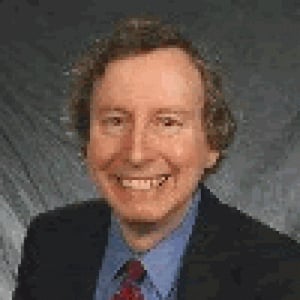
Professor of Law, Roger Williams University School of Law
As an expert in National Security Law, Professor Peter Margulies focuses on the delicate balance between liberty, equality, and security in issues involving law and terrorism. Professor Margulies has written almost a dozen articles discussing the War on Terror. He currently works with RWU Law Professor Jared Goldstein, along with litigators from the law firm Edwards Angell Palmer & Dodge, in representing two Afghan detainees. Professor Margulies led a national conference entitled “Legal Dilemmas in A Dangerous World: Law, Terrorism and National Security” held at RWU.
Professor Margulies also has an extensive background in immigration law and has represented Haitian refugees and conducted outreach to community legal service providers.
Peter Marguiles teaches Immigration Law, National Security Law and Professional Responsibility. He has filed amicus briefs in high-visibility cases with the U.S. Supreme Court and has been frequently cited in the New York Times, the National Law Journal and other media outlets.

Retired Partner, Sullivan & Cromwell LLP
Upon his resignation as the Legal Adviser of the U.S. Department of State in January 1993, Mr. Williamson rejoined Sullivan & Cromwell's Washington, D.C. office. He originally joined the Firm in 1964 after graduating from New York University School of Law, where he was an editor of the Law Review. He became a partner of the Firm in 1971, moved to its London office in 1976, returned to its New York office in 1979, moved to its Washington, D.C. office in 1988 and became Of Counsel in 2007. In 2018, he retired from the firm.
At Sullivan & Cromwell, Mr. Williamson engaged in a broad and wide-ranging domestic and international financing and transactions practice, as well as advice with respect to corporate governance issues, the United States’ economic sanctions laws, the ethics rules applicable to government officials and the immunities of foreign sovereigns and international organizations.
Mr. Williamson has been an active participant on panels and other forums involving public international law and national security issues, such as the domestic and international bases for the use of force, the role of the United States with respect to the International Criminal Court, the law of the sea and the application of international legal principles in the war against terrorism.
Mr. Williamson is a member of the Council on Foreign Relations and a former member of the Executive Council of the American Society of International Law, the Executive Committees of the Business and Advisory Committee (BIAC) to the OECD and the U.S. Council for International Business, the United States Advisory Board of NTT DoCoMo, Inc. and the Board of Directors of Triton Oil & Gas Limited.
Mr. Williamson has served on the Boards of Regents and Trustees of the University of the South and as chair of the Board of Regents. He is currently a member of the Board of Directors of the American Council of Trustees and Alumni, a higher education watchdog.

Clayton J. and Henry R. Barber Professor of Law, Northwestern University Pritzker School of Law and Co-Chairman, Board of Directors, The Federalist Society
STEVEN GOW CALABRESI is the Clayton J. & Henry R. Barber Professor at Northwestern Pritzker School of Law. He has also co-taught in the Fall semester at Yale Law School from 2013 to the present. Calabresi clerked for Justice Antonin Scalia and Judges Robert H. Bork and Ralph K. Winter. He was a Special Assistant to Attorney General Meese from 1985 to 1987 and worked with Ken Cribb as his deputy in 1987 on the second floor of the West Wing of the Reagan White House. Calabresi has written books on presidential power and comparative constitutional law and the origins of judicial review. He and Gary Lawson are the co-editors of a casebook on U.S. Constitutional Law, and Calabresi is also the co-editor of a casebook on comparative constitutional law. He has written over seventy law review articles since 1990.
Professor of Law, Fordham University School of Law
Professor Andrew Kent teaches and writes about constitutional law, foreign relations law, federal courts and procedure, national security law, public international law, professional responsibility and legal ethics. He received the Dean’s Distinguished Research Award (2016-17) for his scholarship.
After graduating from Yale Law School, Professor Kent clerked for the Hon. Robert A. Katzmann of the U.S. Court of Appeals for the Second Circuit and the Hon. Carol B. Amon of the U.S. District Court for the Eastern District of New York. Before joining Fordham’s faculty, he was a Climenko Fellow at Harvard Law School and an attorney at both Sullivan & Cromwell and WilmerHale.
From 2014-2015, Professor Kent served as Senior Counsel to the Solicitor General, State of New York, Office of the Attorney General.
Professor Kent is a member of the New York City Bar’s Professional Responsibility Committee. He provides appellate representation to the indigent as a member of the Pro Bono Panel of the U.S. Court of Appeals for the Second Circuit.

Professor of Law, Northwestern University Pritzker School of Law
Joshua Kleinfeld teaches and writes about political, legal, and moral philosophy, criminal law, and criminal procedure. He also practices law in Northwestern's Juvenile Criminal Defense Clinic. He is a full professor with tenure at the Northwestern Pritzker School of the Law and (by courtesy) in Northwestern’s philosophy department. In 2017-18, he was a visiting professor at Harvard and Stanford Law Schools. He is the recipient of the Bator Award, given annually to one American law professor under the age of 40 who has demonstrated "excellence in legal scholarship, a commitment to teaching, a concern for students, and who has made a significant public impact."
In philosophy, Kleinfeld's research focuses on the idea of "embodied ethical life," as developed in the socio-theoretic tradition of Hegel, Weber, and Durkheim. This tradition aims to understand and critique social life by bringing to light the normative ideas implicit in social practices and institutions. In law, this means that the most interesting philosophical concepts are often those reflected or actualized in legal practice – in the law as judges and lawyers think of it and wield it.
In criminal law and procedure, Kleinfeld has developed a theory known as "reconstructivism," which holds that the chief office of criminal law is not to dole out retributive justice, nor to optimize crime and cost control, but to reconstruct a violated normative order in the wake of a crime. This work, which draws on the thought of Hegel, Durkheim, Jean Hampton, and Antony Duff, develops an alternative to retributive and utilitarian theories of criminal law by focusing on the distinctive social function and sense of justice at work in the criminal system.
Kleinfeld is also involved in practical criminal justice reform. In this vein, he defends children accused of homicide in the Northwestern Juvenile Criminal Defense clinic and assists in litigation efforts meant to reform American criminal law through the courts. He has also developed a view of criminal justice reform known as "democratization," which holds that the root of the American criminal justice crisis is a set of bureaucratic attitudes, structures, and incentives divorced from the American public’s concerns and sense of justice, and that the primary solution is to make criminal justice more community-focused and responsive to lay influences. Working with others, he has developed a number of policy proposals meant to reform American criminal justice in a democratic direction.
Kleinfeld holds a JD from Yale Law School, a PhD in philosophy from the Goethe University of Frankfurt (supervised by Axel Honneth, Klaus Günther, and Rainer Forst), and a BA in philosophy from Yale College. He clerked for Judge J. Harvie Wilkinson on the United States Court of Appeals for the Fourth Circuit; Judge Janice Rogers Brown on the United States Court of Appeals for the D.C. Circuit; and President (chief justice) Aharon Barak of the Supreme Court of Israel. He worked as an Associate at Debevoise & Plimpton LLP in Frankfurt, Germany, in the area of corporate criminal law. Before law school, he worked as a Senior Research Analyst at the White House’s Council on Bioethics.
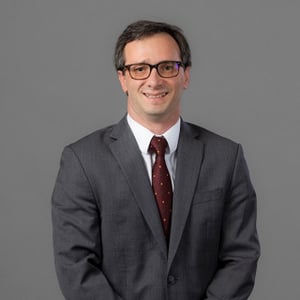
Assistant Professor of Law, George Mason University, Antonin Scalia Law School
Robert Leider is an Assistant Professor of Law at Antonin Scalia Law School, George Mason University. His scholarly interests are in criminal law, criminal procedure, and constitutional law, especially concerning questions about the use of force and the rule of law. He has written on the law of self-defense, the constitutional allocation of military power, and gun control. Among other places, he has published in the Florida Law Review (forthcoming), the Indiana Law Journal, and the Wall Street Journal.
Before joining Antonin Scalia Law School, Professor Leider was at Arnold & Porter in Washington, DC. He was previously with Mayer Brown LLP and was an Olin-Searle-Smith Fellow at the University of Pennsylvania Law School. He has clerked for Judge Diane S. Sykes, of the U.S. Court of Appeals for the Seventh Circuit, and Justice Clarence Thomas. Professor Leider earned a BA, summa cum laude, from The George Washington University, a JD from Yale Law School, and a PhD in Philosophy (dissertation defended with distinction) from Georgetown University. While at Yale, he served as an articles editor for the Yale Law Journal.
Professor Leider teaches criminal law and torts.

Charles Evans Hughes Professor of Law, Columbia Law School
THOMAS W. MERRILL is the Charles Evans Hughes Professor of Law at Columbia Law School. He previously taught at Northwestern University School of Law and Yale Law School. He has undergraduate degrees from Grinnell College and Oxford University, where he studied as a Rhodes Scholar, and a law degree from the University of Chicago. He clerked on the D.C. Circuit (for Chief Judge David Bazelon) and the U.S. Supreme Court (for Justice Harry Blackmun). From 1987-1990 he served as Deputy Solicitor General, U.S. Department of Justice. Professor Merrill’s writings related to property include Property: Principles and Policies (Foundation Press Second Edition, 2012) (with Henry E. Smith); Property: The Oxford Introductions to U.S. Law (Oxford U. Press, 2010); Property: Takings (Foundation Press, 2002)(with David Dana); and numerous articles, including “The Economics of Public Use” (Cornell Law Review 1986); “The Landscape of Constitutional Property” (Virginia Law Review 2000); and “The Character of the Governmental Action” (Vermont Law Review 2012). He is a member of the American Academy of Arts and Sciences.
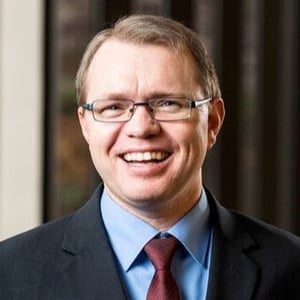
Charles I. Francis Professorship in Law, University of Texas at Austin School of Law
Professor Aaron Nielson lectures and writes in the areas of administrative law, civil procedure, and federal courts. Before joining the faculty, he served as Solicitor General of Texas and represented Texas before the U.S. Supreme Court and the Texas Supreme Court, as well as overseeing all appellate litigation for the State. Earlier in his career, he was a professor at Brigham Young University and an appellate and antitrust partner in the Washington, D.C. office of Kirkland & Ellis LLP. He also clerked for Justice Samuel A. Alito, Jr. of the U.S. Supreme Court, Judge Janice Rogers Brown of the U.S. Court of Appeals for the D.C. Circuit, and Judge Jerry E. Smith of the U.S. Court of Appeals for the Fifth Circuit.
As Solicitor General, Professor Nielson successfully defended against a First Amendment challenge Texas’s law requiring online pornographers to institute age verification. In 2020, the U.S. Supreme Court appointed him to defend the constitutionality of a federal agency. He currently serves as a Senior Fellow of the Administrative Conference of the United States after completing a six-year term as an appointed public member and chair of the Conference’s Administration & Management Committee.
Nielson’s research focuses on administrative law, federal litigation, and the separation of powers. He has published (or soon will publish) in the Harvard Law Review, Columbia Law Review, University of Chicago Law Review, University of Pennsylvania Law Review, Duke Law Journal, Georgetown Law Journal, Cornell Law Review, and Northwestern University Law Review, among others. Nielson has been recognized for teaching for teaching and scholarship and in 2021 received the Federalist Society’s Joseph Story Award, which recognizes a young academic for excellence in legal scholarship, a commitment to teaching, and a concern for students, and who has made a significant public impact in a manner that advances the rule of law in a free society. He is also an elected member of the American Law Institute.
Professor Nielson received his J.D. magna cum laude from Harvard Law School and an LL.M from the University of Cambridge, where he focused his studies on the institutions that regulate global competition and commerce. He received his undergraduate degree summa cum laude from the University of Pennsylvania, majoring in economics and political science.
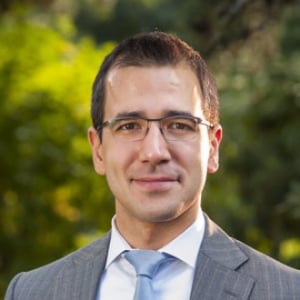
Associate Professor of Law, Lewis & Clark Law School
Ozan Varol is a rocket scientist turned award-winning law professor and author. He teaches in the areas of constitutional law, criminal law and procedure, comparative constitutional law, and Islamic law. His recent scholarship has focused on constitutional transitions and constitutional design. He also lectures and writes about civil-military relations and law and politics in the Middle East.
Professor Varol is the author of two forthcoming books with Oxford University: The Democratic Coup d’État (monograph) and Comparative Constitutional Law: A Global and Interdisciplinary Approach (co-authored textbook).
He has also authored more than a dozen book chapters or law review articles published or forthcoming in the California Law Review, Georgetown Law Journal, UC Davis Law Review, Iowa Law Review (twice), Harvard International Law Journal, Columbia Journal of Transnational Law, Virginia Journal of International Law, American Journal of Comparative Law (peer-reviewed), and the International Journal of Constitutional Law (peer-reviewed), among many other academic journals. His scholarship has been featured in various domestic and foreign media outlets, including BBC, CNN, Washington Post, Slate, and Foreign Policy.
Professor Varol’s articles have received numerous scholarly recognitions. He is the only scholar to twice win the American Society of Comparative Law’s paper competition for younger scholars. His 2014 article, Temporary Constitutions, was selected as one of the best three papers in the AALS Scholarly Papers Competition, which is widely considered the most prestigious in legal education, and awarded Honorable Mention. In 2014 and in 2016, his articles won the Federalist Society’s Young Legal Scholars Paper Competition. In addition, his article, The Democratic Coup d’État, was identified in a review by Professor Mark Tushnet (Harvard Law School) as “one of the best works of recent scholarship relating to constitutional law.”
To access Professor Varol’s personal website and download a free chapter from his forthcoming book, click here.

Senior Fellow, National Review
Bestselling author Andrew C. McCarthy is a contributing editor at National Review, a senior fellow at National Review Institute, and a Fox News contributor. He is a former Chief Assistant United States Attorney in the Southern District of New York and led the terrorism prosecution against the “Blind Sheikh” (Omar Abdel Rahman) and eleven other jihadists for conducting a war of urban terrorism against the United States that included the 1993 World Trade Center bombing and a plot to bomb New York City landmarks. During is 20-year career as a prosecutor, he received numerous honors, including the Justice Department’s highest awards. Andy speaks and writes widely on law and national security, radical Islam, politics, and culture. He has testified before Congress as an expert on issues of constitutional law, counterterrorism, and law-enforcement. He is a columnist for The Hill, and his essays and book reviews appear frequently at The New Criterion. His most recent New York Times bestselling book is Ball of Collusion (Encounter Books, 2019), about the Russiagate controversy (an updated version was published in 2020). His other books include Willful Blindness (2008), The Grand Jihad (2010), Spring Fever: The Illusion of Islamic Democracy (2012), and Faithless Execution (2014). He has also written several pamphlets in the Broadside series published by Encounter Books, most recently Islam and Free Speech (2015).

Agnes Williams Sesquicentennial Professor of Federal Courts, Georgetown Law
Stephen I. Vladeck is a professor of law at the Georgetown University Law Center, and is a nationally recognized expert on the federal courts; the Supreme Court; national security law; and military justice.
Vladeck is author of the New York Times bestselling book, “The Shadow Docket: How the Supreme Court Uses Stealth Rulings to Amass Power and Undermine the Republic,” which won the 2023 Writers’ League of Texas Book Award for Non-Fiction and was a finalist for the 2024 ABA Silver Gavel Award for Media and the Arts. Vladeck is also a highly regarded appellate advocate, having argued three cases before the U.S. Supreme Court and over a dozen before various lower federal civilian and military courts. He has received numerous awards for his influential and widely cited legal scholarship, his prolific popular writing, his teaching, and his service to the legal profession—including the 2024 University of Texas President’s Research Impact Award and his selection by the Order of the Coif to serve as its Distinguished Visiting Professor for 2025.
Vladeck is CNN’s Supreme Court analyst and editor and author of “One First,” a popular weekly newsletter about the Supreme Court. Together with Bobby Chesney, Vladeck co-hosts the popular and award-winning “National Security Law Podcast.” He is also a co-author of Aspen Publishers’ leading national security law and counterterrorism law casebooks. And he is a member of the Board of Trustees of EarthJustice—the nation’s premier nonprofit public interest environmental law organization.
Vladeck graduated from Yale Law School in 2004—where he was executive editor of the Yale Law Journal and won the Harlan Fiske Stone Prize for outstanding moot court oralist and shared the Potter Stewart Prize for best moot court team performance. After law school, he clerked for the Honorable Marsha S. Berzon on the U.S. Court of Appeals for the Ninth Circuit and the Honorable Rosemary Barkett on the U.S. Court of Appeals for the Eleventh Circuit. He earned a B.A. summa cum laude with Highest Distinction in History and Mathematics from Amherst College in 2001—where he wrote his senior thesis on “Leipzig’s Shadow: The War Crimes Trials of the First World War and Their Implications from Nuremberg to the Present.” A native New Yorker and hopeless Mets fan, Vladeck lives in the District with his wife, Karen (Founder and Managing Partner of Risepoint Search Partners); their daughters, Madeleine and Sydney; and their eleven-year-old pug, Roxanna.

Emanuel S. Heller Professor of Law, University of California at Berkeley; Thomas Smith Senior Research Fellow, The Civitas Institute, University of Texas at Austin
John Yoo is the Emanuel Heller Professor of Law at the University of California at Berkeley. He is also the Thomas Smith Senior Research Fellow, Civitas Institute, at the University of Texas at Austin. He is also a Nonresident Senior Fellow at the American Enterprise Institute.
His most recent book, The Politically Incorrect Guide to the Supreme Court, co-authored with Robert Delahunty, was published in 2023. Professor Yoo’s other books include Defender-in-Chief: Trump’s Fight for Presidential Power; Striking Power: How Cyber, Robots, and Space Weapons Change the Rules for War; Point of Attack: Preventive War, International Law, and Global Welfare; and Crisis and Command: A History of Executive Power from George Washington to George Bush.
He is a co-author of volumes 1 and 2 of R. Rossum, G. Tarr, V. Munoz & J. Yoo American Constitution Law (Routledge, 2026), and a co-editor of the eight-volume series on the 250th anniversary of the American Revolution, We Hold These Truths, with Yuval Levin and Adam White of the American Enterprise Institute.
Professor Yoo has published more than 100 articles in academic journals on subjects including national security, constitutional law, international law, and the Supreme Court. He also regularly contributes to the editorial pages of the Wall Street Journal, New York Times, Washington Post, Los Angeles Times, and National Review, among others.
Professor Yoo has served in all three branches of government. He was an official in the U.S. Department of Justice, where he worked on national security and terrorism issues after the 9/11 attacks. He served as general counsel of the U.S. Senate Judiciary Committee. He has been a law clerk for Supreme Court Justice Clarence Thomas and federal appeals Judge Laurence Silberman. He has been a visiting professor at the University of Texas at Austin’s School of Civic Leadership, Seoul National University, the Interdisciplinary Center Herzliya, Keio University, Trento University, the University of Chicago, and the Free University of Amsterdam.
Professor Yoo supervises the Public Law and Policy Program and the California Constitution Center. He also serves on the boards of Founding Forward, the Washington Legal Foundation, the Pacific Legal Foundation, the Ulysses Grant Institute, the Federalist Society’s Separation of Powers and Federalism Division, the Universidad Cientifica del Sur Law School, and the Asia-Pacific Law Institute at Seoul National University. He is a winner of the Federalist Society’s Paul Bator award and the Heritage Foundation’s Edwin Meese III Originalism Lectureship.
Professor Yoo graduated from Yale Law School and summa cum laude from Harvard College.

Executive Vice President, The Federalist Society
Dean Reuter is Executive Vice President at the Federalist Society for Law and Public Policy Studies. He has served in two federal government agency Offices of the Inspector General, as Counsel to the Inspector General and Deputy Inspector General, responsible for policing the use of federal funds granted and contracted through those agencies. As such, he helped conduct and oversee criminal investigations across the country. He is the principal author of the non-fiction book, The Hidden Nazi: The Untold Story of America's Deal with the Devil, and editor of Liberty’s Nemesis: The Unchecked Expansion of the State and Confronting Terror: 9/11 and the Future of American National Security. He was appointed by the President and served as Vice-Chairman of the Board of Directors of the Corporation for National and Community Service, and recently served as an appointee on the U.S. Commission on Presidential Scholars. He is a graduate of Hood College (BA with Honors) and the University of Maryland School of Law.

Deputy Secretary of Transportation, US Department of Transportation
Steven G. Bradbury was sworn in as the Deputy Secretary of Transportation on March 13, 2025, following his confirmation by the U.S. Senate on March 11, 2025. In this role, he oversees the Department’s operating administrations and spearheads initiatives to ensure a safe, efficient, and modern transportation system that strengthens economic productivity and global competitiveness. Deputy Secretary Bradbury also assists Secretary Duffy in managing the Department’s activities, including its workforce of over 58,000 employees and an annual budget exceeding $109 billion.
Bradbury previously served as the 23rd General Counsel of the Department of Transportation from 2017 to 2021, as the Acting Deputy Secretary from 2019, and as Acting Secretary of Transportation in 2021. As General Counsel, he was the chief legal officer, advising on all legal matters and ensuring the integrity and compliance of the Department’s policies and programs.
Before rejoining DOT, Bradbury was a Distinguished Fellow at The Heritage Foundation from December 2022 to March 2025. He has extensive experience in the public and private sector, having served as Principal Deputy and Acting Assistant Attorney General at the U.S. Department of Justice and as a partner at Kirkland & Ellis LLP and Dechert LLP. Earlier in his career, he clerked for Justice Clarence Thomas and Judge James L. Buckley.
Bradbury holds a J.D., magna cum laude, from the University of Michigan Law School and a B.A. in English from Stanford University.
Director and Founder, Shurat HaDin
Since 1997, Israeli activist attorney Nitsana Darshan-Leitner has been leading the struggle to fight the Palestinian and Islamic terrorist organizations in the courtroom. As the director of the Israel based civil rights group, Shurat HaDin – Israel Law Center, she is currently representing hundreds of terror victims in lawsuits and legal actions against the HAMAS, Islamic Jihad, the Palestinian Authority, the PLO, Hizbollah, Iran, Syria, Egypt, North Korea, UBS, The Arab Bank, Bank of China, and LCB. The cases, being litigated in the Israeli, American, Canadian and European courts, allow the victims of terrorism to fight back.
A mother of six, including triplets, Darshan-Leitner is a graduate of the Bar-Ilan University Law Faculty and holds an MBA from Manchester University. She regularly appears in the media including Israeli talk show programs, Voice of Israel radio, CNN, the BBC, European television, the Jerusalem Report and many American, Canadian and European publications.
Executive Vice President, The Federalist Society
Dean Reuter is Executive Vice President at the Federalist Society for Law and Public Policy Studies. He has served in two federal government agency Offices of the Inspector General, as Counsel to the Inspector General and Deputy Inspector General, responsible for policing the use of federal funds granted and contracted through those agencies. As such, he helped conduct and oversee criminal investigations across the country. He is the principal author of the non-fiction book, The Hidden Nazi: The Untold Story of America's Deal with the Devil, and editor of Liberty’s Nemesis: The Unchecked Expansion of the State and Confronting Terror: 9/11 and the Future of American National Security. He was appointed by the President and served as Vice-Chairman of the Board of Directors of the Corporation for National and Community Service, and recently served as an appointee on the U.S. Commission on Presidential Scholars. He is a graduate of Hood College (BA with Honors) and the University of Maryland School of Law.
Agnes Williams Sesquicentennial Professor of Federal Courts, Georgetown Law
Stephen I. Vladeck is a professor of law at the Georgetown University Law Center, and is a nationally recognized expert on the federal courts; the Supreme Court; national security law; and military justice.
Vladeck is author of the New York Times bestselling book, “The Shadow Docket: How the Supreme Court Uses Stealth Rulings to Amass Power and Undermine the Republic,” which won the 2023 Writers’ League of Texas Book Award for Non-Fiction and was a finalist for the 2024 ABA Silver Gavel Award for Media and the Arts. Vladeck is also a highly regarded appellate advocate, having argued three cases before the U.S. Supreme Court and over a dozen before various lower federal civilian and military courts. He has received numerous awards for his influential and widely cited legal scholarship, his prolific popular writing, his teaching, and his service to the legal profession—including the 2024 University of Texas President’s Research Impact Award and his selection by the Order of the Coif to serve as its Distinguished Visiting Professor for 2025.
Vladeck is CNN’s Supreme Court analyst and editor and author of “One First,” a popular weekly newsletter about the Supreme Court. Together with Bobby Chesney, Vladeck co-hosts the popular and award-winning “National Security Law Podcast.” He is also a co-author of Aspen Publishers’ leading national security law and counterterrorism law casebooks. And he is a member of the Board of Trustees of EarthJustice—the nation’s premier nonprofit public interest environmental law organization.
Vladeck graduated from Yale Law School in 2004—where he was executive editor of the Yale Law Journal and won the Harlan Fiske Stone Prize for outstanding moot court oralist and shared the Potter Stewart Prize for best moot court team performance. After law school, he clerked for the Honorable Marsha S. Berzon on the U.S. Court of Appeals for the Ninth Circuit and the Honorable Rosemary Barkett on the U.S. Court of Appeals for the Eleventh Circuit. He earned a B.A. summa cum laude with Highest Distinction in History and Mathematics from Amherst College in 2001—where he wrote his senior thesis on “Leipzig’s Shadow: The War Crimes Trials of the First World War and Their Implications from Nuremberg to the Present.” A native New Yorker and hopeless Mets fan, Vladeck lives in the District with his wife, Karen (Founder and Managing Partner of Risepoint Search Partners); their daughters, Madeleine and Sydney; and their eleven-year-old pug, Roxanna.
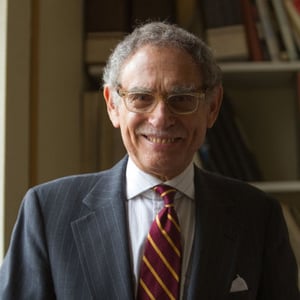
Founder and Co-Director, James Wilson Institute
Hadley Arkes joined the faculty of Amherst College in 1966. He became the Edward Ney Professor of Jurisprudence in 1987, and held that chair until he retired officially in July 2015. But he has not retired from writing and speaking. He has carried that teaching into a new phase; he has become the Founder and Director of the James Wilson Institute on Natural Rights and the American Founding in Washington, D.C. He has written eight books, mostly with Princeton and Cambridge University Presss. Among the books at Princeton have been: The Philosopher in the City (1981), First Things (1986), Beyond the Constitution (1990), and The Return of George Sutherland (1994). With Cambridge Press he has done Natural Rights and the Right to Choose (2002), and Constitutional Illusions & Anchoring Truths: The Touchstone of the Natural Law (2010). His most recent book, with Regnery Press is Mere Natural Law (2023) His articles have appeared in professional journals, but apart from his writing in more scholarly formats, he has become known to a wider audience through his writings in the Wall Street Journal, National Review, Civitas and First Things, a journal that took its name from his book of that title.
He was the main advocate, and architect, of the bill that became known as the Born-Alive Infants’ Protection Act. The account of his experience, in moving the bill through Congress, is contained as an epilogue or memoir in his book, Natural Rights & the Right to Choose. Arkes first prepared his proposal as part of the debating kit assembled for the first George Bush in 1988. The purpose of that proposal was to offer the “most modest first step” of all in legislating on abortion, and opening a conversation even with people who called themselves “pro-choice.” Professor Arkes proposed to begin simply by preserving the life of a child who survived an abortion–contrary to the holding of one federal judge, that such a child was not protected by the laws. Professor Arkes led the testimony on the bill before the Judiciary Committee of the U.S. House in July 2000, then again in July 2001. The legislative calendar was upended in the aftermath of September 11th, but in March 2002, the bill was brought to the floor of the House, where it passed unanimously. To the surprise of Professor Arkes, the bill was brought to the floor of the Senate on July 18 by the Deputy Majority Leader, Harry Reid, and passed in the same way. On August 5, President Bush signed the bill into law with Professor Arkes in attendance.
Professor Arkes was the founder, at Amherst, of the Committee for the American Founding, a group of alumni and students seeking to preserve, at Amherst, the doctrines of “natural rights” taught by the American Founders and Lincoln. That interest has been carried over now to the founding of a new center for the jurisprudence of natural law, in Washington, D.C.: the James Wilson Institute on Natural Rights and the American Founding, named for one of the premier minds among the American Founders. Professor Arkes has drawn to this project a cluster of accomplished federal judges who have wanted to get a firmer hold on the natural law, and brought them together with some gifted teachers of philosophy and law. The new institute will be sponsoring lectures and seminars in Washington and other parts of the country. The purpose of this new James Wilson Institute is to teach anew, to lawyers, judges, and students those principles of law that furnished the guide to the American Founders as they set about framing a Constitution. And the hope is to restore, to a new generation, the furnishings of mind of the men who formed this regime.
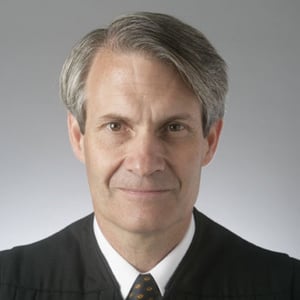
Special Counsel, Hunton Andrews Kurth
After serving on the United State Court of Appeals for the D. C. Circuit from 2005, Judge Griffith stepped down from the bench in 2020. Currently he is a Lecturer on Law at Harvard Law School, a Fellow at the Wheatley Institute at Brigham Young University, and Special Counsel in the Washington, DC office of the law firm of Hunton Andrews Kurth. Most recently, he was a member of President Biden's Commission on the Supreme Court. He is the author of Civic Charity and the Constitution , and the co-author, along with former judges Michael Luttig and Michael McConnell, of Lost, Not Stolen: The Conservative Case that Trump Lost and Biden Won the 2020 Presidential Election. https://lostnotstolen.org/ . Before being appointed to the D. C. Circuit, Judge Griffith was the General Counsel at BYU; Senate Legal Counsel, the non-partisan chief legal officer of the U. S. Senate; and a partner at Wiley, Rein & Fielding. Long active in rule-of-law programs in former communist nations, Judge Griffith is a member of the international advisory board of the CEELI Institute in Prague. He is a graduate of BYU and the University of Virginia School of Law and is a member of the American Law Institute.
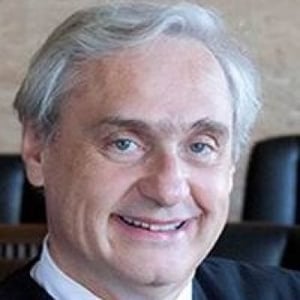
Former Judge, United States Court of Appeals, Ninth Circuit
Judge Kozinski served as a United States Circuit Judge for the Ninth Circuit from November 1985 until December 2017. He served as Chief Judge from 2007 to 2014. He graduated from UCLA, receiving an A.B. degree in 1972, and from UCLA Law School, receiving a J.D. degree in 1975.
Prior to his appointment to the appellate bench, Judge Kozinski served as Chief Judge of the United States Claims Court, 1982-85; Special Counsel, Merit Systems Protection Board, 1981-82; Assistant Counsel, Office of Counsel to the President, 1981; Deputy Legal Counsel, Office of President-Elect Reagan, 1980-81; Attorney, Covington & Burling, 1979-81; Attorney, Forry Golbert Singer & Gelles, 1977-79; Law Clerk to Chief Justice Warren E. Burger, 1976-77; and Law Clerk to Circuit Judge Anthony M. Kennedy, 1975-76.
Judge Kozinski is married to Marcy Jane Tiffany and has three children: Yale, Wyatt and Clayton, and three grandchildren: Quinn, Owen and Anna.

Former President & CEO, The Federalist Society for Law and Public Policy Studies
Eugene B. Meyer, former President and CEO of the Federalist Society, has served as Executive Director, CEO, and/or President of the organization for more than 40 years. He is responsible for shepherding the organization from a small group of law students to a community of 90,000 lawyers, law students, academics, judges, and others interested in the rule of law. The Society now includes a Student Chapter at nearly every ABA-accredited law school in the country and Lawyers Chapters in 220 major cities across the nation. Gene earned his B.A. in history at Yale in 1975 and his M.A. in political science from the London School of Economics in 1976. Gene currently serves on the boards of the U.S. Chess Center, the Holman Foundation, the Sarah Scaife Foundation, and the advisory board of the Adam Smith Society. He holds the title of International Chess Master.
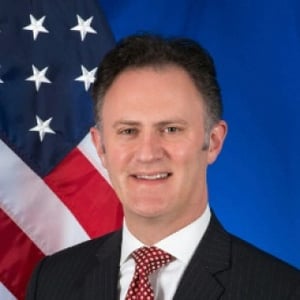
Founder and Principal, Fillmore Global Strategies LLC
Ambassador Nathan A. Sales is the founder and principal of Fillmore Global Strategies LLC, a consultancy that provides legal and strategic advisory services on matters at the intersection of law, policy, and diplomacy.
From 2017 to 2021, Ambassador Sales served at the U.S. Department of State as Under Secretary for Civilian Security, Democracy, and Human Rights (acting). He oversaw nine bureaus and offices led by Senate-confirmed principals, with 1,300 employees and a combined foreign assistance budget of more than $5 billion annually, and the mission of preventing and countering threats to civilian security, including terrorism, mass atrocities, and violations of human rights and the rule of law.
Concurrently, Ambassador Sales was Ambassador-at-Large and Coordinator for Counterterrorism. After being nominated by the President and unanimously confirmed by the U.S. Senate, he was sworn in on August 10, 2017. He served as the principal adviser to the Secretary of State on international counterterrorism matters, and led the State Department’s Counterterrorism Bureau, a 200-person team with an annual foreign assistance budget of $400 million. He was also the Special Presidential Envoy to the Global Coalition to Defeat ISIS, leading U.S. relations with the 83-member Coalition and efforts to ensure the lasting defeat of ISIS in the Middle East and around the world.
While at the State Department, Ambassador Sales led the elements of the U.S. government’s China strategy promoting democratic values and human rights, including with respect to Hong Kong and Xinjiang. He oversaw the development and implementation of a wide range of U.S. government sanctions, including Global Magnitsky actions and Executive Order 13,936, targeting those responsible for undermining Hong Kong’s freedoms and autonomy. Ambassador Sales was the architect of the landmark 2017 UN Security Council Resolution 2396 on terrorist travel, and successfully pressed NATO to make counterterrorism a core Alliance mission. He led diplomatic engagements to persuade a dozen key partners in Europe and the Americas to designate Hizballah as a terrorist organization in its entirety. He launched the Western Hemisphere Counterterrorism Ministerial, in which heads of state and minister-level officials meet bianually to coordinate efforts against terrorist threats in the region. He led the U.S. government’s international efforts to combat white supremacist terrorism. Under his leadership, the State Department imposed terrorism sanctions on the Russian Imperial Movement – the first-ever U.S. designation of white supremacist terrorists.
Before joining the State Department, Ambassador Sales was Of Counsel at the law firm Kirkland & Ellis LLP (formerly Bancroft PLLC). He was also a tenured law professor, teaching and writing in the fields of administrative law, constitutional law, and national security law. His scholarship has been cited by the U.S. Supreme Court multiple times.
Ambassador Sales previously was Deputy Assistant Secretary for Policy at the U.S. Department of Homeland Security. He led DHS’s efforts to draft and implement legislation that strengthened the security of and expanded the Visa Waiver Program (which allows citizens of certain countries to travel to the United States without a visa). He headed the U.S. delegation in talks with seven countries to implement the new security measures and was the Secretary of Homeland Security’s Special Envoy to South Korea.
Ambassador Sales also served at the Office of Legal Policy at the U.S. Department of Justice, where he worked on regulatory initiatives, counterterrorism, and judicial confirmations. In 2005, he managed DOJ’s “war room” for the confirmation of Chief Justice John Roberts. He received the Attorney General’s Award for Exceptional Service – the Justice Department’s highest honor – for his role in drafting the USA PATRIOT Act, as well as the Attorney General’s Distinguished Service Award for his work on judicial confirmations.
In addition to his work at Fillmore Global Strategies, Ambassador Sales is a nonresident senior fellow at the Atlantic Council and a senior advisor at the Soufan Group, a global intelligence and security consultancy. He serves on a number of advisory boards, including for the Counter-Extremism Project (a nonprofit and nonpartisan international policy organization formed to combat the growing threat from extremist ideologies), the Secure Community Network (the official safety and security organization for the North American Jewish community), and the Sue J. Henry Center for Pre-Law Education at Miami University.
An Ohio native, Ambassador Sales received his B.A., summa cum laude, from Miami University in Oxford, Ohio, where he was elected to Phi Beta Kappa. He earned his J.D., magna cum laude, from Duke Law School, where he was Research Editor of the Duke Law Journal and joined the Order of the Coif. After law school, he clerked for the Honorable David B. Sentelle of the U.S. Court of Appeals for the DC Circuit.

Senior Legal Fellow and Manager, National Security Law Program, The Heritage Foundation
Charles “Cully” Stimson is a widely recognized expert in national security, homeland security, crime control, drug policy and immigration. A senior legal fellow at The Heritage Foundation since 2007, Stimson became Manager of the National Security Law Program in Heritage’s Institute for Constitutional Government in April 2013 after serving as Heritage’s chief of staff for a year.
Stimson writes and lectures on policy issues such as the law of armed conflict, terrorist detainee policy and interrogations, the Geneva Conventions, military commissions, the Patriot Act and FISA, criminal law and the death penalty, immigration and the war on drugs. As chief of staff to then-Heritage President Edwin J. Feulner, he was a key adviser on public policy matters as well as manager of Feulner’s office staff and Heritage’s day-to-day operations.
Stimson’s many research papers, op-eds and articles include special reports such as “Adult Time for Adult Crime,” a comprehensive study on the constitutionality of life sentences for teen-age murderers, and Sexual Assault in the Military: Understanding the Problem and How to Fix It, a ground-breaking paper detailing the inner workings of the military justice system compared to its civilian counterpart. His work on criminal and immigration law has been cited in briefs before the U.S. Supreme Court.
He testifies before the U.S. Senate and House on national security issues, and recently testified before the Senate Armed Services Committee on the Law of Armed Conflict, Law of War, and the 2001 Authorization for Use of Military Force.
Before joining the think tank in 2007, Stimson served as Deputy Assistant Secretary of Defense for Detainee Affairs. He advised then-Secretaries of Defense Donald Rumsfeld and Robert Gates and coordinated the Pentagon’s global detention policy and operations, including at Guantanamo Bay and in Iraq and Afghanistan. He was chairman of detainee-related panels such as the Defense Senior Leadership Oversight Committee, and the Special Detainee Follow Up Group. He represented the United States before the U.N. in Geneva, Switzerland in May 2006 where he led the DOD delegation in defense of the United States’ Second Period Report on the Convention Against Torture.
An accomplished trial lawyer, Stimson worked as a prosecutor at the local, state and federal levels, where he concentrated on violent crimes such as homicide, sexual assault and domestic violence. A third generation naval officer, Cully also served as a military prosecutor, defense counsel, and recently served as Deputy Chief Judge of the Navy-Marine Corps Trial Judiciary. He continues to serve, with the rank of Captain, as the Commanding Officer of the Preliminary Hearing Unit.
Stimson’s thousands of media interviews and appearances include Fox News Channel, MSNBC, CNN, BBC, NPR and C-SPAN. He has been quoted by most major newspapers, including The Washington Post, Wall Street Journal, New York Times, Los Angeles Times, and London Times.
A businessman and educator by training, Stimson is Vice Chairman of his family’s commercial real estate company in Seattle. Before 9/11, he was a Vice President at a New York-based global financial services and insurance brokerage firm where ran the private equity mergers and acquisitions D.C. operation.
Stimson holds a law degree from the George Mason University School of Law, where he later taught as an Adjunct Professor of Law. He is a graduate of Kenyon College, where he was Captain of the men’s varsity soccer team and an All-Conference player. He also studied at Harvard and Exeter universities. An avid soccer player and triathlete, he serves as Chairman of the Board of the United States Soccer Foundation, the charitable giving arm of U.S. Soccer.
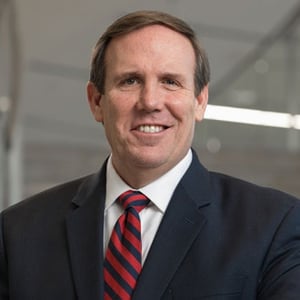
Provost & Chief Academic Officer, Bryant University
An acclaimed international law and national security expert experienced in academic, law, and government service settings, Provost Glenn M. Sulmasy brings a distinguished record of Higher Education leadership and academic achievement to his position as Bryant’s first university Provost and Chief Academic Officer.
Sulmasy previously served as Deputy University Counsel and later led the Humanities Department at the United States Coast Guard Academy (USCGA), in New London, CT. Additionally, he served as Professor of Law at USCGA and has been involved in higher education since 1997.
In addition to serving on the faculties of the Academy and the U.S. Naval War College, Sulmasy has lectured in the fields of International Law, U.S. Constitutional Law, and National Security at numerous universities and think tanks. He has also served as a National Security and Human Rights Fellow at the Carr Center for Human Rights Policy at the Harvard Kennedy School.
A former fellow in Homeland Security and National Security Law for the Center for National Policy in Washington D.C., Sulmasy lectures extensively on the law of armed conflict, international law, and national security matters. He is widely published internationally on national security matters, and as an expert has been featured in the LA Times, on CBS News Radio, National Public Radio, CNN International, US News & World Report, the New York Times and the San Francisco Chronicle, Al-Jazeera America, MSNBC, Fox News and numerous other national media outlets. He is the author of The National Security Court System – A Natural Evolution of Justice in an Age of Terror (Oxford University Press) and Co-Editor of International Law Challenges – Homeland Security and Combating Terrorism (2005).
Sulmasy was educated at the U.S. Coast Guard Academy, University of Baltimore School of Law (cum laude), UC Berkeley School of Law (Boalt Hall) and the Harvard Kennedy School.
Provost Sulmasy, his wife Marla, and seven children hail from Old Lyme, CT and Smithfield, RI.

Fellow, National Security Institute, Antonin Scalia Law School, George Mason University
Vince Vitkowsky chaired the Executive Committee of the Federalist Society’s International and National Security Law and Policy Practice Group for over a decade. He is also a Fellow at the National Security Institute of George Mason University Law School. Vince spent 45 years in private practice, primarily in AmLaw 100/200 firms and their spin-offs. His practice included domestic and international commercial arbitration and litigation, as well as cyber risks and liabilities. Vince's current focus is on national security policy, artificial intelligence, cybersecurity, and counterterrorism. He has often written and spoken on national security and other public policy issues. Among other affiliations, Vince has been an Adjunct Fellow at the Center for Law and Counterterrorism of the Foundation for the Defense of Democracies, a member of the Executive Committee of the American Branch of the International Law Association, and Co-Chair of the Committee on Interventions and Trial Observations of the International Bar Association’s Human Rights Institute. He received his B.A. from Northwestern University and his J.D. from Cornell Law School.
Agnes Williams Sesquicentennial Professor of Federal Courts, Georgetown Law
Stephen I. Vladeck is a professor of law at the Georgetown University Law Center, and is a nationally recognized expert on the federal courts; the Supreme Court; national security law; and military justice.
Vladeck is author of the New York Times bestselling book, “The Shadow Docket: How the Supreme Court Uses Stealth Rulings to Amass Power and Undermine the Republic,” which won the 2023 Writers’ League of Texas Book Award for Non-Fiction and was a finalist for the 2024 ABA Silver Gavel Award for Media and the Arts. Vladeck is also a highly regarded appellate advocate, having argued three cases before the U.S. Supreme Court and over a dozen before various lower federal civilian and military courts. He has received numerous awards for his influential and widely cited legal scholarship, his prolific popular writing, his teaching, and his service to the legal profession—including the 2024 University of Texas President’s Research Impact Award and his selection by the Order of the Coif to serve as its Distinguished Visiting Professor for 2025.
Vladeck is CNN’s Supreme Court analyst and editor and author of “One First,” a popular weekly newsletter about the Supreme Court. Together with Bobby Chesney, Vladeck co-hosts the popular and award-winning “National Security Law Podcast.” He is also a co-author of Aspen Publishers’ leading national security law and counterterrorism law casebooks. And he is a member of the Board of Trustees of EarthJustice—the nation’s premier nonprofit public interest environmental law organization.
Vladeck graduated from Yale Law School in 2004—where he was executive editor of the Yale Law Journal and won the Harlan Fiske Stone Prize for outstanding moot court oralist and shared the Potter Stewart Prize for best moot court team performance. After law school, he clerked for the Honorable Marsha S. Berzon on the U.S. Court of Appeals for the Ninth Circuit and the Honorable Rosemary Barkett on the U.S. Court of Appeals for the Eleventh Circuit. He earned a B.A. summa cum laude with Highest Distinction in History and Mathematics from Amherst College in 2001—where he wrote his senior thesis on “Leipzig’s Shadow: The War Crimes Trials of the First World War and Their Implications from Nuremberg to the Present.” A native New Yorker and hopeless Mets fan, Vladeck lives in the District with his wife, Karen (Founder and Managing Partner of Risepoint Search Partners); their daughters, Madeleine and Sydney; and their eleven-year-old pug, Roxanna.
Senior Fellow, Governance Studies, The Brookings Institution
Benjamin Wittes is a senior fellow in Governance Studies at The Brookings Institution. He co-founded and is the editor-in-chief of the Lawfare blog, which is devoted to sober and serious discussion of "Hard National Security Choices," and is a member of the Hoover Institution's Task Force on National Security and Law. He is the author of Detention and Denial: The Case for Candor After Guantanamo, published in November 2011, co-editor of Constitution 3.0: Freedom and Technological Change, published in December 2011, and editor of Campaign 2012: Twelve Independent Ideas for Improving American Public Policy (Brookings Institution Press, May 2012). He is also writing a book on data and technology proliferation and their implications for security. He is the author of Law and the Long War: The Future of Justice in the Age of Terror, published in June 2008 by The Penguin Press, and the editor of the 2009 Brookings book, Legislating the War on Terror: An Agenda for Reform.
His previous books include Starr: A Reassessment, published in 2002 by Yale University Press, and Confirmation Wars: Preserving Independent Courts in Angry Times, published in 2006 by Rowman & Littlefield and the Hoover Institution.
Between 1997 and 2006, he served as an editorial writer for The Washington Post specializing in legal affairs. Before joining the editorial page staff of The Washington Post, Wittes covered the Justice Department and federal regulatory agencies as a reporter and news editor at Legal Times. His writing has also appeared in a wide range of journals and magazines including The Atlantic, Slate, The New Republic, The Wilson Quarterly, The Weekly Standard, Policy Review, and First Things.
Benjamin Wittes was born in Boston, Massachusetts. He graduated from Oberlin College in 1990, and he has a black belt in taekwondo.
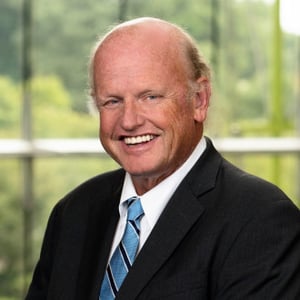
In his 35 years at the Justice Department and in private practice, Mike Carvin was one of the leading appellate and trial lawyers challenging state and federal regulations on constitutional and statutory grounds, with 10 Supreme Court arguments and numerous high-profile victories. In addition to his numerous cases in the United States Supreme Court, he argued in virtually every federal appeals court. His major cases include the recent constitutional challenge to the Affordable Care Act and the decisions invalidating Sarbanes-Oxley's accounting board, preventing the Justice Department from obtaining monetary relief against the tobacco industry under RICO, overturning the federal government's plan to statistically adjust the census, limiting the Justice Department's ability to create "majority-minority" districts, and upholding Proposition 209's ban on racial preferences in California.
Mike was one of the lead lawyers, and argued before the Florida Supreme Court, on behalf of George W. Bush in the 2000 presidential election Florida recount controversy. He also has represented state governments, financial institutions, telecommunications, and energy companies in "takings," First Amendment, civil rights, and statutory challenges to federal government actions.
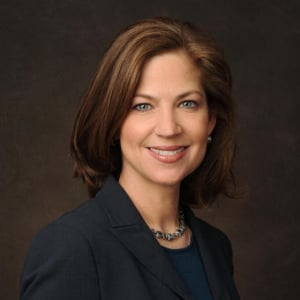
Chief Legal Correspondent, CBS News
Jan Crawford is CBS News' chief legal correspondent and contributes regularly to the "CBS Evening News," "CBS This Morning," and "Face the Nation," as well as CBS News Radio and CBSNews.com.
Crawford joined CBS News in October 2009. She had been a regular contributor to CBS News in 2005 to 2006.
Crawford is a recognized authority on the Supreme Court whose 2007 book, "Supreme Conflict: The Inside Story of the Struggle for the Control of the United States Supreme Court" (Penguin Press), gained critical acclaim and became an instant New York Times Bestseller. She began covering the Court in 1994 for the Chicago Tribune and went on to become a law and political correspondent for all ABC News programs, a Supreme Court analyst for The NewsHour With Jim Lehrer on PBS and a legal analyst for CBS News' "CBS Evening News" and "Face the Nation." She has reported on most of the major judicial appointments and confirmation hearings of the past 15 years and amassed crucial sources in the White House, the Justice Department and Congress along the way.
Chief Justice John Roberts granted his first network television interview to Crawford, just one of the rare interviews she was able to obtain with a total of five of the Court's current members, as well as retired Justice Sandra Day O'Connor. Crawford also sat down with then-86-year-old Justice John Paul Stevens in his first television interview, as well as Justices Clarence Thomas, Antonin Scalia and Stephen Breyer.
Crawford's in-depth reports on the Bush Administration's legal war on terror and her exclusive reports on controversial interrogation techniques used for terror suspects have received wide acclaim and been credited with being a catalyst for congressional hearings. Washingtonian Magazine named her one of Washington's top journalists.
Crawford began her journalistic career at the Tribune in 1987, joining the legal affairs beat in 1993, after her graduation from the University of Chicago Law School. The newspaper awarded Crawford its highest award in 2001, for her role on a team of reporters covering the presidential election of 2000, and the legal battles over the White House. She won the same prize for her 13-part series on the post-civil rights South, a project that brought her back to her native Alabama.
Crawford graduated from the University of Alabama in 1987. She has taught journalism at American University and frequently speaks about the Court to universities, law schools, legal organizations and civic groups across the country. She is a member of the New York Bar. She and her family live in Washington D.C.
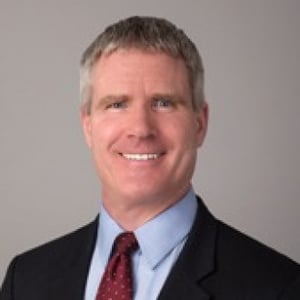
Partner, Gibson, Dunn & Crutcher LLP
Thomas G. Hungar is a partner in the Washington, D.C., office of Gibson Dunn. His practice focuses on appellate litigation, and he assists clients with congressional investigations and complex trial court litigation matters as well. He has presented oral argument before the Supreme Court of the United States in 28 cases, including some of the Court’s most important patent, antitrust, securities, and environmental law decisions, and he has also appeared before numerous lower federal and state courts.
Thomas served as General Counsel to the U.S. House of Representatives from July 2016 until January 2019. As General Counsel, he provided legal advice and litigation representation on a non-partisan basis to the House and its leadership, members, officers, and staff, and he worked closely with numerous House committees in connection with their oversight and investigative activities. Previously, he served as a Deputy Solicitor General of the United States. In that position, he supervised business-related appellate litigation for the federal government, with particular emphasis on patent, antitrust, securities, and environmental appellate cases, and he also oversaw appellate litigation in banking, bankruptcy, tax, government contracts, communications, copyright, labor, trademark, and international trade matters. In private practice, Thomas’s appellate experience has encompassed those areas as well as class actions, constitutional law, employment law, product liability, administrative procedure, insurance coverage and bad faith, and general commercial litigation. He has handled scores of business-related appeals in the Supreme Court and lower appellate courts, and has briefed and argued many high-profile matters.
Thomas is a Fellow of the American Academy of Appellate Lawyers and is a frequent lecturer in his areas of expertise. While at the Department of Justice, he served as Appellate Counsel to the Intellectual Property Task Force Executive Staff, and he was awarded the John Marshall Award for Outstanding Legal Achievement, the Department’s highest award presented to attorneys for contributions and excellence in legal performance, in recognition of his handling of patent-law matters before the Supreme Court.
Most recently, Thomas has garnered national recognition for his Appellate Practice in The Legal 500 – United States, Best Lawyers in America, and in Chambers USA, which has repeatedly highlighted Thomas for his “expertise in appellate litigation” and experience with employment and antitrust disputes, as well as Congressional Investigations. Thomas was also recently named a “Litigation Star” by Benchmark Litigation.
Thomas served as an Assistant to the Solicitor General of the United States from 1992-1994. He also served as a law clerk to Justice Anthony M. Kennedy of the Supreme Court and to Circuit Judge Alex Kozinski of the United States Court of Appeals for the Ninth Circuit. He received his law degree from Yale Law School in 1987, where he was a Senior Editor of the Yale Law & Policy Review. He received his Bachelor of Science degree magna cum laude in mathematics/computer science and economics from Willamette University in 1984.
Thomas is admitted to practice in the District of Columbia.
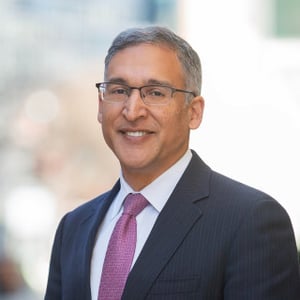
Partner, Millbank LLP
Mr. Katyal, the former Acting Solicitor General of the United States, focuses on appellate and complex litigation. He has argued 54 cases before the Supreme Court of the United States.
He has extensive experience in matters of antitrust, corporate, constitutional, securities, technology, criminal, patent, copyright, trademark, ERISA, products liability, labor, employment and tribal law. In the 2022-23 Supreme Court term, he argued five separate cases (nearly 10% of the docket), including winning the landmark voting case Moore v. Harper, which Judge Michael Luttig described as “the most important case for American democracy in the almost two and a half centuries since America’s founding.” Judge Luttig also said Mr. Katyal’s argument “was the single best oral argument I have ever heard made in the Supreme Court of the United States.” His cases include successfully striking down the Guantanamo military tribunals, successfully defending the constitutionality of the Voting Rights Act and successfully defending the Peace Cross in Maryland. His 2017 win in Bristol Myers Squibb v. Superior Court was a landmark victory for personal jurisdiction law and his 2006 win in Hamdan v. Rumsfeld was described by former Acting Solicitor General Walter Dellinger as “simply the most important decision on presidential power and the rule of law ever. Ever.”
From 2010 to 2011, Mr. Katyal served as Acting Solicitor General of the United States, where he argued several major Supreme Court cases involving a variety of issues, such as his successful defense of the constitutionality of the Voting Rights Act of 1965, his victorious defense of former Attorney General John Ashcroft for alleged abuses in the war on terror, his unanimous victory against eight states who sued the nation's leading power plants for contributing to global warming, and a variety of other matters. As Acting Solicitor General, he was responsible for representing the federal government of the United States in all appellate matters before the US Supreme Court and the Courts of Appeals throughout the nation. He served as Counsel of Record hundreds of times in the US Supreme Court. He was also the only head of the Solicitor General's office to argue a case in the US Court of Appeals for the Federal Circuit, on the important question of whether certain aspects of the human genome were patentable.
After graduating from Yale Law School, Mr. Katyal clerked for The Honorable Guido Calabresi of the US Court of Appeals for the Second Circuit as well as for The Honorable Justice Stephen G. Breyer of the US Supreme Court. He also served in the Deputy Attorney General's Office at the Justice Department as National Security Advisor and as Special Assistant to the Deputy Attorney General during 1998-1999.
Mr. Katyal is a best-selling New York Times author and has published dozens of scholarly articles in law journals (including several in the Harvard Law Review and Yale Law Journal), as well as many op-ed articles in publications such as the New York Times and the Washington Post. He has testified numerous times before various committees of both the US House of Representatives and the US Senate.

Professor of Law, Antonin Scalia Law School, George Mason University
Adam Mossoff is Professor of Law at Antonin Scalia Law School, George Mason University. He has published extensively on why patents, copyrights, and other intellectual property rights have been—and should be—legally secured to innovators and creators as property rights. His scholarship has been relied on by the United States Supreme Court, by lower federal courts, and by U.S. federal agencies. He has been invited to testify numerous times before the U.S. Senate and the House of Representatives on intellectual property legislation. His writings on intellectual property policy have also appeared in the Wall Street Journal, New York Times, Forbes, Investors Business Daily, and in other media outlets. His journal articles can be downloaded here.
Professor Mossoff is a longstanding member of the Executive Committee of the Intellectual Property Practice Group of the Federalist Society, on which he served as Chairperson from 2016-2018, and he is Chair of the Intellectual Property Working Group of the Regulatory Transparency Project of the Federalist Society. He is a Senior Fellow and Chair of the Forum for Intellectual Property at the Hudson Institute, a Visiting Intellectual Property Fellow at the Heritage Foundation, and a member of the Board of Directors of the Center for Intellectual Property Understanding. He is a member of the Intellectual Property Rights Policy Committee of ANSI and he has served as Chair and Vice-Chair of the Intellectual Property Committee of the IEEE-USA, on which he remains a member in good standing.
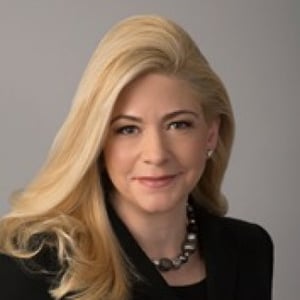
Partner, Gibson, Dunn & Crutcher LLP
Elizabeth Papez is a partner in the Washington, D.C. office of Gibson, Dunn & Crutcher LLP and a member of the firm’s litigation group. Her practice focuses on high-stakes class actions, complex commercial litigation, and related government investigations and appeals.
As a seasoned litigator and former U.S. Deputy Assistant Attorney General, Ms. Papez has substantial experience representing clients in the financial services, pharmaceutical, consumer, and product sectors. She regularly handles federal class actions, multidistrict litigation (MDLs) and other complex commercial disputes under federal and state antitrust statutes, banking and securities laws, and false claims acts, as well as parallel regulatory investigations with the U.S. Department of Justice (DOJ), the Securities and Exchange Commission (SEC), the Commodity Futures Trading Commission (CFTC), and the Food and Drug Administration (FDA).
Ms. Papez has been repeatedly recognized as one of Benchmark USA’s Top 250 Women in Litigation nationwide, which named her a “client favorite” who is “extremely smart and practical and very charismatic,” and is praised by peers as a “fierce, dynamic, bright, powerhouse of a litigator.” Ms. Papez is also recognized in The Legal 500 for her antitrust and appellate work, and by The Best Lawyers in America 2019 for her appellate practice.
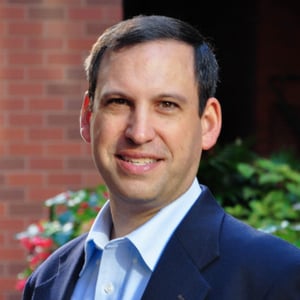
President, Becket Fund for Religious Liberty; Professor of Law and Co-Director of the Center for Religious Liberty, Catholic University; Visiting Professor, Harvard Law School
Mark joined the Becket team in 2011 and splits his time as Associate Professor at The Catholic University of America, Columbus School of Law, and as Visiting Professor at Harvard Law School. Mark teaches constitutional law, religious liberty, torts, and evidence. He has been voted Teacher of the Year three years in a row by the Law School’s Student Bar Association.
Mark has broad experience litigating First Amendment religious exercise and free speech cases. He has represented the winning parties in a variety of Supreme Court First Amendment cases including Hobby Lobby, Little Sisters, Wheaton College, and Holt. In January 2014, Mark argued before the Supreme Court in McCullen v. Coakley, a First Amendment challenge to a Massachusetts speech restriction outside of abortion clinics. The Justices ruled in favor of his clients 9-0. Mark also led a successful eight-year litigation battle against Governor Blagojevich’s effort to force religious pharmacists to distribute the morning-after and week-after pills.
Mark’s academic writing focuses on the First and Fourteenth Amendments, and has appeared in a variety of prestigious journals, including the Harvard Law Review.
Mark is a widely sought after speaker on constitutional issues, particularly concerning abortion and the First Amendment. Professor Rienzi has been invited to discuss these issues at Harvard Law School, Columbia University Law School, Georgetown University Law Center, Boston College Law School, Notre Dame Law School, the National Press Club, and the Capitol. He has been quoted on constitutional law issues on NPR, in the Washington Times, The New York Daily News, and the Chicago Sun-Times. Mark has also been featured on the Kelly File, Fox News Sunday, Your World with Neil Cavuto, Geraldo at Large, CNN Tonight, CNN Live, Andrea Mitchell Reports, and Wall Street Journal Live.
Prior to joining Becket, Mark served as counsel for the litigation department and the intellectual property litigation practice group of WilmerHale LLP. His practice focused on complex civil and appellate litigation with a particular emphasis on intellectual property and First Amendment issues. Prior to joining WilmerHale, he served as law clerk to the Hon. Stephen F. Williams, senior circuit judge for the U.S. Court of Appeals for the D.C. Circuit. Prior to that, Mark was an editor of the Harvard Law Review, and earned his J.D. from Harvard Law School and B.A. from Princeton University, both with honors.
Senior Fellow, National Review
Bestselling author Andrew C. McCarthy is a contributing editor at National Review, a senior fellow at National Review Institute, and a Fox News contributor. He is a former Chief Assistant United States Attorney in the Southern District of New York and led the terrorism prosecution against the “Blind Sheikh” (Omar Abdel Rahman) and eleven other jihadists for conducting a war of urban terrorism against the United States that included the 1993 World Trade Center bombing and a plot to bomb New York City landmarks. During is 20-year career as a prosecutor, he received numerous honors, including the Justice Department’s highest awards. Andy speaks and writes widely on law and national security, radical Islam, politics, and culture. He has testified before Congress as an expert on issues of constitutional law, counterterrorism, and law-enforcement. He is a columnist for The Hill, and his essays and book reviews appear frequently at The New Criterion. His most recent New York Times bestselling book is Ball of Collusion (Encounter Books, 2019), about the Russiagate controversy (an updated version was published in 2020). His other books include Willful Blindness (2008), The Grand Jihad (2010), Spring Fever: The Illusion of Islamic Democracy (2012), and Faithless Execution (2014). He has also written several pamphlets in the Broadside series published by Encounter Books, most recently Islam and Free Speech (2015).
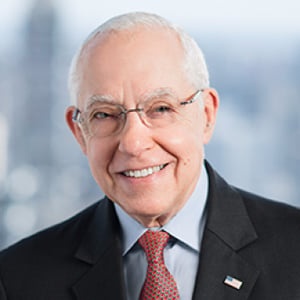
Former United States Attorney General
Michael B. Mukasey is the former Attorney General of the United States, the nation’s chief law enforcement officer. As Attorney General from November 2007 to January 2009, he oversaw the U.S. Department of Justice and advised on critical issues of domestic and international law.
From 1988 to 2006, Judge Mukasey served as a district judge in the United States District Court for the Southern District of New York, becoming Chief Judge in 2000.
From 1972 to 1976, Judge Mukasey served as an Assistant United States Attorney for the Southern District of New York, and as Chief of the Official Corruption Unit from 1975 to 1976. His practice consisted of criminal litigation on behalf of the government, including investigation and prosecution of narcotics, bank robbery, interstate theft, securities fraud, fraud on the government and bribery. From 1976 to 1987 and from 2006 to 2007 he was in private practice.
Judge Mukasey has received numerous honors, including the Federal Bar Council’s Learned Hand Medal for Excellence in Federal Jurisprudence. He served as Chairman of the Committee on Public Access to Information and Proceedings of the New York Bar Association from 1984 to 1987. He served on the Federal Courts Committee of the Association of the Bar of the City of New York from 1979 to 1982 and its Communications Law Committee from 1983 to 1986. Judge Mukasey was also a part-time lecturer at Columbia School of Law from January 1993 to May 2007, teaching trial advocacy.
He received his LL.B. from Yale Law School in 1967 and his B.A. from Columbia College in 1963.
Ella A. and Ernest H. Fisher Professor of Law, Ohio Northern University Claude W. Pettit College of Law
Professor Lewis joined the Ohio Northern faculty in August, 2006. Lewis flew F-14's for the United States Navy in Operation Desert Shield, conducted strike planning for Desert Storm and was deployed to the Persian Gulf to enforce the no-fly zone over Iraq. He was a Topgun graduate in 1992 and was featured in a NOVA documentary on Topgun and aircraft carriers.
After his naval service, Lewis graduated from Harvard Law School, cum laude, was a management consultant with McKinsey and Company, and served as a litigation associate with McGuireWoods, LLP, in Norfolk, Virginia.
Professor Lewis published more than a dozen articles and essays on various aspects of the law of war and the conflict between the US and al Qaeda. His work has been cited by the Seventh, Ninth and Eleventh Circuit Courts of Appeals. He has testified before Congress on the legality of drone strikes in Pakistan and Yemen and on the civil liberties tradeoffs associated with trying some Al Qaeda members or terrorist suspects before military commissions. His op-eds have appeared in numerous media outlets including the LA Times and the New York Post and he has appeared on Public Radio International to discuss the increasing use of armed drones in warfare. He delivered scores of presentations and panel presentations before military and law school audiences alike including presentations to the international Military Operations Law conference in Queensland, Australia, the US Army's JAG School in Charlottesville, VA and law school events at Stanford, Chicago, Columbia, Penn, Duke, Texas and Northwestern among others.
Professor Lewis received the Award for Excellence in Classroom Teaching for the 2007-08 academic year.
He taught Commercial Law, International Law, a Law of War Seminar and Torts. He also taught Corporate Finance and Accounting for Lawyers. His other teaching interests included Civil Procedure and Contracts.
Director, Speech, Privacy & Technology Project, American Civil Liberties Union
Ben Wizner is the Director of ACLU’s Speech, Privacy & Technology Project, which is dedicated to protecting and expanding the First Amendment freedoms of expression, association, and inquiry; expanding the right to privacy and increasing the control that individuals have over their personal information; and ensuring that civil liberties are enhanced rather than compromised by new advances in science and technology. He has litigated numerous cases involving post-9/11 civil liberties abuses, including challenges to airport security policies, government watchlists, extraordinary rendition, and torture. He has appeared regularly in the media, testified before Congress, and traveled several times to Guantánamo Bay to monitor military commission proceedings. Ben is a graduate of Harvard College and New York University School of Law and was a law clerk to the Hon. Stephen Reinhardt of the U.S. Court of Appeals for the 9th Circuit.
Executive Vice President, The Federalist Society
Dean Reuter is Executive Vice President at the Federalist Society for Law and Public Policy Studies. He has served in two federal government agency Offices of the Inspector General, as Counsel to the Inspector General and Deputy Inspector General, responsible for policing the use of federal funds granted and contracted through those agencies. As such, he helped conduct and oversee criminal investigations across the country. He is the principal author of the non-fiction book, The Hidden Nazi: The Untold Story of America's Deal with the Devil, and editor of Liberty’s Nemesis: The Unchecked Expansion of the State and Confronting Terror: 9/11 and the Future of American National Security. He was appointed by the President and served as Vice-Chairman of the Board of Directors of the Corporation for National and Community Service, and recently served as an appointee on the U.S. Commission on Presidential Scholars. He is a graduate of Hood College (BA with Honors) and the University of Maryland School of Law.

Patrick Hotung Professor of Constitutional Law, Georgetown University Law Center; Faculty Director, Georgetown Center for the Constitution
Randy E. Barnett is the Patrick Hotung Professor of Constitutional Law at the Georgetown University Law Center and is the Faculty Director of the Georgetown Center for the Constitution. After graduating from Northwestern University and Harvard Law School, he tried many felony cases as a prosecutor in the Cook County States’ Attorney’s Office in Chicago. A recipient of a Guggenheim Fellowship in Constitutional Studies and the Bradley Prize, Professor Barnett has been a visiting professor at Penn, Northwestern and Harvard Law School.
Professor Barnett’s publications includes thirteen books, more than one hundred articles and reviews, as well as numerous op-eds. His most recent book is Felony Review: Tales of True Crime and Corruption in Chicago (2026). His other books on the Constitution include: A Life for Liberty: The Making of an American Originalist (2024); The Original Meaning of the Fourteenth Amendment: Its Letter and Spirit (2021) (with Evan Bernick); An Introduction to Constitutional Law: 100 Supreme Court Cases Everyone Should Know (2019) (with Josh Blackman); Restoring the Lost Constitution: The Presumption of Liberty (2nd ed. 2013); Our Republican Constitution: Securing the Liberty and Sovereignty of We the People (2016); and Constitutional Law: Cases in Context (5th ed. forthcoming 2027) (with Josh Blackman). His books on contracts are The Oxford Introductions to U.S. Law: Contracts (2010) and Contracts: Cases and Doctrine (7th ed. 2021) (with Nate Oman). And he is the author of The Structure of Liberty: Justice and the Rule of Law (2nd ed. 2014).
In 2004, he argued the medical marijuana case of Gonzalez v. Raich before the U.S. Supreme Court. In 2012, he was one of the lawyers representing the National Federation of Independent Business in its constitutional challenge to the Affordable Care Act in NFIB v. Sebelius. He’s appeared in numerous documentaries and portrayed a prosecutor in the 2010 science-fiction feature film, InAlienable: The Movie. On X he is @RandyEBarnett
A. W. Walker Centennial Chair in Law, University of Texas at Austin School of Law
Professor Graglia has written widely in constitutional law--especially on judicial review, constitutional interpretation, race discrimination, and affirmative action--and also teaches and writes in the area of antitrust. He is the author of Disaster by Decree: The Supreme Court Decisions on Race and the Schools (Cornell, 1976) and many articles, including recently "Church of the Lukumi Babalu Aye: Of Animal Sacrifice and Religious Persecution" (Georgetown Law Journal, 1996). He has been a Visiting Professor at the University of Virginia School of Law.
University of Virginia School of Law

Judge, United States Court of Appeals, D.C. Circuit
Judge Randolph was confirmed by the Senate and appointed to the United States Court of Appeals for the District of Columbia Circuit by President George H. W. Bush in July 1990.
Judge Randolph received his B.S. degree in 1966 from Drexel University, majoring in economics and basic engineering. At Drexel, he was president of the debate society, vice president of the Student Senate, and a member of the varsity wrestling squad. In 1969, he received his J.D. from the University of Pennsylvania, summa cum laude. Judge Randolph ranked first in his law school class all three years and was managing editor of the Law Review.
After graduation, Judge Randolph served as a law clerk to Judge Henry J. Friendly of the United States Court of Appeals for the Second Circuit in New York.
Admitted to the California Bar in 1970 (and to the District of Columbia bar in 1973), Judge Randolph worked as Assistant to the Solicitor General, U.S. Department of Justice, in Washington, D.C., 1970-1973.
After two years in private practice, Judge Randolph was named Deputy Solicitor General of the United States, a position he held from 1975-1977.
In 1979, Judge Randolph was appointed Special Counsel to the Committee on Standards of Official Conduct (the Ethics Committee) of the United States House of Representatives, remaining in this position until 1980.
In the 1980s, Judge Randolph held a number of positions while in private practice, including Special Assistant Attorney General for the states of New Mexico (1985 90), Utah (1986-1990) and Montana (1983-1990). He also served as a Member of the Advisory Panel of the Federal Courts Study Committee.
From 1971-1990, Judge Randolph argued 23 times in the United States Supreme Court, winning 20 of his cases.
As an Adjunct Professor of Law at Georgetown University Law Center from 1974-1978 he taught courses in civil procedure and injunctions. In 1992 he taught a course in constitutional law. He is a Distinguished Adjunct Professor of Law at George Mason School of Law and for the past ten years has been teaching First Amendment law. He also serves on the Judicial Advisory Board of the George Mason University Law and Economics Center.
From 1993 through 1995 Judge Randolph was a member of the Committee on Codes of Conduct of the Judicial Conference of the United States, and from 1995 to 1998 served as the Committee's chairman. He also served as the judicial liaison to the American Bar Association’s Administrative Law Section.
Judge Randolph is a member of the Board of Visitors at Drexel University Law School and was named to the “Drexel One Hundred” as a leading alumnus. In 2002 he was presented the James Wilson Award by the University of Pennsylvania Law School. In November 2005 he delivered the Fifth Annual Barbara K. Olson Memorial Lecture at the Annual Lawyers Convention of the Federalist Society. He has published numerous articles, the most recent of which is in the June 2006 issue of the Harvard Journal of Law and Public Policy.
Judge Randolph is married to the Honorable Eileen J. O’Connor, formerly Assistant Attorney General, Tax Division, U.S. Department of Justice. His son John Trevor Randolph is an investment banker in New York. His daughter Cynthia Lee Randolph is an artist living in San Francisco.
David Berger Professor for the Administration of Justice, University of Pennsylvania Carey Law School
Kermit Roosevelt works in a diverse range of fields, focusing on constitutional law and conflict of laws. He has published scholarly books in both fields.
Conflict of Laws (Foundation Press, 2010) offers an accessible analytical overview of conflicts. The Myth of Judicial Activism: Making Sense of Supreme Court Decisions (Yale, 2006) sets out standards by which citizens can determine whether the Supreme Court is abusing its authority to interpret the Constitution.
He has published articles in the Virginia Law Review, Michigan Law Review, and Columbia Law Review, among others.
He is also the author of two novels, In the Shadow of the Law (Farrar, Straus & Giroux, 2005) and Allegiance (Regan Arts, 2015).
In 2014, he was selected by the American Law Institute as the Reporter for the Third Restatement of Conflict of Laws.

Judge, United States Court of Appeals, Seventh Circuit
Judge Sykes was nominated to the Seventh Circuit by President George W. Bush and confirmed by the Senate in 2004. Prior to her appointment to the federal bench, Judge Sykes served as a justice on the Wisconsin Supreme Court. Governor Tommy G. Thompson appointed her in September 1999 to fill a mid-term vacancy on the state supreme court, and she was elected to a full ten-year term in April 2000. From 1992-1999, Judge Sykes served on the state trial bench in Milwaukee County (elected in 1992 and re-elected in 1998). From 1985-1992, Judge Sykes practiced law with the Milwaukee firm of Whyte & Hirschboeck, S.C., and from 1984-1985, was a law clerk to Federal Judge Terence T. Evans.
Born and raised in the Milwaukee area, Judge Sykes earned a bachelor’s degree in journalism from Northwestern University in 1980 and a law degree from Marquette University Law School in 1984. Between college and law school, Judge Sykes worked as a reporter for The Milwaukee Journal.
Judge Sykes has two sons.

National Security, the U.N., and the Extraterritorial Application of Treaties - Podcast
Peter S. Margulies, C Rostow, Edwin D. Williamson
The United States Government has consistently interpreted the International Covenant on Civil and Political Rights...
Young Legal Scholars Paper Presentations
Steven G. Calabresi, Andrew Kent, Joshua Kleinfeld, Robert Leider, Thomas W. Merrill, Aaron Nielson, Ozan Varol
The Federalist Society's Faculty Division hosted this panel featuring young legal scholar paper presentations on Saturday, January...
The Use of Lethal Force on U.S. Citizens - Podcast
Andrew McCarthy, Stephen I. Vladeck, John C. Yoo, Dean Reuter
As U.S. Sen. Rand Paul (Kentucky)'s filibuster of the confirmation of John O. Brennan, President...
Private Attorneys and the War on Terror
Steven Gill Bradbury, Nitsana Darshan-Leitner, Dean Reuter, Stephen I. Vladeck
As the War on Terror enters its second decade, the private legal community is left...
Fifth Annual Rosenkranz Debate and Luncheon
Hadley P. Arkes, Thomas B. Griffith, Alex Kozinski, Eugene B. Meyer
RESOLVED: Natural Law Should Inform Constitutional Law The Fourth Annual Rosenkranz Debate was held on...
Panel One: Detention, Interrogation and Trial of Terrorist Suspects – 10 Years Later
Nathan A. Sales, Charles "Cully" Stimson, Glenn M. Sulmasy, Vincent Vitkowsky, Stephen I. Vladeck, Benjamin Wittes
The legal ambiguities associated with the classification, interrogation and adjudication of al Qaeda members alleged...
Supreme Court Preview: What Is in Store for October Term 2011?
Michael A. Carvin, Jan Crawford, Thomas G. Hungar, Neal K. Katyal, Adam Mossoff, Elizabeth P. Papez, Mark L. Rienzi
October 3rd marks the first day of the 2011 Supreme Court term. This term the...
2011 James Madison Award Presentation - Prepared Remarks
Andrew McCarthy, Michael B. Mukasey
On April 25, 2011, the New York City Lawyers Chapter hosted its 25th Anniversary Dinner...
Predator Drones and Targeted Killings
Michael W. Lewis, Ben Wizner, Dean Reuter
In this Practice Groups Podcast, Professor Michael W. Lewis and ACLU National Security Project Litigation...
Panel 2 - Originalism and Construction: Does Originalism always provide the Answer?
Randy E. Barnett, Lino A. Graglia, Caleb E. Nelson, A. Raymond Randolph, Kermit Roosevelt, Diane S. Sykes
Recently, the so-called “new originalists” have embraced a concept called constitutional construction. Constructionist originalism responds...