

Laurence A. Tisch Professor of Law and Director, Classical Liberal Institute, New York University School of Law; Director, Classical Liberal Institute, Civitas Institute University of Texas at Austin
Richard A. Epstein is the inaugural Laurence A. Tisch Professor of Law at NYU School of Law. Prior to his joining the faculty, he was a visiting law professor at NYU from 2007 through 2009. He served as the Peter and Kirstin Bedford Senior Fellow at the Hoover Institution from 2000 to 2024. Since 2024 to the present he is a senior lecturer at the Civitas Institute at the University of Texas—Austin. Epstein is also the James Parker Hall Distinguished Service Professor of Law Emeritus and a senior lecturer at the University of Chicago. His initial law school appointment was at the University of Southern California from 1968 to 1972. Epstein received an LL.D., h.c. from the University of Ghent, 2003. He has been a member of the American Academy of Arts and Sciences since 1985 and was a Senior Fellow of the Center for Clinical Medical Ethics at the University of Chicago Division of Biological Sciences, also from 1983. to 2022 He served as editor of the Journal of Legal Studies from 1981 to 1991, and of the Journal of Law and Economics from 1991-2001. From 2001 to 2010 he was a director of the John M. Olin Program in Law and Economics at the University of Chicago.
His newest book, The Myth of Birthright Citizenship: What the Fourteenth Amendment Really Says was published in 2026 (Encounter Books). Prior to that he has published many books including, The Dubious Morality of the Modern Administrative State (Roman & Littlefield 2020).Earlier he published th Classical Liberal Constitution: The Uncertain Quest for Limited Government (Harvard 2014) iHis previous books include Design for Liberty: Private Property, Public Administration and the Rule of Law (Harvard 2011); The Case Against the Employee Free Choice Act (Hoover 2009); Supreme Neglect: How to Revive the Constitutional Protection of Property Rights (Oxford 2008); Antitrust Decrees in Theory and Practice: Why Less is More (AEI 2007); Overdose: How Excessive Government Regulation Stifles Pharmaceutical Innovation (Yale University Press. 2006); How Progressives Rewrote the Constitution (Cato 2006); Cases and Materials on Torts (Aspen Law & Business; 8th ed. 2004); Skepticism and Freedom: A Modern Case for Classical Liberalism (University of Chicago, 2003); Torts (Aspen Law & Business 1999); Principles for a Free Society: Reconciling Individual Liberty with the Common Good (Perseus Books, 1998): Mortal Peril: Our Inalienable Rights to Health Care (Addison-Wesley, 1997); Simple Rules for a Complex World (Harvard, 1995); Bargaining With the State (Princeton, 1993); Forbidden Grounds: The Case Against Employment Discrimination Laws (Harvard , 1992); Takings: Private Property and the Power of Eminent Domain (Harvard, 1985); and Modern Products Liability Law (Greenwood Press, 1980). He has also edited(with Catherine M. Sharkey) Cases and Materials on the Law of Torts (10th edition 2012).
Professor Epstein has written numerous articles on a wide range of legal and interdisciplinary subjects. He has taught courses in administrative law, antitrust law, civil procedure, communications, constitutional law, contracts, corporations, criminal law, employment discrimination law, environmental law, food and drug law health law and policy, legal history, labor law, property, real estate development and finance, jurisprudence, labor law; land use planning, patents, individual, estate and corporate taxation, Roman Law; torts, and workers' compensation.
Professor Epstein also writes a regular column for Civitas Institute, which also sponsors his podcast, The Libertarian with Charles C.W. Cooke, and Law Talk, with Cooke and John Yoo. He also does a podcast with John Batchelor. And appears regularly on the Freedom File with Judge Andrew Napolitano.
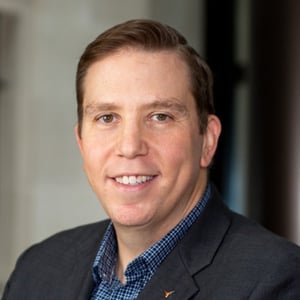
Agnes Williams Sesquicentennial Professor of Federal Courts, Georgetown Law
Stephen I. Vladeck is a professor of law at the Georgetown University Law Center, and is a nationally recognized expert on the federal courts; the Supreme Court; national security law; and military justice.
Vladeck is author of the New York Times bestselling book, “The Shadow Docket: How the Supreme Court Uses Stealth Rulings to Amass Power and Undermine the Republic,” which won the 2023 Writers’ League of Texas Book Award for Non-Fiction and was a finalist for the 2024 ABA Silver Gavel Award for Media and the Arts. Vladeck is also a highly regarded appellate advocate, having argued three cases before the U.S. Supreme Court and over a dozen before various lower federal civilian and military courts. He has received numerous awards for his influential and widely cited legal scholarship, his prolific popular writing, his teaching, and his service to the legal profession—including the 2024 University of Texas President’s Research Impact Award and his selection by the Order of the Coif to serve as its Distinguished Visiting Professor for 2025.
Vladeck is CNN’s Supreme Court analyst and editor and author of “One First,” a popular weekly newsletter about the Supreme Court. Together with Bobby Chesney, Vladeck co-hosts the popular and award-winning “National Security Law Podcast.” He is also a co-author of Aspen Publishers’ leading national security law and counterterrorism law casebooks. And he is a member of the Board of Trustees of EarthJustice—the nation’s premier nonprofit public interest environmental law organization.
Vladeck graduated from Yale Law School in 2004—where he was executive editor of the Yale Law Journal and won the Harlan Fiske Stone Prize for outstanding moot court oralist and shared the Potter Stewart Prize for best moot court team performance. After law school, he clerked for the Honorable Marsha S. Berzon on the U.S. Court of Appeals for the Ninth Circuit and the Honorable Rosemary Barkett on the U.S. Court of Appeals for the Eleventh Circuit. He earned a B.A. summa cum laude with Highest Distinction in History and Mathematics from Amherst College in 2001—where he wrote his senior thesis on “Leipzig’s Shadow: The War Crimes Trials of the First World War and Their Implications from Nuremberg to the Present.” A native New Yorker and hopeless Mets fan, Vladeck lives in the District with his wife, Karen (Founder and Managing Partner of Risepoint Search Partners); their daughters, Madeleine and Sydney; and their eleven-year-old pug, Roxanna.
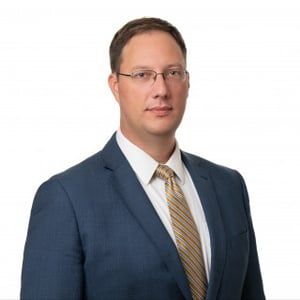
Laurence H. Silberman Chair in Constitutional Governance, American Enterprise Institute; Executive Director, Antonin Scalia Law School’s C. Boyden Gray Center for the Study of the Administrative State
Adam J. White is the Laurence H. Silberman Chair in Constitutional Governance and senior fellow at the American Enterprise Institute, where he focuses on the Supreme Court and the administrative state. He also directs the Antonin Scalia Law School’s C. Boyden Gray Center for the Study of the Administrative State.
He writes on regulation and constitutional government for a variety of publications. He practiced law in Washington, D.C., after clerking for the D.C. Circuit's Judge David Sentelle. He also has been chairman of the ABA's Administrative Law Section.
In 2021, he served on the Presidential Commission on the Supreme Court of the United States, where he criticized “Court packing” and other efforts to restructure the Supreme Court.

Associate, Mayer Brown LLP
Brantley Webb is a Litigation & Dispute Resolution associate and member of the firm’s Supreme Court & Appellate practice in the Washington DC office. Her practice focuses on appellate and complex litigation and spans a range of substantive areas, including administrative law, class actions, and criminal law, and encompasses all phases of litigation, including pre- and post-trial motions practice, depositions, working with experts, and trial strategy. In her appellate practice, she regularly represents clients and briefs cases in the federal courts of appeals and state appellate courts. She has also briefed multiple cases in the U.S. Supreme Court.
Ms. Webb graduated from Yale Law School, where she served as an Articles Editor of the Yale Law Journal, and earned her undergraduate degree, magna cum laude, from Dartmouth College. Before joining Mayer Brown, she clerked for the Honorable Sandra L. Lynch, US Court of Appeals for the First Circuit. Her publications have appeared in the George Mason Law Review, the Yale Law Journal, and Law360.
Laurence H. Silberman Chair in Constitutional Governance, American Enterprise Institute; Executive Director, Antonin Scalia Law School’s C. Boyden Gray Center for the Study of the Administrative State
Adam J. White is the Laurence H. Silberman Chair in Constitutional Governance and senior fellow at the American Enterprise Institute, where he focuses on the Supreme Court and the administrative state. He also directs the Antonin Scalia Law School’s C. Boyden Gray Center for the Study of the Administrative State.
He writes on regulation and constitutional government for a variety of publications. He practiced law in Washington, D.C., after clerking for the D.C. Circuit's Judge David Sentelle. He also has been chairman of the ABA's Administrative Law Section.
In 2021, he served on the Presidential Commission on the Supreme Court of the United States, where he criticized “Court packing” and other efforts to restructure the Supreme Court.
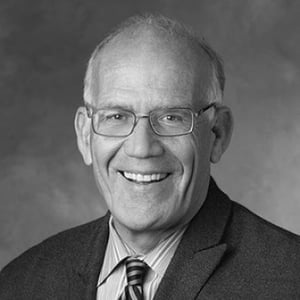
Martin and Illie Anderson Senior Fellow, Hoover Institution
Victor Davis Hanson is the Martin and Illie Anderson Senior Fellow at the Hoover Institution; his focus is classics and military history.
Hanson was a National Endowment for the Humanities fellow at the Center for Advanced Studies in the Behavioral Sciences, Stanford, California (1992–93), a visiting professor of classics at Stanford University (1991–92), the annual Wayne and Marcia Buske Distinguished Visiting Fellow in History at Hillsdale College (2004–), the Visiting Shifron Professor of Military History at the US Naval Academy (2002–3),and the William Simon Visiting Professor of Public Policy at Pepperdine University (2010).
In 1991 he was awarded an American Philological Association Excellence in Teaching Award. He received the Eric Breindel Award for Excellence in Opinion Journalism (2002), presented the Manhattan's Institute's Wriston Lecture (2004), and was awarded the National Humanities Medal (2007) and the Bradley Prize (2008).
Hanson is the author of hundreds of articles, book reviews, and newspaper editorials on Greek, agrarian, and military history and essays on contemporary culture. He has written or edited twenty-four books, the latest of which is The Case for Trump (Basic Books, 2019). His other books include The Second World Wars (Basic Books, 2017); The Savior Generals: How Five Great Commanders Saved Wars That Were Lost - from Ancient Greece to Iraq (Bloomsbury 2013); The End of Sparta (Bloomsbury, 2011); The Father of Us All: War and History, Ancient and Modern (Bloomsbury, 2010); Makers of Ancient Strategy: From the Persian Wars to the Fall of Rome (ed.) (Princeton, 2010); The Other Greeks (California, 1998); The Soul of Battle (Free Press, 1999); Carnage and Culture (Doubleday, 2001); Ripples of Battle (Doubleday, 2003); A War Like No Other (Random House, 2005); The Western Way of War (Alfred Knopf, 1989; 2nd paperback ed., University of California Press, 2000); The Wars of the Ancient Greeks (Cassell, 1999; paperback ed., 2001); and Mexifornia: A State of Becoming (Encounter, 2003), as well as two books on family farming, Fields without Dreams (Free Press, 1995) and The Land Was Everything (Free Press, 1998). Currently, he is a syndicated columnist for Tribune Media Services and a weekly columnist for the National Review Online.
Hanson received a BA in classics at the University of California, Santa Cruz (1975), was a fellow at the American School of Classical Studies, Athens (1977–78), and received his PhD in classics from Stanford University (1980).
Laurence H. Silberman Chair in Constitutional Governance, American Enterprise Institute; Executive Director, Antonin Scalia Law School’s C. Boyden Gray Center for the Study of the Administrative State
Adam J. White is the Laurence H. Silberman Chair in Constitutional Governance and senior fellow at the American Enterprise Institute, where he focuses on the Supreme Court and the administrative state. He also directs the Antonin Scalia Law School’s C. Boyden Gray Center for the Study of the Administrative State.
He writes on regulation and constitutional government for a variety of publications. He practiced law in Washington, D.C., after clerking for the D.C. Circuit's Judge David Sentelle. He also has been chairman of the ABA's Administrative Law Section.
In 2021, he served on the Presidential Commission on the Supreme Court of the United States, where he criticized “Court packing” and other efforts to restructure the Supreme Court.
Agnes Williams Sesquicentennial Professor of Federal Courts, Georgetown Law
Stephen I. Vladeck is a professor of law at the Georgetown University Law Center, and is a nationally recognized expert on the federal courts; the Supreme Court; national security law; and military justice.
Vladeck is author of the New York Times bestselling book, “The Shadow Docket: How the Supreme Court Uses Stealth Rulings to Amass Power and Undermine the Republic,” which won the 2023 Writers’ League of Texas Book Award for Non-Fiction and was a finalist for the 2024 ABA Silver Gavel Award for Media and the Arts. Vladeck is also a highly regarded appellate advocate, having argued three cases before the U.S. Supreme Court and over a dozen before various lower federal civilian and military courts. He has received numerous awards for his influential and widely cited legal scholarship, his prolific popular writing, his teaching, and his service to the legal profession—including the 2024 University of Texas President’s Research Impact Award and his selection by the Order of the Coif to serve as its Distinguished Visiting Professor for 2025.
Vladeck is CNN’s Supreme Court analyst and editor and author of “One First,” a popular weekly newsletter about the Supreme Court. Together with Bobby Chesney, Vladeck co-hosts the popular and award-winning “National Security Law Podcast.” He is also a co-author of Aspen Publishers’ leading national security law and counterterrorism law casebooks. And he is a member of the Board of Trustees of EarthJustice—the nation’s premier nonprofit public interest environmental law organization.
Vladeck graduated from Yale Law School in 2004—where he was executive editor of the Yale Law Journal and won the Harlan Fiske Stone Prize for outstanding moot court oralist and shared the Potter Stewart Prize for best moot court team performance. After law school, he clerked for the Honorable Marsha S. Berzon on the U.S. Court of Appeals for the Ninth Circuit and the Honorable Rosemary Barkett on the U.S. Court of Appeals for the Eleventh Circuit. He earned a B.A. summa cum laude with Highest Distinction in History and Mathematics from Amherst College in 2001—where he wrote his senior thesis on “Leipzig’s Shadow: The War Crimes Trials of the First World War and Their Implications from Nuremberg to the Present.” A native New Yorker and hopeless Mets fan, Vladeck lives in the District with his wife, Karen (Founder and Managing Partner of Risepoint Search Partners); their daughters, Madeleine and Sydney; and their eleven-year-old pug, Roxanna.
Laurence A. Tisch Professor of Law and Director, Classical Liberal Institute, New York University School of Law; Director, Classical Liberal Institute, Civitas Institute University of Texas at Austin
Richard A. Epstein is the inaugural Laurence A. Tisch Professor of Law at NYU School of Law. Prior to his joining the faculty, he was a visiting law professor at NYU from 2007 through 2009. He served as the Peter and Kirstin Bedford Senior Fellow at the Hoover Institution from 2000 to 2024. Since 2024 to the present he is a senior lecturer at the Civitas Institute at the University of Texas—Austin. Epstein is also the James Parker Hall Distinguished Service Professor of Law Emeritus and a senior lecturer at the University of Chicago. His initial law school appointment was at the University of Southern California from 1968 to 1972. Epstein received an LL.D., h.c. from the University of Ghent, 2003. He has been a member of the American Academy of Arts and Sciences since 1985 and was a Senior Fellow of the Center for Clinical Medical Ethics at the University of Chicago Division of Biological Sciences, also from 1983. to 2022 He served as editor of the Journal of Legal Studies from 1981 to 1991, and of the Journal of Law and Economics from 1991-2001. From 2001 to 2010 he was a director of the John M. Olin Program in Law and Economics at the University of Chicago.
His newest book, The Myth of Birthright Citizenship: What the Fourteenth Amendment Really Says was published in 2026 (Encounter Books). Prior to that he has published many books including, The Dubious Morality of the Modern Administrative State (Roman & Littlefield 2020).Earlier he published th Classical Liberal Constitution: The Uncertain Quest for Limited Government (Harvard 2014) iHis previous books include Design for Liberty: Private Property, Public Administration and the Rule of Law (Harvard 2011); The Case Against the Employee Free Choice Act (Hoover 2009); Supreme Neglect: How to Revive the Constitutional Protection of Property Rights (Oxford 2008); Antitrust Decrees in Theory and Practice: Why Less is More (AEI 2007); Overdose: How Excessive Government Regulation Stifles Pharmaceutical Innovation (Yale University Press. 2006); How Progressives Rewrote the Constitution (Cato 2006); Cases and Materials on Torts (Aspen Law & Business; 8th ed. 2004); Skepticism and Freedom: A Modern Case for Classical Liberalism (University of Chicago, 2003); Torts (Aspen Law & Business 1999); Principles for a Free Society: Reconciling Individual Liberty with the Common Good (Perseus Books, 1998): Mortal Peril: Our Inalienable Rights to Health Care (Addison-Wesley, 1997); Simple Rules for a Complex World (Harvard, 1995); Bargaining With the State (Princeton, 1993); Forbidden Grounds: The Case Against Employment Discrimination Laws (Harvard , 1992); Takings: Private Property and the Power of Eminent Domain (Harvard, 1985); and Modern Products Liability Law (Greenwood Press, 1980). He has also edited(with Catherine M. Sharkey) Cases and Materials on the Law of Torts (10th edition 2012).
Professor Epstein has written numerous articles on a wide range of legal and interdisciplinary subjects. He has taught courses in administrative law, antitrust law, civil procedure, communications, constitutional law, contracts, corporations, criminal law, employment discrimination law, environmental law, food and drug law health law and policy, legal history, labor law, property, real estate development and finance, jurisprudence, labor law; land use planning, patents, individual, estate and corporate taxation, Roman Law; torts, and workers' compensation.
Professor Epstein also writes a regular column for Civitas Institute, which also sponsors his podcast, The Libertarian with Charles C.W. Cooke, and Law Talk, with Cooke and John Yoo. He also does a podcast with John Batchelor. And appears regularly on the Freedom File with Judge Andrew Napolitano.
Laurence H. Silberman Chair in Constitutional Governance, American Enterprise Institute; Executive Director, Antonin Scalia Law School’s C. Boyden Gray Center for the Study of the Administrative State
Adam J. White is the Laurence H. Silberman Chair in Constitutional Governance and senior fellow at the American Enterprise Institute, where he focuses on the Supreme Court and the administrative state. He also directs the Antonin Scalia Law School’s C. Boyden Gray Center for the Study of the Administrative State.
He writes on regulation and constitutional government for a variety of publications. He practiced law in Washington, D.C., after clerking for the D.C. Circuit's Judge David Sentelle. He also has been chairman of the ABA's Administrative Law Section.
In 2021, he served on the Presidential Commission on the Supreme Court of the United States, where he criticized “Court packing” and other efforts to restructure the Supreme Court.
Associate, Mayer Brown LLP
Brantley Webb is a Litigation & Dispute Resolution associate and member of the firm’s Supreme Court & Appellate practice in the Washington DC office. Her practice focuses on appellate and complex litigation and spans a range of substantive areas, including administrative law, class actions, and criminal law, and encompasses all phases of litigation, including pre- and post-trial motions practice, depositions, working with experts, and trial strategy. In her appellate practice, she regularly represents clients and briefs cases in the federal courts of appeals and state appellate courts. She has also briefed multiple cases in the U.S. Supreme Court.
Ms. Webb graduated from Yale Law School, where she served as an Articles Editor of the Yale Law Journal, and earned her undergraduate degree, magna cum laude, from Dartmouth College. Before joining Mayer Brown, she clerked for the Honorable Sandra L. Lynch, US Court of Appeals for the First Circuit. Her publications have appeared in the George Mason Law Review, the Yale Law Journal, and Law360.
Martin and Illie Anderson Senior Fellow, Hoover Institution
Victor Davis Hanson is the Martin and Illie Anderson Senior Fellow at the Hoover Institution; his focus is classics and military history.
Hanson was a National Endowment for the Humanities fellow at the Center for Advanced Studies in the Behavioral Sciences, Stanford, California (1992–93), a visiting professor of classics at Stanford University (1991–92), the annual Wayne and Marcia Buske Distinguished Visiting Fellow in History at Hillsdale College (2004–), the Visiting Shifron Professor of Military History at the US Naval Academy (2002–3),and the William Simon Visiting Professor of Public Policy at Pepperdine University (2010).
In 1991 he was awarded an American Philological Association Excellence in Teaching Award. He received the Eric Breindel Award for Excellence in Opinion Journalism (2002), presented the Manhattan's Institute's Wriston Lecture (2004), and was awarded the National Humanities Medal (2007) and the Bradley Prize (2008).
Hanson is the author of hundreds of articles, book reviews, and newspaper editorials on Greek, agrarian, and military history and essays on contemporary culture. He has written or edited twenty-four books, the latest of which is The Case for Trump (Basic Books, 2019). His other books include The Second World Wars (Basic Books, 2017); The Savior Generals: How Five Great Commanders Saved Wars That Were Lost - from Ancient Greece to Iraq (Bloomsbury 2013); The End of Sparta (Bloomsbury, 2011); The Father of Us All: War and History, Ancient and Modern (Bloomsbury, 2010); Makers of Ancient Strategy: From the Persian Wars to the Fall of Rome (ed.) (Princeton, 2010); The Other Greeks (California, 1998); The Soul of Battle (Free Press, 1999); Carnage and Culture (Doubleday, 2001); Ripples of Battle (Doubleday, 2003); A War Like No Other (Random House, 2005); The Western Way of War (Alfred Knopf, 1989; 2nd paperback ed., University of California Press, 2000); The Wars of the Ancient Greeks (Cassell, 1999; paperback ed., 2001); and Mexifornia: A State of Becoming (Encounter, 2003), as well as two books on family farming, Fields without Dreams (Free Press, 1995) and The Land Was Everything (Free Press, 1998). Currently, he is a syndicated columnist for Tribune Media Services and a weekly columnist for the National Review Online.
Hanson received a BA in classics at the University of California, Santa Cruz (1975), was a fellow at the American School of Classical Studies, Athens (1977–78), and received his PhD in classics from Stanford University (1980).

Going, Going, Gone
Allan Meltzer is probably the foremost watcher today of Federal Reserve monetary policy. He certainly...
Topics
Article: Apple's iPhone Blunder
Writing for the Hoover Institution, Richard A. Epstein comments: Can the United States government compel...
Richard Epstein on The Classical Liberal Constitution
Palo Alto, CaliforniaArticle III Standing and the Texas Immigration Case - Podcast
Adam White, Stephen I. Vladeck
The Supreme Court will soon decide whether to hear a challenge by Texas (and 25...
Friedrichs v. California Teachers Association - Post-Argument SCOTUScast
Richard A. Epstein
On January 11, 2016, the Supreme Court heard oral argument in Friedrichs v. California Teachers...
Article III Standing and the Texas Immigration Case
TeleforumNet Neutrality Goes to Court: U.S. Telecomm Association v. FCC - Podcast
Adam White, Brantley Webb
On Friday, the D.C. Court of Appeals heard U.S. Telecomm Association v. FCC, a challenge to...
Net Neutrality Goes to Court: U.S. Telecomm Association v. FCC
TeleforumVictor Davis Hanson Discusses Foreign Policy - Podcast
Victor Davis Hanson
Acclaimed military historian, prolific columnist and political essayist Victor Davis Hanson discusses President Obama’s foreign...
Victor Davis Hanson Discusses Foreign Policy
Teleforum