

Chief Policy Counsel, Council on Criminal Justice and Senior Advisor, Right on Crime
Marc A. Levin is the Chief Policy Counsel for the Council on Criminal Justice (counciloncj.org) and Senior Advisor for Right on Crime.
An attorney and accomplished author on legal and public policy issues, Marc began the Foundation’s criminal justice program in 2005. This work contributed to nationally praised policy changes that have been followed by dramatic declines in crime and incarceration in Texas. Building on this success, in 2010, Levin developed the concept for the Right on Crime initiative, a TPPF project in partnership with Prison Fellowship and the American Conservative Union Foundation. Right on Crime has become the national clearinghouse for conservative criminal justice reforms and has contributed to the adoption of policies in dozens of states that fight crime, support victims, and protect taxpayers.
In 2014, Levin was named one of the “Politico 50” in the magazine’s annual “list of thinkers, doers, and dreamers who really matter in this age of gridlock and dysfunction.”
Marc has testified on criminal justice policy on four occasions before Congress and has testified before legislatures in states including Texas, Nevada, Kansas, Wisconsin, and California. He also has met personally with leaders such as U.S. Presidents, Speakers of the House, and the Justice Commtitee of the United Kingdom Parliament to share his ideas on criminal justice reform. In 2007, he was honored in a resolution unanimously passed by the Texas House of Representatives that stated, “Mr. Levin’s intellect is unparalleled and his research is impeccable.”
Since 2005, Marc has published dozens of policy papers on topics such as sentencing, probation, parole, reentry, and overcriminalization which are available on the TPPF website. Levin’s articles on law and public policy have been featured in publications such as the Wall Street Journal, USA Today, Texas Review of Law & Politics, National Law Journal, New York Daily News, Jerusalem Post, Toronto Star, Atlanta Journal-Constitution, Philadelphia Inquirer, San Francisco Chronicle, Washington Times, Los Angeles Daily Journal, Charlotte Observer, Dallas Morning News, Houston Chronicle, Austin American-Statesman, San Antonio Express-News and Reason Magazine.
In 1999, Marc graduated with honors from the University of Texas with a B.A. in Plan II Honors and Government. In 2002, Marc received his J.D. with honors from the University of Texas School of Law. Marc was a Charles G. Koch Summer Fellow in 1996. He served as a law clerk to Judge Will Garwood on the U.S. Court of Appeals for the Fifth Circuit and Staff Attorney at the Texas Supreme Court.

Vice President, Edwin Meese III Institute for the Rule of Law, Advancing American Freedom
John G. Malcolm oversees Advancing American Freedom’s work to increase understanding of the Constitution and the rule of law as Vice President of the organization’s Edwin Meese III Institute for the Rule of Law. Malcolm brings to the challenge a wealth of legal expertise and experience in both the public and private sectors.
Prior to joining Advancing American Freedom in 2025, Malcolm was the Vice President of the Institute for Constitutional Government and the Director of the Meese Center for Legal and Judicial Studies at the Heritage Foundation. Prior to joining Heritage in 2012, Malcolm was general counsel at the U.S. Commission on International Religious Freedom, as well as a distinguished practitioner in residence at Pepperdine Law School. From 2004 to 2009, Malcolm was executive vice president and director of worldwide anti-piracy operations for the Motion Picture Association.
Malcolm served as a deputy assistant attorney general in the Department of Justice’s Criminal Division from 2001 to 2004, where he oversaw sections on computer crime and intellectual property, domestic security, child exploitation and obscenity, and special investigations. Immediately prior to that, he was a founding partner in the Atlanta law firm of Malcolm & Schroeder, LLP.
From 1990 to 1997, Malcolm was an assistant U.S. attorney in Atlanta, assigned to the fraud and public corruption section, and also an associate independent counsel, investigating fraud and abuse in the Department of Housing and Urban Development. He was honored with the Director’s Award for Superior Performance for his work in connection with the successful prosecution of Walter Leroy Moody Jr., who assassinated an 11th Circuit judge and the head of the Savannah chapter of the NAACP.
A graduate of Harvard Law School and Columbia College, Malcolm began his career as a law clerk to a federal district court judge and a federal appellate court judge, and as an associate at the Atlanta-based law firm of Sutherland, Asbill & Brennan (new Eversheds Sutherland).
Malcolm, who resides in Washington, D.C., serves on the Board of Trustees of the Washington National Opera and is a Senate-confirmed member of the Board of Directors of the Legal Services Corporation, the largest funder of civil legal aid in the United States.
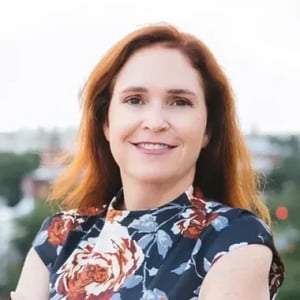
Founder & President, Due Process Institute
Shana founded the Due Process Institute because, after years of first-hand defense work and criminal legal reform advocacy, she became convinced that the Constitution needed and deserved its own lobbying firm--particularly in the area of procedural due process rights.
With 20 years of project management, lobbying, legal defense, and teaching experience, Shana's goal is to achieve meaningful solutions to as many of these problems, in the shortest amount of time possible, for the betterment of as many people as possible, as well as to prevent any of it from getting worse on her watch.
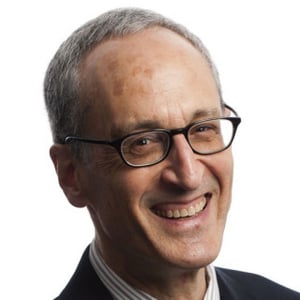
Chancellor’s Professor of Law, UC Irvine School of Law
Professor Simons is a leading scholar of tort law, criminal law, and law and philosophy and Co-director of the Center for Legal Philosophy. He has served since 2014 as Chief Reporter for the American Law Institute’s Restatement Third of Torts: Intentional Torts to Persons. In January 2019, he was the recipient of the 2019 William L. Prosser Award by the Association of American Law Schools Section on Torts and Compensation Systems, which recognizes “outstanding contributions of law teachers in scholarship, teaching and service” related to tort law and compensation systems.
Professor Simons has published influential scholarship concerning consent, assumption of risk and contributory negligence; the nature and role of mental states in criminal, tort and constitutional law; and negligence as a moral and legal concept. He has also explored such topics as bias crimes, corrective justice, the logic of egalitarian norms, mistake and impossibility in criminal law, and strict criminal liability.
Before joining UC Irvine School of Law, Prof. Simons was Professor of Law and The Honorable Frank R. Kenison Distinguished Scholar in Law at Boston University School of Law. He was a law clerk to U.S. Supreme Court Justice Thurgood Marshall and to Judge James L. Oakes, U.S. Court of Appeals for the Second Circuit. Prof. Simons also worked as an associate at Goodwin, Procter & Hoar in Boston, in the field of civil litigation. He received his J.D. from Michigan Law School, magna cum laude, and graduated from Yale University, summa cum laude, with a B.A. in philosophy.
Shareholder, Farney Daniels, PC
Jonathan B. Baker is Professor of Law at American University Washington College of Law, where he teaches courses primarily in the areas of antitrust and economic regulation. He served as the Chief Economist of the Federal Communications Commission from 2009 to 2011, and as the Director of the Bureau of Economics at the Federal Trade Commission from 1995 to 1998. Previously, he worked as a Senior Economist at the President’s Council of Economic Advisers, Special Assistant to the Deputy Assistant Attorney General for Economics in the Antitrust Division of the Department of Justice, an Assistant Professor at Dartmouth's Amos Tuck School of Business Administration, an Attorney Advisor to the Acting Chairman of the Federal Trade Commission, and an antitrust lawyer in private practice. Professor Baker is the co-author of an antitrust casebook, a past Editorial Chair of Antitrust Law Journal, and a past member of the Council of the American Bar Association’s Section of Antitrust Law. He has published widely in the fields of antitrust law and policy and industrial organization economics. In 2004 he received American University’s Faculty Award for Outstanding Scholarship, Research, and Other Professional Accomplishments, and in 1998 he received the Federal Trade Commission’s Award for Distinguished Service. He has a J.D. from Harvard and a Ph.D. in economics from Stanford University.
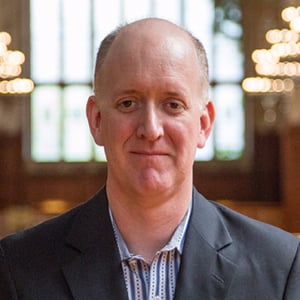
Richard W. Pogue Professor of Law, University of Michigan Law School
Professor Daniel Crane is the Richard W. Pogue Professor of Law. He served as the associate dean for faculty and research from 2013 to 2016. He teaches Contracts, Antitrust, Antitrust and Intellectual Property, and Legislation and Regulation.
Crane previously was a professor of law at Yeshiva University's Benjamin N. Cardozo School of Law and a visiting professor at New York University School of Law and the University of Chicago Law School. In spring 2009, he taught antitrust law on a Fulbright Scholarship at the Universidade Católica Portuguesa in Lisbon.
Crane's work has appeared in the University of Chicago Law Review, the California Law Review, the Michigan Law Review, the Georgetown Law Journal, and the Cornell Law Review, among other journals. He is the author of several books on antitrust law, including Antitrust (Aspen, 2014), The Making of Competition Policy: Legal and Economic Sources (Oxford University Press, 2013), and The Institutional Structure of Antitrust Enforcement (Oxford University Press, 2011).

Chief Judge, United States Court of Appeals, Fifth Circuit
Jennifer Walker Elrod is the Chief Judge of the United States Court of Appeals for the Fifth Circuit. She was nominated to the Fifth Circuit in 2007, and she served as a Circuit Judge on the court until assuming the role of Chief Judge in October 2024. Prior to serving as a Circuit Judge, Chief Judge Elrod was appointed and then twice elected Judge of the 190th District Court of Harris County, Texas, where she spent over five years presiding over more than 200 jury and non-jury trials.
Chief Judge Elrod graduated cum laude from Harvard Law School, where she was an active member of the Harvard Federalist Society, an Ames Moot Court finalist, and a Senior Editor of the Harvard Journal of Law & Public Policy. She clerked for the Honorable Sim Lake in the Southern District of Texas. Before serving as a judge, Chief Judge Elrod worked in private practice, focusing on civil litigation, antitrust, and employment matters.
She has been repeatedly recognized for her work as a jurist, as well as for her pro bono work and contributions to the community. She has been named the 2022 Texas Review of Law & Politics’ Jurist of the Year, the 2018 Harvard Federalist Society’s Alumni of the Year, the 2016–17 Texas Association of Civil Trial and Appellate Specialists’ Appellate Judge of the Year, and the 2008 Mexican-American Bar Association of Texas’s Judge of the Year.
Chief Judge Elrod is actively engaged in the academic and legal communities. Chief Judge Elrod currently serves on the Board of Directors and as the Jurist-in-Residence at the South Texas College of Law, where she teaches civil procedure and First Amendment law. She is also a member of the American Law Institute and of the Board of Advisors for the Harvard Journal of Law & Public Policy, and she is a former member of the Board of Regents of her alma mater, Baylor University, and the Board of Visitors at Brigham Young University Law School. She previously served as the Chair of the Codes of Conduct Committee for the Judicial Conference of the United States. She has also served as the M.D. Anderson Visiting Public Service Professor at the Texas Tech University School of Law and as Jurist-in-Residence at Brigham Young University Law School, and she has taught legal writing at the University of Houston Law Center. She presented the Lewis F. Powell, Jr. Distinguished Lecture at the Washington and Lee University School of Law and is a frequent speaker on the topics of trial and appellate procedure, ethics, employment law, and constitutional law. Chief Judge Elrod also serves on the board of the Garland R. Walker Inn of Court, and co-produces an annual musical CLE, for which her pupilage group has won multiple national awards.
Chief Judge Elrod’s publications include: Trial by Siri: AI Comes to the Courtroom; Don’t Mess with Texas Judges: In Praise of the State Judiciary; For Good: Enriching Your Practice and Your Life Through Pro Bono and Community Service; Is the Jury Still Out?: A Case for the Continued Viability of the American Jury; and W(h)ither the Jury? The Diminishing Role of the Jury Trial in our Legal System.
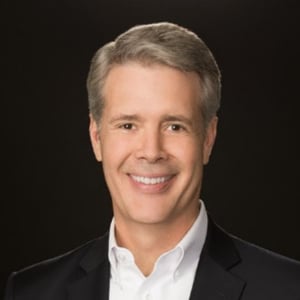
Partner, Cooley
Rob McDowell advises telecommunications, media and technology clients on their most significant regulatory, legal and business matters. As a former commissioner of the Federal Communications Commission (FCC) and a highly regarded industry leader, Rob has been at the forefront of the most complex and groundbreaking issues facing telecommunications.
Mr. McDowell was first appointed to the FCC by President George W. Bush in 2006 and again by President Obama in 2009. He was unanimously confirmed both times by the US Senate. During his tenure, Mr. McDowell led efforts to expand consumer access to spectrum through his work on the two largest wireless auctions in US history at the time, played a key role in the 2009 digital television transition and led efforts to establish the first federal civil rights rule in a generation by creating a ban on racially discriminatory practices in broadcast advertising. He also worked extensively on several large and complex mergers, including Sirius/XM and Comcast/NBC-Universal.
He is an advocate for internet freedom, serving on the US delegation to the 2012 World Conference on International Telecommunications and exposing an international bid to regulate vital aspects of the Internet through multilateral treaty-based organizations. Mr. McDowell authored an op-ed in the Wall Street Journal opposing multilateral internet regulation that led to a resolution passed unanimously in the House and Senate, as well as the ultimate defeat of the international bid at a treaty negation in Dubai later that year.
Prior to the FCC, Mr. McDowell was senior vice president for CompTel, the Competitive Telecommunications Association, where he led advocacy efforts before several government agencies, the White House and Congress.
Mr. McDowell is often called upon for speaking engagements and frequently appears on TV and radio. He has written opinion pieces for many high-profile publications, including the Wall Street Journal and Washington Post.
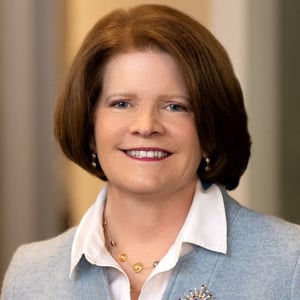
Partner, Antitrust and Competition, Wilson Sonsini Goodrich & Rosati
Maureen Ohlhausen is a partner in the Washington, D.C., office of Wilson Sonsini Goodrich & Rosati, where she advises industry-leading clients on complex antitrust and litigation matters, with a focus on high-profile cases. Sought after for her depth of experience on antitrust and Federal Trade Commission (FTC)-related issues, Maureen is known for her relationships with officials in the U.S. and abroad.
After finishing law school and clerking at the U.S. Court of Appeals for the D.C. Circuit, Maureen joined the FTC in 1997. She held a series of roles at the agency over the next 12 years, rising to the position of Director of the FTC Office of Policy Planning, where she led the agency’s work on e-commerce and headed the FTC’s Internet Access Task Force, which produced an influential report analyzing competition and consumer protection legal issues in the broadband and internet sectors. She then went into private practice at a leading telecommunications law firm, where she headed the FTC practice group.
In 2012, Maureen was confirmed by the Senate as a Commissioner of the FTC and was appointed Acting Chairman in January 2017, a role she held until May 2018. As Acting Chairman, Maureen directed all aspects of the agency’s antitrust work, including merger review, conduct enforcement, and all consumer protection enforcement, with an emphasis on privacy and technology issues. Under her leadership, the FTC won several influential merger challenges in court and reached a number of key digital privacy settlements.
To date, Maureen is the only FTC Commissioner to have received the Robert Pitofsky Lifetime Achievement Award in recognition of her contributions to the FTC.
Following the end of her term at the FTC, and immediately prior to joining Wilson Sonsini, Maureen was chair of the global antitrust and competition practice at Baker Botts, based in that firm’s Washington, D.C., office.
A recognized thought leader, Maureen is a frequent author and speaker, and is often quoted by leading print and broadcast media on antitrust, FTC, and privacy and data security matters. She has published dozens of articles on antitrust, privacy, intellectual property, regulation, FTC litigation, telecommunications, and international law issues in prestigious publications. During her tenure at the FTC and in private practice, she testified more than two dozen times before Congress, including before the Senate Commerce Committee and the House Energy and Commerce Antitrust Sub-Committee. She also testified before the Antitrust Modernization Commission.
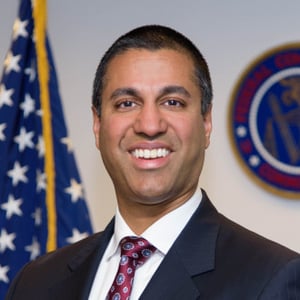
Nonresident Fellow, American Enterprise Institute
Ajit Pai, a former chairman of the Federal Communications Commission (FCC), is a nonresident fellow at the American Enterprise Institute, where he focuses on issues pertaining to technology and innovation, telecommunications regulatory policy, and market-based incentives for investment in broadband deployment. Concurrently, he is a partner at Searchlight Capital Partners, a global investment firm.
Mr. Pai’s distinguished career at the FCC includes two leadership roles following presidential appointments. He was appointed commissioner by President Barack Obama in 2012, designated chairman by President Donald Trump in 2017, and twice confirmed by the US Senate. While at the helm of the FCC, Mr. Pai had a transformative impact on the future of US technology and communications policy, implementing major initiatives to help close the digital divide; advance US leadership in 5G and other wireless technologies; promote innovation; protect consumers, public safety, and national security; and make the agency itself more open, transparent, and data-driven.
Earlier in his career, Mr. Pai served in various public-sector positions in the FCC’s Office of General Counsel, the US Department of Justice, the US Senate Judiciary Committee, and the US District Court for the Eastern District of Louisiana. He also worked as a partner at Jenner & Block and associate general counsel at Verizon Communications.
Mr. Pai graduated with honors from Harvard University, where he received a bachelor’s degree, and from the University of Chicago Law School, where he received a law degree and was an editor on the University of Chicago Law Review.

Judge, United States Court of Appeals, Ninth Circuit
Judge Carlos Bea serves as a judge on the United States Court of Appeals for the Ninth Circuit. He received his Bachelor's Degree from Stanford University in 1956 and his J.D. from Stanford Law School in 1958. Judge Bea was born in San Sebastian, Spain, and immigrated with his family to Cuba in 1939. In 1952, he represented Cuba on the Cuban National basketball team in the Helsinki Olympics. Judge Bea became a naturalized citizen of the United States in 1958. He engaged in private practice in San Francisco, principally in the area of civil trials (jury and non-jury), from 1959-75 at Dunne, Phelps & Mills and from 1975-90 at Carlos Bea, A Law Corporation. He taught courses in civil litigation advocacy at Hastings College of Law and Stanford Law School. From 1990 to 2003, Judge Bea served as a judge of the San Francisco Superior Court. He was nominated by President George W. Bush to the United States Court of Appeals for the Ninth Circuit and was confirmed in 2003.
Judge Bea and his wife Louise reside in San Francisco, where they raised their four sons, Sebastian, Alexander, Nicholas, and Dominic.
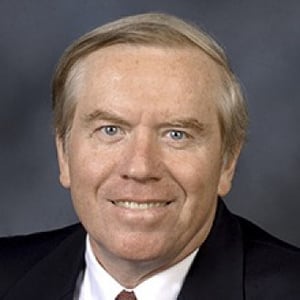
Edward J. Phelps Professor of Law and Economics and Kauffman Distinguished Research Scholar in Law, Economics, and Entrepreneurship, Yale Law School
Professor George L. Priest passed away on Dec. 17, 2024. Please read his obituary here.
George L. Priest is the Edward J. Phelps Professor of Law and Economics and Kauffman Distinguished Research Scholar in Law, Economics, and Entrepreneurship at Yale Law School. An internationally recognized expert, Professor Priest has focused his research over the past two decades on antitrust, the operation of private and public insurance, and the role of the legal system in promoting economic growth. He joined Yale Law School in 1981 and is co-director of the John M. Olin Center for Law, Economics and Public Policy, which facilitates the scholarly work of the Yale law and economics faculty and supports student interest and research in the field. Before coming to Yale, Professor Priest taught law at the University of Chicago, SUNY/Buffalo, and UCLA. His subject areas are antitrust; capitalism; regulated industries; torts; and insurance and public policy. Professor Priest holds a B.A. from Yale and a J.D. from the University of Chicago.

Laurence A. Tisch Professor of Law and Director, Classical Liberal Institute, New York University School of Law; Senior Fellow, The Civitas Institute, University of Texas at Austin
Richard A. Epstein is the inaugural Laurence A. Tisch Professor of Law at NYU School of Law. Prior to his joining the faculty, he was a visiting law professor at NYU from 2007 through 2009. He served as the Peter and Kirstin Bedford Senior Fellow at the Hoover Institution from 2000 to 2024. Since 2024 to the present he is a senior lecturer at the Civitas Institute at the University of Texas—Austin. Epstein is also the James Parker Hall Distinguished Service Professor of Law Emeritus and a senior lecturer at the University of Chicago. His initial law school appointment was at the University of Southern California from 1968 to 1972. Epstein received an LL.D., h.c. from the University of Ghent, 2003. He has been a member of the American Academy of Arts and Sciences since 1985 and was a Senior Fellow of the Center for Clinical Medical Ethics at the University of Chicago Division of Biological Sciences, also from 1983. to 2022 He served as editor of the Journal of Legal Studies from 1981 to 1991, and of the Journal of Law and Economics from 1991-2001. From 2001 to 2010 he was a director of the John M. Olin Program in Law and Economics at the University of Chicago.
His newest book, The Myth of Birthright Citizenship: What the Fourteenth Amendment Really Says was published in 2026 (Encounter Books). Prior to that he has published many books including, The Dubious Morality of the Modern Administrative State (Roman & Littlefield 2020).Earlier he published th Classical Liberal Constitution: The Uncertain Quest for Limited Government (Harvard 2014) iHis previous books include Design for Liberty: Private Property, Public Administration and the Rule of Law (Harvard 2011); The Case Against the Employee Free Choice Act (Hoover 2009); Supreme Neglect: How to Revive the Constitutional Protection of Property Rights (Oxford 2008); Antitrust Decrees in Theory and Practice: Why Less is More (AEI 2007); Overdose: How Excessive Government Regulation Stifles Pharmaceutical Innovation (Yale University Press. 2006); How Progressives Rewrote the Constitution (Cato 2006); Cases and Materials on Torts (Aspen Law & Business; 8th ed. 2004); Skepticism and Freedom: A Modern Case for Classical Liberalism (University of Chicago, 2003); Torts (Aspen Law & Business 1999); Principles for a Free Society: Reconciling Individual Liberty with the Common Good (Perseus Books, 1998): Mortal Peril: Our Inalienable Rights to Health Care (Addison-Wesley, 1997); Simple Rules for a Complex World (Harvard, 1995); Bargaining With the State (Princeton, 1993); Forbidden Grounds: The Case Against Employment Discrimination Laws (Harvard , 1992); Takings: Private Property and the Power of Eminent Domain (Harvard, 1985); and Modern Products Liability Law (Greenwood Press, 1980). He has also edited(with Catherine M. Sharkey) Cases and Materials on the Law of Torts (10th edition 2012).
Professor Epstein has written numerous articles on a wide range of legal and interdisciplinary subjects. He has taught courses in administrative law, antitrust law, civil procedure, communications, constitutional law, contracts, corporations, criminal law, employment discrimination law, environmental law, food and drug law health law and policy, legal history, labor law, property, real estate development and finance, jurisprudence, labor law; land use planning, patents, individual, estate and corporate taxation, Roman Law; torts, and workers' compensation.
Professor Epstein also writes a regular column for Civitas Institute, which also sponsors his podcast, The Libertarian with Charles C.W. Cooke, and Law Talk, with Cooke and John Yoo. He also does a podcast with John Batchelor. And appears regularly on the Freedom File with Judge Andrew Napolitano.
Assistant Professor of Law, Brooklyn Law School
William H. Rehnquist Professor of Law, Pepperdine University School of Law
Professor Nelson joined the Pepperdine faculty in 2007 as the William H. Rehnquist Professor of Law. Before coming to Pepperdine, Professor Nelson was on the faculty at UCLA School of Law since 1991 and taught Real Estate Finance, Advanced Real Estate Transactions, Property, Land Use Regulation, and Remedies. He was the recipient of the UCLA School of Law's Rutter Award for Excellence in Teaching in 2000 and the UCLA University's Distinguished Teaching Award in 2002. UCLA Law graduates selected him as "Professor of the Year" in 2004, 2005 and 2007.
He was the co-reporter for the American Law Institute's Restatement of Property (Third)--Mortgages (1997), served on the Law School Editorial Advisory Board of the West Publishing Company, and as a commissioner of the National Conference of Commissioners on Uniform State Laws.
While in law school, Professor Nelson was an editor on the Minnesota Law Review. After serving as an officer in the U.S. Army during the Vietnam era, he practiced real estate finance at Faegre and Benson, a large Minneapolis law firm. He taught at the University of Missouri-Columbia School of Law for twenty-four years, where he was the Enoch H. Crowder & Earl F. Nelson Professor of Law and was elected Outstanding Professor by three classes. He was also Professor of the Year at two other law schools where he was visiting.
Professor Nelson has published many books and articles on real estate finance law, property, and remedies, the most recent of which include: Real Estate Finance Law(with Dale A. Whitman), 5th ed. West Publishing (2007); Contemporary Property (with W. Stoebuck and Dale A. Whitman), 3rd ed. West Publishing (2008); and Real Estate Transfer, Finance and Development (with Dale A. Whitman, Ann Burkhart & Wilson Freyermuth), 8th ed. West Group (2009).
DeMuth Chair of Business Law, University of Colorado Law School
Andrew A. Schwartz joined the Colorado Law faculty in 2008 and was promoted to full professor in 2017. He teaches and publishes on corporate, securities and contract law, and has become an internationally recognized expert on investment crowdfunding. In 2017, Professor Schwartz served as a Fulbright Research Scholar and visiting professor at the University of Auckland Law School in New Zealand.
Professor Schwartz earned an Sc.B. in Civil Engineering from Brown University and a J.D. from Columbia University, where he served on the Columbia Law Review and was named a James Kent Scholar (top honors) all three years. Before entering academia, he clerked for Judge William A. Fletcher of the U.S. Court of Appeals for the Ninth Circuit and Judge Naomi Reice Buchwald of the U.S. District Court for the Southern District of New York. Following his clerkships, Professor Schwartz practiced corporate law in New York at Wachtell, Lipton, Rosen & Katz.
Professor Schwartz is the author of one book, Investment Crowdfunding, forthcoming from the Oxford University Press, as well as more than forty scholarly publications. His major articles have appeared in leading flagship law reviews including the UCLA Law Review, Minnesota Law Review, and Notre Dame Law Review, top specialty journals such as the Yale Journal on Regulation and Harvard Business Law Review, and peer-reviewed journals like the New Zealand Law Review.
Professor Schwartz has won numerous national awards for his scholarship, including the AALS Scholarly Paper Competition and the Federalist Society Young Legal Scholars Paper Competition. At Colorado Law, Professor Schwartz has received the Provost's Award for Faculty Achievement, the Gilbert Goldstein Faculty Fellowship, and the Outstanding New Faculty Award. His research is frequently cited and relied upon by courts and commentators across the country and around the world, including numerous citations by the Delaware Court of Chancery, the nation's leading venue for corporate law.
Professor of Law, Brigham Young University
Professor Paul Stancil joined the Brigham Young University law faculty in 2014. Prior to this, Professor Stancil was a professor at Illinois University College of Law and a shareholder at Godfrey & Kahn, S.C. (Milwaukee), where his practice focused on antitrust and trade regulation matters. Professor Stancil teaches Antitrust Law, Civil Procedure, Public Choice Theory, and Mergers & Acquisitions.
Professor Stancil has broad research interests in law and economics, antitrust law, civil procedure, and public choice theory. He specializes in analyzing the complex incentives that motivate individuals and groups in both the creation and application of law. Professor Stancil has written on the legitimacy of statutory interpretation by courts and the economic incentives facing parties in civil and criminal litigation; he has also written articles exploring the influence of interest groups in various aspects of the political process. Professor Stancil’s research strives to connect a rich theoretical account of law and lawmaking with the complex and often messy dynamics of the real world. He is particularly interested in the role transaction costs play in motivating real-world individual and group behavior.
Professor Stancil’s articles have appeared in the Virginia Law Review, the William & Mary Law Review, the Cardozo Law Review, and the Baylor Law Review, among others.
Professor Stancil earned his B.A. in economics and Spanish from the University of Virginia and graduated Order of the Coif from the University of Virginia School of Law. After law school graduation, Professor Stancil worked for Baker Botts (Houston) and another small Texas firm as an antitrust and litigation associate before leaving to help start an antitrust practice group at Godfrey & Kahn.

Visiting Professor, Case Western Reserve University School of Law
Robert E. Wagner is a Visiting Professor at the Case Western Reserve University School of Law. Before his appointment, Professor Wagner served as a member of the Judge Advocate General (JAG) Corps of the U.S. Air Force for five years. He last held the position of Chief of Military Justice of the Little Rock Air Force Base and was in charge of all the criminal prosecutions on the base. He currently teaches Criminal Procedure, Business Associations, and the White Collar Crime research seminar. His scholarship has appeared in the University of Cincinnati Law Review and Nexus: Chapman's Journal of Law and Policy (symposium edition).
Assistant Professor of Law, University of Wisconsin Law School
Professor Yackee's research centers on international investment law, international economic relations, foreign arbitration, and administrative law and politics. He teaches Contracts, International Investment Law, International Arbitration, and International Business Transactions.
Professor Yackee graduated summa cum laude and Phi Beta Kappa fromUniversity of Pittsburgh, earned an M.A. and Ph.D. in political science (International Relations) from the University of North Carolina at Chapel Hill, and earned a J.D., summa cum laude and Order of the Coif, from Duke University School of Law where he was an editor for the Duke Law Journal. He has also studied French and European law at L'Universite Pantheon-Assas (Paris-2).
Professor Yackee has published articles in a variety of peer-reviewed social science journals, student-edited law reviews, and edited volumes, including volumes published by the Cambridge and Oxford University Presses. His latest article,"Do Bilateral Investment Treaties Promote Foreign Direct Investment? Some Hints from Alternative Evidence?", is forthcoming in the Virginia Journal of International Law, one of the most influential student-edited law reviews in its field.

Milton R. Underwood Chair in Free Enterprise, Vanderbilt University Law School
Brian Fitzpatrick is the Milton R. Underwood Chair in Free Enterprise and Professor of Law at Vanderbilt Law School, where his research focuses on class action litigation, federal courts, judicial selection, and constitutional law. He is best known for his empirical studies of class action settlements as well as his book The Conservative Case for Class Actions (University of Chicago Press, 2019). Professor Fitzpatrick joined Vanderbilt's law faculty in 2007 after serving as the John M. Olin Fellow at New York University School of Law. He graduated first in his class from Harvard Law School and went on to clerk for Judge Diarmuid O'Scannlain on the U.S. Court of Appeals for the Ninth Circuit and Justice Antonin Scalia on the U.S. Supreme Court. After his clerkships, Professor Fitzpatrick practiced commercial and appellate litigation for several years at Sidley Austin in Washington, D.C., and served as Special Counsel for Supreme Court Nominations to U.S. Senator John Cornyn. Before earning his law degree, Fitzpatrick graduated summa cum laude with a bachelor's of science in chemical engineering from the University of Notre Dame. He has received the Hall-Hartman Outstanding Professor Award, which recognizes excellence in classroom teaching, for his Civil Procedure and Federal Courts courses.
Supreme Court Correspondent, The Washington Post
Robert Barnes has been a Washington Post reporter and editor since 1987. He joined the paper to cover Maryland politics, and has served in various editing positions including metropolitan editor and national political editor . He has covered the Supreme Court since November 2006. He gave up law school plans for a life in newspapers after taking a journalism class in college. It did not occur to him, as it apparently did to others, that he could do both.

Partner, O'Melveny & Myers LLP
Walter Dellinger is an influential authority on appellate and Supreme Court decisions, lending his experience as a former Solicitor General and decades of legal knowledge to amicus briefs, a multitude of pro bono clients, and public and private companies involved in bet-the-company litigation. A frequent commentator for the Wall Street Journal, Slate, and major television networks, Walter holds the designation of the Douglas B. Maggs Emeritus Professor of Law at Duke University. He was named one of the 100 Most Influential Lawyers in America by the National Law Journal and recognized with a Lifetime Achievement Award from the American Lawyer.
Walter, who formerly served as O’Melveny’s Diversity and Inclusion Partner, helped convince the US Supreme Court that proponents of Proposition 8, California's ban on same-sex marriage, did not have standing to appeal a court order invalidating it. That ruling, Hollingsworth v. Perry, cleared the way for marriage equality in California and eventually nationwide.
Walter served as Assistant Attorney General and head of the Office of Legal Counsel (OLC) from 1993 to 1996. He was acting Solicitor General for the 1996-97 Term of the US Supreme Court. During that time, Walter argued nine cases before the Court, the most by any Solicitor General in more than 20 years. His arguments included cases dealing with physician-assisted suicide, the line item veto, the cable television act, the Brady Act, the Religious Freedom Restoration Act, and the constitutionality of remedial services for parochial school children.
Walter has served as Special Counsel to the Board of Directors of the New York Stock Exchange in connection with the NYSE’s transformation into a publicly held company and its acquisition of an electronic trading company.
After serving in early 1993 in the White House as an advisor to the President on constitutional issues, Walter was nominated by the President to be Assistant Attorney General. He was confirmed by the Senate in October 1993 and served for three years. As head of the OLC, Walter issued opinions on a wide variety of issues, including: the President's authority to deploy United States forces in Haiti and Bosnia; whether the trade agreements required treaty ratification; and a major review of separation of powers questions. He provided extensive legal advice on questions arising out of the shutdown of the federal government, on national debt ceiling issues, and on loan guarantees for Mexico.
Walter has published articles on constitutional issues for scholarly journals including the Harvard Law Review, the Yale Law Journal, and the Duke Law Journal, and has written for the New York Times, the Washington Post, Newsweek, the New Republic, and the London Times. He has been a visiting professor at the Catholic University of Belgium and has given lectures to university faculties in Florence, Siena, Nuremberg, Copenhagen, Leiden, Utrecht, Tilburg, Mexico, and Rio de Janeiro, and has delivered major lectures at Stanford, Yale, Harvard, Michigan, Berkeley, Penn, Duke, Chicago, and other US law schools. He has testified more than 25 times before committees of Congress.
In private practice, Walter’s arguments before the United States Supreme Court have included Exxon Shipping Co. v. Baker, Morgan Stanley Capital Group Inc. v. Public Utility District No. 1 of Snohomish County, Alabama v. North Carolina, Hosanna-Tabor v. EEOC, Heller v. District of Columbia, Jackson v. Birmingham School District, Brown v. Legal Foundation of Washington, US Airways v. Barnett, Utah v. Evans, Hunt v. Cromartie, and Hunt v. Easley. His most notable Court of Appeals and state supreme court arguments include Martha Stewart v. United States, Whiteside v. United States, and Exxon v. Alabama, LCI v. Phillips.

Professor of Law, Stanford Law School
Orin S. Kerr is a Professor of Law at Stanford Law School, where he teaches and writes in the areas of criminal procedure and computer crime law. Kerr earned mechanical engineering degrees from Princeton University and Stanford University before graduating with a J.D. from Harvard Law School. He is a former law clerk to Justice Anthony M. Kennedy at the United States Supreme Court and Judge Leonard I. Garth of the U.S. Court of Appeals for the Third Circuit.
Partner (retd.), Foley & Lardner LLP
Cleta Mitchell was a partner and political law attorney in the Washington, D.C. office of Foley & Lardner LLP and a member of the firm’s Political Law Practice. With more than 40 years of experience in law, politics and public policy, Ms. Mitchell advised nonprofit and issue organizations, corporations, candidates, campaigns, and individuals on state and federal campaign finance law, election law, and compliance issues related to lobbying, ethics and financial disclosure. Ms. Mitchell practiced before the Federal Election Commission, the ethics committees of the US House and Senate and similar state and local enforcement bodies and agencies.
Ms. Mitchell has extensive experience on the federal lobbying and ethics law enacted by Congress in 2007, having taught dozens of seminars on the subject since its passage. In 2008, Ms. Mitchell authored The Lobbying Compliance Handbook, published by Columbia Books, Inc.
Ms. Mitchell represented numerous candidates, campaigns and members of Congress, as well as state and national political party committees. She has served as legal counsel to the National Republican Senatorial Committee and the National Republican Congressional Committee. Ms. Mitchell served as co-counsel for the National Rifle Association in the Supreme Court case involving the 2002 federal campaign finance law.
Ms. Mitchell has testified before Congress on numerous occasions related to election law, campaign finance and lobbying and ethics laws, and is a frequent speaker and guest commentator on political law. In 1999, she authored "The Rise of America’s Two National Pastimes: Baseball and the Law," published by the University of Michigan Law Review, and in 2012, Ms. Mitchell authored “Donor Disclosure: Undermining The First Amendment,” published by the Minnesota Law Review. In 2013, she was interviewed by The Wall Street Journal, “How to Investigate the IRS.”
Ms. Mitchell served on the advisory council to the American Bar Association’s Standing Committee on Election Law and as an advisor on the American Law Institute's Election Law Project entitled, “Principles of Election Law: Dispute Resolution.” She serves on the board of directors of the Lynde and Harry Bradley Foundation, is chairman of the American Conservative Union Foundation, and has served as the president of the Republican National Lawyers Association.
Ms. Mitchell was a member of the Oklahoma House of Representatives from 1976-1984 where she chaired the House Appropriations and Budget Committee. She served on the executive committee of the National Conference of State Legislatures.
Ms. Mitchell was in private law practice in Oklahoma City in litigation and administrative law until 1991 when she became director and general counsel of the Term Limits Legal Institute in Washington, D.C. She litigated cases in state and federal courts nationwide on congressional term limits and served as co-counsel with former U.S. Attorney General Griffin Bell in the Supreme Court of the United States case on term limits for members of Congress.
Ms. Mitchell earned both her B.A., magna cum laude, and J.D. from the University of Oklahoma.

Professor of Law, Georgetown University Law Center
Nicholas Quinn Rosenkranz teaches constitutional law and federal jurisdiction, and he writes articles for the Harvard Law Review and the Stanford Law Review.
He is currently developing a new theory of constitutional interpretation and judicial review. The first installment, entitledThe Subjects of the Constitution, was published in the Stanford Law Review in May of 2010, and it is among the most downloaded articles about constitutional interpretation, judicial review, and/or federal courts in the history of SSRN. The second installment, The Objects of the Constitution, was published in May of 2011, also in the Stanford Law Review. And the comprehensive version is forthcoming as a book by Oxford University Press.
Rosenkranz has served and advised the federal government in a variety of capacities. He clerked for Judge Frank H. Easterbrook on the U.S. Court of Appeals for the Seventh Circuit (1999-2000) and for Justice Anthony M. Kennedy at the U.S. Supreme Court (October Term 2001). He served as an Attorney-Advisor at the Office of Legal Counsel in the U.S. Department of Justice (November 2002 - July 2004). He often testifies before Congress as a constitutional expert—most recently before the House Financial Services Oversight Subcommittee, regarding the Obama Administration's use of bank settlement agreements to circumvent the Appropriations Clause. He has also filed briefs and presented oral argument before the U.S. Supreme Court. His most recent Supreme Court brief, in Los Angeles v. Patel, was cited by Justice Alito in dissent.
Rosenkranz is a member of the New York Bar and the U.S. Supreme Court Bar. He is a Senior Fellow at the Cato Institute. He serves on the Board of Directors of the Foundation for Individual Rights in Education (FIRE). He is a founding member of Heterodox Academy and a member of its Executive Committee. He also serves on the Board of Directors of the Federalist Society and as the faculty advisor to the Georgetown chapter.
Partner, Schaerr Jaffe LLP
Gene Schaerr specializes in handling—and usually winning—civil appeals, writ proceedings and similar matters, both in appellate courts and in the law-focused proceedings at the trial-court or agency level that often determine success or failure on appeal. He has argued and won dozens of cases in a variety of forums—including the U.S. Supreme Court (where he has argued six cases), every federal circuit, and numerous federal district courts and state appellate courts. His win rate in the dozens of federal appeals he has argued in the past six years is over 75 percent.
He was a coordinator of Sidley Austin's appellate practice from 1993 until 2005, and from 2005 until 2014 was the chair of the nationwide appellate practice at Winston & Strawn—a practice he led to numerous recognitions in such publications as the Appellate Hot List. His personal practice successes have won him repeated recognition in such publications as Best Lawyers in Washington, D.C., Legal 500, D.C. Superlawyers, and Best Lawyers in America. In January 2014, Mr. Schaerr formed his own boutique litigation firm so that he could serve his clients without the conflicts and inefficiencies inherent in big-firm law practice.
Substantively, Mr. Schaerr's experience includes not only virtually every area of federal law, defamation, higher education law, immigration, insurance coverage, labor and employment, patent and trademark, privacy, product liability and warranty, statutory interpretation and tax.He has represented clients in virtually every sector, including automotive, communications, energy, financial services, health care, higher education, insurance, maritime, pharmaceuticals, technology and state and local government. He also teaches courses in Supreme Court litigation, religious freedom litigation and advanced litigation skills as an adjunct professor of law at the Brigham Young University law school.
Mr. Schaerr began law practice in 1987 following clerkships on the U.S. Supreme Court (for Chief Justice Warren Burger and Justice Antonin Scalia) and on the U.S. Court of Appeals for the D.C. Circuit (for then- Judge Kenneth Starr). He graduated in 1985 from the Yale Law School, where he was Editor-in-Chief of the Yale Journal on Regulation and Senior Editor of the Yale Law Journal. From 1991 to 1993, he served in the White House as Associate Counsel to the President, where he had responsibility for a wide range of constitutional and administrative-law issues, including those involving economic regulation, higher education, separation of powers, federalism and religious freedom. He serves as Chairman of the Constitutional Sources Project, a digital resource providing free public access to historical materials relevant to the U.S. Constitution.

Discussing Attempts to Address Federal Overcriminalization
Marc Levin, John G. Malcolm, Shana O’Toole, Kenneth W. Simons
A recent executive order entitled “Fighting Overcriminalization in Federal Regulations” and two congressional proposals: the...
Telecommunications: Communications Law Reform
Jonathan D. Baker, Daniel A. Crane, Jennifer Walker Elrod, Robert M. McDowell, Maureen K. Ohlhausen, Ajit V. Pai
The Telecommunications & Electronic Media Practice Group hosted this panel on "Communications Law Reform" on...
Mexico's New Class Action Law
Carlos T. Bea, Eduardo Garcia, Marco Martinez, George L. Priest, Luis Daniel Rodriguez
This panel will discuss the new class action law in Mexico and how it compares...
Young Legal Scholars Paper Presentations
Richard A. Epstein, Rebecca Kysar, Grant S. Nelson, Andrew A. Schwartz, Paul J. Stancil, Robert Wagner, Jason Yackee
Prof. Rebecca Kysar, Brooklyn Law School, "Lasting Legislation" Prof. Andrew Schwartz, University of Colorado Law...
Hertz Corporation v. Friend – Post-Decision SCOTUScast
Brian T. Fitzpatrick
On February 23, 2010, the Supreme Court announced its decision in Hertz Corporation v. Friend....
Supreme Court October Term 2009: What Is in Store?
Robert Barnes, Walter E. Dellinger, Orin S. Kerr, Cleta Mitchell, Nicholas Quinn Rosenkranz, Gene C. Schaerr
October 5th marks the first day of the 2009 Supreme Court term. Thus far the...