
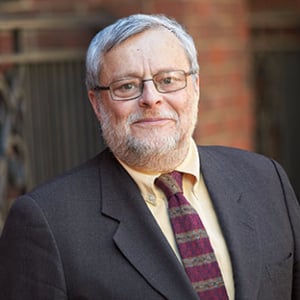
Dwight D. Opperman Professor of Law; Director, Center for Labor, New York University School of Law
Samuel Estreicher is a nationally preeminent scholar in US and international-comparative labor and employment law and arbitration law. He has authored more than a dozen books, including Beyond Elite Law: Access to Civil Justice in America (with Joy Radice, Cambridge Univ. 2016); leading casebooks on legislation and regulatory state, labor law and employment discrimination and employment law; and published more than 200 articles in professional and academic journals. He served as Chief Reporter for the American Law Institute’s Restatement of Employment Law (2015). After clerking for Judge Harold Leventhal of the US Court of Appeals for the DC Circuit, practicing in a labor law firm, and clerking for Justice Lewis F. Powell Jr. of the US Supreme Court, Prof. Estreicher joined the NYU School of Law faculty in 1978. In addition to serving as counsel to major law firms, he is the former secretary of the Labor and Employment Law Section of the American Bar Association, a former chair of the Committee on Labor and Employment Law of the Association of the Bar of the City of New York.15). He maintains an active appellate and ADR practice. The Labor and Employment Research Association awarded him its 2010 Susan C. Eaton Award for Outstanding Scholar-Practitioner. In recent years, Estreicher also has published work in public international law and authored several briefs in the Supreme Court and US courts of appeals on employment and US foreign relations law issues. Prof. Estreicher received his BA from Columbia College, his MS in industrial relations from Cornell University, and his JD from Columbia Law School, where he was editor-in-chief of the Columbia Law Review. He is a member of the College of Labor and Employment Lawyers and was appointed in 2016 by the UN Secretary General as a member of the UN’s Internal Justice Commission.
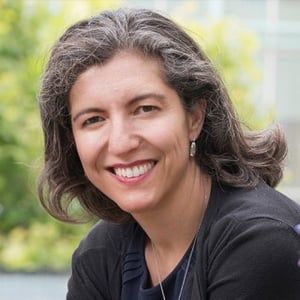
Martin Luther King Jr. Professor of Law, University of California, Davis School of the Law
Professor Chimène Keitner is a leading authority on international law and civil litigation, and served as the 27th Counselor on International Law in the U.S. Department of State. She has authored two books and dozens of articles, essays, and book chapters on questions surrounding the relationship among law, communities, and borders, including issues of jurisdiction, extraterritoriality, foreign sovereign and foreign official immunity, and the historical understandings underpinning current practice in these areas.
Professor Keitner holds a bachelor’s degree in history and literature with high honors from Harvard, a JD from Yale, where she was a Paul & Daisy Soros Fellow, and a doctorate in international relations from Oxford, where she was a Rhodes Scholar.
Among other professional service, Professor Keitner has served on the Executive Council of the American Society of International Law and as Co-Chair of the ASIL International Law in Domestic Courts Interest Group. She is a member of the American Law Institute and an Adviser on the ALI’s Fourth Restatement of the Foreign Relations Law of the United States. She is also a founding co-chair of the International Law Association’s Study Group on Individual Responsibility in International Law.

Judge, United States Court of Appeals, Eighth Circuit
David Stras became a judge on the United States Court of Appeals for the Eighth Circuit on January 31, 2018. Before serving on the Eighth Circuit, Judge Stras was an Associate Justice of the Minnesota Supreme Court, a position he occupied from July 1, 2010 until his appointment to the Eighth Circuit.
Prior to becoming a judge, Stras was a member of the faculty of the University of Minnesota Law School from 2004 through 2010. He taught and wrote in the areas of federal courts and jurisdiction, constitutional law, criminal law, and law and politics.
Judge Stras received his Bachelor of Arts degree, with highest distinction, in 1995 and his Master of Business Administration in 1999, both from the University of Kansas. He also received his law degree from the University of Kansas School of Law in 1999, where he served as Editor-in-Chief of the Criminal Procedure Edition of the Kansas Law Review.
Following law school, Stras clerked for The Honorable Melvin Brunetti of the United States Court of Appeals for the Ninth Circuit and then for The Honorable J. Michael Luttig of the United States Court of Appeals for the Fourth Circuit.
From 2001 to 2002, he practiced white-collar criminal and appellate litigation with the Washington, D.C., office of Sidley Austin Brown & Wood. Following his year in practice, he clerked for The Honorable Clarence Thomas of the Supreme Court of the United States.

University Professor of Law and Executive Director, Liberty & Law Center, Antonin Scalia Law School, George Mason University
David Bernstein holds a University Professorship chair at the Antonin Scalia Law School, where he has been teaching since 1995. He has also been a visiting professor at the University of Michigan, Georgetown University, William & Mary, Brooklyn Law School, the University of Turin, and Hebrew University. Professor Bernstein teaches Constitutional Law, Evidence, and Products Liability.
A prolific author, Professor Bernstein often challenges the conventional wisdom with prodigious research and sharp, original analysis. He is the author of five books, and coauthor of two more. Professor Bernstein’s book Rehabilitating Lochner was praised across the political spectrum as “intellectual history in its highest form,” a “fresh perspective and a cogent analysis,” “delightful and informative,” “sharp and iconoclastic,” and “a terrific work of historical revisionism.” Columnist George Will praised Bernstein’s most recent book, Classified, The Untold Story of Racial Classification in America, as “perhaps the most consequential American book of 2022.”
Professor Bernstein has also written dozens of articles and essays published in major law reviews, including the California Law Review, Columbia Law Review, Michigan Law Review, and Yale Law Journal. An article he coauthored, Defending Daubert: It’s Time to Amend Federal Rule of Evidence 702, directly inspired a pending amendment to Rule 702.
Professor Bernstein blogs at the Instapundit.com, the Times of Israel, and the Volokh Conspiracy. He is a graduate of the Yale Law School, where he was senior editor of the Yale Law Journal and a John M. Olin Fellow in Law, Economics, and Public Policy.

Partner and Executive Director, Christie 55 Solutions LLC
Rich Bagger is a Partner and Executive Director of Christie 55 Solutions, a New Jersey based consulting firm that provides strategic counsel to assist clients with business strategies and opportunities and with complex public policy and regulatory challenges at the state, federal and international levels. Rich is also an Adjunct Faculty member at Rutgers University and a member of the Board of Directors of Tonix Pharmaceuticals.
Prior to joining Christie 55 Solutions, Rich worked in the health sector for over 25 years, including as the senior most global Corporate Affairs executive for two major biopharmaceutical companies and as legal counsel for a large health plan. From 2012 through 2019, he was Executive Vice President of Corporate Affairs and Market Access for Celgene Corporation, as well as a member of the company’s Executive Committee. During a 16-year career with Pfizer Inc, Rich served from 2006 to 2009 on Pfizer’s senior most management team as Senior Vice President, Worldwide Public Affairs and Policy. Prior to joining Pfizer, Rich was Assistant General Counsel of Blue Cross and Blue Shield of New Jersey and before that practiced law with McCarter & English.
Rich has a record of public service that spans more than three decades. From 2012 until 2021, he served as a Commissioner of the Port Authority of New York and New Jersey and was Chair of the Gateway Program Development Corporation for 2017. For six months during 2016, Rich led pre-election transition planning as Executive Director of Trump for America. Rich served from 2010 to 2012 as Chief of Staff for New Jersey Governor Chris Christie, responsible for managing implementation of the Governor’s policy agenda and priorities. He was also elected to serve five terms in the New Jersey General Assembly, where he chaired the Appropriations Committee and was elected by his colleagues as Majority Conference Leader. In 2001, Rich was elected to the New Jersey Senate and served there until 2003. Before his election to the Legislature, he was a Council Member and Mayor of Westfield, New Jersey.
Rich served as Board Chair of the National Pharmaceutical Council for 2019 and is a member of the Board of Directors and Executive Committee of the U.S. Chamber of Commerce, where he chaired the Global Innovation Policy Center from 2014 to 2018. He is also on the Board of the Leukemia & Lymphoma Society and the Advisory Board for the Lerner Center for the Study of Pharmaceutical Management at Rutgers University Business School.
He received an A.B. degree from Princeton University’s School of Public and International Affairs and a J.D. degree from Rutgers University Law School.
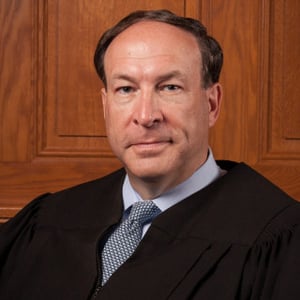
Judge, United States Court of Appeals, Seventh Circuit
Michael B. Brennan was confirmed and sworn in as a Circuit Judge for the U.S. Court of Appeals for the Seventh Circuit in May 2018.
He previously worked as a partner in the Milwaukee law firm of Gass Weber Mullins LLC, where he tried cases and handled appeals in federal and state courts, as a judge on the Milwaukee County Circuit, where he presided over a variety of criminal and civil calendars, and as an assistant district attorney in the Milwaukee County District Attorney’s office.
Brennan’s undergraduate degree is from the University of Notre Dame, and his law degree from Northwestern University School of Law, where he was an editor on the law review and the moot court champion. He served as a law clerk on the U.S. District Court for the Eastern District of Wisconsin and the U.S. Court of Appeals for the Seventh Circuit.
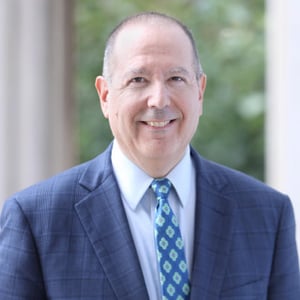
Dean Emeritus and Harvey R. Miller Professor of Law & Economics, Columbia Law School
David Schizer is Dean Emeritus and Harvey R. Miller Professor of Law & Economics at Columbia Law School. He served as Dean from 2004 to 2014, and as CEO of the American Jewish Joint Distribution Committee, a global Jewish humanitarian organization, from 2017 to 2019. He is the author of How to Save the World in Six (Not So Easy) Steps: Bringing Out the Best in Nonprofits. Schizer serves on the Board of Visitors of the Federalist Society. He is Second Vice Chair of the Tax Section of the New York State Bar Association, a co-founder and co-chair of the Richman Center for Law, Business, and Public Policy at Columbia University, and a co-founder and co-chair of the Center for Israeli Legal Studies at Columbia Law School. Schizer served as a law clerk to Justice Ruth Bader Ginsburg on the U.S. Supreme Court and Judge Alex Kozinski on the U.S. Court of Appeals for the Ninth Circuit.

Executive Director, College Autism Network
Lee Burdette Williams has worked in higher education and student affairs for more than three decades and is now Executive Director of the College Autism Network, a nonprofit organization supporting the efforts of autistic college students and the institutions that serve them. She served previously as the Vice President for Student Affairs and Dean of Students at Wheaton College in Massachusetts and Dean of Students at the University of Connecticut.
Lee’s professional interests include student mental health, academic partnerships, learning communities and student culture. A particular interest is in the experiences of autistic students in student conduct processes. She has written extensively on these and other topics and is a frequent speaker and presenter on contemporary issues in higher education. Lee is the author of two books, Emerging Practices and Trends in Peer Education and Learning Communities in Student Affairs: Partnering for Powerful Learning. She is the director of the College Autism Summit, an annual conference that brings together professionals working to support college students with autism. Lee has taught in the student affairs graduate programs at the University of Vermont, the University of Connecticut, Appalachian State University, and the University of Maryland College Park. She received her Ph.D. in College Student Personnel Administration from the University of Maryland College Park, her M.Ed. in Counseling from Salem State University, and her B.A. from Gordon College.
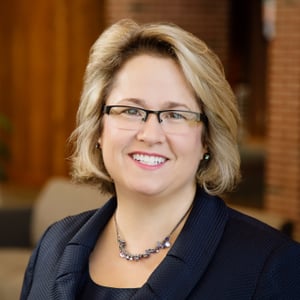
Professor, University of Illinois College of Law
Robin Fretwell Wilson is the Mildred Van Voorhis Jones Chair in Law at the University of Illinois College of Law.
A scholar in family law, bioethics and law and religion, Professor Wilson has worked extensively on behalf of state and federal law reform efforts in each realm.
Across two decades, she has worked to secure laws protecting the autonomy of patients to decide when they will be used to teach intimate exams to medical students, laws now in place in 22 states—sixteen of which have been enacted since 2019.
Professor Wilson is known for bridging differences in the culture war. In 2015, she spent a month in residence with the Utah legislature, helping Utah state lawmakers to pass anti-discrimination legislation that balances religious liberty and LGBT rights. In 2019, Professor Wilson assisted the governor of Utah to craft regulations banning gay conversion therapy. In 2019, she also aided U.S. Representative Chris Stewart with portions of the “Fairness for All” he introduced in Congress. A member of the American Law Institute and a Fulbright Specialist, Professor Wilson has served as a consultant to the United Arab Emirates’ Judicial Department as they sought to create a parallel court system for the adjudication by expatriates of family law matters using the laws of their home country or of their faith traditions.
Professor Wilson is the author of 20 books, including her 2018 book, Religious Freedom, LGBT Rights, and the Prospects for Common Ground, with Yale University Professor William Eskridge, Jr., which is now in paperback at Cambridge University Press. Her other books include: The Contested Place of Religion in Family Law (Cambridge University Press, 2018, ed.), Reconceiving the Family: Critical Reflections on the American Law Institute’s Principles of the Law of Family Dissolution (Cambridge University Press, 2006, ed.); The Handbook of Children, Culture & Violence (Sage Publications, 2006, with Nancy Dowd and Dorothy Singer, eds.); Same-Sex Marriage and Religious Liberty: Emerging Conflicts (Rowman & Littlefield, 2008, with Douglas Laycock and Anthony Picarello, eds.); Health Law and Bioethics: Cases in Context (Aspen, 2008, with Joan Krause, Sandra Johnson, and Richard Saver, eds.); Domestic Relations: Cases and Materials, 8th edition (Foundation Press, 2017, with Walter Wadlington and Raymond C. O’Brien); and Understanding Family Law, 4th edition (LexisNexis, 2013, with John DeWitt Gregory and Peter N. Swisher). Her articles have appeared in the Boston College Law Review, Cornell Law Review, Emory Law Journal, Illinois Law Review, North Carolina Law Review, San Diego Law Review, U.C. Davis Law Review, and Washington and Lee Law Review, as well as in numerous peer-reviewed journals.
In 2010 and again in 2016, Professor Wilson was ranked among the Top Ten Family Law Scholars in the United States for scholarly impact. She ranks among the Top 10% of Authors in all time downloads on the Social Science Research Network. Professor Wilson’s scholarship has been cited by the Fifth, Seventh and Tenth Circuit Court of Appeals, the Minnesota Court of Appeals, lower federal courts, and the Supreme Courts of Delaware, Illinois, Iowa, and Washington.
Professor Wilson’s work has been featured in the New York Times, Wall Street Journal, National Public Radio’s All Things Considered, Washington Post, Los Angeles Times, The Atlantic Monthly, U.S. News and World Report, ABA Journal, Chronicle of Higher Education, Chicago Tribune, CNN Headline News, Good Morning America, ABC News, CBS News, Philadelphia Inquirer, Essence Magazine, The American Prospect, People Magazine, The American Conservative, The Australian, and Al Jazeera, among others. She has presented her research across the world, including the United Nations in Geneva, Switzerland, as well as in Argentina, Brazil, Peru, Chile, China, Israel, Qatar, the Netherlands, Italy, England, Wales, Poland, Spain, Serbia, Japan, Canada, Norway, Denmark, Australia, New Zealand, South Africa, Turkey, and France.
Professor Wilson has seven times been honored for her work on innovative laws that respect all persons. In 2007, she received the Citizen’s Legislative Award for her work on changing Virginia’s informed consent law. In 2018, Professor Wilson received the Thomas L. Kane Religious Freedom Award from the J. Reuben Clark Law Society, which is presented annually to an individual who exemplifies the spirit of religious liberty for all and who has contributed in significant ways to the defense of religious freedom in the public square.
In 2018, Professor Wilson was honored as one of the 150 for 150: Celebrating the Accomplishments of Women at the University of Illinois at Urbana-Champaign for its sesquicentennial celebration. In 2020, Professor Wilson received the 2020 Larine Y. Cowan Make a Difference Award for Advocacy for LGBTQ Affairs, a university-wide honor given by the Office of Diversity, Equity and Inclusion at the University of Illinois at Urbana-Champaign.

Tad and Dianne Taube Senior Fellow, Hoover Institution, Stanford University; Former Director of Policy Planning Staff, U.S. Department of State
Peter Berkowitz is the Tad and Dianne Taube Senior Fellow at the Hoover Institution, Stanford University. From 2019-2021, he served as the Director of the State Department’s Policy Planning Staff, executive secretary of the department’s Commission on Unalienable Rights, and senior adviser to the Secretary of State. Peter studies and writes about, among other things, constitutional government, conservatism and progressivism, liberal education, national security and law, and Middle East politics. He is the author of Constitutional Conservatism: Liberty, Self-Government, and Political Moderation; Israel and the Struggle over the International Laws of War; Virtue and the Making of Modern Liberalism; and Nietzsche: The Ethics of an Immoralist. He has edited seven volumes on American politics and political institutions. He is a contributor at RealClearPolitics, and has written hundreds of essays, articles, and reviews on many subjects for a variety of publications, including the American Political Science Review, the Atlantic, the Chronicle of Higher Education, the Claremont Review of Books, Commentary, First Things, Haaretz, the Jerusalem Post, National Review, the New Republic, the New York Post, the New York Sun, PJ Media, Policy Review, the Public Interest, the Times Literary Supplement, the Wall Street Journal, the Washington Post, the Weekly Standard, the Wilson Quarterly, and the Yale Law Journal. Peter holds a JD and a PhD in political science from Yale University; an MA in philosophy from the Hebrew University of Jerusalem; and a BA in English literature from Swarthmore College.
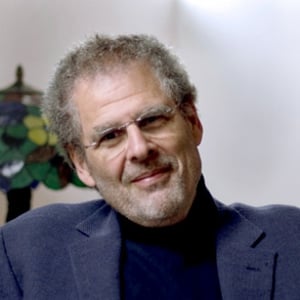
Adjunct Professor of Business, Hebrew University of Jerusalem, V, Dartmouth College
Bernard Avishai is an Adjunct Professor of Business at Hebrew University of Jerusalem. He lives in Jerusalem and the United States. He has taught at Duke University, the Massachusetts Institute of Technology (MIT), and Dartmouth College, and was director of the Zell Entrepreneurship Program at the Interdisciplinary Center Herzliya in Israel. From 1998 to 2001 he was International Director of Intellectual Capital at KPMG LLP. Before this he headed product development at Monitor Group, with which he is still associated. From 1986 to 1991 he was technology editor of Harvard Business Review. A Guggenheim Fellow, Avishai holds a doctorate in political economy from the University of Toronto. Before turning to management, he covered the Middle East as a journalist. He has written many articles and commentaries for The New Yorker, The New York Review of Books, Harvard Business Review, Harper's Magazine and other publications. He is the author of three books on Israel, including the widely read The Tragedy of Zionism, and the 2008 The Hebrew Republic.
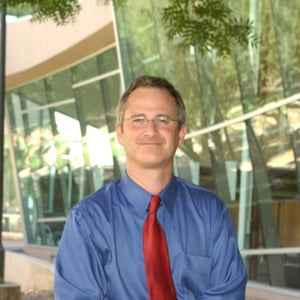
Senior Fellow, Foundation for Defense of Democracies, Professor, Arizona State University
Orde Kittrie is a senior fellow at the Foundation for Defense of Democracies and professor of law at the Sandra Day O'Connor College of Law at Arizona State University. He is a leading expert on nonproliferation law and policy with a focus on Iran sanctions, and an expert on international law, particularly as it relates to the Middle East. Kittrie is author of Lawfare: Law as a Weapon of War (Oxford University Press, 2016), which describes how and why law is becoming an increasingly powerful and prevalent weapon of war, through examples of lawfare use by the U.S., China, Israel, the Palestinians, as well as non-governmental organizations and individuals.
Prior to entering academia, Prof. Kittrie served for eleven years at the Department of State, where he received the Department’s Superior Honor Award and its Meritorious Honor Award. As the Department's lead nuclear affairs attorney, Prof. Kittrie helped negotiate five U.S.-Russia nuclear agreements and a UN treaty to combat nuclear terrorism. Prof. Kittrie also served as director of the department’s Office of International Anti-Crime Programs, as the department’s lead attorney for strategic trade controls, and as a lead attorney for public affairs and public diplomacy. He also served as Special Assistant to the Under Secretary of State for Economic, Business and Agricultural Affairs.
Prof. Kittrie has testified before various Senate and House committees, and served on a special National Academies of Science committee to make recommendations on preventing nuclear, chemical, and biological proliferation. He has also testified before several state legislatures regarding divestment and other legislation related to foreign affairs.
His work has been featured in leading outlets including The Wall Street Journal, Washington Post, and Foreign Affairs, and he has done on-air commentary for networks and stations including NBC, ABC, Fox, PBS, and Al Jazeera. He is also the author of numerous scholarly articles.
Prof. Kittrie has been a guest speaker of the International Atomic Energy Agency, NATO, various U.S. federal agencies, the British Foreign & Commonwealth Office, the Belgian Royal Military Academy, and the Royal Military College of Canada. He has also lectured at over a dozen universities including Harvard, Yale, Columbia University, Georgetown, Johns Hopkins, King’s College London, and the University of Pennsylvania.
Prof. Kittrie is a graduate of the University of Michigan Law School, and a former Ford Foundation fellow in Egypt, Israel, Jordan, and Syria. Prior to law school, he served as press spokesman and legislative assistant to U.S. Congresswoman Connie Morella. He is a member of the Council on Foreign Relations.
- See more at: http://www.defenddemocracy.org/about-fdd/team-overview/orde-kittrie/#sthash.aVtyFegm.dpuf
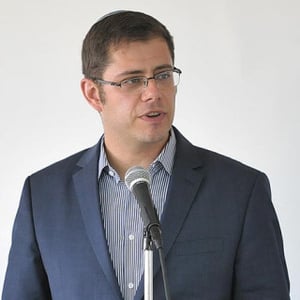
Professor of Law and Director, Center for the Middle East and International Law, George Mason University Antonin Scalia Law School
Professor of Law Eugene Kontorovich is one of the world’s preeminent experts on universal jurisdiction and maritime piracy, as well as international law and the Israel-Arab conflict. He is also the Director of Scalia Law School's Center for the Middle East and International Law. Professor Kontorovich joined the Scalia Law School from Northwestern University Pritzker School of Law where he was a Professor of Law from 2011 to 2018 and an Associate Professor from 2007 to 2011. Previously, he was a Visiting Professor at the University of Chicago from 2005 to 2007 and an Assistant Professor at George Mason School of Law from 2003 to 2007.
Professor Kontorovich has published over thirty major scholarly articles and book chapters in leading law reviews and peer-reviewed journals in the United States and Europe, including the American Journal of International Law, International Review of Law & Economics, Stanford Law Review, California Law Review, University of Pennsylvania Law Review, and Virginia Law Review. His scholarship has been cited in leading foreign relations and international law
His expertise is often sought out and quoted by major news organizations such the New York Times, Wall Street Journal, NPR News, The New Yorker, Los Angeles Times, and numerous television and radio programs. Prof. Kontorovich’s popular writings have appeared in the New York Times, Wall Street Journal, Los Angeles Times, POLITICO, Commentary, Haaretz, and numerous other leading publications. He is also a regular contributor to the Washington Post’s Volokh Conspiracy legal blog.
He attended the University of Chicago for college and law school. After law school, he clerked for Judge Richard Posner on the United States Court of Appeals for the Seventh Circuit. He has been honored with a fellowship at the Institute for Advanced Study in Princeton, in 2011-12, and with the Federalist Society’s prestigious Bator Award, given annually to a young scholar (under 40), for outstanding scholarship and teaching.

Founder and Executive Director, National Security Institute; Assistant Professor of Law, Antonin Scalia Law School, George Mason University
Jamil N. Jaffer is the Founder and Executive Director of the National Security Institute at the Antonin Scalia Law School at George Mason University where he also serves as an Assistant Professor of Law, Director of the National Security Law and Policy Program, and Director of the Cyber, Intelligence, and National Security LLM Program. Jamil also teaches classes on counterterrorism, intelligence, surveillance, cybersecurity, and other national security matters, as well as a summer course held abroad with U.S. Supreme Court Justice Neil M. Gorsuch. Jamil is also affiliated with Stanford University’s Center for International Security and Cooperation and previously served as a Visiting Fellow at the Hoover Institution from 2016 to 2019.
Jamil is also a Venture Partner with Paladin Capital Group, where he assists the firm with investments across the full range of its themes and theses, including a focus on dual-use national security technologies. Jamil also serves on the board of directors of RangeForce, a cybersecurity training and readiness platform startup and Tozny, a digital identity startup, and on the advisory boards of U.S. Strategic Metals, North America’s largest primary producer of cobalt, a critical mineral used in EV batteries, aerospace, and other national security applications; and Constella Intelligence, a deep and dark web intelligence startup. Jamil also serves as an advisor to Beacon Global Strategies, a strategic advisory firm and Duco, a technology platform startup that connects corporations with geopolitical and international business experts. Jamil is also the managing director of Trigraph Caveat Capital, a private investment vehicle.
Among other things, Jamil currently serves on the Board of Directors for the Greater Washington Board of Trade, the Board of Advisors for the Global Cyber Alliance, and the Advisory Board of the Foundation for the Defense of Democracies’ Center on Cyber and Tech Innovation, the Executive Committee of the Reagan Institute Strategy Group. Jamil is also a Fellow at the Academy for Judaic, Christian, and Islamic Studies, an advisor to the Concordia Summit, and is a member of the Board of Directors for the Center for Intelligence Policy, the Board of Directors of Speech First, and the Executive Committee of the International Law and National Security Practice Group of the Federalist Society.
Immediately prior to his current positions, from 2015-2021, Jamil served as a senior business leader at IronNet Cybersecurity, helping take the company from a bootstrapped first-year technology products startup through two rounds of venture capital fundraising, growing from 40 employees to over 300, and through its listing on New York Stock Exchange. In his role as IronNet's Senior Vice President for Strategy, Partnerships & Corporate Development, Jamil worked directly for the co-CEOs of the company, Gen (ret.) Keith B. Alexander, the former Director of the National Security Agency and Founding Commander of U.S. Cyber Command, and Bill Welch, the former COO of Zscaler and Duo; in that role, Jamil led all of the company’s strategic and technology partnership efforts, including developing go-to-market and technology integration plans with some of the largest cloud platforms and cybersecurity companies in the market, evaluating potential acquisition targets, and developing overall corporate strategy and thought leadership around collective security and collaborative defense in the cyber arena.
Prior to his time at IronNet, Jamil served on the leadership team of the Senate Foreign Relations Committee as Chief Counsel and Senior Advisor under Chairman Bob Corker (R-TN), where he worked on key national security and foreign policy issues, including leading the drafting of the proposed Authorization for the Use of Military Force against ISIS in 2014 and 2015, the AUMF against Syria in 2013, and revisions to the 9/11 AUMF against al Qaeda. Jamil was also the lead architect of the Iran Nuclear Agreement Review Act and two sanctions laws against Russia for its first intervention in Ukraine.
Prior to joining SFRC, Jamil served as Senior Counsel to the House Permanent Select Committee on Intelligence under Chairman Mike Rogers (R-MI) where he led the committee’s oversight of NSA surveillance, NRO intelligence issues, and NGA analytic and collection matters, as well as intelligence community-wide counterterrorism issues. Jamil was also the lead architect of the Cyber Intelligence Sharing and Protection Act, the nation’s first cyber threat intelligence sharing legislation that was signed into law in 2015.
In the Bush Administration, Jamil served in the White House as an Associate Counsel to the President, handling Defense Department, State Department, and intelligence community matters, and serving as one of the White House Counsel’s primary representatives to the National Security Council Deputies Committee.
Prior to the White House, Jamil served on the leadership team of the Justice Department’s National Security Division as Counsel to the Assistant Attorney General for National Security, where he focused on counterterrorism and intelligence matters. At NSD, Jamil helped lead the division’s work on In re: Directives, the first ever two-party litigated matter in the FISA Court and the second case before the FISA Court of Review in its 30-year history. Jamil also led NSD’s efforts on the President’s Comprehensive National Cybersecurity Initiative (CNCI), including the drafting of NSPD-54/HSPD-23, and related classified matters, and advised the National Security Agency (NSA) and U.S. Cyber Command’s predecessor organization, the Joint Function Component Command for Network Warfare (JFCC-NW), on matters related to cyber intelligence collection and offensive cyber activities. For his work on these matters, Jamil was awarded the Assistant Attorney General’s Award for Special Initiative and was among the group of lawyers awarded the Director of National Intelligence’s 2008 Legal Award (Team of the Year – Cyber Legal).
Jamil also served in other positions in the Justice Department, including in the Office of Legal Policy, where he worked on the confirmations of Chief Justice John G. Roberts, Jr. and Justice Samuel A. Alito, Jr. to the United States Supreme Court.
Jamil also served as a lawyer in private practice at Kellogg Huber, a Washington, DC-based litigation boutique, as a policy advisor to Congressman Bob Goodlatte (R-VA), and as a staff member or senior advisor on a number of political campaigns, including two presidential campaigns and a presidential transition team. While in law school, Jamil was a member of the University of Chicago Law Review, managing editor of the Chicago Journal of International Law, and National Symposium Editor of the Harvard Journal of Law & Public Policy. Following law school, Jamil served as a law clerk to Judge Edith H. Jones of the United States Court of Appeals for the Fifth Circuit and, later in his career, as a law clerk to then-Judge Neil M. Gorsuch when he first joined the United States Court of Appeals for the Tenth Circuit as well as a law clerk to Justice Neil Gorsuch when he joined the U.S. Supreme Court.
Jamil has published multiple op-eds and academic articles on national security, foreign policy, cybersecurity, counterterrorism, encryption, and intelligence matters, and is the co-author of a book chapter with former NSA Director Gen. (Ret.) Keith B. Alexander on national security and the press in National Security, Leaks, and the Freedom of the Press: The Pentagon Papers Fifty Years On (2021) and a book chapter with former CIA Director Gen. (ret.) Mike Hayden on ISIS, al Qaeda, and other international terrorist groups in Choosing to Lead: American Foreign Policy for a Disordered World (2015). Jamil has also written book chapters on cybersecurity and surveillance, as well as op-eds and policy papers with former Attorney General Michael B. Mukasey, former National Counterterrorism Center Director Matt Olsen, and Congressman Mike Waltz (R-FL), among others.
Jamil has previously taught graduate-level courses in intelligence law and policy at George Washington University’s Elliott School of International Affairs and the National Intelligence University, served an outside advisor to the Cyberspace Solarium Commission, and has recently testified before committees of the U.S. Senate and House of Representatives on China, cybersecurity, counterterrorism, and other national security matters. Jamil has also recently appeared on a range of national television and radio outlets including CNN, Fox News, Fox Business, MSNBC, Bloomberg, PBS, Voice of America, and National Public Radio, and in various print and online publications, including the Wall Street Journal, New York Times, and the Washington Post on a range of national security matters including cybersecurity, counterterrorism, surveillance, encryption, privacy, and foreign policy issues.
Jamil holds degrees from UCLA (BA, cum laude), the University of Chicago Law School (JD, with honors), and the United States Naval War College (MA, with distinction).
Adjunct Professor of Business, Hebrew University of Jerusalem, V, Dartmouth College
Bernard Avishai is an Adjunct Professor of Business at Hebrew University of Jerusalem. He lives in Jerusalem and the United States. He has taught at Duke University, the Massachusetts Institute of Technology (MIT), and Dartmouth College, and was director of the Zell Entrepreneurship Program at the Interdisciplinary Center Herzliya in Israel. From 1998 to 2001 he was International Director of Intellectual Capital at KPMG LLP. Before this he headed product development at Monitor Group, with which he is still associated. From 1986 to 1991 he was technology editor of Harvard Business Review. A Guggenheim Fellow, Avishai holds a doctorate in political economy from the University of Toronto. Before turning to management, he covered the Middle East as a journalist. He has written many articles and commentaries for The New Yorker, The New York Review of Books, Harvard Business Review, Harper's Magazine and other publications. He is the author of three books on Israel, including the widely read The Tragedy of Zionism, and the 2008 The Hebrew Republic.
Senior Fellow, Foundation for Defense of Democracies, Professor, Arizona State University
Orde Kittrie is a senior fellow at the Foundation for Defense of Democracies and professor of law at the Sandra Day O'Connor College of Law at Arizona State University. He is a leading expert on nonproliferation law and policy with a focus on Iran sanctions, and an expert on international law, particularly as it relates to the Middle East. Kittrie is author of Lawfare: Law as a Weapon of War (Oxford University Press, 2016), which describes how and why law is becoming an increasingly powerful and prevalent weapon of war, through examples of lawfare use by the U.S., China, Israel, the Palestinians, as well as non-governmental organizations and individuals.
Prior to entering academia, Prof. Kittrie served for eleven years at the Department of State, where he received the Department’s Superior Honor Award and its Meritorious Honor Award. As the Department's lead nuclear affairs attorney, Prof. Kittrie helped negotiate five U.S.-Russia nuclear agreements and a UN treaty to combat nuclear terrorism. Prof. Kittrie also served as director of the department’s Office of International Anti-Crime Programs, as the department’s lead attorney for strategic trade controls, and as a lead attorney for public affairs and public diplomacy. He also served as Special Assistant to the Under Secretary of State for Economic, Business and Agricultural Affairs.
Prof. Kittrie has testified before various Senate and House committees, and served on a special National Academies of Science committee to make recommendations on preventing nuclear, chemical, and biological proliferation. He has also testified before several state legislatures regarding divestment and other legislation related to foreign affairs.
His work has been featured in leading outlets including The Wall Street Journal, Washington Post, and Foreign Affairs, and he has done on-air commentary for networks and stations including NBC, ABC, Fox, PBS, and Al Jazeera. He is also the author of numerous scholarly articles.
Prof. Kittrie has been a guest speaker of the International Atomic Energy Agency, NATO, various U.S. federal agencies, the British Foreign & Commonwealth Office, the Belgian Royal Military Academy, and the Royal Military College of Canada. He has also lectured at over a dozen universities including Harvard, Yale, Columbia University, Georgetown, Johns Hopkins, King’s College London, and the University of Pennsylvania.
Prof. Kittrie is a graduate of the University of Michigan Law School, and a former Ford Foundation fellow in Egypt, Israel, Jordan, and Syria. Prior to law school, he served as press spokesman and legislative assistant to U.S. Congresswoman Connie Morella. He is a member of the Council on Foreign Relations.
- See more at: http://www.defenddemocracy.org/about-fdd/team-overview/orde-kittrie/#sthash.aVtyFegm.dpuf
Professor of Law and Director, Center for the Middle East and International Law, George Mason University Antonin Scalia Law School
Professor of Law Eugene Kontorovich is one of the world’s preeminent experts on universal jurisdiction and maritime piracy, as well as international law and the Israel-Arab conflict. He is also the Director of Scalia Law School's Center for the Middle East and International Law. Professor Kontorovich joined the Scalia Law School from Northwestern University Pritzker School of Law where he was a Professor of Law from 2011 to 2018 and an Associate Professor from 2007 to 2011. Previously, he was a Visiting Professor at the University of Chicago from 2005 to 2007 and an Assistant Professor at George Mason School of Law from 2003 to 2007.
Professor Kontorovich has published over thirty major scholarly articles and book chapters in leading law reviews and peer-reviewed journals in the United States and Europe, including the American Journal of International Law, International Review of Law & Economics, Stanford Law Review, California Law Review, University of Pennsylvania Law Review, and Virginia Law Review. His scholarship has been cited in leading foreign relations and international law
His expertise is often sought out and quoted by major news organizations such the New York Times, Wall Street Journal, NPR News, The New Yorker, Los Angeles Times, and numerous television and radio programs. Prof. Kontorovich’s popular writings have appeared in the New York Times, Wall Street Journal, Los Angeles Times, POLITICO, Commentary, Haaretz, and numerous other leading publications. He is also a regular contributor to the Washington Post’s Volokh Conspiracy legal blog.
He attended the University of Chicago for college and law school. After law school, he clerked for Judge Richard Posner on the United States Court of Appeals for the Seventh Circuit. He has been honored with a fellowship at the Institute for Advanced Study in Princeton, in 2011-12, and with the Federalist Society’s prestigious Bator Award, given annually to a young scholar (under 40), for outstanding scholarship and teaching.

Luncheon Discussion: South Africa v. Israel Case: Allegations of Israeli Genocide in Gaza
Samuel Estreicher, Chimène Keitner, David R. Stras
Featuring: Prof. Sam Estreicher, Dwight D. Opperman Professor of Public Law, New York University...
Explainer 59 - Why (and How) Does OMB Classify Americans’ Race? A Brief History
David Bernstein
It may surprise some to know that the government has definitive racial classifications for Americans,...
Showcase Panel III: Corporate and Academic Management Today
Richard Bagger, Michael B. Brennan, David M. Schizer, Lee Burdette Williams, Robin Fretwell Wilson
The 2021 National Lawyers Convention took place November 11-13, 2021 at the Mayflower Hotel in...
Legacy of the Unalienable Rights Commission: Discussion with Dr. Peter Berkowitz, Director of the Policy Planning Office, U.S. Department of State
Peter Berkowitz
In May 2019, Secretary of State Mike Pompeo announced formation of the Commission on Unalienable...
The UNSCR 2334 Against Israel: What Is President Trump To Do? - Podcast
Bernard Avishai, Orde Kittrie, Eugene Kontorovich
Since the Obama administration abstained from the United Nations Security Council vote on Resolution 2334...
The UNSCR 2334 Against Israel: What Is President Trump To Do?
TeleforumCourthouse Steps: Ziglar v. Abbasi - Podcast
Jamil N. Jaffer
Ziglar v. Abbasi is the result of over a decade of remands and appeals. The...
International Law and Jihad Terrorism: Novel Legal Questions Challenge the Status Quo