
Associate Professor of Political Science, Johns Hopkins University
Steven Teles is associate professor of political science at Johns Hopkins University and fellow at the New America Foundation.
He is the author, most recently, of the Rise of the Conservative Legal Movement: The Battle for Control of the Law (Princeton University Press, 2008), and before that Whose Welfare: AFDC and Elite Politics (University Press of Kansas, 1996). He is the co-editor of two books: Conservatism and American Political Development (Oxford University Press, 2009, with Brian Glenn) and Ethnicity, Social Mobility and Public Policy: Comparing the US and UK (Cambridge University Press, 2005, with Glenn Loury and Tariq Modood). Professor Teles is also the editor of Oxford University Press' book series on Contemporary American Political Development. He is currently working on two co-authored books. The first, with Mark Kleiman of UCLA, tentatively calledThe Statesman's Discipline: The Art of Asking the Right Questions. His second project, with Peter Frumkin, is a developmental study of foundations over the past half-century.
Professor Teles has also published articles in the New Statesman, American Prospect, Public Interest, National Affairs, The American Interest, Prospect (UK) and Boston Reviews, appeared on bloggingheads.tv and blogs occasionally at samefacts.com.
He received his PhD in government and foreign affairs from the University of Virginia in 1995, and his BA in political science from George Washington University in 1989.
William Nelson Cromwell Professor of Law, Harvard Law School
Professor Tushnet, who graduated from Harvard College and Yale Law School and served as a law clerk to Justice Thurgood Marshall, specializes in constitutional law and theory, including comparative constitutional law. His research includes studies examining (skeptically) the practice of judicial review in the United States and around the world. He also writes in the area of legal and particularly constitutional history, with works on the development of civil rights law in the United States and (currently) a long-term project on the history of the Supreme Court in the 1930s. This fall he is organizing a conference on American constitutional development and another that features a conversation among several current and former judges on the world's constitutional courts.
Senior Fellow, Governance Studies, The Brookings Institution
Benjamin Wittes is a senior fellow in Governance Studies at The Brookings Institution. He co-founded and is the editor-in-chief of the Lawfare blog, which is devoted to sober and serious discussion of "Hard National Security Choices," and is a member of the Hoover Institution's Task Force on National Security and Law. He is the author of Detention and Denial: The Case for Candor After Guantanamo, published in November 2011, co-editor of Constitution 3.0: Freedom and Technological Change, published in December 2011, and editor of Campaign 2012: Twelve Independent Ideas for Improving American Public Policy (Brookings Institution Press, May 2012). He is also writing a book on data and technology proliferation and their implications for security. He is the author of Law and the Long War: The Future of Justice in the Age of Terror, published in June 2008 by The Penguin Press, and the editor of the 2009 Brookings book, Legislating the War on Terror: An Agenda for Reform.
His previous books include Starr: A Reassessment, published in 2002 by Yale University Press, and Confirmation Wars: Preserving Independent Courts in Angry Times, published in 2006 by Rowman & Littlefield and the Hoover Institution.
Between 1997 and 2006, he served as an editorial writer for The Washington Post specializing in legal affairs. Before joining the editorial page staff of The Washington Post, Wittes covered the Justice Department and federal regulatory agencies as a reporter and news editor at Legal Times. His writing has also appeared in a wide range of journals and magazines including The Atlantic, Slate, The New Republic, The Wilson Quarterly, The Weekly Standard, Policy Review, and First Things.
Benjamin Wittes was born in Boston, Massachusetts. He graduated from Oberlin College in 1990, and he has a black belt in taekwondo.
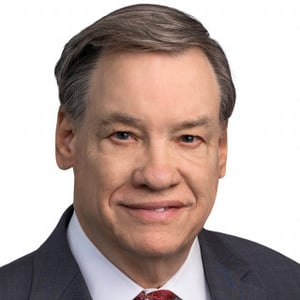
Partner, Baker Botts L.L.P.
Thomas R. Phillips is a partner in the Austin office of Baker Botts L.L.P.,
concentrating in general litigation, including appellate, trial strategy, and alternate
dispute resolution. He was appointed and then elected Chief Justice of the Supreme
Court of Texas in 1988, being one of the first four Republicans (along with Kent Hance,
Eugene Cook, and Bathan Hecht) to win a down-ballot statewide race since
Reconstruction. He was re-elected in 1990, 1996, and 2002 before leaving the Court in
2004.
While in office, Phillips served as president of the Conference of Chief Justices in
1997-98 and as a member of the Federal-State Relations Committee of the
Administrative Conference of the United States and the Institutions of Democracy
Judicial Branch Commission of the Annenberg Public Policy Center. After returning to
private life, he served on the Carter-Baker Commission on Federal Election Reform, the
Texas Historical Commission, the Texas State Historical Society, and the Judicial
Districts Board.
A native of Dallas, Phillips earned a B.A. from Baylor University in 1971 and a
J.D. from Harvard Law School in 1974. He has been awarded honorary doctoral
degrees from St. Edward’s University and Texas Tech University. Prior to becoming
Chief Justice, he practiced law in Houston and served as judge of the 280th District
Court in Harris County. Texas.
He resides with his wife, Dr. Lyn B. Phillips, in a historic home in Bastrop.

U.S. Court of Appeals, First Circuit
David Barron was appointed to the United States Court of Appeals for the First Circuit in May 2014. He graduated from Harvard College in 1989 and Harvard Law School in 1994. From 1989 to 1991, he worked as a newspaper reporter. After graduating from law school, he clerked for Judge Stephen R. Reinhardt of the United States Court of Appeals for the Ninth Circuit, from 1994 to 1995, and for Justice John Paul Stevens of the United States Supreme Court, from 1995 to 1996. He then worked as an attorney advisor for the Office of Legal Counsel of the United States Department of Justice, from 1996 to 1999. In 1999, Barron became an Assistant Professor at Harvard Law School. He became a full Professor at Harvard Law School in 2004, where he worked until he rejoined the Justice Department as Acting Assistant Attorney General for the Office of Legal Counsel, from 2009 to 2010. He then returned to the Harvard Law School faculty in 2010, where he was named the S. William Green Professor of Public Law in 2011, and worked until his appointment to the federal bench in 2014. Currently, Barron is the Honorable S. William Green Visiting Professor of Public Law at Harvard Law School. Barron has published articles in the Harvard Law Review, the Stanford Law Review, and the Yale Law Journal. His book, Waging War, won the 2017 William E. Colby Award.

Executive Vice President of Global Governance, Chief Legal Officer and Corporate Secretary, Walmart Inc.
Rachel Brand is Walmart’s executive vice president of global governance, chief legal officer, and corporate secretary. She oversees the company’s global legal, compliance, ethics, corporate governance, digital citizenship, aviation, investigative, and corporate security functions, including Walmart’s Emergency Operations Center.
Immediately before joining Walmart, Rachel served as the United States Associate Attorney General and holds the distinction of being the first woman to serve in this role. She had previously served in the U.S. Department of Justice as the Assistant Attorney General for the Office of Legal Policy during President George W. Bush’s administration. Her other government service includes an appointment by President Obama to serve as a Member of the U.S. Privacy and Civil Liberties Oversight Board, service as an Associate Counsel to the President at the White House, and judicial clerkships with Justice Charles Fried of the Supreme Judicial Court of Massachusetts and Justice Anthony Kennedy at the Supreme Court of the United States. In the private sector, Rachel was a lawyer in private practice at two law firms in Washington, D.C. and served as the Vice President and Chief Counsel for Regulatory Litigation at the U.S. Chamber of Commerce Litigation Center.
Rachel serves on the board of directors for the Walmart Foundation and is the executive sponsor for Walmart’s Tribal Voices Associate Resource Group. Outside of Walmart, she serves on the board of directors for the International Justice Mission and is a member of The American Law Institute.
Rachel earned her Bachelor of Arts degree from the University of Minnesota-Morris and her J.D. from Harvard Law School.
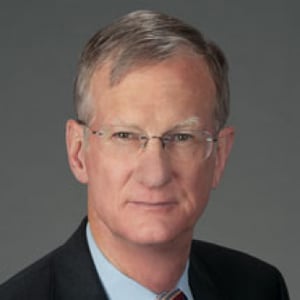
Legal Scholar and Solo Practitioner
Jack received his B.A. in History from the University of Virginia in 1977, graduating with Highest Distinction. After graduating Yale Law School in 1980, he served active duty in the U.S. Army's JAG Corps, rising to the rank of Major, where he represented the United States in more than 250 cases.
He practiced for a decade as an Associate for Bradley Arant in Birmingham, Alabama. He proudly served the State of Alabama in the Office of the Attorney General, both as Deputy and Assistant Attorney General, handling complex civil and criminal litigation cases for the people of Alabama. In 2000, he won the "Best Brief Award" from the National Association of Attorneys General for his brief in a case decided by the U.S. Supreme Court, James Alexander v. Martha Sandoval – a case he won. He was Special Assistant to the Inspector General for the Corporation for National and Community Service, Visiting Legal Fellow for the Center for Judicial and Legal Studies for the Heritage Foundation, Of Counsel at Strickland Brockington Lewis, a solo practitioner, and General Counsel for Indigo Energy.
Most recently, he "re-upped" for military service, volunteering his legal services to the Georgia State Defense Force where twice each month he provided legal services for National Guardsmen who were being deployed. He wore his military uniform for the last time in October 2024.
Jack Park passed away on March 16, 2026.
43rd President of the United States
George Walker Bush served as the 43rd President of the United States from 2001 to 2009, and the 46th Governor of Texas from 1995 to 2000.

Selecting Judges: What's Best for Democracy?
Boston College Student Chapter
Newton Centre, MAThe Rise of the Conservative Legal Movement
Barwatch Bulletin -- February 14, 2009
Bioethics and the LawSaturday morning featured a roundtable discussion entitled "Hot Topics in Bioethics and...
Ohio Update: Ackison v. Anchor Packing Co.
John J. Park
In the Summer 2008 issue of State Court Docket Watch, David Oswiany discussed two decisions...
Law & the Long War
What If McCain Wins? What If Obama Wins?
St. Louis Lawyers Chapter
St. Louis, MOThe 2008 Presidential Election and the Future of the United States Supreme Court
Boumediene v. Bush
Remarks by the President on Judicial Accomplishments and Philosophy
George W. Bush
Hilton Cincinnati Netherland PlazaCincinnati, Ohio 3:02 P.M. EDT THE PRESIDENT: Thank you very much. (Applause.) ...
The 2008 Election: What Is at Stake for the Federal Judiciary?
Philadelphia, Pennsylvania