
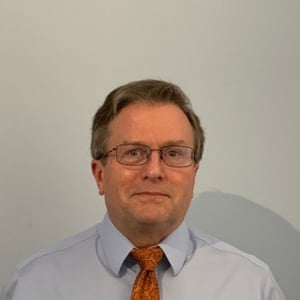
Partner, Winston & Strawn LLP
Gordon Coffee is a litigation partner in the firm’s Washington, D.C. office. Coffee’s success in litigating multimillion-dollar claims by and against energy companies has led to his being repeatedly recommended for energy litigation by Legal 500. Among the energy companies for whom he has served as lead trial counsel are Midland Cogeneration Venture, Allegheny Energy Supply, and USGen New England. Coffee also has effectively represented several other businesses in complex commercial litigation at the trial and appellate levels.
Besides commercial litigation, Coffee has defended energy and health-care companies in battles with federal agencies in federal court and administrative proceedings. He recently won summary judgment for a company seeking a multimillion-dollar refund from a federal agency and assisted hydroelectric generators in challenging onerous license conditions imposed by another federal agency. In the health-care arena, he convinced the D.C. Circuit to overturn regulations issued by the Centers for Medicare and Medicaid Services that prohibited physicians from charging technical fees for surgical procedures on a per-use basis, and he secured an injunction barring the Department of Health and Human Services from enforcing Stark Act regulations against lithotripsy providers.
Moreover, Coffee has successfully represented several energy companies in federal agency investigations. Notably, he has secured nearly a dozen favorable resolutions of Federal Energy Regulatory Commission (FERC) and North American Electric Reliability Corporation (NERC) investigations and audits. In several cases, he persuaded FERC or NERC to take no adverse action against the company or to dismiss proposed notices of violations. In other instances, his efforts resulted in substantial reductions in penalties proposed by the agency and helped his clients avoid expensive mitigation and compliance plans.

Director, Electricity Law Initiative, Harvard Law School
Ari Peskoe is the Director of the Electricity Law Initiative at the Harvard Law School Environmental and Energy Law Program. He has written extensively about electricity regulation, on issues ranging from Constitutional challenges to states’ energy laws to federal regulation of distributed energy resources. Prior to the Environmental and Energy Law Program, Ari was an associate at a law firm in Washington, D.C. where he litigated before the Federal Energy Regulatory Commission about the Western Energy Crisis. Before that, Ari was a Peace Corps Volunteer in Ghana and spent two years trying to bring the 2012 Olympics to New York. He received his J.D. from Harvard Law School and graduated from the University of Pennsylvania with degrees in electrical engineering and business.
Partner, Winston & Strawn LLP
Gordon Coffee is a litigation partner in the firm’s Washington, D.C. office. Coffee’s success in litigating multimillion-dollar claims by and against energy companies has led to his being repeatedly recommended for energy litigation by Legal 500. Among the energy companies for whom he has served as lead trial counsel are Midland Cogeneration Venture, Allegheny Energy Supply, and USGen New England. Coffee also has effectively represented several other businesses in complex commercial litigation at the trial and appellate levels.
Besides commercial litigation, Coffee has defended energy and health-care companies in battles with federal agencies in federal court and administrative proceedings. He recently won summary judgment for a company seeking a multimillion-dollar refund from a federal agency and assisted hydroelectric generators in challenging onerous license conditions imposed by another federal agency. In the health-care arena, he convinced the D.C. Circuit to overturn regulations issued by the Centers for Medicare and Medicaid Services that prohibited physicians from charging technical fees for surgical procedures on a per-use basis, and he secured an injunction barring the Department of Health and Human Services from enforcing Stark Act regulations against lithotripsy providers.
Moreover, Coffee has successfully represented several energy companies in federal agency investigations. Notably, he has secured nearly a dozen favorable resolutions of Federal Energy Regulatory Commission (FERC) and North American Electric Reliability Corporation (NERC) investigations and audits. In several cases, he persuaded FERC or NERC to take no adverse action against the company or to dismiss proposed notices of violations. In other instances, his efforts resulted in substantial reductions in penalties proposed by the agency and helped his clients avoid expensive mitigation and compliance plans.
Director, Electricity Law Initiative, Harvard Law School
Ari Peskoe is the Director of the Electricity Law Initiative at the Harvard Law School Environmental and Energy Law Program. He has written extensively about electricity regulation, on issues ranging from Constitutional challenges to states’ energy laws to federal regulation of distributed energy resources. Prior to the Environmental and Energy Law Program, Ari was an associate at a law firm in Washington, D.C. where he litigated before the Federal Energy Regulatory Commission about the Western Energy Crisis. Before that, Ari was a Peace Corps Volunteer in Ghana and spent two years trying to bring the 2012 Olympics to New York. He received his J.D. from Harvard Law School and graduated from the University of Pennsylvania with degrees in electrical engineering and business.
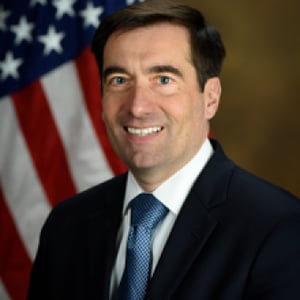
The Boeing Company, Corporate Secretary
John Demers serves as the corporate secretary for The Boeing Company, as well as vice president and assistant general counsel for Finance & Strategy and Environmental & Enterprise Operations. Demers’s responsibilities include oversight of legal matters related to corporate governance and securities filings, mergers and acquisitions, sustainability and environment, health and safety and cybersecurity. The group also supports Boeing’s information technology and information security organizations, as well as its real estate operations.
Demers returned to Boeing in 2021 after serving as assistant attorney general for National Security at the U.S. Department of Justice under both Presidents Trump and Biden. In that capacity, he led the department’s efforts to combat national security related cyber-crime, terrorism and espionage; enforce export control and sanctions laws; use the authorities of the Foreign Intelligence Surveillance Act and conduct national security review of foreign investments and telecommunications licensing applications.
Before that, Demers worked at Boeing in various senior positions, including roles with Boeing Defense, Space & Security and as general counsel and acting head of international government affairs for Boeing International.
Demers first joined Boeing from the U.S. Department of Justice, where he served on the first leadership team of the National Security Division, in the Office of Legal Counsel and in the Office of the Deputy Attorney General. Previously, Demers worked in private practice in Boston and was a law clerk at both the U.S. Court of Appeals for the Ninth Circuit and the U.S. Supreme Court.
Demers currently serves in an advisory capacity to several cybersecurity policy organizations. He earned a bachelor’s degree in political science from the College of the Holy Cross and a Juris Doctor from Harvard Law School. He has served as an adjunct professor of national security law at the Georgetown University Law Center.
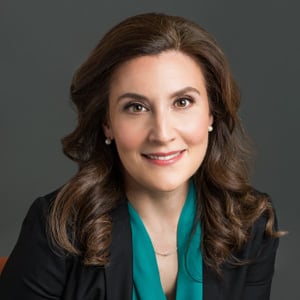
Board Member, U.S. Privacy and Civil Liberties Oversight Board
Beth A. Williams is a Board Member of the United States Privacy and Civil Liberties Oversight Board, an agency whose mission is to ensure that the federal government's efforts to prevent terrorism are balanced with the need to protect privacy and civil liberties.
Prior to her Board service, Ms. Williams was the Assistant Attorney General for the Office of Legal Policy at the United States Department of Justice from August 2017 to December 2020. In that role, she served as the primary policy advisor to the Attorney General and the Deputy Attorney General, and as the Chief Regulatory Officer for the Department. Ms. Williams also led the judicial nomination process for the Department, assisting in the selection and confirmation of more than 230 Article III judges to the bench.
Prior to becoming Assistant Attorney General, Ms. Williams was a litigation and appellate partner at a national law firm, where her practice focused on complex commercial, securities, appellate, and First Amendment litigation. From 2005-2006, Ms. Williams served as Special Counsel to the United States Senate Committee on the Judiciary, where she assisted with the confirmation of Chief Justice John G. Roberts, Jr. and Associate Justice Samuel A. Alito, Jr. to the United States Supreme Court.
Ms. Williams clerked for the Hon. Richard C. Wesley on the United State Court of Appeals for the Second Circuit. She graduated from Harvard College magna cum laude, with a degree in History and Literature, and she earned her law degree from Harvard Law School, where she served as Executive Editor of the Harvard Journal of Law and Public Policy.

Associate Professor of Law and Director, Religious Liberty Clini, Stanford Law School
Jim Sonne is a professor at law at Stanford Law School, and is the founding director of the law school’s Religious Liberty Clinic, the only full-time program in the country where students learn the practice of law through supervised litigation in that field. He is an experienced and award-winning teacher, practitioner, and scholar, with expertise in law and religion issues.
Professor Sonne received his BA with honors from Duke University and his JD with honors from Harvard Law School. He is a former law clerk to Judge Edith Brown Clement of the U.S. Court of Appeals for the Fifth Circuit. Before joining the law school in 2012, Sonne was an appellate lawyer at Horvitz & Levy in Los Angeles.

Patrick Hotung Professor of Constitutional Law, Georgetown University Law Center
Randy Barnett is the Patrick Hotung Professor of Constitutional Law at Georgetown University Law Center. He has argued before the United States Supreme Court, tried murder cases to juries as a prosecutor in Chicago, and appeared as a prosecutor in the feature film Inalienable. He is the author of numerous books, including Restoring the Lost Constitution, The Structure of Liberty, Our Republican Constitution, and The Original Meaning of the Fourteenth Amendment. He has published two memoirs, A Life for Liberty: The Making of an American Originalist, and Felony Review: Tales of True Crime and Corruption in Chicago. He is currently working on a new book, Freedom and Flourishing: Libertarianism for the Real World.

Ralph S. Tyler, Jr. Professor of Constitutional Law, Harvard Law School
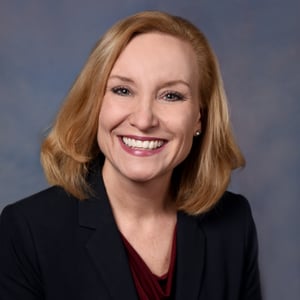
Judge, United States Court of Appeals, Sixth Circuit
The Honorable Joan L. Larsen is a judge of the United States Court of Appeals for the Sixth Circuit. She was nominated by the President on May 8, 2017 and confirmed by the Senate on November 1, 2017. Before her appointment to the federal bench, Judge Larsen served two terms as a Justice of the Michigan Supreme Court, where she was the court’s liaison to Michigan’s drug, sobriety, mental health and veteran’s courts.
Before becoming a judge, Judge Larsen was a faculty member at the University of Michigan Law School, where she was also Special Counsel to the Dean and received the L. Hart Wright Award for Excellence in Teaching. Judge Larsen's research and teaching interests included constitutional law, criminal procedure, statutory interpretation, and presidential power. Judge Larsen continues to assist the law school as the adviser to the Henry M. Campbell Moot Court Competition.
Judge Larsen began her legal career as a law clerk to the Hon. David B. Sentelle of the United States Court of Appeals for the D.C. Circuit and to Justice Antonin Scalia of the Supreme Court of the United States. Following her clerkships, she joined the law firm of Sidley Austin, where she was a member of the Constitutional, Criminal, and Civil Litigation Section. She later served as Deputy Assistant Attorney General in the United States Department of Justice, Office of Legal Counsel.
Judge Larsen graduated first in her class from Northwestern University School of Law, where she served as articles editor of the Northwestern University Law Review and earned the John Paul Stevens Award for Academic Excellence. She received her B.A., with highest honors, from the University of Northern Iowa.

Executive Vice President and Dean of the Law Center; Paul Regis Dean Leadership Chair; Professor of Law, Georgetown University Law Center
William M. Treanor is the Executive Vice President of Georgetown University, Dean of the Law Center, and Paul Regis Dean Leadership Chair. Treanor joined Georgetown in 2010 and was reappointed to serve a third term as Dean and Executive Vice President on July 1, 2020.
Under Treanor’s leadership, Georgetown Law has hired 75 new faculty members; tripled the number of experiential offerings for students in its clinical, externship, and practicum programs; transformed its law and technology offerings into a world class program with 19 full-time faculty experts and over 80 courses in this area; and experienced its most successful era of fundraising, culminating in nearly $67 million in giving in the last fiscal year.
Treanor has also advanced Georgetown Law’s commitment to affordability and access. During his tenure, Georgetown has more than doubled financial aid; raised nearly $25 million dollars for the Law Center’s scholarship program for exceptional students with significant financial need; and launched the RISE program, which provides academic support for students from historically underrepresented groups. The Law Center also created the Early Outreach Initiative, which brings the Law Center’s dean of admissions, current law students, and alumni together to encourage students in underserved high schools to consider pursuing careers as lawyers.
In keeping with Georgetown Law’s motto, “Law is but the means; justice is the end,” Treanor has focused on increasing opportunities for students to pursue careers in public interest law. He is proud that nearly 1 in 4 graduates move straight into public service jobs – a ratio higher than any other top law school in America. The Law Center supports post-graduate fellowships that have enabled more than 400 graduates to work in public interest jobs, and, in combination with the law firms ArentFox Schiff and DLA Piper, it has launched the D.C. Affordable Law Firm, a “low bono” law firm where recent Georgetown Law graduates provide legal representation to people of limited means.
The National Jurist magazine has named Treanor one of the most influential people in legal education five times. He is a member of the Morristown (N.J.) High School Hall of Fame. In 2020, he was elected into the American Academy of Arts & Sciences for law and education. Most recently, he was selected for the inaugural Honorable Robert A. Katzmann Award for Academic Excellence by the Burton Awards.
Treanor’s areas of academic expertise include constitutional law, property law, criminal law, intellectual property, and legal history. At Georgetown Law, he has taught a first-year legal justice seminar, an upper-level course on the drafting of the U.S. Constitution, and leadership courses. His writings have principally been in the area of constitutional history, and he has been recognized as one of the 10 most-cited legal history scholars in the United States by the University of Chicago Law School’s Brian Leiter. His early work largely focused on the history of constitutional protections of private property. His article “The Original Understanding of the Takings Clause and the Political Process,” 95 Colum. L. Rev. 782 (1995), was recognized by the Land Use Professors Blog as the most cited land use article of the past 30 years. Treanor’s article, “Judicial Review before Marbury” was cited in the Moore v. Harper (2023) majority opinion written by Chief Justice Roberts. His recent article, “The Case of the Dishonest Scrivener: Gouverneur Morris and the Creation of the Federalist Constitution,” examined the changes that Gouverneur Morris and the Committee of Style made in preparing the Constitution’s final draft. W.W. Norton will publish his upcoming book, Fathers of the Constitution: Triumph, Tragedy, and the Creation of the American Republic.
Before coming to Georgetown, Treanor was Dean and Paul Fuller Professor of Law at Fordham Law School. He also served in a variety of positions in the government, including Deputy Assistant Attorney General in the Office of Legal Counsel, U.S. Department of Justice; Associate Counsel, Office of Independent Counsel during the Iran/Contra investigation. He was law clerk to the Honorable James L. Oakes, U.S. Court of Appeals for the Second Circuit. Treanor has a Ph.D. in history from Harvard University, a J.D. from Yale Law School, and a B.A., summa cum laude, from Yale College.

Chief Legal Officer, Paradigm
Co-Founder & Vice Chairman, InvestRes
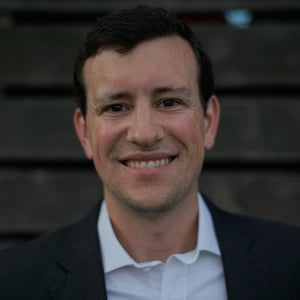
Nathaniel Fischer is the co-founder of Trustwork, a technology platform for workers and entrepreneurs, initially focused on real estate space. The vision for Trustwork originated as he was building InvestRes, a $1.5B real estate company, and was developed during a year-long fact-finding trip to 65 countries to understand the scope of the global opportunity to use technology to empower people. Nathaniel graduated from Harvard Law School in 2010, where he met his wife (Meghan Grizzle Fischer '11) and his business partner (Peter Rex '10) with whom he co-founded both Trustwork and InvestRes. He and Meghan live in Dallas with their three children.

Principal, Bain & Company
Nate Hamilton is a Principal at Bain & Company, a management consulting firm. A member of the firm's Customer Strategy practice, Nate currently serves as the global product manager for Bain's Pricing consulting services. He is based in Bain's Boston office as has also worked in Bain's Melbourne office. He has worked across diverse industries, including Private Equity, Software, Utilities, Manufacturing, and Business Services.
Nate previously served as a law clerk for the Hon. Timothy M. Tymkovich on the U.S. Court of Appeals for the 10th Circuit in Denver, and for Mitt Romney's 2012 presidential campaign in Boston. He is a 2011 graduate of Harvard Law School, where he served on the Harvard Law Review, and is a 2006 graduate of Dartmouth College.
Originally from Texas, Nate currently lives in Boston's South End neighborhood with his wife Kylee, four-year-old son Gunther, and cat Lily. Nate sings bass in the Park Street Church Sanctuary Choir and in Lyricora, a choral ensemble based in Massachusetts's North Shore region. In his spare time, he enjoys hiking, skiing, and tennis; cooking; and playing guitar.
Chief Counsel to Senator Marsha Blackburn, United States Senate
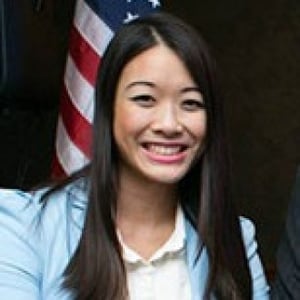
Jessica Vu formerly served as Chief Counsel to Senator Marsha Blackburn (R-Tennessee), where she advises on Senate Judiciary Committee issues. Previously, as Counsel to Senator Chuck Grassley (R-Iowa), she worked on judicial nominations and the confirmation of Associate Justice Brett Kavanaugh to the United States Supreme Court.
Jessica has worked in all three branches of government, and has experience in local, state, and federal politics. After law school, she clerked on the Supreme Court of Texas for Judge Don Willett (now of the United States Court of Appeals for the Fifth Circuit). She then clerked for Judge John McBryde of the United States District Court for the Northern District of Texas. She was a prosecutor for three years at the Harris County District Attorney’s Office before going on to serve Texas Governor Greg Abbott as his Public Information Coordinator and Assistant General Counsel. She was then Counsel to the Assistant Attorney General for the Civil Rights Division at the United States Department of Justice, focusing on discrimination in higher education.
Jessica graduated from the University of California, Berkeley, with highest honors in Political Science, and a minor in Southeast Asian Studies. She received her J.D. from Harvard Law School, where she was Executive Editor of the Harvard Journal of Law and Public Policy. She is a member of the Asian Pacific American Bar Association of Washington, D.C. and serves on the board of the Federalist Society’s D.C. Young Lawyers Chapter.

Topics
The Political — and Solely Political — Power of Impeachment
The story of impeachment is a simple and straightforward one. So much so, in fact,...
Recent Strains on Cooperative Federalism in the Energy Sector
Gordon Alan Coffee, Ari Peskoe
In statutes such as the Federal Power Act and Clean Water Act, Congress divided responsibility...
Recent Strains on Cooperative Federalism in the Energy Sector
TeleforumTopics
Human Rights in American Foreign Policy
Early last month, Secretary Pompeo announced the formation at the State Department of an advisory...
Lunch with Assistant Attorney General John C. Demers
Portland, OR2019 Harvard Alumni Reception
Washington, DCTopics
Deference and Independent Agencies
During the last week of its just-ended term, the Supreme Court handed down its much...
A Discussion of Prof. Sonne’s Experience Running the Nation’s First Religious Liberty Clinic
Charleston, SC2019 Thomas M. Cooley Judicial Lecture
Washington, DCIn-House/Private Sector Panel
Cambridge, MA